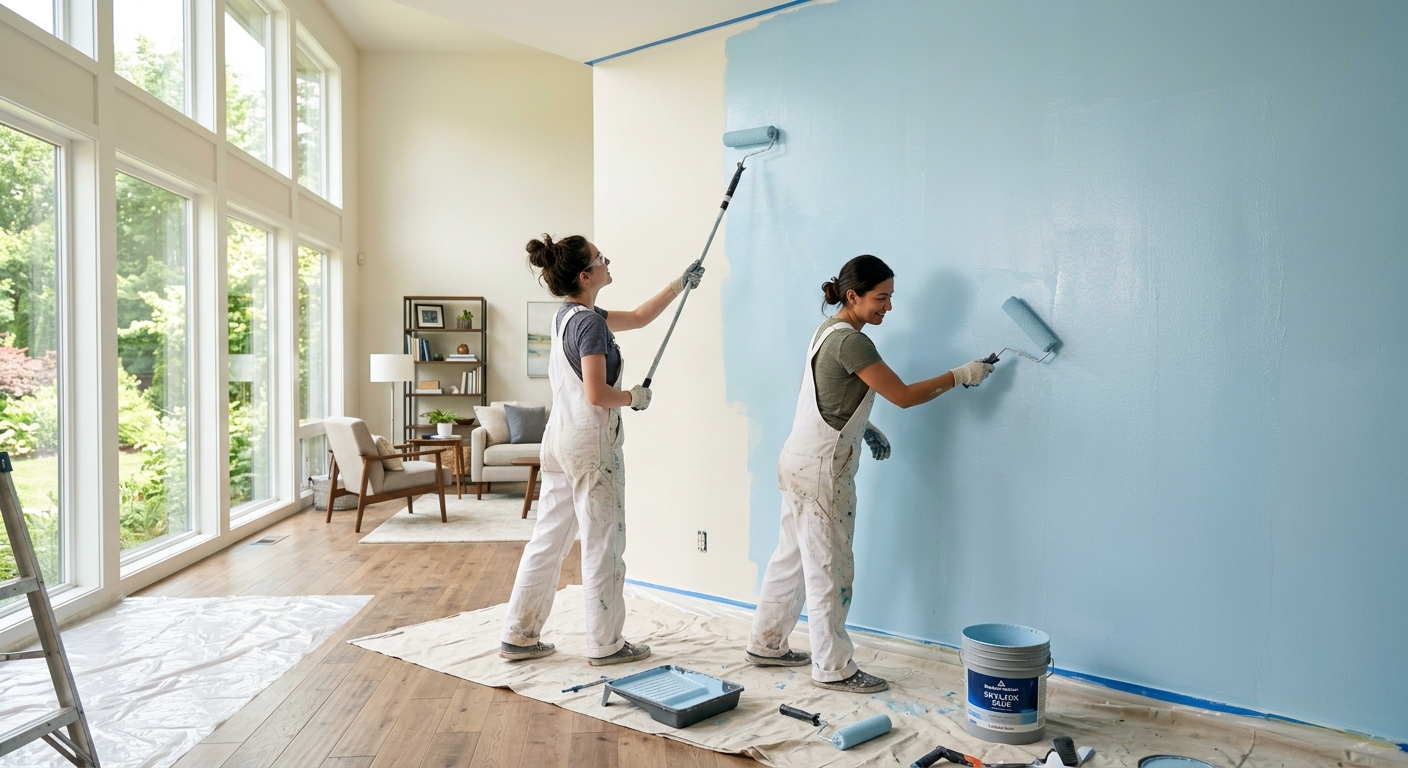
Painting options and costs in Hillcrest Village
In Hillcrest Village, Ontario, choosing the right paint system usually matters just as much as the brand—and it starts with understanding your home’s age. With a population of 16,934 (Statistics Canada, 2021 Census), our neighbourhoods sit within the larger Toronto market where older housing stock is common. Pre-1980 homes often need more preparation—scraping, patching, sanding, caulking and priming—and that preparation can be the difference between a paint job that looks good for a year and one that lasts through Ontario seasons. For properties built before 1978, contractors also follow lead-safe work practices if lead paint is present (even when a permit isn’t required), which adds time for testing, containment and clean-up.
Costs in the Greater Toronto Area are also shaped by climate and demand. Exterior painting is tightly season-bound: crews typically work late May through June, then again from September to mid-October when temperatures remain above about 10°C for proper curing. In June–August, limited “ideal” weeks can push pricing up roughly 10–15% as schedules tighten. That timing reality is why many homeowners in areas such as the Bayview Avenue corridor (and surrounding side streets) book early for spring or early fall.
Once you know your scope—interior refresh vs. full exterior, plus trim and prep needs—you can benchmark your quote against realistic local ranges. Below is a practical cost comparison table for Hillcrest Village homeowners.
| Service |
What's Included |
Typical Duration |
Price Range |
| Interior — whole home (walls, ceilings, trim) |
Surface prep, patching/sanding, caulking, primer as needed, paint on walls/ceilings, basic trim coverage, protect flooring/furnishings, cleanup |
4–10 days |
$3,000 – $6,000 |
| Interior — per room (standard bedroom or living room) |
Prep, patching as needed, caulking, 2-coat paint on walls (and ceiling if included), light trim touch-ups, protection and cleanup |
1–3 days |
$400 – $1,500 |
| Exterior — full house (siding, trim, soffits) |
Wash, scrape/sand, patching, caulking, primer, full exterior paint system (siding + trim/soffits), protection, disposal and final cleanup |
6–14 days |
$4,500 – $8,000 |
| Exterior — trim and accent colours only |
Targeted prep and repaint of trim/accents, spot-priming, caulking touch-ups, paint application, protection and cleanup |
2–6 days |
$1,500 – $4,000 |
| Kitchen cabinet painting (doors, frames, spray finish) |
Hardware removal (as applicable), degreasing, sanding/scuffing, bonding primer, cabinet-grade paint in a spray finish, reassembly and cleanup |
3–8 days (plus cure time) |
$1,800 – $4,000 |
| Specialty / faux finish (accent wall, texture) |
Specialty coating system, base prep/priming, application of texture/faux effect, protection and cleanup |
2–6 days |
$800 – $3,500 |
Prices are estimates only and vary by project scope, site access and material selection.
What affects the price of painting in Hillcrest Village
In Hillcrest Village and across Toronto, it’s common to see the “same” painting job land 30–50% apart from one contractor to another. The big drivers are scope definition (how much prep and how many coats), product system choices, and labour efficiency based on the home’s condition. Even a wall repaint can change price quickly if there’s patching, water staining, or multiple existing paint layers that need more sanding and primer than expected.
For exterior work in this region, timing is a major cost lever. The GTA’s exterior season is tightly climate-dependent—roughly late May through June and again September to mid-October—because crews need temperatures above about 10°C and stable conditions long enough for proper adhesion and cure. Coastal BC can paint longer in theory, but persistent humidity and mildew risk change coating selection and add careful scheduling; Alberta’s season is shorter and frost risk affects planning. In Ontario, shorter “ideal” windows concentrate demand, so June–August jobs can be 10–15% higher, especially when the schedule is competing with many preps that can’t wait.
Older homes across the region also increase labour. In pre-1980 properties, surface preparation can take 50–70% of total labour on repainting jobs: scraping failed spots, sanding old gloss, caulking cracks, and priming bare or patched areas. For example, a full exterior repaint that starts near $4,500 – $8,000 can move toward the higher end if there’s extensive trim repair or peeling around windows. On the interior side, a basic refresh near $400 – $1,500 per room can rise when ceilings, trim, and patching are included, since ceilings and detailed carpentry coverage add time.
Concrete Hillcrest Village examples: a two-storey home with soffits and second-floor railings may require scaffolding, lifting costs, and extra setup; and previously unmaintained stucco or wood trim can force more priming and more caulking cycles before coating.
| Price Factor |
Why It Matters |
Cost Impact |
| Surface prep — scraping, sanding, patching drywall or wood |
Determines adhesion and whether old failures “telegraph” through new paint |
High; often 30–70% of labour |
| Number of coats — 2-coat system over primer vs. 1 coat over existing |
Coverage and colour change control durability and uniformity |
Medium–High; can add days and materials |
| Paint quality tier — contractor-grade vs. premium (Benjamin Moore, Sherwin) |
Impacts film build, washability, hide, and long-term recoat timing |
Low–Medium; higher products can cost more but reduce rework |
| Ceilings and trim — adds significant time vs. walls-only |
Ceilings require careful cutting-in; trim needs sanding, masking, and attention to edges |
Medium; can shift total by 10–25% |
| Exterior season window — short season raises summer rates |
Limited “ideal” weather concentrates demand and compresses schedules |
Medium–High; June–August often costs more |
| Lead-safe precautions — required for pre-1978 homes with lead paint |
Testing/containment/HEPA cleanup adds labour and safety setup |
Medium; increases prep and disposal time |
| Surface material — drywall vs. plaster vs. wood vs. stucco |
Different substrates require different primers and adhesion strategies |
Medium; can change product list and prep duration |
| Height and access — multi-storey exterior requires scaffolding or lifts |
Access equipment increases time, labour coordination and safety requirements |
Medium–High depending on site |
Permits & regulations in Ontario
For most painting projects in Ontario, you typically do not need a permit. In Hillcrest Village, a standard interior repaint or an exterior repaint usually proceeds without municipal permitting as long as you’re painting existing surfaces without structural changes. The key legal “line” is usually health and safety practices rather than permits for the painting work itself.
Where homeowners should be alert is older housing. For homes built before 1978, health guidelines recommend testing for lead paint before sanding or scraping, and using lead-safe work practices if lead is present. Pro contractors generally follow wet methods to reduce dust, HEPA vacuuming, proper containment, and safe disposal—this isn’t typically mandated for homeowners, but it’s standard professional practice and materially affects labour time and cost.
Independently of permits, verify the contractor is properly insured and covered. Ask for proof of liability insurance and workers’ compensation coverage (WSIB). Step-by-step, here’s how to verify: (1) confirm their WSIB account coverage using their WSIB number or clearance process, (2) request a current Certificate of Insurance and confirm the policy is active and includes general liability, (3) confirm their business details and credentials via Ontario’s public business/licensing information (and any contractor registration where applicable), and (4) ensure the written contract clearly states the paint brand, sheen, number of coats, which prep tasks are included (e.g., patching, caulking, priming), and what’s excluded.
Interior vs exterior painting — getting the best result in Hillcrest Village
The difference between a long-lasting paint job and a premature failure in Hillcrest Village often comes down to prep, not the colour. In Ontario interiors, surface prep is the foundation: filling nail pops, sanding smooth, cleaning residue, and priming stained or porous spots. Sheen choice also matters. Flat paint hides imperfections but can scuff; eggshell is a popular wall compromise; satin or semi-gloss on doors and trim improves cleanability. In practice, two coats over a proper primer almost always outlasts “one thick coat,” because you get better film continuity and more uniform coverage.
Exteriors are more unforgiving in our climate. The biggest wins come from thorough cleaning, scraping of loose paint, caulking before painting to prevent water ingress, and selecting primer by substrate. On wood trim, priming helps seal and improve adhesion; on repaired drywall or porous areas, primer ensures consistent bond and reduces flashing. Toronto also has humidity spikes and rain events, so timing between prep and coating matters. Unlike BC, where mildew resistance is often a primary driver due to persistent dampness, the GTA’s primary constraints are frost risk, rainfall, and humidity fluctuations—so contractors focus on temperature-stable products and curing conditions around the late May–June and September–mid-October windows.
If you’re considering cabinets, painting is often a budget alternative to replacement—done right. A kitchen cabinet spray finish can run roughly $1,800 – $4,000. The higher end is usually justified when prep is thorough (degreasing, scuffing, bonding primer) and when you want a factory-like look that resists daily wipe-downs. For pre-1978 homes, lead-safe precautions apply if sanding or scraping risks disturbing lead paint—often adding time but protecting your household.
| Project Type |
Key Prep Step |
Recommended Coats |
Price Band |
| Interior — fresh drywall (new construction) |
Proper drywall priming plus full sanding/spot priming for uniform texture |
2 coats (often primer + 2 finish coats) |
$900 – $3,500 |
| Interior — repaint (good condition, no repairs) |
Cleaning and light scuffing, then caulk touch-ups only where needed |
2 coats |
$400 – $1,500 |
| Interior — repaint (patching and priming needed) |
Patch, sand smooth, prime repaired areas to avoid flashing |
2 finish coats (with primer on patches) |
$700 – $2,800 |
| Exterior siding (wood or fibre cement) |
Scrape/sand loose areas, prime bare spots, caulk gaps before finish coat |
2 coats over primer where required |
$4,500 – $8,000 |
| Exterior trim and accents only |
Spot prep and feather-sanding edges for clean transitions |
2 coats where prep requires it |
$1,500 – $4,000 |
| Kitchen cabinets (spray finish) |
Degrease, scuff/sand, bonding primer, then spray for even film build |
Primer + 2 finish coats (or equivalent system) |
$1,800 – $4,000 |
How to choose a painting contractor in Hillcrest Village
Choosing a contractor in Hillcrest Village is less about flashy ads and more about proof. Start with Ontario coverage checks: (1) liability insurance—ask for a current Certificate of Insurance and confirm the coverage is active for the start date; (2) workers’ compensation—request proof of WSIB coverage and verify the WSIB number/clearance; (3) business details—ensure their legal business name matches the contract; and (4) any specialty certifications they claim (especially if they mention lead-safe practices).
Next, require 2–3 itemised written quotes, not just one lump sum. Your quote should break down labour versus materials, and it should list what’s included in preparation (washing, scraping, sanding, caulking, priming) and what’s included in painting (number of coats, sheen, surface protection). Pay attention to exclusions: disposal, power washing, lead-safe measures, ceiling height access, and whether old caulking is fully removed and replaced. Permits usually aren’t required for standard painting in Ontario, but lead-safe handling for pre-1978 work can be scoped.
Warranty and payment structure matter. Ask for the workmanship warranty length, whether product/manufacturer warranty applies through the contractor, and whether you can transfer it. Payment should be staged: never pay more than 10–15% upfront; request holdback until the job is complete and cleaned up. Also insist on a timeline in writing: start date, estimated daily hours, and completion date. With our seasonality, that written schedule is critical for exterior timing.
- Confirm WSIB coverage before work begins; don’t rely on verbal assurance.
- Review their Certificate of Insurance for active general liability coverage.
- Get a written scope that lists prep tasks (scrape/sand/wash/patch/caulk/prime) clearly.
- Require paint system details: brand, product line, sheen, and colour codes.
- Ensure the quote states number of coats and how many primer applications are included.
- Ask who handles surface protection and cleanup (including drop sheets and vacuuming).
- Clarify disposal: will they remove and dispose of debris/paint-related waste?
- Check timeline realism—especially for exteriors with late May–June and September–mid-October windows.
- Request a workmanship warranty statement in writing.
- Keep a holdback (typically 10–20%) until final walkthrough is complete.
- Verify accessibility handling: scaffolding/lifts included or quoted as an add-on?
- Confirm how they manage weather interruptions for cure time and recoat windows.
Red flags I see in Hillcrest Village include: refusing to itemise the quote (lump sums only), missing WSIB or an expired insurance certificate, vague scope that doesn’t mention caulking and primer, promises to “cut corners” on scrape/sand prep for exteriors, and demanding large upfront payments. If any of these show up, pause and ask for revisions before signing.
Frequently asked questions — painting in Hillcrest Village
How many coats of paint do I need?
Most homeowners in Hillcrest Village end up with two finish coats, because it’s the best balance of durability and uniform colour. If you’re repainting and walls are in good condition, two coats over a proper cleaned and scuffed surface is usually enough. If you have patched drywall, water staining, or bare spots from repairs, you’ll also need primer where adhesion or stain-blocking is required. That’s why “one thick coat” often disappoints—coverage may look fine at day one but can fail sooner with Ontario’s humidity swings. For comparison, interior per-room painting commonly sits around $400 – $1,500, and the difference between “repaint” versus “repaint with patching and priming” is mostly tied to whether primer is added and whether two finish coats are fully achievable.
What paint is best for Hillcrest Village's climate?
In Ontario, the best choice is the correct coating system for the surface and the weather window, not just a “premium” brand. For exteriors in Hillcrest Village, look for paint that can cure properly when temperatures stay above about 10°C for at least 24–48 hours after application. Because the GTA’s exterior season is late May–June and September–mid-October, contractors need products that perform well when humidity and rain events cause delays. For interiors, washable finishes like eggshell or satin on walls and semi-gloss on trim help with wipe-downs without scuffing too easily. If you’re doing a full exterior, typical budgets start around $4,500 – $8,000, and using the right primer plus the correct exterior paint system is what protects the finish through freeze–thaw cycles and summer moisture spikes.
How long does exterior paint last here?
Realistically, exterior paint life in Hillcrest Village depends on preparation and weather timing more than marketing claims. In the GTA, coatings are exposed to freeze–thaw stress, rain-driven wash-off, and humidity fluctuations. When prep is thorough—scrape loose material, sand edges smooth, caulk before coating, prime bare or repaired areas—and the job is scheduled within workable weather, many homeowners see years of service before repainting becomes necessary. When shortcuts happen (skipping scraping, painting over failing caulk, or coating when the surface can’t cure), you can see premature bubbling, cracking or peeling. If you’re planning a full exterior, budgets usually land within $4,500 – $8,000, and the time spent on prep is often what determines whether the paint lasts long enough to justify the cost.
Should I paint or replace my cabinets?
In most Hillcrest Village kitchens, repainting cabinets is a strong alternative to replacement—especially if the frames are solid and boxes are square. Painting is usually best when you’re looking for a colour change and better finish cleanliness without the disruption and cost of new cabinetry. Cabinet painting requires proper degreasing, sanding/scuffing, bonding primer (so the coating adheres), and a durable spray or equivalent finish to resist daily wipe-downs. If your current cabinets have structural issues like sagging frames or damaged boxes, replacement may be the smarter long-term move. But if the cabinets are sound, repainting typically costs less, with many projects fitting into $1,800 – $4,000. The biggest “failure point” is cutting prep—so ask what bonding primer and sanding steps are included.
How do I prep walls before painting?
For most homeowners in Hillcrest Village, you’ll get the best results by focusing on what you can control safely before the crew arrives: clear the room, move furniture to the centre if recommended, remove or protect wall decor, and ensure pets/people are out of the work zone. Leave patching, sanding, caulking and priming to the contractor unless you’ve confirmed what’s needed. Don’t paint over peeling areas—those must be scraped and properly primed. Also avoid cleaning with products that leave residues. If you’ve had nicotine, grease, or water staining, tell your contractor before painting begins so the right primer is selected. A well-prepped repaint is commonly priced around $400 – $1,500 per room, while repainting with patching and priming typically costs more because those steps add labour.
Do I need to worry about lead paint in an older Hillcrest Village home?
If your Hillcrest Village home was built before 1978, it’s wise to treat it as a lead-risk situation during renovation. In Ontario, painting itself doesn’t usually require a permit, but lead-safe work practices are strongly recommended when sanding or scraping could disturb lead-containing paint. The standard approach is testing before aggressive prep, then using lead-safe controls if lead is present—wet methods to reduce dust, HEPA vacuuming, containment where appropriate, and proper disposal. This is why quotes on older homes can vary: lead-safe measures add time and materials even if the topcoat work looks similar. If you hire a professional contractor, confirm they follow these practices and carry liability insurance and WSIB coverage. This protects your household and helps ensure the job is done safely while still meeting the prep quality needed for long-lasting results.