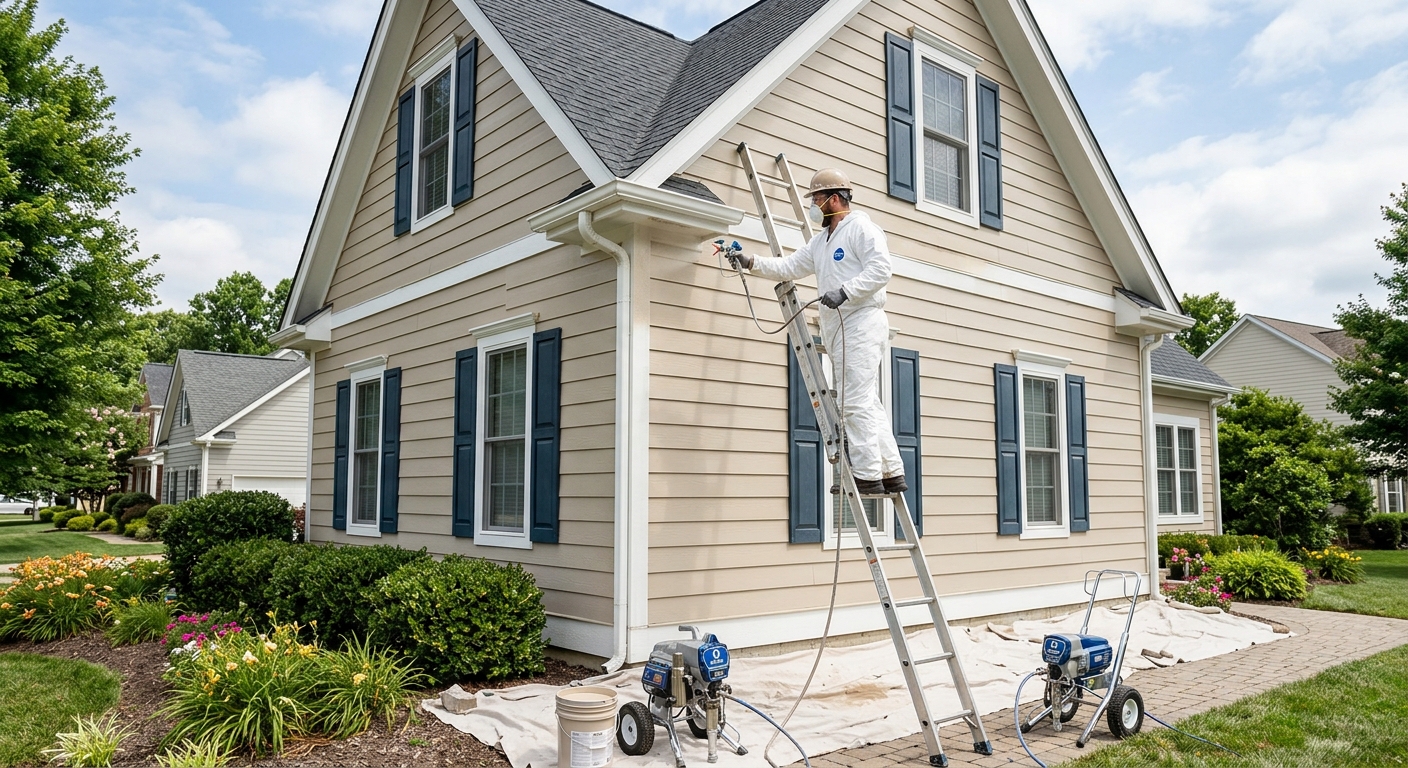
Painting options and costs in Scarborough Village
In Scarborough Village, the right painting option depends on your home’s age, how much prep your surfaces need, and whether you’re working inside or outside. With a population of 16,724 (Statistics Canada, 2021 Census), the area follows the broader Toronto supply-and-demand pattern: lots of homeowners repaint, but exterior work is limited to short weather windows. Scarborough Village also includes many older properties, and when your siding, trim, or interior plaster/wood has had multiple paint layers over decades, prep becomes the main cost driver. In practice, that means more scraping, patching, sanding, caulking and priming—especially around window frames, eaves, fascia and any previously repaired drywall.
Toronto’s climate affects both product performance and scheduling. Contractors usually target exterior painting from late May through June, and again from September to mid-October, when temperatures are staying above about 10°C for 24–48 hours and humidity is moderate enough for proper adhesion and curing. In June–August, demand can climb and prices often land on the higher end of the band because those “ideal” days are limited. For interiors, the schedule is more flexible year-round, but labour varies with ceiling height, masking, stairwells, furniture protection, and the finish level you want.
In neighbourhood pockets such as Woburn and nearby Scarborough Junction areas, exterior repainting and trim work are especially in demand each summer. Below is a clear way to compare typical scope and realistic ranges, before you request itemised quotes.
| Service |
What's Included |
Typical Duration |
Price Range |
| Interior — whole home (walls, ceilings, trim) |
Move/floor protection, patching and sanding, caulking, primer where needed, paint on walls/ceilings, basic trim coverage, cleanup |
5–10 days |
$2,400 – $6,000 |
| Interior — per room (standard bedroom or living room) |
Cut-in/edge work, prep of typical scuffs and nail holes, 2-coat wall coverage (primer included where required), trim touch-up |
1–3 days |
$450 – $1,400 |
| Exterior — full house (siding, trim, soffits) |
Surface wash (as needed), scraping/sanding loose paint, caulking gaps, spot priming, 2-coat exterior system, paint soffits/trim, disposal |
1–3 weeks (schedule dependent) |
$3,000 – $8,000 |
| Exterior — trim and accent colours only |
Prep and prime affected trim areas, caulking where required, 2-coat coverage on selected exterior elements |
3–8 days |
$1,500 – $3,800 |
| Kitchen cabinet painting (doors, frames, spray finish) |
Degreasing, sanding and deglossing, repairs, bonding primer, high-durability topcoat, spray/roll finish, hardware masking (removal optional) |
5–12 days |
$1,400 – $4,000 |
| Specialty / faux finish (accent wall, texture) |
Surface prep, base coat, finish layers, protective topcoat (as specified), custom patterns/texture application |
2–6 days |
$650 – $4,000 |
Prices are estimates only and vary by project scope, site access and material selection.
What affects the price of painting in Scarborough Village
In Toronto and across Ontario, quotes for the same “paint the house” request can easily swing by 30–50% because painters price preparation and risk differently. Two contractors may quote the same paint system, but if one team builds in more surface repair, better priming coverage, and realistic curing time, the labour cost moves a lot. Exterior painting is the clearest example: in the Toronto market, the ideal season is short and climate-dependent. Typical work happens from late May to early October, with application needing temperatures above about 10°C and rising, and humidity staying moderate enough for curing. When contractors are booking limited ideal weeks in June–August, exterior pricing often sits 10–15% higher than you’d see in shoulder-season periods.
Coastal BC often has a longer timeline but higher persistent humidity and mildew pressure, so product choices and timing are different there. In Scarborough Village, the biggest constraints are rain, frost risk and humidity spikes rather than year-round dampness. That said, older homes throughout the region change the economics: more prep—scraping, caulking and priming—can make up 50–70% of total labour on a repaint. If your exterior is pre-1980 (common in older Scarborough streetscapes), you’re more likely to deal with multiple paint layers, weathered caulk lines, and rough trim profiles that require careful smoothing and bonding primer.
Concrete examples: (1) A vinyl-sided home with minimal failing caulk typically lands closer to the lower end of exterior bands—say around $1,500–$3,800 for trim-only—while (2) a wood or fibre-cement façade with widespread peeling may push a full exterior repaint into the $3,000–$8,000 range due to time-intensive scraping and priming. Interior can vary too: a walls-and-ceilings refresh might come in around $400–$1,200 per room, but adding ceiling repairs and trim repainting can move the same room closer to the upper end quickly.
| Price Factor |
Why It Matters |
Cost Impact |
| Surface prep — scraping, sanding, patching drywall or wood |
Determines adhesion and whether old peeling returns |
Often the largest cost driver; can add 20–60% vs “touch-ups” |
| Number of coats — 2-coat system over primer vs. 1 coat over existing |
Coverage and durability depend on proper layering |
Missing coats can reduce cost short-term but increases failure risk |
| Paint quality tier — contractor-grade vs. premium (Benjamin Moore, Sherwin) |
Pigment strength, washability and hiding power vary |
Materials shift; labour may drop if coverage is better (still prep-led) |
| Ceilings and trim — adds significant time vs. walls-only |
Cutting in, masking, and detail work take more labour |
Can add 10–35% to interior totals |
| Exterior season window — short season raises summer rates |
Scheduling pressure affects labour rates and availability |
Typically 10–15% higher in June–August |
| Lead-safe precautions — required for pre-1978 homes with lead paint |
Controls dust and disposal when lead is present |
May increase prep costs by adding containment and HEPA cleanup |
| Surface material — drywall vs. plaster vs. wood vs. stucco |
Different porosity and bonding requirements |
Absorbency and priming frequency change material and labour |
| Height and access — multi-storey exterior requires scaffolding or lifts |
Safe access and protection for landscaping/windows |
Access can add 15–50% on exterior jobs |
Permits & regulations in Ontario
For most painting projects in Ontario, you generally do not need a permit. Painting itself is usually treated as a finishing trade. The main regulatory-related issue is safety practices for older homes. For homes built before 1978, health guidelines recommend testing for lead paint before sanding or scraping, and using lead-safe work practices if lead is present—such as wet methods, HEPA vacuuming, proper bagging/sealing, and compliant disposal. This is not automatically “a homeowner permit requirement,” but it is standard practice for professional contractors because the process can create hazardous dust.
In addition to safety practices, a reputable contractor should carry proper coverage. Confirm they have liability insurance and workers’ compensation coverage (WSIB for Ontario workers). For labour paperwork and protection, always get a written contract that spells out: surface prep tasks (scrape/sand/patch/caulk/prime), the paint brand and sheen, number of coats, and what’s included for disposal and cleanup.
Step-by-step, here’s how to verify before work begins in Scarborough Village:
- Request the contractor’s insurance certificate of liability (ask for the expiry date and coverage limits).
- Ask for WSIB clearance/coverage proof and verify the effective status.
- Confirm the specific scope in the contract: paint type, sheen, coat count, and which areas are excluded.
- Ask whether lead-safe methods will be used if pre-1978 materials test positive.
- Keep your signed quote/contract and invoices for your records.
Interior vs exterior painting — getting the best result in Scarborough Village
In Scarborough Village, the fastest way to avoid premature paint failure is to treat prep and environmental timing like part of the “paint system,” not an afterthought. For interiors, the biggest difference between a long-lasting job and a rework is surface prep: filling, sanding, priming stained or porous areas, and cleaning dust before topcoat. Sheen matters too. Flat/ceiling paint helps hide imperfections, but in hallways and high-touch areas you’ll typically want eggshell or satin for durability and easier cleaning. Remember: two coats over a proper primer nearly always outlast one thick coat, especially on darker-to-lighter transitions and patched areas.
For exteriors in Toronto, prep is even more critical. Start with thorough cleaning, scrape back any failing material, sand edges smooth, and caulk before painting to reduce water ingress behind trim and at joints. Primer type matters by substrate: some wood and weathered areas need bonding primer to prevent bleed-through and improve adhesion. In our climate, products must tolerate temperature swings and humidity spikes, so the “best” exterior coating is usually the one that matches your substrate and is applied within that late-May-to-October window when curing conditions are steady.
Kitchens are where homeowners often want a budget alternative: cabinet painting can be a smarter spend than replacement when the boxes are solid. I’ll often justify cabinet spray refinishing because it upgrades the look without the full demo and replacement cost—whereas cutting corners on prep (degreaasing, sanding and priming) can cause peeling or tackiness that forces a redo.
For a dollar reality check: a trim-only exterior refresh might range around $1,500 – $3,800, but if your siding has widespread peeling, paying for full prep and a full exterior system can land closer to $3,000 – $8,000—and that difference is usually justified by the prep work needed to stop problems, not just cover them. For pre-1978 homes, lead-safe precautions during sanding/scraping protect your family and help your contractor work more safely, which is part of why those jobs can cost more.
| Project Type |
Key Prep Step |
Recommended Coats |
Price Band |
| Interior — fresh drywall (new construction) |
Prime properly at joints/patches and after dust control |
Primer + 2 topcoats (or 2 topcoats total if specified by product) |
$400 – $1,600 |
| Interior — repaint (good condition, no repairs) |
Clean/degloss where needed, light sanding for adhesion |
2 coats |
$450 – $1,400 |
| Interior — repaint (patching and priming needed) |
Sand edges smooth, spot prime patched areas |
Primer spot + 2 topcoats on walls (trim as applicable) |
$650 – $2,200 |
| Exterior siding (wood or fibre cement) |
Scrape/sand failing paint, caulk gaps, prime exposed spots |
Primer where needed + 2 exterior coats |
$3,000 – $8,000 |
| Exterior trim and accents only |
Prep and prime bare/failed trim; caulk before topcoat |
Prime where needed + 2 coats |
$1,500 – $3,800 |
| Kitchen cabinets (spray finish) |
Degrease, degloss/sand, bond primer, careful masking |
Primer + 2 finish coats (system-dependent) |
$1,400 – $4,000 |
How to choose a painting contractor in Scarborough Village
Choosing the right painter in Scarborough Village starts with verifying coverage and then comparing like-for-like scopes. In Ontario, confirm liability insurance by requesting a current certificate of insurance (look for the effective dates and that it lists your jobsite address range or coverage application). For workers’ compensation, ask for WSIB proof/clearance and verify it’s active before work begins. If a contractor can’t provide these documents, that’s a major risk signal.
Next, get 2–3 itemised written quotes. “Itemised” should mean a breakdown that separates labour and materials, outlines prep steps (scraping, sanding, patching, caulking, priming), and lists paint brand/line and sheen. Also read exclusions: is window caulking included? Are repairs included or billed separately? Is lead-safe work included where required for pre-1978 homes? Ask whether disposal is included and whether any permits are needed for related scope (most painting doesn’t require a permit, but the contract should clarify what’s handled).
Warranty matters: request a workmanship warranty length and confirm whether product/manufacturer warranty coverage applies through the contractor’s application method. Payment should be staged—never pay more than 10–15% upfront; hold back until key milestones are complete and the final walkthrough is signed off. Finally, get a start date and completion estimate in writing, not just “weather permitting.”
- Verify WSIB coverage is active (ask for proof before signing).
- Verify liability insurance certificate is current (ask for expiry date).
- Insist on a written scope: prep, coats, and paint lines.
- Confirm disposal/removal of scrape waste and masking materials.
- Ask how they protect landscaping, siding edges and windows during exterior work.
- Request at least 3 recent references with similar Scarborough-area homes.
- Clarify lead-safe steps if your home is pre-1978 (testing approach and containment).
- Get sheen recommendations by room (flat vs eggshell vs satin vs semi-gloss).
- Confirm surface repairs policy: included vs “repair estimate” separate line item.
- Demand colour code control: paint colour name/number in the contract.
- Ask about curing/weather rules for exterior days (rain/temperature triggers).
- Put payment schedule in the contract and keep a holdback until completion.
Red flags I see in Scarborough Village: contractors who won’t provide WSIB/liability proof, vague quotes that don’t list prep steps or number of coats, “one-coat” promises for exteriors, pressure to pay the full amount upfront, and no written warranty or unclear cleanup/disposal responsibilities.
Frequently asked questions — painting in Scarborough Village
Do I need to worry about lead paint in an older Scarborough Village home?
If your Scarborough Village home is pre-1978, it’s wise to treat lead paint as a real possibility before scraping, sanding or aggressively removing old coatings. Ontario doesn’t typically require a homeowner “permit” to paint, but lead-safe practices are important for safety: dust control (often wet methods and HEPA vacuuming), proper containment and disposal, and avoiding dry sanding. A professional contractor should ask about the home’s build year and recommend testing if the surfaces will be disturbed significantly. If lead is present, safe work can affect both schedule and cost because prep becomes more careful and time-consuming. In many projects, that’s why interior or exterior repaint scopes can move from a simple refresh toward the higher side of the band (for example, full exterior work commonly lands in the $3,000 – $8,000 range depending on prep needs).
How long does it take to paint a house?
For interiors in Ontario, timing is usually about scope and access rather than season. A single standard room might take 1–3 days for prep and drying between coats, while a whole-home interior repaint often takes 5–10 days depending on ceiling work, trim volume and how many rooms are occupied. For exteriors in Scarborough Village, the weather window is tighter: contractors typically schedule from late May through June and again from September to mid-October when temperatures are suitable and surfaces can cure properly (often 24–48 hours after application). Even when the crew is available, rain and humidity spikes can stretch the calendar. If your job needs scaffolding, multiple repairs, or significant scraping, plan for 1–3 weeks of on-site time and an appointment window around ideal curing days.
What's the difference between paint quality tiers?
Paint quality tiers mainly affect hiding power, durability, washability and how forgiving the product is during application—not just “how it looks on day one.” Contractor-grade paints can cover well, but premium lines often provide better opacity and smoother finish, especially on patches, colour changes, or high-traffic areas. In the GTA climate, a coating’s performance depends heavily on prep and proper primer selection, but topcoat quality can reduce streaking, reduce the number of coats needed in some cases, and improve scuff resistance and longevity. Practically, homeowners will see price movement in both materials and time: a premium system that hides better may help keep the job closer to the middle of the band, while poor prep can make any tier fail. If your plan is full exterior, expect it to land somewhere in the $3,000 – $8,000 band when prep is substantial.
How do I compare painting quotes?
Compare quotes like you’d compare renovation scopes: look for line items, not just totals. Ask each contractor to list labour and materials separately, specify paint brand/line and sheen, and state exactly what prep is included (scraping, sanding, patching, caulking, priming). Verify the number of coats and whether primer is included for bare/spot-primed areas. For exteriors in Scarborough Village, make sure the quote reflects the GTA’s curing realities—rain and humidity can change schedule and can’t be treated like “extra days are free.” Also confirm what’s excluded: window caulking, carpentry repairs, lead-safe measures for pre-1978 homes, and disposal. A quote that’s cheaper because it excludes prep or offers fewer coats can look attractive but often costs more later. Use price bands as a sanity check (for instance, interior room work can be around $450 – $1,400, while trim-only exterior work often sits near $1,500 – $3,800).
What paint sheen should I use in different rooms?
In Scarborough Village homes, sheen should match both lighting and how much the room gets cleaned. Ceilings are commonly painted flat to help hide imperfections. Walls often work well in eggshell or satin: eggshell is a good balance for living rooms and bedrooms, while satin holds up better on walls that see more contact (hallways, kids’ rooms). Bathrooms and kitchens usually benefit from a higher durability sheen (commonly satin), because frequent wiping is part of daily life. Trim is often semi-gloss or satin because it cleans well and resists scuffs. The “right” sheen also depends on whether prep is truly smooth—if patches weren’t sanded properly, higher sheen will reveal flaws. For a long-lasting interior outcome, a two-coat topcoat over appropriate primer matters as much as choosing between eggshell and satin.
Can I paint my house exterior in spring or fall in Scarborough Village?
Yes—spring and fall can be ideal in Ontario when conditions are right, and this is especially practical in Scarborough Village because it helps you avoid the peak summer pricing pressure and scheduling crunch. Contractors typically aim for late May through June for spring work and September into mid-October for fall work, when temperatures are generally above about 10°C for application and can stay suitable through curing (often 24–48 hours). The main limitations are rain, temperature swings, and surface moisture. If your siding or trim is still damp, adhesion and drying can be compromised. A good contractor will base readiness on actual conditions, not the calendar. If you’re planning a repaint, having the scope ready early and booking your inspection in advance can help you secure the weather window and keep the project within realistic exterior bands like $3,000 – $8,000 for full houses, depending on prep needs.