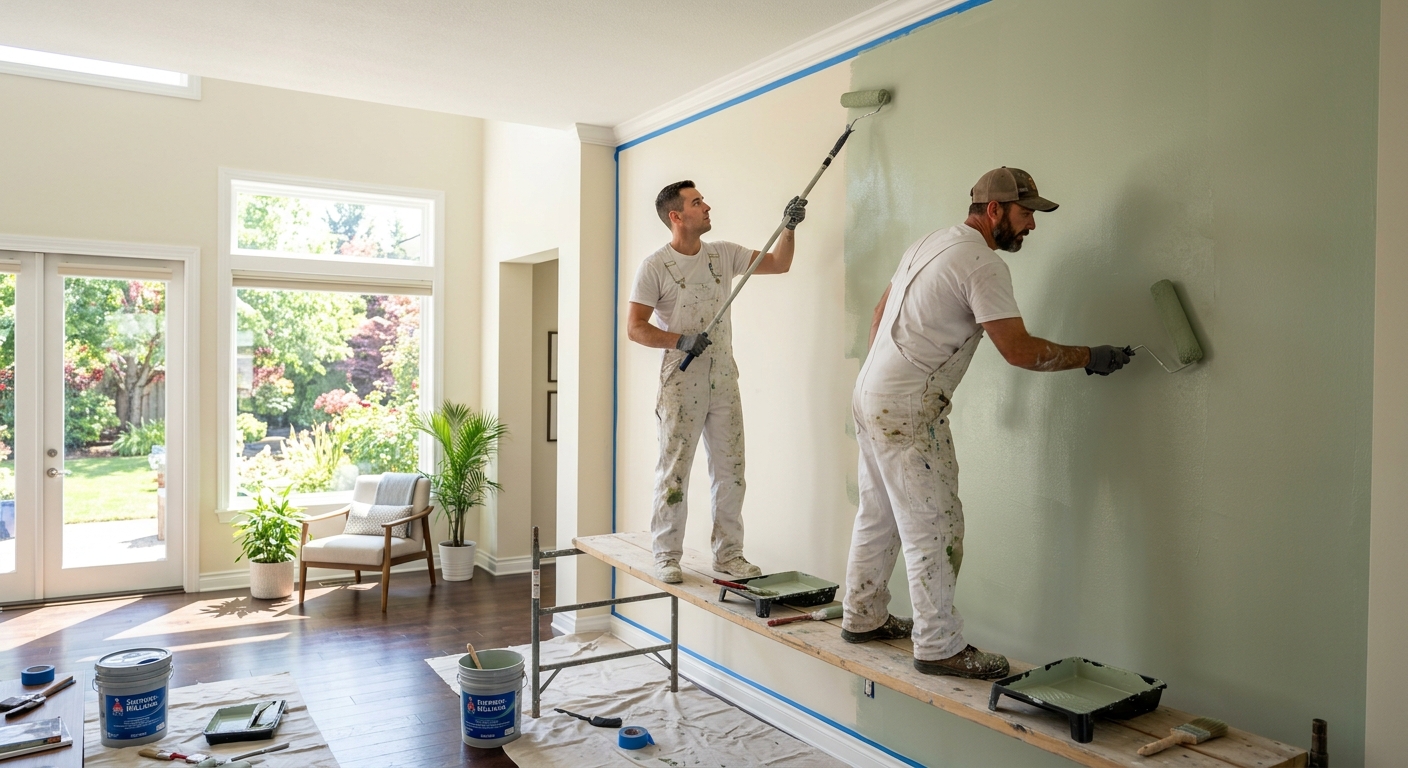
Painting options and costs in Dufferin Grove
Dufferin Grove homeowners typically have a range of painting options, from a simple interior refresh to a full exterior repaint. In this area of Toronto (Statistics Canada, 2021 Census), the city’s housing mix includes many pre-1980 homes, and that matters because older surfaces often need extra prep—scraping, sanding, patching, priming, and careful caulking—before paint can bond well. Also, Toronto’s population stood at 11,785 in the local profile area (Statistics Canada, 2021 Census), and demand in established neighbourhoods like Dufferin Grove can influence contractor scheduling, especially for exterior work.
Costs here are shaped less by coastal dampness and more by Ontario’s practical constraints: exterior painting runs on a narrow set of “ideal” stretches when temperatures are consistently above about 10°C for proper adhesion and curing, with rain and humidity spikes as the main variables. Because the GTA paint season is concentrated into late May–June and again September–mid-October, peak summer demand can add pressure on crews and materials—often nudging exterior pricing up compared to shoulder-season weeks.
If you’re on a street with older brick or wood trim, or you’re near the active commercial pockets around Dufferin Street and Dundas Street West, you’ll notice how quickly reputable crews book—so planning prep and scheduling around weather windows is part of controlling cost.
Below is a practical cost comparison to help you benchmark quotes before you narrow down scope with your painter.
| Service |
What's Included |
Typical Duration |
Price Range |
| Interior — whole home (walls, ceilings, trim) |
Move/cover items as agreed, protect floors, prep (patch/sand/caulk as needed), prime stained areas, paint walls/ceilings, paint trim/doors/handrails as specified |
5–12 days |
$2,000 – $6,000 |
| Interior — per room (standard bedroom or living room) |
Protect floors and fixtures, prep minor repairs, prime as needed, paint walls and ceiling; basic trim/door touch-ups included if in scope |
1–3 days |
$400 – $1,200 |
| Exterior — full house (siding, trim, soffits) |
Full surface prep, scrape/sand, caulk, prime bare spots, paint siding and trim/soffits; includes basic protection/cleanup |
2–4 weeks (weather-dependent) |
$3,500 – $8,000 |
| Exterior — trim and accent colours only |
Prep and prime trim surfaces only, caulk where required, paint trim/accents; excludes siding re-coating unless noted |
4–10 days |
$1,500 – $3,800 |
| Kitchen cabinet painting (doors, frames, spray finish) |
Remove/label doors (if agreed), degrease, sand, prime, spray doors/drawers and paint frames; hardware masking and reinstallation as specified |
5–14 days (plus dry/cure time) |
$1,600 – $4,000 |
| Specialty / faux finish (accent wall, texture) |
Surface prep for feature wall, custom finish application, sealing/clear coat where needed |
1–5 days |
$300 – $5,000 |
Prices are estimates only and vary by project scope, site access and material selection.
What affects the price of painting in Dufferin Grove
In Dufferin Grove and the wider Toronto area, two quotes for what sounds like the “same” painting job can differ by 30–50%. The main reason is that prep and risk management aren’t identical—surface condition, the number of paint layers, access complexity, and how carefully a contractor estimates drying/curing time. Interior and exterior can both be affected, but exterior is more sensitive to timing because GTA work depends on a short set of workable weeks.
For exterior painting in this region, the weather window is typically late May to early October, when temperatures are above about 10°C for application and follow-up curing (usually 24–48 hours). In Ontario, sudden rain and humidity spikes can force partial rework or extend timelines, which raises labour cost. Coastal BC often has a different constraint—persistent dampness that pushes higher-end mildew-resistant products and more cautious scheduling—whereas here the constraint is more about frost, rain and humidity swings than year-round moisture.
Older homes across the region are another big driver. On many pre-1980 repaints, surface preparation can be 50–70% of labour: scraping loose paint, sanding edges, patching, caulking, and priming stains or bare wood. That’s why an exterior repaint that starts around the exterior band of $1,500 – $8,000 can quickly move upward if multiple areas are failing or if lead-safe precautions are required on pre-1978 trim and railings.
Concrete examples from Dufferin Grove: a two-storey home with eaves and soffits often needs scaffolding/lifts, adding labour and protection costs; and a south-facing facade that cycles through sun-heated drying and sudden evening humidity can extend cure time, especially if a contractor is trying to stay on the ideal schedule. For interiors, a simple bedroom refresh can sit near $400 – $6,000 depending on sheen choice and whether ceilings need patching and priming, while a whole-home job climbs primarily due to trim detail and wall/ceiling prep.
| Price Factor |
Why It Matters |
Cost Impact |
| Surface prep — scraping, sanding, patching drywall or wood |
Determines adhesion and smoothness; older paint often needs more work than homeowners expect |
High: frequently the biggest swing (can be 50–70% of labour on repaints) |
| Number of coats — 2-coat system over primer vs. 1 coat over existing |
Coverage and durability; one heavy coat can look fine but wears faster |
Medium to high: additional coat increases time and material by roughly 10–25% |
| Paint quality tier — contractor-grade vs. premium (Benjamin Moore, Sherwin) |
Hide, washability, and longevity vary; premium often reduces recoat frequency |
Low to medium: often 5–15% difference in total project cost |
| Ceilings and trim — adds significant time vs. walls-only |
Ceilings, crown moulding, doors and rails require more masking and cutting in |
Medium: trim-heavy homes can add 10–30% labour |
| Exterior season window — short season raises summer rates |
Fewer “ideal” weeks mean higher demand and scheduling pressure |
Medium: can add roughly 10–15% during June–August |
| Lead-safe precautions — required for pre-1978 homes with lead paint |
Professional safety steps increase prep time and disposal requirements |
Medium to high: can add several hours to multiple days depending on surfaces |
| Surface material — drywall vs. plaster vs. wood vs. stucco |
Different substrate needs different primers and prep intensity |
Medium: mismatched primer can fail early, increasing cost |
| Height and access — multi-storey exterior requires scaffolding or lifts |
Safe access drives labour, equipment, and protection |
High on multi-storey homes: often one of the biggest exterior adders |
Permits & regulations in Ontario
For painting in Ontario, permits are generally not required for typical interior or exterior repainting. Homeowners usually don’t need to pull a permit for the act of painting itself—your focus should be on safe work practices, proper surface preparation, and a clearly written contract. Where regulations and guidelines matter is health and safety, especially in older homes: for homes built before 1978, lead-paint guidelines recommend testing before sanding or scraping, and using lead-safe methods (wet methods to control dust, HEPA vacuuming, and proper disposal) if lead is present. This is not always legally mandated for homeowners in the same way it is for contractors doing occupational work, but professional contractors treat it as standard practice.
Also confirm your contractor carries the right coverage: liability insurance and WSIB (or applicable workers’ compensation coverage for their work). A good quote package should include the paint brand/product line, sheen, number of coats, and exactly which prep tasks are included (for example: scraping loose paint, priming bare wood, caulking in exterior scope).
How to verify in Dufferin Grove step-by-step:
- Ask for the contractor’s proof of liability insurance—review the certificate and ensure it matches the company name on the contract.
- Ask for WSIB/WCB clearance or evidence of coverage, and confirm the policy is active.
- Get a written scope that lists prep steps and what is excluded (repairs, replacement, mould remediation, disposal).
- If you’re in a pre-1978 home, request their lead-safe approach: test plan (if offered), containment practices, and disposal method.
- Use the certificate expiry dates and review the contractor’s contact info consistency on every document you’re given.
Interior vs exterior painting — getting the best result in Dufferin Grove
In Dufferin Grove’s Toronto climate, the difference between a long-lasting paint job and a premature failure is usually prep, timing, and the correct system for the surface. For interiors, buyers often fixate on the paint brand, but homeowners get better durability by prioritizing surface prep: filling and sanding dents, tightening cracks, caulking where appropriate, and priming repaired or stained areas. Sheen selection also affects wear and cleanability. A flat finish can hide wall imperfections but scuffs more in hallways; eggshell or satin is often a better balance for everyday living, while semi-gloss on trim withstands cleaning without looking dull.
A simple rule that pays off: two proper coats over a suitable primer almost always outlasts one thick coat. If you’re repainting a good-condition room, you may get away with $400 – $1,200 per room, but if ceilings and trim need patching and priming, that’s where labour time expands—moving the project toward the higher end of typical interior ranges.
For exteriors, the system matters even more. Caulk before painting to prevent water ingress at seams, use a primer matched to the substrate (wood vs. fibre cement vs. previously painted surfaces), and ensure temperatures and humidity allow curing. Ontario’s freeze–thaw cycles and rain events can stress weak prep; if the surface isn’t scraped, sanded, and primed properly, paint can fail sooner even when the topcoat looks fine.
Budget note: if you want the look of a new kitchen without replacement, cabinet painting can be a cost-efficient alternative. In Dufferin Grove, cabinet spray painting is often priced within the cabinet/trim band, but it depends heavily on surface prep and whether doors/drawers are sprayed for a smooth finish. For pre-1978 homes, discuss lead-safe precautions before sanding old trim or railings.
For example, spending a few extra hours on exterior caulking and primer for bare spots can prevent costly “repaint sooner” outcomes—often saving far more than the delta between a basic prep approach and a full prep approach within the $1,500 – $8,000 exterior bands.
| Project Type |
Key Prep Step |
Recommended Coats |
Price Band |
| Interior — fresh drywall (new construction) |
Prime new drywall thoroughly, address joint compound texture and suction |
Primer + 2 top coats |
$800 – $2,500 |
| Interior — repaint (good condition, no repairs) |
Clean and lightly sand, spot-prime if needed for uniform sheen |
1–2 top coats depending on colour change; typically 2 |
$400 – $1,200 |
| Interior — repaint (patching and priming needed) |
Patch, sand flush, prime repaired areas so texture doesn’t “ghost” |
Primer + 2 top coats |
$600 – $1,800 |
| Exterior siding (wood or fibre cement) |
Scrape/sand to stable surface, caulk critical joints, prime bare spots |
Primer + 2 top coats (system-dependent) |
$3,500 – $8,000 |
| Exterior trim and accents only |
Remove peeling paint, sand edges smooth, caulk cracks before paint |
Primer + 2 top coats on suspect areas; otherwise 2 |
$1,500 – $3,800 |
| Kitchen cabinets (spray finish) |
Degrease and sand, then prime for adhesion; mask carefully for clean edges |
Primer + 2 top coats (sprayed) |
$1,600 – $4,000 |
How to choose a painting contractor in Dufferin Grove
Choosing the right contractor in Dufferin Grove comes down to verifying coverage, getting itemised quotes, and making sure the scope matches what you want. First, confirm Ontario coverage documents: ask for a certificate of liability insurance (make sure it lists the contracting company and is current) and request proof of WSIB/WCB coverage so you’re not exposed if a worker is injured. If you can’t get clear documentation quickly, that’s a red flag.
Next, require 2–3 written, itemised quotes—labour and materials broken out—rather than only a lump sum. The scope should state what’s included (scraping, sanding, priming, caulking, cleanup and disposal) and what’s excluded (mould remediation, drywall replacement, lead testing, furniture moves beyond protection). Also clarify whether permits are included where applicable (for painting itself, permits are typically not required, but other work like structural changes can trigger permitting).
Warranty matters: ask for a workmanship warranty length, whether it covers peeling/blistering and how “failure” is defined, and whether manufacturer product warranties are included and transferred to you. Payment schedules should be controlled—never more than 10–15% upfront, with the remainder tied to milestones or a holdback until the job is complete and cleaned.
Finally, get a start date and completion estimate in writing, tied to weather expectations for exterior painting. A contractor should be transparent that Ontario’s short exterior season means they may start in late May–June, and schedule again in September, depending on temperature and rain windows.
- Confirm liability insurance is current and matches the legal company name on the contract.
- Request WSIB/WCB coverage proof before work begins.
- Get quotes itemised by labour, materials, and surface prep tasks.
- Ensure scope explicitly includes scraping/sanding, caulking, and priming where needed.
- Ask what products and sheens are specified (brand and line), not “equivalent.”
- Clarify how many coats are guaranteed and where a primer is required.
- Confirm how cleanup is handled, including disposal of paint debris and masking.
- Ask how they protect floors, landscaping, windows and light fixtures.
- For pre-1978 homes, discuss lead-safe precautions up front.
- Review the warranty terms in writing and ask how claims are processed.
- Check payment schedule: max 10–15% deposit; holdback until completion.
- Get a written timeline and weather contingency for exterior work.
Red flags to watch in Dufferin Grove: (1) quotes that skip surface prep or don’t mention caulking/priming; (2) no proof of WSIB/WCB or an outdated insurance certificate; (3) vague “we use good paint” language without brand/sheens; (4) asking for large upfront payments (over 15%); and (5) no clear warranty or no written contract spelling out coats and prep.
Frequently asked questions — painting in Dufferin Grove
How much does interior painting cost per room in Dufferin Grove?
In Dufferin Grove, interior painting per room typically depends on prep needs and whether trim/doors are included. For a standard bedroom or living room in good condition (minimal repairs, basic prep), many projects fall around the lower interior range of roughly $400 – $1,200 per room. If the room needs patching, sanding, and primer—especially for ceiling repairs or colour changes—pricing commonly moves toward the upper end of that band because prep time is the labour driver. Sheen selection also matters: flat finishes can hide imperfections but scuff more, while eggshell/satin can reduce touch-ups over time. (Statistics Canada, 2021 Census)
When is the best time for exterior painting in Dufferin Grove?
The best timing in Ontario’s Toronto region is when you can secure a few consecutive days of warm weather and allow curing without rain interruption. Typically, exterior contractors target late May through June and then again from September to mid-October, when temperatures stay around 10°C or higher for at least 24–48 hours after application. June–August can be pricier because demand compresses into a short season and humidity/rain events still happen. If your house has lots of trim or soffits, scheduling earlier in the season can help avoid schedule squeezes later, especially in established neighbourhoods like Dufferin Grove where crews book quickly.
How many coats of paint do I need?
Most homeowners need a two-coat topcoat for consistent coverage and long-term durability, but the exact number depends on substrate condition and colour change. For interior repainting in good condition, a well-prepped surface may take 1–2 coats; many contractors still plan for 2 coats to keep sheen uniform. When there are repairs, bare patches, or stained areas, expect primer plus 2 top coats. For exteriors, a paint system commonly uses primer plus 2 top coats, with extra primer where wood is bare or where adhesion is compromised. The key is not “thicker is better”—it’s correct systems and proper drying between coats.
What paint is best for Dufferin Grove's climate?
For Dufferin Grove, the best choice balances exterior durability with Ontario’s practical weather realities: freeze–thaw cycles, wind-driven rain, and periods of higher humidity. In most cases, choose a quality exterior coating designed for local temperature swings and substrate type (wood vs. fibre cement vs. previously painted surfaces). The contractor should match the primer to the surface—using the right bonding primer where adhesion is at risk—because primer issues are a common reason for early failures. While mildew-resistant products are crucial in consistently damp coastal climates, here the bigger factors are rain timing and proper curing. For interiors, washable interior wall finishes (eggshell/satin where appropriate) tend to hold up better for everyday cleaning.
How long does exterior paint last here?
With proper prep and correct coating systems, many exterior paint jobs in the GTA can last several years before you start seeing fading or minor wear, but the actual lifespan depends heavily on preparation and your exposure (sun, rain streaking, wind, and any failing caulk). If the surface had peeling paint that wasn’t fully scraped or if primer/caulking wasn’t handled correctly, you can see problems sooner because moisture gets behind the coating. That’s why a “cheap” quote can sometimes cost more—repainting early. In this market, homeowners planning a budget often look at the exterior band of $1,500 – $8,000 and compare how much prep and system work each contractor includes, not just the topcoat price.
Should I paint or replace my cabinets?
In many Dufferin Grove kitchens, painting cabinets is the smarter first move because it delivers a big visual upgrade at a fraction of replacement cost—especially if boxes and doors are still structurally sound. Cabinet painting (typically sprayed for a smooth finish) is often priced within the cabinet painting band of $600 – $4,000, depending on the scope, number of doors/drawers, and whether the finish needs heavy sanding/priming. Replacement makes sense when cabinets are damaged, warped, or swollen beyond what refinishing can correct. Painting is also where good prep counts: thorough degreasing, correct primer adhesion, and controlled dry/cure time are what make the finish last.