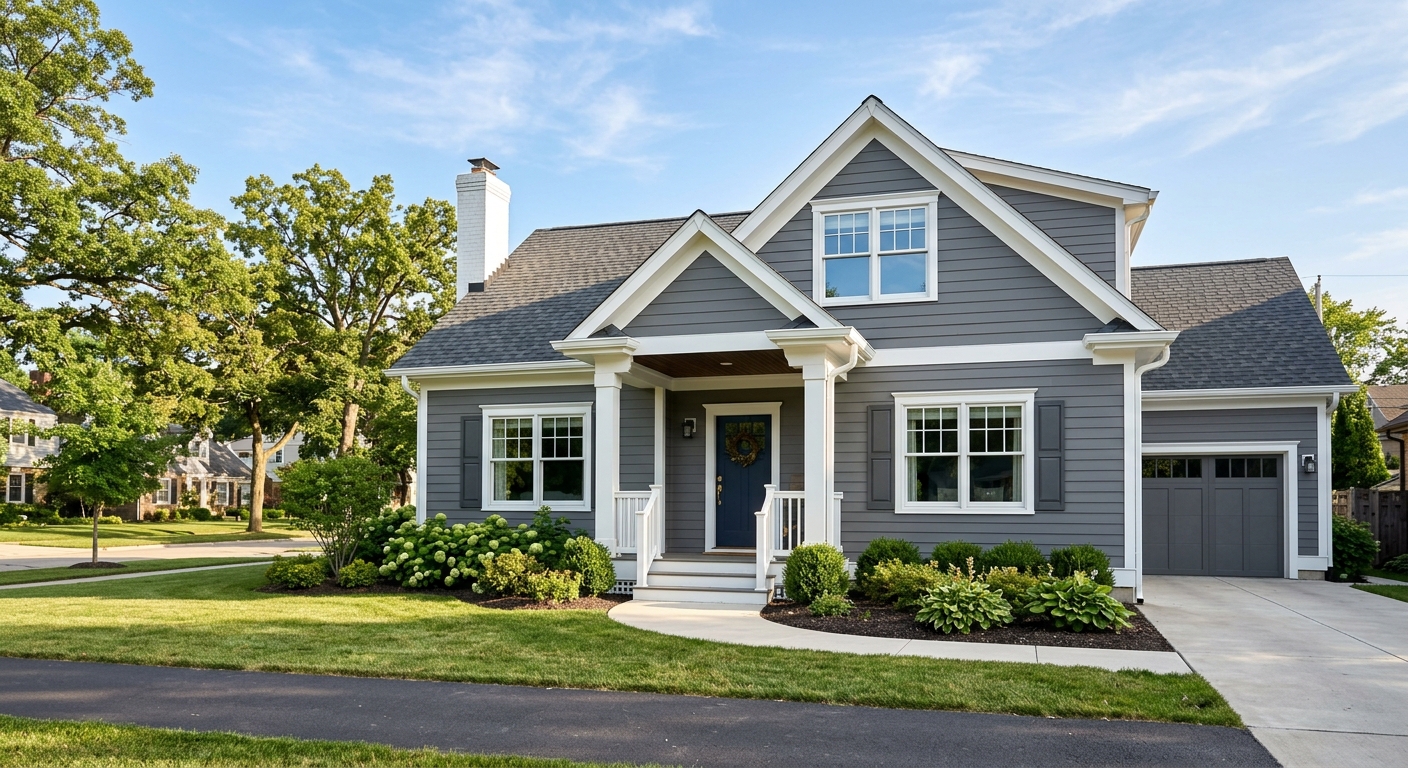
Painting options and costs in O'Connor-Parkview
In O'Connor-Parkview, Ontario, homeowners typically choose between refresh-level interior work and more weather-critical exterior repaints. With a population of 18,675 in the local profile area (Statistics Canada, 2021 Census), you’ll see a steady flow of family homes and older properties changing hands—and those pre-existing paint layers matter. In the GTA, a large portion of homes are pre-1980, which usually means more scraping, sanding, caulking, and priming than people expect, especially on trim, railings, and window frames.
Toronto-area exterior painting also has a shorter, climate-dependent season. Contractors commonly work late May through June, then again September to mid-October, when temperatures stay around 10°C+ for at least 24–48 hours and humidity is moderate enough for adhesion and proper curing. Because peak summer demand concentrates labour, exterior pricing often runs about 10–15% higher in June to August compared with shoulder-season work. Interior painting, by contrast, is generally year-round; costs hinge more on labour intensity (ceilings, trim, stairwells, masking and clean-up) and the finish level you want.
If your home is in high-demand pocket areas such as the O'Connor/nearby transit corridor where neighbourhood turnovers are common, booking earlier helps lock in scheduling—and often improves value. From there, it’s easiest to compare options side-by-side, starting with the typical scopes and durations below.
| Service |
What's Included |
Typical Duration |
Price Range |
| Interior — whole home (walls, ceilings, trim) |
Patch and sand (minor repairs), caulking, primer where needed, paint for walls/ceilings, full trim including doors; basic masking and protection; cleanup and removal of debris |
5–10 business days (depending on home size and access) |
$2,200 – $6,000 |
| Interior — per room (standard bedroom or living room) |
Prep and patching (minor), prime where required, 2-coat coverage on walls; ceiling paint as specified; trim spot touch-ups or full trim (per scope) |
1–3 business days per room |
$400 – $1,600 |
| Exterior — full house (siding, trim, soffits) |
Power washing, scraping/sanding, caulking, spot-priming, 2-coat exterior system; paint for siding and trim/soffits; protection of landscaping and hardware; final cleanup |
7–15 business days (weather-dependent) |
$3,500 – $8,000 |
| Exterior — trim and accent colours only |
Surface prep on painted trim areas, caulking and primer where needed; 2-coat coverage on trim/accent elements; protection and cleanup |
3–7 business days |
$1,500 – $4,800 |
| Kitchen cabinet painting (doors, frames, spray finish) |
Remove/label doors (as applicable), degrease and sand, bonding primer, spray or brushed enamel finish; hardware masking; re-install and final touch-up |
5–12 business days (plus dry/cure time) |
$1,200 – $4,000 |
| Specialty / faux finish (accent wall, texture) |
Surface sealing and preparation, base coat and specialty application, 1–2 additional finish steps; protective topcoat as required |
1–5 business days |
$700 – $2,800 |
Prices are estimates only and vary by project scope, site access and material selection.
What affects the price of painting in O'Connor-Parkview
In O'Connor-Parkview and across the Toronto region, two contractors can price the “same” painting scope 30–50% apart—and it usually comes down to preparation, product systems, and scheduling pressure. Exterior work is the clearest example: in the GTA, the ideal window for exterior painting is late May to early October when temperatures remain above about 10°C for proper application and curing. That tight season means fewer ideal weeks, higher demand in June–August, and less flexibility when a rainy stretch hits. Coastal BC often has a longer calendar but higher humidity and mildew pressure; here, the main constraints are frost, rain, and humidity spikes rather than persistent dampness, which changes product choices and the pace of the job.
Preparation dominates cost, especially on repainting jobs in older stock—many homes built before 1980 need more scraping, caulking, and priming because paint has multiple layers and may be failing around trim edges and window surrounds. In practice, surface prep can be 50–70% of labour on a repaint. That can push an exterior repaint from a mid-band option (around the $1,500–$8,000 region) toward the upper end when the house has deteriorated caulk, peeling trim, or rough substrates.
Concrete examples you’ll see locally: (1) a trim-focused job on intact surfaces may stay closer to $1,500–$4,800, while (2) a full house exterior repaint with widespread scraping and primer can quickly approach the $3,500–$8,000 band. On the interior side, adding ceilings, stairwells, and trim can move a per-room repaint toward the higher end of the $400–$6,000 interior backbone range, because masking and edge-work multiply labour time.
| Price Factor |
Why It Matters |
Cost Impact |
| Surface prep — scraping, sanding, patching drywall or wood |
Determines adhesion and longevity; older homes need more repair and feathering |
Can add 20–60% depending on condition |
| Number of coats — 2-coat system over primer vs. 1 coat over existing |
Coverage and colour consistency; proper primer blocks staining and flashes |
Typically +10–25% for an upgraded 2-coat system |
| Paint quality tier — contractor-grade vs. premium (Benjamin Moore, Sherwin) |
Premium lines usually offer better hide, durability, and washability |
Materials may shift 5–20%, but labour stays similar |
| Ceilings and trim — adds significant time vs. walls-only |
Ceilings, crown moulding, and doors require extra masking and cutting-in |
Often +15–40% for trim-heavy scopes |
| Exterior season window — short season raises summer rates |
Limited ideal weather increases scheduling cost and risk of downtime |
Can move exterior pricing 10–15% higher in June–August |
| Lead-safe precautions — required for pre-1978 homes with lead paint |
Safety planning affects containment, clean-up method, and disposal |
Can add 10–30% where lead is confirmed or likely |
| Surface material — drywall vs. plaster vs. wood vs. stucco |
Different porosity and movement require different primers and prep methods |
Can add 5–25% based on substrate and adhesion needs |
| Height and access — multi-storey exterior requires scaffolding or lifts |
More labour and rental gear for safe, even coverage |
Often +10–35% for multi-storey access challenges |
Permits & regulations in Ontario
For painting in Ontario, permits are generally not required for typical residential interior or exterior painting projects. The one area that changes the compliance conversation is older housing: for homes built before 1978, health guidelines recommend considering lead paint risk before sanding, scraping, or using dry abrasive methods. Professional contractors typically follow lead-safe work practices even when homeowners aren’t legally required to—things like wet methods to control dust, HEPA vacuuming, and proper disposal of dust and debris if lead is present. This is about controlling exposure during preparation, where most of the airborne risk comes from.
Beyond permits, you should verify three practical items before work starts. First, confirm the contractor carries liability insurance (so you’re protected if there’s accidental property damage or injury). Second, ensure they have workers’ compensation coverage (WSIB/WCB), which matters if a worker is injured on your property. Third, insist on a written contract that specifies the paint brand and line, sheen level, number of coats, primer type, surface prep scope (including what happens to peeling areas), and disposal/cleanup responsibilities.
To check coverage in O'Connor-Parkview step-by-step: (1) ask for a certificate of insurance naming you/your property as applicable; (2) request WSIB/WCB proof or a coverage number; (3) confirm any applicable business details through the contractor’s official listing; and (4) ensure the contract clearly lists the exact prep and coating system so there’s no ambiguity about “repair” versus “touch-up.”
Interior vs exterior painting — getting the best result in O'Connor-Parkview
Getting a long-lasting finish in O'Connor-Parkview starts with matching prep and product to how the surface behaves in Toronto’s climate. For interiors, premature failure is usually a prep issue, not a paint-brand issue. Filling and sanding, spot-priming stains or repairs, and cleaning residue off surfaces matter more than whether you choose a mid-tier versus premium topcoat. Sheen also controls durability: flat can hide wall imperfections but scuffs more; eggshell is a common living-area compromise; satin or semi-gloss typically holds up better in higher-touch areas. Realistically, two coats over the correct primer beats one “thick” coat every time—better coverage reduces flashing and improves washability for daily life.
For exteriors, Ontario’s freeze–thaw cycles and humidity swings make surface prep and caulking critical. Scrape off anything loose, feather edges, then prime bare spots correctly—paint won’t stick to failing substrate. Caulking before painting helps prevent water ingress behind trim and around window/door edges, which is where peeling often begins. Primer choice matters by substrate and condition; you may need different systems for wood versus fibre cement or masonry repairs. While mildew-resistant products are a bigger driver in coastal BC, the GTA still benefits from proper stain-blocking and good surface management where water sits.
Cabinet painting is a smart budget alternative to replacement when boxes are in good condition; you’re mainly paying for degreasing, sanding, priming, and a durable enamel topcoat. For example, if replacing kitchen cabinets would push your project beyond the typical specialty bands, repainting often lands closer to the cabinet painting range (around $1,200–$4,000) because the scope is targeted—surfaces only, not demolition and reinstall.
| Project Type |
Key Prep Step |
Recommended Coats |
Price Band |
| Interior — fresh drywall (new construction) |
Seal and prime for uniform absorption; fill and sand joints |
Primer + 2 coats |
$1,000 – $4,500 |
| Interior — repaint (good condition, no repairs) |
Wash/degrease, light sand if needed, mask and protect |
2 coats (spot-prime only as required) |
$400 – $2,200 |
| Interior — repaint (patching and priming needed) |
Patch, sand, and prime repaired areas; stain-block as required |
1 coat primer + 2 coats topcoat |
$700 – $3,500 |
| Exterior siding (wood or fibre cement) |
Power wash, scrape loose paint, sand feather edges, correct caulking |
Primer where bare spots exist + 2 coats system |
$3,500 – $8,000 |
| Exterior trim and accents only |
Prep exposed trim edges and spot-prime bare/failed areas |
2 coats on trim; spot-prime as needed |
$1,500 – $4,800 |
| Kitchen cabinets (spray finish) |
Degrease, sand for bonding, bonding primer, controlled spray finish |
Primer + 2 finish coats (or as system requires) |
$1,200 – $4,000 |
How to choose a painting contractor in O'Connor-Parkview
In O'Connor-Parkview, the best quotes come from contractors who can prove coverage and clearly define scope—not just from the lowest line price. Start by verifying insurance: ask for a certificate of liability insurance and confirm the policy is active and covers residential work. Next, confirm workers’ compensation coverage (WSIB/WCB). Your contractor should be able to provide proof or a coverage number that you can keep on file with your contract documents.
Then, request 2–3 itemised written quotes that split labour and materials rather than giving a single lump sum. Itemisation should show prep steps (power washing, scraping, patching, caulking, primer types), number of coats, paint line, and whether trim/doors are included fully. Check what’s excluded: furniture moving and re-installation, lead-safe containment if applicable, permit work (usually none for painting), waste hauling, and disposal of old paint dust/debris. A good scope will also state whether the contractor includes spot-priming on bare wood and how they handle stains.
Warranty matters for long-term value. Ask for a workmanship warranty length and confirm whether the product/manufacturer warranty applies only if the correct primer system is used. For payment, a safe schedule is never more than 10–15% upfront; hold back the remainder until the final walkthrough and touch-ups are complete. Finally, get the timeline and weather contingency in writing—start date, expected duration, and how rain or humidity delays affect the schedule.
- Confirm liability insurance is current and request the certificate before the job starts.
- Confirm WSIB/WCB coverage for workers (request proof or coverage number).
- Insist on an itemised quote: labour, materials, primer system, coats, and prep.
- Ask what’s included in surface prep and what’s “extra” if more repairs are found.
- Verify the paint brand/line and sheen levels (eggshell, satin, semi-gloss) by room.
- Ask whether power washing and caulking are included in exterior pricing.
- Confirm disposal and cleanup are included (brushes, tarps, dust, waste haul-away).
- Get a written schedule with start date and completion estimate.
- Check warranty: workmanship length and how it’s handled after completion.
- Confirm the product warranty conditions (correct primer system, surface prep, application).
- Use a payment schedule with a small deposit (10–15%) and a holdback until the walkthrough.
- Ask who supplies masks, plastic containment, and PPE if lead-safe precautions are needed.
Red flags I see in O'Connor-Parkview: (1) vague scopes like “prep and paint” with no primer or coat counts; (2) unwillingness to show proof of insurance and WSIB/WCB; (3) pressure to pay most of the cost upfront; (4) promising exterior work regardless of rain/humidity without weather contingencies; and (5) no written warranty terms or unclear responsibility for peeling due to poor surface prep.
Frequently asked questions — painting in O'Connor-Parkview
Do I need to worry about lead paint in an older O'Connor-Parkview home?
If your O'Connor-Parkview home is older (especially pre-1978), it’s sensible to treat lead as a possibility before sanding or scraping. Ontario doesn’t typically require permits for painting, but lead-safe work practices are standard for professional contractors because preparation can create hazardous dust. A reputable contractor should discuss how they’ll control dust (wet methods, HEPA vacuuming, and proper disposal if lead is confirmed or likely) and what procedures they’ll use on trim, windows, railings, and any peeling paint. If you’re planning to sand aggressively or remove old paint from multiple exterior edges, ask whether they can test the paint or how they would proceed safely. Cost-wise, lead-safe precautions can affect pricing; exterior jobs in the typical $3,500–$8,000 range may move toward the higher end if containment and extra cleanup are required.
How long does it take to paint a house?
For interior painting in Ontario, many crews can complete a good-sized occupied home in about 5–10 business days for whole-home work, depending on ceiling height, number of rooms, and how much trim is included. If you’re painting per room (for example, a standard bedroom or living room), plan for roughly 1–3 business days per room. Exterior timelines are more weather-dependent in the GTA. Typical full-house exterior work often takes 7–15 business days, but delays happen when rain moves in or when temperatures won’t support proper curing. That’s why contractors often schedule late May through June and then again September to mid-October. If your goal is a mid-summer completion, expect tighter scheduling pressure and plan around the contractor’s availability.
What's the difference between paint quality tiers?
Paint quality tiers usually show up in hide/coverage, durability, and how the finish cleans over time. Premium lines (commonly used by contractors) tend to spread more evenly, resist scuffing and staining better, and provide more consistent colour with fewer issues like flashing. Contractor-grade products can still look great when prep and primer are correct, but you may need to pay closer attention to the number of coats and sheen choice. For homeowners comparing quotes, don’t look only at the price of paint—ask what system is specified: primer type, stain-blocking (if needed), and whether you’re getting a true 2-coat topcoat. On the interior side, this can determine whether a job stays closer to a lower end of the range (for instance, $400–$1,600 per room) or requires extra coats and labour because of coverage differences.
How do I compare painting quotes?
In O'Connor-Parkview, the best way to compare quotes is to line them up by scope, not by the final total. Ask each contractor to itemise labour and materials and to specify: prep steps (power washing, scraping, sanding, patching), caulking, primer type, number of coats, paint brand/line, and sheen. Confirm disposal and cleanup: who hauls away waste and how dust is managed. Also check exclusions—often masking, moving furniture, or extra repairs beyond “minor patching” are priced separately. For exterior work, ask about weather contingencies since the ideal GTA window depends on temperatures staying around 10°C+ and curing time. If one quote for trim-only work is closer to the lower end (about $1,500–$4,800) but another includes full siding prep and spot-priming, the difference is usually justified by the extra prep labour.
What paint sheen should I use in different rooms?
Sheen choice is both about appearance and durability in an Ontario home. For most living rooms and bedrooms, eggshell is a common choice because it offers good washability while keeping walls looking smooth. Kitchens and hallways often benefit from satin or an equivalent scrub-friendly finish since they take more hand contact and grease from cooking vapours. Bathrooms typically need a harder, more moisture-tolerant finish and proper ventilation—satin is frequently used because it withstands cleaning better than flat. Ceilings are often painted flat for a uniform look and reduced glare. If your walls have minor imperfections, a slightly lower sheen can hide them, but scuffing resistance will drop. Ask your contractor to match sheen to traffic and to the cleaning routine you expect.
Can I paint my house exterior in spring or fall in O'Connor-Parkview?
Yes—spring and fall can be great in O'Connor-Parkview, as long as temperatures and drying conditions are suitable for proper adhesion and curing. In the GTA, contractors typically target late May through June and then September to mid-October, when temperatures are commonly above about 10°C for 24–48 hours and humidity is manageable. Early spring can be too cool or wet, which increases the risk of poor bond and longer dry times; late fall can bring frosts that interrupt cure. The upside of shoulder-season work is sometimes more scheduling availability than peak June–August. If you’re considering spring or fall exterior painting, ask your contractor how they’ll monitor forecast windows and whether they’ll pause work if humidity spikes or rain is likely—this protects the finish and helps keep the project within the typical exterior range.