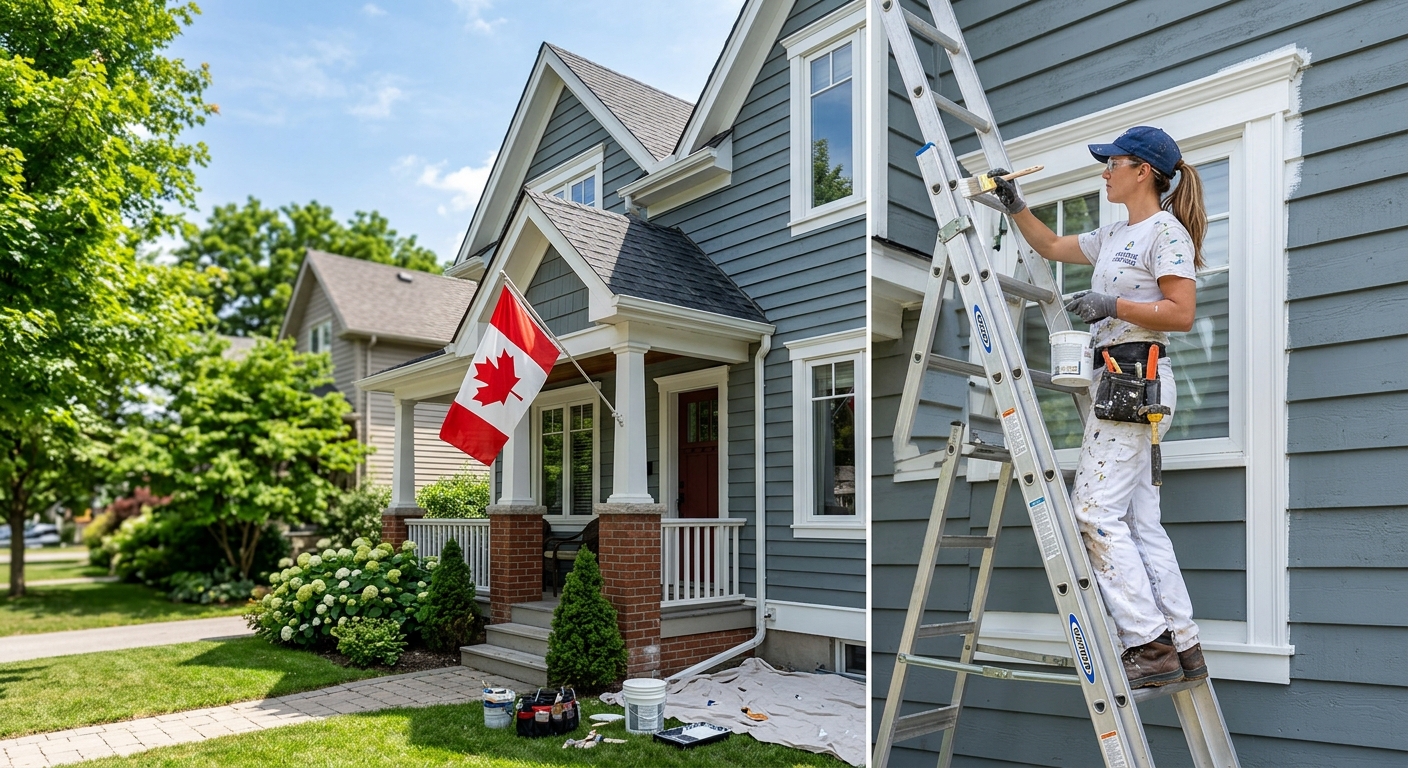
Painting options and costs in Upper Delbrook
Upper Delbrook homeowners usually have a clear idea of what they want—“fresh paint”—but the cost in real life depends on what’s already on the walls, how much prep is needed, and how the coastal climate behaves around your schedule. With a population of 1,186 (Statistics Canada, 2021 Census), Upper Delbrook is a smaller pocket where reputable crews can be booked quickly, especially for exterior work. And because much of the Lower Mainland–Southwest housing stock is mid-century through the 1990s, many repaints involve more than a simple topcoat: scraping failing coatings, patching settlement cracks, and using stain-blocking primer for nicotine or wood tannins. For pre-1978 homes, contractors often use lead-paint–safe practices to protect occupants and workers if older coatings are disturbed (lead-safe work is standard practice for professionals in British Columbia, even when it isn’t a homeowner permit issue).
In the Lower Mainland–Southwest, the main cost pressure on exterior painting isn’t extreme cold—it’s rain and humidity. Weather windows are manageable, but crews must mobilize between dry stretches, slow drying times are common, and mildew-resistant, high-adhesion coatings matter. That’s why you’ll see interior work priced more steadily through fall and winter, while exterior can spike when summer demand concentrates. This is especially noticeable around the Lynn Valley / Edgemont corridor where ongoing renovations keep painters in high demand.
Use the table below to compare typical scopes side-by-side, then we can narrow the number with a quick look at your surfaces and a proposed prep plan.
| Service |
What's Included |
Typical Duration |
Price Range |
| Interior — whole home (walls, ceilings, trim) |
Move-protect, surface cleaning, patch/sand, prime where needed, 2-coat finish on walls/ceilings, caulking where required, paint trim/enamel, clean-up |
3–10 days |
$3,200–$8,000 |
| Interior — per room (standard bedroom or living room) |
Protect floors/fixtures, prep and patch, prime stains as required, 2-coat finish on walls, optional ceiling coat, basic trim touch-ups |
1–3 days |
$650–$2,200 |
| Exterior — full house (siding, trim, soffits) |
Pressure wash (where appropriate), scrape/chip failing areas, prime bare spots, caulk cracks/open joints, 2-coat exterior system, back-roll where needed, thorough clean-up |
5–14 days |
$6,000–$15,000 |
| Exterior — trim and accent colours only |
Patch/scuff prep, spot-prime as required, caulking for open seams, 2-coat trim/enamel or specialty coating, mask/protect surrounding surfaces |
2–6 days |
$1,200–$5,800 |
| Kitchen cabinet painting (doors, frames, spray finish) |
Degrease and sand, fill/spot prime, spray or high-build enamels, hardware masking or light handling, 2–3 finish coats, reinstallation and cleanup |
4–12 days (including cure time) |
$2,400–$7,800 |
| Specialty / faux finish (accent wall, texture) |
Surface build-up/patching as needed, base coat(s), finish coat(s), specialized tools/technique, protective topcoat where appropriate |
1–6 days |
$900–$6,500 |
Prices are estimates only and vary by project scope, site access and material selection.
What affects the price of painting in Upper Delbrook
Even when two contractors quote the “same paint colour,” the numbers across the Lower Mainland–Southwest can differ by 30–50% because pricing responds to prep complexity, coating performance requirements, and how crews are booked during weather. Coastal BC also changes the economics: exterior timelines are more weather-bound than interiors, and higher humidity means painters must plan for slower drying and more careful surface readiness. That’s very different from Ontario and Alberta, where crews often chase a clearer late-spring to early-fall window (temperatures generally need to be above 10°C and rising for reliable application). In Upper Delbrook, the exterior season can feel long, but it’s interrupted by damp shoulder-season conditions—so mobilization and re-mobilization between dry stretches is built into the cost. On older homes in the area, scraping, caulking, patching, and priming can take 50–70% of the total labour on a repainting job; the topcoat is often the cheaper part.
Here are concrete examples from Upper Delbrook projects that move the price:
- Peeling or chalking on older siding/trim: one repaint might be “spot-prime and paint,” but if adhesion has failed, the scope shifts toward wider scraping and more primer, pushing exterior budgets toward the $6,000–$15,000 band.
- Stains on ceilings or stairwells: nicotine/wood tannins typically require stain-blocking primer. Skipping primer saves money short-term but increases rework risk.
- Ceilings and ornate trim: adding crown moulding, baseboards, and multiple fine-finish coats can move you from per-room totals into whole-home work around the $3,200–$8,000 range.
The bottom line: if your quote focuses only on “paint” and not on how the contractor will make surfaces sound and dry for adhesion, you’re likely comparing apples to oranges.
| Price Factor |
Why It Matters |
Cost Impact |
| Surface prep — scraping, sanding, patching drywall or wood |
Prep is the foundation for adhesion and smoothness; failing coatings must be removed or stabilized |
High: often 40–70% of labour on repaints |
| Number of coats — 2-coat system over primer vs. 1 coat over existing |
Coat count affects coverage, hide, and durability (especially over repaired/primed areas) |
Medium to high: can add 10–25% to labour |
| Paint quality tier — contractor-grade vs. premium (Benjamin Moore, Sherwin) |
Higher-tier products often provide better coverage, consistency, and stain resistance |
Low to medium: material upcharge, sometimes offset by fewer coats |
| Ceilings and trim — adds significant time vs. walls-only |
Trim work requires careful masking, edge-cutting, sanding between coats, and clean lines |
Medium: typically +15–35% versus walls-only |
| Exterior season window — short season raises summer rates |
Weather windows drive scheduling and labour demand |
Medium to high: peak-season premiums or added mobilization |
| Lead-safe precautions — required for pre-1978 homes with lead paint |
Containment, HEPA cleanup, and disposal take time if lead-bearing materials are disturbed |
Medium: can add 10–30% depending on conditions |
| Surface material — drywall vs. plaster vs. wood vs. stucco |
Different substrates require different primers and prep methods for adhesion and cracking |
Medium: primer and prep complexity vary widely |
| Height and access — multi-storey exterior requires scaffolding or lifts |
Safety and setup time directly affect labour cost |
Medium to high: can add 20–40% on two-storey work |
Permits & regulations in British Columbia
In British Columbia, painting generally does not require a permit. For homes built before 1978, health guidelines recommend testing for lead paint before sanding, scraping, or otherwise disturbing older coatings. If lead is present, lead-safe work practices are the professional standard: wet methods to control dust, HEPA vacuuming, proper containment and cleanup, and responsible disposal of debris. While this is not typically “legal permit work” for homeowners, licensed contractors in BC treat it as mandatory for safe jobsite control and to meet occupational health expectations.
Separately, some building-related activities can trigger other requirements, but painting itself—like interior wall repainting, repainting trim, or exterior coating with proper prep—usually does not. What can be permit-adjacent is when you’re doing renovations beyond paint, such as major structural changes or certain building-envelope alterations. For a typical Upper Delbrook paint project, expect “no permit,” but do expect careful prep documentation and safe disposal.
Step-by-step verification for your contractor in Upper Delbrook:
- Licence (if applicable): Check the contractor’s professional profile/registration details online if they claim to be licensed for related scopes.
- Liability insurance: Request a certificate of insurance naming you (or confirming you’re covered as the property owner) and ensure it’s active.
- Workers’ compensation (WCB/WSIB coverage): Ask for proof of workers’ compensation coverage (and confirm the account is current).
- Contract clarity: Make sure the written contract lists paint brand/product, sheen, number of coats, surface prep scope, and cleanup/disposal expectations.
- Lead-safe procedures (pre-1978): Require an explanation of containment/HEPA cleanup if older coatings will be scraped.
Interior vs exterior painting — getting the best result in Upper Delbrook
The difference between a paint job that lasts and one that peels early in Upper Delbrook usually comes down to prep and the right coating system—not just “better paint.” For interiors, the biggest longevity driver is proper surface preparation: filling and sanding imperfections, then priming when you’re working over repairs, new drywall, patched areas, or stained spots. Sheen matters too. Flat or matte is great for low-traffic ceilings, but high-traffic rooms often perform better with eggshell or satin on walls. Trim typically needs semi-gloss for washability and durability. Two coats applied over a correct primer consistently outlast a “one coat and hope” approach, especially over patches.
For exteriors, British Columbia’s coastal environment makes the job far more sensitive to readiness. Caulking should be done before painting to prevent water ingress into cracks and seams. Primer type is critical for substrate conditions—oil-based systems may be used for certain bonding or stain-blocking needs, while latex systems are commonly selected for exterior flexibility and maintenance. Mild, damp cycles also mean homeowners should prioritize mildew-resistant, high-adhesion products and painting schedules that align with dry periods so films cure properly. In addition, pre-1978 homes often need lead-safe protocols, which add time but reduce safety risk.
Cabinet painting is a budget alternative to replacement when the boxes are structurally sound. For a small kitchen, that “upgrade without demolition” can land around the $2,400–$7,800 band, whereas a full cabinet replacement typically costs substantially more and adds delays from lead times.
As a practical example: if you choose an exterior trim-only refresh versus a full house repaint, you might stay in the $1,200–$5,800 range—but only if the siding and soffits aren’t failing underneath. When adhesion is already compromised, paying for broader prep is justified because the cheaper “spot” option won’t bond long-term.
| Project Type |
Key Prep Step |
Recommended Coats |
Price Band |
| Interior — fresh drywall (new construction) |
Prime all drywall and patch seams for uniform absorption; light sanding for smooth finish |
2 coats (plus primer) |
$3,000–$7,500 |
| Interior — repaint (good condition, no repairs) |
Clean/de-gloss as needed, spot prime minor stains, caulk small gaps |
2 coats (spot primer where required) |
$1,800–$6,500 |
| Interior — repaint (patching and priming needed) |
Patch/sand, then prime repairs and any stain-prone areas before finish |
2 coats (primer mandatory on repairs) |
$2,800–$8,000 |
| Exterior siding (wood or fibre cement) |
Scrape failing coatings, wash/prepare, prime bare spots, caulk open joints |
2-coat exterior system |
$6,000–$15,000 |
| Exterior trim and accents only |
Mask carefully, scuff/sand, prime spots, seal caulking seams |
2 coats (spot prime) |
$1,200–$5,800 |
| Kitchen cabinets (spray finish) |
Degrease, sand, and prime properly for adhesion; control dust for a smooth film |
2–3 coats (primer + finish coats) |
$2,400–$7,800 |
How to choose a painting contractor in Upper Delbrook
Start by verifying British Columbia coverage details before you talk paint brands. Ask your contractor for a current certificate of liability insurance (active policy, correct project address) and proof of workers’ compensation coverage for their crew (WCB/WSIB). If anything feels vague—“we’re insured, don’t worry”—pause. In Upper Delbrook, where older homes are common, also ask how they handle dust control and safe cleanup, especially for pre-1978 coatings.
Next, request 2–3 itemised written quotes, not lump sums. A strong quote breaks down labour and materials: prep scope (scraping, sanding, patching), primer type, caulking, number of finish coats, and any special coatings (stain-blocking, mildew-resistant). Carefully review exclusions: is disposal included, are repairs beyond minor patching covered, and are permits required for any related work? Painting usually doesn’t require a permit in BC, but disposal and prep scope are where contractors sometimes differ.
Warranty and payment terms should be clear. Look for a workmanship warranty (how many years, what’s covered) and separate product/manufacturer warranty details. Make sure the workmanship warranty is straightforward to claim. For payment, never pay more than 10–15% upfront; use a holdback until completion and punch-list items are addressed. Get a start date and a completion estimate in writing, and confirm weather-dependent scheduling for exterior work given Lower Mainland–Southwest rain and humidity.
- Confirm liability insurance is current (request COI).
- Confirm WCB/WSIB coverage is active for all workers.
- Get itemised labour + materials (primer, paint, caulking, sanding/patch materials).
- Ask exactly what “surface prep” means for your specific walls/siding.
- Verify number of coats and which areas get spot priming.
- Ask whether paint is sprayed or brushed for cabinets and why.
- Confirm disposal and debris removal are included.
- Clarify protection/masking (floors, landscaping, windows, hardware).
- Review warranty length and whether it includes rework for adhesion/peeling.
- Use a payment schedule with a holdback until punch list completion.
- Get a written start date and a completion window.
- For pre-1978 homes, ask about lead-safe practices and HEPA cleanup.
Red flags I see in Upper Delbrook: (1) quotes that skip prep entirely (“we’ll just repaint over it”), (2) no proof of insurance/WCB/WSIB, (3) only a verbal warranty with no written scope, (4) insisting on large upfront payments beyond 10–15%, and (5) vague “budget paint” language with no brand/product or sheen listed.
Frequently asked questions — painting in Upper Delbrook
Do I need to worry about lead paint in an older Upper Delbrook home?
In Upper Delbrook and across British Columbia, lead paint is a consideration primarily for homes built before 1978. For those homes, health guidance recommends testing for lead before sanding or scraping older coatings, and using lead-safe practices if lead is present. It’s not typically a “homeowner permit” situation for painting, but it is a safety and cleanup standard that professional contractors follow—wet methods to control dust, HEPA vacuuming, containment where needed, and proper disposal of debris. If your contractor intends to scrape peeling areas or sand trim, ask how they’ll handle lead-safe preparation and what containment/cleanup they provide. A reputable contractor will also clearly describe this in the written contract and protect occupants and nearby surfaces.
How long does it take to paint a house?
Timing depends on whether you’re painting interiors, exteriors, or both, and how much prep is required. For a whole-home interior repaint in Upper Delbrook, a typical range is about 3–10 days of active work, with cure times factored in for trim and any cabinet-like finishes. Exterior timelines are more weather-sensitive in the Lower Mainland–Southwest due to rain and humidity, so crews often schedule around dry windows and re-mobilize if weather interrupts progress. A full exterior house repaint commonly takes 5–14 days, but that’s spread across weather-appropriate days rather than continuous work. If you’re budgeting, don’t only compare the price—ask for a start date and completion window in writing, and confirm how they’ll adjust to forecasted damp periods.
What's the difference between paint quality tiers?
Paint quality tiers affect coverage, consistency, stain blocking, and how smoothly the finish levels across brush marks and minor surface imperfections. Premium lines often cost more per litre, but they can reduce frustration: better hide can mean fewer coats, and better stain resistance can reduce the chance you’ll see bleed-through in high-risk areas like ceilings with past water marks. Contractor-grade products can be an excellent value when the prep is correct, but they may require stricter adherence to coat count and primer selection to achieve the same durability. In Upper Delbrook, especially for interiors and kitchens, I typically recommend spending where it matters most: primer and correct sheen for the room, followed by a finish product that performs in your specific use case. Your quote should specify the brand/product tier, not just “premium paint.”
How do I compare painting quotes?
To compare quotes in Upper Delbrook, match apples to apples: scope first, then price. Ask each contractor for an itemised breakdown—labour and materials—covering prep (scraping/sanding/patching), primer type, caulking, and the exact number of finish coats. Make sure the quoted sheen and paint brand/product are the same or compare equivalent specs. Also check what’s included for cleanup and disposal. Quotes can differ by 30–50% in the Lower Mainland–Southwest largely because prep and weather planning aren’t always described consistently. For example, an exterior trim-only refresh could be around $1,200–$5,800, while a full house repaint with more scraping and priming often lands in the $6,000–$15,000 range—those aren’t interchangeable without an honest assessment of substrate condition. The “cheapest” quote is only good if it includes the prep needed for longevity.
What paint sheen should I use in different rooms?
Sheen choice is one of the quickest ways to improve your day-to-day results in Upper Delbrook homes. Ceilings are typically flat or matte to reduce glare and highlight defects less. For bedrooms and dining areas, eggshell is a common balance—scrubbable enough for normal life while staying visually soft. High-traffic spaces like hallways and family rooms often benefit from satin because it cleans better without looking as shiny as semi-gloss. Bathrooms and kitchens generally need the most washability, and trim usually goes semi-gloss for durability. If your contractor only suggests “the same paint everywhere,” ask what sheen they recommend for your specific surfaces, including any repaired or stain-prone areas that need primer first. In interiors, two-coat application over the right primer usually matters more than changing sheen mid-quote.
Can I paint my house exterior in spring or fall in Upper Delbrook?
Yes, you can paint exterior in Upper Delbrook in spring or fall, but success depends on a dry application window and proper curing conditions in the Lower Mainland–Southwest. Spring can work if temperatures and humidity are stable enough to prevent extended drying times; fall can work if crews can secure dry weather and avoid coating over damp substrates. Rain and humidity are the main constraints locally, so painters often plan around forecasted dry stretches rather than fixed calendar dates. When contractors rush the schedule, you can see adhesion issues or increased mildew risk. A mildew-resistant, high-adhesion exterior system helps, but it doesn’t replace good timing and surface readiness. Ask your contractor how they’ll monitor conditions (surface dryness, forecast timing) and whether they’ll adjust the schedule to protect your paint warranty and longevity.