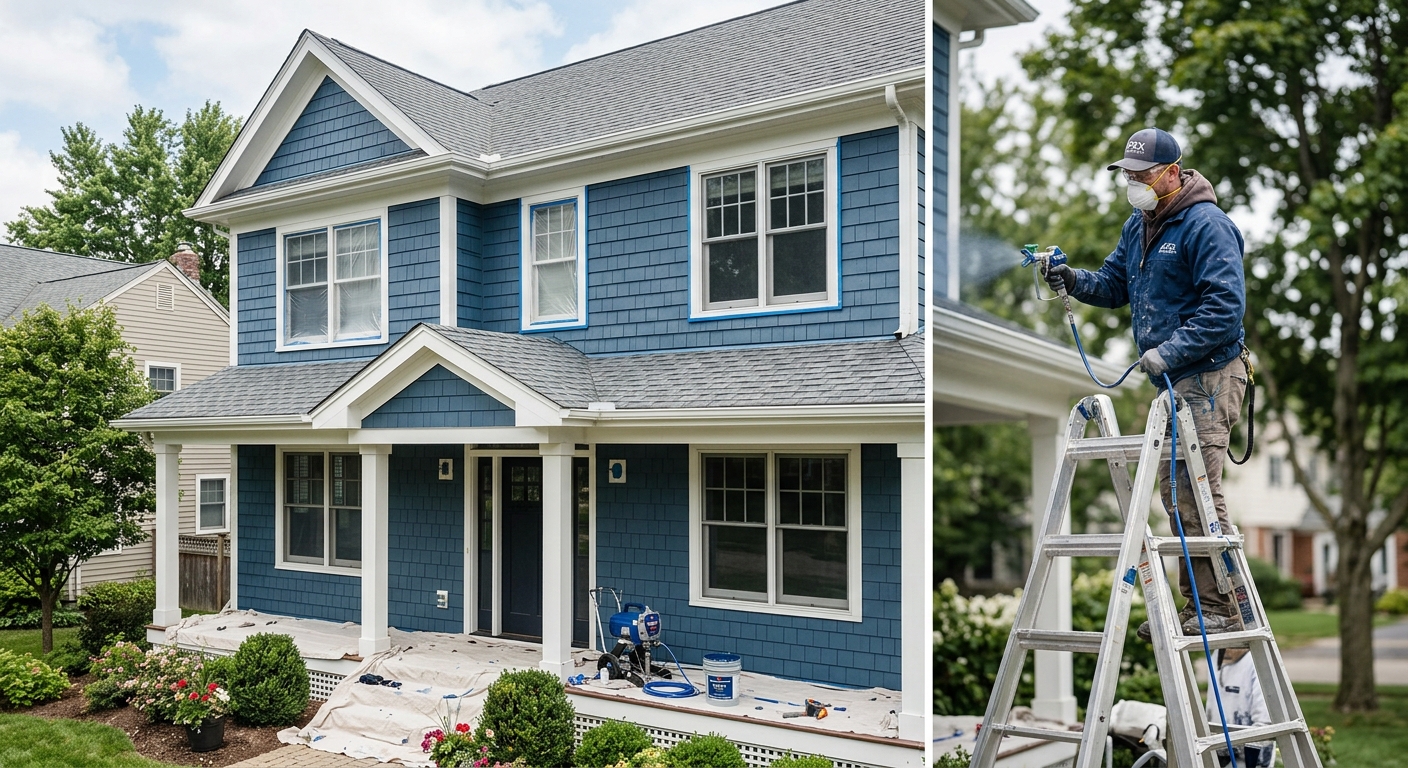
Painting options and costs in 100 Mile House
Painting in 100 Mile House is all about balancing expectations with what the Cariboo climate allows and what local crews can schedule in peak summer. With a population of 1,980 (Statistics Canada, 2021 Census), it’s a smaller market, so contractor availability can tighten when weather cooperates—especially for exteriors. You’ll also see a mix of older homes across the area, and older housing stock typically means more surface repair: scraping, sanding, caulking, and spot-priming before the first full coat goes on. That prep time matters because the Cariboo’s colder inland conditions make exterior work more seasonal than coastal BC; if temperatures dip or wind dries the surface too quickly, application efficiency drops and contractors spend longer managing conditions.
In practical terms, that’s why interior refreshes often price more predictably, while exterior repainting tends to land higher once you include patching and trim work. For many homeowners in the Deka Lake area, for example, the spring-to-early fall demand window concentrates bookings, and you’ll often see quotes reflect both weather timing and the labour needed to prep rough or weathered siding and trim.
Below are realistic budgeting ranges you can use to compare quotes—then we’ll break down what drives the differences and how to protect yourself in the details.
| Service |
What's Included |
Typical Duration |
Price Range |
| Interior — whole home (walls, ceilings, trim) |
Move & protect furnishings, patch/sand as needed, prime repaired areas, caulk interior gaps, paint walls/ceilings, include basic trim walkthrough and touch-ups |
3–7 days |
$2,800–$8,800 |
| Interior — per room (standard bedroom or living room) |
Protect flooring, prep minor scuffs/patches, prime repairs, paint walls and (if requested) ceiling, clean-up and final detail roll |
1–3 days |
$2,500–$4,800 |
| Exterior — full house (siding, trim, soffits) |
Power wash (as required), scrape/sand loose paint, caulk where needed, prime bare spots, paint siding and trim/soffits, two-coat system on properly primed areas |
5–12 days |
$6,500–$17,500 |
| Exterior — trim and accent colours only |
Protect windows/consumables, spot prep, prime bare areas, paint trim and selected accents; siding left as-is |
2–5 days |
$4,500–$9,800 |
| Kitchen cabinet painting (doors, frames, spray finish) |
Degrease, scuff/sand, repair minor chips, prime, spray-cure finish, hardware masking, reinstall after cure window |
4–9 days (including cure time) |
$2,200–$6,200 |
| Specialty / faux finish (accent wall, texture) |
Surface build-up/texture prep, base coat, texture/application, sealing as needed, careful edging around trims |
2–6 days |
$1,500–$10,500 |
Prices are estimates only and vary by project scope, site access and material selection.
What affects the price of painting in 100 Mile House
It’s normal to see quotes for the same “paint the house” request swing by 30–50% across the Cariboo region and the wider province—mostly because painting is labour-driven. In British Columbia, crews commonly price from a combination of surface condition, how much prep is required, and how many coats are needed for durability. A repaint on a tight, well-caulked surface can be straightforward; the same repaint on older siding with cracking caulk, peeling edges, or chalky paint demands more time and primer.
For exteriors, the season window is tightly climate-bound in the Cariboo. Inland BC weather is colder and more variable than coastal BC, so exterior schedules often run from late spring through early fall when temperatures stay reliably above about 10°C and rising during application. Coastal BC may have a longer calendar, but damp conditions can slow progress and increase the need for mould/mildew-resistant choices. In 100 Mile House, that shorter workable window concentrates demand, so summer scheduling pressure can raise labour rates and push crews to prioritize jobs with smoother logistics and quicker prep paths.
Also, prep can represent 50–70% of labour on repaints. Older homes across the region commonly require more scraping, caulking, patching, and spot priming, and that’s where costs move. For example, if exterior trim is already failing, going from a basic exterior repaint to a full trim-and-soffit scope can add thousands—often moving an exterior project toward the higher end of the $4,500–$18,000 band. Similarly, interior jobs that include ceiling work and trim typically drift toward the upper end of the $2,500–$9,000 interior range because ceilings and detailed edging take longer than walls alone.
In 100 Mile House, you’ll also notice cost differences based on site access and material type: wood and fibre cement surfaces each respond differently to prep, and cracked or previously patched substrates can require extra prime/patch cycles before coating.
| Price Factor |
Why It Matters |
Cost Impact |
| Surface prep — scraping, sanding, patching drywall or wood |
Poor prep causes peeling/blistering and forces rework; older surfaces need more labour and primer |
Medium to high (often 50%+ of labour on repaints) |
| Number of coats — 2-coat system over primer vs. 1 coat over existing |
Coverage and hide vary; bare/spot-primed areas usually require additional coats |
Low to high depending on current paint condition |
| Paint quality tier — contractor-grade vs. premium (Benjamin Moore, Sherwin) |
Higher tiers can improve hide, scuff resistance, and washability (longer lasting finish) |
Low to medium (material cost difference, but can reduce recoat risk) |
| Ceilings and trim — adds significant time vs. walls-only |
Ceilings require careful edging/coverage; trim needs masking and detail brushing |
Medium |
| Exterior season window — short season raises summer rates |
Weather downtime affects crew efficiency; demand concentrates during workable weeks |
Medium to high |
| Lead-safe precautions — required for pre-1978 homes with lead paint |
If present, dust control and safe disposal change how prep is performed |
Medium (time + containment materials) |
| Surface material — drywall vs. plaster vs. wood vs. stucco |
Different substrates need different primers and repair methods |
Low to medium |
| Height and access — multi-storey exterior requires scaffolding or lifts |
Access systems increase setup time and safety requirements |
High on taller or complex elevations |
Permits & regulations in British Columbia
In British Columbia, painting typically doesn’t require a permit. However, there are important health and safety practices to understand—especially for homes built before 1978, when lead-based paint may be present. For professional painters, health guidelines recommend testing for lead paint before sanding or scraping, and if lead is present, using lead-safe work practices such as wet methods to reduce dust, HEPA vacuuming, and proper disposal of debris. Homeowners aren’t always required to do lead testing by law, but these precautions are standard professional practice because peeling paint prep is where contaminated dust can spread.
Separately, confirm your contractor carries liability insurance and the required workers’ compensation coverage (commonly WSBC/WCB). Before work begins, insist on a written contract that clearly states the paint brand and sheen, number of coats, and which surface prep steps are included (power washing, scraping, caulking, sanding, patching, and priming of bare spots). Also ask who is responsible for any test results if lead is suspected and whether containment is part of the job plan.
To verify a contractor in 100 Mile House, start by asking for their certificate of insurance (liability coverage) and proof of workers’ compensation coverage. Then check the contractor’s licence/registration details via the appropriate BC online registry listing for the company or contractor name. If they won’t provide documentation up front, that’s a red flag—especially for pre-1978 properties where dust control and cleanup matter most.
Interior vs exterior painting — getting the best result in 100 Mile House
To get a paint job that lasts in 100 Mile House, you need to separate marketing from the real failure points. In our inland Cariboo climate, most premature failures come from insufficient prep, incorrect primer for the substrate, or sheen choices that don’t match how a room is used. Interior failures are usually about adhesion and cleaning resistance; exterior failures are usually about moisture management and proper bonding to weathered surfaces.
For interiors, surface prep beats paint brand. Filling holes, sanding smooth, removing dust, and priming repaired areas are the foundations of durability. Sheen choice is practical: flat/eggshell is forgiving for walls with minor imperfections, while satin or semi-gloss is better for trim, doors, and higher-touch surfaces because it wipes clean. And here’s the reality: two coats over a proper primer almost always outlast a single thick coat—especially when you’re covering patch repairs or colour changes.
For exteriors, British Columbia’s weather means your prep must handle water risk. Caulking should be completed before painting so you’re sealing edges first, then coating over stable surfaces. Primer type matters: some substrates need bonding primers (and the wrong primer can lead to lifting). Temperature-stable products and a system designed for inland moisture swings are important in the Cariboo; while coastal BC often leans toward mildew-resistant choices due to humidity, 100 Mile House needs a system that performs through drying cycles and seasonal temperature change.
Cabinet painting is a budget alternative to replacement, but it requires degreasing and a durable finish system—otherwise cabinets show wear and peeling quickly. For pre-1978 homes, lead-safe precautions are part of doing prep right, not just a compliance checkbox.
On pricing, a typical justification is when surface repair pushes you from “freshen-up” to “full scope.” If an exterior repaint is trending toward the upper $4,500–$18,000 band because extensive scraping and priming are required, paying for the prep often costs less than repainting again next season.
| Project Type |
Key Prep Step |
Recommended Coats |
Price Band |
| Interior — fresh drywall (new construction) |
Prime properly (especially around joints and repairs), sand for smooth adhesion |
2 coats topcoat after primer |
$2,500–$6,500 |
| Interior — repaint (good condition, no repairs) |
Clean, scuff-sand glossy areas, spot prime if needed |
2 coats topcoat (often on scuffed surface) |
$2,500–$5,000 |
| Interior — repaint (patching and priming needed) |
Patch, sand, caulk minor gaps, prime repaired/spot-bleed areas |
2 coats over primer; sometimes 3 where stains/patches bleed |
$3,200–$9,000 |
| Exterior siding (wood or fibre cement) |
Scrape loose paint, sand edges, prime bare spots, caulk as required |
2 coat system after primer |
$6,500–$17,500 |
| Exterior trim and accents only |
Mask carefully, spot prep and prime bare trim edges |
2 coats on trim after primer/spot prime |
$4,500–$9,800 |
| Kitchen cabinets (spray finish) |
Degrease and proper primer/finish prep to prevent peeling and sags |
2 coats sprayed (plus primer stage) |
$2,200–$6,200 |
How to choose a painting contractor in 100 Mile House
Start by verifying three things for any painting contractor working in British Columbia: liability insurance, workers’ compensation coverage, and proper licensing/registration for the work they’re doing. The simple process is to ask for documents before booking. Request a current certificate of insurance (liability) and proof of workers’ compensation coverage (WSBC/WCB) for their workers. For licensing/registration, check the BC online listing for the company or contractor name—then confirm it matches the estimate paperwork and invoice.
Next, get 2–3 itemised written quotes. The best quotes break costs out into labour and materials and list what’s included: prep steps, primer use, how many coats, and the type/brand of paint. Avoid “lump sum” bids that don’t explain scope—especially for exteriors, where power washing, scraping, caulking, spot priming, and disposal can make or break durability. Also ask whether permits are included (painting itself generally doesn’t require one in BC) and whether disposal and waste handling are part of the price.
Warranty matters too. Ask for a workmanship warranty length, what surfaces it covers, and whether product/manufacturer warranty is included (and whether it’s transferable to future owners). On payment schedule, don’t agree to large upfront amounts—never more than about 10–15%. Hold back a portion until the work is complete, cleaned, and touch-ups are done. Finally, insist on a written timeline with a start date and a completion estimate tied to weather conditions for exterior jobs.
- Provide proof of liability insurance and workers’ compensation coverage before work starts
- Use a written contract with paint brand, sheen, colour/tint references, and coat count
- Clearly list prep scope (scraping, sanding, caulking, patching, primer on bare spots)
- Confirm clean-up standards and waste disposal method for paint chips and debris
- Ask who moves and covers furnishings (and whether it’s included or extra)
- Get a written schedule that acknowledges the inland Cariboo exterior season limits
- Verify how they protect landscaping, decks, and windows during exterior coating
- Confirm warranty terms for peeling, adhesion failures, and workmanship
- Request references or photos from similar jobs in 100 Mile House or nearby communities
- Make sure cabinet quotes state curing time and whether doors are sprayed vs. brushed/rolled
- Avoid quotes that don’t state paint system details (primer type, coats, sheen)
- Don’t pay more than 10–15% upfront; hold back until walkthrough approval
Red flags we see in 100 Mile House include: refusing to provide insurance/coverage documentation, vague scopes that omit caulking/priming, “one coat” promises over repairs, no written warranty details, and high upfront payments with no defined completion steps.
Frequently asked questions — painting in 100 Mile House
What paint is best for 100 Mile House's climate?
For 100 Mile House and the Cariboo region, the “best” paint is the system that matches the surface and the local weather. For exteriors, that usually means a quality exterior coating with good adhesion and flexibility for temperature swings, paired with the correct primer for wood or fibre cement and proper caulking before painting. Because this area is inland and more seasonal than coastal BC, coats need to be applied within workable temperature and drying windows to avoid problems like poor cure or streaking. For interiors, durability and cleanability matter—eggshell/satin in living areas and semi-gloss on trim typically holds up well to daily wear. If you’re painting an older home (and in a market with a small total population, availability and timing matter), we also plan around surface condition and prep so the coating bonds correctly (Statistics Canada, 2021 Census).
How long does exterior paint last here?
Exterior paint life in British Columbia varies widely with prep, substrate condition, and how well the coating system is matched to the surface. In the Cariboo around 100 Mile House, you’ll typically see strong results when the job includes thorough scraping, sanding, caulking, and spot-priming of bare areas before the two-coat exterior system. When those steps are done well, exterior paint can last several years before you notice uniform fading; earlier failure usually points to missed prep at edges, failing caulk lines, or spot-primer skipped where bare wood or chalky paint was present. If your quote is closer to the lower end (for example, around $4,500–$9,800 for trim-only scope), it’s often because less surface repair is expected. A full exterior scope can be higher (for example $6,500–$17,500) because it includes more prep that directly protects lifespan.
Should I paint or replace my cabinets?
For most homeowners in 100 Mile House, cabinet painting is worth considering when the cabinet boxes and hardware are still solid. Painting can refresh the look quickly at a fraction of replacement, and it’s especially practical when you like your layout. The key is prep: degreasing, sanding/scuffing, proper primer choice, and a finish system designed for frequent handling and cleaning. If doors are delaminating, boxes are warped, or the frame structure is failing, replacement may be the better long-term fix. If your goal is “new look, minimal disruption,” cabinet painting is often a smart alternative. Budget-wise, cabinet painting commonly falls in the $2,200–$6,200 range depending on number of doors, finish type, and whether any repairs are needed.
How do I prep walls before painting?
If you’re prepping before a contractor arrives, focus on clearing and protecting rather than sanding unknown materials. Remove wall décor, patch obvious holes, and lightly clean greasy areas so the surface is ready for primers. If you’re planning to sand glossy trim or touch up repairs, the safest approach is to do only small scuffing and let the painter handle larger prep. For most interior jobs in 100 Mile House, the prep that makes the biggest difference is what happens after surfaces are evaluated: sanding for adhesion, filling and sanding smooth, caulking gaps, and priming repaired/spot areas before the finish coats. Also keep humidity and airflow in mind—interior curing depends on drying conditions. If your home has older finishes, a contractor may also recommend a primer type to prevent bleed-through or adhesion issues.
Do I need to worry about lead paint in an older 100 Mile House home?
It’s wise to take lead seriously in British Columbia for homes built before 1978. Professional guidance recommends testing or assessing risk before you scrape or sand, because lead dust is the hazard during prep. You’re not always legally required as a homeowner to test in advance, but many contractors use lead-safe methods when lead is suspected: wet methods to reduce airborne dust, HEPA vacuuming, careful containment, and proper disposal of materials. For a homeowner in 100 Mile House, the practical step is to ask your contractor what lead precautions they follow for pre-1978 homes and to ensure their scope includes dust control and cleanup. This can affect both cost and schedule—so if your interior or exterior prep includes scraping old paint, your quote should clearly explain how they plan to manage lead-safe work.
How long does it take to paint a house?
Timing depends on size, surface condition, and whether you’re doing interior, exterior, or both. In 100 Mile House, interior work is often faster because it’s not weather-dependent like exterior coating. A typical whole-home interior can take roughly 3–7 days, while per-room work is commonly 1–3 days depending on prep and trim detail. Exterior painting is more seasonal in the Cariboo, which means crew availability and workable drying conditions affect schedules; a full exterior can take about 5–12 days depending on prep needs and access. If your job includes cabinets, note cure time—cabinet painting can be around 4–9 days including drying/curing. If you’re comparing quotes, ask for a written start date and completion estimate tied to the planned scope and weather windows.