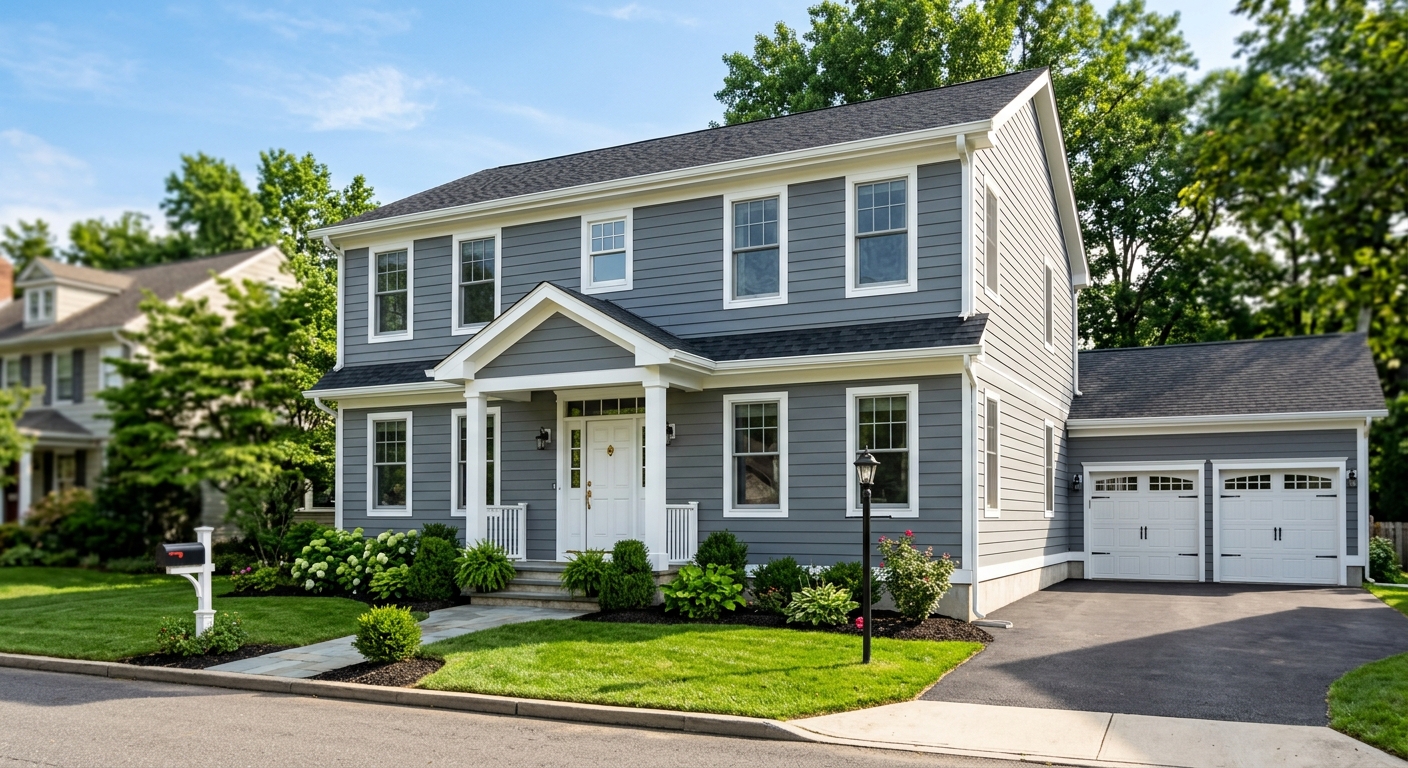
Painting options and costs in Ladner
Ladner homeowners usually start with a simple question—“What will it cost?”—and the answer depends on how much prep is needed. In Ladner, the housing stock is a big driver: across the Lower Mainland–Southwest, many homes were built well before today’s repainting standards, so a repaint often turns into a “prep-first” project with scraping, patching settlement cracks, stain blocking for older surfaces, and upgraded primers. That’s especially common around pre-1980 homes, and if a property is pre-1978, lead-paint-safe practices may be required for professionals doing sanding or scraping. (Statistics Canada, 2021 Census) also shows Ladner has a population of 23,016, which supports steady local demand and a reliable pool of trades—helpful for scheduling, but busy seasons still affect pricing.
In the Lower Mainland–Southwest, exterior paint costs are shaped less by deep cold and more by rain and humidity. Painters in Ladner typically price in time lost between weather windows and the need for mildew-resistant, high-adhesion coatings that perform on coastal siding and trim. Interior work is more consistent year-round, so crew availability often shifts toward indoor projects as the exterior season tightens. In neighbourhoods like Ladner Harbour and the broader Central Ladner area, we commonly see strong demand for exterior refreshes and long-aging repaint schedules on older finishes.
Below are realistic ranges you can use to sanity-check a quote. They’re designed to match common scope levels and the prep intensity seen in Ladner homes, then transition into a more detailed breakdown of what drives variations.
| Service |
What's Included |
Typical Duration |
Price Range |
| Interior — whole home (walls, ceilings, trim) |
Protect floors/furniture, prep (patch/sand), prime where needed, paint walls/ceilings, paint baseboards/doors/trim, caulk where required, cleanup |
3–10 days |
$3,000–$8,000 |
| Interior — per room (standard bedroom or living room) |
Prep and patching, prime on repaired areas, paint walls, typically include trim/baseboards for that room |
1–3 days |
$600–$2,500 |
| Exterior — full house (siding, trim, soffits) |
Power wash, scrape/spot prime, caulking, prime bare/failed areas, paint siding/trim/soffits, weather-aware staging and cleanup |
5–15 days |
$4,500–$15,000 |
| Exterior — trim and accent colours only |
Spot prep, scrape and prime where adhesion is weak, paint trim/doors/accents; typically not full siding coverage |
2–7 days |
$1,200–$5,500 |
| Kitchen cabinet painting (doors, frames, spray finish) |
Hardware protection, degrease/clean, prep and sanding, prime and spray paint doors/frames, reassemble, minor touch-ups and cleanup |
4–12 days |
$2,500–$8,000 |
| Specialty / faux finish (accent wall, texture) |
Surface preparation, specialized base coat and finish system, multi-step application for texture/faux effect, protective topcoat |
2–7 days |
$500–$12,000 |
Prices are estimates only and vary by project scope, site access and material selection.
What affects the price of painting in Ladner
In Ladner, it’s common to see quotes for the “same” job vary by 30–50% across the Lower Mainland–Southwest and the broader Canadian market. The reason is rarely the paint itself—it’s the prep time, how weather affects exterior drying, and what level of finish the contractor is willing to stand behind. Compared with Ontario and Alberta, coastal BC trades more in risk management: in our coastal climate, exterior work is constrained by rain and humidity, so crews may need to re-mobilize between dry windows and slow down for proper cure. That said, the window isn’t just shorter; it’s also less forgiving for adhesion when surfaces stay damp.
For repainting jobs, older homes throughout the region often need scraping and patching before any topcoat goes on. In practice, surface prep can be 50–70% of total labour on a repaint, especially when primers must be upgraded to stop tannin bleed on wood and stain bleed on older drywall. Those prep realities are one reason interior whole-home ranges swing wide (for example, about $3,000–$8,000), even before you consider ceiling height, trim detailing, or how many rooms are included.
Concrete examples from Ladner: (1) a full exterior repaint on siding with peeling failure typically pushes you toward the higher end of the exterior full-house band because adhesion requires more scraping and spot-priming; (2) a cabinet refresh can cost less than replacement in many cases, but if your layout has lots of custom mouldings, it can climb toward the upper cabinet ranges (often $2,500–$8,000) due to more masking, multiple coats and extra fine finishing. If you want a premium look on trim only, you can control budget by keeping the work limited—but if you need extensive patching before painting, the cost rises quickly.
| Price Factor |
Why It Matters |
Cost Impact |
| Surface prep — scraping, sanding, patching drywall or wood |
Prep determines adhesion and how long the finish stays uniform |
High: can be 50–70% of labour on repaints |
| Number of coats — 2-coat system over primer vs. 1 coat over existing |
Dry hides better and resists flashing and uneven sheen |
Medium to high: adds days and material |
| Paint quality tier — contractor-grade vs. premium (Benjamin Moore, Sherwin) |
Coverage, stain blocking, and durability vary by line |
Medium: typically shifts both labour efficiency and material cost |
| Ceilings and trim — adds significant time vs. walls-only |
Ceilings and detail work demand careful cutting-in and control |
High for trim-heavy homes |
| Exterior season window — short season raises summer rates |
Re-scheduling between rain windows increases crew costs |
Medium to high during peak periods |
| Lead-safe precautions — required for pre-1978 homes with lead paint |
Containment, HEPA cleanup, and disposal add time and safety steps |
Medium to high depending on extent of disturbance |
| Surface material — drywall vs. plaster vs. wood vs. stucco |
Different substrates need different primers and prep intensity |
Medium: impacts material selection and prep time |
| Height and access — multi-storey exterior requires scaffolding or lifts |
Access equipment adds labour planning and setup time |
Medium to high for 2-storey+ homes |
Permits & regulations in British Columbia
In British Columbia, painting typically does not require a permit for a standard residential repaint. However, there are important health guidelines for older homes: for homes built before 1978, health guidance recommends testing for lead paint before sanding or scraping, and using lead-safe work practices if lead is present. This includes wet methods to reduce dust, HEPA-filtered vacuuming, proper containment, and correct disposal of hazardous materials. While this is not always legally mandated for homeowners, it is standard practice for professional contractors because lead dust is the key risk during disturbance.
What doesn’t usually require a permit: interior wall/ceiling painting, exterior repainting with similar coatings, and typical trim repainting. What can trigger extra compliance is the handling of lead-containing paint during pre-1978 sanding/scraping—contractors should still follow safe work procedures even when no “painting permit” applies.
Before signing in Ladner, verify these step-by-step: (1) Licence/registration: check the painter’s business listing/credentials via the relevant provincial contractor directory or their own documentation—ask for the certificate details and confirm it matches the company name on your quote. (2) Liability insurance: request a Certificate of Insurance (COI) showing general liability limits and the named insured. (3) Workers’ compensation: confirm WSBC coverage for workers (WCB) through their proof-of-coverage document. (4) Written contract: ensure it states paint brands/lines, sheen, number of coats, surface prep inclusions, and cleanup/disposal responsibilities.
Interior vs exterior painting — getting the best result in Ladner
In Ladner, the difference between a job that looks great for years and one that fails early is usually surface preparation, not “more expensive paint.” For interiors, start with filling, sanding, and priming—particularly around patches, water stains, and repaired drywall joints. Sheen choice also matters: flat/eggshell is common for low-traffic ceilings and bedrooms, while a cleanable eggshell or satin is often a better fit for living areas and hallways. In day-to-day use, two coats over a properly primed surface almost always beats one heavy coat because it improves uniformity and reduces flashing (shiny patches where coverage changed).
For exteriors, BC’s coastal conditions make prep non-negotiable. That means power washing, scraping failing coatings, caulking first (so gaps are sealed before paint), and using the right primer system for the substrate—wood, fibre cement, and previously painted surfaces. Coastal BC also pushes mildew-resistant, high-adhesion products, and product choice should account for temperature stability through the day as well as humidity-driven dry times. If you’re comparing options, it’s often justified to spend more on prep and primer than on the topcoat—because bad adhesion is what causes peeling and blistering. A good example: choosing a thorough scrape-and-prime plan for a full exterior can keep you within the higher side of the exterior full-house range (for example $4,500–$15,000) while avoiding the more costly “repaint next year” scenario that happens when prep was skimmed.
Cabinet painting is a practical budget alternative to replacement when boxes and doors are solid and the finish is staged for proper drying and reassembly. For pre-1978 interiors or homes where older coatings may be disturbed, lead-safe precautions should be discussed up front before sanding or scraping begins—especially if work will create dust.
| Project Type |
Key Prep Step |
Recommended Coats |
Price Band |
| Interior — fresh drywall (new construction) |
Skim/repair joints, sand smooth, prime bare drywall and patch areas |
Prime + 2 coats on walls; 2 coats on ceilings |
$3,000–$7,500 |
| Interior — repaint (good condition, no repairs) |
Light scuff sanding, spot prime any marks, caulk minor gaps |
2 coats (often minimal primer if truly sound) |
$600–$3,500 |
| Interior — repaint (patching and priming needed) |
Patch drywall, sand level, stain block/spot prime as required |
Prime spots + 2 full coats on affected areas and blend |
$900–$4,500 |
| Exterior siding (wood or fibre cement) |
Scrape failing areas, prime bare substrate, caulk seams before coating |
Primer where needed + 2 finish coats |
$4,500–$15,000 |
| Exterior trim and accents only |
Spot prep and prime for adhesion on trim; mask siding carefully |
Primer where needed + 2 finish coats on trim |
$1,200–$5,500 |
| Kitchen cabinets (spray finish) |
Degrease, sand/abrade, prime properly for adhesion, controlled masking |
Spray primer + 2 finish coats (often with sanding between coats) |
$2,500–$8,000 |
How to choose a painting contractor in Ladner
Choosing the right painter in Ladner comes down to proof, planning, and scope clarity. Start with British Columbia verification: request the painter’s business credentials and confirm they match the contract paperwork. Next, ask for a Certificate of Liability Insurance (COI) showing current coverage and adequate limits. Then verify workers’ compensation coverage—WSBC (WCB) documentation—so you’re not exposed if someone gets hurt on your property. A reputable contractor will provide these without hesitation.
Get 2–3 itemised written quotes, not just a lump sum. Itemisation should separate labour and materials and list what’s included for prep (scraping, sanding, patching, priming), the number of coats, paint brand/line, sheen, and cleanup/disposal. Read exclusions carefully: for example, is lead-safe work included if your home is pre-1978? Is permit paperwork needed for any scope that could disturb old coatings? In BC, painting itself typically doesn’t require a permit, but lead-safe methods and disposal can change the estimate. Also check for warranty language: workmanship warranty length, whether the product/manufacturer warranty applies, and whether it’s transferable if you sell the home.
Payment should protect you. Never pay more than 10–15% upfront. Hold back a portion until the job is complete and touch-ups are done. Finally, require a written start date and completion estimate, including how they’ll manage weather windows for any exterior work in Ladner’s coastal climate.
- Ask for and confirm COI liability insurance (current dates, correct legal name).
- Verify WSBC coverage documentation for workers.
- Use an itemised quote: labour line items + material/paint line items.
- Confirm prep scope: scraping, sanding, patching, caulking, and spot-priming rules.
- Confirm paint details: brand/line, sheen, and number of coats.
- Check exclusions: what happens if unexpected damage is found?
- Confirm disposal and cleanup (especially paint debris, sanding dust, and masking waste).
- For pre-1978 homes, ask how lead-safe practices would be handled if needed.
- Get warranty terms in writing (workmanship length and product warranty details).
- Confirm the payment schedule and holdback amount.
- Require a written timeline with start and completion expectations.
- Ask for references of similar Ladner jobs (interior whole-home, exterior repaint, or cabinets).
Red flags we often see in Ladner: (1) quote only talks topcoat “brand” but never specifies prep steps or primers; (2) no proof of WSBC/insurance or a willingness to “start first then paperwork later”; (3) asks for large upfront deposits beyond 10–15%; (4) vague timelines that ignore rain-humidity constraints for exterior work; (5) no written warranty or no mention of touch-up/defect handling.
Frequently asked questions — painting in Ladner
What's the difference between paint quality tiers?
In British Columbia, the biggest difference between paint tiers is coverage and performance, not just colour availability. Premium contractor and retail pro lines generally cost more per litre, but they often cover better, resist scuffing, and help reduce the “flash” you can see when coverage is thin. That means fewer problem touch-ups, especially on patched drywall, stained areas, and areas needing stain-blocking primer. For homeowners, the practical impact shows up in labour efficiency: a better product can make it easier to keep consistent sheen and uniformity across rooms. If you’re pricing an interior room versus a whole-home scope, paint tier is one reason estimates can land anywhere within interior bands like $600–$2,500 per room or higher for full homes.
How do I compare painting quotes?
Compare quotes like-for-like. Ask each contractor to provide an itemised breakdown of labour and materials, including the specific paint line, sheen, and the number of coats. Then compare the prep scope: scraping, sanding, patching, caulking, priming rules, and how they handle stain blocking or wood/tannin bleed. In Ladner’s coastal climate, exterior quotes should also explain scheduling assumptions—how they’ll manage rain/humidity windows and drying time between coats. If one quote is much lower but it doesn’t mention prep, caulking, or primer, the cost difference usually returns later as peeling or uneven sheen. For instance, a realistic exterior full-house plan is often within $4,500–$15,000, and the gap should be explained by prep intensity and product system, not vague promises.
What paint sheen should I use in different rooms?
In Ladner, the common approach is: ceilings with flat or matte for minimal visibility of imperfections; bedrooms and dining rooms often use eggshell for a balance of look and cleanability; and kitchens, hallways, and high-traffic areas usually benefit from satin or eggshell that can be wiped. Bathrooms and laundry spaces should use coatings rated for moisture resistance and proper ventilation. Exterior trim typically uses a higher durability sheen (often semi-gloss) because it tolerates cleaning and weathering better. If sheen isn’t specified in your contract, ask—sheen affects both appearance and how easily you can remove scuffs without damaging the finish. A contractor who only says “we’ll paint walls” without naming sheen is missing a key detail that impacts your long-term result.
Can I paint my house exterior in spring or fall in Ladner?
You can, but it must align with dry weather and surface temperatures, especially in coastal BC where humidity can slow drying and affect adhesion. In Ladner, exterior work is typically most reliable when crews can get multiple consecutive dry days for application and cure. Spring and fall can work if the forecast cooperates and the contractor uses appropriate products and timing. The bigger cost driver is usually not “cold,” but rain and damp conditions that require re-scheduling and can increase the number of weather-window visits. That’s why exterior pricing in the Lower Mainland–Southwest often reflects the risk of holding crews and equipment between dry stretches. If a contractor is scheduling tight dates without discussing drying/cure and humidity, ask more questions.
How do I choose a painting contractor in Ladner?
Choose a contractor who can prove coverage and commits to clear scope. Start by requesting evidence of liability insurance (COI) and workers’ compensation coverage via WSBC documentation. Then confirm the job scope is written: paint brand/line, sheen, number of coats, exact prep steps (scrape/sand/patch/prime), and cleanup/disposal. Get at least two or three itemised quotes, not lump sums, and ask how they’ll handle exterior weather windows for rain and humidity. Verify warranty terms in writing and ask how defects or touch-ups are handled. Finally, keep payment protected: never pay more than 10–15% upfront and plan a holdback until completion. If your project includes cabinets, make sure the quote addresses spray setup, masking, and multi-coat fine finishing; cabinet work commonly sits around $2,500–$8,000.
How many coats does an exterior repaint need in Ladner?
Most exterior repaints in Ladner are designed as a primer + two finish coats system, but the exact approach depends on what’s already there. If existing paint is sound and only needs refreshing, a contractor may still use primer selectively on bare or failing areas, then apply two finish coats. If you have peeling, flaking, or areas with adhesion failure, expect more scraping, more spot-priming, and typically two finish coats over the corrected substrate. Coastal humidity can also influence how long coats need to cure before the next step, so a “two coats” promise needs a realistic drying schedule in the estimate. For older homes—especially pre-1978—lead-safe practices may add extra steps (containment and HEPA cleanup) during scraping or sanding, which can change the time and therefore the overall cost even if coat count is the same.