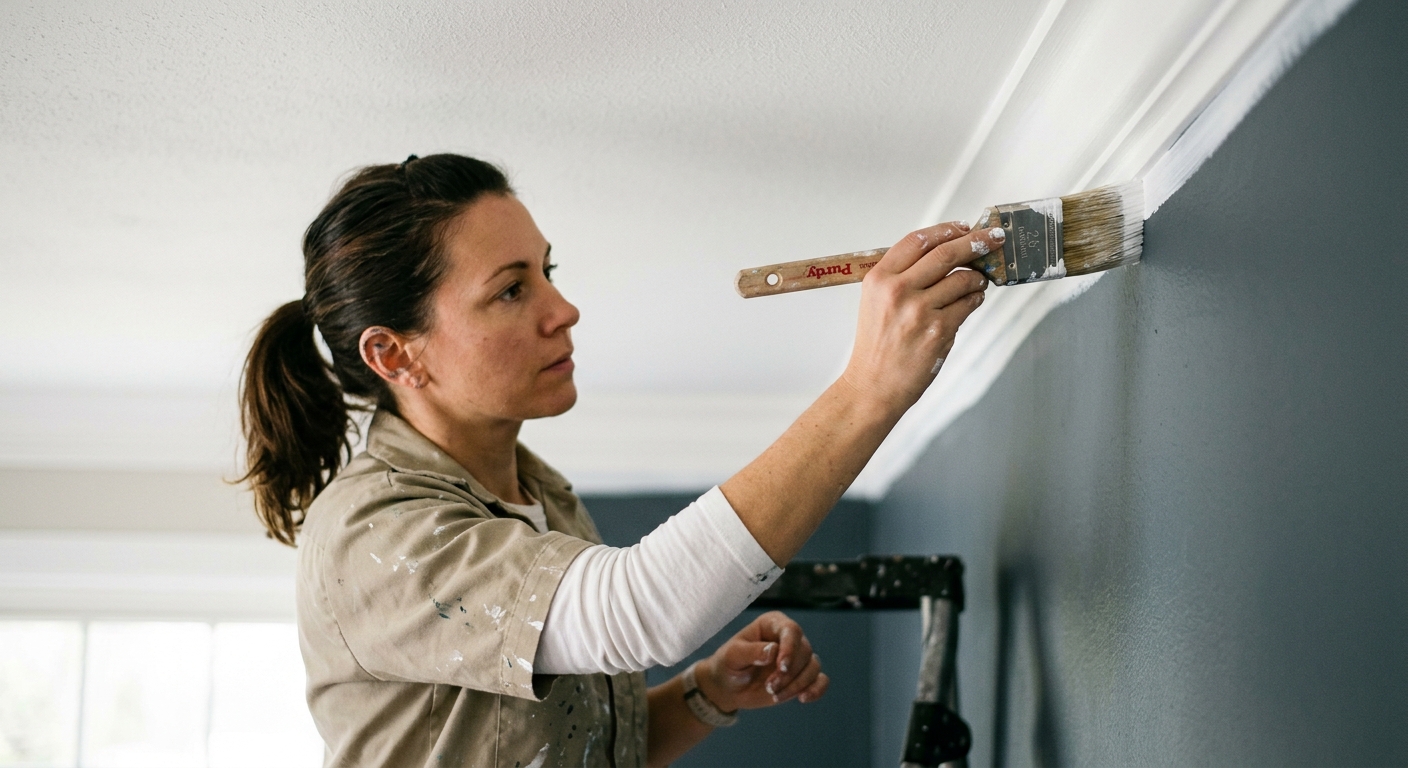
Painting options and costs in James Bay
In James Bay, the cost of a paint job depends less on “just paint” and more on prep, access, and how long the surfaces need to stay dry. James Bay is part of a Lower Mainland–Southwest market with a lot of mid-century to late-century housing, and the area’s population was recorded at 13,055 in 2021 (Statistics Canada, 2021 Census). Older homes are especially common here, and that matters because failed coatings often hide settlement cracks, peeling around trim, and adhesion issues that can’t be fixed with topcoat alone. On pre-1978 homes, contractors typically treat sanding and scraping as lead-paint–safe work (wet methods, HEPA cleanup, and proper disposal) if lead is present—those steps add time and cost.
On the cost side, Lower Mainland–Southwest pricing tends to run higher than “base” estimates because exterior work is constrained by coastal humidity and rain. Even when temperatures are mild, painters need dry stretches and mildew-resistant, high-adhesion systems for siding and trim. Meanwhile, interior work is steadier across the year, so crew availability often shifts toward indoor repainting in fall and winter. In James Bay, demand is often strongest around the inner-street blocks near Government House and the seaside frontage, where homeowners want clean lines on older woodwork and fast, tidy turnaround before busy seasons.
Use the table below to benchmark typical options—then we’ll narrow scope based on what’s peeling, what’s been patched before, and whether the project is primarily interior, exterior, or trim-heavy.
| Service |
What's Included |
Typical Duration |
Price Range |
| Interior — whole home (walls, ceilings, trim) |
Moveable furniture protection, masking, patching minor drywall issues, sanding where needed, caulking gaps, primer as required, 2-coat topcoat system, clean-up and touch-ups |
3–8 days |
$2,200–$7,500 |
| Interior — per room (standard bedroom or living room) |
Surface prep for existing paint, spot-priming, 2-coat paint on walls (and ceiling if included in scope), caulking where required, tidy edging |
1–3 days |
$600–$2,200 |
| Exterior — full house (siding, trim, soffits) |
Pressure wash prep (as needed), scraping/sanding failing areas, patching, caulking, primer on bare/repairs, mildew-resistant exterior system, 2-coat coverage, protection of windows/landscaping |
5–12 days (weather dependent) |
$6,500–$15,000 |
| Exterior — trim and accent colours only |
Prep limited to trim/accents, spot-prime bare/repairs, caulking, 2-coat finish, careful masking for siding lines |
2–6 days |
$1,200–$5,500 |
| Kitchen cabinet painting (doors, frames, spray finish) |
Remove/label doors (as feasible), degrease, scuff-sand, spot-prime, spray finish or high-build roll-and-brush system, multiple coats for durability, reassembly and hardware masking |
4–10 days (shop time/drying included in scheduling) |
$2,400–$7,800 |
| Specialty / faux finish (accent wall, texture) |
Surface prep tailored to the finish, primer/base coat, application technique, sealing/clear coat where required, final clean-up |
1–5 days |
$800–$6,500 |
Prices are estimates only and vary by project scope, site access and material selection.
What affects the price of painting in James Bay
In the Lower Mainland–Southwest, two quotes for the same “number of rooms” can differ by 30–50% because the real driver is usually prep and risk management—not the paint itself. In British Columbia, exterior painting is tightly shaped by coastal weather: you often get long damp shoulder seasons, so contractors must wait for dry windows, slow down drying, and build in re-mobilization time when rain interrupts. By contrast, in many parts of Ontario and Alberta, the exterior window is more temperature-bound (roughly late May to early October in general practice), which concentrates demand differently. That’s why you’ll see interior pricing spread across the year, while exterior rates tighten and can rise when scheduling pressure peaks.
Prep also consumes the budget quickly on repainting jobs. Across older neighbourhoods in the region, surface prep can be 50–70% of labour when coatings are failing: scraping loose paint, sanding edges, filling and caulking, and priming stains like nicotine or wood tannins. For James Bay specifically, you’ll often deal with trim and older wood details that need careful sanding and sealing—small changes in what’s “included” can swing a job from a mid-range interior refresh to a higher-end repaint closer to the top of the Interior painting band ($300–$8,000). On exteriors, moisture-related failure risk keeps contractors focused on mildew-resistant, high-adhesion systems, which is why a full-house exterior is commonly budgeted closer to the Exterior painting range ($1,200–$15,000).
Concrete examples: if siding has widespread peeling near joints, the prep and priming scope grows fast (cost up). If the house has limited height/access issues and fewer areas of bare wood, you may land closer to the lower end of the range. If you’re repainting a pre-1978 home, lead-safe practices can add containment, HEPA cleanup, and disposal time even if the topcoat change is simple.
| Price Factor |
Why It Matters |
Cost Impact |
| Surface prep — scraping, sanding, patching drywall or wood |
Determines adhesion and smoothness; on repainting jobs, it’s often the majority of labour |
High (can swing 30–70% of labour) |
| Number of coats — 2-coat system over primer vs. 1 coat over existing |
Proper coverage and durability require consistent film build, especially over repairs |
Medium to high (+10–25% when upgrades are needed) |
| Paint quality tier — contractor-grade vs. premium (Benjamin Moore, Sherwin) |
Impacts coverage rate, sheen stability, stain resistance, and longevity |
Low to medium (materials +5–15%, labour same) |
| Ceilings and trim — adds significant time vs. walls-only |
More edging, cutting-in, masking, and detailing; trim often needs sealing and sanding |
Medium (+15–40% depending on scope) |
| Exterior season window — short season raises summer rates |
Rain/humidity can delay start and require schedule changes and protection |
High (timing risk and rework potential) |
| Lead-safe precautions — required for pre-1978 homes with lead paint |
Containment, HEPA vacuuming, wet methods, and disposal add time and materials |
Medium to high (+10–35% on affected surfaces) |
| Surface material — drywall vs. plaster vs. wood vs. stucco |
Different adhesion challenges and primer requirements |
Medium (+5–20% depending on substrate) |
| Height and access — multi-storey exterior requires scaffolding or lifts |
More setup time, safety controls, and labour duration |
High (+10–60% if lift/scaffold is required) |
Permits & regulations in British Columbia
In British Columbia, painting work typically does not require a permit for homeowners or contractors. Where permits do come into play is usually unrelated work—like structural changes, window replacements, or major building envelope repairs—rather than the act of applying paint itself. For homes built before 1978, health guidelines strongly recommend checking for lead paint before sanding or scraping. If lead is present, professionals follow lead-safe practices such as wet methods, HEPA vacuuming (not dry sweeping), proper containment, and correct disposal. This isn’t usually something a homeowner is legally required to do, but it is standard practice for credible contractors because the risk is real during prep.
For your project in James Bay, verify three things step-by-step: (1) Licensing or trade registration where applicable—start by searching the contractor’s legal business name in the relevant online registry and confirm the person/company you’re hiring matches the quote. (2) Liability insurance—ask for a current certificate of insurance that lists you as the certificate holder if available, and confirm coverage includes painting/surface work. (3) Workers’ compensation coverage (WCB)—request proof the contractor and any employees are covered (not just subcontractors who bill under another party). Then insist on a written contract that states the paint brand and sheen, number of coats, and the exact prep scope (scraping/sanding areas, caulking, primer on repairs). A good contract also clarifies disposal and what happens if weather delays exterior work.
Interior vs exterior painting — getting the best result in James Bay
To get a long-lasting paint job in James Bay, the difference between a finish that holds and one that fails early usually comes down to prep discipline and correct sheen/product selection for the job. For interiors, surface prep is more important than the “brand name” of the topcoat: filling, sanding, and priming stains or patched areas prevents flashing, peeling at edges, and the “dry patch” look. Choose sheen by room function. Flat/eggshell typically suits low-touch ceilings and dining rooms, while eggshell or satin in living spaces balances washability with a soft look. For high-traffic areas like hallways, satin is often more forgiving. Also, two coats over a proper primer generally outlast one thick coat—especially when patching has disturbed absorption or when old stains bleed through.
For exteriors in British Columbia, prep is the whole game because moisture is persistent. Caulk before painting (not after) so joints can be sealed and water can’t sneak behind the coating. Use primers matched to the substrate and issue: bare wood, chalky coatings, or stained areas may need different primers to lock down adhesion. Mildew-resistant systems and products engineered for damp conditions matter more here than in drier climates. In pre-1978 homes, lead-safe precautions should be built into the schedule because the cost increase is often in containment, cleanup, and disposal—not the paint.
Cabinet painting can be a smart alternative to replacement. If your budget is tight, a professionally sprayed cabinet job is commonly in the $2,000–$8,000 band, while new cabinet replacement frequently far exceeds that—so the “extra cost” is often justified. For example, spending closer to the upper interior repaint range (near $8,000 for a whole-home scope) makes sense when trim and patching are extensive; otherwise, doing only walls and keeping trim can land you much nearer the mid-to-lower end.
| Project Type |
Key Prep Step |
Recommended Coats |
Price Band |
| Interior — fresh drywall (new construction) |
Prime bare board and embed/fill joints to prevent flashing and pinholes |
1 primer + 2 topcoats |
$900–$4,500 |
| Interior — repaint (good condition, no repairs) |
Clean/de-gloss, light scuff, then spot-prime any suspect areas |
2 topcoats (primer only on spots as needed) |
$300–$2,800 |
| Interior — repaint (patching and priming needed) |
Sand edges smooth, caulk gaps, prime patched/stained areas before colour |
1 primer + 2 topcoats |
$800–$6,500 |
| Exterior siding (wood or fibre cement) |
Scrape failing paint, caulk joints correctly, prime bare/repairs, then exterior system |
1 primer + 2 topcoats |
$4,800–$15,000 |
| Exterior trim and accents only |
Mask carefully, prep trim edges, spot-prime bare/aged areas |
1 primer (as required) + 2 topcoats |
$1,200–$5,500 |
| Kitchen cabinets (spray finish) |
Degrease thoroughly, sand/scuff, then prime for adhesion and stain-blocking |
Spray/finish system (typically 2–4 layers depending on product) |
$2,400–$7,800 |
How to choose a painting contractor in James Bay
Choosing the right painter in James Bay comes down to verification, clarity, and how they handle the parts of the job that usually create disputes—prep scope, drying/weather risk, and disposal. First, confirm British Columbia coverage and insurance. Ask for a certificate of liability insurance (current date, correct address/coverage terms) and for proof of workers’ compensation coverage for employees and any covered workers. Then request the contract details in writing before anyone starts: where the work begins/ends, what surfaces are included, and what products will be used (paint brand and sheen, primer type, and number of coats).
Next, get 2–3 itemised written quotes—not a single lump sum. Itemisation should separate labour and materials, and should list prep actions like scraping, sanding, patching, caulking, and priming. Confirm exclusions: Are windows protected? Is furniture moving included or excluded? Is power washing included for exterior prep? Is disposal (old paint, sanding debris) part of the scope? Also ask about warranty: workmanship warranty length, whether it covers peeling or adhesion failures, and whether product/manufacturer warranties are included and transferable if you sell the home.
For payment schedule, avoid large deposits. A common safe approach is 10–15% upfront for scheduling and materials only, with the balance due after completion of defined milestones. Finally, obtain a start date and completion estimate in writing, especially for exterior work where rain/humidity can change drying times and force schedule adjustments.
- Ask for proof of liability insurance and workers’ compensation coverage; read the expiry dates.
- Verify the legal business name and match it to the quote and invoice.
- Request 2–3 itemised quotes (labour vs materials), not just one total.
- Confirm the prep scope: scraping/sanding areas, patching, caulking, and stain-blocking.
- Make sure primer type is specified (especially on stained or repaired surfaces).
- Check sheen selection by room (flat/eggshell for ceilings, satin/eggshell for walls where needed).
- Ensure exterior quotes mention weather window planning and mildew-resistant systems.
- Ask whether disposal is included (old paint, masking waste, sanding debris).
- Confirm masking and protection standards for floors, trim, and landscaping.
- Verify the warranty: workmanship term and what conditions apply.
- Confirm the paint brand, product line, and number of coats in the contract.
- Agree on schedule milestones and how delays are communicated in writing.
Red flags I commonly see with painters in James Bay: quotes that skip prep details (especially scraping/sanding), refusal to provide insurance/coverage documentation, “one-coat” claims on repainting jobs, unclear warranty terms, and contracts that don’t state the paint brand/sheens and the number of coats.
Frequently asked questions — painting in James Bay
How do I compare painting quotes?
Start by comparing like-for-like scope. Ask each contractor to list prep steps (scraping, sanding, patching, caulking, priming) and to specify the exact paint line, sheen, and the number of coats. In coastal British Columbia, exterior quotes should also explain how they handle rain/humidity delays and drying time. A low number can be misleading if it assumes minimal prep—especially common when a home has peeling or chalky paint. For example, a full interior refresh can land anywhere from roughly $300 to $8,000 depending on patching and trim work, and that difference often comes from prep. If you see interior-only pricing but the quote also covers ceilings and trim, the comparison improves. Finally, require itemised labour and materials, not a lump sum.
What paint sheen should I use in different rooms?
In James Bay homes, sheen choice affects both appearance and cleanability. Ceilings are often best with flat or matte to reduce glare and hide minor imperfections. For walls, eggshell is a common “sweet spot” in living rooms and bedrooms because it’s easy to clean without looking too glossy. Kitchens, hallways, and areas near doors typically do better with satin for durability. Trim is usually satin or semi-gloss to withstand frequent cleaning and stand up to daily contact. If you’re repainting after patching, correct priming helps prevent sheen differences (“flashing”). The goal is not maximum shine—it’s uniform appearance and practical washability for British Columbia’s indoor living conditions.
Can I paint my house exterior in spring or fall in James Bay?
Yes, but timing is everything in coastal British Columbia. James Bay’s humidity and rain mean you need dry conditions long enough for proper cure, not just “no rain during application.” Spring can work well if you have a clear weather window and surfaces are dry and stable. Fall can be trickier because damp shoulder-season conditions can slow drying and increase mildew risk, which is why reputable contractors build weather contingencies into the schedule. When weather delays happen, the cost can rise because crews may need to re-mobilize and surfaces might require additional cleaning or re-checking before painting resumes. For budgeting, exterior projects commonly land in the $1,200–$15,000 range depending on prep and whether you’re doing full house work versus trim accents only.
How do I choose a painting contractor in James Bay?
Choose based on documentation and clarity. First, ask for liability insurance and proof of workers’ compensation coverage for employees. Then verify the business name and ensure it matches the contract and invoice. Next, request 2–3 itemised written quotes showing labour and materials, and make sure the scope is specific: prep actions, primer type, caulking, and number of coats. A good quote also states what’s included for disposal and how the contractor protects landscaping and interior areas during exterior work. For homeowners in James Bay, I recommend insisting on a workmanship warranty and written start/completion estimates. Avoid anyone who won’t put paint brands and sheen choices in writing—because you can’t hold a contractor accountable for undefined products.
How many coats does an exterior repaint need in James Bay?
Most exterior repaints need a primer (when required by bare wood, repairs, chalky surfaces, or staining) plus two topcoats for a stable, uniform finish. That typically means 2 coats of exterior paint over the correct primer system; some surfaces require more prep and sealing, which can change the primer quantity but doesn’t usually reduce topcoat requirements. In James Bay’s coastal climate, skipping primer or reducing to one topcoat is where durability problems start—peeling and uneven sheen can show up faster when humidity and dampness persist. Your exact coat count depends on substrate and existing paint condition, which should be assessed on-site. For budgeting, a trim-only exterior might fit the lower end (around $1,200–$5,500), while full-house work often sits closer to the broader exterior band ($1,200–$15,000).
What is the best primer for older James Bay homes?
For older James Bay homes (especially those built before 1978), the “best” primer depends on what the contractor finds during prep—flaking/chalking, stains, wood tannins, or repainted patches. The primer should be chosen to lock down adhesion and block staining, and it should be compatible with the finish paint system. If lead paint is suspected, pros should use lead-safe practices during sanding/scraping (wet methods, HEPA vacuuming, and appropriate disposal) before priming. Many failures on older homes aren’t a primer-brand issue—they’re a prep issue—so look for detailed prep steps in the quote. A well-structured exterior repaint with correct priming is a key part of staying within the $1,200–$15,000 exterior range depending on scope.