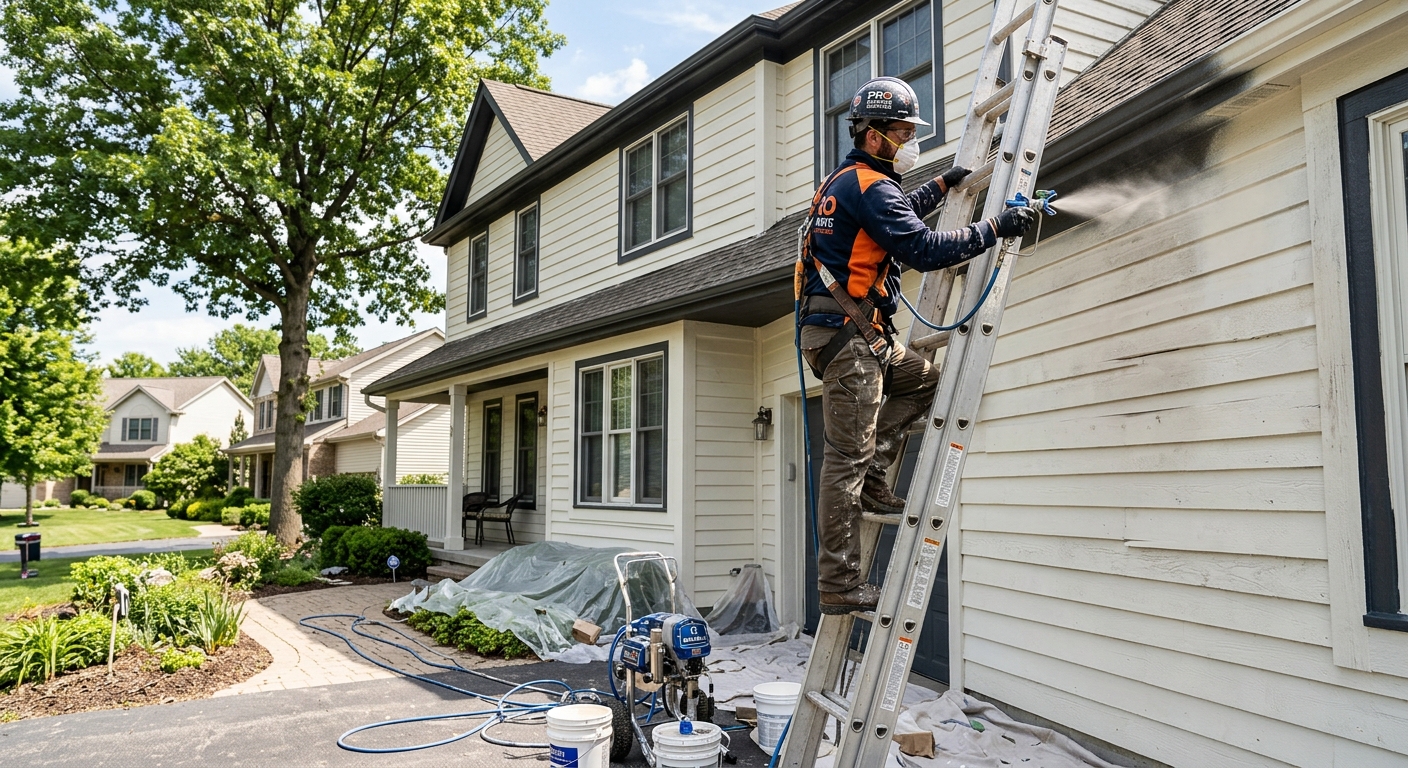
Painting options and costs in Huntingdon
Huntingdon, British Columbia is a small community (population 1,224, based on the Statistics Canada, 2021 Census), and that can mean fewer crews available during peak painting weeks. For homeowners, the biggest cost swings usually come down to prep and the condition of surfaces. In the Lower Mainland–Southwest, a lot of housing stock is mid-century to 1990s, so many repaints involve scraping failing coatings, patching settlement cracks, stain-blocking nicotine or wood tannins, and upgrading to modern primers. On pre-1978 homes, contractors commonly factor in lead-paint–safe practices (containment, cleanup, and disposal time), which increases labour even when the visible “paint work” looks simple.
Weather also shapes what you pay. Coastal BC has long, damp shoulder seasons; rain and high humidity can slow drying and increase the risk of mildew, so painters must schedule around dry stretches and use mildew-resistant, high-adhesion products. In practice, that means exterior quotes often include re-mobilization risk between weather windows, while interior work is steadier through fall and winter as crews shift indoors. In Huntingdon’s more in-demand pockets—like the residential strips around major routes where access is tighter—contractors may price in extra time for parking, drop-offs, and careful surface protection.
Below are typical options you can use to benchmark bids before you compare scopes and materials.
| Service |
What's Included |
Typical Duration |
Price Range |
| Interior — whole home (walls, ceilings, trim) |
Surface protection, prep (fill/sand/spot prime), 2-coat system on walls/ceilings (primer where needed), caulking, brush/roller work, tidy-up and final clean |
5–10 working days |
$1,900–$7,200 |
| Interior — per room (standard bedroom or living room) |
Prep and patching as needed, 2-coat finish, spot-priming, cut-in/trim work for that room, basic floor protection and cleanup |
1–3 working days |
$600–$2,100 |
| Exterior — full house (siding, trim, soffits) |
Pressure wash (where appropriate), scrape/sand, caulking, stain/bleed blocking (if required), primer system for substrate, 2-coat exterior finish, tool staging and weather-window planning |
7–15 working days (often spread across weather windows) |
$4,200–$13,500 |
| Exterior — trim and accent colours only |
Prep and prime trim/accents, spot-blast or scrape as required, caulking for trim lines, 2-coat finish on specified elements |
3–7 working days |
$1,200–$5,600 |
| Kitchen cabinet painting (doors, frames, spray finish) |
In-shop or on-site prep (degrease, sanding, repairs), primer, sprayed/enamel finish with multiple coats, hardware masking, light touch-ups, final install |
5–12 working days (plus cure time) |
$2,300–$7,800 |
| Specialty / faux finish (accent wall, texture) |
Surface levelling as needed, speciality coatings and labour-intensive detailing, clear masking and protection, sealing where specified |
2–6 working days |
$650–$4,900 |
Prices are estimates only and vary by project scope, site access and material selection.
What affects the price of painting in Huntingdon
Even for the same home, quotes across the Lower Mainland–Southwest and the rest of British Columbia can vary by about 30–50% because the “paint” is only a portion of the work. In our region, exterior painting is tightly climate-bound: while coastal BC often has a longer workable season than interior provinces, humidity, mist, and rain create frequent stoppages. Short windows mean crews can’t always keep momentum, and contractors price in scheduling pressure. In addition, prep for older homes is commonly extensive—scraping failing coatings, caulking before finish coats, patching drywall or wood, and priming to block stains or tannins. On repainting jobs, surface prep can make up roughly 50–70% of total labour depending on how many layers and how much patching is needed.
Here are concrete examples you’ll see in Huntingdon. First, trim and siding that has chalking or peeling usually forces more scraping and sanding than a “good-wall” repaint; that’s where costs move from the lower end of the exterior band (around $1,200 for small trim work) toward the mid-to-upper ranges (several thousand) for full-house prep and primer systems. Second, moisture-prone areas like eaves and lower siding are often addressed with mildew-resistant, high-adhesion products and additional priming—especially when previous coatings have trapped contaminants. Third, lead-paint–safe precautions on pre-1978 homes can add containment, HEPA-vac cleanup, and disposal time even if the exterior repaint is “just a colour refresh.”
On the interior side, ceiling height, trim density, and whether walls need patch-and-prime can push a per-room job into the higher interior band, and a whole-home repaint can climb quickly if doors, trim, and repairs are included.
| Price Factor |
Why It Matters |
Cost Impact |
| Surface prep — scraping, sanding, patching drywall or wood |
Prep determines bond strength; weak prep leads to blistering, peeling, and frequent rework |
Often the largest swing: +$400 to +$3,000 on many repaint jobs |
| Number of coats — 2-coat system over primer vs. 1 coat over existing |
Coat count affects coverage, sheen uniformity, and stain blocking |
Usually +10% to +35% depending on colour change and adhesion |
| Paint quality tier — contractor-grade vs. premium (Benjamin Moore, Sherwin) |
Premium lines often improve hide, durability, and washability |
Material difference can add +$150 to +$900; labour may rise if extra coats are needed |
| Ceilings and trim — adds significant time vs. walls-only |
Cutting-in, masking, and detail work are labour-intensive |
Commonly +$300 to +$2,500 depending on home size |
| Exterior season window — short season raises summer rates |
Rain/humidity delays dry times and can force crew re-mobilization |
Often +$300 to +$2,200 on exterior schedules |
| Lead-safe precautions — required for pre-1978 homes with lead paint |
Containment, wet methods, HEPA vacuuming, and compliant disposal add time and cost |
Can add +$800 to +$4,000+ for larger areas |
| Surface material — drywall vs. plaster vs. wood vs. stucco |
Different substrates require different primers and cleaning steps |
+10% to +40% when primer compatibility is a concern |
| Height and access — multi-storey exterior requires scaffolding or lifts |
Safety gear, containment, and labour increase with access complexity |
Can add +$500 to +$3,500 |
Permits & regulations in British Columbia
In British Columbia, painting typically does not require a permit for most residential projects. That said, health guidelines matter—especially for homes built before 1978—because lead paint may be present. Contractors are expected (and many choose, even when not legally mandated for homeowners) to follow lead-safe work practices if lead is found or suspected: wet methods to control dust, HEPA vacuuming, careful containment, and proper disposal of debris and waste materials. For homeowners, this isn’t usually a “permit” issue; it’s a job-safety and contamination-control issue.
Before signing, confirm your contractor carries liability insurance and has workers’ compensation coverage (WCB). Also ask for a written contract that clearly states the paint brand and sheen, the number of coats, and what prep is included (for example: scraping, sanding, patching, caulking, and stain blocking). The contract should also specify what’s excluded—like replacing damaged siding, repairing rotted wood, or removing mould—so there are no surprises.
To verify credentials in Huntingdon, British Columbia, follow a simple step-by-step check:
- Ask for the certificate of insurance and confirm the policy is active and includes liability coverage.
- Request evidence of workers’ compensation coverage (WCB) for the contractor and/or crew.
- Search the relevant provincial registries for the contractor’s standing if they market themselves as a licensed tradesperson (and confirm the name matches the quote/contract).
- Verify the contractor’s business address and that the quote is in writing on company letterhead.
- Get a written start date and timeline in the same contract document.
Interior vs exterior painting — getting the best result in Huntingdon
In Huntingdon’s Lower Mainland–Southwest climate, long-lasting results depend on treating prep, moisture control, and sheen selection as “the job.” For interiors, surface prep is more important than the topcoat brand. Proper filling and sanding of nail pops and cracks, cleaning off residue, and spot priming stained or patched areas prevents flashing and peeling. Sheen choice also matters: flatter finishes hide wall imperfections, while higher-sheen paints stand up better to cleaning in kitchens, hallways, and homes with kids or pets. The real durability lesson is simple: two coats over the right primer usually outlasts one thick coat because coverage is consistent and the film builds evenly.
For exteriors, British Columbia’s coastal rain and humidity make caulking and drying time critical. Paint systems fail when water gets behind coatings, so homeowners should expect caulking before finish coats, correct primer type for the substrate, and high-adhesion products designed for mildewy conditions. On wood or fibre cement, contractors typically tailor primer and finish based on whether the surface is absorbing, chalking, or previously coated. In pre-1978 homes, lead-safe precautions can also affect the schedule and cleanup, which is reflected in exterior pricing.
Cabinet painting is often the budget alternative to replacement. If you’re comparing options, a full kitchen cabinet spray finish is commonly priced in the $2,000–$8,000 band, while replacing cabinets can climb dramatically higher once you include demolition, disposal, flooring touch-ups, and installation. For older homes where doors and frames are still structurally sound, painting is usually the justified spend—provided prep is thorough and the right enamel system is used.
| Project Type |
Key Prep Step |
Recommended Coats |
Price Band |
| Interior — fresh drywall (new construction) |
Prime bare drywall thoroughly, sand nibs, caulk transitions |
Primer + 2 finish coats |
$700–$3,200 |
| Interior — repaint (good condition, no repairs) |
Clean/degloss lightly, scrape if needed, spot prime stains only |
1–2 coats finish (usually 2 over primer spots) |
$600–$2,400 |
| Interior — repaint (patching and priming needed) |
Patch, sand flush, spot prime repairs and any staining/bleed areas |
Primer spots + 2 finish coats |
$900–$4,100 |
| Exterior siding (wood or fibre cement) |
Scrape/sand to stable edges, caulk seams, prime correctly for substrate |
Primer + 2 finish coats (system dependent) |
$4,200–$13,500 |
| Exterior trim and accents only |
Prep and caulk trim lines, prime exposed/spot areas |
Primer spots + 2 finish coats |
$1,200–$5,600 |
| Kitchen cabinets (spray finish) |
Degrease, sand/scuff properly, prime for adhesion, mask with care |
Primer + 2–3 sprayed coats (finish dependent) |
$2,300–$7,800 |
How to choose a painting contractor in Huntingdon
Choosing a painter in Huntingdon is about verifying safety, scope clarity, and workmanship—not just the lowest number. First, confirm British Columbia coverage: ask for proof of liability insurance and workers’ compensation (WCB). For checking, look for a current certificate of insurance (often showing policy number and expiry date), and a WCB clearance or documentation showing the contractor’s account coverage for the crew. If they can’t provide documentation quickly, that’s a problem.
Next, request 2–3 itemised written quotes. Each should separate labour and materials (paint, primer, sanding supplies, caulking, disposal), and should list exactly what’s included in prep. Pay attention to exclusions: for example, is there allowance for removing flaking paint layers, repairing cracks, cleaning mildew, or replacing deteriorated wood? Also ask if permit pull is included where applicable (painting itself usually doesn’t need a permit in BC, but accessibility, scaffolding, or related work may change requirements), and whether disposal is included for paint waste and debris.
Warranty matters too. Ask for a workmanship warranty length and what it covers (peeling due to coating failure tied to their prep, for example). Confirm whether product/manufacturer warranties apply and whether they’re transferable to your ownership if you sell. Finally, plan payments: never pay more than 10–15% upfront; use a holdback until the job is complete and walk the site for touch-ups. Get a start date and completion estimate in writing, especially for exterior work that can be delayed by rain and humidity.
- Verify liability insurance with a current certificate.
- Verify WCB coverage for the people who will work on your site.
- Get 2–3 itemised quotes with labour and materials separated.
- Ensure prep steps are written (scraping, sanding, patching, priming, caulking).
- Confirm paint brands, sheen, and the exact number of coats.
- Ask how they protect landscaping, windows, and siding details during prep.
- Confirm cleanup methods and disposal for paint solids and dust.
- For pre-1978 homes, ask about lead-safe procedures if surfaces are being disturbed.
- Request a written timeline with weather assumptions for exterior work.
- Ask for a workmanship warranty and the process for warranty visits.
- Agree on payment schedule (10–15% max upfront; holdback at completion).
- Do a walkthrough and photo-document the starting condition.
Red flags I often see with painting contractors in Huntingdon include: quotes that don’t list prep or primer clearly, promises of “one-coat coverage” over unprepared surfaces, no proof of insurance/WCB, a vague warranty (“we’ll fix it if there’s a problem” with no timeframe), and asking for large deposits early (more than 10–15%) without a written contract and schedule.
Frequently asked questions — painting in Huntingdon
How do I compare painting quotes?
In Huntingdon, compare quotes line-by-line, not by totals. Look for written prep scope (scrape/sand, patching, spot priming, caulking) and the number of coats, because those drive durability in BC’s humid conditions. Make sure each quote names the paint brand and sheen and states whether primer is included for stained or patched areas. For cost context, interior room repaints commonly land in a band like $600–$2,100, but the high end usually reflects extra repairs and ceiling/trim cutting. For exteriors, the difference between a trim-only job and full-house work is substantial; a full exterior can be several thousand more due to moisture-resistant systems and weather-window scheduling. Finally, ask for a labour/materials breakdown and disposal details so “unknowns” don’t appear after the job starts.
What paint sheen should I use in different rooms?
For British Columbia homes in Huntingdon, sheen choice is about how surfaces will be cleaned and how forgiving the finish is. Typically, ceilings are flat to reduce visibility of imperfections. Walls are often eggshell (slight washability with decent hiding), while kitchens, hallways, and rooms with kids/pets benefit from satin for easier wipe-down. Trim and doors are commonly semi-gloss for durability and crispness—especially important where damp air can encourage scuffing near entryways. If you have patched drywall, a sheen that’s too glossy can highlight texture, so proper sanding and spot-priming matters as much as the sheen itself. If a contractor offers to skip primer or claims sheen won’t matter, ask how they’ll prevent flashing and patch-band visibility after the paint cures.
Can I paint my house exterior in spring or fall in Huntingdon?
You can paint in spring or fall in Huntingdon, but the practical limitation is dry time, humidity, and rain. Coastal BC crews aim to work during windows with enough drying conditions so paint bonds and cures properly—this is why exterior quotes often assume weather management. In many cases, mid-to-late spring is safer than early spring, and late summer into early fall can work if rain stays away for several days. The key is avoiding application when surfaces are damp or when dew/humidity will slow curing; mildew-resistant products help, but they don’t replace correct timing. If you’re comparing contractor availability, expect scheduling pressure in peak dry stretches, and some painters may increase rates for re-mobilization risk. If your home needs scraping and caulking, those steps should happen right before coating within the same workable weather window.
How do I choose a painting contractor in Huntingdon?
Start with proof and process. In British Columbia, confirm the contractor has liability insurance and WCB workers’ compensation coverage, and get the certificate dates in writing. Then request 2–3 itemised quotes that spell out labour and materials, including prep steps, primer, caulking, and the exact number of coats. A good contractor will be specific about brand and sheen and will explain why they’re recommending a system for your siding or drywall condition. For pre-1978 homes, ask about lead-safe practices if scraping or sanding will disturb older coatings. Verify the workmanship warranty (length and what it covers) and keep payments reasonable—often no more than 10–15% upfront—with a holdback until you’ve confirmed completion. Pricing is only part of the decision; for example, a full exterior may range like $4,200–$13,500, but the best value comes from consistent prep and a clear plan around Huntingdon’s damp, coastal conditions.
How many coats does an exterior repaint need in Huntingdon?
Most exterior repaints in Huntingdon use a paint system that results in primer plus two finish coats, especially when there’s any patching, staining, or prep that exposes bare or chalky material. In humid, rain-affected Lower Mainland–Southwest conditions, skipping coats or skipping primer spots can lead to adhesion issues and uneven appearance. The exact number depends on existing coating condition and how much stable surface remains after scraping. If the contractor specifies a “2-coat finish over existing paint with no primer,” ask what they’ll do if the surface isn’t absorbing consistently or if there are tannin stains from wood trim. For budget planning, a trim-only exterior refresh is often less prep-heavy than a full house, which is why small-scope work can land nearer $1,200–$5,600, while full-house work trends higher due to primer systems and more extensive surface preparation.
What is the best primer for older Huntingdon homes?
There isn’t a single “best” primer for every older home in Huntingdon, British Columbia—what matters is matching the primer to the substrate and the problem you’re solving: adhesion, stain blocking (wood tannins, water marks, nicotine), or sealing chalky surfaces. For pre-1978 homes, contractors also think about lead-safe practices before sanding or scraping because dust control and cleanup are part of the job standard. Typically, you’ll see different primer choices if the surface is bare wood, previously painted drywall/stucco, or chalking/peeling areas that need stabilization. A good contractor will explain their primer selection in the quote, including whether primer is used across entire areas or only spot-priming. If someone only quotes a finish-coat price and doesn’t clearly include primer system decisions, that’s a sign the scope may not be set up to handle Huntingdon’s prep realities and moisture-driven wear.