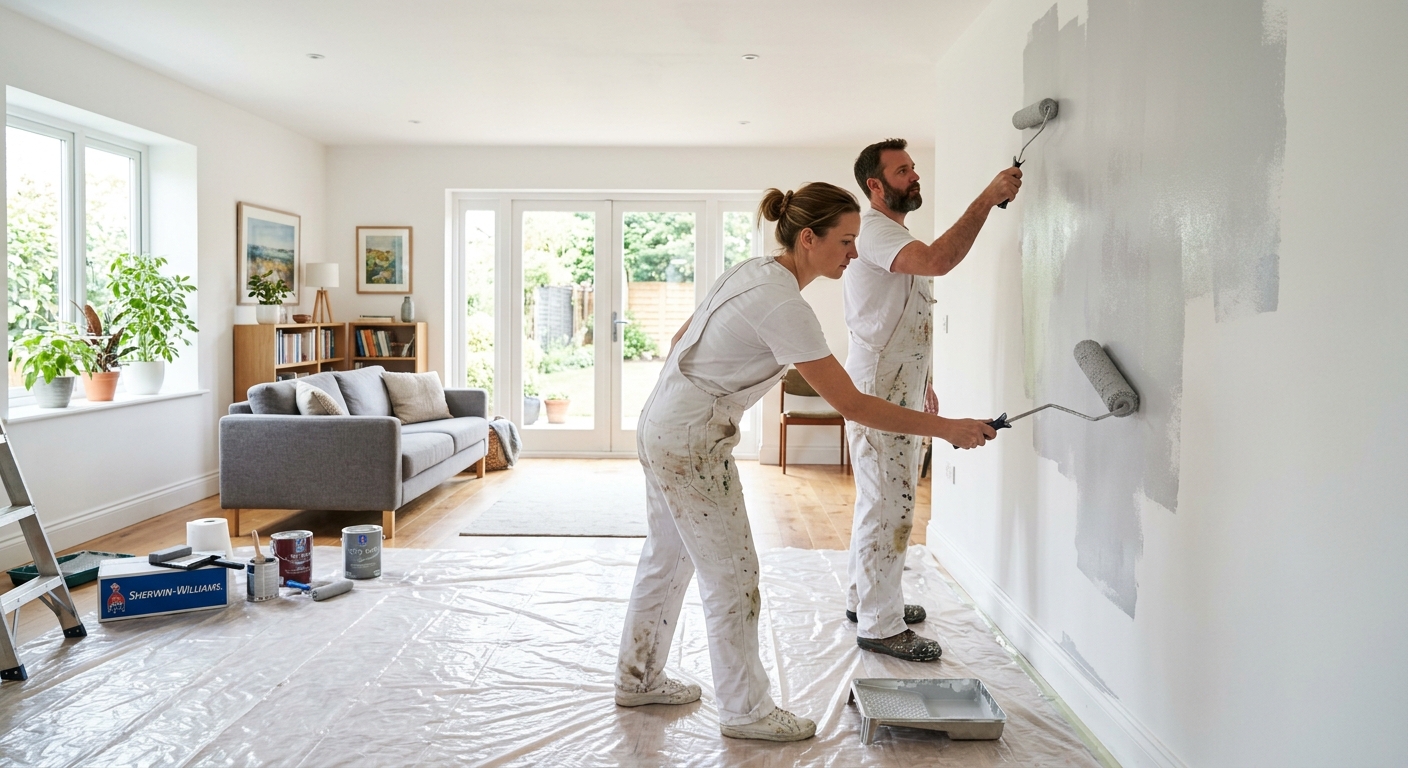
Painting options and costs in Sunshine Hills
Sunshine Hills is where many homeowners in the Lower Mainland–Southwest area plan their next paint refresh around both appearance and durability. With a population of about 9,900 people (Statistics Canada, 2021 Census), demand tends to cluster around the same peak months, so pricing and scheduling can tighten—especially for exterior work. Another practical cost driver is housing age: older homes are common throughout the wider Lower Mainland, and for pre-1978 properties, contractors may need lead-paint–safe practices if they’re scraping or sanding failing coatings. That adds containment, HEPA cleanup, and disposal time compared with a straightforward repaint.
In Sunshine Hills, coastal BC climate influences how paint systems are selected and how long crews stay on-site between weather windows. Exterior work is less about extreme cold and more about rain, humidity, and mildew risk—so painters plan around drier stretches, use high-adhesion and mildew-resistant products, and allow for slower drying. Interior timelines are typically easier to manage year-round by shifting crews indoors through fall and winter.
One area where you’ll often see painting trades busy is around the Sunshine Hills neighbourhood corridor near schools and main arterials, where home turnover and renovation cycles create steady demand for both interiors and curb-appeal refreshes. From there, homeowners usually ask whether they should budget for a full interior repaint, an exterior refresh, or cabinet painting as a lower-cost alternative to replacement. The comparison table below gives realistic ranges for the Sunshine Hills market.
| Service |
What's Included |
Typical Duration |
Price Range |
| Interior — whole home (walls, ceilings, trim) |
Prep, patching, sanding, caulking, stain-blocking as needed, primer, 2 topcoats, trim/door painting, final clean |
5–12 days |
$2,500–$8,000 |
| Interior — per room (standard bedroom or living room) |
Prep, spot patching, primer where needed, 2 topcoats to walls; light trim touch-ups |
1–3 days |
$300–$1,600 |
| Exterior — full house (siding, trim, soffits) |
Power wash, scrape/repair, caulking, stain blocking, primer system, 2 coats exterior paint, prep for weather windows |
2–5 weeks (weather-dependent) |
$4,500–$15,000 |
| Exterior — trim and accent colours only |
Prep and prime for trim surfaces, 2 topcoats on accents, limited caulking and spot repairs |
1–2 weeks (weather-dependent) |
$1,200–$5,500 |
| Kitchen cabinet painting (doors, frames, spray finish) |
Degrease, sanding/scuffing, repairs, bonding primer, sprayed finish, hardware masking (or removal), 2–3 finish coats |
7–20 days (including cure time) |
$2,000–$6,500 |
| Specialty / faux finish (accent wall, texture) |
Surface preparation, specialty base/primer, application of faux/texture system, sealing coat, cleanup |
2–7 days |
$500–$12,000 |
Prices are estimates only and vary by project scope, site access and material selection.
What affects the price of painting in Sunshine Hills
In Sunshine Hills and across the Lower Mainland–Southwest, two quotes for what looks like the “same” paint job can easily differ by 30–50%. The usual reason isn’t paint—it’s how much prep, risk management, and fine-detail labour the job actually requires. In BC, the coastal climate means exterior painting is more tightly constrained by rain and humidity, so crews must schedule around dry stretches and then mobilize again if weather delays work. In Ontario and Alberta, painters often have clearer temperature-based windows, but in coastal BC the limiting factor is drying and mildew control rather than a simple “above 10°C” check. That scheduling pressure can raise summer rates even if the temperature feels mild.
Older homes throughout the Lower Mainland–Southwest typically need extensive prep—scraping failing coatings, caulking gaps, patching settlement cracks, and using the right primer system to prevent bleed-through. In repaint projects, prep can represent 50–70% of total labour, which is why a “walls only” repaint may land in the $300–$8,000 interior band while a “same house, but fully prepped and stain-blocked” job climbs quickly toward the upper end. For exteriors, similar differences show up when boards or stucco have hidden defects: a modest trim-colour refresh might stay within the $1,200–$15,000 exterior band, but extensive siding prep and bonding primer can push the job higher.
Concrete examples I see in Sunshine Hills: nicotine or water-tannin staining around older vents can add stain-blocking primer and extra topcoats; and small but numerous caulking failures around trim can increase labour time because proper sealing must be done before paint. On the other hand, a newer build with sound surfaces and straightforward access often keeps interior repaint pricing closer to the lower half of the band.
| Price Factor |
Why It Matters |
Cost Impact |
| Surface prep — scraping, sanding, patching drywall or wood |
Prep controls adhesion and reduces peeling, bubbling, and flashing through. |
Can add 20–60% depending on damage level. |
| Number of coats — 2-coat system over primer vs. 1 coat over existing |
Coat count affects coverage and durability, especially on repairs. |
Often increases cost by 10–25% versus minimal-coat approaches. |
| Paint quality tier — contractor-grade vs. premium (Benjamin Moore, Sherwin) |
Higher-tier coatings generally improve hide, scuff resistance, and longevity. |
Typical variance: 5–20% overall, more on larger exteriors. |
| Ceilings and trim — adds significant time vs. walls-only |
Ceilings require careful masking and smooth cutting; trim needs steadier detail work. |
Can raise interior pricing by 15–40%. |
| Exterior season window — short season raises summer rates |
Rain/humidity create longer drying cycles and rescheduling costs. |
May increase labour rates or add mobilization by 10–30%. |
| Lead-safe precautions — required for pre-1978 homes with lead paint |
Containment, HEPA vacuuming, and proper disposal add labour and materials. |
Often adds 15–50% if lead work is triggered. |
| Surface material — drywall vs. plaster vs. wood vs. stucco |
Different substrates require different primers and bonding prep. |
May shift cost by 10–35% based on primer requirements. |
| Height and access — multi-storey exterior requires scaffolding or lifts |
Safe access increases setup time and crew coordination. |
Can add 10–40% on larger two-storey homes. |
Permits & regulations in British Columbia
In British Columbia, painting generally does not require a permit for typical interior or exterior cosmetic work. If your home was built before 1978, health guidelines recommend testing for lead paint before sanding, scraping, or disturbing old coatings, and then following lead-safe work practices if lead is present. For professional crews, that usually means wet methods to reduce dust, HEPA vacuuming, plastic containment where needed, and proper disposal of prep debris. This is not legally mandated for homeowners in the same way it is on regulated job sites, but it’s standard practice to protect you, your family, and the workers.
What typically DOES require a permit or a separate approval is not painting itself—it’s situations like structural work, significant building alterations, or work that changes occupancy/means of egress under building regulations. For standard painting and staining, you’re usually in the clear.
To verify a contractor around Sunshine Hills, ask for three things and check them step-by-step:
- British Columbia licence status (use the contractor registry or the company’s registration details shown online, if applicable for their business type).
- Liability insurance: request a certificate of insurance listing your contractor, your address as applicable, and valid policy dates.
- Workers’ compensation coverage (WCB): confirm their account/coverage for their workers—don’t rely on verbal assurance.
- Get a written contract that specifies paint brand/line, sheen, number of coats, and exactly which prep tasks are included.
Interior vs exterior painting — getting the best result in Sunshine Hills
The difference between a long-lasting paint job and a premature failure in Sunshine Hills is mostly in preparation and system choice—not in brand names. For interiors, the most reliable approach starts with filling, sanding, and priming the areas that truly need it: patched spots, stains, and any substrate that won’t accept topcoat uniformly. Sheen matters by room—eggshell or satin for living areas and kitchens (more washable than flat), and typically flatter finishes for ceilings. If a contractor suggests “one thick coat” to save time, be cautious: two proper coats over a suitable primer nearly always outlast a single heavy coat because coverage and bonding are more consistent.
For exteriors, British Columbia’s rain-and-humidity pattern makes surface prep even more critical. Scrape back to sound material, remove mildew, caulk gaps before painting, and use primer types that match the substrate (wood/fibre cement/stucco). Oil-based products are less common today, but the right primer selection can be important when bonding to difficult surfaces. In Sunshine Hills, mildewed areas need mildew-resistant, high-adhesion systems and the right timing so paint cures fully between wet periods.
Cabinet painting is a smart budget alternative to replacement when the cabinet boxes and doors are structurally sound. For a typical kitchen, a professionally sprayed cabinet finish commonly sits in the $2,000–$6,500 range, while full replacement often jumps far higher—so the savings can be justified. For pre-1978 homes, lead-safe precautions may apply if sanding or scraping old coatings; skipping that step is what can turn a “simple repaint” into a problem later.
As a practical example, if your exterior trim is solid and the siding is in good condition, a trim-and-accent repaint can fit the $1,200–$5,500 range. If the same house needs significant scraping, stain blocking, and caulking renewal, you’ll be closer to the upper exterior band because those labour-intensive steps drive adhesion and longevity.
| Project Type |
Key Prep Step |
Recommended Coats |
Price Band |
| Interior — fresh drywall (new construction) |
Proper drywall primer and spot sealing of joints to prevent flashing |
1 primer + 2 topcoats |
$1,200–$6,500 |
| Interior — repaint (good condition, no repairs) |
Light deglossing, caulking touch-ups, and cleaning |
1 primer (if needed) + 2 topcoats |
$300–$3,500 |
| Interior — repaint (patching and priming needed) |
Patch, sand, stain-block/prime repaired areas for even sheen |
Primer spots + 2 topcoats (full room often) |
$800–$8,000 |
| Exterior siding (wood or fibre cement) |
Scrape to sound surfaces, caulk, prime with a bonding system |
1 primer + 2 exterior coats |
$4,500–$15,000 |
| Exterior trim and accents only |
Prep and prime trim edges and previously painted areas |
Primer (as required) + 2 exterior coats |
$1,200–$5,500 |
| Kitchen cabinets (spray finish) |
Degrease, scuff/sand, bonding primer, and controlled spray application |
Primer + 2–3 finish coats |
$2,000–$6,500 |
How to choose a painting contractor in Sunshine Hills
Choosing the right contractor in Sunshine Hills starts with verifying coverage and avoiding vague quotes. In British Columbia, confirm their licensing status where applicable, ask for a certificate of liability insurance, and verify workers’ compensation coverage (WCB) before work begins. How to check: (1) request the latest certificate of insurance and ensure it lists the correct legal business name and policy dates; (2) ask for proof of WCB account/coverage for their workers; and (3) look up any publicly listed business registration details online and confirm the company matches what’s on the contract.
Then get 2–3 itemised written quotes. You want a breakdown of labour and materials, including prep scope (scrape, sand, caulk, stain block), number of coats, whether they include primer, and what they’re using for surface prep. A good quote will clearly state exclusions like glass/mirror masking, restoration of damaged drywall beyond patching, or removal of major built-ins—so you don’t get surprise change orders.
Ask about warranty: workmanship warranty length (for example, how they handle peeling or adhesion failures), plus the manufacturer warranty terms and whether product warranty is transferable if you sell your home. For payment schedule, never pay more than 10–15% upfront. Hold back until the job is fully cleaned, inspected, and touched up. Finally, insist on a written timeline with a start date and estimated completion window—especially for exterior work where Sunshine Hills weather can delay drying between weather windows.
- Request written proof of liability insurance and confirm coverage dates.
- Verify workers’ compensation (WCB) for their crew.
- Ensure the quote lists paint brand/line and sheen (especially for kitchens and trim).
- Confirm the number of primer and topcoats per area (walls, ceilings, trim, exterior).
- Ask what exactly “prep” includes and what’s excluded.
- Verify disposal and cleanup are included for prep debris.
- For pre-1978 homes, ask how they handle lead-safe precautions if needed.
- Confirm caulking scope and whether it’s done before priming.
- Look for detail on surface types (drywall vs. plaster, wood vs. fibre cement).
- Ask how colour changes are managed (test patches, coverage plan).
- Review the warranty in writing before signing.
- Schedule around drying windows for exterior—get their approach in writing.
Red flags I see in the Sunshine Hills market: quotes with no mention of primer or stain-blocking, “we’ll scrape later” or unclear prep scope, no proof of insurance/WCB coverage, upfront payments beyond 10–15%, and crews that can’t give a realistic completion estimate that accounts for coastal humidity and rain delays.
Frequently asked questions — painting in Sunshine Hills
What paint is best for Sunshine Hills's climate?
For Sunshine Hills and the broader Lower Mainland–Southwest, the best choice is the coating system that matches your substrate and moisture conditions—not just a name brand. On exteriors, homeowners typically need a mildew-resistant, high-adhesion exterior paint with a primer matched to wood or fibre cement so it bonds through coastal humidity and short wet cycles. On interiors, select washable sheens by room: eggshell or satin for living areas and kitchens, and flatter finishes for ceilings. If your home has older stains (nicotine or tannin bleed), ask for stain-blocking primer before topcoats. Prices commonly land anywhere from $300–$8,000 for interior work depending on prep and finish, and $1,200–$15,000 for exteriors depending on how much scraping and caulking is required.
How long does exterior paint last here?
In Sunshine Hills, exterior paint life is strongly tied to prep quality and weather windows during application. With correct scraping to sound material, proper caulking before painting, and the right primer system for your siding, many well-prepped repaint projects can hold up for years without peeling or blistering. If the surface was painted over without fixing failed coatings or if mildew was not addressed, you can see premature failure. Coastal BC humidity and rain can also slow curing, so contractors should apply only when drying conditions are likely to support proper cure. Expect typical results to vary based on condition, but the labour-intensive “full exterior” work commonly sits in the $4,500–$15,000 band for a reason: that’s where bonding prep and system alignment drive longevity.
Should I paint or replace my cabinets?
If your cabinet boxes are solid and doors are the main issue, painting is usually the better value in British Columbia. Painting allows you to update style and colour without the dust and downtime of demolition. A professionally sprayed cabinet finish can often fit roughly $2,000–$6,500 depending on kitchen size, door count, and detail complexity. Replacement can be far more expensive, and it also introduces lead times, installation coordination, and potential rework. Painting isn’t the right choice if cabinets are warped beyond repair or if there’s major water damage to the cabinet frames. For older homes in Sunshine Hills, we may also watch for stubborn stains and ensure correct priming so bleed-through doesn’t ruin the new finish.
How do I prep walls before painting?
For most homeowners, “prepping” before the painters arrive is limited to clearing space and protecting belongings—not doing the professional prep that requires sanding, priming, and patching. In Sunshine Hills, the main prep tasks that matter are: clean the walls so paint can adhere, remove or label wall items, and ensure pets/kids have a safe plan for dust and ventilation. If there are obvious holes, ask the contractor whether patching is included or whether they need to price it as part of the scope. A good contractor will handle scraping, sanding, caulking, stain-blocking primer where needed, and then apply two topcoats. Skipping primer or underestimating patched areas is how repaint jobs can look uneven and fail early.
Do I need to worry about lead paint in an older Sunshine Hills home?
It’s wise to take lead paint seriously in Sunshine Hills if your home predates 1978. In British Columbia, health guidelines recommend testing before sanding or scraping old coatings, and using lead-safe work practices if lead is present (think wet methods to reduce dust, HEPA vacuuming, containment where needed, and proper disposal). This isn’t generally something homeowners must follow with the same regulatory burden as a fully regulated job site, but it’s standard professional practice because dust can spread and create long-term contamination risk. If your painting scope includes scraping, sanding, or removing peeling coatings, ask your contractor how they manage lead-safe procedures and whether those costs are included in the quote. A lead-safe triggered prep can change pricing significantly, even when the topcoat selection stays the same.
How long does it take to paint a house?
Timing depends on interior versus exterior, prep complexity, and weather windows in coastal BC. Interiors are often easier to schedule: a single room repaint may be 1–3 days, while whole-home interiors commonly take about 5–12 days depending on drywall condition, number of rooms, and trim volume. Exteriors are slower because crews must manage rain/humidity, allow drying between coats, and sometimes re-mobilize between weather windows; a full exterior can commonly run 2–5 weeks. If lead-safe precautions or extensive scraping are needed on older coatings, prep time increases. For cabinets, the schedule includes cure time and typically runs 7–20 days. If you’re budgeting, the most common interior and exterior ranges are $300–$8,000 and $1,200–$15,000 respectively—those bands reflect real differences in time spent preparing and finishing.