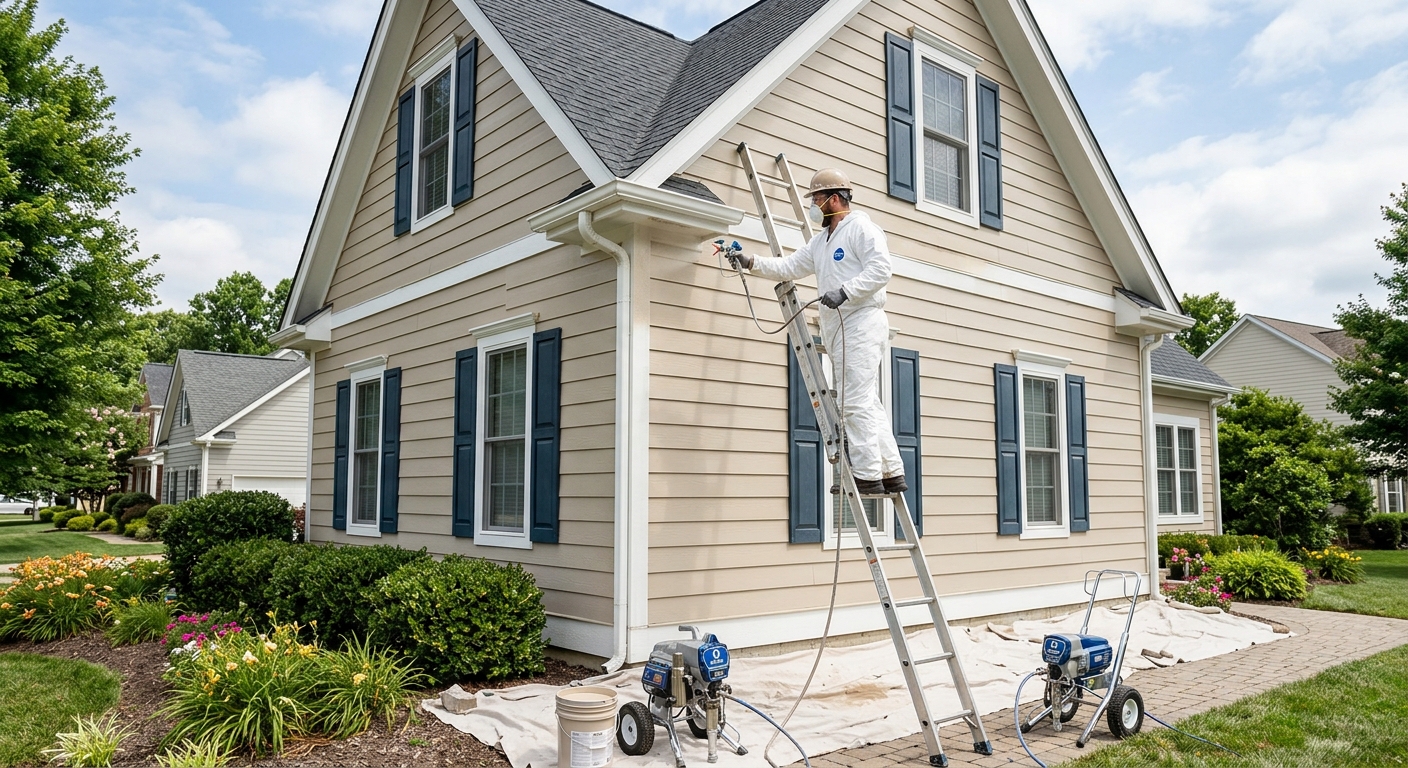
Painting options and costs in Gold River
Gold River is a small community where exterior painting is very weather-driven, and that directly shows up in pricing. With 77.0% of local dwellings built before 1981, many homes arrive at the painter with weathered trim, older siding, and a level of prep that newer houses simply don’t need. In these cases, scraping, caulking, patching, and thorough priming aren’t “extras”—they’re usually the difference between paint lasting 5–7 years versus peeling or blistering sooner. (Statistics Canada, 2021 Census). Interior work tends to be less season-bound, but coastal humidity can still affect drying time and mildew-prone areas such as basements and bathrooms.
On Vancouver Island and the Coast, crews typically focus exterior work in the late-spring to early-fall window when conditions are more reliable (think roughly 10°C to 30°C with manageable humidity). That schedule pressure is part of why peak pricing can run higher here than in milder regions. You’ll also see steady demand in and around Campbell Road and the broader Gold River townsite, where older single-detached homes are common and touch-ups turn into full repaints when people notice failing caulk or worn trim.
Because of the climate, labour availability, and the prep realities of older housing, two contractors can quote different totals for the “same” repaint. The table below gives a practical way to compare common options and see where your scope fits.
| Service |
What's Included |
Typical Duration |
Price Range |
| Interior — whole home (walls, ceilings, trim) |
Masking, patching of minor defects, sanding, prime as needed, walls/ceilings paint, caulk where required, standard trim/doors painting, clean-up |
3–7 days |
$3,800–$6,500 |
| Interior — per room (standard bedroom or living room) |
Prep and patching of typical scuffs/holes, prime as needed, wall and ceiling paint, trim/door caulking and painting (doors often included) |
1–3 days |
$2,000–$3,500 |
| Exterior — full house (siding, trim, soffits) |
Pressure wash/treatment as required, scrape/sand, repair caulking and minor wood/fibre cement touch-ups, spot prime, two-coat exterior system, paint soffits/trim, protection and disposal |
5–12 days |
$6,000–$11,500 |
| Exterior — trim and accent colours only |
Surface prep focused on trim only, scrape/sand edges as needed, prime spots, two coats on trim/accent areas, caulking touch-ups, protection and clean-up |
2–6 days |
$3,500–$7,500 |
| Kitchen cabinet painting (doors, frames, spray finish) |
Degrease, light sanding, bonding primer, sprayed or carefully brushed finish, hardware removal/reinstall (if applicable), cabinet-ready clean-up |
4–9 days (plus dry time) |
$2,000–$5,000 |
| Specialty / faux finish (accent wall, texture) |
Surface skim/patch for level look, basecoat, special application (roller/texturing/faux), protective topcoat, extra masking and detailing |
2–5 days |
$1,200–$4,500 |
Prices are estimates only and vary by project scope, site access and material selection.
What affects the price of painting in Gold River
If you’re seeing quote differences of 30–50% for what looks like the “same” job in Gold River, it’s usually because the scope of prep and the build quality of the coatings aren’t actually the same. On Vancouver Island and the Coast, exterior painting is tightly weather-bound. Contractors need temperatures roughly above 10°C with drying and curing time across the day—so crews schedule around forecasted windows, not just the calendar. Coastal BC’s frequent rain, morning dew, and higher humidity mean crews use mildew-resistant, high-quality coatings, but they also plan more carefully around delays. When the reliable exterior season is tight, labour demand spikes and peak-week pricing rises.
Older homes throughout the region commonly drive prep costs. For many repaints, surface prep can become the majority of labour—often 50–70%—because scraping, sanding, caulking, and priming are required before paint can adhere in the damp environment. In a typical full exterior project, that prep portion can shift your total by thousands, especially when timber/stucco edges need repair and extra primer. With homes built before 1981 making up a large share (77.0% per Statistics Canada, 2021 Census), it’s common to see quotes that still fall within the exterior band of $3,500–$12,000, but differ based on how much repair and priming is included. Interior can also vary: a “whole home” at $2,000–$6,500 depends heavily on whether trim, ceilings, and patching are part of the work.
Concrete examples I see locally: (1) a home with failing caulk and chalking trim usually triggers more scraping and caulking time, pushing exterior closer to the upper end; (2) if your siding is in good condition and the prior paint is sound, a trim-only repaint can stay near the lower trim/accent range; (3) for interior bathrooms or basements with mildew staining, premium coatings and additional spot-priming can add cost but reduce call-backs.
| Price Factor |
Why It Matters |
Cost Impact |
| Surface prep — scraping, sanding, patching drywall or wood |
Proper adhesion and hiding require getting loose/failed material off and filling low spots |
Can be 50–70% of exterior repaint labour on older homes |
| Number of coats — 2-coat system over primer vs. 1 coat over existing |
Coverage and durability depend on correct layering, especially in damp coastal conditions |
Often adds $300–$1,500+ depending on house size and current paint condition |
| Paint quality tier — contractor-grade vs. premium (Benjamin Moore, Sherwin) |
Premium systems typically build better film thickness and mildew resistance |
Material and labour changes can move totals by 10–25% |
| Ceilings and trim — adds significant time vs. walls-only |
Ceilings need careful edging; trim requires more detail work and caulking |
May add 20–40% to interior scope |
| Exterior season window — short season raises summer rates |
Delays cost money; crews charge for reliable scheduling and weather risk |
Can increase costs by several hundred to thousands during peak months |
| Lead-safe precautions — required for pre-1978 homes with lead paint |
Professional lead-safe methods reduce dust and manage disposal if lead is present |
Can add $500–$2,500+ depending on extent of sanding/scraping |
| Surface material — drywall vs. plaster vs. wood vs. stucco |
Different substrates need different primers, leveling, and bonding strategies |
Primers and prep can shift totals by $300–$1,200 |
| Height and access — multi-storey exterior requires scaffolding or lifts |
Safer access takes time and equipment |
Often adds $800–$3,000+ for larger/steeper elevations |
Permits & regulations in British Columbia
In British Columbia, painting typically does not require a permit. That means your job usually proceeds based on the contractor’s work practices and good building stewardship (surface preparation, containment when needed, and safe disposal), not on a municipal approval process. The main regulatory consideration for homeowners is health guidance around older homes: for homes built before 1978, health guidelines recommend testing for lead paint before sanding or scraping. If lead is present, lead-safe work practices should be used (wet methods, HEPA vacuuming, proper containment and disposal). This is not legally mandated for homeowners in most situations, but it’s standard practice for professional contractors to protect your family and their crew.
Before work begins, confirm your contractor carries liability insurance and workers’ compensation coverage (WSIB/WCB coverage). Also request a written contract that clearly states paint brands or approved equivalents, sheen level, number of coats, surface prep steps (scraping/sanding, caulking, spot priming), and how disposal is handled.
Step-by-step for Gold River homeowners: (1) ask for proof of insurance and coverage—typically a certificate of insurance and a workers’ compensation clearance document; (2) check the contractor’s business information/credentials using the online registry link they provide; (3) request the clearance letter or coverage confirmation and verify the effective dates; (4) ensure the scope details what they will and won’t disturb (for example, how they handle pre-1978 trim or painted surfaces if lead is suspected).
Interior vs exterior painting — getting the best result in Gold River
In Gold River, a “good looking” paint job isn’t the same as a long-lasting one—your success comes from matching prep and coatings to the way the coastal environment stresses surfaces. For interior projects, the biggest driver of durability is surface prep: filling and sanding minor defects, using primer on stains or repairs, and making sure sheen transitions are smooth. Brand matters, but it can’t fix poor adhesion. Sheen choice also affects how your walls and trim age under daily life: flatter finishes tend to hide wall imperfections, while semi-gloss on doors/trim cleans up well and resists scuffs. Two coats over a proper primer almost always outlast one thick coat, especially when you’re changing colours or covering patchwork.
For exteriors, the key is surface prep in British Columbia’s coastal conditions. Cracked caulk should be removed and replaced before painting so water doesn’t wick under the coating. Primers must suit the substrate—different strategies are needed for bare wood, previously painted wood, and other materials. In Gold River, mildew resistance and temperature-stable product selection help the paint survive damp spells and morning dew. If your home has pre-1978 components, lead-safe precautions may apply before sanding or scraping to reduce dust and manage disposal.
Cabinet painting is often the most “budget-friendly” upgrade because it targets one high-visibility area without replacing everything. For example, if replacing kitchen cabinets would put you well beyond the $6,500 interior whole-home band, painted cabinets typically land closer to the cabinet painting range (often around $2,000–$5,000), assuming prep and surface finish are done correctly.
| Project Type |
Key Prep Step |
Recommended Coats |
Price Band |
| Interior — fresh drywall (new construction) |
Prime drywall thoroughly to prevent flashing and ensure uniform sheen |
2 coats topcoat (after primer) |
$2,500–$6,500 |
| Interior — repaint (good condition, no repairs) |
Clean, spot-prime any marks, light scuff-sand glossy areas |
2 coats where needed for coverage/colour change |
$2,000–$4,500 |
| Interior — repaint (patching and priming needed) |
Patch, sand smooth, prime repaired sections to match absorption |
2 coats topcoat plus primer over repairs/stains |
$3,000–$6,000 |
| Exterior siding (wood or fibre cement) |
Scrape/sand back to sound material; caulk joints; spot prime |
Primer (as required) + 2 coats exterior system |
$5,500–$12,000 |
| Exterior trim and accents only |
Prep edges and caulk before painting trim for tight seals |
2 coats over primer spots |
$3,500–$7,500 |
| Kitchen cabinets (spray finish) |
Degrease, bond primer, careful sanding between coats |
Primer + 2 finish coats (sprayed for smoother look) |
$2,000–$5,000 |
How to choose a painting contractor in Gold River
Start by verifying the contractor’s credentials in British Columbia. Ask for (1) proof of liability insurance (certificate of insurance showing your jobsite/address or at least the coverage details); (2) workers’ compensation coverage (WCB/WSIB clearance documentation or equivalent proof, depending on the work arrangement); and (3) their business registration/credentials as applicable for operating in BC. If they can’t provide paperwork promptly, that’s a major risk signal—especially on exterior work where access and weather can increase the likelihood of property damage.
Next, get 2–3 itemised written quotes. The best quotes separate labour and materials, and they list prep steps and inclusions such as pressure washing, scraping/sanding, caulking, primer type, number of coats, and disposal. Avoid lump sums that don’t specify sheen, paint brand/line, or whether trim and ceilings are truly included. Confirm what’s excluded (for example, rotten wood replacement, lead-safe containment/HEPA vacuuming if sanding pre-1978 surfaces, or permit pulls—painting usually does not need one). Make sure product and prep scope match the conditions in Gold River’s damp marine climate.
Warranty matters: ask for a workmanship warranty length and whether it’s tied to specific maintenance (like cleaning schedules). Payment schedule should be conservative—never more than 10–15% upfront, and hold back until the job is complete and final touch-ups are done. Finally, request a written timeline with start date and estimated completion, recognizing that weather windows on Vancouver Island can shift exterior work.
- Request certificate of insurance and verify dates before work
- Request proof of workers’ compensation coverage and verify clearance
- Ask for a written scope: prep steps, caulking, priming, and cleanup
- Confirm paint line/brand, sheen level, and exact number of coats
- Ensure disposal is included (trash, masking materials, sanding debris)
- Clarify if lead-safe practices are included for pre-1978 work where sanding/scraping occurs
- Ask what happens if rain delays exterior work (schedule flexibility and communication)
- Get itemised quotes (labour + materials), not just a total
- Check how they protect landscaping, windows, and siding edges
- Confirm warranty: workmanship duration and what it covers
- Use a payment schedule with a final holdback until completion
- Review references/photos from similar Gold River coastal projects
Red flags I often see in Gold River: quotes that skip surface prep details, vague “paint and go” scopes, missing insurance/coverage paperwork, no written warranty terms, and payment requests that exceed 10–15% upfront or refuse a holdback until final walkthrough.
Frequently asked questions — painting in Gold River
Should I paint or replace my cabinets?
In Gold River, painting kitchen cabinets is often the smart choice if the boxes are solid and the doors are only worn, dated, or scratched. If the cabinet frames are structurally sound, cabinet painting can deliver a brand-new look at a fraction of replacement. As a benchmark, cabinet painting (doors and frames) commonly lands in the $2,000–$5,000 range, while full replacement is usually much higher once you factor in new cabinetry, labour, and material lead times. The deciding factors are water damage, swollen particleboard, and whether your style needs change so big that new doors/materials are required. A good contractor should also explain whether they’ll use a bonding primer and a sprayed finish for durability in BC’s humid conditions. (Statistics Canada, 2021 Census)
How do I prep walls before painting?
For walls in British Columbia homes, prep is what prevents peeling, flashing, and uneven sheen. Typically, the contractor should handle the heavy prep: filling holes or cracks, sanding, and priming repaired or stained areas. If you’re doing light prep yourself in Gold River, focus on cleaning—remove grease, dust, and any bathroom residue—then let the surface dry fully. Scrape off loose paint and caulk gaps if they’re obvious, but avoid large sanding projects if your home is pre-1978 and you suspect lead paint. In practice, pro crews often spot-prime before the topcoat so repairs don’t telegraph through. If your quote includes 2 coats, it should also include the primer strategy; skipping primer is a common shortcut that shows up later as uneven coverage or early failure.
Do I need to worry about lead paint in an older Gold River home?
Gold River homes are often older—77.0% of dwellings were built before 1981 (Statistics Canada, 2021 Census)—so lead-safe planning is a real consideration when sanding or scraping is involved. In BC, health guidelines recommend testing for lead paint before disturbing pre-1978 painted surfaces, and using lead-safe work practices if lead is present. For homeowners, this is not always legally mandated the way a municipal permit would be, but professional contractors treat it as standard practice because the risk is dust exposure. If you’re repainting only with minimal abrasion (no scraping/sanding), risk is lower, but once dry sanding begins, containment steps matter. Ask your contractor how they handle pre-1978 trim, what dust-control method they use, and how waste disposal is managed—those details should be in your written contract.
How long does it take to paint a house?
Timing in Gold River depends on whether you’re doing interior, exterior, or both—and on weather windows for the outside. Interiors generally move faster because drying is more controllable indoors, especially if the home is heated and ventilated. For a whole-home interior, a typical range is 3–7 days depending on rooms, patching, and trim level. Exteriors are more schedule-sensitive in the Vancouver Island and Coast climate: crews often need a stretch of drier conditions and manageable humidity for application and cure, usually during late-spring to early-fall. A full exterior repaint commonly takes 5–12 days on-site because of prep (scraping and caulking) and system time. A quality contractor should provide a written start and completion estimate and explain what happens if rain shifts the schedule.
What's the difference between paint quality tiers?
Paint “tiers” usually refer to how the product performs in coverage, film build, durability, and resistance to mildew and moisture—big factors on Vancouver Island and the Coast. Contractor-grade coatings can work well when the prep is excellent, but premium systems often provide better hiding and more reliable performance in damp environments. In practical homeowner terms, premium coatings can reduce the risk of early chalking or mildew staining and may require less “chasing” for coverage, which can make the finish look more consistent. That said, even premium paint won’t overcome poor surface prep or skipping primer. When comparing quotes in Gold River, don’t just look at totals—ask what brand/line they’re using (and the number of coats), and whether they’re recommending mildew-resistant products for coastal bathrooms and basements. Your best value is often the quote that matches prep and system to the substrate.
How do I compare painting quotes?
To compare painting quotes fairly in Gold River, match scope line-by-line. Ask for itemised labour and materials, including prep tasks (scrape/sand, patching, caulking, spot priming), paint brand/line, sheen, and the exact number of coats. Confirm whether ceilings and trim are included or only walls, and whether disposal and protection (masking, covering floors, cleanup) are part of the price. For context, a whole-home interior can range roughly from $2,000–$6,500 depending on repairs and trim, while exterior full-house projects often fall around $3,500–$12,000 depending on condition and access. Also compare how each contractor handles coastal weather risk—repaint schedules and cure time matter. Finally, check insurance/coverage paperwork and look for clear warranty terms; the cheapest number is often the costliest if prep is missing.