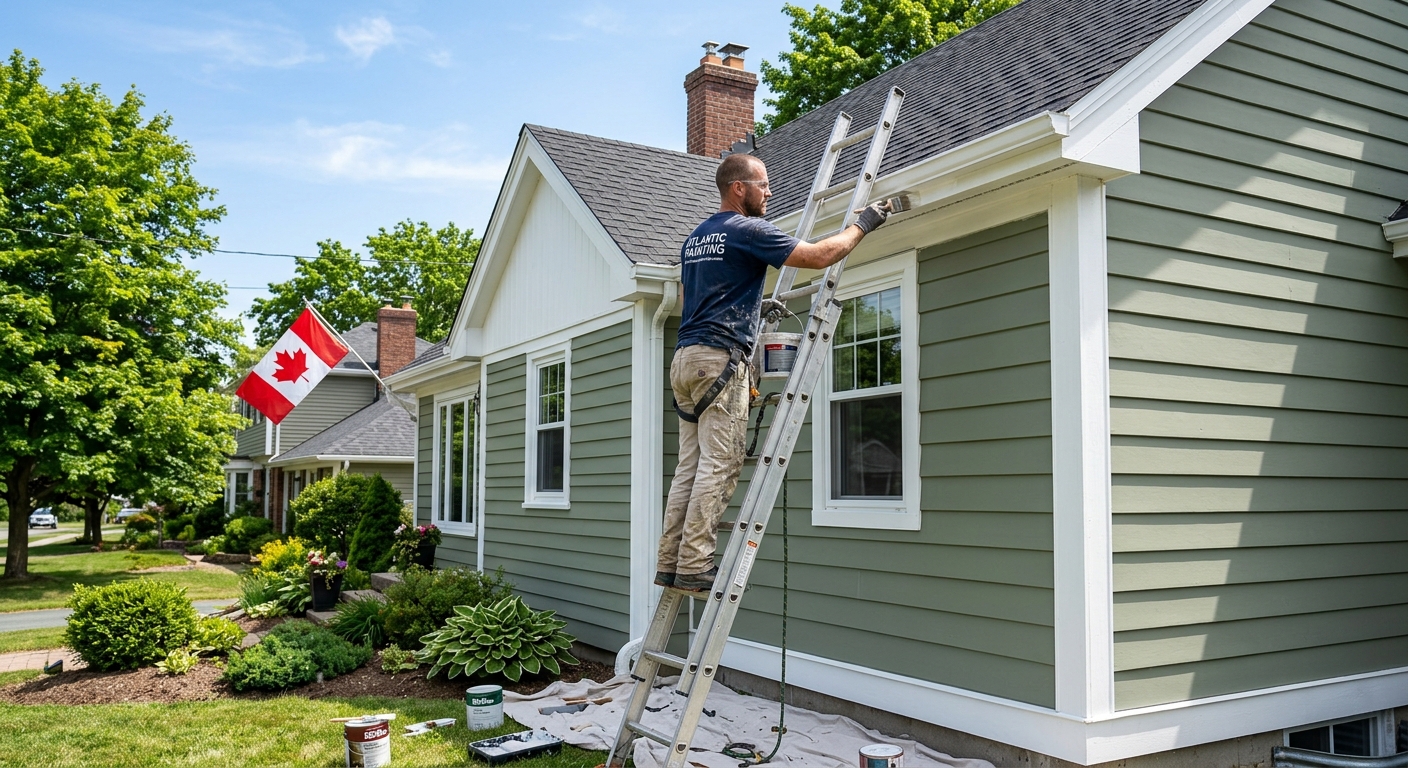
Painting options and costs in Port McNeill
Port McNeill is a small, coastal community where painting pricing is closely tied to weather, surface condition, and how much prep your home needs. With 62.3% of dwellings built before 1981, many houses have older siding, trim, and interior walls that tend to require more labour to scrape, sand, patch, and prime before any topcoat goes on. On top of that, homeowner households make up 69.6% of households, which usually means repainting and trim refresh projects are planned carefully—but in the right season.
On Vancouver Island and the Coast, crews typically aim for a reliable late-spring to early-fall window when temperatures are roughly between 10°C and 30°C and humidity is manageable. Coastal BC’s marine weather brings frequent rain, morning dew, and higher baseline humidity, so contractors schedule to protect coats from getting trapped moisture. That short, demand-heavy season can mean higher summer rates, especially for exteriors and for neighbourhood pockets where access is more difficult.
In Port McNeill, demand is often especially high along the busier residential corridors near the harbour area, where homeowners commonly want refreshed siding and trim to keep up appearances for summer visitors. If your home is in that mix, booking earlier usually improves your choice of dates and reduces rush surcharges. Use the table below to compare typical cost ranges for interior, exterior, and cabinet or specialty work in this area.
| Service |
What's Included |
Typical Duration |
Price Range |
| Interior — whole home (walls, ceilings, trim) |
Surface prep (patch/sand/prime as needed), 2-coat finish system, caulking, masking, basic protection/cleanup; paint supplied by homeowner or contractor (as quoted) |
5–12 days |
$3,800–$6,500 |
| Interior — per room (standard bedroom or living room) |
Prep and paint for walls and ceiling; trim spot work (light caulking and touch-ups) included unless noted otherwise |
1–3 days |
$2,000–$4,200 |
| Exterior — full house (siding, trim, soffits) |
Thorough prep (scrape/sand, caulk, prime bare/failed areas), full exterior coating system suited to damp coastal conditions, protection/masking, cleanup |
7–18 days |
$6,000–$12,000 |
| Exterior — trim and accent colours only |
Prep for trim areas, spot-priming, 2-coat finish on trim/specified accents; avoids full siding replacement of old coating unless included |
3–8 days |
$3,500–$6,800 |
| Kitchen cabinet painting (doors, frames, spray finish) |
Degrease/clean, sanding and priming, spray-applied topcoats, hardware masking, light repair as assessed on site |
4–12 days |
$2,200–$5,000 |
| Specialty / faux finish (accent wall, texture) |
Surface preparation for texture consistency, multiple-coat build as required, finishing technique (glaze/faux/texture), protective topcoat where needed |
2–7 days |
$1,000–$4,500 |
Prices are estimates only and vary by project scope, site access and material selection.
What affects the price of painting in Port McNeill
In Port McNeill and across Vancouver Island and the Coast, two quotes for the same “paint the same colours” request can realistically differ by 30–50%. The main drivers are how much prep is required, how many coats the contractor plans for, and how the coastal weather window affects scheduling and cure time for exteriors. Even when the topcoat brand is similar, labour intensity changes significantly from one house to another—especially when older homes are involved.
For exterior work, the season is tightly climate-bound in Coastal BC: crews rely on temperatures roughly between 10°C and 30°C, enough dry hours for application, and at least a full day above 10°C to cure properly. Shorter, reliable windows concentrate demand, so premium scheduling in peak months is common. In addition, the marine climate elevates humidity and dew, so contractors often lean on mildew-resistant, high-quality coatings; that’s a cost increase but usually protects longevity.
Older housing stock also matters. Across the region, homes are frequently built with surfaces that have weathered coatings or older caulk lines. On repainting jobs, surface prep can be 50–70% of total labour time, which helps explain why an exterior repaint can land in a broad band like $3,500–$12,000. For interiors, a walls-only refresh might be closer to the lower interior band (like $2,000–$6,500 for a whole home), but trim-heavy work still requires time-intensive masking, sanding, and edge work.
Concrete examples from Port McNeill: (1) a home with peeling trim and failed caulk often jumps cost because we must remove loose material, spot-prime, and re-caulk before topcoats; (2) a house with good existing paint and minimal repairs can stay closer to the trim/accent pricing rather than full-house exterior pricing; and (3) multi-storey access or tight staging near fences can raise labour and safety time.
| Price Factor |
Why It Matters |
Cost Impact |
| Surface prep — scraping, sanding, patching drywall or wood |
Prep determines adhesion; coastal humidity amplifies failures caused by weak bonding |
High (often 50–70% of labour on repaints) |
| Number of coats — 2-coat system over primer vs. 1 coat over existing |
Proper coverage and uniform sheen require coat build-up, especially after priming |
Medium to high (adds labour and material) |
| Paint quality tier — contractor-grade vs. premium (Benjamin Moore, Sherwin) |
Higher solids and durability can reduce recoat frequency and improve mildew resistance |
Medium (material delta; often better long-term value) |
| Ceilings and trim — adds significant time vs. walls-only |
Cut-in work, masking, and edge sanding multiply labour hours |
Medium to high |
| Exterior season window — short season raises summer rates |
Demand compresses timelines; crews may price for schedule risk and forecast dependence |
Medium (especially for full-house exteriors) |
| Lead-safe precautions — required for pre-1978 homes with lead paint |
Professional containment and safe cleanup add setup time and disposal costs |
Medium to high (only if lead risks are present) |
| Surface material — drywall vs. plaster vs. wood vs. stucco |
Different substrates need different primers and prep methods for adhesion |
Medium |
| Height and access — multi-storey exterior requires scaffolding or lifts |
Safety equipment and handling time increase labour and site requirements |
High on multi-storey properties |
Permits & regulations in British Columbia
In British Columbia, painting typically does not require a permit for ordinary interior or exterior repainting. For homes built before 1978, health guidelines recommend that you test for lead paint before sanding or scraping. If lead is present, professional lead-safe practices are the standard approach, including wet methods to reduce dust, HEPA vacuuming, proper containment, and disposal procedures. This is not usually a homeowner “permit” issue, but it is something professional contractors handle as part of safe work practices.
Before work begins in Port McNeill, confirm that your contractor carries liability insurance and has workers’ compensation coverage (WSIB/WCB). Also ask for a written contract that clearly states the paint brand and sheen, the number of coats, and what prep work is included (for example, whether caulking, spot-priming, and repair of weathered trim are part of the scope).
What does require a permit? Painting itself generally does not. However, if your project includes components that fall under other regulated scopes—like structural changes, significant demolition, or certain specialized work—those may trigger separate permitting or approvals. For repainting, your practical focus is safe preparation and clean-up, not municipal permits.
How to verify: (1) check the contractor’s licensing/registration information through the appropriate British Columbia contractor registry or business listing (use the company name exactly as shown on the quote); (2) request a certificate of insurance showing current liability coverage and matching the legal name on the contract; (3) ask for proof of workers’ compensation account status and coverage; and (4) get a clearance letter or documentation where your contractor indicates it is required by their lead-safe plan (typically handled by the contractor as part of safe procedures).
Interior vs exterior painting — getting the best result in Port McNeill
In Port McNeill, the difference between a long-lasting paint job and a premature failure is rarely the colour—it’s almost always preparation, coat build-up, and how the system is matched to the environment. For interiors, surface prep is more important than the brand of topcoat. Proper filling, sanding, and priming for stained or repaired spots prevents bleeding and patchiness. Sheen choice also matters: flat or matte helps hide wall imperfections (common for ceilings and low-traffic walls), while eggshell is a popular middle ground for living rooms and bedrooms. Kitchens and basements often need more cleanability, so satin or semi-gloss is frequently chosen for durability on high-touch surfaces. And yes: two coats over the right primer usually outlast one thick coat, because the film builds evenly and resists scuffing.
Exteriors have even fewer shortcuts. Coastal BC’s marine climate means moisture management is critical: caulking before painting helps prevent water ingress under trim and along joints, and primer selection matters for different substrates (wood versus fibre cement versus previously painted surfaces). A good exterior system also needs mildew-resistant, damp-environment performance and the ability to cure during realistic weather windows.
If you’re considering kitchen cabinet painting instead of replacement, cabinet finishes can be a budget-friendly option when doors and frames are structurally sound. For example, cabinet painting typically lands in the $2,200–$5,000 band; compared with full cabinet replacement, that price gap is often justified because you’re paying for a high-quality finish rather than new cabinetry—provided the prep and spray process are done correctly.
For pre-1978 homes, lead-safe precautions should be included in prep planning before sanding or scraping. That added work can move the project toward the higher end of the exterior range, but it helps you avoid rework and keeps the job safer for the household.
| Project Type |
Key Prep Step |
Recommended Coats |
Price Band |
| Interior — fresh drywall (new construction) |
Seal and prime new drywall; caulk joints for a clean edge |
2 topcoats (with primer/sealer as required) |
$2,500–$5,500 |
| Interior — repaint (good condition, no repairs) |
Light sanding/scuffing and spot-prime if needed |
2 coats |
$2,000–$4,800 |
| Interior — repaint (patching and priming needed) |
Patch repairs, sand feather edges, prime repaired/stained areas |
2 coats (plus primer where repairs occurred) |
$2,500–$6,500 |
| Exterior siding (wood or fibre cement) |
Scrape/sand loose coatings, wash, caulk gaps, spot prime bare areas |
2-coat system over primer |
$6,000–$12,000 |
| Exterior trim and accents only |
Prep trim edges and caulk before finishing to prevent future water paths |
2 coats |
$3,500–$6,800 |
| Kitchen cabinets (spray finish) |
Degrease thoroughly, sand for adhesion, prime for a smooth base |
3-step build (primer + 2 finish coats commonly) |
$2,200–$5,000 |
How to choose a painting contractor in Port McNeill
Start by verifying British Columbia coverage and professionalism. Ask for (1) proof of liability insurance—your certificate should list the contractor’s legal entity and show coverage effective dates; (2) workers’ compensation coverage (WSIB/WCB) so you’re not responsible if a worker is injured; and (3) licensing/registration details through the appropriate British Columbia contractor registry or business listing. Then confirm the company name on the invoice matches the legal name on the insurance paperwork.
Get 2–3 itemised written quotes. You want a breakdown that separates labour and materials, including line items for prep (scraping, sanding, caulking, patching), primer, number of finish coats, and any special coatings for coastal mildew resistance. Avoid a “lump sum” quote unless the scope is exceptionally clear. Read what’s excluded: is paint colour matched and supplied by the contractor or you, is waste disposal included, and will they return for touch-ups after final coat cure?
Warranty matters. Ask for the workmanship warranty length and whether it’s tied to specific product systems. Also ask if product/manufacturer warranties apply only when their specified primer and topcoat are used. For payment, never pay more than about 10–15% upfront; hold back a portion until the job is complete, inspected, and cleaned up. Finally, insist on a start date and completion estimate in writing, because exterior scheduling in Port McNeill depends heavily on forecastable dry periods and workable humidity.
- Ask for a sample schedule that accounts for weather windows for exterior work.
- Confirm liability insurance certificate and workers’ compensation coverage before signing.
- Get an itemised quote with labour + materials and the number of coats.
- Ensure prep scope is explicit: caulking, sanding, scraping, spot-priming, and repairs.
- Check whether disposal (paint waste, sanding debris) is included.
- Clarify paint brand, sheen level, and whether primer is included for repairs and bare spots.
- Ask who does colour verification on-site and when (before work starts).
- Request a written warranty for workmanship and how claims are handled.
- Confirm whether prep includes masking/protection and how floors/landscaping are covered.
- Agree on a payment schedule with small deposit and a holdback after completion.
- Confirm cleanup standards: dust control, vacuuming, and debris removal at end of each day.
- Verify they plan for pre-1978 lead-safe practices if your home is older.
Red flags in Port McNeill include: refusing to provide insurance/coverage documentation, quoting exterior work without talking about weather windows and cure time, giving only a single lump sum with no prep details, demanding a large upfront payment, and starting without a written scope that states coats and primer responsibilities.
Frequently asked questions — painting in Port McNeill
What's the difference between paint quality tiers?
In Port McNeill and across coastal British Columbia, “quality tier” usually means how well a paint performs on adhesion, coverage, durability, and mildew resistance—especially when humidity and morning dew are common. Premium lines often have higher solids and better binder performance, which can improve how evenly the finish lays down and how resistant it is to scuffing and moisture-related issues. Contractor-grade can still be suitable for many interiors, but on older exteriors (62.3% of homes built before 1981), prep and primer quality usually matter just as much as the topcoat. A practical way to compare is to ask what specific product line is proposed and whether the quote uses a full system (primer + 2 finish coats), not just “one coat plus touch-ups.” If you’re budgeting, you can often keep topcoat premium while staying efficient on areas that need less prep.
How do I compare painting quotes?
When comparing quotes in Port McNeill, compare scope first—not just totals. Ask for the same coat count across quotes (for example, a two-coat system over primer for most repaints) and confirm what prep is included: scraping loose coating, sanding, patching, caulking, and spot-priming repaired or bare areas. For exteriors, also confirm how they handle coastal curing: do they plan around dry hours and temperature stability so the coating can cure properly? It’s common to see differences of 30–50% because one contractor allows for extensive prep while another assumes “good paint underneath.” Use price bands as a sanity check—exterior full-house work here often lands roughly in the $6,000–$12,000 range depending on repairs and access, while trim-only exteriors may be around $3,500–$6,800. If the scope lines up and the numbers differ, then you can focus on product tier and workmanship details.
What paint sheen should I use in different rooms?
Sheen choice is about how the surface will be cleaned and how it needs to hide imperfections. In typical Port McNeill interiors, ceilings are commonly flat or matte to reduce appearance of roller marks. Walls in bedrooms and living areas often use matte or eggshell; eggshell is usually a good balance because it cleans better than flat. Kitchens, trim areas, and high-touch areas typically benefit from satin or semi-gloss because they tolerate wiping and reduce scuff marks. Bathrooms and damp areas (like some coastal basements) often do better with mildew-resistant products and a sheen that can handle regular cleaning. For exteriors, contractors usually select products that match substrate needs and outdoor durability rather than treating sheen as purely aesthetic. If your quote doesn’t specify sheen by room, ask—“same paint everywhere” can lead to scuffing, glare, or patchiness. Proper primer and correct coat build-up still matter more than sheen alone.
Can I paint my house exterior in spring or fall in Port McNeill?
You can paint in spring or fall in Port McNeill, but you’re working around a tighter coastal weather reality than many inland areas. On Vancouver Island and the Coast, exterior painting needs workable drying conditions: crews generally look for temperatures around or above 10°C to apply and a full day above 10°C for proper curing, plus enough time to manage dew and rain. Spring can be fine if the week ahead is dry, but morning dew and cool nights can slow drying, which may cause adhesion problems. Fall can work as well, but scheduling becomes forecast-driven—one rainy stretch can push recoats out and compress the season. Because demand is concentrated into the late-spring to early-fall window, peak timing can raise rates. If you want the best outcome, ask contractors what dates they can hold for your exterior and whether they’ll adjust the schedule based on daily weather. That planning is part of why quotes vary.
How do I choose a painting contractor in Port McNeill?
Choose a Port McNeill contractor by verifying coverage and then matching scope details. First, ask for a certificate of liability insurance and proof of workers’ compensation coverage (WSIB/WCB). This protects you if something happens on-site. Next, make sure the contractor can show the required insurance documentation and operates under a clear legal business name that matches the contract. Then request 2–3 itemised written quotes that list labour, materials, primer, surface prep steps, and the number of finish coats—especially for older homes (62.3% of dwellings built before 1981 often need extra prep). For pre-1978 homes, ask how they plan safe prep around possible lead paint (testing and lead-safe methods if present). Finally, check warranty terms, clarify disposal and cleanup, and agree on payment—typically keeping deposits low (around 10–15%) and holding back until completion. If a contractor won’t put scope in writing, it’s usually a risk.
How many coats does an exterior repaint need in Port McNeill?
Most exterior repaints in Port McNeill are planned as a two-coat finish system over appropriate primer. The number of coats can increase when there are major repairs, significant colour changes, or areas where older coatings have failed and require additional priming for adhesion. Coastal humidity and marine dew mean the system needs enough film build and uniform coverage, not just “one heavy coat.” If the substrate is wood or fibre cement and there are bare or patched spots, spot-priming is required before the finish coats, so you may effectively be looking at primer plus two topcoats. Contractors often use mildew-resistant coatings suited to damp environments on Vancouver Island and the Coast. As a budgeting reference, full-house exterior work commonly falls around $6,000–$12,000, and part of what you’re paying for is the correct coat system plus prep and priming discipline.