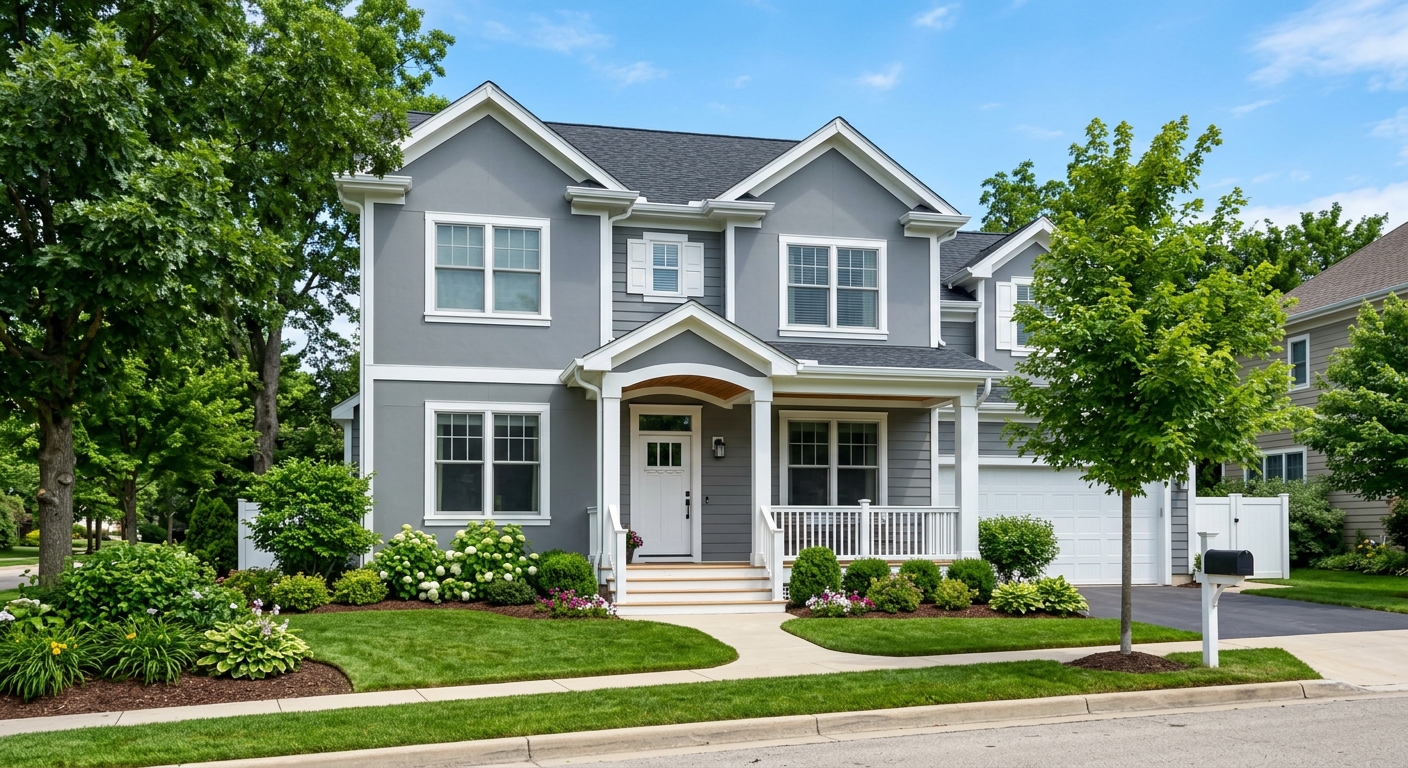
Painting options and costs in Campbell River
Campbell River homeowners usually have three main routes when planning a fresh coat: interior touch-ups, full interior repaints, and exterior work (which is the most weather-sensitive). With 71.8% of households in Campbell River owning their home and a housing stock where 40.0% of dwellings were built before 1981 (Statistics Canada, 2021 Census), many projects lean heavily on prep—scraping loose paint, sanding rough edges, patching defects, and priming bare or repaired areas. In homes that pre-date common paint technologies, crews may also apply lead-safe procedures to reduce dust and manage cleanup.
On Vancouver Island and the Coast, your quote reflects a short, tightly managed exterior window. Crews typically target the drier late-spring to early-fall period when temperatures are roughly between 10°C and 30°C and humidity is manageable. Coastal rain, morning dew, and frequent damp evenings mean contractors must coordinate around forecasts—often scheduling siding and soffits earlier in the day and delaying touch-ups until surfaces are fully dry. That compression of demand into a few months can push peak-season pricing higher, so booking early (especially around the Comox Valley Road corridor and North Campbell River) helps lock in a more realistic timeline.
Below are practical Campbell River price bands homeowners commonly see, including the prep time that older homes demand. Use these ranges to compare quotes line-by-line before you sign.
| Service |
What's Included |
Typical Duration |
Price Range |
| Interior — whole home (walls, ceilings, trim) |
Protection, patching/filling where needed, sanding, priming repaired areas, two coats on walls/ceilings, caulking, and paint for baseboards/door trim |
5–10 working days |
$2,900–$6,800 |
| Interior — per room (standard bedroom or living room) |
Prep and clean-up, two coats on walls and one coat touch on ceilings as required by condition, basic trim/door touch-up |
2–4 working days |
$2,000–$4,200 |
| Exterior — full house (siding, trim, soffits) |
Thorough washing, scrape/sand spot work, caulking, priming bare or stained areas, two-coat exterior system, and protected masking/clean-up |
1–3 weeks (weather-dependent) |
$5,200–$11,900 |
| Exterior — trim and accent colours only |
Surface prep focused on trim, caulking and spot-priming, two coats on trim/accent areas |
3–7 working days |
$3,500–$7,900 |
| Kitchen cabinet painting (doors, frames, spray finish) |
Degrease/clean, sanding, bonding primer, colour coats (often sprayed), hardware masking, and interior cabinet touch-ups |
5–12 working days |
$1,800–$4,900 |
| Specialty / faux finish (accent wall, texture) |
Wall coverage, texture preparation, base coat, finish coats, and protective topcoat where appropriate |
2–6 working days |
$900–$4,500 |
Prices are estimates only and vary by project scope, site access and material selection.
What affects the price of painting in Campbell River
You can see the same “paint the house” job land 30–50% apart across Vancouver Island and Coast contractors because scope is rarely identical. Two quotes can both say “exterior repaint,” yet one company includes aggressive prep and full priming, while another might treat failing areas as cosmetic. In Campbell River and nearby communities, that gap is amplified by older surfaces and a coastal climate that demands tighter scheduling and higher-end coatings.
Exterior work here is tightly climate-bound in the Vancouver Island and Coast region: crews rely on a short period when temperatures sit roughly between 10°C and 30°C with humidity you can manage. Coastal rain and morning dew increase the chance of paint skinning or poor cure if crews rush coats, so reputable contractors will wait for proper dry times and use mildeW-resistant, high-quality products designed for damp environments. The shorter, more reliable season concentrates demand and raises summer scheduling pressure—so if you paint mid-season without a booking, labour can cost more.
Prep is the biggest swing factor. For older homes (40.0% built before 1981, Statistics Canada, 2021 Census), scraping, sanding, caulking, and priming can represent 50–70% of total labour on repaints. For example, an exterior that starts near the lower band (around $5,200) can jump toward $9,500+ if there’s extensive weathered trim, failing caulking, or multiple patch/prime cycles. Conversely, an interior repaint in good condition can stay closer to $2,000–$4,200 because repairs drive time.
Two concrete Campbell River examples: first, wood trim that’s softened along the edges almost always needs more sanding and spot-priming before the topcoat; second, damp basements and coastal bathrooms often perform better with a mildew-resistant system, which adds material cost but helps prevent early staining.
| Price Factor |
Why It Matters |
Cost Impact |
| Surface prep — scraping, sanding, patching drywall or wood |
Most failures start from weak adhesion or loose material under the paint system |
Typically +15% to +45% on repaints |
| Number of coats — 2-coat system over primer vs. 1 coat over existing |
Coverage, durability, and colour uniformity depend on a complete coat build |
Often +10% to +25% depending on condition |
| Paint quality tier — contractor-grade vs. premium (Benjamin Moore, Sherwin) |
Premium coatings usually offer better hiding, bonding and mildew resistance |
+5% to +20% material difference; can reduce rework |
| Ceilings and trim — adds significant time vs. walls-only |
Ceilings require careful edging; trim needs more masking, caulking and smooth finish |
+10% to +30% |
| Exterior season window — short season raises summer rates |
Weather delays stack; crews may charge for priority scheduling |
+10% to +35% in peak months |
| Lead-safe precautions — required for pre-1978 homes with lead paint |
Proper containment and dust control add labour and disposal costs |
+5% to +25% depending on test results and condition |
| Surface material — drywall vs. plaster vs. wood vs. stucco |
Different substrates need different primers and preparation |
+5% to +30% |
| Height and access — multi-storey exterior requires scaffolding or lifts |
Safety setup and extended protection time increases overhead |
+15% to +40% on two-storey homes |
Permits & regulations in British Columbia
In British Columbia, painting typically does not require a permit for standard residential interior or exterior work. However, if you’re dealing with a home built before 1978, health guidelines recommend testing for lead paint before sanding, scraping, or aggressive preparation—because lead-contaminated dust can be generated during surface work. For professional crews, lead-safe work practices are standard when lead is present or suspected: wet methods to reduce airborne dust, HEPA-vacuuming, proper containment where practical, and correct disposal and cleanup. For homeowners, it’s not automatically “legally mandated,” but it is strongly treated as best practice by professional contractors due to the health risk.
What DOES require permits (and is not “just painting”) usually includes structural changes, significant alterations that affect building systems, or work that goes beyond decoration—like major renovations or certain trades that may trigger permitting. Pure repainting, caulking, trim refinishing, and cabinet painting typically do not.
For Campbell River, take three verification steps before work starts. First, confirm your contractor carries liability insurance by requesting a current certificate of insurance (COI). Second, ask for proof of workers’ compensation coverage (WSBC/WCB) so you’re not exposed if someone gets hurt on site. Third, use a written contract that clearly spells out paint brand and sheen, number of coats, which surfaces are primed, and whether removal/disposal of peeling material is included. If your contractor won’t put scope details in writing, treat that as a major risk.
Interior vs exterior painting — getting the best result in Campbell River
In Campbell River’s coastal climate, the difference between a job that looks great today and one that stays solid through damp seasons is preparation and coat build, not just paint brand. For interior work, homeowners often focus on topcoat colour, but the long-term result hinges on filling, sanding, priming, and clean edges. Two-coat durability over a proper primer almost always outlasts “one thick coat” over unprepared areas. Sheen matters too: flat paint hides imperfections on low-traffic ceilings, eggshell is popular in bedrooms and living rooms, and satin or semi-gloss is better for wipeable performance in kitchens, bathrooms, and trim.
For exteriors, surface prep is non-negotiable in British Columbia’s wet environment. Scrape what’s loose, sand feathered edges, and caulk before painting so you stop water ingress at the source—not under the coating. Substrate matters: wood may need a specific primer for tannin or moisture control, while fibre cement and other boards typically benefit from bonding primer systems that suit the texture. Mildew-resistant, temperature-stable coatings help in coastal damp conditions.
Cabinet painting is a good budget alternative to replacement when you’re prepared for the limitations: cabinets need proper degreasing, sanding, bonding primer, and typically sprayed finish for smoothness. For pre-1978 homes, lead-safe precautions may also be relevant when sanding or scraping painted surfaces—plan for that upfront rather than reacting mid-job.
To illustrate why options differ, consider a typical exterior full-house repaint. If a properly prepped scope lands around the mid-range (about $7,000), it’s often justified compared with a lighter scope that lands closer to $5,200—because the higher quote usually includes deeper priming and caulking attention. In Campbell River, that’s what helps prevent early peeling after the damp weather cycles.
| Project Type |
Key Prep Step |
Recommended Coats |
Price Band |
| Interior — fresh drywall (new construction) |
Drywall sealing/primer and spot-filling for a uniform base |
Primer + 2 finish coats |
$2,500–$5,900 |
| Interior — repaint (good condition, no repairs) |
Light sanding, cleaning, and proper masking |
2 finish coats (often with spot-priming if needed) |
$2,000–$4,800 |
| Interior — repaint (patching and priming needed) |
Patch/repair, sand smooth, and prime repaired areas |
Primer (patch areas) + 2 finish coats |
$2,300–$6,500 |
| Exterior siding (wood or fibre cement) |
Wash, scrape loose paint, sand edges, caulk, and prime bare areas |
Primer + 2 finish coats (system-based) |
$5,200–$12,000 |
| Exterior trim and accents only |
Trim-focused scraping/sanding and caulking before colour work |
Spot prime + 2 finish coats |
$3,500–$7,900 |
| Kitchen cabinets (spray finish) |
Degrease thoroughly, bond prime, and sand for adhesion |
Primer + 2 colour coats (often sprayed) |
$1,800–$4,900 |
How to choose a painting contractor in Campbell River
Start by verifying the three essentials for any contractor working on your Campbell River property: British Columbia coverage, liability, and scope accountability. For licensing, ask the contractor to provide their BC business/contractor registration details and any applicable provincial confirmation they hold. Next, request a current certificate of insurance (liability) so you can see it’s active. Finally, ask for proof of workers’ compensation coverage (WCB/WSBC) so you’re protected if an on-site incident occurs. A reputable painter won’t hesitate—if they do, that’s your first warning sign.
Then get 2–3 itemised written quotes. You want a line-by-line breakdown that shows labour and materials, and exactly what’s included: surface prep scope, number of coats, priming plan, brand/line of paint, caulking materials, and whether power washing and disposal are included. Avoid lump sums that don’t show what they’re actually doing.
Read exclusions carefully. Does the quote include permit pulls if needed for adjacent work (most pure painting doesn’t), and does it include waste disposal of scraped material? Ask about warranty: confirm a workmanship warranty length and whether product/manufacturer warranties apply. If the contractor offers warranty, ask if it’s transferable to future owners (this matters for resale).
Payment scheduling should be conservative—never more than 10–15% upfront—and hold back a portion until completion and final walkthrough. Also request a start date and completion estimate in writing, recognizing that coastal weather can affect exterior curing timelines.
- Ask for proof of liability insurance and WSBC/WCB coverage before work starts
- Request the exact paint brand and sheen (flat/eggshell/satin/semi-gloss) in the contract
- Confirm number of coats and where priming is required (patches, bare wood, stained areas)
- Check that exterior quotes include washing, scraping, sanding, and caulking scope
- Verify disposal is included for peeling/trim debris
- Ask who handles lead-safe practices if pre-1978 materials are involved
- Make sure the quote includes protection of landscaping, windows, and floors
- Confirm prep standard: feather sanding, spot patching approach, and dust control method
- Get a written timeline with start date and weather contingency notes
- Confirm warranty terms in writing (workmanship and product coverage)
- Avoid “change order” ambiguity—request a process for extras and approvals
- Review references or completed local projects in Campbell River or the surrounding region
Red flags: (1) quote is only a single number with no prep, coat, or material details; (2) they want a large upfront payment (more than 10–15%); (3) no written warranty or vague “best effort” language; (4) they won’t provide insurance/WSBC/WCB proof; and (5) they insist on starting exterior work without considering forecast/dry-cure needs.
Frequently asked questions — painting in Campbell River
When is the best time for exterior painting in Campbell River?
The best time for exterior painting in Campbell River is late spring through early fall, when the weather window is most reliable. On Vancouver Island and the Coast, crews typically need a period with temperatures roughly between 10°C and 30°C and manageable humidity so paint can dry and cure properly. Because coastal BC brings frequent rain and morning dew, mid-season scheduling depends heavily on forecasts, and touch-ups can be delayed if surfaces stay damp. If you want a smoother timeline, book early—peak demand during the summer stretch can tighten availability. Planning around dry days also reduces the risk of poor adhesion and early mildew staining, especially on north-facing siding and shaded trim.
How many coats of paint do I need?
Most residential repainting projects in British Columbia follow a two-coat finish system, typically with priming over repairs or bare material. If you’re repainting an interior space in good condition, two coats is common for uniform colour and durability. For patched areas, a primer for repairs helps the topcoat bond and keeps texture from flashing through. For exteriors, the coat count depends on substrate and previous paint condition—often primer + two finish coats when there’s bare wood, stain bleed, or significant prep. If you’re shopping budgets, remember that a “cheaper” quote that cuts priming or reduces coats is usually what drives peeling and rework later.
What paint is best for Campbell River's climate?
For Campbell River’s coastal damp conditions, the “best” paint is one matched to the surface and designed for mildew resistance and bonding. On exteriors, reputable contractors use high-quality exterior coatings with mildew-resistant additives, and they’ll select primer based on whether the substrate is wood, fibre cement, or older painted areas. In interior humid spaces like basements and coastal bathrooms, mildew-resistant systems can help prevent staining and odour issues. Colour and sheen selection also matter for wipeability—semi-gloss or satin tends to hold up better where cleaning is frequent. If a quote doesn’t specify the paint line or sheen, ask directly; the wrong tier can look fine initially but struggle in damp cycles.
How long does exterior paint last here?
Exterior paint longevity in Campbell River is largely determined by prep quality, proper caulking, and how well the paint system matches the substrate and moisture exposure. When prep is thorough—scrape loose material, sand feather edges, caulk correctly, and prime where needed—homes often see strong performance for multiple years even through wet seasons. When prep is rushed, the most common failures are peeling at edges, blistering over weak adhesion, and dark mildew staining in sheltered areas. To set expectations with real numbers: a full exterior repaint typically falls in the range of about $5,200 to $11,900 depending on prep intensity, access, and number of coats. Spending toward the higher end usually reflects deeper priming and better surface stabilization for the long haul.
Should I paint or replace my cabinets?
In many Campbell River homes, painting cabinets is the better choice if the boxes are structurally sound and the goal is to refresh the look without a full remodel. Painted cabinets can also be more realistic financially than replacement. However, cabinet painting requires prep discipline—cleaning/degreasing, sanding for adhesion, bonding primer, and a smooth finish approach (often spray for doors) so the final surface doesn’t look rough or patchy. If your cabinets have warped doors, major swelling from moisture, or you want a new layout, replacement or partial replacement may make more sense. As a practical reference, kitchen cabinet painting often runs roughly $1,800 to $4,900—so compare that against replacement plus demolition, hardware, and installation costs.
How do I prep walls before painting?
Prep depends on what your walls look like. In general for British Columbia interiors, start with cleaning: wash down greasy areas (especially kitchens) and remove dust so paint bonds. Fill holes and cracks with appropriate patch compound, let it cure fully, and sand until smooth. If you have glossy or peeling paint, you’ll need to scuff-sand and remove loose material so the new coating can grip—otherwise you can get adhesion issues. Spot-prime patched areas; two coats overall is usually needed for consistent coverage. For pre-1978 areas, if you’re dealing with uncertain paint condition and there’s scraping/sanding involved, consider lead-safe practices and testing before doing dusty prep yourself.