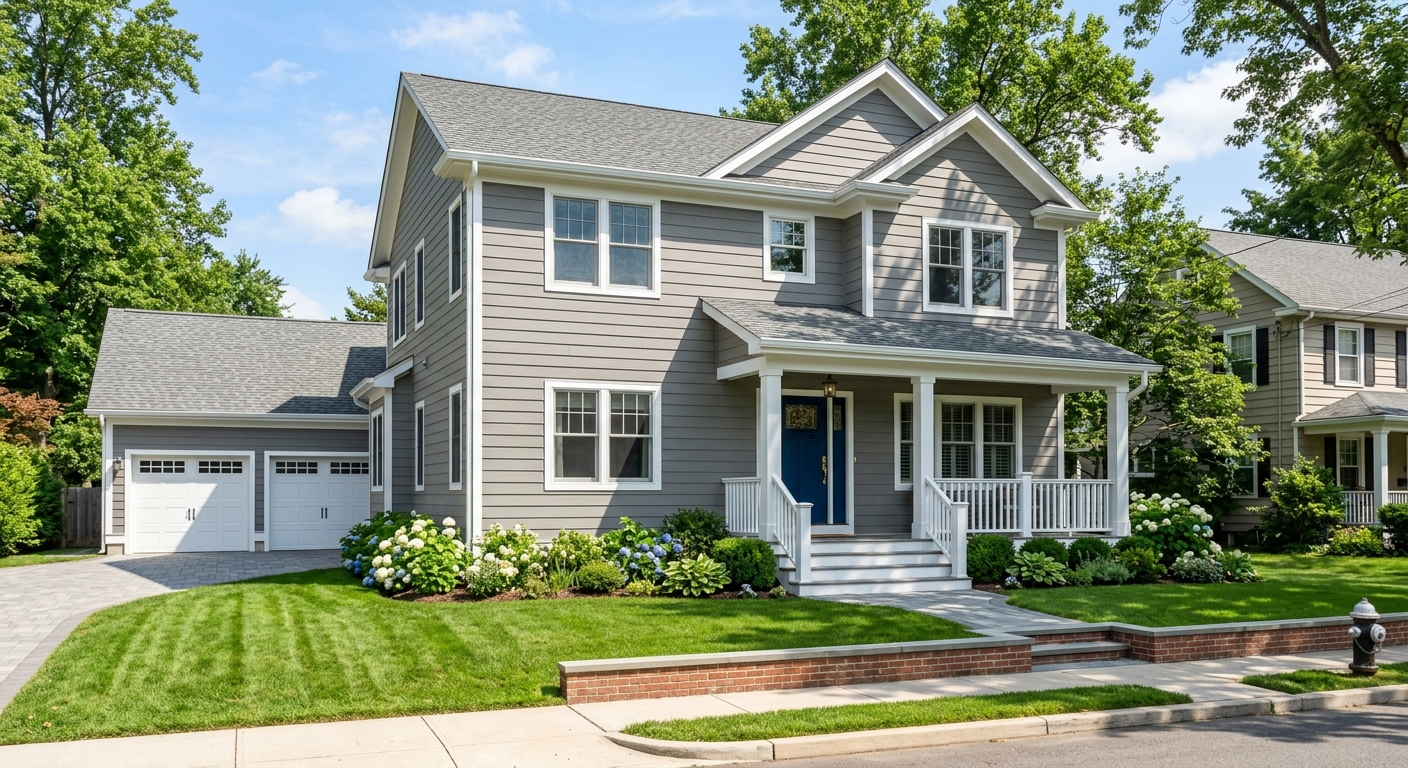
Painting options and costs in Newton
Newton in the Lower Mainland–Southwest is busy with trades year-round, but painting demand changes with the seasons. With a population of 159,390 (Statistics Canada, 2021 Census), there’s enough turnover in homes and rentals to keep painters booked—especially in neighbourhoods like Newton Village where lots of mid-century and 1970s-era houses are common and exterior repainting cycles come around more often. Two homeowners can ask for “the same paint job” and still get different pricing because older properties typically need heavier surface prep: scraping failing coatings, patching settlement cracks, stain blocking nicotine or wood tannins, and moving up to modern primers. On pre-1978 homes, contractors may also use lead-paint–safe practices, which adds containment, cleanup, and disposal time.
Costs in Newton are also shaped by British Columbia’s coastal humidity and rain. Exterior work is less constrained by extreme cold than by wet weather windows, so scheduling, re-mobilizing between dry stretches, and using mildew-resistant, high-adhesion systems are built into the estimate. Interior work is generally more predictable, which is why crews often level their year by shifting focus indoors through fall and winter.
Below are realistic budget ranges you can use to compare quotes from Newton-area contractors, then we’ll break down the specific factors that move the price up or down.
| Service |
What's Included |
Typical Duration |
Price Range |
| Interior — whole home (walls, ceilings, trim) |
Prep, patching and sanding where needed; prime as required; paint walls and ceilings; caulk/spot-prime trim; finish coats on trim/doors; cleanup and protection |
5–12 days |
$3,000 – $8,000 |
| Interior — per room (standard bedroom or living room) |
Prep and patching; prime as required; 2 finish coats; light masking and cleanup; paint to ceiling height |
1–3 days |
$700 – $2,500 |
| Exterior — full house (siding, trim, soffits) |
Power-wash where appropriate; scrape and repair failing areas; caulking at vulnerable joints; stain-blocking/priming as needed; 2-coat exterior system; protection and cleanup |
7–20 days |
$5,000 – $15,000 |
| Exterior — trim and accent colours only |
Targeted prep on trim lines; prime where required; paint trim/doors/selected accents; caulking and touch-up blending |
3–10 days |
$1,200 – $5,000 |
| Kitchen cabinet painting (doors, frames, spray finish) |
Remove hardware where needed; clean/de-grease; sanding profile prep; spray or high-build enamel finish; prime-stain block as required; reinstall and caulk touch-ups |
3–10 days (plus dry time) |
$2,000 – $6,500 |
| Specialty / faux finish (accent wall, texture) |
Surface prep and base coat; finish application; multi-step technique as specified; sealing as needed; design/layout included on request |
2–7 days |
$500 – $4,500 |
Prices are estimates only and vary by project scope, site access and material selection.
What affects the price of painting in Newton
In Newton and across the Lower Mainland–Southwest, you’ll often see quotation differences of 30–50% for the “same” job when you compare two contractors’ assumptions about prep, product system, and scheduling risk. The same can happen across British Columbia because labour costs and production planning vary by market demand, crew size, and the time of year. For exterior painting, the schedule is tightly climate-bound: while coastal BC tends to avoid the deep freezes that can stall work in winter inland, rain and humidity still shorten the reliable dry stretches, and repainting requires careful timing and mildew-resistant, high-adhesion products. That creates summer pressure—especially when multiple houses are competing for the same weather windows.
Older housing stock also pushes costs. In repainting jobs, surface prep can be 50–70% of total labour: scraping failing coatings, patching drywall/wood, sanding edges, caulking, and priming with the right barrier system. For example, if a whole-house exterior quote sits in the $5,000 – $15,000 band, the difference is frequently whether prep is treated as “spot touch-up” or as full system renewal (clean, scrape, prime, and re-seal). Similarly, interior work can swing within the $700 – $2,500 per-room range depending on whether ceilings need patching and whether trim receives full prep and multi-step caulking.
In Newton specifically, cost can rise with (1) weather delays that require re-mobilization (scaffolding/lifts, protection, and crews waiting for dry conditions) and (2) pre-1978 paint concerns where lead-safe containment and disposal time are required for safe work. Costs can be lower when walls are already sound, caulking lines are intact, and the schedule falls during a steady dry stretch.
| Price Factor |
Why It Matters |
Cost Impact |
| Surface prep — scraping, sanding, patching drywall or wood |
Poor adhesion and visible imperfections usually come from missed prep rather than paint quality |
Highest variability; commonly 50–70% of labour on repaints |
| Number of coats — 2-coat system over primer vs. 1 coat over existing |
Coverage gaps, flashing, and stains bleed through if the coating system isn’t complete |
Often shifts the job by 10–30% |
| Paint quality tier — contractor-grade vs. premium (Benjamin Moore, Sherwin) |
Premium lines typically provide better hiding and durability; fewer redo issues |
Materials can be +5–20%, but can reduce call-backs |
| Ceilings and trim — adds significant time vs. walls-only |
Ceilings require tighter masking/edge work; trim adds caulking and detail coats |
Can add 15–40% depending on condition |
| Exterior season window — short season raises summer rates |
Rain/humidity affect drying, recoat windows, and scheduling of crews/lifts |
Can raise exterior pricing by 10–25% |
| Lead-safe precautions — required for pre-1978 homes with lead paint |
Containment, HEPA cleanup, and proper disposal extend labour time |
Can add 10–30% on older exterior/trim work |
| Surface material — drywall vs. plaster vs. wood vs. stucco |
Different substrates need different primer/binder and adhesion approach |
Can change labour and primer cost by 5–20% |
| Height and access — multi-storey exterior requires scaffolding or lifts |
Access tools increase time for setup, protection, and safe application |
Can add 15–50% for tall façades |
Permits & regulations in British Columbia
In British Columbia, painting typically does not require a permit for homeowners or contractors to complete a standard interior/exterior paint job. The key compliance topic is product safety and health practices rather than approvals. For homes built before 1978, health guidelines recommend testing for lead paint before sanding or scraping. If lead is present, lead-safe work practices—wet methods to reduce dust, HEPA vacuuming, proper containment, and disposal—are considered standard professional practice. While this isn’t usually something homeowners “must” do by permit, it is the expected approach when a contractor is working responsibly on older surfaces.
What does require permits in practice is not painting itself; it’s usually structural, mechanical, or envelope work (for example, changes to load-bearing elements, certain renovations, or work that triggers permitting through the building envelope). Painting alone generally doesn’t trigger a permit requirement.
Step-by-step checks for a Newton homeowner: (1) verify contractor licensing through the BC provincial licensing/registry process relevant to their trade; (2) request a current certificate of liability insurance showing adequate coverage and active dates; (3) ask for proof of workers’ compensation coverage (WCB/coverage documentation) for anyone performing the work; (4) confirm the contract includes paint brand/line and sheen, number of coats, detailed surface prep scope, and what’s included for protection and disposal.
Interior vs exterior painting — getting the best result in Newton
In Newton’s Lower Mainland–Southwest climate, the difference between a long-lasting paint job and a premature failure is usually prep discipline and correct system selection, not marketing. For interiors, start with surface preparation: fill and sand imperfections, prime repaired drywall, and spot-prime stains before topcoating. Choose sheen based on room use—flat is better for low-traffic ceiling walls, eggshell is common for living rooms, and satin or semi-gloss holds up better in trim-heavy areas and higher-touch zones. Two proper coats over the correct primer almost always outlast one “heavy” coat, because coverage and bond are engineered for a system, not thickness.
For exteriors, the work hinges on British Columbia’s damp shoulder seasons. Caulk first (before painting) to seal joints and reduce water ingress; then use the correct primer for your substrate (wood, fibre cement, or stucco). Mildew-resistant products and high-adhesion primers are essential in coastal humidity, and contractors must respect temperature and dry time windows to avoid blistering or weak bond. If your home is pre-1978, lead-safe precautions during scraping or sanding should be part of the plan.
Cabinet painting is a smart alternative to replacement when boxes are solid and the finish is properly prepared; it’s also a great way to control budget. For example, if replacing mid-range kitchen cabinets pushes you into a far higher range, a spray cabinet finish in Newton commonly sits in the $2,000 – $6,500 band—provided you’re buying thorough prep and a durable enamel system, not just a quick topcoat.
| Project Type |
Key Prep Step |
Recommended Coats |
Price Band |
| Interior — fresh drywall (new construction) |
Prime all drywall and sand any raised grain before topcoats |
1 primer + 2 finish coats |
$3,500 – $8,000 |
| Interior — repaint (good condition, no repairs) |
Clean, light scuff-sand, mask and caulk touch-ups |
1 primer (spot) + 2 finish coats |
$300 – $3,500 |
| Interior — repaint (patching and priming needed) |
Patch, sand smooth, then prime repairs and stain-block where required |
Spot primer + 2 finish coats (often full sheen uniformity) |
$700 – $5,000 |
| Exterior siding (wood or fibre cement) |
Scrape failing areas, address cracks, caulk joints, and apply correct primer |
2-coat exterior system (primer as required) |
$5,000 – $15,000 |
| Exterior trim and accents only |
Prep edges and caulk lines, then prime bare spots for adhesion |
2 finish coats (primer where exposed) |
$1,200 – $5,000 |
| Kitchen cabinets (spray finish) |
Degrease, sand for profile, and prime properly to prevent peeling |
Primer + 2 sprayed finish coats |
$2,000 – $6,500 |
How to choose a painting contractor in Newton
To choose a contractor in Newton, verify three things: (1) licensing/qualification for the trade, (2) liability insurance, and (3) workers’ compensation coverage. Start by asking for their licensing reference and checking it through the relevant BC registry/verification route. Next, request a current certificate of insurance and confirm it lists active coverage for the term of your project. Third, ask for proof of WCB/workers’ compensation coverage so you’re not exposed if someone gets hurt on your property.
Then get 2–3 itemised written quotes rather than a lump sum. The best quotes break down labour and materials (prep, primer, caulking, paint gallons/lines, disposal, protection/masking, and any lift/scaffold costs). Read the exclusions carefully: what surfaces aren’t being prepped, what isn’t being painted, and whether permit pulls (usually not needed for paint alone) or disposal are included. For lead-safe projects on pre-1978 homes, look for HEPA cleanup/containment language—not vague “we’ll be careful.”
Warranty matters. Ask for the workmanship warranty length, whether it’s tied to proper surface prep and product system, and whether it’s transferable if you sell the home. For payment, never pay more than 10–15% upfront; hold a portion until the job is complete and cleaned. Finally, insist on a written timeline with a start date and completion estimate, because coastal rain can shift exterior schedules.
- Ask for a site visit and written plan for prep (scrape, patch, prime, caulk) before topcoating.
- Confirm paint line, sheen, and system (primer type + number of finish coats) in the contract.
- Request photos of similar Newton projects, especially older homes with trim repair.
- Verify insurance dates and coverage amounts on the certificate of insurance.
- Verify workers’ compensation coverage (WCB) for all workers on site.
- Make sure disposal and cleanup are included (not “you haul waste”).
- Confirm masking/protection scope: floors, stairs, fixtures, and landscaping.
- Check whether they include repairs to minor drywall cracks and caulking at exterior joints.
- Get a schedule that references weather windows for exterior work.
- Ask what happens if rain delays recoats (re-mobilization policy).
- Require a detailed change-order process if scope expands (e.g., additional scraping).
- Ensure warranty terms cover peeling/alligatoring and adhesion failures due to prep omissions.
Red flags in Newton: (1) quotes that skip prep (“just paint over it”), (2) no mention of primer/primer type or number of coats, (3) refusal to provide insurance/WCB documentation, (4) big upfront deposits beyond 10–15%, and (5) vague timelines that don’t account for coastal weather and dry-recoat requirements.
Frequently asked questions — painting in Newton
When is the best time for exterior painting in Newton?
The best time for exterior painting in Newton (Lower Mainland–Southwest) is during a run of dry, mild weather when surfaces can dry and recoat windows can be met. While coastal BC is generally paintable for longer than inland regions, rainfall and humidity still affect drying, so crews typically schedule around forecasted dry stretches rather than relying on a single “season.” If you’re planning a full exterior (siding, trim, soffits), the planning mindset is important: expect scheduling pressure in summer because many homeowners want work done before winter. If you’re comparing bids, ask how they manage weather delays and re-mobilization between windows. For context, many full-exterior projects in Newton land in the $5,000 – $15,000 band, and timing can influence labour scheduling.
How many coats of paint do I need?
For most properly prepped interiors, the standard is two finish coats over primer. If there are repairs, stains, or bare spots, primer (or spot primer) is used first so the finish topcoats don’t flash or allow bleed-through. For exteriors in Newton’s coastal humidity, you generally want a complete exterior coating system: primer where required, then two finish coats, rather than trying to “stretch” coverage with a single thicker coat. Contractors sometimes propose different systems depending on whether the surface is wood, fibre cement, or previously painted coating types. When you review quotes, confirm the number of coats is explicit for each material (walls/ceilings/trim or siding/trim) and that primers and caulking are included.
What paint is best for Newton's climate?
In Newton and across the Lower Mainland–Southwest, the “best” choice is less about a famous brand and more about choosing the right coating system for humidity, substrate, and surface condition. For exteriors, you’ll usually want a mildew-resistant, high-adhesion product paired with the appropriate primer (especially where wood or exposed spots are present). Coastal moisture can trigger adhesion problems if a low-quality or wrong primer is used, or if surfaces aren’t clean and dry. For interiors, durability matters too: choose sheen based on how the room is used—eggshell for many living spaces, satin/near semi-gloss for areas that get more touch. If you’re choosing between budget and premium, the job’s longevity is typically driven by prep and system completeness first, then product tier. Interior per-room repaint budgets often fall in the $700 – $2,500 range depending on that system.
How long does exterior paint last here?
Exterior paint lifespan in Newton depends primarily on prep quality, product system, and how well the contractor protected critical areas like joints and trim edges. In the Lower Mainland–Southwest, coastal humidity and rain mean failed prep (skipped scraping, missing caulk lines, or incorrect primer) shows up faster. With thorough surface preparation, correct primers for your siding and trim, and proper timing around dry weather windows, many homeowners see long service life—often several years before noticeable wear, and longer when maintenance is handled responsibly. For older homes, pre-1978 surfaces may require additional safe prep steps; if a contractor misses this, you can get peeling or chalking earlier. When comparing quotes, focus on whether the scope includes full scraping/patching/priming (not just a “top-up”).
Should I paint or replace my cabinets?
In Newton, cabinet painting is often the better value when the box structure is solid and doors/drawers are salvageable. If your cabinets are still straight, sound, and well built, repainting can refresh the kitchen without the disruption of replacement. The key is professional surface prep and a durable finish approach (commonly a sprayed enamel system) so doors don’t peel or show flashing. A well-run cabinet painting job often costs in the $2,000 – $6,500 range depending on kitchen size, door count, and detail work. Replacement may be more appropriate if boxes are failing (warped, water-damaged, or structurally unstable). Ask the contractor what prep is included (degreasing, sanding profile, priming steps) and how long you should plan for dry/cure time before heavy use.
How do I prep walls before painting?
Homeowner prep can reduce mess, but a professional prep plan is still the foundation of a durable finish in British Columbia. Generally, remove or protect wall items (art, shelves), patch obvious holes, and ensure surfaces are clean—no greasy fingerprints or dusty areas. Avoid sanding or scraping aggressively if you suspect older lead paint; for homes built before 1978 in Newton, contractors typically follow lead-safe practices rather than dry sanding. For interiors, a contractor will usually handle the detailed steps: filling, sanding smooth, spot-priming repairs and stains, and caulking edges before topcoating. If you’re preparing ceilings and walls, don’t just repaint over peeling areas—remove loose material and address adhesion issues first. The best way to confirm what you should do is to ask for the exact prep scope in the written contract and compare it across quotes.