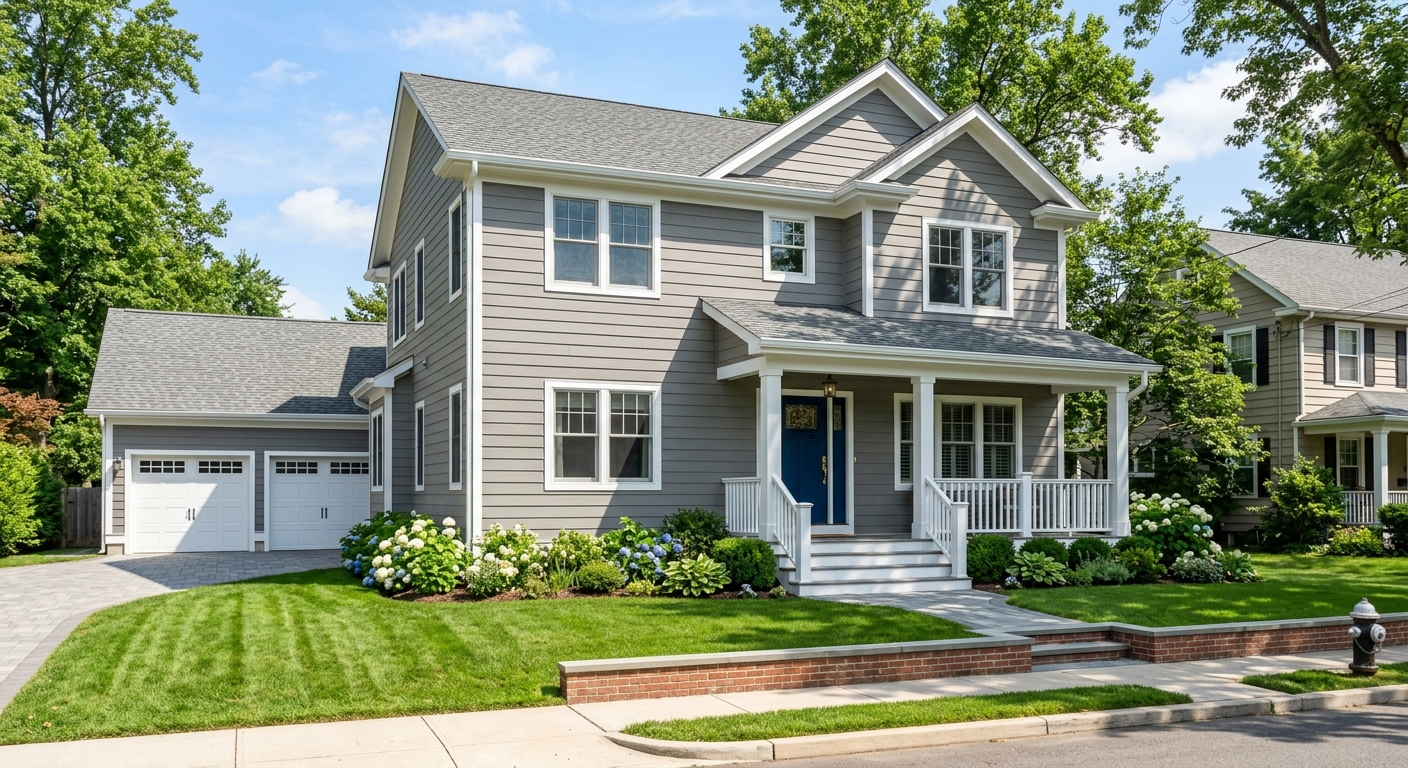
Painting options and costs in University Heights
Painting in University Heights usually starts with how old the home is and how the surface has held up. While University Heights is part of the Calgary region, the housing stock here includes a lot of 1960s–2000s builds, and for the pre-1978 homes that show up in many neighbourhood pockets, extra lead-safe preparation may be needed before sanding or scraping. Even if you’re not sure of the paint age, professionals typically plan for the “hidden work” that older trim and siding demand—scraping loose paint, patching, caulking, stain-blocking and priming—before any topcoat goes on. (In a community of 2,965 residents, homeowners tend to coordinate projects around limited summer availability and contractor schedules—Statistics Canada, 2021 Census.)
In Calgary, exterior costs are shaped by a shorter, more weather-dependent workable season. We generally plan exterior work for about mid-May to late September, when daytime conditions stay above 10°C and surfaces can dry properly. That tight window concentrates demand, so peak-season exterior appointments book quickly and pricing firms up compared to shoulder months. Interiors are less season-sensitive, but access, ceiling heights, and the amount of patching still drive labour time.
In University Heights, trade demand is especially high in the older, higher-turnover areas around the central residential corridors where many repaint cycles are timed for spring and early summer. If you’re comparing options right now, the table below will help you translate the scope into a realistic budget range.
| Service |
What's Included |
Typical Duration |
Price Range |
| Interior — whole home (walls, ceilings, trim) |
Prep (patching/sanding/caulking as needed), prime where required, 2-coat coverage, ceiling work, doors/trim touch-ups, room-by-room protection and clean-up |
3–7 days |
$3,200–$7,500 |
| Interior — per room (standard bedroom or living room) |
Prep and protection, 2-coat coverage on walls (and optional ceiling), prime stain/patch areas, basic trim coverage |
1–2 days |
$450–$1,650 |
| Exterior — full house (siding, trim, soffits) |
Power/hand cleaning, scraping and sanding, caulking, spot priming, prime full substrate where needed, 2-coat exterior system, protection of landscaping/railings |
5–12 days |
$3,800–$8,900 |
| Exterior — trim and accent colours only |
Cleaning and surface prep, spot priming, caulking, 2-coat finish on trim/accents, protection and final clean-up |
2–6 days |
$2,500–$5,800 |
| Kitchen cabinet painting (doors, frames, spray finish) |
Degrease/clean, hardware removal, light sanding and bonding primer, spray application, touch-ups, reinstallation and re-hang as included |
5–12 days (including dry time) |
$1,800–$6,900 |
| Specialty / faux finish (accent wall, texture) |
Surface prep, basecoat, finishing coats, pattern/texture application as specified, protection and dust control |
2–5 days |
$900–$4,800 |
Prices are estimates only and vary by project scope, site access and material selection.
What affects the price of painting in University Heights
Even when homeowners ask for “the same job,” quotes across Calgary and Alberta can vary by 30–50%. The reason is simple: painting costs aren’t just the paint—they’re labour intensity and prep risk. The exterior painting season is tightly climate-bound here. In the Calgary region, workable exterior work is typically mid-May to early/mid-October, with daytime highs staying above 10°C and surfaces drying between coats. By contrast, coastal BC can stretch the calendar longer, but humidity and rain can require mildew-resistant systems and strict timing. In Alberta, freeze–thaw cycles, UV, and occasional hail mean we plan for durable, flexible coatings and careful cure times. When demand concentrates into a shorter window, crews price to protect schedule reliability.
Older homes throughout the region also shift costs toward prep. Scraping failing coatings, patching wood or drywall, caulking joints, and priming stain-blocking areas can represent 50–70% of labour on a repaint. For example, an exterior repaint that would sit near an interior-style “nice and simple” job can jump from the lower end of the exterior range (closer to $2,500–$3,800 for trim-only) to the higher end (near $3,800–$8,900) if siding needs substantial priming and bonding. Similarly, interior repaint budgets can swing within the $400–$8,000 band depending on ceiling complexity and how much repair work is uncovered.
Two common University Heights scenarios that raise cost: (1) previously DIY-painted trim with adhesion issues, where extra sanding and bonding primer are required; and (2) stucco or fibre-cement with hairline cracks, where we spend time on crack repair and the right sealant before coating—small areas that take long to do properly. Tight access (fences, narrow gates, multi-storey elevations) can also add real cost even when square footage looks modest.
| Price Factor |
Why It Matters |
Cost Impact |
| Surface prep — scraping, sanding, patching drywall or wood |
Prep is where adhesion and longevity are won or lost; loose paint and failing patches must be removed and made sound |
Can add 20%–60% of total labour |
| Number of coats — 2-coat system over primer vs. 1 coat over existing |
Colour change, stain blocking, and substrate absorbency dictate coat count; cutting corners causes early peeling or flashing |
Typically +10%–35% when additional coats are required |
| Paint quality tier — contractor-grade vs. premium (Benjamin Moore, Sherwin) |
Higher tiers often improve coverage, stain resistance, and durability in UV exposure |
Materials may vary by ~5%–25% for the same scope |
| Ceilings and trim — adds significant time vs. walls-only |
Ceilings and detailed trim slow down coverage, require more masking and careful finishing |
Often +15%–40% depending on size |
| Exterior season window — short season raises summer rates |
Weather-dependent drying and compressed booking increase crew cost during peak weeks |
Can shift pricing upward 10%–20% in peak months |
| Lead-safe precautions — required for pre-1978 homes with lead paint |
Testing, wet methods, HEPA vacuuming, and correct disposal add time and compliance steps |
Can add 5%–25% on affected surfaces |
| Surface material — drywall vs. plaster vs. wood vs. stucco |
Different substrates absorb differently and need different primers and patch methods |
Can add 10%–30% when special systems are needed |
| Height and access — multi-storey exterior requires scaffolding or lifts |
Working at height increases labour time, safety planning, and equipment costs |
Often +10%–40% depending on setup |
Permits & regulations in Alberta
In Alberta, painting work generally does not require a building permit for typical interior or exterior painting. Where homeowners do need to pay attention is health and safety planning for older homes. For homes built before 1978 in University Heights, health guidelines commonly recommend testing for lead paint before sanding, scraping, or disturbing old coatings. If lead is present, lead-safe practices are considered standard in the professional industry: wet methods to minimize dust, HEPA vacuuming, controlled containment where needed, and correct disposal of debris. This is not the same thing as a municipal “permit,” but it is part of responsible work planning and risk reduction.
Other work that does typically require permits or additional approvals is not “painting” itself—e.g., changes that affect structural elements, electrical/mechanical relocations, or major envelope alterations. Painting-only projects (priming and top-coating, caulking, patching minor holes) are usually permit-free.
To verify a contractor in University Heights, start by confirming Alberta licensing status where applicable through the relevant provincial directory/registry and ensuring the contractor can produce documents. Then ask for (1) a current Certificate of Insurance showing liability coverage, (2) proof of WSIB/WCB workers’ compensation coverage for the crew, and (3) a written contract with brand, sheen, number of coats, and which prep items are included. If a contractor can’t provide clear proof—especially insurance and workers’ compensation—treat it as a non-starter.
Interior vs exterior painting — getting the best result in University Heights
The difference between a long-lasting paint job and a premature failure in University Heights comes down to preparation, coat strategy, and selecting products that match Alberta conditions. For interiors, most of the performance comes from surface prep: filling and sanding imperfections, degreasing where needed, priming patched areas, and spot-priming stains so they don’t bleed through. Sheen matters too—flat works for low-splash ceilings, but eggshell or satin on living areas is usually more forgiving to wipe marks. A key reality: two coats over a proper primer almost always outlast one thick coat, because the coating film forms more consistently.
For exteriors, prep is even more critical because siding and trim experience UV, wind-driven dirt, freeze–thaw effects, and sudden Alberta temperature swings. Caulking before painting prevents water ingress at joints and helps hold the system together. Primer choice matters: oil-based or bonding primers are sometimes needed on glossy or questionable adhesion substrates, while latex systems are typically used on properly prepared, compatible surfaces. We also pick products that perform reliably here—mould/mildew resistance is important where humidity supports it, but in Alberta the emphasis is on durability under sun and thermal cycling, plus flexible coatings where movement is expected.
Cabinet painting is a strong budget alternative to replacement when the frames and doors are sound. In a typical project, cabinet spray finishing can land in the $1,800–$6,900 range, which can be far less than replacing cabinetry—however, poor box condition or structural issues make “paint-only” less of a bargain. For pre-1978 homes, lead-safe precautions are part of doing it right: controlling dust during prep protects occupants and crew and avoids costly rework.
To see how cost is justified: choosing full exterior painting (often $3,800–$8,900) is worth it when scraping and priming are required across multiple elevations. If your siding is sound, sticking to trim and accent work (commonly $2,500–$5,800) can deliver a visible refresh without paying for full façade prep.
| Project Type |
Key Prep Step |
Recommended Coats |
Price Band |
| Interior — fresh drywall (new construction) |
Prime drywall thoroughly, address fasteners and joint compound sheen differences, light sand for uniform texture |
2 coats topcoat over correct primer |
$400–$3,200 |
| Interior — repaint (good condition, no repairs) |
Clean, scuff-sand where needed, spot-prime minor marks to prevent flashing |
2 coats topcoat |
$450–$6,000 |
| Interior — repaint (patching and priming needed) |
Patch and sand, prime repairs and any stain-prone areas before full coverage |
2 coats topcoat + primer on affected areas |
$1,200–$8,000 |
| Exterior siding (wood or fibre cement) |
Remove failing paint, clean, scrape/sand, caulk joints, and prime bare/spot areas for adhesion |
2-coat exterior system |
$3,800–$8,900 |
| Exterior trim and accents only |
Clean and spot prime adhesion areas; ensure caulking is done before finishing |
2 coats on trim/accents |
$2,500–$5,800 |
| Kitchen cabinets (spray finish) |
Degrease thoroughly, bond-priming where required, then spray for an even film build |
2-coat finish over primer (system dependent) |
$1,800–$6,900 |
How to choose a painting contractor in University Heights
Choosing a contractor in University Heights is mostly about verification and clarity. First, confirm Alberta licensing status where applicable through the provincial directory/registry and ensure the company carries liability insurance. Ask for a Certificate of Insurance and check that it’s current, matches the legal business name, and includes coverage for work performed at your address. Next, verify WSIB/WCB workers’ compensation coverage for the crew—if a contractor can’t provide proof, you can be exposed to risk if something goes wrong. A reputable crew will provide these documents without pressure.
Then get 2–3 itemised written quotes. You want a breakdown that separates labour from materials (at minimum: prep steps, number of coats, primer type, masking/protection, and disposal). Avoid quotes that lump everything into one number without stating what’s excluded. Confirm whether surface repairs (cracks, nail holes, rotted trim), caulking, and disposal are included. Also ask about the paint brands and sheen, because topcoat differences affect both appearance and durability. Warranty matters too: ask for workmanship coverage length and whether it applies to adhesion, cracking, or peeling, plus the product/manufacturer warranty terms. Finally, confirm payment schedule—never pay more than 10–15% upfront, and request a holdback until the job is complete and inspected. Get start date and completion estimate in writing.
- Provide current Certificate of Insurance (liability) with business name and address
- Provide WSIB/WCB clearance/proof for active workers on your project
- Use an itemised quote: prep, priming, coats, and protection listed line-by-line
- Confirm whether caulking is included and which joints are addressed
- Clarify paint system: primer type, sheen, and whether stain-blocking is included
- Ask what happens if weather delays exterior work (in Calgary, drying windows matter)
- Verify lead-safe handling plan for pre-1978 homes if any scraping is required
- Ask if equipment/methods for dust control are included (HEPA vacuum for sensitive prep)
- Confirm disposal included for chips, sanding dust, and packaging
- Request a written workmanship warranty (what it covers, how long, claim process)
- Check schedule commitment: start date, daily hours, and completion target
- Confirm payment terms: keepholdback until final touch-ups and walkthrough
Red flags I see around University Heights include: a contractor who won’t show insurance/WSIB proof; quotes that omit priming and caulking (especially for exterior); “one-coat only” promises without substrate prep details; no written scope/warranty; and requests for large upfront payments (well beyond 10–15%).
Frequently asked questions — painting in University Heights
How long does exterior paint last here?
In University Heights and the wider Calgary region, exterior paint life is strongly tied to preparation and Alberta’s freeze–thaw and UV exposure. When a siding system is properly scraped, caulked, primed where adhesion is failing, and applied in the workable mid-May to late-September window, many homeowners see strong performance for several years before touch-ups become necessary. If the substrate wasn’t prepped well—especially around joints and trim—peeling can start sooner. A full exterior job often sits around $3,800–$8,900, and the higher end is usually justified by extensive prep and the right primer/base bonding, not just “more paint.” (Statistics Canada, 2021 Census)
Should I paint or replace my cabinets?
Most homeowners in Alberta choose painting when the cabinet frames and boxes are still straight, solid, and well attached. If the doors are dated but the structure is sound, cabinet painting is a realistic refresh—especially with spray finishing for an even look. Typical cabinet painting budgets are often in the $1,800–$6,900 range depending on door count, prep complexity, and whether bonding primers and multiple finish coats are needed. Replace cabinets when you’re dealing with water damage, warped boxes, or layout problems that painting can’t fix. For pre-1978 homes in University Heights, we also plan dust control during prep to manage lead-safe requirements if older coatings are disturbed.
How do I prep walls before painting?
For best results, prep should be judged by the surface condition rather than time spent. If you’re prepping yourself, start with cleaning: remove grease, dust and residue so the topcoat can bond. Patch and sand visible holes or gouges, then wipe dust off after sanding. Anything that’s glossy or peeling needs special attention; “painting over” questionable adhesion usually causes failures later, particularly in high-traffic areas like entries. For older University Heights homes, patching and priming are often where the biggest durability gains come from—two coats over proper primer outlast one heavy coat. If your existing paint is stained, it’s important to spot-prime before full coverage so stains don’t bleed through.
Do I need to worry about lead paint in an older University Heights home?
If your home was built before 1978, lead paint risk is a real consideration. Alberta doesn’t require homeowners to obtain a lead test for paint, but professional work standards commonly recommend testing before sanding or scraping and using lead-safe methods if lead is present. For University Heights, that usually means wet methods to reduce dust, HEPA vacuuming, controlled handling of debris, and proper disposal. Even if you plan to paint yourself, the most important step is to avoid dry sanding of older coatings. In many cases, contractors will include lead-safe precautions as part of the prep scope when they anticipate pre-1978 materials. If the project is a full repaint, budgets like $3,800–$8,900 can be higher when lead-safe prep is required for affected surfaces.
How long does it take to paint a house?
Timing depends on interior vs exterior, prep severity, and access. Interiors are often less weather-dependent, while exteriors in Calgary typically must fit the mid-May to late September workable window because surfaces need to dry properly and applications require temperatures generally above 10°C. For a whole-home interior, you might expect roughly 3–7 days, but additional days are common when there’s significant patching and priming. For a full exterior, a typical schedule is about 5–12 days depending on prep complexity and number of elevations. The project can also run longer if weather interrupts cure times. If you’re planning around move-in or events, ask your contractor for a written start date and completion estimate; reliable planning is part of the service quality.
What's the difference between paint quality tiers?
Paint quality tiers mainly affect coverage, durability, and how consistently the finish looks after it cures. Premium lines from brands like Benjamin Moore or Sherwin often provide better hiding, improved stain resistance, and more predictable performance under sun and temperature change—important for Calgary’s UV exposure and exterior wear. Contractor-grade paints can be perfectly fine when the substrate is correctly prepped and the coating system is applied as specified (primer + the right number of topcoats). Where quality matters most is adhesion and film build: two coats over correct primer typically beats one thick coat regardless of brand. If you’re comparing quotes, look past the sticker price and confirm the number of coats and primer system, because those factors frequently change your real outcome and can move you within bands like $400–$8,000 for interior or $2,500–$9,000 for exterior.