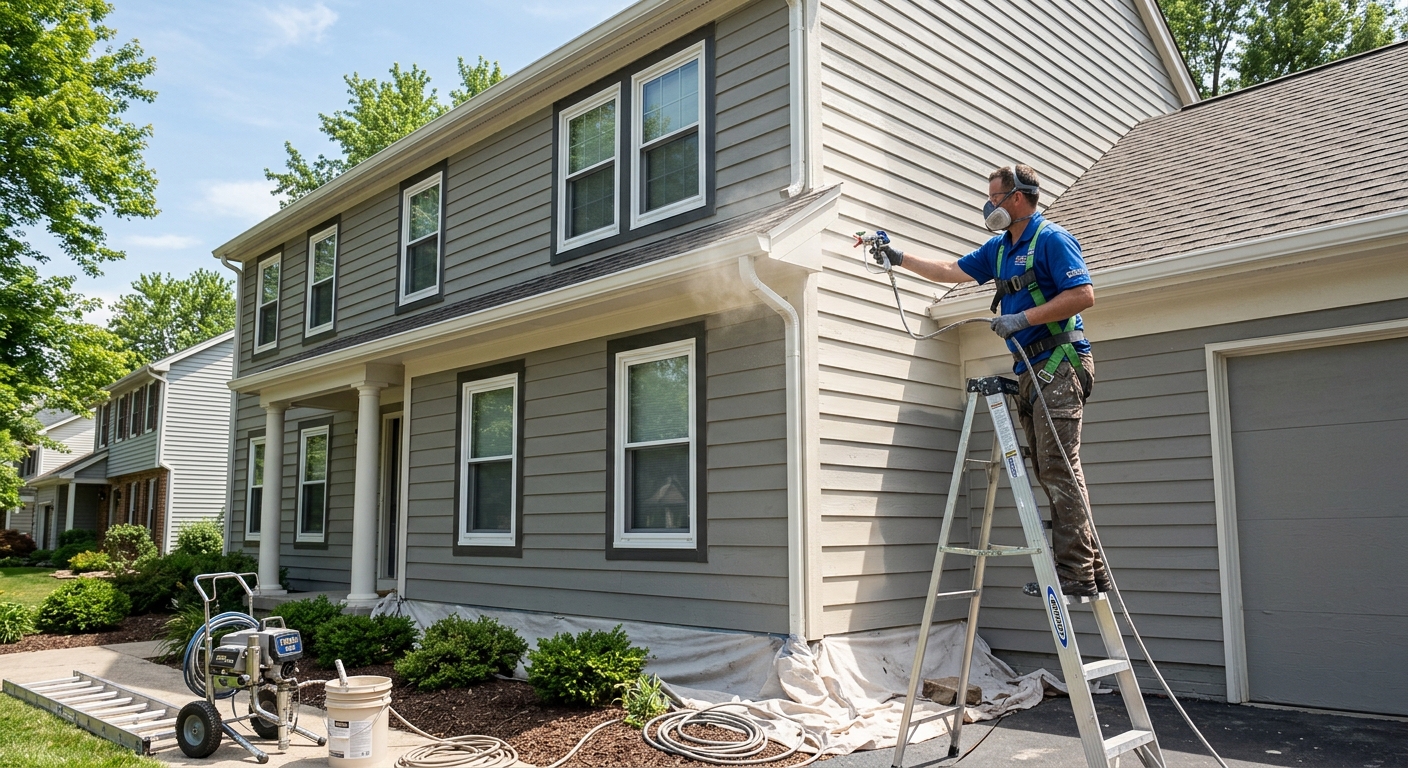
Painting options and costs in Athabasca
Athabasca homeowners usually start with the same question: what will this painting project really cost? With 2,759 residents (Statistics Canada, 2021 Census) and about 670 homeowner households (Statistics Canada, 2021 Census), painting demand tends to cluster when weather cooperates—especially for exteriors. In Athabasca, many houses are older: 39.4% of homes were built before 1981, which commonly means more surface wear, more patching, and sometimes older paint systems that need extra prep. While Alberta doesn’t require a permit for typical painting, professional prep and safe work practices matter more on older surfaces, particularly if lead paint precautions are warranted.
Pricing in the Edmonton economic region also reflects scheduling pressure. Exterior work is tightly climate-bound here; contractors generally aim for late spring through early fall when temperatures are consistently suitable for application and curing. That short usable window can raise labour pressure, so you’ll often see pricing spread between “simple repainting” and “full prep on weathered surfaces,” especially when caulking, sanding, and primer work becomes substantial. Neighbourhoods with more ongoing renovations and turnover—like the downtown and residential pockets around the centre of town—often book earlier because interior projects pair well with the same seasons contractors are available.
Below is a realistic cost guide for Athabasca, so you can compare quotes apples-to-apples. Then we’ll break down what most affects final pricing and how to verify a contractor before work begins.
| Service |
What's Included |
Typical Duration |
Price Range |
| Interior — whole home (walls, ceilings, trim) |
Patch and sand, prime where needed, caulk trim gaps, protect floors and fixtures, two-coat system on walls/ceilings, paint trim (doors/frames optional) |
5–10 days |
$2,800–$7,200 |
| Interior — per room (standard bedroom or living room) |
Protect surfaces, prep minor scuffs, patch small holes, prime spots, two coats on walls, paint ceiling optional, trim touches as agreed |
1–3 days |
$1,100–$2,900 |
| Exterior — full house (siding, trim, soffits) |
Pressure wash (where feasible), scrape loose paint, sand/scuff, patch and caulk, prime bare spots, two-coat finish system, protect landscaping and windows |
7–14 days |
$3,500–$11,000 |
| Exterior — trim and accent colours only |
Prep limited to trim areas, spot prime, two coats on trim and selected accents, careful masking for siding lines |
3–7 days |
$1,800–$5,800 |
| Kitchen cabinet painting (doors, frames, spray finish) |
Full hardware removal (if requested), degrease, sand/scuff, prime, sprayed finish for durability, reassemble and reinstall, light touch-up on edges |
4–10 days (including dry/cure time) |
$1,800–$6,500 |
| Specialty / faux finish (accent wall, texture) |
Surface smoothing where needed, base coat, specialty application (glaze/texture), protective topcoat, cleanup and removal of coverings |
1–5 days |
$1,200–$4,500 |
Prices are estimates only and vary by project scope, site access and material selection.
What affects the price of painting in Athabasca
The same “paint the walls” job can land 30–50% apart across Edmonton and the broader Alberta market because contractors price risk and preparation time differently. In Athabasca specifically, quotes jump when the work shifts from a straightforward repaint to a full prep on weathered, chalky, or flaking surfaces. Older housing stock matters too: with 39.4% of homes built before 1981 (Statistics Canada, 2021 Census), more projects require scraping and additional priming, and that preparation can become 50–70% of labour on a repainting job.
Climate also tightens scheduling for exterior work in the Edmonton economic region. In late spring through early fall, contractors can apply coatings when temperatures are typically above 10°C and curing isn’t disrupted by overnight cool-down, dew, or frost risk. That shorter season concentrates demand, so exterior projects can price closer to the upper end of the exterior range—often starting near the $3,500–$11,000 band for full homes, depending on how much scraping and patching is needed. Coastal BC may have a different rhythm, but here the bigger driver is “can we apply and cure correctly within the window,” especially when crews are booking back-to-back.
Two Athabasca examples that commonly move prices: first, trim and soffits with peeling edges often require targeted scraping and caulking before paint—this can add days, not hours. Second, multi-storey access (lifts/scaffolding) increases labour time and staging costs. Even interior jobs respond to prep needs: moving from a clean repaint to a patch-and-prime situation pushes you toward the higher end of the $2,800–$7,200 interior whole-home range.
| Price Factor |
Why It Matters |
Cost Impact |
| Surface prep — scraping, sanding, patching drywall or wood |
Determines adhesion and whether new paint bridges old failure points |
High: commonly the biggest swing factor (often 40–70% of labour) |
| Number of coats — 2-coat system over primer vs. 1 coat over existing |
Existing colour/build and substrate condition affect coverage and durability |
Medium to high: can shift a job by thousands |
| Paint quality tier — contractor-grade vs. premium (Benjamin Moore, Sherwin) |
Coverage, scrub resistance, and longevity differ by tier |
Medium: material cost changes plus possible labour efficiency |
| Ceilings and trim — adds significant time vs. walls-only |
Cut-in work, masking, and touch-ups expand crew time |
Medium: frequently adds 10–30% depending on detail |
| Exterior season window — short season raises summer rates |
Scheduling pressure and weather risk affect crew availability |
Medium to high: affects labour/day rates and booking priority |
| Lead-safe precautions — required for pre-1978 homes with lead paint |
Controls dust and debris during scraping/sanding if lead is present |
Low to high: can add containment time and disposal costs |
| Surface material — drywall vs. plaster vs. wood vs. stucco |
Absorption and bonding differ; primer type changes |
Medium: wrong primer can cause early peeling or staining |
| Height and access — multi-storey exterior requires scaffolding or lifts |
Staging, safety, and slower prep/painting increase labour |
High: especially for upper trim and soffits |
Permits & regulations in Alberta
In Alberta, painting typically does not require a permit for the homeowner to have work done. The most important “regulatory” piece is health and safe work practice—especially on older homes. For homes built before 1978, health guidelines recommend testing for lead paint before sanding, scraping, or disturbing coatings, and then using lead-safe work practices if lead is confirmed. That generally means wet methods to reduce airborne dust, HEPA vacuuming, properly sealed waste disposal, and containment so dust doesn’t spread through the home.
What DOES require a permit is not painting itself; it’s usually related construction or structural changes (for example, major renovations that alter load-bearing elements, or certain mechanical/electrical work). For typical repainting, caulking, drywall patching, and cabinet refinishing, you’re generally not pulling a painting permit in Athabasca.
To verify a contractor’s Alberta coverage step-by-step, start by asking for: (1) proof of liability insurance, (2) evidence of WSIB/WCB coverage for workers, and (3) the written contract before any work begins. You can also request the contractor’s business information and check licensing/registration details through Alberta’s standard public channels. For insurance, review the certificate of insurance for coverage limits and ensure the policy lists the contractor, not just a subcontractor. If the contractor can’t provide current insurance and coverage documents promptly, that’s a major warning sign.
Interior vs exterior painting — getting the best result in Athabasca
In Athabasca, the difference between a long-lasting paint job and a premature failure usually comes down to prep quality, drying/curing conditions, and whether the selected products match the substrate. For interiors, surface prep matters more than brand alone: filling cracks, sanding edges smooth, priming new drywall or repaired areas, and caulking where needed prevents flashing and peeling. Sheen choice also affects wear. Flat hides wall imperfections best but can scuff; eggshell is a practical middle for many living areas; satin and semi-gloss hold up better for trim, doors, and higher-touch surfaces. Two coats over a properly primed base typically outlast one heavy coat—especially where repaired patches would otherwise “sink in” visually.
For exteriors in the Edmonton economic region, Alberta’s freeze–thaw cycles and short painting window make surface prep and sealing critical. Caulking before painting helps prevent water ingress at joints; primer selection matters by substrate and failure history. If the wall system is chalky or previously compromised, skipping primer can cause blistering or adhesion failure. While mildew-resistant formulations are more emphasized in damp climates, Edmonton-area homes still benefit from products that resist staining and help manage minor surface issues.
Cabinet painting is a smart budget alternative to replacement when boxes are solid and hardware openings align—expect to pay within the cabinet band because the prep and spray finish time is real. For older pre-1978 homes, lead-safe precautions remain a must if scraping or sanding is required, regardless of whether you’re doing interior patches or exterior spot work.
One practical pricing example: if your exterior estimate starts near the lower end of the exterior range, but the home needs major scraping and re-priming, a quote closer to the upper end (within $3,500–$11,000) is often justified—because those added days prevent peeling that would otherwise force a repaint sooner. For interiors, moving from a repaint-only plan to a patch-and-prime scope is commonly where you see projects climb toward the higher portion of the $2,800–$7,200 whole-home band.
| Project Type |
Key Prep Step |
Recommended Coats |
Price Band |
| Interior — fresh drywall (new construction) |
Prime all new drywall; sand smooth for an even sheen |
2 coats finish over primer |
$3,200–$6,800 |
| Interior — repaint (good condition, no repairs) |
Light scuff-sand and spot-prime stained areas |
2 coats finish (primer only where needed) |
$2,800–$5,200 |
| Interior — repaint (patching and priming needed) |
Patch, sand, prime repairs and any uneven bonding |
2 coats finish over primered patches |
$4,000–$7,200 |
| Exterior siding (wood or fibre cement) |
Scrape loose paint, sand edges, caulk and prime bare spots |
2 coats finish (primer on affected areas) |
$5,000–$10,500 |
| Exterior trim and accents only |
Mask carefully; spot-prime where adhesion is compromised |
2 coats finish over primer spots |
$1,800–$5,800 |
| Kitchen cabinets (spray finish) |
Degrease, sand/scuff, prime for adhesion, control dust |
2 coats sprayed finish over primer |
$1,800–$6,500 |
How to choose a painting contractor in Athabasca
Start with verification. Ask for the contractor’s Alberta business information and confirm current liability insurance before they ever begin. A certificate of insurance should list the insured entity, coverage limits, and the policy’s effective dates. Next, confirm workers’ compensation coverage: they should be able to show WSIB/WCB registration or documentation that they have coverage in place for their workers. If they use subcontractors, the documentation should still clearly cover the people doing the work.
Then get 2–3 itemised written quotes. You want a breakdown of labour hours/tasks (prep, sanding, caulking, priming, masking, cleanup) and a materials list (paint tier, primer type, caulking products). Avoid lump sums that don’t explain prep—on Alberta exteriors, prep is usually where costs are won or lost. Read exclusions carefully: ask whether pressure washing, disposal, sanding dust containment, and window/door protection are included. Also confirm if any permit-related handling is needed for your specific project type (painting itself usually doesn’t need one, but surrounding changes might).
For warranty, ask for two things: workmanship warranty length and whether it applies to peeling/blistering due to improper prep, plus the manufacturer warranty on the specific product used. Confirm if the workmanship warranty is transferable to a new homeowner. Payment scheduling matters: never pay more than 10–15% upfront. Hold back the remainder until the job is complete and touch-ups are done. Get the start date and completion estimate in writing, including weather contingency for exterior work in the Edmonton region.
- Request proof of liability insurance and check expiry dates.
- Verify WSIB/WCB coverage for painters (not just the business owner).
- Ask for an itemised quote (prep + materials + labour tasks), not a single number only.
- Confirm how they handle surface prep: scraping, sanding, patching, priming.
- Ask what paint tier/brand and sheen are included for each room/area.
- Clarify whether trim, ceilings, doors, and caulking are included or “as needed.”
- Ask about masking and floor protection standards and cleanup/disposal method.
- Get their lead-safe approach for pre-1978 homes (testing, containment, disposal).
- Confirm warranty: workmanship duration and what failures it covers.
- Check payment terms: max 10–15% upfront and a holdback until completion.
- Require a written start date and weather notes for exterior curing windows.
- Look for a detailed scope that matches your expectations (colours, areas, sheen).
Common red flags in Athabasca include: quotes that skip prep details, no proof of WSIB/WCB or liability coverage, “too-good-to-be-true” pricing for weathered exterior work, pressure to pay the majority upfront, and vague warranties that don’t specify workmanship coverage. Another red flag is refusing to list the paint brand, sheen, and primer type in writing—those specifics are essential for comparing quotes and for accountability.
Frequently asked questions — painting in Athabasca
What paint sheen should I use in different rooms?
In Athabasca, I usually recommend sheen based on how much the room gets touched and how well you want imperfections hidden. Living rooms and bedrooms often look best with eggshell on walls: it’s washable without looking too shiny. Kitchens, hallways, and kids’ spaces typically benefit from satin on walls and semi-gloss on trim for easier cleaning. Ceilings are commonly flat because it reduces the appearance of roller marks and hides minor flaws, but flat scuffs more easily—avoid it for high-traffic surfaces. If you’re comparing contractors, make sure the quote states the sheen by area; sheen choice affects durability and can change costs within the interior bands (for example, interior whole-home painting often lands between $2,800–$7,200 depending on prep and trim coverage).
Can I paint my house exterior in spring or fall in Athabasca?
Yes, but it’s risk-managed in Alberta. In Athabasca and the Edmonton economic region, exterior painting is typically concentrated late spring through early fall because curing depends on daytime temperatures and overnight conditions. If temperatures aren’t consistently warm (often roughly above 10°C during application) or if dew and cool nights interfere with drying, adhesion and finish quality can suffer. Spring can work well if surfaces are dry and the forecast supports proper curing; fall is possible only when daytime warmth holds and frost risk is low. If an older house has 39.4% of pre-1981 stock in the local housing mix (Statistics Canada, 2021 Census), expect more prep on weathered areas, which makes timing even more important. For exterior budgeting, many full-home projects fall within $3,500–$11,000 depending on how weathered the siding and trim are.
How do I choose a painting contractor in Athabasca?
Choose based on documentation and scope clarity, not just the bottom line. Start by requiring proof of liability insurance and confirmation of WSIB/WCB coverage for workers doing the work. Then request 2–3 itemised written quotes showing labour and materials, including what prep is included (scraping, sanding, patching, caulking, priming) and what paint brand/sheens you’re paying for. For homes built before 1978, ask what lead-safe practices they follow if testing indicates lead—containment and HEPA cleanup are key. Finally, look at payment terms and schedule: reputable contractors generally keep upfront payments to about 10–15% and provide a written start/completion estimate with weather notes for exterior projects. If a quote avoids details or can’t produce insurance/coverage, don’t sign—especially for exterior work where prep drives durability and cost.
How many coats does an exterior repaint need in Athabasca?
Most exterior repaints need a 2-coat finish system, with primer applied to bare or affected spots. In Athabasca’s conditions—freeze–thaw, wind-driven dirt, and a short application window—the coating system is only as good as the prep and adhesion. If the siding or trim has failing paint, the job can’t be treated as “one coat over everything”; scraping loose material, sanding edges, caulking joints, and priming bare areas is what prevents early peeling. Exact coating count can vary depending on product coverage and substrate, but a well-done repaint plan generally follows: prime where needed, then two finish coats across the system. That’s why exterior pricing often spans $3,500–$11,000—jobs that need heavy prep and access work land higher.
What is the best primer for older Athabasca homes?
For older Athabasca homes (many with pre-1981 builds in the broader local profile, Statistics Canada, 2021 Census), the “best” primer depends on what you’re covering and what’s failing underneath. If the surface is chalky or there’s reduced adhesion, a bonding primer is often needed to lock down contaminants and help new paint stick. If you’re working over wood or bare areas, primer should match the substrate and the existing coating system. For patched drywall or interior repairs, priming is about creating an even base so the final sheen looks consistent. For lead paint concerns, the primer choice doesn’t replace lead-safe work practices—if testing indicates lead, dust control and proper disposal come first. When you compare quotes, insist the contractor specifies the primer type and where it will be applied; that clarity is a major reason interior and exterior estimates can differ significantly.
Should I paint or wallpaper my Athabasca home?
In Athabasca, most homeowners choose paint because it’s faster to refresh, easier to maintain, and more forgiving when walls have minor temperature-related movement. Wallpaper can look great but requires careful surface preparation—especially on walls with texture mismatch, patch repairs, or older paint history. If your home has more than a few patch areas or older surfaces that were previously repainted, paint is often the practical option: prep and priming can smooth the transition without trapping problems under the paper. Painting also lets you choose scrubbable sheens where needed (eggshell or satin on walls; semi-gloss on trim). If you’re considering a budget alternative, cabinet painting vs. replacement is usually the better value for kitchen updates, while wallpaper is best left for rooms where walls can be prepared perfectly. If your goal is a whole-home refresh, many interior projects fit within $2,800–$7,200 depending on trim, ceiling coverage, and how much patch-and-prime work is needed.