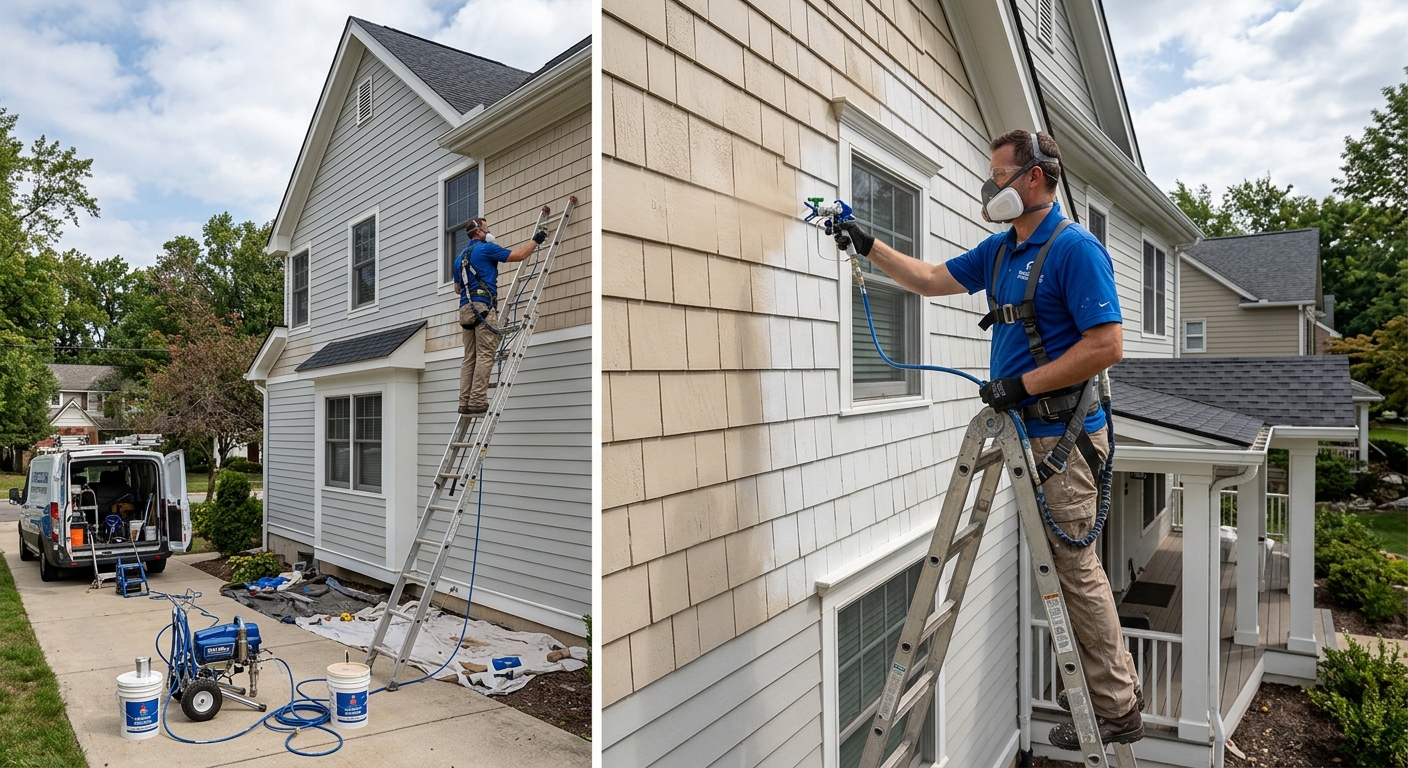
Painting options and costs in Edmonton
Edmonton is a great place to paint—but it’s also a place where the surface prep and timing matter as much as the colour. With 1,010,899 people in the Edmonton economic region (Statistics Canada, 2021 Census), there’s consistent demand, and pricing moves with contractor schedules. The age of housing plays a big role too: with 40.5% of homes built before 1981 (Statistics Canada, 2021 Census), many projects involve more scraping, patching, sanding, caulking and priming than homeowners expect—especially around windows, eaves, and exterior trim.
Costs in Edmonton are shaped by a short, climate-bound exterior season. Contractors typically concentrate exterior work from late spring into early fall because temperatures, overnight lows, frost risk, and dew can affect drying and curing. That short window also tightens summer availability, so bids can change quickly if you wait. In older neighbourhoods like Glenora, where homes often have detailed trim and older siding, you’ll commonly see more labour for patching and better masking/containment—both of which protect your landscaping and reduce dust fallout.
Below is a practical comparison of common project types and realistic price bands for Edmonton homes. Use it to sanity-check any quote you receive before you compare scopes and line items.
| Service |
What's Included |
Typical Duration |
Price Range |
| Interior — whole home (walls, ceilings, trim) |
Move furniture as feasible, wall & ceiling prep, caulking, patching, sanding, primer as needed, 2-coat painting, brush/roll trim work, cut-in at edges |
5–10 days |
$4,200–$7,200 |
| Interior — per room (standard bedroom or living room) |
Prep, patching/sanding, prime minor bare areas, 2-coat walls, cut-in around baseboards/ceiling edges; trim repaint as included |
1–3 days |
$2,800–$4,200 |
| Exterior — full house (siding, trim, soffits) |
Pressure wash/degrease (as condition requires), scraping & sanding, caulking, priming bare/repairs, 2-coat exterior system, soffit & trim painting, basic protection of plants/eaves |
1–3 weeks |
$6,200–$11,000 |
| Exterior — trim and accent colours only |
Spot prep, sanding and scrape where needed, caulking, primer on bare spots, 2-coat trim/accent; typically excludes siding repainting |
3–7 days |
$3,500–$6,800 |
| Kitchen cabinet painting (doors, frames, spray finish) |
Degrease, sand/scuff, repair/caulk as needed, prime, spray finish for doors, back-rolling where appropriate, hardware removal/masking |
7–15 days (incl. dry times) |
$2,900–$5,800 |
| Specialty / faux finish (accent wall, texture) |
Surface prep specific to the effect, base coat, application of texture/faux technique, protective topcoat where needed |
1–5 days |
$1,200–$4,500 |
Prices are estimates only and vary by project scope, site access and material selection.
What affects the price of painting in Edmonton
In Edmonton, you can see quotes for the same “paint the house” request swing by roughly 30–50% once surface condition, prep scope, and product system are accounted for. That’s because pricing isn’t just paint—it’s labour time for preparation, dry times, masking/containment, and the risk that a job may need extra primer or additional coats to achieve uniform coverage. Even within Alberta, Edmonton rates can differ based on whether the crew is booked during the peak exterior window and how much repair work is tied to weathered surfaces.
For exterior work in the Edmonton economic region, the season is tightly climate-bound. Contractors typically target late May through early October, when daytime temperatures and rising warm-up allow proper application and curing. In coastal BC, the season can be “longer,” but humidity and rainfall often require strict dry-weather timing and mildew-resistant systems; in Edmonton you’re balancing frost risk, dew, and shorter workable weeks. That short window concentrates demand and increases scheduling pressure.
Older homes throughout the Edmonton economic region (including parts of St. Albert and Sherwood Park) often drive cost because surface prep can be 50–70% of total labour on a repainting job. For example, if primer and patching aren’t priced correctly, a “trim-only” quote can quickly drift toward exterior full-house pricing once rot, failed caulking, or peeling paint is uncovered. As a ballpark, a well-prepped exterior can land in the $6,200–$11,000 band, while a straightforward trim refresh might stay nearer the $3,500–$6,800 range—if the siding is truly in good shape and the prep scope is limited.
Concrete local examples that change the cost:
- Weathered window frames and eaves often require extra scraping and caulking, adding labour before the first primer coat goes on.
- Frost-impacted caulking and water-stained spots on older trim may need spot-priming (and sometimes more than one primer application).
- Second-storey access around the Strathcona/Glenora-type housing stock can trigger lifts or scaffolding time.
| Price Factor |
Why It Matters |
Cost Impact |
| Surface prep — scraping, sanding, patching drywall or wood |
Prep determines adhesion; peeling paint and loose material must be removed or it will telegraph through |
Higher prep can add 20–50% of labour on repainting |
| Number of coats — 2-coat system over primer vs. 1 coat over existing |
Coverage and durability depend on a correct film build, especially on patched or stained surfaces |
Moving from “1 coat” to a full 2-coat system commonly adds 10–25% |
| Paint quality tier — contractor-grade vs. premium (Benjamin Moore, Sherwin) |
Sheen control, hide, and long-term UV resistance affect recoat requirements and finish uniformity |
Material premium often adds 3–12% to the total, but can reduce problem callbacks |
| Ceilings and trim — adds significant time vs. walls-only |
Ceilings require edging, masking, and careful control; trim needs additional cut-in and dry time |
Can increase the interior total by 15–40% |
| Exterior season window — short season raises summer rates |
More demand during limited workable weeks increases scheduling and crew premiums |
Seasonal effect can shift pricing by 10–20% on active bookings |
| Lead-safe precautions — required for pre-1978 homes with lead paint |
Lead paint handling adds containment, dust control, and disposal steps for sanding/scraping |
Typically adds 5–15% (or more if extensive remediation is required) |
| Surface material — drywall vs. plaster vs. wood vs. stucco |
Different substrates absorb differently and require tailored primers and prep methods |
Wrong primer choice can increase coats or cause failures, raising cost |
| Height and access — multi-storey exterior requires scaffolding or lifts |
Access equipment increases labour, time on site, and risk controls |
Often the difference between “mid” and “high” exterior bands |
Permits & regulations in Alberta
In Alberta, painting itself generally does not require a permit. However, if you live in an older Edmonton home, the practical requirement is health guidance—not a permit—especially for homes built before 1978 where lead paint is a real possibility. Professional contractors typically recommend testing or using lead-safe work practices before sanding, scraping, or disturbing paint films that may contain lead. Standard lead-safe methods include wet methods (to reduce airborne dust), HEPA vacuuming where appropriate, careful dust containment, and proper disposal of debris. For homeowners, this isn’t usually framed as a “legal permit” requirement, but it is the standard approach for professional work to protect the household and the crew.
Separately, painting contractors should carry liability insurance and be covered for workplace injuries through workers’ compensation (WSIB/WCB coverage). Before you sign, ask for proof and verify the information is current.
Step-by-step for Edmonton homeowners:
- Get the contractor’s legal business name and ask for their certificate of insurance (liability) showing dates and coverage amount.
- Ask for WSIB/WCB clearance/coverage details in writing (or the certificate/confirmation number they use).
- Request a written contract that lists paint brand and sheen, number of coats, prep tasks (scrape/sand/patch/prime), and what’s excluded.
- Confirm whether they will test for lead or proceed with lead-safe precautions for pre-1978 materials before any scraping.
What typically does not require a permit: interior repainting, exterior repainting, trim painting, and cabinet painting. What may involve additional compliance: any work that substantially disturbs lead-containing coatings on pre-1978 surfaces—handled through safe work practices and containment rather than a painting permit.
Interior vs exterior painting — getting the best result in Edmonton
The biggest difference between a long-lasting paint job and a premature failure in Edmonton is how the contractor manages preparation, dryness, and film build—because our winters are harsh and our summers are busy. For interiors, the brand of topcoat matters less than correct prep: filled nail pops, sanded feather edges, and priming patched areas. Two thin coats over a properly primed surface almost always outlast a “one coat and hope it hides” approach, especially on patched drywall and areas with previous stains.
Sheen choice is also practical. In Edmonton homes, kitchens and hallways see scuffs and frequent cleaning—so satin or semi-gloss is often the better value. Flat paint can look great initially but tends to mark sooner in high-traffic zones. For ceilings, many homeowners choose a flatter sheen for visual smoothing and reduced sheen lap.
On exteriors, Alberta climate makes prep non-negotiable. Caulking before painting helps prevent water ingress pathways at trim joints and around window perimeters, and it’s a common failure point when it’s rushed. Primer type matters by substrate: bare/repair areas need the right primer to seal and bond, while previously painted surfaces still require sanding/scuffing where adhesion is questionable. Also, product selection should fit local conditions—Edmonton doesn’t have coastal mildew pressure like BC, but you still need systems that tolerate temperature swings, dew, and summer curing realities.
Cabinet painting can be a smart budget alternative to replacement: if your box and layout are solid, painting can refresh appearance at a fraction of replacement. If you’re comparing options, it’s usually more justified to invest in prep and primer for cabinets than to chase the cheapest topcoat—cabinet painting commonly sits around the $2,900–$5,800 range, while replacement typically costs far more.
For pre-1978 homes, lead-safe precautions should be part of exterior and interior scraping plans. Getting the prep right is what protects you from peeling, flaking, and early recoat cycles.
| Project Type |
Key Prep Step |
Recommended Coats |
Price Band |
| Interior — fresh drywall (new construction) |
Proper drywall priming/sealing before colour to avoid flashing |
Primer + 2 coats |
$2,800–$4,800 |
| Interior — repaint (good condition, no repairs) |
Thorough cleaning and light scuff where needed |
2 coats (primer only if required for colour change) |
$2,800–$3,900 |
| Interior — repaint (patching and priming needed) |
Feather-sanding repairs and priming bare/porous spots |
Primer on patches + 2 full coats |
$3,400–$5,800 |
| Exterior siding (wood or fibre cement) |
Scrape/sand to sound material, caulk joints, prime repairs |
Primer as needed + 2 coats exterior system |
$6,200–$11,000 |
| Exterior trim and accents only |
Spot prep, sanding, and prime bare spots before colour |
2 coats (primer on bare/repairs) |
$3,500–$6,800 |
| Kitchen cabinets (spray finish) |
Degrease + sand/scuff + proper adhesion primer |
Primer + 2 build coats (system-based) |
$2,900–$5,800 |
How to choose a painting contractor in Edmonton
Start by verifying credentials the right way for Alberta work. First, ask for proof of current liability insurance and confirm the coverage is appropriate for property damage. Second, request workers’ compensation coverage information (WSIB/WCB clearance or certificate) so you’re not left holding the risk if a painter is injured on your property. Third, make sure the contractor can clearly explain how they handle risk with older Edmonton homes—especially pre-1978 paint disturbance and dust control.
Then compare quotes using apples-to-apples pricing. Ask for 2–3 itemised written estimates that separate labour and materials and list exactly what prep is included. A “reasonable total” can hide missing steps like sanding/caulking/priming, which is how projects drift upward after the fact. Read exclusions carefully: landscaping protection, furniture moving, disposal, and whether spot repairs or colour changes trigger additional primer or extra coats.
Warranty matters too. Confirm the workmanship warranty (how long, what it covers, and what must be reported promptly). Also note the manufacturer/product warranty terms—some cover defects, but they may require proof of correct surface prep and application conditions.
For payment scheduling, plan to keep upfront payments low. A standard best practice is not to pay more than 10–15% upfront, and to hold the remainder until the job is complete and cleaned. Always get the start date and a realistic completion timeline in writing—Edmonton exterior work is weather-dependent, and quality crews will plan their schedule around workable drying conditions.
- Confirm liability insurance certificate (name matches quote, dates current).
- Verify WSIB/WCB coverage or clearance in writing before work begins.
- Ask for an itemised scope: prep, number of coats, primer requirements, and sanding standards.
- Ensure disposal is included (paint scrapings, sanding dust, masking waste).
- Confirm whether power washing is included for exteriors and how they handle damaged caulking.
- Ask how colour changes will be handled (extra primer? stain-blockers?).
- Check protection details: drop sheets, masking, and how they protect windows/landscaping.
- Review the warranty in plain language (coverage length and exclusions).
- Get the exact paint brand and sheen (not “quality paint” generics).
- Ask how they manage lead-safe steps for pre-1978 work if sanding/scraping is required.
- Limit upfront payment to 10–15% and tie remaining payments to completion.
- Require a written start date, estimated duration, and weather-day contingencies for exterior work.
Red flags I see with Edmonton painting contractors include: only providing a vague “lump sum” without listing prep and coat counts, refusing to show insurance/WSIB/WCB proof, offering heavy discounts that skip scraping/priming, asking for large upfront payments (beyond 10–15%), and giving no written timeline or warranty terms.
Frequently asked questions — painting in Edmonton
How many coats of paint do I need?
Most Edmonton interiors and exteriors are designed around a 2-coat system. On interior repainting in good condition, that usually means 2 coats after cleaning and light scuffing. If there’s patching, sanding, or any stain/odour issue, you’ll typically need primer on the repaired or bare areas, then 2 full colour coats for consistent hide and uniform sheen. On exteriors, the safe default is primer on repairs (and sometimes full primer depending on substrate) plus 2 coats of an exterior system. If you’re shopping for an interior project, many homeowners land in the $2,800–$7,200 interior bands when prep and the full coat system are done correctly (Statistics Canada, 2021 Census).
What paint is best for Edmonton's climate?
For Edmonton’s freeze-thaw cycle and summer dew, the “best” choice is the right system for the surface—not just the most expensive can. For exterior siding and trim, choose a product rated for exterior use that tolerates temperature swings and has strong adhesion properties. On older homes (including the large share built before 1981), expect more prep—scraping, caulking, sanding, and priming—to be the main driver of durability rather than the paint slogan on the label. In interior rooms with cleaning and scuff resistance needs (hallways, kitchens), use a washable sheen like satin or semi-gloss where appropriate. If you’re budgeting, even in the $3,500–$11,000 exterior range, the correct prep + primer + 2-coat application typically matters more than chasing a premium brand.
How long does exterior paint last here?
In Edmonton, exterior paint longevity depends heavily on prep and detailing. If caulking fails early, water can work its way behind coatings and lead to peeling—even if you used high-quality paint. On well-prepped and properly caulked homes, many repainting cycles can last several years, but timeframes vary with sun exposure, moisture exposure, and how much peeling/peeling-prone material was removed at the start. Older Edmonton housing stock (including homes built before 1981) often needs additional labour for scraping and priming, which is why exterior repaint quotes commonly land in the $6,200–$11,000 band for full work. If the contractor is cutting prep to hit a lower number, you’ll usually pay later through quicker recoat needs.
Should I paint or replace my cabinets?
In most Edmonton homes where the cabinet boxes and layout are solid, painting is the better value. Replacement is costly, while cabinet painting focuses on doors/frames and can deliver a factory-like finish when prep and spraying are done properly. The key is prep: cabinets need thorough degreasing, sanding/scuffing for adhesion, and a primer system suited to the existing material (especially glossy surfaces). A quality cabinet paint job commonly falls around $2,900–$5,800 depending on how many cabinet runs, whether frames are included, and how much repair is needed. Painting won’t fix structural problems (water damage, failing hinges, swollen boxes), but it’s an excellent budget alternative when the cabinetry is still sound.
How do I prep walls before painting?
If you’re doing light homeowner prep in Edmonton, start with cleaning: wash grease and dirt so paint bonds correctly, then let the walls dry fully. Remove hardware and patch small holes with joint compound, and sand smooth so patched areas are flush. Caulk gaps around trim and baseboards where the old sealant has cracked. For areas with stains, scuffs, or nicotine-like discolouration, you usually need a stain-blocking primer—otherwise you’ll get flashing or bleed-through. If you want a professional result, expect the contractor to do the prep you may not be able to properly finish (feathering, sanding dust control, and priming bare/porous spots). Interior repainting that includes patching/priming often lands higher within the $2,800–$7,200 band.
Do I need to worry about lead paint in an older Edmonton home?
Yes, it’s a smart concern for Edmonton and Alberta—especially in homes built before 1978—because lead paint may be present in coatings that were historically used. For professional contractors, lead-safe precautions are standard practice when sanding, scraping, or disturbing old paint films: wet methods to reduce dust, HEPA vacuuming, careful containment, and proper disposal. Homeowners aren’t typically “required” to obtain a permit just for painting, but you should still treat lead as a health risk. The best approach is to ask whether the contractor will test or proceed with lead-safe methods and how they’ll protect your floors, HVAC returns, and your family during prep. Given that a large share of homes were built before 1981 (Statistics Canada, 2021 Census), it’s reasonable to ask these questions on any repainting scope that involves scraping.