Painting options and costs in Renfrew
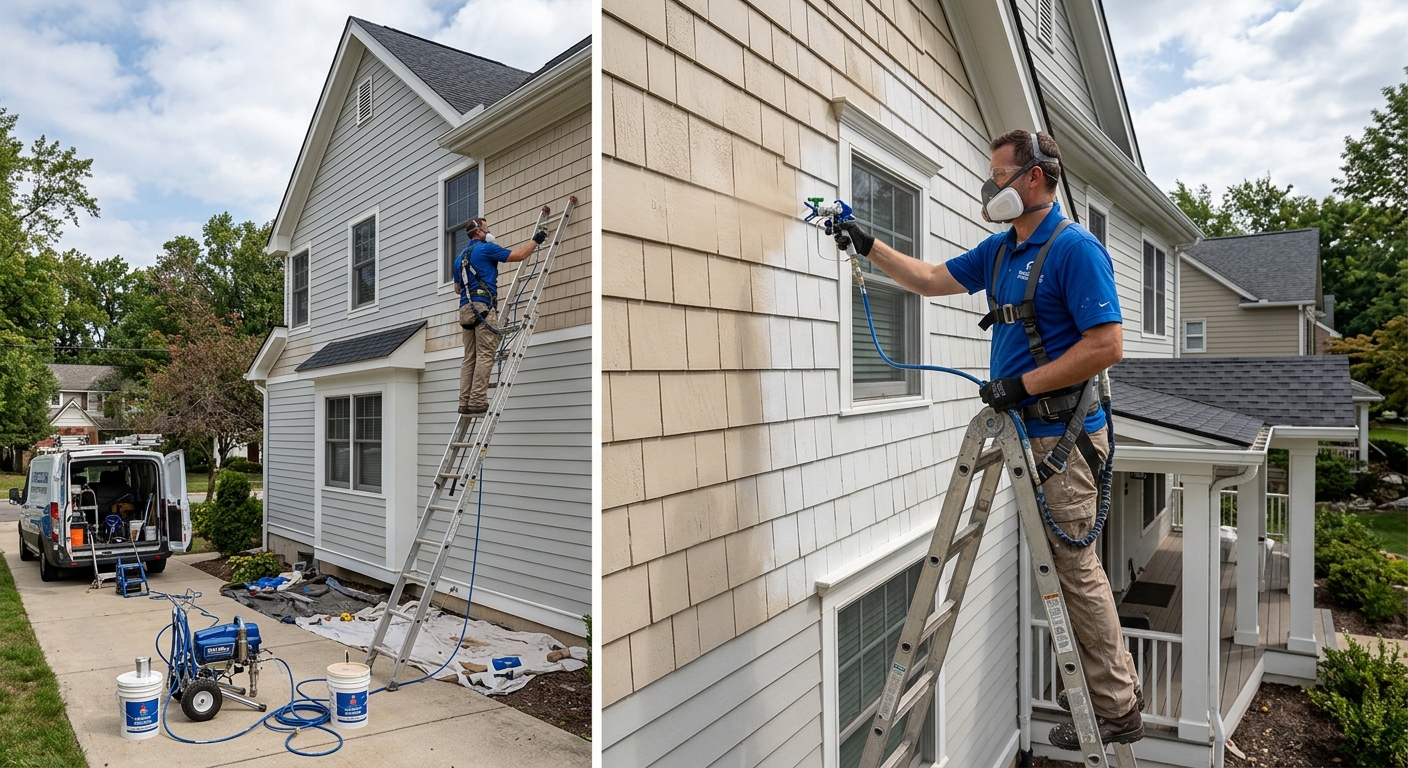
Renfrew homeowners have a lot of choices when it comes to paint, but costs tend to land in predictable bands once you account for prep, product, and the short Calgary-area exterior window. Renfrew’s community is small—about 6,580 people in 2021 (Statistics Canada, 2021 Census)—so tradespeople can book up quickly, especially for summer turnaround work. Just as importantly, many Alberta houses reflect earlier construction eras, and older siding and trim often need more than “a fresh coat,” including scraping, patching, caulking, and extra priming on original details. If your home has pre-1978 materials, lead-safe prep practices are standard for pros even when they’re not legally required for homeowners.
In the Calgary region, exterior projects are weather-dependent. We plan workable exterior work from roughly mid-May through late September, when daytime temperatures reliably stay above 10°C and surfaces can dry properly. That short season compresses demand, so peak scheduling is firmer and contractors prioritize jobs with clear access and minimal unforeseen repairs.
In Renfrew, interior refreshes are steady year-round, and exterior repainting is especially in demand in the older core areas where wood trim and mature landscaping make prep and protection time-consuming—so we usually see the biggest variation there.
Use the table below as a starting point for budgeting; your final number tightens once we confirm condition, surface materials, and whether repairs or colour changes are included.
| Service |
What's Included |
Typical Duration |
Price Range |
| Interior — whole home (walls, ceilings, trim) |
Move/cover protection, surface prep (fill/sand/caulk), prime as needed, walls + ceilings, interior trim/doors, clean-up |
5–10 days |
$2,200–$7,500 |
| Interior — per room (standard bedroom or living room) |
Prep, prime as needed, one room of walls + ceiling, standard trim touch-ups |
1–3 days |
$400–$1,600 |
| Exterior — full house (siding, trim, soffits) |
Power washing, scraping/sanding where needed, caulking, primer system, elastomeric/flexible exterior coating where appropriate, gutters/soffits/trim repaint, full clean-up |
2–4 weeks (weather-dependent) |
$2,500–$9,000 |
| Exterior — trim and accent colours only |
Prep and prime for trim/accent areas, paint system for exterior durability, protection of adjacent surfaces |
5–10 days |
$1,200–$4,200 |
| Kitchen cabinet painting (doors, frames, spray finish) |
Degrease, sanding/scuffing, bonding primer, multi-step topcoats, hardware masking, protective finish, light prep of surrounding trim |
5–12 days |
$800–$5,500 |
| Specialty / faux finish (accent wall, texture) |
Surface prep, base coat, technique execution (texture/faux), topcoat protection, spot-touch ups |
2–7 days |
$600–$6,000 |
Prices are estimates only and vary by project scope, site access and material selection.
What affects the price of painting in Renfrew
Even when two contractors quote the “same” painting scope across Calgary and Alberta, it can differ by 30–50% because preparation, surface condition, and product systems aren’t the same. A quote that looks higher often includes more surface readiness (bonding primer, stain-blocking, repairs, and caulking), and that’s exactly where durability is won or lost.
For exteriors in this region, the season is tightly climate-bound. We’re typically looking at late May to early October: temperatures need to stay above 10°C and rising during application so coatings cure, plus we must time around rain and overnight lows. Coastal BC has a longer calendar, but humidity and mildew control raise complexity and product selection. In Renfrew, the shorter season concentrates demand, so summer scheduling pressure can raise labour rates compared with shoulder-season interior work.
Older homes across the Calgary market often mean prep is the largest cost driver. In repainting jobs, scraping, patching, caulking and priming can be 50–70% of labour depending on what’s underneath. For example, a well-maintained exterior might sit near the lower end of the $2,500–$9,000 band, while a house with flaking trim and multiple failed DIY touch-ups can climb toward the upper end because repairs and primer systems multiply.
Two practical Renfrew examples: if you have peeling paint on south-facing trim, UV and freeze–thaw cycles usually require more mechanical prep and flexible coatings; if you have older siding with previous latex over oil, bonding primer becomes non-optional. Interiors vary too: a walls-only refresh may fit the $400–$8,000 interior band at the low end, while adding ceilings, trim, and multiple priming steps pushes cost upward.
| Price Factor |
Why It Matters |
Cost Impact |
| Surface prep — scraping, sanding, patching drywall or wood |
Paint systems only perform if the substrate is stable and sound |
Can add 20–60% depending on damage |
| Number of coats — 2-coat system over primer vs. 1 coat over existing |
Coverage and durability depend on film build and proper base |
Typically shifts cost 10–30% |
| Paint quality tier — contractor-grade vs. premium (Benjamin Moore, Sherwin) |
Premium lines often improve hiding, colour hold, and cleanability |
Material difference can be 5–20%+ |
| Ceilings and trim — adds significant time vs. walls-only |
Trim masking, cutting-in, and detailed finishing are labour-intensive |
Often adds 15–40% |
| Exterior season window — short season raises summer rates |
Weather scheduling and crew availability affect labour rates |
Can increase quoted labour in peak months |
| Lead-safe precautions — required for pre-1978 homes with lead paint |
Pros use wet methods, HEPA vacuuming, and proper disposal when lead is present |
Often adds 5–25% |
| Surface material — drywall vs. plaster vs. wood vs. stucco |
Different substrates need different primers and prep techniques |
May change primer system and labour 10–35% |
| Height and access — multi-storey exterior requires scaffolding or lifts |
Access equipment and safety time increase |
Can add substantial labour and equipment costs |
Permits & regulations in Alberta
In Alberta, painting typically does not require a permit. That said, health and safety rules matter for older housing stock. For homes built before 1978, health guidelines recommend testing for lead paint before sanding or scraping, and using lead-safe work practices if lead is present. Professional crews generally follow wet methods to reduce dust, use HEPA vacuuming, and manage debris and waste disposal properly. This isn’t mandated for homeowners in the way some construction permits are, but it is standard practice for reputable contractors.
What does require a permit (usually) is not the act of painting—it’s related work like plumbing/electrical upgrades, structural changes, or some exterior work governed by municipal permitting rules (and those situations vary). For a straightforward interior or exterior repaint, the permit requirement is typically “no,” but the contractor still must do safe, code-conscious prep.
To verify a Renfrew contractor is properly covered in Alberta, do it step-by-step:
- Check their business licensing status through the appropriate online registry listings (and confirm they’re operating as a legitimate contractor).
- Ask for a current certificate of insurance: it should include liability coverage for the work site.
- Confirm workers’ compensation coverage: request evidence of WSIB/WCB coverage (as applicable) for employees.
- Ask for the written job scope showing surface prep, paint brand and sheen, number of coats, and what repairs are included.
- Get a contract that states start date, duration estimate, and cleanup/disposal responsibilities.
Once these pieces are in place, you’re far less likely to get surprises in cost or scheduling.
Interior vs exterior painting — getting the best result in Renfrew
In Renfrew, the difference between a long-lasting paint job and a premature failure comes down to prep discipline and product-system fit to Alberta conditions. For interiors, surface prep matters more than the topcoat brand. Fill and sand properly, address stains and sheen differences, and prime bare patches—two coats of the right system over sound primer almost always outlast one “heavy” coat. Then choose sheen intentionally: flat for low-traffic ceilings, eggshell or satin for living areas, and semi-gloss for trim because it wipes clean and resists scuffing.
For exteriors, the rules tighten further. Caulking should be done before painting to prevent water ingress at joints and trim edges, not after the fact. Primer type is critical: different substrates (wood, fibre cement, previously painted surfaces) need the correct bonding and sealing system. In Alberta, we specify temperature- and freeze–thaw-tolerant acrylics and elastomeric or flexible exterior coatings where appropriate, because Alberta UV and seasonal cycling can punish brittle coatings.
Cabinet painting can be a smart alternative to replacement when your boxes are solid. If your goal is to refresh without moving plumbing or installing new hardware, cabinet painting is often a better spend than replacement, but it still requires degreasing, bonding primer, and a factory-style finish process.
For pre-1978 homes, lead-safe precautions are part of the “best result” conversation because sanding and scraping can create hazardous dust if lead is present. In terms of money, it’s also where value shows: spending the additional prep to reach the middle of the interior repaint range (for example, closer to $1,200 – $3,000 for a multi-room refresh with patching and priming) usually beats cutting corners and paying again for peeling patches later.
| Project Type |
Key Prep Step |
Recommended Coats |
Price Band |
| Interior — fresh drywall (new construction) |
Prime bare drywall and filled seams to unify absorbency |
1 primer + 2 topcoats |
$900–$5,500 |
| Interior — repaint (good condition, no repairs) |
Light scuff/sand and clean; spot-prime as needed |
2 topcoats |
$400–$2,500 |
| Interior — repaint (patching and priming needed) |
Fill, sand, caulk where required, then prime patched/sanded areas |
1 primer + 2 topcoats (or 2 coats over primer spots) |
$800–$4,200 |
| Exterior siding (wood or fibre cement) |
Power wash, scrape loose paint, caulk joints, and apply primer system |
1 primer + 2 finish coats (system dependent) |
$2,500–$9,000 |
| Exterior trim and accents only |
Mask and prep trim thoroughly; prime bare/spot areas for adhesion |
2 finish coats (plus primer where exposed) |
$1,200–$4,200 |
| Kitchen cabinets (spray finish) |
Degrease and bonding primer before spraying topcoats |
Multiple steps: primer + 2 topcoats (finish system) |
$800–$5,500 |
How to choose a painting contractor in Renfrew
Choosing the right painter in Renfrew is mostly about verifying coverage, then comparing apples-to-apples scopes. Start with licensing and insurance. In Alberta, there isn’t a single “painter licence” that replaces everything, so you verify contractor legitimacy and coverage instead. Ask for their liability insurance certificate (make sure it’s current and includes work activities). For employees, confirm they carry WSIB/WCB workers’ compensation coverage and provide documentation you can review. If a contractor can’t produce these quickly, it’s usually not a good sign for your job.
Next, request 2–3 itemised written quotes. You want labour and materials broken out, not a vague lump sum. Itemisation should clearly call out prep responsibilities (scraping/sanding, patching, caulking, priming), product lines/colour codes, number of coats, and surface protection. Review the exclusions too: what’s not included in the quote (trim repair, drywall patching beyond a set amount, disposal, or moving furniture)?
Warranty matters. Ask for the workmanship warranty length, what it covers (peeling, adhesion failure, roller marks, etc.), and whether it’s transferable if you sell the home. Payment schedule should be conservative: never pay more than 10–15% upfront; hold back a portion until key milestones and final clean-up are completed. Finally, get the start date and completion estimate in writing, especially for exterior work that depends on temperatures above 10°C and proper drying time.
- Confirm liability insurance with the certificate details provided before signing.
- Confirm WSIB/WCB coverage for any employees.
- Ensure the scope lists surface prep steps (scrape, sand, patch, caulk, prime) by area.
- Check paint brand, sheen, and colour code are specified—not just “quality paint.”
- Verify number of coats and primer requirements for bare/patch areas.
- Ask how they protect landscaping, windows, floors, and hardware.
- Confirm disposal/removal of debris and waste is included.
- Look for clear timelines and rain/freeze contingencies for exteriors.
- Ask about site walkthrough and written measurements to support pricing.
- Request a workmanship warranty in writing.
- Avoid quotes with a lot of “allowances” for major prep without defining limits.
- Clarify payment milestones tied to completed steps, not only “project underway.”
Red flags I commonly see in Renfrew: no written scope or vague “we’ll prep as needed,” refusing to share proof of insurance/WSIB, promising exterior work “any time” regardless of temperatures and drying windows, skipping caulking or primer steps to save money, and asking for large upfront payments (beyond 10–15%).
Frequently asked questions — painting in Renfrew
When is the best time for exterior painting in Renfrew?
For Renfrew and the broader Calgary region, the best window for exterior painting is typically mid-May through late September, when daytime temperatures stay reliably above 10°C and surfaces can dry properly. We also plan around rain and overnight lows because coatings need time to cure. If you’re aiming for a full exterior scope, book earlier in the season—demand spikes quickly due to the shorter summer weather window. If your schedule is flexible, shoulder-month work is sometimes possible for smaller sections, but full houses usually need consistent dry conditions for a durable finish.
How many coats of paint do I need?
Most good exterior and interior outcomes use a system, not just “more paint.” In many repaint scenarios, a proper primer plus two finish coats is the standard for coverage and durability. If the surface is in good condition and colour is consistent, interiors may be done with two topcoats, with spot-priming where patches or bare areas were sanded. For budgeting, many homeowners find interior repaint projects fall within the broad interior band (for example, around $400–$8,000 depending on rooms, ceilings, and prep).
What paint is best for Renfrew's climate?
For Alberta climate, exterior durability hinges on product-system fit: we typically specify acrylics and, when needed, elastomeric or flexible coatings to handle freeze–thaw cycling and UV exposure. Caulking and primer selection are just as important as the topcoat. Interiors usually prioritize washability and sheen: eggshell or satin for living areas and semi-gloss on trim for easy cleaning. If your home includes older materials or pre-1978 components, we plan primers and prep to improve adhesion and reduce bleeding, and we follow lead-safe practices if lead is present.
How long does exterior paint last here?
Exterior paint lifespan in Renfrew depends on prep quality, substrate condition, product selection, and sun exposure. Well-prepped work—scraping loose material, proper priming of bare areas, correct caulking, and a two-coat finish system—typically performs far better than rushed repainting. If your home has hail impact or areas with repeating moisture issues, you may need more robust coatings and careful detail work around trim and joints. Cost-effective longevity usually aligns with projects near the realistic exterior range (for example, within $2,500–$9,000 depending on repair and surface complexity).
Should I paint or replace my cabinets?
In many Renfrew kitchens, painting cabinets is the better choice when the box frames are solid and the goal is colour change rather than structural replacement. Cabinet painting focuses on degreasing, bonding primer, and a sprayed multi-step topcoat process for durability. Replacement is usually justified if cabinets are damaged, warped, or structurally compromised, or if you’re changing layout significantly. If you only need a refresh, cabinet painting can be a cost-effective path within the cabinet/trim painting pricing band (often starting around $800–$7,000 depending on scope and finish quality). We’ll assess door condition, hardware fit, and finish expectations during your quote.
How do I prep walls before painting?
For best results, prep should be systematic: remove dust and grease, fill dents and nail pops, sand smooth, and prime patched areas so they don’t flash or peel later. If there’s staining or uneven absorbency, spot-priming is essential—especially near repairs. Caulk where edges meet (baseboards, trim lines) to prevent air and moisture pathways, then sand lightly to ensure adhesion. If you’re repainting, don’t skip scuffing/sanding where glossy paint exists. In older Renfrew homes, be mindful of pre-1978 materials: if sanding or scraping may disturb unknown paint layers, professionals follow lead-safe practices as a safety standard.