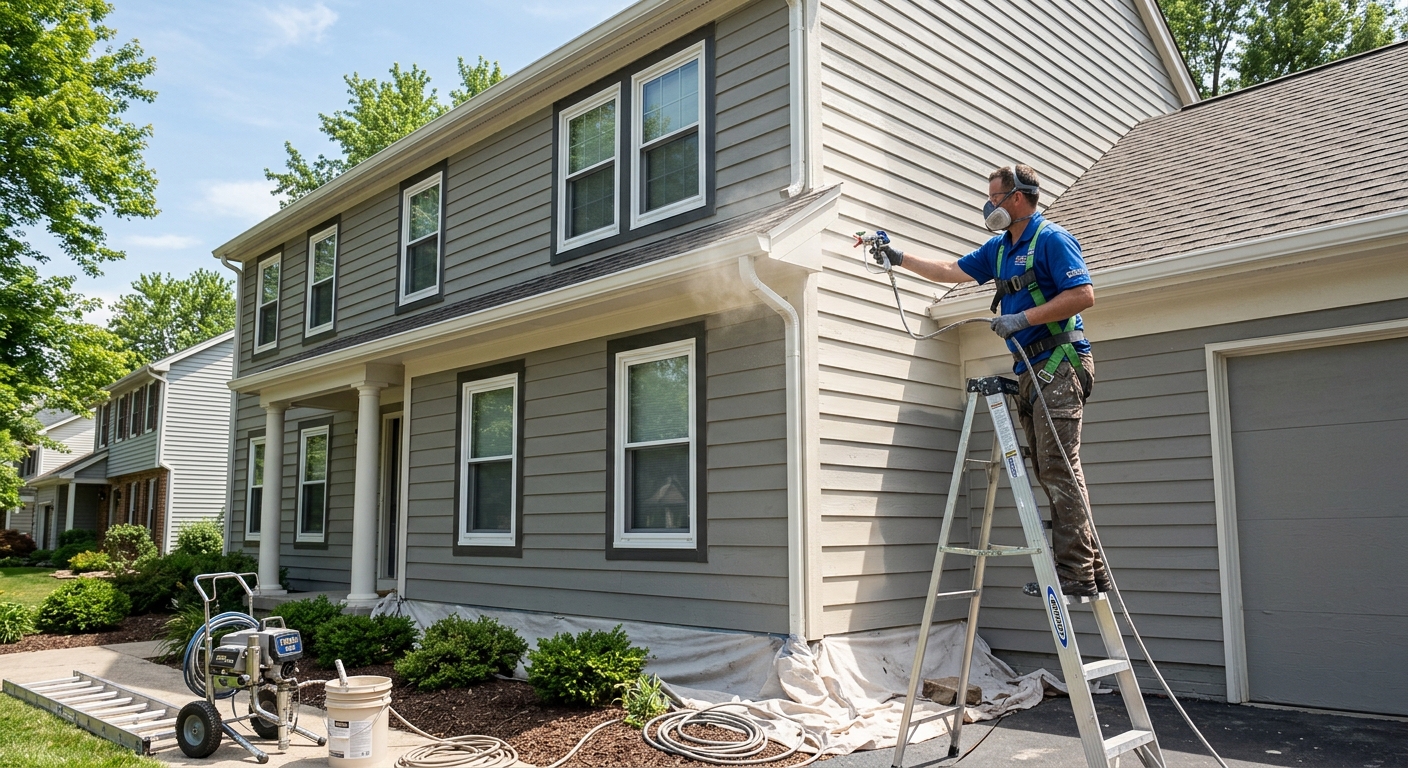
Painting options and costs in Acadia
Acadia, Alberta is a small community where good painting planning really shows—especially when you’re dealing with older housing stock. In the Calgary region, the population is 9,915 (Statistics Canada, 2021 Census), and that demand is spread across a limited pool of crews during the busy season. Many homes in the broader area date back decades; properties built before 1980 often need more intensive prep, such as scraping, patching, caulking, and extra priming on older trim and siding (and may require lead-safe protocols if materials are pre-1978).
Pricing in Acadia follows the same market pressures as the Calgary region: exterior work is weather-dependent, so our workable painting window typically runs from mid-May to late September when daytime temperatures reliably stay above 10°C and surfaces can dry properly. Freeze–thaw cycles, strong UV, and hail risk mean we specify high-quality acrylics and flexible exterior systems, which can raise material costs compared with basic paints. Interior work is less season-sensitive, but labour still climbs with ceiling height, access, trim, and prep complexity.
In Acadia, trade activity tends to concentrate around the town’s established residential pockets and older streets where repainting and trim refreshing come up most often. For homeowners comparing options, the fastest way to understand your range is to look at scope first—then match the right coating system and labour level to your substrate. Use the table below as a starting point for budgeting, and we’ll refine it after a site visit and prep assessment.
| Service |
What's Included |
Typical Duration |
Price Range |
| Interior — whole home (walls, ceilings, trim) |
Protect floors and fixtures, wall prep (patch/sand/caulk as needed), prime where required, 2-coat wall/ceiling system, detailed trim coverage, clean-up and dust control |
5–10 working days |
$1,800–$6,800 |
| Interior — per room (standard bedroom or living room) |
Prep and masking, patch/sand/prime as needed, 2-coat walls, ceiling touch-ups, basic trim painting, light clean-up |
1–3 working days |
$400–$1,600 |
| Exterior — full house (siding, trim, soffits) |
Power washing (as required), scrape and patch loose paint, caulking, stain-blocking where needed, prime substrate, 2-coat exterior system, door/trim/soffit coverage, project clean-up |
6–14 working days |
$3,200–$9,000 |
| Exterior — trim and accent colours only |
Prep and prime localized areas, scrape/patch where affected, caulk edges, 2-coat trim/accent application, protecting adjacent surfaces |
2–6 working days |
$2,500–$5,900 |
| Kitchen cabinet painting (doors, frames, spray finish) |
Degrease and clean, hardware handling (as agreed), sanding/scuff prep, bonding primer where needed, spray-applied finish, reinstallation, minor touch-ups, optional protective topcoat sheen selection |
4–10 working days (plus cure time) |
$1,300–$4,900 |
| Specialty / faux finish (accent wall, texture) |
Surface smoothing prep, texture or faux application, sealing/finish coat, colour matching, dust control and final clean-up |
2–7 working days |
$600–$3,600 |
Prices are estimates only and vary by project scope, site access and material selection.
What affects the price of painting in Acadia
Two homeowners in Acadia can receive quotes that differ by 30–50% for what looks like the same paint job, and in most cases the gap comes down to prep depth, product system, and site access—not “paint cost” alone. Exterior pricing is especially sensitive to conditions in the Calgary region. Our exterior painting window typically runs from late May to early October, when application and drying require daytime temperatures above 10°C and proper cure time. When schedules get compressed in summer, labour rates firm up and crews may need to prioritize weather-ready days.
Older homes throughout this region are another major driver. Repaints often require extensive scraping, patching, caulking and priming, and those prep steps can represent 50–70% of total labour on a typical exterior repaint. For example, if we find adhesion failures on trim paint, we may need additional prime and localized stain-blocking before the topcoat—pushing an exterior from the lower end of the $2,500–$9,000 range toward the higher end.
Concrete local scenarios that change cost in Acadia include: (1) hail-warped siding or damaged caulking, which increases surface repair and elastomeric sealing; (2) interior ceilings with heavier texture or water-damage spots, which adds sanding, drywall repair, and primer; and (3) cabinet locations with grease exposure (near ranges), where degreasing and bonding primer are non-negotiable for a durable finish. If you compare interior room repainting around the $400–$8,000 interior band, the pricing swings largely on trim extent, ceiling work, and whether we’re smoothing patches to a “no-ledge” finish standard.
In short: Alberta’s freeze–thaw cycles and UV exposure demand a proper system, and the Calgary market concentrates labour when weather cooperates—so the right prep and the right coating choice usually wins long-term.
| Price Factor |
Why It Matters |
Cost Impact |
| Surface prep — scraping, sanding, patching drywall or wood |
Determines adhesion and smoothness; fixes failures before paint goes on |
Can add 20–60% of labour on repaints |
| Number of coats — 2-coat system over primer vs. 1 coat over existing |
Coverage, hide, and uniform sheen depend on correct layering |
Typically shifts cost by 10–25% |
| Paint quality tier — contractor-grade vs. premium (Benjamin Moore, Sherwin) |
Premium systems often offer better durability and coverage, reducing rework |
Material swing usually 5–15% overall |
| Ceilings and trim — adds significant time vs. walls-only |
Trim needs cutting, detail work, and careful masking |
Often increases interior scope by 15–40% |
| Exterior season window — short season raises summer rates |
Limited workable weeks affect scheduling and crew availability |
Can raise labour by 10–30% in peak weeks |
| Lead-safe precautions — required for pre-1978 homes with lead paint |
Protects occupants and workers during scraping/sanding and dust control |
May add 5–20% depending on condition and testing needs |
| Surface material — drywall vs. plaster vs. wood vs. stucco |
Different substrates need different primers and prep methods |
Can change total by 10–35% for exteriors |
| Height and access — multi-storey exterior requires scaffolding or lifts |
Increases setup time, safety measures, and labour productivity |
Can add 15–45% on larger/multi-storey homes |
Permits & regulations in Alberta
In Alberta, painting itself typically does not require a permit. That said, the work may trigger permit-like requirements depending on how your project interacts with other trades or home systems, so your contract should be clear about scope. For homes built before 1978, health guidelines recommend testing for lead paint before sanding or scraping, and using lead-safe work practices if lead is present. Professional crews commonly follow precautions such as wet methods to reduce airborne dust, HEPA vacuuming during prep, proper bagging and disposal, and containment where practical—these steps aren’t “homeowner legal requirements” in the way permits are, but they are standard good practice.
When hiring in Acadia, confirm your contractor carries liability insurance and the appropriate workers’ compensation coverage (WSIB/WCB) for the province. Ask for proof before work starts, not after. Also insist on a written contract that lists paint brand and sheen, number of coats, the exact prep activities (scrape, sand, patch, caulk, prime/stain-block), and what’s included for protection, disposal, and final clean-up.
How a homeowner verifies credentials step-by-step:
- Licence/eligibility: check Alberta’s relevant trade licensing registry if applicable for the contractor’s business model and registration details (many painting firms operate as businesses that must be properly registered).
- Liability: request a current certificate of insurance; confirm the policy is active and includes the appropriate coverage limits for property damage.
- Workers’ comp: request WSIB/WCB account proof or an insurance letter showing coverage; this matters if a painter gets injured while working.
- Ask for written scope: make sure the contract specifies prep and coatings—not just “we’ll paint everything.”
- Confirm start/completion: schedule in writing with weather/weather-day contingencies for exterior work.
Interior vs exterior painting — getting the best result in Acadia
Getting a long-lasting paint job in Acadia isn’t about picking the fanciest brand; it’s about matching the coating system and prep to our Calgary-region climate. Interiors fail early when prep is rushed: filling and sanding needs to be complete, drywall repairs must be primed, and caulking around transitions should be addressed before any colour goes on. For interior rooms, sheen choice matters by use. Flat paint hides imperfections in low-traffic ceiling areas, while eggshell or satin often balances wipeability and appearance on walls. In real life, two coats applied over a proper primer consistently outlast one “thick” coat—especially when walls have patches or stain spots.
Exteriors are stricter. In Alberta, freeze–thaw cycles, UV, and hail-related wear can stress coatings, so surface prep is the foundation: scraping loose paint, patching defects, and caulking seams before painting to prevent water ingress. Primer type also matters. Different substrates (wood, fibre cement, older repainted areas) may need specific primers—sometimes bonding primers for poor adhesion, and appropriate options for sound masonry or stucco-like textures. We also select products engineered for Canadian temperature swings, rather than assuming a paint that’s “fine” indoors will perform outside.
Cabinet painting is a practical budget alternative to replacement. If your boxes are solid and doors are removable, painting can deliver a refreshed look at a fraction of full renovation—often landing within the interior/cabinet band, such as $1,300–$4,900 depending on door count and finish system. If the cabinet frames are delaminating, swollen from moisture, or the hardware holes are wallowed out, replacement may make more sense.
For pre-1978 homes in the Acadia area, we plan lead-safe prep as needed. That extra containment and dust control may raise the job, but it’s what protects your home and improves adhesion and finish quality.
| Project Type |
Key Prep Step |
Recommended Coats |
Price Band |
| Interior — fresh drywall (new construction) |
Prime bare drywall thoroughly, seal patches, sand for uniform texture |
1 primer + 2 top coats |
$1,000–$3,500 |
| Interior — repaint (good condition, no repairs) |
Light scuff, clean, address minor caulk lines; spot-prime if needed |
1–2 coats depending on colour change (typically 2) |
$400–$2,400 |
| Interior — repaint (patching and priming needed) |
Patch and sand, then prime patched areas and stain-prone zones |
1 primer + 2 top coats |
$700–$4,500 |
| Exterior siding (wood or fibre cement) |
Scrape/patch, caulk joints, use correct exterior primer for substrate and adhesion |
1 primer + 2 exterior top coats |
$3,200–$9,000 |
| Exterior trim and accents only |
Spot-scrape, prime where paint is failing, caulk edges, protect adjacent surfaces |
Prime as needed + 2 top coats |
$2,500–$5,900 |
| Kitchen cabinets (spray finish) |
Degrease and apply bonding primer where adhesion is critical |
Primer + 2 finish coats (or as system requires) |
$1,300–$4,900 |
How to choose a painting contractor in Acadia
Choosing the right contractor in Acadia starts with verification and good documentation. First, confirm Alberta compliance for your contractor’s business operation, and make sure they carry liability insurance and workers’ compensation coverage (WSIB/WCB). How to check each: request a certificate of insurance and ensure it’s current (not expired), then ask for proof of WSIB/WCB coverage that matches the workers who will be on-site. If a contractor can’t provide these immediately, that’s a risk you should treat seriously.
Next, get 2–3 itemised written quotes that separate labour and materials. A solid estimate will list surface prep steps (scraping, sanding, patching, caulking, priming, stain-blocking), the number of coats, the paint line/type, and protections (masking, floor coverings, cleanup). Avoid quotes that only provide a single lump-sum with no scope detail. Also confirm what’s excluded: furniture moving, drywall repair beyond basic patching, removal of doors/windows screens, and whether disposal and jobsite clean-up are included.
Warranty should be written and clear: workmanship warranty length, whether product/manufacturer warranties are provided, and whether they’re transferable if you sell the home. Payment scheduling matters too. For painting jobs, never pay more than about 10–15% upfront, and hold back a portion until final walkthrough and touch-ups are complete. Finally, ask for a written start date and completion estimate, especially for exterior work where Alberta’s weather can affect cure times and recoat windows.
- Ask for insurance and workers’ comp proof before signing.
- Ensure the quote lists paint brand and sheen (e.g., eggshell vs. satin).
- Confirm the number of coats and where primer is required.
- Make sure prep includes scraping, sanding, patching, and caulking (as applicable).
- Check whether stain-blocking is included for knots, tannins, or water marks.
- Confirm disposal and clean-up are included (trash removal, surface wipe-downs).
- Verify protection plans (drop cloth coverage, masking details, ventilation for interiors).
- Ask about colour change coverage requirements (light-to-dark may need extra coats).
- Require a timeline in writing with weather contingencies for exterior work.
- Clarify how touch-ups and minor defects are handled in the final day(s).
- Confirm whether hardware removal/reinstallation is included (especially cabinets).
- Ask how dust control is handled on repaints and lead-safe prep if pre-1978 materials exist.
Red flags I’ve seen in the Acadia area: crews that won’t discuss prep depth, quotes that omit priming and caulking details, missing or expired insurance/WSIB/WCB documents, payment requests over typical upfront levels without a signed contract, and no written warranty or vague “we’ll do our best” workmanship language.
Frequently asked questions — painting in Acadia
When is the best time for exterior painting in Acadia?
For Acadia homeowners, the best time aligns with the Calgary-region weather pattern: typically mid-May to late September. Exterior work needs daytime highs reliably above 10°C so paint can be applied and dry properly, and crews also need enough time for cure before overnight lows and the next rain. In practice, summer slots book fast because demand concentrates into a short, weather-dependent window. If you schedule too early, paint may not dry evenly; too late, you risk poor cure and adhesion issues. A typical plan is to aim for a stretch of stable temperatures, with day-to-day weather checks before we start. If your siding shows hail pitting or failed caulking, we factor repair time into the schedule as well.
How many coats of paint do I need?
Most solid-colour exterior projects use a primer (when required by substrate condition) plus two top coats. For interiors, the “two-coat rule” is just as important: two coats over a proper primer generally outlasts one thick coat because it improves coverage and uniformity. If you’re repainting good-condition walls with no repairs, two coats may still be recommended for consistent sheen and colour match. If there are patches, drywall repairs, or stained areas, plan on priming first—those areas absorb paint differently and will otherwise “flash” through. As a budgeting anchor for many Acadia projects, interior room repainting often falls within $400–$1,600, while a more involved whole-home scope can run higher once priming, trim and ceilings are included.
What paint is best for Acadia's climate?
For Alberta exteriors, the best performance comes from a system designed for temperature swings, UV exposure, and typical winter freeze–thaw stress. That usually means high-quality acrylic exterior paints and, where appropriate, elastomeric or flexible coatings for crack-prone or movement areas like trim and caulk lines. We also select primers based on the substrate and current adhesion: wood, fibre cement, and older previously painted surfaces don’t all behave the same. In Acadia, hail and sun combine to stress coatings—so choosing a durable exterior-grade product and doing the prep right matters more than chasing the cheapest option. For interiors, you can still prioritize durability, but the bigger drivers are sheen choice and correct primer on repaired or stain-blocked areas.
How long does exterior paint last here?
In the Calgary region and Acadia area, exterior paint longevity usually depends on prep and system selection more than the paint label. When we scrape failing areas, patch properly, caulk before top-coating, and use the right primer and exterior-grade product, many homes see a typical service life in the range of years rather than seasons. If prep is skipped—especially over loose paint, porous substrate, or improperly sealed joints—failures can appear early (peeling, blistering, or colour fade). Weather plays a role too: freeze–thaw cycles and UV exposure accelerate wear, while hail damage can create new weak points. The best way to estimate your likely lifespan is to have a contractor evaluate adhesion and existing coating condition on your siding and trim during the quote process.
Should I paint or replace my cabinets?
In Acadia, painting cabinets is often the smarter option when boxes are structurally sound, doors are salvageable, and the current finish can be properly prepped and bonded. Replacement becomes more attractive when boxes are swollen, joint hardware is compromised, or the cabinetry has persistent moisture damage that prep alone can’t fix. A quality spray finish can refresh the look for a fraction of the cost of replacement, and many homeowners budget around $1,300–$4,900 depending on door count, condition, and finish system. The key is prep: thorough degreasing, correct primer selection, and careful topcoat application. If you’re dealing with heavy grease buildup near the range or glossy surfaces that resist adhesion, painting can still work—but the bond prep steps are critical.
How do I prep walls before painting?
For interiors in Alberta, prep is where quality is made. If you’re planning a DIY prep pass, focus on cleaning and minor defect removal: remove dust, grease, and fingerprints (especially around kitchens and hallways), then lightly scuff glossy areas so paint can bond. Fill holes and cracks with appropriate patching compound, sand smooth, and wipe off dust after sanding. Caulk gaps at trim edges and between wall transitions before painting—cracks that are not caulked usually reappear as thin lines. If walls have stains (water marks, nicotine, tannins), spot-prime/stain-blocking is typically needed; otherwise, stains can bleed through. For pre-1978 homes, dust control considerations matter if there’s any chance of lead-containing surfaces during sanding or scraping—professionals use lead-safe practices as standard practice.