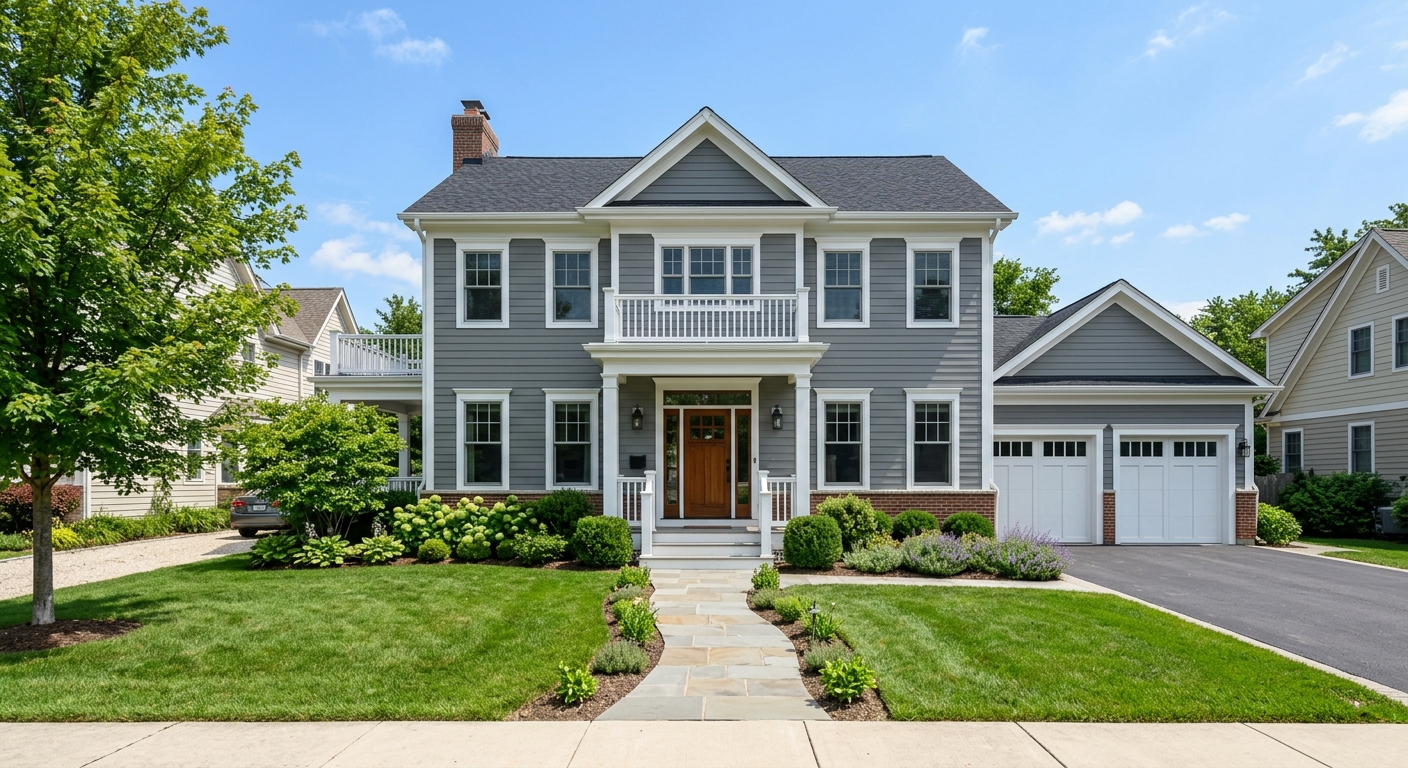
Painting options and costs in Redstone
In Redstone, Alberta, the most common painting requests fall into two buckets: “whole-home” interior refreshes and exterior repaints that protect siding and trim through freeze–thaw cycles, UV exposure, and the occasional hail season. Redstone’s housing stock includes a meaningful share of older properties—across the Calgary economic region, many homes are established enough that repainting often means more than rolling a topcoat; it can include scraping, patching, caulking, and sometimes extra priming on original trim. In fact, with 9,050 people living in Redstone (Statistics Canada, 2021 Census), contractor availability can tighten when multiple neighbours book at once, particularly for exteriors.
Calgary-area weather shapes the budget fast. Our workable exterior window typically runs from mid-May to late September, when daytime highs stay above 10°C and surfaces can dry properly. That short, weather-dependent window compresses demand and makes peak-season scheduling firmer than shoulder months. Interiors are less season-sensitive, but labour and prep complexity still drive pricing—especially if you’re updating ceilings, switching sheens, or addressing patched drywall.
If you’re choosing between options, it helps to compare typical scopes side-by-side. In Redstone, exteriors are especially in demand along newer developments near local arterial access routes, where homeowners frequently align exterior work with summer move-in timelines. Use the table below to benchmark what different scopes usually cost before you request your quote.
| Service |
What's Included |
Typical Duration |
Price Range |
| Interior — whole home (walls, ceilings, trim) |
Prep (masking, patching, sanding), prime as needed, 2-coat paint on walls/ceilings, caulking where required, paint trim/doors, clean-up and final touch-ups |
5–12 days |
$3,200–$8,000 |
| Interior — per room (standard bedroom or living room) |
Protect floors and fixtures, spot patch/sand, prime as needed, 2-coat finish on walls/ceiling, basic trim touch-up (light caulking) |
2–4 days |
$400–$1,800 |
| Exterior — full house (siding, trim, soffits) |
Pressure wash (where appropriate), scrape/sand, patch caulk and spot repairs, prime bare/porous areas, elastomeric/flexible system as specified, 2-coat exterior paint, protective edging/trim work |
1–3 weeks (weather dependent) |
$4,500–$9,000 |
| Exterior — trim and accent colours only |
Surface cleaning, scrape/sand, spot prime, 2-coat trim/accent application, caulking and detailing around windows/doors |
4–8 days |
$2,500–$6,000 |
| Kitchen cabinet painting (doors, frames, spray finish) |
Degrease, clean and de-gloss, repairs, bonding primer on suitable substrates, sprayed finish on doors/drawers, hardware handling, reinstallation |
1–2.5 weeks |
$1,200–$5,500 |
| Specialty / faux finish (accent wall, texture) |
Surface prep tailored to the effect, specialty primer/base, application of faux/texture system, sealing as required, blending to adjoining surfaces |
2–6 days |
$600–$6,000 |
Prices are estimates only and vary by project scope, site access and material selection.
What affects the price of painting in Redstone
In Redstone and across the Calgary region, two quotes for the “same” paint job can differ by 30–50% because the real drivers aren’t the brand on the pail—they’re the amount of prep, access, and the coating system required to survive Alberta conditions. For exteriors, pricing tightens in our short, weather-bound window (typically mid-May to late September) because temperatures need to stay above 10°C and surfaces must dry properly during application. In coastal BC, the season can be longer but humidity and mildew risk change product choices and scheduling; here, we’re less worried about year-round damp, but freeze–thaw and UV still demand quality acrylics and flexible systems. When summer demand concentrates, crews book out sooner and rates firm up.
Older homes throughout the broader region can mean prep becomes the biggest cost line. Scraping flaking paint, sanding glossy surfaces for adhesion, caulking at joints, and priming patched areas can represent 50–70% of labour on a repainting job. In Redstone, a common cost-reality is that a “trim-only” refresh may land near the lower end of the exterior range (around $2,500–$6,000), while a full house exterior repaint that includes siding and soffits can quickly move toward the higher band (often $4,500–$9,000) once prep and primer are fully costed.
Concrete local examples: a house with sun-baked, chalky siding often needs more sanding and primer because adhesion drops; multi-storey facades or complicated rooflines require lifts and more time; and a repaint on previously DIY-finished trim can cost more because coverage problems show up only after caulking and full sanding. Even an interior refresh can swing: replacing a “simple repaint” with patching and primer can move the project from a per-room budget to whole-home pricing (for example, moving from the interior per-room band toward the $400–$8,000 range depending on scope).
| Price Factor |
Why It Matters |
Cost Impact |
| Surface prep — scraping, sanding, patching drywall or wood |
Adhesion and longevity depend on prep quality; failing to remove loose paint or to feather edges causes early peeling. |
High impact (often 30–70% of labour) |
| Number of coats — 2-coat system over primer vs. 1 coat over existing |
Uneven absorption, stains, and colour changes require correct coating buildup. |
Medium to high impact (+10–25%) |
| Paint quality tier — contractor-grade vs. premium (Benjamin Moore, Sherwin) |
Premium lines often offer better hiding, durability, and touch-up performance; cheaper coatings may need extra coats. |
Medium impact (varies with coverage) |
| Ceilings and trim — adds significant time vs. walls-only |
Ceilings demand careful cutting in; trim involves more masking and detail work. |
High impact (+15–35%) |
| Exterior season window — short season raises summer rates |
When weather and drying times tighten, crews cost more to secure scheduling and manage rain delays. |
Medium to high impact |
| Lead-safe precautions — required for pre-1978 homes with lead paint |
Testing and lead-safe methods increase labour time and containment/disposal steps if lead is present. |
Medium to high impact (scope-dependent) |
| Surface material — drywall vs. plaster vs. wood vs. stucco |
Different substrates absorb differently and may need specific primers for bonding and stain blocking. |
Medium impact |
| Height and access — multi-storey exterior requires scaffolding or lifts |
Access equipment and safety time increase labour and material consumption (masking, protection, cleanup). |
High impact |
Permits & regulations in Alberta
In Alberta, painting typically does not require a permit for standard interior and exterior repainting of private homes. However, some work can trigger permit requirements if it’s bundled with building alteration, structural changes, or other regulated tasks—but pure surface preparation and coating (scrape, patch, prime, paint) is usually permit-free. For homes built before 1978, health guidelines recommend testing for lead paint before you sand or scrape, and using lead-safe work practices if lead is present. This isn’t legally mandated for homeowners in the way building permits are, but it’s standard professional practice: wet methods to reduce dust, HEPA vacuuming, controlled containment where needed, and proper disposal.
For your contractor in Redstone, insist on proof they’re set up to work safely and responsibly. A professional should carry liability insurance and workers’ compensation coverage (WSIB/WCB, depending on coverage structure). Also, request a written contract that clearly states the paint brand/line and sheen, the number of coats, the primer system, and the surface prep included (for example: caulking and patching scope, not just “prep as required”).
To verify coverage step-by-step: (1) confirm the contractor’s Alberta registration/licensing status via the online registry they provide or publicly listed registration; (2) ask for a current certificate of liability insurance showing your project address or at least valid coverage dates; and (3) request proof of WSIB/WCB clearance/coverage—then check the certificate for validity dates and matching business name. If they can’t provide documents promptly, that’s a scheduling risk you don’t want to take on.
Interior vs exterior painting — getting the best result in Redstone
In Redstone’s climate and in the Calgary market, the biggest difference between a long-lasting paint job and a premature failure is usually prep, not the “name” of the topcoat. Indoors, surface prep dictates the finish: filling and sanding nail pops or drywall imperfections, priming repaired areas, and ensuring sheen transitions are handled properly. Sheen choice matters too. Flat is forgiving on walls, but eggshell or satin typically holds up better in living rooms and hallways; semi-gloss is common for trim and doors because it resists scuffs and cleaning cycles. In practice, two coats over a properly primed surface nearly always outlast a “thick” single coat—especially when you’re covering patches, stains, or colour changes.
Outdoors, the coating system has to survive Alberta’s temperature swings, UV intensity, and freeze–thaw. That means caulking before painting (so joints stay watertight), primer matched to the substrate (oil-based where adhesion demands it, latex where appropriate and compatible), and surface prep that removes failing paint and chalky residue. We also plan around the reality that the exterior season is weather-bound: if conditions aren’t right, coatings won’t level and dry as designed.
Cabinet painting is a smart budget alternative to replacement when your boxes are sound. For example, cabinet spray finishing might land around $1,200–$5,500—often less than replacement—provided prep is thorough and the coating system is compatible with kitchen grease exposure. For pre-1978 homes, lead-safe prep steps should be treated as part of the job’s “quality,” not an optional add-on.
| Project Type |
Key Prep Step |
Recommended Coats |
Price Band |
| Interior — fresh drywall (new construction) |
Prime to seal suction and lock down joint compound; sand for a uniform profile. |
2 coats (primer + 2-coat finish system) |
$1,200–$4,500 |
| Interior — repaint (good condition, no repairs) |
Clean/de-gloss as needed, light scuff-sand, caulk minor gaps, spot prime problem areas only. |
2 finish coats over proper primer where required |
$400–$2,800 |
| Interior — repaint (patching and priming needed) |
Feather patches, sand flush, stain-block where necessary, prime all repairs for even absorption. |
1–2 primer spots + 2 finish coats |
$800–$8,000 |
| Exterior siding (wood or fibre cement) |
Scrape loose paint, sand edges, prime bare areas, and caulk joints before final coating. |
2 coats exterior system (with primer as required) |
$4,500–$9,000 |
| Exterior trim and accents only |
Correct prep and bonding primer on details; careful masking around siding transitions. |
2 coats on trim/accent (primer included where needed) |
$2,500–$6,000 |
| Kitchen cabinets (spray finish) |
Degrease and bonding primer for adhesion, then spray finish for a smooth, durable film. |
Primer + 2 finish coats (system-dependent) |
$1,200–$5,500 |
How to choose a painting contractor in Redstone
Choosing the right contractor in Redstone comes down to verifying coverage, demanding itemised quotes, and matching the scope to what Alberta weather and your home require. Start with licensing/registration status in Alberta: ask for their current listing details and confirm the business name matches the documents they provide. Next, verify liability insurance by requesting a certificate of insurance (COI) showing valid dates and coverage limits. Finally, check WSIB/WCB workers’ compensation coverage—ask for clearance or proof of coverage and review it for the correct legal name and active period. If they won’t provide documents, that’s a major red flag.
Get 2–3 quotes that break out labour and materials separately rather than one lump sum. A clear quote shows what’s included and what isn’t: prep limits, surface cleaning method, caulking scope, whether primer is bundled, whether disposal and protection are included, and how colour changes are handled. Ask about workmanship warranty length, and whether product/manufacturer warranties apply to your specific surface system. Also ask if warranties are transferable to future owners, if that matters to you.
Payment matters. A reasonable schedule typically keeps upfront deposits around 10–15% and holds back the balance until completion and punch-list items are addressed. Get your start date and completion estimate in writing, with weather contingency language for exterior work, since Alberta’s drying and temperature windows affect progress.
- Confirm Alberta registration/licence details before signing.
- Request liability insurance COI and verify dates/coverage limit.
- Verify WSIB/WCB coverage with a clearance/proof document.
- Ask for an itemised quote (labour, materials, equipment/protection).
- Ensure prep scope is explicit (scraping, sanding level, patching, priming rules).
- Confirm caulking details—what gaps/joints are included.
- Check for disposal and jobsite protection (covers, waste handling).
- Confirm paint lines, sheen types, and number of coats in the contract.
- Ask how colour changes from dark to light are managed (often extra prep/priming).
- Review the workmanship warranty length and what it covers.
- Clarify payment schedule (keep upfront near 10–15%; hold back until punch-list).
- Get a written timeline and weather plan for exterior work.
Red flags I see in Redstone: contractors who won’t provide insurance/coverage proof, vague scopes like “prep as needed” without defining caulking/priming, quotes that omit surface cleaning or primer details, refusal to put paint brand/sheens/coat counts in writing, and requests for large upfront payments or no written timeline.
Frequently asked questions — painting in Redstone
How much does it cost to paint a house in Redstone?
In Redstone, pricing depends heavily on interior vs exterior and—most importantly—how much surface prep is required. For interiors, whole-home painting commonly falls in a wide band, roughly $400–$8,000 depending on number of rooms, ceiling work, and trim detail. For exterior painting, a full house repaint (siding, trim, soffits) is often in the $4,500–$9,000 range because the coating system must handle Alberta freeze–thaw, UV, and drying-time requirements. With Redstone’s population at 9,050 (Statistics Canada, 2021 Census), local scheduling demand can increase in summer when crews are busiest. If your exterior needs substantial scraping and priming, the job can quickly move toward the upper end of the exterior band.
How much does interior painting cost per room in Redstone?
For a typical bedroom or living room, many homeowners see per-room interior painting estimates in the $400–$1,800 range. That’s usually based on prep (masking, patching/sanding), caulking where needed, and a 2-coat finish on walls and ceiling, with primer included when repairs or stains require it. Costs climb when there’s lots of trim, high ceilings, or extensive patching—because labour for cutting in and sanding is where time adds up. If you’re only repainting in good condition with no repairs, the lower end is more realistic; if you need patching and priming, you’ll commonly land higher in the band. Always confirm sheens and trim coverage in the written scope to avoid surprises.
When is the best time for exterior painting in Redstone?
The best time for exterior painting in Redstone is usually mid-May through late September, when daytime temperatures stay reliably above 10°C and surfaces can dry properly between coats. Alberta’s freeze–thaw cycle means we don’t want to trap moisture or apply when overnight lows will delay cure. In our local market, peak summer scheduling tends to book quickly, so start planning ahead—especially if you want a full house. If weather shifts, crews may need to pause for rain or temperature drops, which is why weather contingency matters in the contract.
How many coats of paint do I need?
Most residential jobs in Redstone follow a 2-coat finish system, but the “total” number of coats depends on substrate and condition. For a repaint in decent shape, you generally apply 2 finish coats, with primer included only where needed (for repairs, stains, or bare/porous areas). For patched drywall or problematic stains, you may need primer over repairs, then 2 coats of finish—so your total could be 3 steps (primer + 2 finish coats). For exteriors, we typically plan for an exterior system of primer (where required) plus 2 coats to ensure hiding and durability against UV and temperature swings. A contractor should spell out coat counts and primer requirements in writing.
What paint is best for Redstone's climate?
For Redstone and the Calgary area, exteriors need products that can handle UV exposure and Alberta’s freeze–thaw swings. Contractors typically choose high-quality exterior acrylics, and where appropriate, elastomeric or flexible coatings to better tolerate movement and minor cracking in siding and trim. Interior paint should match the room’s cleaning demands: flat or eggshell for many walls, satin for higher-traffic areas, and semi-gloss on trim and doors for durability. The “best” paint is also the right system for the surface—primer type matters as much as the topcoat for adhesion on repaired or previously painted substrates. If your home is pre-1978, plan for safe prep around potential lead paint before sanding or scraping.
How long does exterior paint last here?
When prep is done correctly and the right coating system is used, exterior paint life in Redstone can run many years, but exact longevity depends on substrate condition, previous coatings, and how well caulking and priming were handled. Freeze–thaw and hail exposure can accelerate wear if cracks and joints aren’t sealed before painting. That’s why a full exterior scope—scraping, sanding edges, caulking before topcoat, and applying primer where bare areas exist—usually lasts better than a quick “topcoat only” approach. If you’re comparing budgets, it’s normal for a full house exterior repaint (often $4,500–$9,000) to outperform a smaller scope (like trim-only around $2,500–$6,000) in terms of overall building protection, because the entire system is addressed rather than a cosmetic layer.