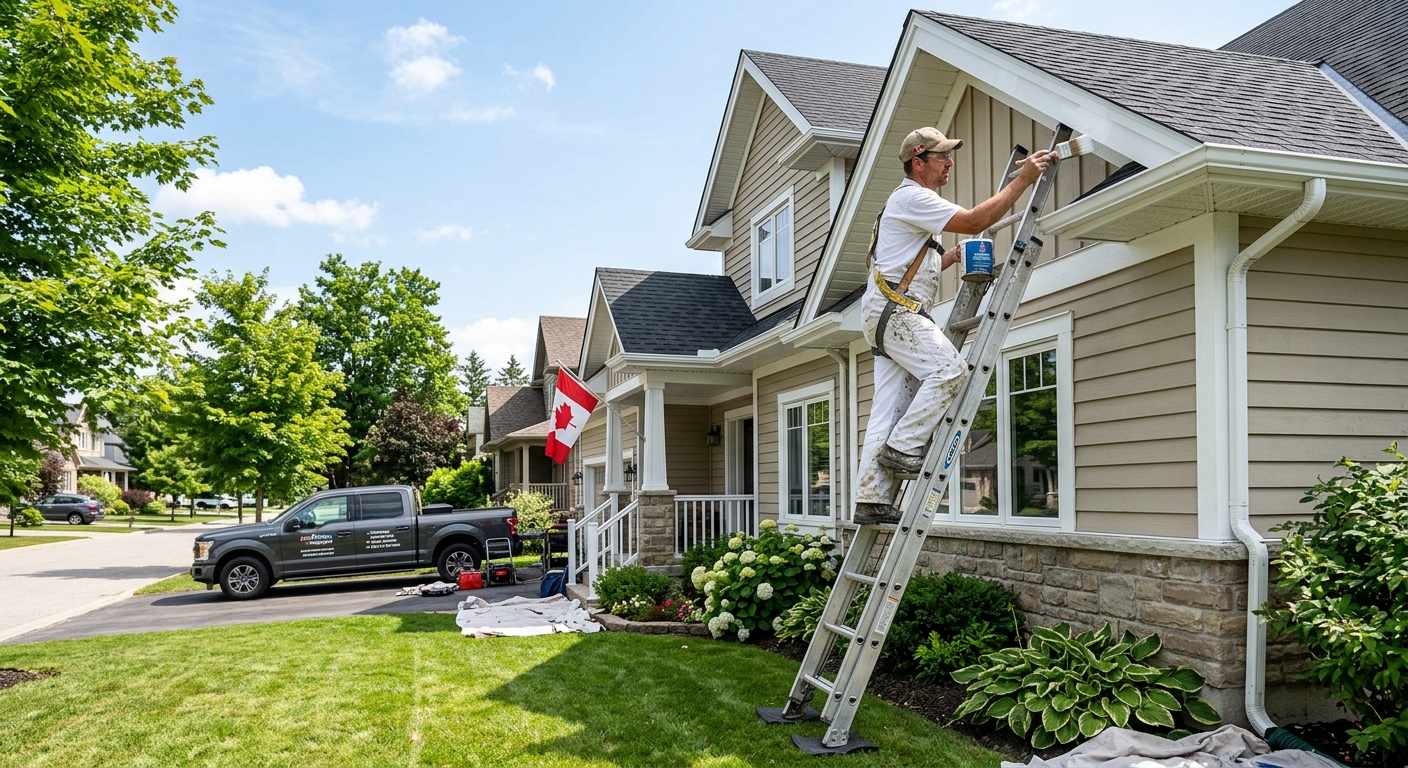
Painting options and costs in Sweet Grass
In Sweet Grass, Alberta, painting options and pricing come down to how much prep your surfaces need and how weather affects drying and scheduling. With a local population of 2,636 (Statistics Canada, 2021 Census), you’ll typically see fewer contractors than Calgary itself, so peak exterior weeks can book quickly. Sweet Grass and the surrounding Calgary region also have many homes from the mid-to-late 20th century; older substrates often mean extra scraping, caulking, stain-blocking, and priming before we ever apply a top-coat—cost drivers that get missed in lowball quotes. For pre-1978 buildings, contractors commonly plan for lead-safe precautions even when the work is “just paint,” because renovation dust control and safe handling matter if lead is present.
Calgary-area costs are shaped by a short, weather-dependent exterior window. Our workable season is typically mid-May to late September, when daytime highs stay reliably above 10°C so paint can cure properly and rain can be worked around. That compression of demand tightens availability, so exterior estimates tend to hold firmer than shoulder-season work. Interior projects are less season-sensitive, but labour changes with access, ceiling heights, and whether trim and cabinets are included.
In Sweet Grass, trade demand is especially strong for repainting and trim work in the areas closer to the Calgary commuter belt, where homeowners often refresh older bungalows and split-levels before selling or after major renovations. Next, here’s a side-by-side snapshot of typical options and budgets so you can compare quotes apples-to-apples.
| Service |
What's Included |
Typical Duration |
Price Range |
| Interior — whole home (walls, ceilings, trim) |
Move light furnishings as arranged, protect floors and fixtures, patch/sand, prime as required, 2-coat finish on walls and ceilings, paint trim/doors as specified, cleanup and disposal |
5–12 business days |
$2,000–$8,000 |
| Interior — per room (standard bedroom or living room) |
Protect contents, patch and sand, prime where needed, 2-coat finish on walls, optional ceiling paint, basic trim painting if accessible |
1–3 business days |
$400–$1,800 |
| Exterior — full house (siding, trim, soffits) |
Surface inspection, scrape/sand as needed, caulk where appropriate, prime bare/porous spots, 2-coat system on siding and trim, protect landscaping and surfaces, cleanup |
7–20 business days |
$2,500–$9,000 |
| Exterior — trim and accent colours only |
Spot prep on failing areas, caulking/priming of exposed spots, 2-coat finish on trim and accents, masking and protection, cleanup |
3–10 business days |
$900–$4,500 |
| Kitchen cabinet painting (doors, frames, spray finish) |
Degrease and clean, sanding/scuffing, bonding primer as required, cabinet-grade topcoats, spray application for smooth finish, re-install or re-hang as arranged |
5–15 business days |
$800–$7,000 |
| Specialty / faux finish (accent wall, texture) |
Surface prep for pattern durability, specialty material application, colour matching, sealing/finishing coat as specified, cleanup and touch-ups |
2–7 business days |
$600–$6,000 |
Prices are estimates only and vary by project scope, site access and material selection.
What affects the price of painting in Sweet Grass
Even for “the same” paint job, quotes in the Calgary region can swing by 30–50% because the biggest variable isn’t the paint—it’s the prep and the schedule. A cheap quote often assumes surfaces are already sound and that two coats will cover without extra priming. On many older homes around Sweet Grass and the wider Calgary market, that assumption fails: scraping, sanding, caulking, drywall patching, and stain-blocking can be where the real time goes. On repainting work, surface prep can represent 50–70% of total labour depending on how the previous coatings were applied and how weather has aged them.
Exterior pricing is also tightly shaped by climate. In the Calgary region, exterior work is best from roughly late May to early October, when daytime temperatures are consistently above about 10°C and surfaces can dry between rain and dew. Compare that to coastal BC, where a longer calendar is offset by higher humidity and mildew risk—so products and timing are different. Here, freeze–thaw cycles, strong UV, and hail exposure still demand high-quality acrylics and flexible coatings outdoors, but the bigger cost lever is the compressed summer window that raises scheduling pressure.
Concrete examples from recent Sweet Grass-area jobs: if a stucco or wood section has flaking paint, we typically add scraping and spot priming, which can move an exterior estimate upward within the $2,500–$9,000 band. If the project is “trim only” on accents with mostly intact caulk and no bare substrate, it may stay closer to the $900–$4,500 range. On interiors, adding ceilings and full trim commonly pushes work toward the higher end of $400–$8,000, because ladders, cutting-in time, and protection needs multiply with height and complexity.
| Price Factor |
Why It Matters |
Cost Impact |
| Surface prep — scraping, sanding, patching drywall or wood |
Determines how well paint bonds and how smooth the finish will be |
Often the largest labour swing; can add major cost to repaints |
| Number of coats — 2-coat system over primer vs. 1 coat over existing |
Coverage and durability depend on proper build-up, especially over patchwork |
Can increase cost noticeably if more priming/coats are needed |
| Paint quality tier — contractor-grade vs. premium (Benjamin Moore, Sherwin) |
Premium coatings can hide better and resist fading/scuffing |
Material cost increases; labour can decrease if coverage improves |
| Ceilings and trim — adds significant time vs. walls-only |
More cutting-in, protection, and careful roller/brush work |
Commonly pushes projects toward the upper mid-range |
| Exterior season window — short season raises summer rates |
Weather scheduling constraints affect how fast crews can access sites |
Can raise labour rates and affect availability |
| Lead-safe precautions — required for pre-1978 homes with lead paint |
Protects occupants and workers during sanding/scraping |
Adds prep time, containment, and proper cleanup/disposal |
| Surface material — drywall vs. plaster vs. wood vs. stucco |
Each substrate needs different priming and prep approach |
Changes product and labour effort significantly |
| Height and access — multi-storey exterior requires scaffolding or lifts |
Access equipment increases labour and time |
Can be a major jump on two-storey or complex facades |
Permits & regulations in Alberta
In Alberta, painting typically requires no permit. If you’re only repainting exterior walls, trim, ceilings, doors, or cabinets, there’s usually nothing you need to pull from the city—no permit process is required for standard painting work. Where requirements shift is around hazardous materials and work practices. For homes built before 1978, health guidelines recommend testing for lead paint before sanding or scraping, and then using lead-safe work practices if lead is present. For professionals, that means containment, wet methods where appropriate, HEPA vacuuming, and correct disposal. For homeowners, it isn’t always legally mandated, but in practice it’s the standard we follow because it reduces risk to your family and to workers.
What DOES require a permit is not typical for painting alone; however, separate trades or building-envelope changes can trigger permitting (for example, structural work, window replacements, or work classified as renovations beyond cosmetic painting). For painting scope, focus instead on contractor compliance: liability insurance and WSIB/WCB workers’ compensation coverage are critical.
To verify before signing in Sweet Grass, do this step-by-step: (1) ask for the contractor’s Alberta business details and confirm they’re in good standing using the online business/labour resources they provide; (2) request a current certificate of liability insurance (make sure dates cover your project); (3) request WSIB/WCB clearance or coverage proof from the contractor; and (4) insist on a written contract listing paint brand and sheen, number of coats, and the exact surface-prep items included (scraping, patching, caulking, priming). That paperwork protects you if something fails early.
Interior vs exterior painting — getting the best result in Sweet Grass
The difference between a long-lasting paint job and a premature failure in Sweet Grass is usually preparation quality, not simply which brand is on the can. For interiors, proper filling, sanding, and priming where repairs were made is more important than the topcoat label. Sheen matters too: flat is prone to scuffing in active spaces, while eggshell or satin often performs better in living areas; semi-gloss is commonly used on trim and higher-touch areas because it cleans without looking tired. Two coats over a properly primed substrate almost always outlasts one thick “shortcut” coat—especially on patched drywall and over stain-bleed areas.
For exteriors in the Calgary market, the climate is less about continuous damp and more about UV, hail, and freeze–thaw stress. That’s why caulking before painting is critical: it seals gaps to prevent water ingress behind coatings. Primer choice is equally important—some substrates need bonding primers, and porous areas require stain-blocking or appropriate primers so the topcoat doesn’t fail through adhesion or bleed-through. While mildew-resistant products are more emphasized in coastal BC, we still select coatings that handle local conditions and we plan around rain and overnight lows so the paint can cure properly.
Cabinet painting can be a smart budget alternative to replacement when frames and boxes are sound and the hardware and finish can be properly prepped. In one recent type of Sweet Grass homeowner scenario, upgrading a full cabinet repaint added cost, but avoiding cabinet replacement justified it when the kitchen layout and cabinet boxes were in good condition. If the cabinet doors are warped or the boxes are compromised, replacement may be more cost-effective—but that’s determined after inspection and surface condition checks, not just design preferences.
On price, interiors often start around $400–$8,000 depending on whether it’s a single room or full home with trim and ceilings. Exterior work typically sits in the $2,500–$9,000 band because prep, caulking, primer systems, and weather scheduling compress how crews can plan and complete the job.
| Project Type |
Key Prep Step |
Recommended Coats |
Price Band |
| Interior — fresh drywall (new construction) |
Prime all drywall with a compatible primer before colour coats to prevent flashing |
Primer + 2 coats |
$1,200–$6,500 |
| Interior — repaint (good condition, no repairs) |
Clean and lightly abrade for adhesion; spot prime as needed for uniformity |
2 coats |
$400–$4,000 |
| Interior — repaint (patching and priming needed) |
Patch, sand smooth, and prime repaired areas to avoid visible “hot spots” |
Primer + 2 coats (spot primer where required) |
$900–$8,000 |
| Exterior siding (wood or fibre cement) |
Scrape failing coating, caulk gaps, and spot-prime bare or porous areas |
Primer where required + 2 coats |
$2,500–$9,000 |
| Exterior trim and accents only |
Mask carefully and ensure caulking and priming on edges before finishing |
2 coats (spot primer as required) |
$900–$4,500 |
| Kitchen cabinets (spray finish) |
Dégrease thoroughly, scuff/sand for bonding, and use bonding primer suitable for cabinet surfaces |
Primer + 2–3 coats depending on sheen and coverage goals |
$800–$7,000 |
How to choose a painting contractor in Sweet Grass
Choosing the right painting contractor in Sweet Grass comes down to verification, clarity of scope, and proof of capacity. First, confirm Alberta compliance: ask for a current certificate of general liability insurance (so you’re protected if there’s accidental damage), and request evidence of WSIB/WCB workers’ compensation coverage. You can verify coverage details by reviewing the certificate for active dates and coverage limits, and by ensuring the company can provide clear documentation for your project period—don’t rely on a verbal assurance.
Next, get 2–3 itemised written quotes. Look for a breakdown that separates labour and materials, and clearly lists surface prep (scraping, sanding, patching, caulking, primer type) and the number of coats. A good quote will also specify what’s included in the clean-up and disposal process, and whether permit handling is included (for painting itself, permits generally aren’t part of the process in Alberta, but you still want to know who handles any site requirements if applicable). Scope clarity prevents disputes later.
Warranty should be in writing: workmanship warranty length, and whether product/manufacturer coverage is separate. Ask if the warranty is transferable to the next homeowner. For payment, never pay more than about 10–15% upfront, and use a holdback until the job is complete and touch-ups are finished. Finally, insist on a start date and completion estimate in writing—especially for exteriors, where Calgary-area weather can shift schedules.
- Ask for lead-safe approach for pre-1978 homes (testing plan and dust control expectations).
- Request insurance and WSIB/WCB proof before work begins; confirm dates match your project.
- Get quotes with line items for prep, primer, caulking, and coat count—not just “paint and labour.”
- Confirm product and sheen by room (flat/eggshell/satin/semi-gloss) so results match your lifestyle.
- Clarify whether ceilings and trim are included or “as time permits.”
- Ask who moves/returns fixtures and what protection is used for floors and landscaping.
- Confirm masking standards around windows, lighting, and cabinetry hardware.
- Ensure disposal is included (scraping debris, sand, empty containers).
- Request colour matching process and sample approval before top-coats.
- Get a written warranty for workmanship and learn how repairs are handled.
- Use a payment schedule with a meaningful holdback until completion.
- Confirm scheduling policy for weather impacts on exterior work.
In Sweet Grass, red flags I watch for include quotes that skip surface-prep details, unwillingness to provide insurance/WSIB documentation, no written contract for coats/primer scope, paint-schedule promises that ignore Calgary’s mid-May to late-September drying reality, and “one coat covers everything” language that typically leads to early failure.
Frequently asked questions — painting in Sweet Grass
How much does interior painting cost per room in Sweet Grass?
For Sweet Grass (and the wider Calgary region), interior painting per room usually lands in the $400–$1,800 range depending on room size, whether ceilings are included, and how much repair/priming is needed. A straightforward repaint of a typical bedroom with minimal patching is often closer to the lower part of that band, while rooms with water stains, heavy scuffing, or lots of trim and doorwork push higher. Labour time also increases with access (furniture amount, narrow hallways, and ladder/step needs). If your walls need substantial patching and priming, the quote may move toward the upper end because prep can account for more time than the topcoat.
When is the best time for exterior painting in Sweet Grass?
The best time for exterior painting in Sweet Grass is when temperatures stay reliably above about 10°C and surfaces can dry properly—typically mid-May through late September in the Calgary region. We plan around rain and overnight lows because acrylic coatings and primers need time to cure and bond. Earlier spring can be too cold for consistent drying, and late-season work may be at risk if nights drop faster than expected. Even though freeze–thaw isn’t constant like coastal damp, it still stresses coatings, so rushing application to “fit” the calendar often backfires. Booking sooner helps because peak-season exterior slots fill faster.
How many coats of paint do I need?
Most projects are designed around a 2-coat top system because it improves uniformity and durability. The exact plan depends on substrate and condition: repainting usually involves 2 coats, with spot priming where repairs or stains exist; fresh drywall and some repairs require primer plus 2 coats. If your walls have patchwork, heavy odours/stains, or prior coatings that don’t bond well, you may need extra primer (sometimes additional coating time) to avoid flashing or peeling. For exteriors, the standard approach is primer where required plus 2 finish coats. A contractor who offers “1 coat and you’re done” is often underestimating prep or coverage needs in Alberta conditions.
What paint is best for Sweet Grass's climate?
For Sweet Grass, the “best” paint is the one matched to the surface and exposure, not just a premium brand. Outdoors in the Calgary region, we typically specify high-quality acrylic exterior coatings and elastomeric/flexible options where movement is expected, because UV, hail impacts, and freeze–thaw can stress brittle coatings. For interiors, the key is sheen selection: durable washable finishes like satin/eggshell for common living areas and semi-gloss on trim and doors help cleaning and reduce scuff visibility. If your home is older (especially pre-1978 areas), the prep and primer selection becomes even more important to handle adhesion and, where applicable, lead-safe dust control practices before sanding or scraping.
How long does exterior paint last here?
Exterior paint life in the Sweet Grass/Calgary region depends heavily on prep quality and substrate condition. With correct scraping, caulking, compatible primer systems, and proper weather-timed application, many homeowners see strong performance for years rather than seasons. If the previous coating was failing (peeling/poor bonding) or if caulking wasn’t addressed before painting, early failure can happen sooner even when the topcoat is a premium product. Because the workable season is mid-May to late September, we also avoid applying when curing conditions are unreliable. A careful inspection and a written plan for priming bare/porous areas is often what separates a paint job that holds up versus one that needs repainting quickly.
Should I paint or replace my cabinets?
Painting kitchen cabinets is usually the best choice when the cabinet boxes are solid and doors can be refinished without structural issues—warping, water damage, or failing hardware mounts are the main reasons replacement becomes more cost-effective. Cabinet painting is typically priced in the $800–$7,000 range depending on door count, finish complexity (spray for a smoother look), and prep needs like sanding, bonding primers, and degreasing. Replacing can be worth it if you’re changing layout, dealing with severe damage, or want new hardware and drawer systems at the same time. In most Sweet Grass-area updates, we recommend a close inspection first: if the frames are sound, repainting can deliver a meaningful refresh for less than replacement.