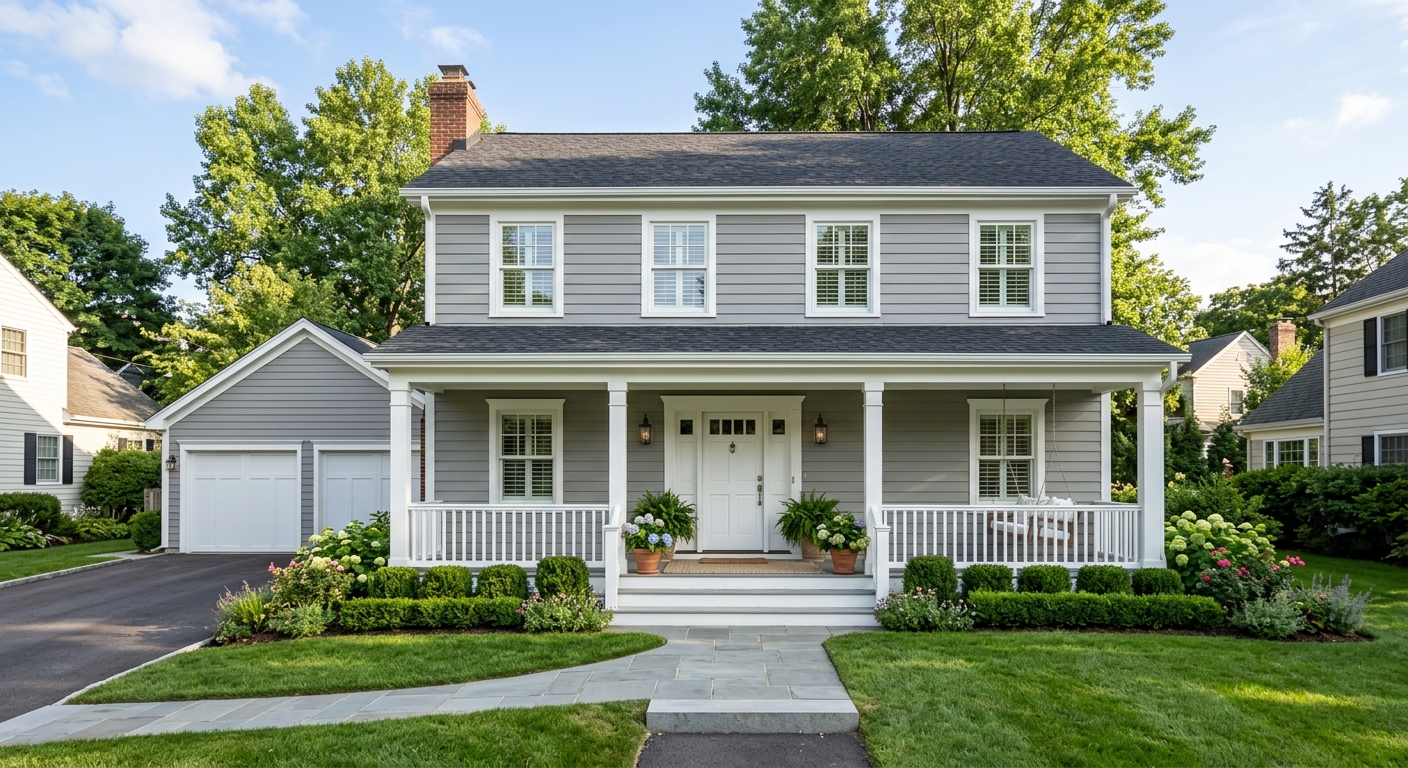
Painting options and costs in North Glenmore
North Glenmore homeowners usually start by comparing options, and the honest answer is that costs reflect both the job and the conditions around it. With a small local population (2,435 residents in the 2021 Census), demand can spike quickly for the few crews that are available, especially once summer weather locks in. Just as important, the housing profile across the Calgary area includes many older properties; for pre-1978 homes, extra prep and lead-safe practices may be required due to possible lead paint on trim and siding, which adds time before a top-coat is ever applied. In practice, that means scraping, patching, caulking, stain-blocking, and priming are commonly where budgets rise.
Calgary’s exterior season is tightly weather-dependent, typically mid-May to late September, when daytime highs stay reliably above 10°C and surfaces can dry properly between coats. That short window compresses scheduling and can make summer rates firmer than shoulder-month work. Interiors are less seasonal, but labour still depends on access (stairways, hallways, and ceilings) and how much repair is needed. In North Glenmore, trade demand is often highest around the older residential pockets near the Glenmore Trail corridor, where repaint cycles and curb-appeal refreshes show up most frequently in spring and early summer.
To help you compare like-for-like, use the ranges below as a starting point, then we can tighten pricing once we know your surface condition, number of colours, and access.
| Service |
What's Included |
Typical Duration |
Price Range |
| Interior — whole home (walls, ceilings, trim) |
Protect floors and fixtures, patch/sand as needed, prime repairs/stains, paint walls and ceilings, paint interior trim (baseboards, casing). One colour per surface unless noted. |
3–10 days |
$2,000–$6,500 |
| Interior — per room (standard bedroom or living room) |
Protect area, fill and sand minor defects, caulk where needed, prime as required, paint walls and one ceiling; trim painted if included in scope. |
1–3 days |
$400–$1,500 |
| Exterior — full house (siding, trim, soffits) |
Wash/degrease, scrape loose paint, spot-prime bare/suspect areas, caulk gaps, prime as required, paint siding and trim, protect landscaping and eaves. |
6–15 days |
$2,500–$9,000 |
| Exterior — trim and accent colours only |
Surface prep for trim only, spot prime as required, caulking and repaint of fascia/soffit/trim and chosen accents. Siding left as-is. |
2–7 days |
$1,200–$4,500 |
| Kitchen cabinet painting (doors, frames, spray finish) |
Degrease and decontaminate, remove hardware, sand/scuff, spot prime, spray doors for uniform finish, paint frames, reinstall hardware. Includes basic surface repair. |
5–14 days |
$800–$7,000 |
| Specialty / faux finish (accent wall, texture) |
Layout and prep, specialty base coat(s), finish texture/faux application, sealing/clear protection where required for durability. |
2–6 days |
$600–$6,000 |
Prices are estimates only and vary by project scope, site access and material selection.
What affects the price of painting in North Glenmore
Even when two homeowners describe the “same” job, quotes in Calgary can vary by 30–50% because painting is mostly prep and labour—two crews can hit totally different levels of surface readiness. Exterior work is especially price-sensitive in Alberta: the workable season is short and climate-bound, usually about late May through early October, with application and drying depending on temperature and wind. Coastal BC may offer a longer calendar, but humidity and mildew control can drive product and scheduling requirements. In North Glenmore, that tighter Calgary window concentrates demand, so peak-season slots are booked fast and pricing is firmer than in shoulder periods.
Older homes throughout the region often require additional prep—scraping peeling areas, patching cracks, caulking joints, sanding, and priming—so prep can represent 50–70% of total labour on a repaint. That’s why a “looks okay” house can still move from a mid-range interior repaint to the higher end once repairs and primer needs are confirmed. For example, an exterior repaint might land closer to the $2,500–$9,000 band; if we’re dealing with widespread failing caulking or heavy scraping, you’ll see the higher end. Conversely, a small interior room with minimal wall damage can stay near the lower end of the $400–$8,000 interior range.
Local conditions also matter. In North Glenmore, strong UV and hail exposure can accelerate chalking and require higher-quality acrylics or flexible exterior systems, which can increase material costs. Multi-storey frontage or limited driveway access can also require scaffolding or lift time, adding labour days.
| Price Factor |
Why It Matters |
Cost Impact |
| Surface prep — scraping, sanding, patching drywall or wood |
Prep determines adhesion; poor prep is the most common cause of peeling and blistering. |
High (often the biggest variable; can be 50–70% of labour on repaints) |
| Number of coats — 2-coat system over primer vs. 1 coat over existing |
Proper coverage over primer improves durability in UV and freeze–thaw. |
Medium to high (one fewer coat typically won’t last as long) |
| Paint quality tier — contractor-grade vs. premium (Benjamin Moore, Sherwin) |
Higher solids and better pigments can resist chalking and scuffing longer. |
Medium (material uplift plus longer-term value) |
| Ceilings and trim — adds significant time vs. walls-only |
Ceilings and trim require masking, cutting-in, and finer finishing. |
Medium (can shift a job several hundred to a few thousand) |
| Exterior season window — short season raises summer rates |
Weather and schedule pressure reduce availability in peak months. |
Medium to high (timing can move the estimate) |
| Lead-safe precautions — required for pre-1978 homes with lead paint |
Testing and dust-control add steps, equipment, and disposal handling. |
High on older trim/siding repaints |
| Surface material — drywall vs. plaster vs. wood vs. stucco |
Different substrates need different primers and preparation for adhesion. |
Medium (primer type and prep intensity vary) |
| Height and access — multi-storey exterior requires scaffolding or lifts |
Safety, set-up time, and protective containment increase labour. |
High for two-storey and difficult access |
Permits & regulations in Alberta
In Alberta, most painting does not require a permit. Simply repainting interior walls or exterior surfaces typically falls under ordinary home improvement and does not trigger municipal permitting. The key compliance item for professional contractors is not permits, but safe work practices—especially for older homes.
For homes built before 1978 in North Glenmore (and broadly across the Calgary region), health guidelines recommend testing for lead paint before sanding or scraping if you suspect lead-bearing coatings. If lead is present, lead-safe work practices are the standard: wet methods to minimize dust, HEPA vacuuming for cleanup, proper containment, and appropriate disposal. For homeowners, this isn’t usually mandated as a legal requirement in the way permits are, but it is widely expected as best practice in professional contracts because the risk is real and the dust is what matters most.
What does typically require a permit is not painting itself, but related work like major structural changes, electrical/plumbing alterations, or specific renovation permits under a broader project—so you’ll want your contractor to clarify if any separate permits apply to your scope. For painting-only jobs, the more important checks are insurance and coverage.
To verify a contractor: (1) confirm their Alberta business details through the appropriate online registry search, (2) request a certificate of liability insurance showing active coverage limits, (3) verify workers’ compensation coverage (WSIB/WCB) via their documentation or account confirmation, and (4) get a written contract listing paint brand, sheen, number of coats, and prep included (scraping, patching, priming, and caulking).
Interior vs exterior painting — getting the best result in North Glenmore
The difference between a long-lasting finish and early failure in North Glenmore comes down to two things: preparation and systems. In Alberta interiors, the brand matters less than how well the surface is prepped—filling and sanding repairs, removing contaminants, and priming stains or repairs. Sheen selection is also practical: flat/eggshell hides wall imperfections but is less washable; satin and semi-gloss are better for kitchens, trim, and higher-touch areas. A common durability rule is straightforward: two coats over a proper primer typically outlasts one thick coat, even when the colour is “the same.” If your walls need patching, stepping into the higher end of the interior band (up to $8,000 for larger or complex interiors) is often just the cost of time, sanding, and priming—not overspending on paint.
For exteriors in the Calgary climate, systems matter even more. Start with thorough washing, scrape-back of loose paint, caulking gaps before coating, and using the right primer for your substrate (wood, fibre cement, or previously painted surfaces). Alberta’s freeze–thaw swings plus strong UV and hail demand products built for flexibility and adhesion; the wrong primer can lead to flaking even when the topcoat looks fine at first. That’s why a “trim-only refresh” may save budget (often landing in the $1,200–$4,500 trim band), but it won’t replace a full siding prep if the main adhesion problems are on the walls.
Kitchen cabinet painting is a smart alternative to replacement when you want a faster refresh—especially if the cabinet boxes are sound. Just plan for degreasing, sanding/scuffing, and a spray finish process; if your cabinets are heavily greased, skipping that prep is where failures start. For pre-1978 trim, lead-safe precautions should be part of the plan whenever sanding or scraping is involved.
| Project Type |
Key Prep Step |
Recommended Coats |
Price Band |
| Interior — fresh drywall (new construction) |
Prime bare drywall thoroughly and seal undertones before top-coats |
2 coats over primer |
$400–$8,000 |
| Interior — repaint (good condition, no repairs) |
Light sanding/cleaning and spot-prime minor stains or scuffs |
2 coats |
$400–$2,500 |
| Interior — repaint (patching and priming needed) |
Fill, sand, and prime repairs and any stain-bearing areas |
2 coats over primer (plus spot-priming) |
$1,200–$6,000 |
| Exterior siding (wood or fibre cement) |
Scrape loose paint, caulk gaps, and prime bare/failed areas |
2 coats (often with primer where needed) |
$2,500–$9,000 |
| Exterior trim and accents only |
Prep and prime trim spots and around caulk lines |
2 coats on prepared areas |
$1,200–$4,500 |
| Kitchen cabinets (spray finish) |
Degrease thoroughly, sand/scuff, and apply adhesion primer |
Primer + 2 finish coats (typical system) |
$800–$7,000 |
How to choose a painting contractor in North Glenmore
Start with verification, not just appearance. In Alberta, you’ll want proof of the contractor’s ability to work legally in the province, along with insurance. Ask for their business registration information and confirm details through the relevant Alberta online business registry. Then request a certificate of liability insurance (showing active coverage and dates) and confirm they have workers’ compensation coverage for employees (WSIB/WCB). If they can’t provide documents promptly, treat that as a serious red flag.
Next, collect 2–3 itemised written quotes. Not a lump-sum sketch—ask for a breakdown of labour vs. materials, and include line items for key prep tasks: scraping, sanding, patching, caulking, priming, and cleanup/disposal. Ask what’s excluded (for example, lead-safe testing, drywall repairs beyond a set amount, or scaffold/lift costs). Clarify whether permits are pulled if your scope requires them (most painting doesn’t, but other renovation steps might). Also confirm what disposal is included—paint waste and debris should be handled appropriately.
Warranty matters in Alberta weather. Ask for the workmanship warranty length and what it covers (surface prep and coating failures from workmanship). Product/manufacturer warranties are separate—confirm whether coverage transfers and what conditions must be met. For payment, never pay more than about 10–15% upfront; hold back the remainder until completion and touch-ups. Finally, insist on a start date and completion estimate in writing so your schedule aligns with the exterior season window.
- Ask for insurance certificates: liability + workers’ compensation (WSIB/WCB) documentation
- Confirm business details and that the quote is in writing with contractor name and address
- Request an itemised scope: prep, primers, paint brands, and number of coats
- Get clarification on caulking: which joints are included and what type is used
- Confirm lead-safe approach for pre-1978 trim/siding if scraping is planned
- Ask how they protect landscaping, windows, and exterior fixtures
- Verify disposal/cleanup is included (paint waste, masking removal, debris hauling)
- Require a written schedule tied to weather windows for exterior work
- Ask whether they do post-completion touch-ups and how they handle “missed” spots
- Confirm warranty terms for workmanship and whether they honour claims promptly
- Avoid quotes that omit prep (“just paint over it”)—adhesion starts with surfaces
- Use a payment schedule: small deposit only, then holdback until final acceptance
Red flags in North Glenmore include: (1) refusing to provide insurance/WSIB/WCB proof, (2) vague scopes that don’t specify coats, brands, or prep, (3) asking for a large upfront payment (well beyond 10–15%), (4) dismissing exterior prep/calking needs, and (5) no written start/completion timeline—especially for short summer exterior windows.
Frequently asked questions — painting in North Glenmore
How do I fix peeling exterior paint in North Glenmore?
Peeling exterior paint in North Glenmore usually isn’t solved by adding a topcoat over loose areas. The fix is surface-driven: scrape back all failing or loose paint, sand edges smooth, clean thoroughly, and prime bare spots and any stained areas before you repaint. If caulking has failed, re-caulking before painting is essential to prevent water ingress—Alberta’s freeze–thaw cycle will punish gaps. For pre-1978 trim/siding where lead may be present, lead-safe prep is standard practice for professionals (testing guidance and dust control). If your house needs a full siding and trim repaint, typical pricing can fall within the $2,500–$9,000 exterior band depending on prep severity and access.
What colours add the most resale value in North Glenmore?
For resale in North Glenmore, the best-performing choices are typically “broad appeal” neutrals and carefully chosen accents that won’t look dated quickly. Warm whites, soft greiges, and light-to-mid taupes tend to photograph well and suit Calgary’s sky-and-stone palette. For trim, a slightly brighter tone than the siding helps houses look crisp without going high-contrast. If you’re planning a full exterior refresh during the short mid-May to late-September season, staying within a proven, classic palette can also reduce rework costs if your contractor needs to match existing colours precisely. If you’re deciding between options, a trim-and-accent plan (often within $1,200–$4,500) can test colour direction before committing to a full repaint.
How much does it cost to paint a house in North Glenmore?
“Paint a house” can mean very different scopes, so costs vary widely. For exteriors, a full-house repaint in the Calgary area commonly sits in the $2,500–$9,000 range, mainly driven by prep (scraping, patching, caulking) and whether the work needs scaffolding/lifts. Interiors also swing based on repairs and ceilings: interior painting can range from a few hundred dollars for a single room up to larger whole-home projects near the upper end of the interior band (up to $8,000). Because North Glenmore experiences a weather-limited exterior window, peak scheduling can make exterior quotes firm sooner, so it’s smart to book early if you want summer availability.
How much does interior painting cost per room in North Glenmore?
Per-room interior painting in North Glenmore depends on whether it’s mainly repainting or whether you need patching, primer, and trim work. A standard bedroom or living room often falls in the $400–$1,500 range when surfaces are in good shape and prep is straightforward. If the room needs wall repairs, stain blocking, or extra time due to higher ceilings or heavy trim detail, the quote can move upward within that band. If you want trim and detailed cutting-in included, expect the higher end. For homeowners comparing quotes, insist the scope clearly lists primer and prep—those line items are usually what separates “cheap” from “lasting.”
When is the best time for exterior painting in North Glenmore?
The best time for exterior painting around North Glenmore is when temperatures are reliably above about 10°C and surfaces can dry properly between coats. In Calgary’s climate, that typically means mid-May through late September, with weather-driven scheduling for rain and overnight lows. The shorter season concentrates demand, so crews often book out earlier in summer—waiting too long can push you into higher-rate windows or delay your start. If you’re planning lead-safe prep for pre-1978 trim/siding, early scheduling also matters because testing/prep and dust-control steps take additional time. A trim-and-accent refresh may be easier to schedule than a full house repaint, but it still must meet drying conditions for durable adhesion.
How many coats of paint do I need?
For most residential work, the standard system is two finish coats, often with primer where needed. Interiors: a typical repaint calls for 2 coats, with primer on repaired areas, stained spots, or any surface that needs adhesion help. Exteriors: you generally apply 2 finish coats over properly primed areas, especially where bare wood, failing paint, or stains were present after scraping. Cabinets: cabinets are commonly primer + 2 finish coats for a smooth, durable finish. The right number of coats is tied to prep and surface condition—skipping primer or reducing coats may lower the short-term cost, but in Alberta conditions it often increases failure risk. If you’re budgeting, ask your contractor to show the planned primer and coat count in writing within the quote.