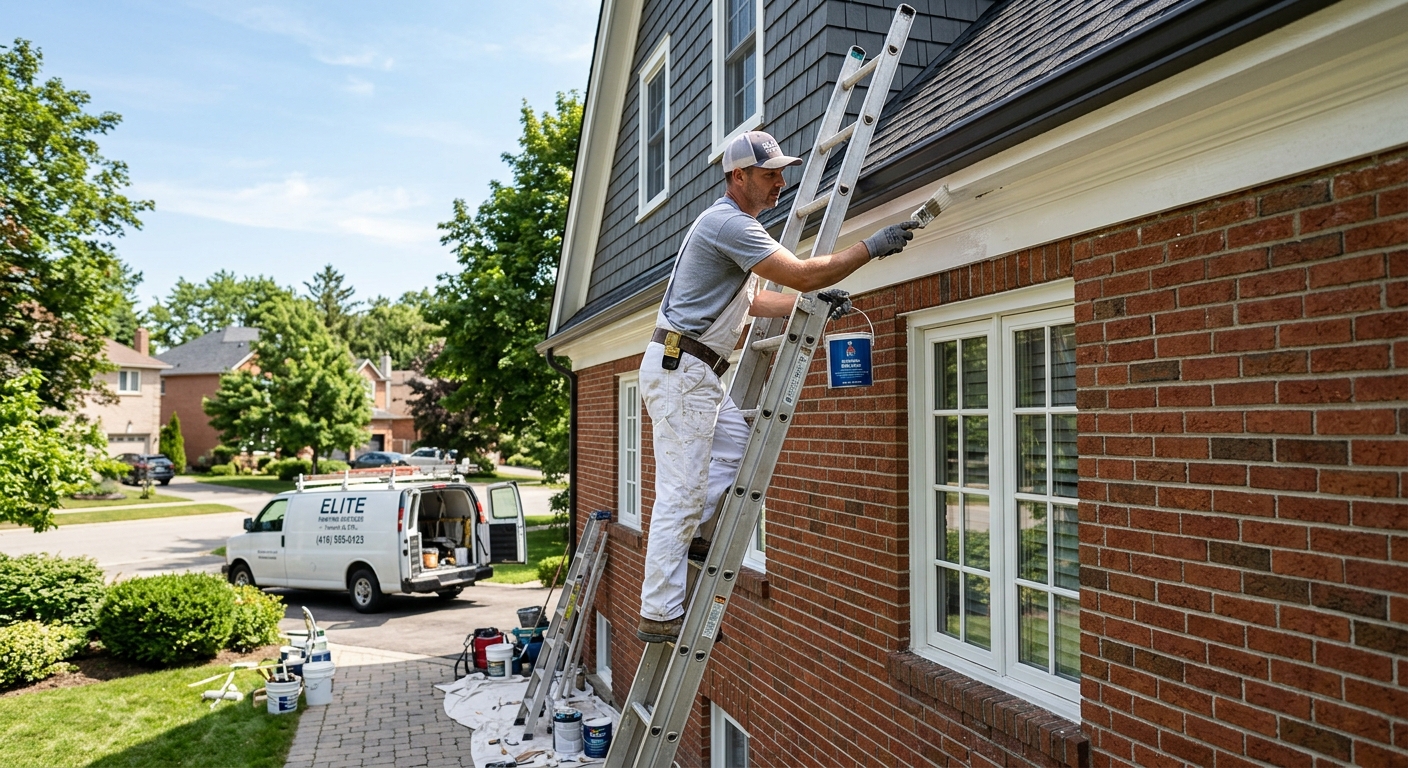
Painting options and costs in Red Carpet
Red Carpet, Alberta may be a small community (it’s home to 1,745 residents, Statistics Canada, 2021 Census), but the painting demand follows the broader Calgary market—especially for occupied homes where mess, downtime, and finish quality matter. One big driver of cost here is housing age: many properties in the Calgary region date from the 1960s–2000s, and pre-1978 buildings can require extra caution and testing before sanding or scraping if lead paint is present. That preparation step isn’t just “nice to have”—it often affects labour hours, disposal, and the amount of priming we need before any top-coat goes on.
On the exterior side, the workable window is tighter than most homeowners expect. In this part of Alberta, we typically plan exterior painting from mid-May to late September—when daytime temperatures stay reliably above 10°C and surfaces can dry properly. Because that window is weather-dependent, summer scheduling can be firmer, and pricing can move upward as projects get closer to peak demand. Add freeze–thaw cycles, strong UV, and hail risk, and we specify higher-quality acrylics and flexible exterior coatings that can handle movement and impact.
In Red Carpet, trade activity is often especially concentrated around the newer development pockets and busy residential streets where homes turn over or change colours more frequently—so it’s smart to book earlier if you’re aiming for a summer finish. Next, compare typical options side-by-side so you can align your scope with the right price band.
| Service |
What's Included |
Typical Duration |
Price Range |
| Interior — whole home (walls, ceilings, trim) |
Surface prep (patching/sanding), 2-coat wall system, ceiling painting, caulking, prime as needed, full trim/door painting, protection & cleanup |
5–10 days |
$2,100–$6,800 |
| Interior — per room (standard bedroom or living room) |
Prep (light repair), 2-coat walls, choice of sheen, minor trim/door touch-up as scoped |
1–3 days |
$400–$1,800 |
| Exterior — full house (siding, trim, soffits) |
Wash & prep, scraping/sanding, caulking, spot priming, full siding and trim/soffit coatings, rain-delay planning, cleanup |
2–4 weeks (weather-dependent) |
$2,900–$8,900 |
| Exterior — trim and accent colours only |
Prep focused on trim/accent surfaces, caulking, primer where required, 2-coat colour system, protective masking |
1–2 weeks (weather-dependent) |
$2,500–$6,200 |
| Kitchen cabinet painting (doors, frames, spray finish) |
Degreasing, surface prep & bonding primer, spray finish for doors, hardware masking/removal as scoped, multiple-coat durability system |
1–3 weeks |
$1,600–$5,800 |
| Specialty / faux finish (accent wall, texture) |
Surface conditioning, base coat, specialty application, topcoat protection, cleanup |
2–7 days |
$750–$4,900 |
Prices are estimates only and vary by project scope, site access and material selection.
What affects the price of painting in Red Carpet
In Red Carpet and across the Calgary economic region, it’s common to see quotes for the “same” job vary by 30–50%. The difference usually isn’t the sheen colour—it’s the time and complexity of prep, how many coats are actually required, and whether a contractor is building in weather and substrate risk. Two painters can both say “two coats,” but one may include the hard prep (scraping, patching, caulking, primer selection, stain-blocking) while the other assumes the existing surface will cooperate. That’s where labour and material totals can swing.
Exterior costs are especially sensitive because the exterior painting season is tightly climate-bound in this region. In Alberta, the workable window is roughly late May to early October: application needs daytime temperatures above about 10°C, plus drying time before overnight lows and rain. Coastal BC often has a longer calendar but higher humidity and mildew-control requirements, which changes product selection and scheduling. Here in Red Carpet, the shorter season concentrates demand, so summer scheduling pressure can lift rates. For older homes, surface prep can also make or break the budget: scraping, caulking, patching, and priming can represent 50–70% of labour on a repaint, not just a “quick scuff.”
Concrete examples: if your siding needs substantial scraping plus extra primer on problematic areas, an exterior refresh that might sit near the lower end of the $2,500–$9,000 band can move toward the upper end. If you’re repainting interior rooms in good condition, you might stay closer to the $400–$8,000 interior range; but if ceilings have stains, water spots, or drywall repairs, primer and additional passes quickly add hours and materials.
| Price Factor |
Why It Matters |
Cost Impact |
| Surface prep — scraping, sanding, patching drywall or wood |
Determines adhesion and long-term appearance; older paint and damaged surfaces need more labour |
Often +15–+40% on top of paint cost |
| Number of coats — 2-coat system over primer vs. 1 coat over existing |
Two-coat coverage over appropriate primer is what prevents flashing and early failure |
Can change total labour/materials by 10–25% |
| Paint quality tier — contractor-grade vs. premium (Benjamin Moore, Sherwin) |
Premium systems typically cover better and hold up to UV and chalking |
Usually +5–+20% depending on products selected |
| Ceilings and trim — adds significant time vs. walls-only |
Trim edges, doors, and ceiling cut-ins require careful masking and extra coats |
Often +10–+30% for full interior packages |
| Exterior season window — short season raises summer rates |
Weather and drying time affect crew availability and scheduling |
Summer peak scheduling can add +5–+15% |
| Lead-safe precautions — required for pre-1978 homes with lead paint |
Testing and safer work methods increase time, containment and disposal |
Can add +10–+35% if lead-safe work is required |
| Surface material — drywall vs. plaster vs. wood vs. stucco |
Different substrates require different primers and prep methods |
Often +5–+25% based on primer and labour |
| Height and access — multi-storey exterior requires scaffolding or lifts |
Access equipment and safety procedures increase setup and time |
Can add +10–+40% on larger homes |
Permits & regulations in Alberta
In Alberta, painting work generally does not require a permit for homeowners. What does matter is safe work practice and compliance around hazardous materials. For homes built before 1978 in Red Carpet, health guidelines recommend testing for lead paint before sanding or scraping. If lead is present, standard lead-safe methods include wet methods to reduce dust, HEPA vacuuming, controlled cleanup, and proper disposal of waste. This isn’t typically “a homeowner permit” situation, but it is the standard professional approach—especially because sanding dust can become a serious inhalation hazard.
What does require a permit or formal approvals is usually not painting itself; it’s the kind of work around painting that can trigger permits (for example, certain structural changes, major renovations, or work covered under building permits). For typical repainting—walls, ceilings, siding, trim, and caulking—permits are usually not required.
Before you book a contractor, confirm three things: (1) they carry liability insurance, (2) they have WSIB/WCB workers’ compensation coverage for their employees, and (3) they provide a written contract. Your contract should specify paint brand/line (or equivalent), sheen levels, number of coats, surface prep inclusions (scraping/sanding/patching/priming), and what’s excluded.
To verify: ask for a current certificate of insurance (liability) and clearance details for workers’ compensation; then request their Alberta business details and ensure they’re operating under the correct business name for the quote. If they can’t provide documents quickly, that’s a warning sign—especially on exterior work where prep and dust control matter.
Interior vs exterior painting — getting the best result in Red Carpet
A durable paint job in Red Carpet comes down to the same two principles, inside and out: do the prep that your surface actually needs, and apply the right system for how this climate performs. Alberta brings strong UV, hail impacts, and freeze–thaw cycles. Those conditions punish “pretty but thin” work—especially when caulking, primer choice, and coverage aren’t matched to the substrate.
For interiors, surface prep beats brand every time. Filling, sanding, and priming repaired drywall (and stain-blocking where needed) determine whether you get smooth walls without flashing. Sheen choice matters by room: flat/eggshell in lower-traffic spaces, satin or eggshell for living areas, and semi-gloss on trim for wipe-ability. Two coats applied over a proper primer system typically outlast one thick coat; if a painter skips primer or uses insufficient coverage, you’ll see uneven sheen and faster scuffing.
For exteriors, prep and caulking are the foundation. We caulk before paint to prevent water ingress behind trim and at joints; then we prime correctly for the substrate (latex or acrylic primers on compatible surfaces; oil-based or bonding primers where adhesion or stains require it). Unlike coastal BC—where mildew resistance is a constant focus—Calgary-area work leans heavily on UV durability and flexibility. In a hail-prone region, we choose coatings that can handle minor movement rather than cracking.
Kitchen cabinets are a smart budget alternative to replacement when they’re structurally solid. For example, repainting cabinets often lands in the cabinet band (commonly within $800–$7,000 regionally), whereas replacement can run several times that. Lead-safe precautions still matter for pre-1978 homes: if sanding or scraping is needed, the safe approach protects occupants and workers.
| Project Type |
Key Prep Step |
Recommended Coats |
Price Band |
| Interior — fresh drywall (new construction) |
Prime all drywall and sand transitions for a uniform surface |
1 primer + 2 top coats |
$900–$4,500 |
| Interior — repaint (good condition, no repairs) |
Light sanding/scuff, cleaning, and spot-prime any marks |
1–2 top coats over proper prep (often 2 total) |
$400–$2,800 |
| Interior — repaint (patching and priming needed) |
Patch compound blending, spot-prime repairs, caulk edges |
1 primer + 2 top coats (typical for smooth finish) |
$700–$6,000 |
| Exterior siding (wood or fibre cement) |
Scrape/sand, caulk joints, and prime bare or troubled areas |
1 primer (as needed) + 2 top coats |
$2,500–$9,000 |
| Exterior trim and accents only |
Mask carefully, prep edges, spot-prime and caulk before colour |
2 top coats with primer where required |
$2,500–$6,200 |
| Kitchen cabinets (spray finish) |
Degrease thoroughly, bonding primer if needed, sand between coats |
Multiple-coat system (commonly 2–3 coats total) |
$1,600–$5,800 |
How to choose a painting contractor in Red Carpet
Choosing the right contractor in Red Carpet is mostly about verifying proof, not trusting promises. First, check Alberta licensing/business registration as applicable for the contractor’s legal operating name, and confirm they carry liability insurance and WSIB/WCB coverage for their workers. How to check: ask for a current certificate of insurance (liability) that lists their company name and coverage period, and request evidence of workers’ compensation coverage/clearance for the individuals working on your site. If a contractor can’t supply these documents promptly, don’t proceed.
Next, get 2–3 itemised written quotes. You want line items for labour (prep, priming, masking, trim work, cleanup) and materials (primer type, paint line, caulking, supplies). Avoid “lump sum only” quotes because you can’t compare apples to apples if prep scope differs. Read exclusions carefully: will they supply disposal, include protection for floors and landscaping, and handle rain-delay scheduling? Ask specifically whether permit pull is included—painting itself usually doesn’t require it, but ensure the quote covers any site/HOA or municipal process if applicable to your street.
Warranty should be in writing: workmanship length, product/manufacturer warranty terms, and whether the warranty transfers if you sell the home. Payment schedule matters: never pay more than about 10–15% upfront, and hold back a portion until the job is complete and inspected. Finally, get a written timeline with a start date and estimated completion, especially because exterior work depends on drying conditions.
- Ask for liability insurance certificate (current date, correct business name).
- Request WSIB/WCB coverage evidence for the crew working at your home.
- Verify their licence/business details match the quote you sign.
- Get an itemised quote: prep, priming, coats, trim work, cleanup/disposal.
- Confirm paint brand/line (or approved equivalents) and sheen selections.
- Ask how they handle scraping/sanding on older (pre-1978) homes.
- Confirm caulking is included where needed on exterior joints.
- Ask whether they protect landscaping, siding edges, and nearby windows.
- Ensure they list number of coats and what is “spot primed” vs full primed.
- Get the warranty terms in writing (workmanship + product coverage).
- Use a payment schedule with a small deposit and a holdback at completion.
- Request a start date and completion estimate in the contract.
Red flags we see in the Red Carpet market: a contractor who won’t provide insurance/WSIB proof, quotes that skip detailed prep (especially caulking and primer selection), “one-coat” promises for areas that clearly need coverage, no written warranty or vague warranty language, and requests for large upfront payments that leave you with little leverage if anything goes wrong.
Frequently asked questions — painting in Red Carpet
How much does interior painting cost per room in Red Carpet?
In Red Carpet, interior painting per room usually depends on prep and what’s included—walls only versus walls, ceiling, and trim. For a typical bedroom or living room where surfaces are in good shape and repairs are minimal, you’ll often see pricing within the per-room band of $400–$1,800. If the room needs patching, sanding, stain-blocking, or more detailed trim work, the cost can move toward the upper end because primer and additional labour are required to get a smooth, consistent finish. Also note that ceiling work and extra cut-in/masking time add labour even if the paint amount is similar. (Statistics Canada, 2021 Census)
When is the best time for exterior painting in Red Carpet?
The best time for exterior painting in Red Carpet follows the Calgary region’s workable weather window: plan for mid-May to late September, when daytime highs stay reliably above about 10°C and surfaces can dry properly. Exterior work is still possible in shoulder periods, but we often schedule around overnight lows and rain risk to avoid poor adhesion or streaking. Because the season is shorter here than in many other parts of Canada, summer slots book fast—so if you want a full-house exterior at peak quality, booking earlier helps. We also plan for freeze–thaw cycles and UV exposure, which is why we choose durable acrylics and flexible coatings rather than relying on “any exterior paint.”
How many coats of paint do I need?
Most repaints in Red Carpet typically use a 2-coat system over appropriate prep and primer. The exact number can change when the existing surface is stained, patchy, or has been repaired—because those areas may require primer first to prevent bleeding, flashing, or uneven sheen. For interiors, that often means 2 top coats plus primer where the wall needs it; for exteriors, it’s usually 2 top coats with primer as required by substrate condition (bare spots, heavily sanded areas, or problematic adhesion zones). It’s rarely about “thick paint equals fewer coats”—two proper coats over the right base is what holds up to Alberta’s UV and temperature swings.
What paint is best for Red Carpet's climate?
For Alberta’s climate, “best” usually means a product system designed for UV durability, resistance to chalking, and flexibility through temperature changes. On exterior siding and trim in Red Carpet, we typically specify high-quality acrylics and elastomeric or flexible coatings (depending on your surface) because they help handle minor movement and hail impacts. For interiors, the best choice is about durability and washability as much as colour—eggshell/satin on living spaces and semi-gloss on trim generally perform better with normal household cleaning. If your home is pre-1978, the paint system also needs a safety-minded prep approach; if lead paint is present, proper lead-safe work practices and priming choices become essential before top-coats.
How long does exterior paint last here?
Exterior paint life in Red Carpet varies by substrate condition, prep quality, and product tier, but a well-prepared exterior repaint commonly targets several years of strong appearance before you start seeing early wear. The biggest factor isn’t the colour—it’s whether scraping, sanding, caulking, and primer selection were done correctly. Homes with significant surface oxidation, failing caulking, or poor adhesion on older trim may show problems earlier even with premium paint. Also, because the Calgary-region exterior window is tight (mid-May to late September), the application timing matters: rushing coats in damp conditions can shorten performance. When a contractor sticks to the right system, including flexible exterior coatings and proper caulking, longevity improves.
Should I paint or replace my cabinets?
If your cabinet boxes and frames are solid, painting is often the smarter move in Red Carpet. Replacement can be expensive and disruptive, while a quality cabinet repaint can refresh your kitchen with far less upheaval—especially when the goal is a new colour or updated finish. Painting also tends to be budget-friendly: cabinet painting in this market commonly falls around $800–$7,000 depending on size, condition, and whether you’re doing a spray finish for the smoothest result. That said, if cabinets are failing structurally, warped from moisture, or the doors/frames are beyond repair, replacement may be more cost-effective long-term. For pre-1978 homes, we also treat lead-safe prep seriously when sanding or stripping is involved.