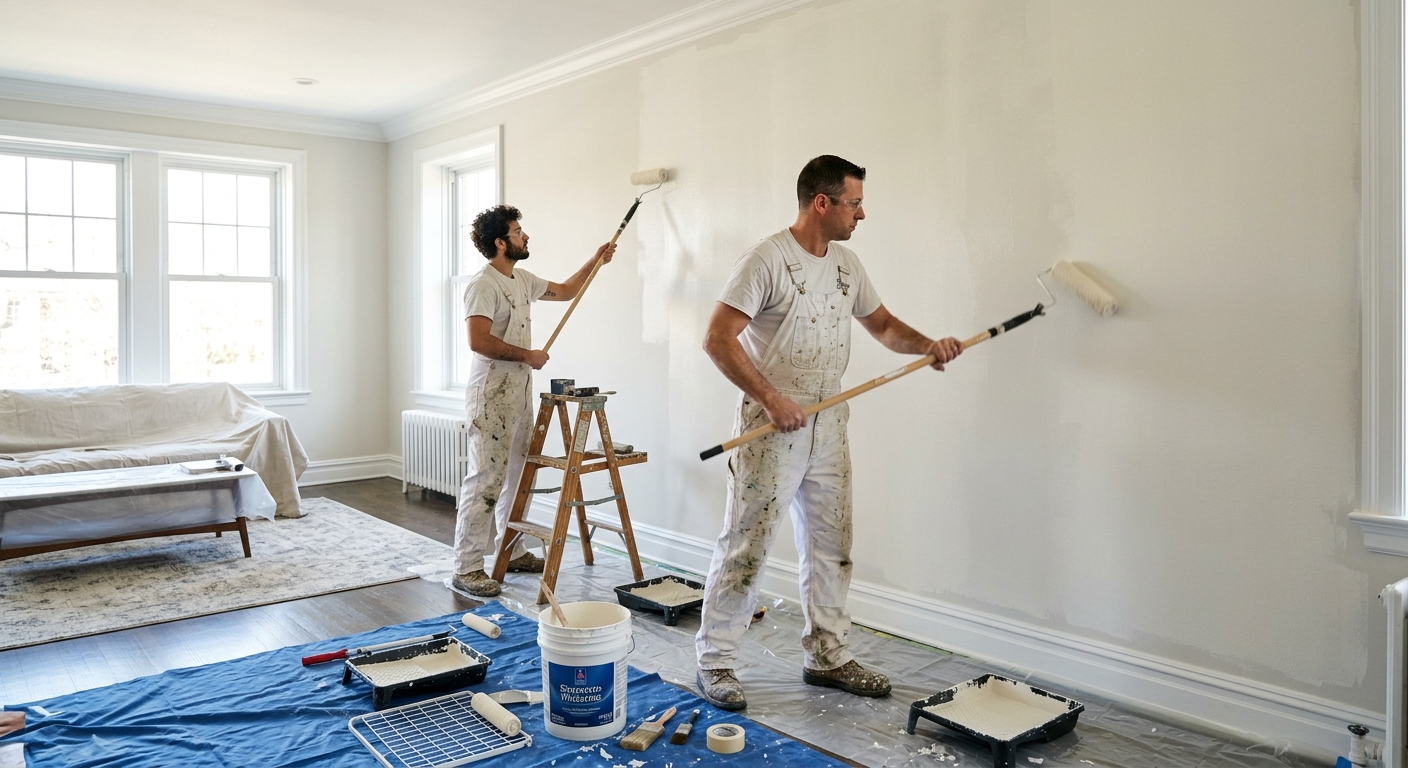
Painting options and costs in MacEwan
Painting in MacEwan comes down to two things: how much prep your surfaces need and how tight the Calgary-area season is for getting quality dry time. MacEwan is a small community (5,618 people reported in the 2021 Census) where crews often fill up quickly once weather cooperates (Statistics Canada, 2021 Census). In the broader Calgary region, many neighbourhood homes date from the 1960s through the 2000s, and that matters because repainting older siding or trim usually involves more scraping, patching and caulking before we ever apply top-coat. For pre-1978 buildings, lead-safe protocols may be required as part of professional prep—especially when sanding or scraping original trim, siding, or millwork.
Cost also reflects market pressure. In the Calgary region, our workable exterior window typically runs from mid-May to late September, when daytime highs stay above about 10°C and surfaces can dry properly. That shorter, weather-dependent window concentrates demand, so summer labour rates tend to firm up. Interiors are less season-sensitive, but labour still rises with prep complexity, ceiling height, and access. In MacEwan, this work is especially in demand around the newer growth pockets near the MacEwan community area as homeowners refresh move-in finishes and maintain curb appeal.
Below is a practical comparison of typical scopes so you can align expectations before you request quotes from contractors in MacEwan.
| Service |
What's Included |
Typical Duration |
Price Range |
| Interior — whole home (walls, ceilings, trim) |
Protection, patching where needed, sanding, caulking of typical gaps, primer on repaired/spot areas, two top-coats to walls/ceilings (as specified), wash-up, and finish trim prep and coat(s) |
4–10 days |
$1,800 – $8,000 |
| Interior — per room (standard bedroom or living room) |
Protection, prep and spot repair, primer where required, two coats to walls, one or two coats to ceiling depending on condition, and light trim touch-ups as in scope |
1–3 days |
$400 – $1,800 |
| Exterior — full house (siding, trim, soffits) |
Power-wash/degrease (as needed), scrape/sand loose paint, patch and caulk, primer to bare/spot areas, two exterior coats, and careful edge work around soffits, trim and features |
5–14 days (weather-dependent) |
$2,500 – $9,000 |
| Exterior — trim and accent colours only |
Surface prep on trim accents, spot priming, two coats for trim colours, protection for siding edges and landscape areas |
2–7 days (weather-dependent) |
$1,200 – $4,500 |
| Kitchen cabinet painting (doors, frames, spray finish) |
Degrease and degloss, bonding primer where needed, sanding between coats, spray/roll finish, hardware removal and re-install (as specified), and top-coat suited for daily use |
5–15 days (including cure time) |
$800 – $7,000 |
| Specialty / faux finish (accent wall, texture) |
Surface stabilization, base coat(s), crackle/texture/feature finish technique as quoted, protective top-coat for durability |
2–7 days |
$600 – $6,000 |
Prices are estimates only and vary by project scope, site access and material selection.
What affects the price of painting in MacEwan
In MacEwan and across the Calgary economic region, it’s common to see quotes for the “same” job vary by 30–50%. The difference usually isn’t paint price—it’s preparation time, access complexity, and product specification. Exterior work is tightly climate-bound: in Alberta, temperatures must be above about 10°C and rising during application so coatings can dry and bond correctly. Unlike coastal BC, we’re less fighting year-round damp, but Calgary-area freeze–thaw cycles, strong UV and occasional hail push us toward higher-quality acrylics and flexible exterior systems. When the exterior season window is short, contractors have fewer start dates, which tightens scheduling and can increase summer rates.
Older homes throughout the Calgary region also drive cost. Repaints on older siding and trim often have failing caulk lines, chalky surfaces and older adhesive residue, so scraping, patching and priming can make up roughly 50–70% of total labour on repaints. If a crew quotes near the lower end of the interior band (for example, around $400–$1,800 for a single room), the assumption is typically “good condition” surfaces with minimal patching. If the project stretches toward the upper interior range (up to $8,000 for whole-home work), it usually means more drywall repair, more prep across multiple rooms, and additional trim/ceiling detail.
Concrete MacEwan examples: (1) If your exterior has peeling areas on trim due to water ingress, plan for added scraping and caulking before the first primer coat—this can move a job from the exterior trim band toward the full exterior range. (2) If you have multi-storey access that requires lifts or full scaffolding, labour and protection time increase, often pushing total cost upward even when repaint colour is simple.
| Price Factor |
Why It Matters |
Cost Impact |
| Surface prep — scraping, sanding, patching drywall or wood |
Bonding depends on stable substrate; damaged areas must be corrected before coating |
High: often 20%–70% of labour on repaints |
| Number of coats — 2-coat system over primer vs. 1 coat over existing |
Coverage and durability require proper film build, especially over repairs or stains |
Medium–High: can shift a job by 10%–30% |
| Paint quality tier — contractor-grade vs. premium (Benjamin Moore, Sherwin) |
Higher-end products typically improve hide, washability and long-term performance |
Low–Medium: material deltas, but can reduce rework |
| Ceilings and trim — adds significant time vs. walls-only |
Cut-in work, masking and detailed edging take more labour than flat wall space |
Medium: often increases totals 15%–40% |
| Exterior season window — short season raises summer rates |
Weather-dependent drying time limits schedule slots during peak summer |
Medium: pushes pricing upward in peak weeks |
| Lead-safe precautions — required for pre-1978 homes with lead paint |
Safe methods add planning, containment and cleaning steps when lead is present |
Medium: can add several labour hours and materials |
| Surface material — drywall vs. plaster vs. wood vs. stucco |
Different materials need different primers and preparation approaches |
Medium: impacts coating adhesion and primer requirements |
| Height and access — multi-storey exterior requires scaffolding or lifts |
Protection, setup time and safe reach increase labour and equipment |
High: can be a major cost driver on full exteriors |
Permits & regulations in Alberta
In Alberta, painting work generally does not require a permit. For homeowners in MacEwan, the practical “rules” are about safe work methods rather than municipal sign-offs. If your home was built before 1978, health guidelines recommend testing for lead paint before sanding or scraping. If lead is found, lead-safe work practices are the standard approach professional contractors use—wet methods to reduce dust, HEPA vacuuming, proper containment where needed, and compliant disposal of dust and debris. This is not typically mandated for homeowners in the same way it is for regulated employers, but it’s the responsible route to reduce exposure during prep.
What does require permits in most cases is not painting itself, but adjacent work—think plumbing, electrical, gas, structural changes, or any “renovation” scope that triggers municipal/permit processes. Typical paint jobs (interior top-coat, wall repaint, trim painting, exterior repaint with existing materials) usually do not trigger permits.
Before hiring, verify three items step-by-step: (1) Ask for a certificate of insurance showing liability coverage; confirm the name matches the contractor and that coverage is current. (2) Ask for WSIB/WCB workers’ compensation coverage paperwork for employees (not just “general liability”). (3) Confirm the written quote references brand, sheen, number of coats, and what surface prep is included (scraping/patching/priming, caulking locations, and prep exclusions). Where applicable, request documentation of any professional licensing relevant to the contractor’s business model, and keep a signed contract on file with the scope and product details.
Interior vs exterior painting — getting the best result in MacEwan
Long-lasting paint in MacEwan depends less on “celebrity brand” and more on how the job is staged: correct prep, the right primer for the substrate, and a proper number of coats. For interior surfaces, filling, sanding, priming and controlling dust matter more than the top-coat name. A common mistake is rushing through repairs and going straight to finish—two coats over a proper primer system generally outlast one thick coat over patchy or stained areas. Sheen choice also affects durability: flat paint hides imperfections but scuffs more; eggshell and satin are a better balance for most rooms; semi-gloss on trim is easier to clean. In day-to-day life across the Calgary region, that washability is why interior jobs with ceilings plus trim are priced higher than walls-only—they take more masking and detail time.
For exteriors, the critical difference is preparation and caulking. Alberta’s cycling conditions mean water ingress control is everything: we caulk before painting to prevent moisture pathways, then prime appropriately (substrate-specific primers for wood, fibre cement, or bare areas). You also need a product that tolerates temperature swings and strong UV; we don’t treat mildew resistance as the only issue—bonding and flexibility through expansion/contraction are the bigger wins in Calgary.
Cabinet painting is a good budget alternative to replacement when the frames and boxes are solid. For example, if your kitchen cabinet project fits the cabinet/trim painting band (starting around $800–$7,000), it can deliver a refreshed look for a fraction of a full cabinet replacement, provided surfaces are degreased and primed/bonded correctly.
If you’re in a pre-1978 home, build lead-safe prep into the plan so sanding and scraping don’t create avoidable exposure—this can slightly increase the job’s timeline, but it protects you and the contractor crew.
| Project Type |
Key Prep Step |
Recommended Coats |
Price Band |
| Interior — fresh drywall (new construction) |
Prime entire surface to seal absorption and ensure uniform finish |
2 coats top-coat over primer (typical), plus touch-ups after inspection |
$800 – $3,500 |
| Interior — repaint (good condition, no repairs) |
Wash/degloss lightly, scuff sand glossy areas, spot-prime any stains or scuffs |
2 coats top-coat (sometimes 1 coat only in very controlled cases, but 2 is safest) |
$400 – $1,800 |
| Interior — repaint (patching and priming needed) |
Feather patches, sand smooth, spot-prime and seal repairs consistently |
1–2 coats top-coat depending on primer coverage; typically 2 over repairs |
$1,000 – $4,500 |
| Exterior siding (wood or fibre cement) |
Scrape loose paint, sand feather edges, spot prime bare spots, caulk before top-coat |
2 coats exterior finish over primer system |
$2,500 – $9,000 |
| Exterior trim and accents only |
Edge prep on trim, sand/scuff gloss, prime repaired sections, caulk trim gaps |
2 coats trim colour over primer where needed |
$1,200 – $4,500 |
| Kitchen cabinets (spray finish) |
Degrease thoroughly, degloss, bond primer as needed, then sand/break between coats |
Primer + 2 top-coat system, with cure time respected |
$800 – $7,000 |
How to choose a painting contractor in MacEwan
Choosing the right contractor in MacEwan means verifying coverage and reading the quote like a contract, not a guess. Start with Alberta coverage checks: request proof of liability insurance and ensure it includes painting-related operations. Next, ask for WSIB/WCB workers’ compensation coverage for any employees—if they don’t have it, you may be taking on risk as the property owner. If the business uses subcontractors, ask who is insured for what portion of the work and request certificates accordingly. For licensing, painting itself often doesn’t trigger the same permit-based requirements as electrical or plumbing, but contractors should still be properly registered for operating in Alberta and able to provide documentation upon request.
Then get 2–3 itemised written quotes. You want a breakdown that separates labour and materials, and clearly lists surface prep (what will be scraped, patched, sanded, spot-primed and caulked), product brand and sheen, number of coats, and whether disposal is included. Be wary if a quote is “lump sum” with vague prep language—exteriors in Calgary routinely need significant prep, and that’s where costs swing. Ask what’s excluded (for example, rotten wood replacement, lead-safe containment work if testing indicates lead, damaged drywall beyond allowance, or furniture moving beyond normal access).
Warranty matters: confirm the workmanship warranty length in writing, whether it covers peeling or adhesion failures, and whether product/manufacturer warranties are transferable to the homeowner. Payment schedule should be conservative—never more than 10–15% upfront, and hold a completion holdback until the job is inspected and finished. Finally, ask for a start date and completion estimate in writing, including weather contingency language for exterior work.
- Request proof of current liability insurance before signing anything.
- Confirm WSIB/WCB coverage is in place for workers (not just “we can provide it later”).
- Get quotes that specify paint brand, line, and sheen—not “equivalent premium.”
- Ask exactly what prep is included for exterior: scrape, sand, prime, caulk locations, and stain-blocking.
- Clarify whether ceilings are included for interiors and whether trim is included or “touch-up.”
- Confirm number of coats by surface (walls, ceiling, trim, exterior siding, and bare/spot areas).
- Ask how they protect landscaping, windows, and siding edges.
- Check if disposal and waste removal are included (often overlooked in low bids).
- Verify cure and recoat timing expectations (especially cabinets) so you’re not disrupted by premature use.
- Require a written scope that states colour change approach and primer coverage for repairs.
- Confirm warranty terms and what triggers a service call.
- Use a payment schedule with a small deposit and a holdback until completion inspection.
In MacEwan, red flags I commonly see include quotes with no written prep scope, “one-coat” promises for problem areas, contractors who won’t provide insurance/WSIB/WCB documentation up front, deposits larger than 10–15% without a clear contract schedule, and vague language on disposal and masking/protection. If the job depends on Alberta weather, another red flag is refusing to put exterior weather contingency terms in writing.
Frequently asked questions — painting in MacEwan
How long does exterior paint last here?
In the MacEwan area of Alberta, exterior paint longevity depends heavily on prep and product system, not just the top-coat brand. When we scrape loose material, prime correctly on bare spots, caulk the right seams, and apply a proper 2-coat exterior system during the mid-May to late-September workable window, many homes see good performance for years rather than seasons. If prep is rushed (paint over chalky surfaces or neglected caulk lines), failure can show up sooner due to water ingress and freeze–thaw stress. Homes in the Calgary region also get strong UV, and that’s why we don’t treat “touch-ups only” as an equivalent to a full repaint. If you want to plan budgets, we typically advise homeowners to treat exteriors as a lifecycle project—often priced in the exterior band (for full houses) around $2,500–$9,000 depending on prep and access.
Should I paint or replace my cabinets?
For MacEwan homeowners, painting kitchen cabinets is usually the best choice when the cabinet boxes and frames are solid, the doors are in workable shape, and the main issue is colour or surface wear. Cabinet painting can refresh the kitchen without the disruption and cost of replacement, and it typically fits the cabinet/trim painting range (commonly $800–$7,000) depending on the number of doors/drawers, prep condition, and whether a spray finish is used. If the cabinets are warped, swelling from moisture is present, or the hardware/bases are failing structurally, replacement may be the more reliable route. The key is prep: degreasing, deglossing, proper priming and curing time are what prevent early peeling or tackiness. If you have pre-1978 finishes in an older home, professionals also plan safer handling during prep.
How do I prep walls before painting?
In Alberta, the best “prep” a homeowner can do is remove barriers, clear the work area, and avoid DIY patching that creates uneven texture. Before we start in MacEwan, we typically handle the full prep sequence: protecting floors and fixtures, washing where needed, sanding/scuffing, filling nail holes and cracks, sanding smooth, and spot-priming repairs and stains. If you’re doing anything beforehand, keep it minimal—don’t repaint over water stains with cheap primer; instead, flag the stain so we can determine the right stain-blocking approach. For light scuffs and minor nail pops, cleaning and removing dust helps. For bigger repairs, it’s better to have the contractor assess so the patch matches the surrounding drywall texture. That’s also why quotes vary: prep complexity is often the real driver behind interior pricing.
Do I need to worry about lead paint in an older MacEwan home?
If your MacEwan home is built before 1978, you should plan for the possibility of lead paint during scraping or sanding, especially on trim and siding. Lead-safe work is not usually “permit” driven for painting, but professional contractors follow health guidelines: testing (when appropriate), wet methods to limit dust, HEPA vacuuming, and safe disposal practices if lead is present. For homeowners, it’s not always legally mandated in the same way it is for employers, but it’s still the right safety approach if your surfaces show cracking, flaking, or sanding risks. Practically, lead-safe precautions can add time and materials to prep, so it can affect your final cost. We typically build that into quotes once we know the age of the home and the surfaces involved—particularly for exterior trim work or interior door/window sanding.
How long does it take to paint a house?
Timing for painting in MacEwan depends on interior vs exterior and how much prep is required. Interior projects are often faster because weather is less of a constraint, but drying/cure time still matters. A whole home interior can take roughly 4–10 days for labour, depending on number of rooms, ceiling detail, and how much patching is needed. Exterior work is more weather-dependent in the Calgary region; even when crews are ready, we still have to fit within the mid-May to late-September workable window with adequate temperatures and drying time. Full exterior houses commonly take about 5–14 days depending on surface condition and access, while trim-and-accents-only scopes can be shorter. Your contractor should give a written start and completion estimate. If you’re comparing quotes, ask whether they’re counting prep, cure, and return visits.
What's the difference between paint quality tiers?
Paint quality tiers affect how a finish behaves: hide/coverage, durability, how easily it cleans, and how well it performs over time in Alberta’s UV and temperature swings. Premium lines (often from brands like Benjamin Moore or Sherwin) can reduce number of problem recoat areas, improve scuff resistance on higher-traffic surfaces, and maintain appearance longer—especially in sheen-controlled applications like satin or semi-gloss trim. Contractor-grade products can still look great when matched to the correct primer system and applied with proper film build, but they may require more careful application or more coats to achieve uniformity. For budgets, the “quality” difference is only one part of the total job; prep quality can matter more. That’s why you might see interior estimates in the $400–$8,000 range and exterior in the $2,500–$9,000 range: the scope and prep drive most of the variation, with product tier influencing the finish life.