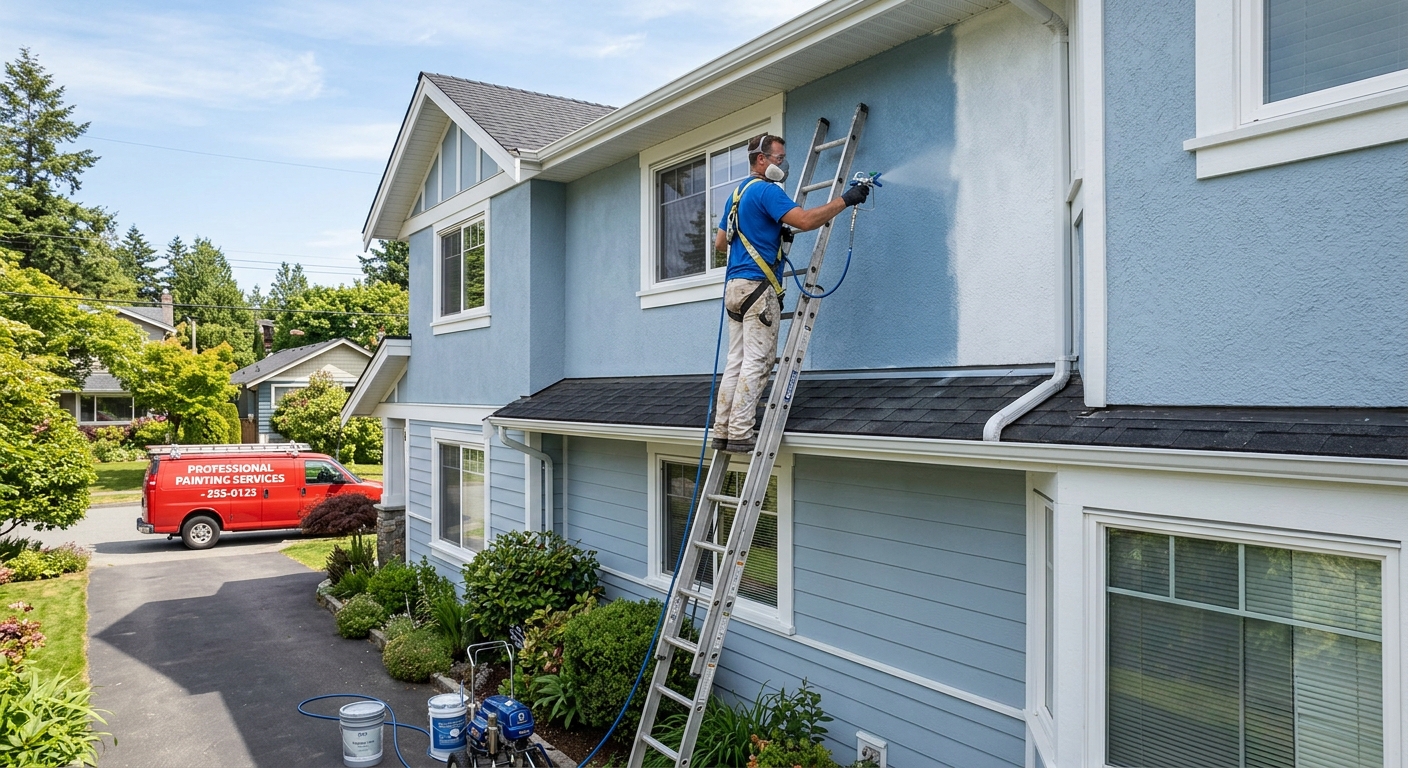
Painting options and costs in Southview
Southview, Alberta is a great place to refresh a home—but painting costs here are driven by a mix of local housing age and the short, weather-dependent exterior window. In Southview’s broader area, the 2021 Census shows the community at 1,550 people (Statistics Canada, 2021 Census), and that smaller local market means reputable painters can book up quickly when conditions line up. Just as importantly, many Calgary-area homes were built well before modern paint systems and weather barriers, so repaints often involve far more prep than homeowners expect—scraping, sanding, patching, caulking, and primer selection to stabilize older trim and siding. For pre-1978 properties, lead-safe work practices are a standard part of professional preparation when lead paint is possible.
In the Calgary region, exterior painting typically becomes practical from mid-May to late September when daytime highs reliably stay above 10°C. When the schedule tightens, labour rates firm up because crews need dry surfaces that can fully cure, and they also have to work around rain and overnight lows. Interiors are less season-sensitive, but labour can still swing widely based on ceiling height, repair scope, and trim/cabinet complexity. Because of that, two quotes for the “same” paint colour can differ once the prep and access realities are priced.
Use the table below as a quick reality check, then we can tighten the numbers after we review your surfaces, condition, and product selections.
| Service |
What's Included |
Typical Duration |
Price Range |
| Interior — whole home (walls, ceilings, trim) |
Protect floors/fixtures, patch & sand, caulk where needed, prime repairs, 2 topcoats, paint trim/doors as specified, clean-up and touch-ups |
3–8 business days |
$1,800–$6,500 |
| Interior — per room (standard bedroom or living room) |
Prep & protection, patch/sand spot repairs, prime bare/patch areas, 2 coats on walls; trim/doors included if requested |
1–2 business days |
$400–$1,800 |
| Exterior — full house (siding, trim, soffits) |
Thorough wash, scrape & sand failing paint, repair caulking/patches, prime stained/bare areas, 2 coats exterior acrylic/appropriate system, site cleanup |
5–12 business days |
$2,800–$8,900 |
| Exterior — trim and accent colours only |
Scrape & spot prime as needed, caulk select joints, 2 coats on trim/accents, protect landscaping and siding edges |
2–6 business days |
$2,500–$5,900 |
| Kitchen cabinet painting (doors, frames, spray finish) |
Degrease/clean, degloss if required, bonding primer, sanding between coats, spray-finish for doors, hardware masking, reinstall-ready finish |
5–15 business days (including dry time) |
$1,500–$6,900 |
| Specialty / faux finish (accent wall, texture) |
Surface prep to achieve a clean base, specialty material/technique application, optional clear coat for durability |
1–5 business days |
$600–$4,900 |
Prices are estimates only and vary by project scope, site access and material selection.
What affects the price of painting in Southview
Even within the Calgary economic region, quotes for what looks like the same job can vary by 30–50% once you price the differences in prep, coatings, access, and job logistics. The biggest drivers are (1) the exterior painting season being tightly climate-bound, and (2) how many hours it takes to get older surfaces stable enough for a durable topcoat. In Ontario you’ll often see longer contractor availability for exterior work than in Alberta because of different climate patterns, but in Alberta the usable window is usually roughly late May to early October—daytime temperatures must support proper application and drying. Coastal BC has a longer year-round need, but higher humidity and frequent rainfall increase dwell time, dry restrictions, and mildew-resistant product requirements.
In Southview specifically, you’ll often see Calgary-area homes from the 1960s–2000s. That housing age matters because repainting commonly involves heavy surface preparation: scraping loose coating, sanding edges, patching drywall cracks, re-caulking joints, and priming stained or weathered areas. In many repaints, prep can represent 50–70% of the labour. That’s why exterior jobs commonly land anywhere in the broader exterior band—around $2,500–$9,000—and why a “trim-only” refresh can still feel expensive when scaffolding or meticulous surface preparation is required.
Two practical examples: if your exterior has blistering or peeling, the scrape-and-prime time can push a job toward the upper end of the exterior range. If you’re painting interior walls only, with minimal repairs, you may stay closer to the lower end of interior pricing (roughly $400–$8,000 depending on total scope). Add high ceilings, lots of doors and trim, or small hard-to-reach areas, and costs move up quickly—often as much from time and access as from paint cost.
| Price Factor |
Why It Matters |
Cost Impact |
| Surface prep — scraping, sanding, patching drywall or wood |
Determines bond strength and whether peeling/roughness telegraphs through new paint |
Often +20% to +50% |
| Number of coats — 2-coat system over primer vs. 1 coat over existing |
Hides properly and improves durability against UV and freeze–thaw stress |
Often +10% to +30% |
| Paint quality tier — contractor-grade vs. premium (Benjamin Moore, Sherwin) |
Coverage, sheen stability, and long-term retention vary by system |
Often +5% to +20% |
| Ceilings and trim — adds significant time vs. walls-only |
Trim work requires careful masking, brushing, and steady line control |
Often +15% to +40% |
| Exterior season window — short season raises summer rates |
Scheduling pressure reduces flexibility and increases labour demand in summer |
Can add +10% to +25% |
| Lead-safe precautions — required for pre-1978 homes with lead paint |
Controls dust and debris during scraping/sanding |
Often +10% to +35% |
| Surface material — drywall vs. plaster vs. wood vs. stucco |
Different absorption and adhesion demands different primers and prep |
Often +5% to +30% |
| Height and access — multi-storey exterior requires scaffolding or lifts |
Safety gear, setup time, and slower application increase costs |
Often +15% to +60% |
Permits & regulations in Alberta
In Alberta, painting by itself generally does not require a permit. That said, for homes built before 1978, health guidance recommends testing for lead paint before sanding or scraping, and using lead-safe work practices if lead is present (wet methods to reduce dust, HEPA vacuuming, and proper containment and disposal). Homeowners are not typically legally forced to follow these exact steps, but pro contractors in Southview commonly follow them as standard practice because it reduces risk and protects the work area.
What DOES require a permit or additional approvals usually isn’t painting—it’s other building work that may accompany painting. Examples can include certain exterior renovations that alter structural elements, deck replacements, or work that requires permits due to changes beyond decorative coating. For pure interior/exterior painting scope, the work is typically handled under normal contractor safety procedures rather than a permit process.
Before hiring, confirm your contractor carries liability insurance and WCB/WSIB workers’ compensation coverage (so you’re not exposed if someone is injured on site). Then get a written contract that clearly states paint brands, sheen selections, number of coats, and exactly what surface prep is included (power wash, scrape/sand depth, caulking type, priming rules, and patching responsibilities).
To verify in Southview: check the contractor’s Alberta licensing/registration details through the appropriate provincial registry they provide, ask for a certificate of liability insurance showing your contractor as the insured, and request proof of workers’ compensation coverage. If offered, also ask for a clearance letter or documentation that matches the coverage period during your project.
Interior vs exterior painting — getting the best result in Southview
In Southview and across the Calgary market, long-lasting paint comes down to prep discipline and system selection—not just the colour you choose. For interiors, the most common failure isn’t the topcoat brand; it’s insufficient surface preparation. Proper patching and sanding, correct primer over repaired or stained areas, and cleaning off dust before coating are what prevent peeling, flashing, and uneven sheen. Sheen also matters by room: flat hides wall imperfections but scuffs more; eggshell or satin typically balances washability with a soft look in living spaces; semi-gloss on trim holds up better to cleaning and fingerprints. A practical rule of thumb is that two coats over a proper primer generally outlasts one heavy coat—especially on patches that may absorb differently.
For exteriors, Alberta’s freeze–thaw cycles, strong UV, and hail exposure make exterior prep and caulking critical. We treat caulking and joint sealing as part of the painting system, not an afterthought, because water ingress behind failing edges can ruin coatings quickly. Primer type depends on substrate and prior coating: latex primers often work for sound acrylic systems, but older or stained surfaces may require specialized bonding or stain-blocking primers to prevent bleed-through. Unlike BC’s mildew-driven concerns, Alberta’s risk profile is more about proper drying times, temperature stability, and adhesion through thermal cycling.
Cabinet painting is where many homeowners get value: compared with replacement, painting can deliver a dramatic refresh for less, provided the prep and spray-friendly finish steps are included. For pre-1978 homes, lead-safe precautions during any scraping that creates dust are a smart baseline for safety.
A dollar example: if your exterior only needs trim touch-ups, it may be justified to stay in the trim/accent range around $2,500–$5,900. If your siding has active peeling, trying to limit prep can cost more later—because full exterior scope in the broader band near $2,800–$8,900 typically addresses the root cause (bond failure) rather than only repainting the surface.
| Project Type |
Key Prep Step |
Recommended Coats |
Price Band |
| Interior — fresh drywall (new construction) |
Proper drywall sealing/primer to control absorption and prevent flashing |
1 primer + 2 topcoats |
$1,000–$3,900 |
| Interior — repaint (good condition, no repairs) |
Clean, lightly scuff/sand if needed, spot-prime any problem areas |
1–2 topcoats (typically 2) |
$400–$2,800 |
| Interior — repaint (patching and priming needed) |
Patch, sand smooth, spot-prime repairs to equalize sheen/absorption |
Primer on repairs + 2 full topcoats |
$900–$4,500 |
| Exterior siding (wood or fibre cement) |
Scrape/sand failing edges, caulk joints, prime bare/weathered areas |
Primer as required + 2 exterior topcoats |
$2,800–$8,900 |
| Exterior trim and accents only |
Masking and careful prep of trim edges; spot-prime and re-caulk |
Spot prime as needed + 2 topcoats |
$2,500–$5,900 |
| Kitchen cabinets (spray finish) |
Degrease, bonding primer, sanding between coats for adhesion |
Primer + 2–3 coats topcoat (system dependent) |
$1,500–$6,900 |
How to choose a painting contractor in Southview
Choosing the right painter in Southview comes down to verification and clarity. First, confirm Alberta licensing/registration status (if applicable to their business model) and ask for proof of liability insurance and workers’ compensation coverage (WCB/WSIB). Liability insurance is what protects you if property damage happens during prep or painting. Workers’ compensation protects you if a worker is injured on site. You should be able to see current certificates and coverage documents—don’t accept verbal confirmation.
Next, get 2–3 itemised written quotes. Look for a breakdown that separates labour (prep, sanding, priming, trim work, cleanup) from materials (primer type, topcoat system, caulking, sanding supplies). A good quote explains inclusions and exclusions clearly, including whether a permit is needed for any related work (usually not for painting itself), disposal of paint debris, and how they protect landscaping and flooring.
Warranty matters in Alberta because UV and thermal cycling expose weak workmanship. Ask for the length of the workmanship warranty and whether it’s tied to proper maintenance and the specified paint system. Also ask if the product/manufacturer warranty is included and whether it’s transferable to you.
For payments, avoid large upfront deposits: keep it to roughly 10–15% and hold back until the job is complete and any final touch-ups are done. Finally, request a written start date and a completion estimate that accounts for drying and curing time—especially for exteriors in the short seasonal window.
- Request certificate of liability insurance with policy dates and your contractor listed as insured.
- Request proof of WCB/WSIB coverage for the period your job is scheduled.
- Confirm their work scope includes wash, scrape/sand, patching, and priming rules (not just “paint”).
- Ask how they handle lead-safe prep if your home is pre-1978 (testing, containment, cleanup).
- Get the exact paint brand and line/spec in writing (including primer and caulking type).
- Confirm sheen selections by surface (flat/eggshell/satin/semi-gloss) and where each goes.
- Ensure disposal and site cleanup are explicitly included.
- Check whether ceiling work and trim/doors are priced separately or included.
- Ask about patching standards: how they feather edges and sand for a smooth finish.
- Review masking protection: floors, fixtures, landscaping, and window hardware.
- Ask for a workmanship warranty term and any conditions in plain language.
- Use a payment schedule with a small deposit and a holdback after completion.
Red flags I see too often in the Southview market: (1) quotes that lump everything into one number with no prep detail, (2) no proof of liability insurance or workers’ compensation coverage, (3) promises of “one-coat” exterior results without primer/surface prep, (4) vague timelines that ignore weather windows for exterior work, and (5) refusal to put paint brands, coatings, and coats count in the contract.
Frequently asked questions — painting in Southview
Should I paint or wallpaper my Southview home?
In Southview, painting is usually the safer, more budget-friendly choice for most homeowners, especially if you have older walls that may have patching, texture, or uneven absorption. Wallpaper can look great, but it’s less forgiving if your drywall has repairs that aren’t perfectly smooth; those imperfections can show as bubbles, edges, or lifting over time. Painting also makes future changes easier—no stripping down to bare wall every time you want a new colour. If you do consider wallpaper, plan for extra prep costs and ask how they’ll treat joints and patch areas for adhesion. If your project is mainly interior and walls are in decent condition, interior repainting commonly starts around $400–$1,800 per typical room, which is often easier to scale than wallpaper labour.
How do I fix peeling exterior paint in Southview?
Peeling exterior paint usually means the old coating system has lost adhesion to the substrate—so the “fix” isn’t just adding new paint over the problem. In Southview’s Alberta conditions, you typically need to scrape off loose material, sand edges smooth, wash thoroughly, and then prime the exposed spots with a compatible primer system. Caulking is also important: failing joints can let water behind the siding and cause repeated peeling. If your home is pre-1978, lead-safe prep should be treated as standard practice when scraping or sanding creates dust. After repairs, the goal is a full 2-coat exterior system over properly primed areas, which is why full exterior work often sits in the broader $2,500–$9,000 band depending on how much scraping and priming is required.
What colours add the most resale value in Southview?
For resale in Southview, buyers tend to respond best to clean, timeless palettes that suit Calgary’s light and seasonal colour changes. On exteriors, consider warm neutrals (greige/taupe), soft greys, and restrained whites, paired with darker trim colours that create contrast without looking harsh in winter shadows. On interiors, most homeowners see the strongest “move-in ready” appeal with warm off-whites, light greys, and muted greige tones; they photograph well and adapt to different furniture styles. If you want a bolder interior accent, keep it to one feature wall or use colour in trim details rather than everywhere. If your goal is maximum value with minimal repaint complexity, planning a consistent colour story usually fits within interior repaint budgets—often starting around $400–$2,800 for a refreshed room with little repair work.
How much does it cost to paint a house in Southview?
It depends on whether you mean interior, exterior, or both, and how much prep is needed. For a typical interior whole-home refresh, costs commonly fall within the broad interior band of $1,800–$6,500 for many occupied homes, driven by prep scope, trim/door coverage, and ceiling height. For exterior work, full-house painting often lands in the exterior range of $2,500–$9,000 because Alberta requires strong bonding prep and proper caulking before coatings are applied. Southview’s exterior season is also short, so summer scheduling pressure can firm up labour pricing—mid-May to late September is when crews can reliably work with surfaces that dry properly (and when daytime temperatures support application). If you’re unsure which scope makes the most sense, start by getting an itemised assessment and a clear prep plan.
How much does interior painting cost per room in Southview?
Per-room interior painting in Southview typically depends on whether you’re painting walls only or walls plus trim/doors, and how much patching and priming is needed. For a standard bedroom or living room with manageable prep, many projects land in the $400–$1,800 range. If the room needs noticeable patching, sanding, stain-blocking, or additional trim detail, the price can rise toward the upper part of that range because the labour shifts from topcoating to prep and smoothing. Ceiling work can also add time. The best way to keep costs predictable is to confirm what’s included in the quote: number of coats, whether repairs are included, primer rules, and protection/masking requirements.
When is the best time for exterior painting in Southview?
The best time for exterior painting in Southview is when Alberta temperatures support proper drying and curing—typically mid-May through late September. In the Calgary market, we aim for stretches when daytime highs stay reliably above 10°C and when there’s enough dry time between rain events. This isn’t just comfort for the crew; paint needs stable conditions so it can bond and develop a durable film. Unlike coastal BC (where humidity and rainfall can complicate drying year-round), Alberta’s bigger swing is freeze–thaw risk early and late in the season, plus UV and hail stress after application. Because the window is shorter, the more you wait, the more scheduling pressure can push pricing upward. If you need a full exterior repaint, booking in early summer often gives you the widest choice of start dates.