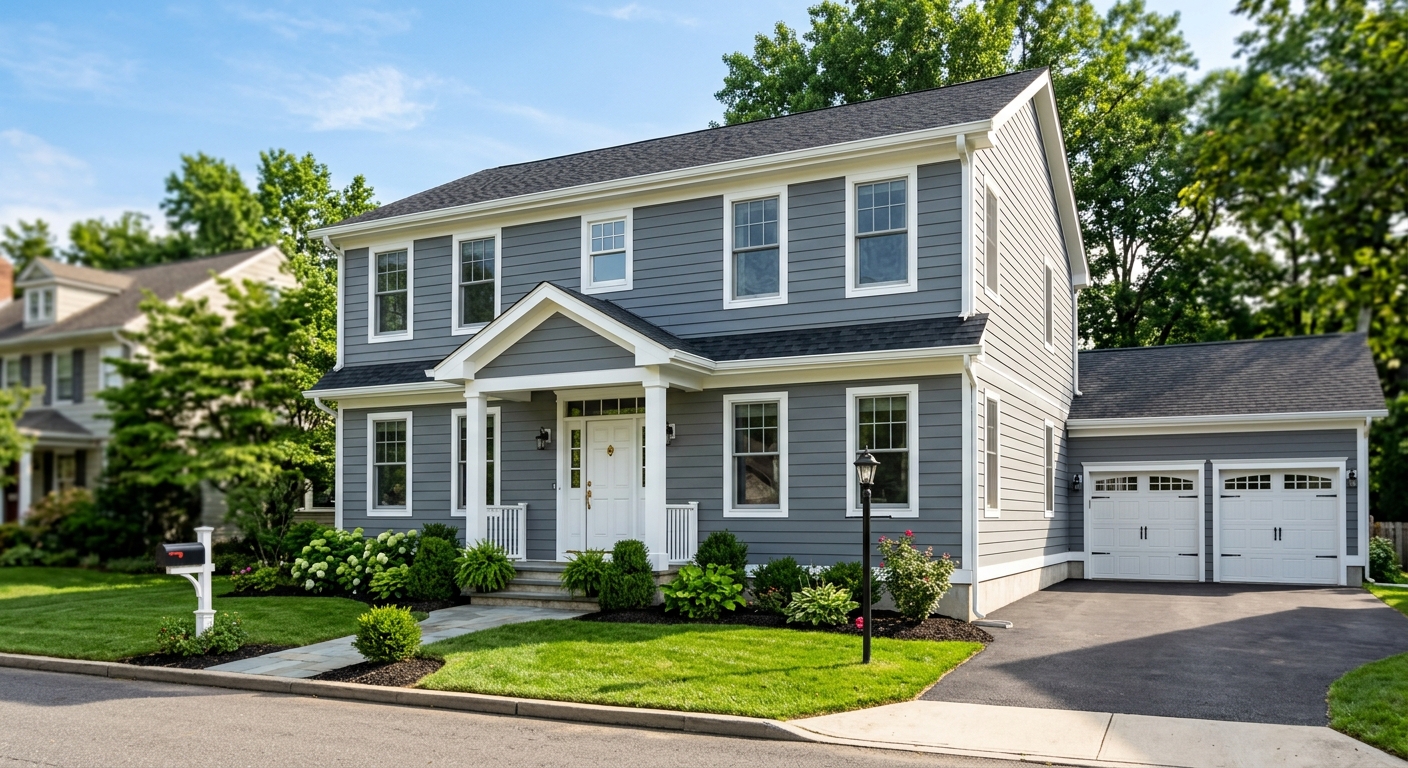
Painting options and costs in Hillview
Hillview homeowners usually start by comparing “whole home” versus “per-room” interior quotes, and “full house” versus “trim-only” exterior quotes. With only 3,444 residents in Hillview (Statistics Canada, 2021 Census), the local market is small, and a lot of the trade capacity in the Calgary region gets pulled toward projects that are pre-booked for the short exterior season. That matters because many Calgary-area neighbourhoods include housing from the 1960s–2000s; older properties often require more prep (scraping, patching, caulking, and priming), and pre-1978 trims may call for lead-safe precautions before sanding or scraping.
In the Calgary region, our workable exterior window is typically mid-May to late September when daytime highs reliably stay above 10°C and surfaces can dry properly. Demand compresses into that season, so exterior pricing tends to be firmer than shoulder-month work. Interiors are more flexible year-round, but costs still swing with prep complexity, ceiling height, and access.
In Hillview, work is especially in demand around the newer infill pockets and the broader community areas where families are updating finishes ahead of listing season—an example is the 84 Street / surrounding commercial corridor area where turnaround time matters. From there, you’ll usually land on one of the options below, which is why comparing apples-to-apples scope is the most reliable way to judge a quote.
Use the table as your baseline, then we can tighten pricing once we confirm surface condition, number of coats, and material selections.
| Service |
What's Included |
Typical Duration |
Price Range |
| Interior — whole home (walls, ceilings, trim) |
Move-protected prep, patching & sanding, caulking, primer where required, two-coat topcoat, ceiling painting, basic trim work, cleanup |
5–10 days |
$2,100 – $8,000 |
| Interior — per room (standard bedroom or living room) |
Prep & patching, caulk where needed, primer on repaired areas, two-coat walls; optional ceiling/trim depending on scope |
1–3 days |
$400 – $1,800 |
| Exterior — full house (siding, trim, soffits) |
Power washing (or equivalent cleaning), scrape & prep, patching, caulking, spot-priming, two-coat exterior system, attention to seams/ledges |
7–18 days |
$2,500 – $9,000 |
| Exterior — trim and accent colours only |
Surface prep on trim/scoped areas, caulking, primer where required, two-coat topcoat on trim and accents |
3–8 days |
$1,100 – $4,800 |
| Kitchen cabinet painting (doors, frames, spray finish) |
Degreasing/cleaning, degloss where needed, bonding primer, prep & masking, spray-grade topcoat, re-install hardware/adjustments as included |
5–14 days (often staggered with cure time) |
$800 – $7,000 |
| Specialty / faux finish (accent wall, texture) |
Surface preparation, specialty base coat, finish application, protective topcoat (as specified), cleanup and touch-ups |
2–7 days |
$600 – $3,500 |
Prices are estimates only and vary by project scope, site access and material selection.
What affects the price of painting in Hillview
In the Calgary region, two “similar” painting jobs can land 30–50% apart because the big cost drivers are usually hidden in prep, access, and product system decisions—not in the labour of rolling or spraying alone. That’s why a quote that looks cheaper on paper can become more expensive after we confirm what’s actually on the walls or siding.
Exterior work is the clearest example. The exterior painting season is tightly climate-bound: in Alberta, we need conditions where temperatures are reliably above 10°C for application and the surface can dry between coats. In coastal BC you often get a longer calendar but more humidity and rain exposure, which pushes the need for mildew-resistant systems and careful scheduling. In Hillview and the Calgary market, the shorter season concentrates demand, raises summer scheduling pressure, and can affect availability—so exterior pricing is firmer, especially in mid-summer.
Older housing throughout Alberta means more surface prep. Scraping loose paint, sanding edges, patching drywall or wood, caulking openings, and priming problem areas can represent 50–70% of total labour on a repaint. For example, a “standard” exterior repaint that usually sits closer to the $2,500–$9,000 band can move toward the top end when there’s heavy peeling, failing caulk at trim joints, or extra priming on stained or tannin-heavy surfaces. Likewise, interior walls can start near the $400–$8,000 range but rise quickly if ceilings need repair, stippling must be matched, or trim needs extensive caulking and detail work.
In Hillview specifically, two common cost swings are sun-faded trim that requires more prep to prevent flashing, and freeze–thaw cycle cracking at caulk lines—often addressed with better caulking and more prep to stop water ingress early.
| Price Factor |
Why It Matters |
Cost Impact |
| Surface prep — scraping, sanding, patching drywall or wood |
Determines adhesion and how smoothly the final coat levels |
Often the largest driver; can move a job by 20–40% |
| Number of coats — 2-coat system over primer vs. 1 coat over existing |
Coverage and durability depend on correct layering |
May add 10–25% when full prime is required |
| Paint quality tier — contractor-grade vs. premium (Benjamin Moore, Sherwin) |
Better products hide better and resist scuffing/UV longer |
Material delta typically modest; labour can drop with better coverage |
| Ceilings and trim — adds significant time vs. walls-only |
Ceilings require more cutting-in and edge control |
Can increase interior costs by 15–35% |
| Exterior season window — short season raises summer rates |
Limited weather window affects scheduling and crew availability |
Can increase pricing by 5–15% during peak weeks |
| Lead-safe precautions — required for pre-1978 homes with lead paint |
Proper methods reduce dust risk and disposal costs |
Can add several hours and specialized materials; often 5–20% |
| Surface material — drywall vs. plaster vs. wood vs. stucco |
Each substrate needs specific primers and prep |
Can shift a job by 10–30% depending on adhesion issues |
| Height and access — multi-storey exterior requires scaffolding or lifts |
Changes safety requirements and setup time |
May add 10–25% on exterior projects |
Permits & regulations in Alberta
In Alberta, painting work typically does not require a permit for standard interior or exterior repainting. The key exception is not usually “painting itself,” but rather work that intersects with regulated building elements (for example, certain exterior coatings tied to specialized remediation or alterations that trigger separate requirements). For most Hillview homeowners planning to repaint siding, ceilings, walls, or trim, you should not need a municipal painting permit.
Where Alberta homeowners do need to think carefully is lead-safe practice for older homes. For properties built before 1978, health guidance recommends testing for lead paint before sanding or scraping, and using lead-safe work methods if lead is present (wet methods to reduce dust, HEPA vacuuming, and proper disposal). While this is not commonly mandated as a homeowner permit issue, it is standard professional practice and significantly impacts how we prep and price the job.
Also confirm the contractor carries liability insurance and has WSIB/WCB workers’ compensation coverage. A solid written contract matters: ask for paint brand, sheen, number of coats, and exactly what surface prep is included (scrape, patch, prime, caulking, cleaning method). Step-by-step for Hillview: (1) ask for their WSIB/WCB account and a current clearance letter, (2) request a certificate of insurance showing liability limits and coverage dates, (3) verify their Alberta business details through the applicable online public registry, and (4) ensure the contract lists scope, products, and prep inclusions.
Interior vs exterior painting — getting the best result in Hillview
The difference between a long-lasting paint job and a premature failure in Hillview is mostly preparation and system choice—especially in Alberta’s freeze–thaw conditions and UV exposure. For interiors, surface prep beats brand. Filling and sanding imperfections, properly priming repairs, and caulking gaps ensure the topcoat adheres and looks level. Sheen matters too: flatter finishes help hide wall imperfections in lower-traffic rooms, while eggshell or satin are often better for families, hallways, and kitchens. And the “two coats over proper primer” rule is practical—one thick coat rarely performs like two correct coats because it won’t build uniform thickness and coverage the same way.
For exteriors, Alberta weather makes caulking and primer selection critical. We expect freeze–thaw movement at joints, so caulking before painting to prevent water ingress is non-negotiable. Primer type depends on substrate and prior coatings; wrong primer is a common reason for peeling or “burn-through.” Unlike coastal BC where mildew-resistant products are a larger conversation due to humidity and rainfall, in Hillview we focus on adhesion, UV stability, and elasticity for temperature changes and hail impacts.
Cabinet painting can be a budget alternative to replacement, but it requires heavy degreasing, bonding primer, and a spray-grade topcoat schedule. In pre-1978 homes, lead-safe precautions should be included in prep (especially around older trim and stained surfaces), which improves safety and paint performance.
A realistic dollar example: choosing full exterior prep and a proper two-coat system often lands in the $2,500–$9,000 band. Going “trim-only” can reduce cost (sometimes around the $1,100–$4,800 range), but if siding is failing at seams, that lower price isn’t justified because you’ll likely pay again when the underlying problem shows through.
| Project Type |
Key Prep Step |
Recommended Coats |
Price Band |
| Interior — fresh drywall (new construction) |
Prime bare drywall and fill nail/screw pops for a uniform base |
Primer + 2 topcoats |
$400 – $1,900 |
| Interior — repaint (good condition, no repairs) |
Degrease/light clean, sand scuffs, spot-prime if needed |
2 topcoats (primer only if required) |
$400 – $1,600 |
| Interior — repaint (patching and priming needed) |
Patching, sanding edges, and priming repairs for consistent sheen |
Primer + 2 topcoats |
$600 – $2,800 |
| Exterior siding (wood or fibre cement) |
Scrape loose areas, caulk gaps, and use substrate-appropriate primer |
Primer (as needed) + 2 topcoats |
$2,500 – $9,000 |
| Exterior trim and accents only |
Thorough cleaning and tight caulking at joints before topcoat |
Prime (as needed) + 2 topcoats |
$1,100 – $4,800 |
| Kitchen cabinets (spray finish) |
Degrease, degloss, and apply bonding primer for adhesion |
Primer + 2 finish coats (system dependent) |
$800 – $7,000 |
How to choose a painting contractor in Hillview
Start by verifying credibility, not just price. In Alberta, confirm the contractor’s WSIB/WCB workers’ compensation coverage by asking for a current clearance letter and the account information they use to report. Next, request a certificate of insurance for liability coverage and verify the dates match your job timeline. Then check licensing/business registration details through Alberta’s public resources—this helps confirm they’re an established company, not a short-term crew.
For quotes, ask for 2–3 itemised written estimates that break labour and materials by scope line (prep, patching, primer, caulking, paint type, number of coats, trim work). Avoid a “lump sum” quote that doesn’t explain what’s excluded. Carefully read the scope: is surface cleaning included? Is disposal included? Are they pulling a permit if one is required for your specific circumstances, or explicitly stating that no permits apply? Make sure product names (and sheens) and the number of coats are written in the contract.
Warranty should be specific: workmanship warranty length, product/manufacturer warranty terms, and whether the warranty transfers if you sell the home. Payment schedule matters too—never allow more than about 10–15% upfront. Hold back the remaining amount until the job is complete and corrected.
Finally, demand a timeline: a written start date and a completion estimate based on prep curing and (for exteriors) weather-dependent drying.
- Ask for WSIB/WCB clearance letter and verify coverage dates.
- Request liability insurance certificate and confirm limits.
- Get itemised quotes (labour + materials) with line-by-line scope.
- Confirm number of coats and primer requirements in writing.
- Ensure caulking scope is stated (interior gaps vs exterior joints).
- Ask what cleaning method is included (power washing, degreasing, sanding).
- Verify disposal includes paint waste and debris removal.
- Confirm surface repairs are included (what counts as “patching”).
- Request proof of product specs (paint brand, colour, sheen, system).
- Check prep for pre-1978 homes: lead-safe methods if testing indicates lead.
- Make sure access needs (ladders, lifts, scaffolding) are planned and priced.
- Put warranty terms in the contract before signing.
Red flags I see in Hillview: (1) they won’t itemise prep (they just promise “two coats”), (2) they avoid discussing WSIB/WCB or can’t produce a clearance letter, (3) they ask for large upfront payments, (4) they start without a written contract listing paint brands/coats and scope, and (5) they dismiss lead-safe practices for older trim and siding. If any of those show up, treat it as a “stop and clarify” moment before paying a deposit.
Frequently asked questions — painting in Hillview
How much does interior painting cost per room in Hillview?
For a typical bedroom or living room in Hillview, interior pricing commonly starts in the $400–$1,800 range per room, depending on prep needs and whether ceilings and trim are included. If the room is in good condition with minimal repairs, you’ll often be closer to the lower end. If there’s patching, sanding, and priming needed around damaged drywall, the same room can move toward $600–$2,800 because prep is where the labour time sits. For a whole-home interior refresh, budgets usually run higher, from $2,100 up to $8,000 when ceilings and trim are fully included. In a cold-winter climate like Alberta, humidity control inside still matters, but interior scheduling is generally less weather-dependent than exterior work.
When is the best time for exterior painting in Hillview?
The best time in Hillview is typically mid-May to late September, when day-time temperatures stay reliably above 10°C and the siding can dry properly between coats. Weather drives the calendar: we need conditions for application and dry time, and we must plan around rain and overnight lows that can slow curing. Because the Calgary region has a shorter weather window, peak-season slots book quickly, so it’s smart to schedule your inspection and prep plan early. If you’re aiming for exterior work, avoid waiting until late summer because the schedule tightens quickly and pricing can firm up. This is also when we can best manage freeze–thaw movement impacts by getting caulking and proper primers in before the colder stretch.
How many coats of paint do I need?
Most residential jobs in Hillview are built around a 2-coat topcoat system. Over bare or repaired areas, we add primer so the finish coat looks even and adheres correctly. For repainting in good condition, some surfaces only need the two topcoats, with primer used only for repairs or areas where existing paint is compromised. If we’re dealing with siding trim that’s stained, peeling, or has adhesion problems, a “prime-where-required + two coats” approach is typical. That system is one reason exterior projects can land in the $2,500–$9,000 range: the cost reflects correct layering and prep, not just the number of times we roll or spray. Cutting corners on coats usually shortens lifespan.
What paint is best for Hillview's climate?
For Hillview’s Alberta climate, the “best” paint is the correct exterior system for your substrate and the right film stability for UV and temperature swings. We generally prioritize high-quality acrylic exterior paints and, where appropriate, elastomeric or flexible coatings to better handle movement at joints and seams during freeze–thaw cycles and hail impacts. Inside, the best choice is usually about the right sheen by room use—flat for low-touch walls, eggshell or satin for higher-traffic areas. If your home has older trim or siding, product selection also depends on whether we’re priming over stained surfaces, different materials, or prior finishes. In pre-1978 homes, we also ensure prep is handled with lead-safe practices if lead paint is present, because good paint doesn’t fix poor or unsafe prep.
How long does exterior paint last here?
Exterior paint longevity in Hillview depends heavily on prep quality, correct caulking, primer choice, and whether the previous coating failed due to adhesion or moisture intrusion. With proper scrape/clean, spot-priming, sealing seams, and a correct two-coat exterior system, many homes achieve solid multi-year performance; however, Alberta’s freeze–thaw cycles and UV exposure accelerate wear when joints are not sealed well. If previous caulk has cracked or water has been getting behind trim, the paint will fail sooner regardless of brand. That’s why a “trim-only” approach can be misleading—if the underlying siding or seam issue isn’t addressed, you may see early peeling or flashing. The $2,500–$9,000 exterior range reflects the real prep and system work needed to protect your investment in Hillview.
Should I paint or replace my cabinets?
Painting kitchen cabinets is often the smarter first step in Hillview if the cabinet boxes are solid and the doors/drawers are worth restoring. Repainting (especially with a spray-grade, multi-step coating) can dramatically refresh your kitchen for a fraction of replacement, typically landing in the $800–$7,000 range depending on scope, accessibility, and the finish level. Replacement makes sense if cabinets are damaged, warped beyond repair, or if you’re changing the layout or moving plumbing/electrical. If your goal is updated colour and a smoother finish, painting can be a budget alternative, but it requires proper degreasing, bonding primer, careful masking, and enough cure time between coats. For pre-1978 homes, lead-safe precautions during prep should be built into the plan if testing indicates lead paint is present.