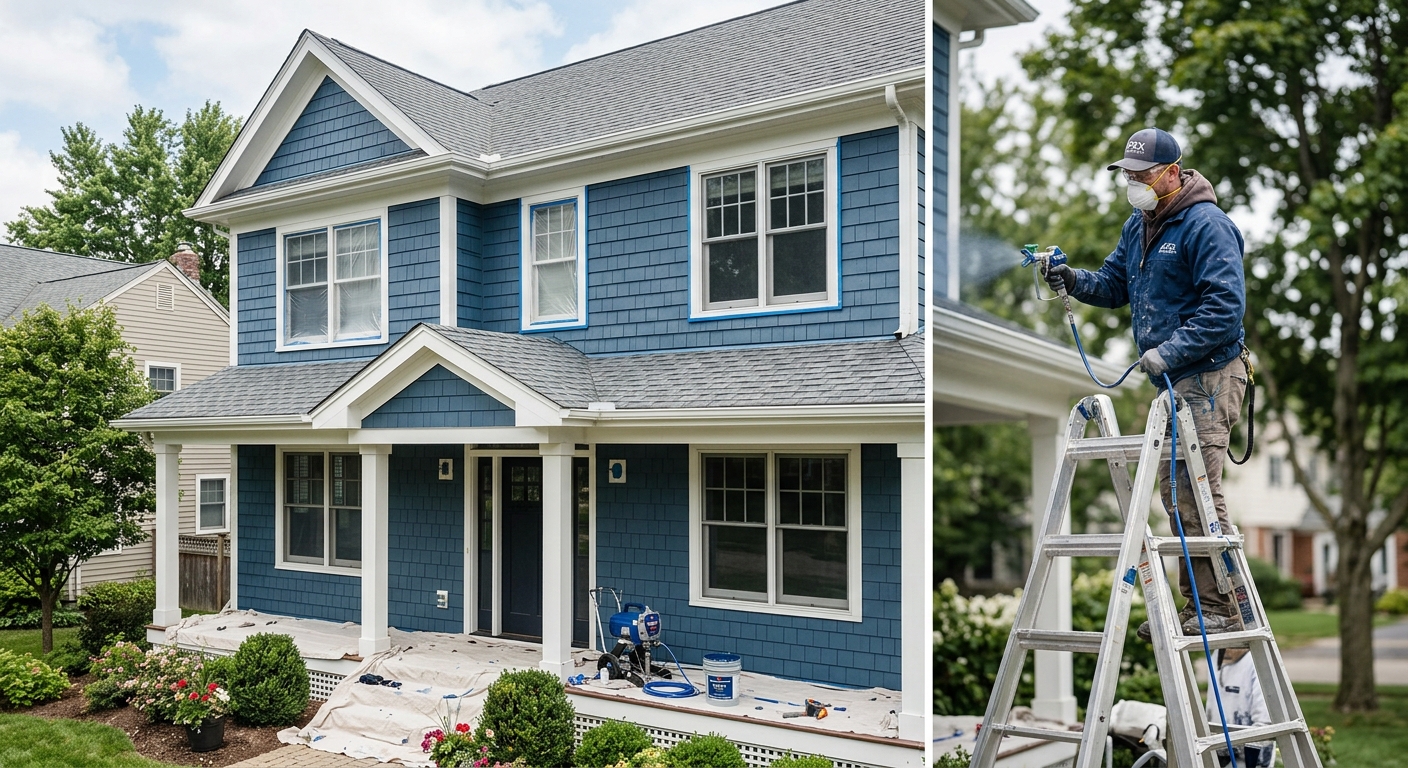
Painting options and costs in Crestmont
Crestmont homeowners typically start comparing options by cost, but the right scope matters as much as the price. With Crestmont’s small population of 2,275 people (Statistics Canada, 2021 Census), local crews and schedules can tighten when multiple neighbours book at the same time. Cost also depends heavily on age of housing: across the Calgary region, many homes date from the 1960s–2000s, and earlier builds can require extra attention to original trim, siding condition, and—if applicable—lead-safe prep for pre-1978 properties.
In the Calgary market, exterior painting is driven by a short, weather-dependent window—roughly mid-May to late September—when daytime highs stay above 10°C and surfaces can dry properly. That compressed season usually means more competition for top crews, firmer summer rates, and strict scheduling around rain and overnight lows. Interiors are less season-sensitive, so availability can be steadier, but prep complexity (patching, sanding, priming) and access (ceilings, trim, stairwells) still swing labour time.
In Crestmont, painting demand is especially noticeable around the newer infill and established residential blocks near local community gathering areas where turnover and refresh projects are common. If you’re repainting an older home, plan for prep as the foundation of the finish—scraping, caulking, patching, stain-blocking, and primer selection—before we even talk about topcoat colour.
Below are realistic ballpark ranges that match the Calgary region’s labour and climate requirements, to help you compare apples-to-apples before you book a site visit.
| Service |
What's Included |
Typical Duration |
Price Range |
| Interior — whole home (walls, ceilings, trim) |
Prep (patch/sand/caulk where needed), spot prime, 2-coat wall system, ceiling painting, full trim finish, cleanup and protection |
4–10 days |
$2,100–$7,800 |
| Interior — per room (standard bedroom or living room) |
Prep, prime as needed, 2-coat walls, ceiling and basic trim (typical door/window casing) |
1–3 days |
$400–$1,800 |
| Exterior — full house (siding, trim, soffits) |
Power wash (as required), scrape/sand, caulking at transitions, stain-blocking where needed, primer system, 2-coat exterior finish, surface protection and cleanup |
7–18 days |
$4,000–$9,000 |
| Exterior — trim and accent colours only |
Prep and spot primer, 2-coat trim/accent coatings, careful masking, caulking touch-ups |
3–8 days |
$2,500–$6,500 |
| Kitchen cabinet painting (doors, frames, spray finish) |
Degrease, bonding primer, spray-applied finish, sheen selection, hardware handling, careful masking and touch-ups |
7–18 days (includes curing time) |
$800–$5,500 |
| Specialty / faux finish (accent wall, texture) |
Surface prep, base coat(s), application method, topcoat protection (as required) |
1–5 days |
$600–$6,000 |
Prices are estimates only and vary by project scope, site access and material selection.
What affects the price of painting in Crestmont
Two quotes for what sounds like the same painting job can differ by 30–50% across Calgary and Alberta because the biggest driver isn’t the colour—it’s the amount of prep, the number of coatings required, and the product system selected for your surface and exposure. In many older neighbourhoods around Crestmont, the substrate tells us how much work is truly needed: peeling paint, chalking, cracked caulk, water staining, or previous DIY brushwork often turns “a quick repaint” into months of labour and material decisions.
On exteriors, the season window is tight in the Calgary region: exterior work needs mid-day warmth and good drying conditions (often above 10°C during application) and can’t be rushed when rain or overnight lows slow cure. Short seasons concentrate demand, so contractors book earlier and price more firmly than in shoulder months. Coastal BC can have a longer season, but humidity and frequent rain require mildew-resistant systems and tighter timing; in Alberta we plan around freeze–thaw cycles, strong UV, and hail impact, which is why we typically spec quality acrylics and flexible or elastomeric coatings on key exterior elements.
Prep can also be a major cost share. On repaints, scraping, patching, caulking, and priming can run 50–70% of the labour on many homes. For example, if your exterior prep is straightforward, you might land closer to the lower end of an exterior range (e.g., around the mid-$2,500s for trim-only). If the siding needs more build-up and stain-blocking, costs can climb toward the upper exterior band (around $9,000) because the coating system and labour time expand together.
Finally, access matters locally: multi-storey homes, rooflines with lots of detail, and tight staging areas can require scaffolding or lifts, adding days and increasing safety labour.
| Price Factor |
Why It Matters |
Cost Impact |
| Surface prep — scraping, sanding, patching drywall or wood |
Old paint adhesion, drywall joints, and wood grain determine how well topcoats bond |
Often the largest labour driver; can swing the total by 20–40% |
| Number of coats — 2-coat system over primer vs. 1 coat over existing |
Coverage and durability depend on primer/base condition and sheen selection |
Adding a coat can add 10–25% depending on area |
| Paint quality tier — contractor-grade vs. premium (Benjamin Moore, Sherwin) |
Higher-end paints often improve hiding, washability, and long-term wear |
Materials may shift 5–15%; can reduce repeat work |
| Ceilings and trim — adds significant time vs. walls-only |
Ceilings and detailed trim require more masking, cutting-in, and careful coverage |
Can add 15–30% on interior whole-home projects |
| Exterior season window — short season raises summer rates |
Drying time and scheduling constraints limit when crews can work |
Typically firm pricing during peak weeks |
| Lead-safe precautions — required for pre-1978 homes with lead paint |
Safe methods (wet cutting, HEPA cleanup, proper disposal) slow the process |
May add 10–20% on affected areas |
| Surface material — drywall vs. plaster vs. wood vs. stucco |
Different substrates need different primers and prep to prevent bubbling/peeling |
Improper primer increases failure risk; correct system prevents rework |
| Height and access — multi-storey exterior requires scaffolding or lifts |
Safety, staging, and time increase with height and roofline complexity |
Can add $500–$2,000+ on larger exterior jobs |
Permits & regulations in Alberta
In Alberta, painting typically does not require a permit for standard interior or exterior paint work. If you’re planning to sand, scrape, or repaint an older home in Crestmont that may have been built before 1978, the key requirement isn’t a permit—it’s health and safe-work practice. Health guidelines recommend testing for lead paint before sanding or scraping. If lead is present, professionals are expected to use lead-safe work practices such as wet methods to reduce dust, HEPA vacuuming, and proper disposal of debris. For homeowners, those practices aren’t always legally mandated, but they are standard and strongly recommended to protect your household and workers.
What can require a permit? Painting itself usually does not, but you should check permits if your project includes related work such as structural modifications, removing and replacing exterior cladding, or changes tied to regulated building components. For typical coating work—prep and application—no painting permit is generally required.
Step-by-step, Crestmont homeowners can verify a contractor before booking: (1) confirm their Alberta licensing/registration status via the appropriate online registry; (2) request a current certificate of liability insurance naming you as certificate holder if possible; (3) confirm WSIB/WCB coverage for workers (ask for proof of coverage, not just “we’re covered”); and (4) insist on a written contract that spells out paint brand, sheen, number of coats, and the exact surface prep included.
Interior vs exterior painting — getting the best result in Crestmont
In Crestmont, the difference between a long-lasting paint job and a premature failure is mostly in prep and system matching—not in the number of colour choices. For interiors, surface preparation (filling, sanding, priming stained or repaired areas) is more important than the topcoat brand. Choose sheen by function: kitchens and high-touch areas typically do better with washable finishes such as eggshell or satin, while ceilings are usually flat to reduce sheen marks. A common mistake is thinking “one thick coat” is faster; in reality, two proper coats over correct primer nearly always outlast a single heavy application, because it levels and cures more consistently.
For exteriors, Alberta’s freeze–thaw cycles and intense UV mean the coating must be able to move and stay sealed where water can enter. Caulking comes before painting at transitions (trim-to-siding, around openings), not after, because it needs time to cure and it must be sealed properly under the coating system. Primer type matters: oil-based primers may be used when surfaces require stronger stain blocking or bonding, while latex systems can work well when the substrate and manufacturer specifications align. We also select products suited to local exposure—mildew resistance is critical in wet climates like coastal BC, but in Alberta we emphasize UV durability, hail resistance, and temperature-stable application.
Cabinet painting is often the best value upgrade when you want a facelift without replacement. If replacement cabinets are priced for a full kitchen refresh, cabinet painting can be a sensible budget alternative; however, it’s not a “spray and pray” job—degreasing, bonding primer, and careful spray finish determine the final look and durability.
Here’s a practical dollar example: if you’re deciding between whole exterior paint versus trim-only refresh, moving from trim-only (often around $2,500–$6,500) to a full-house exterior project (commonly $4,000–$9,000) is justified when the siding/soffits show chalking, staining, or widespread adhesion issues. If your base coat is still solid, spending on trim-only can deliver a big visual improvement without paying for full siding prep.
| Project Type |
Key Prep Step |
Recommended Coats |
Price Band |
| Interior — fresh drywall (new construction) |
Prime all drywall and control suction before finish coats |
2 coats (plus primer) |
$1,200–$4,500 |
| Interior — repaint (good condition, no repairs) |
Clean + light scuff/sand; spot prime any marks or scuffs |
2 coats where needed for consistent sheen |
$400–$3,200 |
| Interior — repaint (patching and priming needed) |
Patch drywall, sand flush, and prime repaired areas before topcoat |
2 coats (primer on repairs) |
$900–$8,000 |
| Exterior siding (wood or fibre cement) |
Scrape/ sand, caulk transitions, and prime correctly for the substrate |
2 coats exterior finish (plus primer) |
$4,000–$9,000 |
| Exterior trim and accents only |
Prep edges carefully, remove loose coating, spot-prime, then caulk |
2 coats trim/accent system |
$2,500–$6,500 |
| Kitchen cabinets (spray finish) |
Degrease and use a bonding primer for adhesion |
2 coats finish after primer (with curing time) |
$800–$5,500 |
How to choose a painting contractor in Crestmont
Choosing a painter in Crestmont comes down to verification, clarity, and how they manage risk. First, confirm Alberta licensing/registration where applicable through the relevant online registry, and ask for proof in writing before work begins. Next, request a current certificate of liability insurance—ensure it’s active and that the coverage limits are appropriate for the job size. For worker protection, ask for proof of WSIB/WCB coverage; reputable contractors provide this routinely and can explain what it covers.
Then get 2–3 itemised written quotes. Look for a labour-and-materials breakdown rather than a single lump sum. A solid quote will list surface prep steps (scraping, sanding, patching, caulking, priming), paint brand and sheen, number of coats, and what’s included for cleanup and disposal.
Read the scope carefully: is permit handling mentioned (if any related trade permits are required), are masking and protection included, and is disposal of scraping debris included? Ask about warranty too. You want a workmanship warranty length in the contract, a summary of the manufacturer/product warranty, and whether any product warranty is tied to approved application methods. Finally, payment schedule matters: never agree to more than about 10–15% upfront, and use a holdback until the job is complete and you’ve inspected it. Ask for a start date and completion estimate in writing—especially for exteriors where the mid-May to late-September drying window can limit flexibility.
- Confirm contractor registration/licence details via Alberta’s online registry.
- Request certificate of liability insurance and review effective dates.
- Ask for proof of WSIB/WCB coverage (not verbal assurance).
- Ensure quotes specify paint brand, product line, and sheen.
- Check that the quote includes surface prep: scraping, sanding, caulking, patching, priming.
- Verify the number of coats and where primer is required.
- Confirm drywall patching and stain-blocking are described (and where they apply).
- Ask what preparation is done before spray cabinet finishes (degreasing and bonding primer).
- Review protection details: tarps, masking, floor/fixture protection, and ventilation.
- Check cleanup and disposal: debris removal and waste handling steps.
- Confirm warranty terms for workmanship and whether it’s transferable or documented.
- Agree on payment milestones with a holdback after final walkthrough.
Red flags in Crestmont include: vague scopes that omit prep steps, quotes that don’t list paint brand/sheens or coat counts, contractors asking for large upfront payments, lack of proof for WSIB/WCB or liability coverage, and promises to paint exterior “regardless of weather” without acknowledging the need for drying time above roughly 10°C.
Frequently asked questions — painting in Crestmont
Do I need to worry about lead paint in an older Crestmont home?
It’s smart to think about lead paint if your Crestmont home may be pre-1978, because that’s when lead content was more common in building materials. There’s usually no painting permit required for typical repainting, but health-guideline best practice is to test before sanding or scraping. If lead is detected, professional lead-safe work practices like wet methods, HEPA vacuuming, and careful disposal are the norm. For homeowners, it’s not always “legally mandated” for you personally, but contractors will follow standard procedures to reduce dust risk for everyone in the home. When you book a painter, ask whether they’ll confirm testing needs and how they’ll protect occupants and clean the area to a safe standard.
How long does it take to paint a house?
Timing depends on interior vs. exterior and how much prep is required. For a whole interior repaint in Crestmont, many homes fall around 4–10 days depending on ceiling height, patching, and trim detail. For an exterior, the schedule is more weather-bound; in the Calgary region, workable conditions are typically mid-May through late September when daytime temperatures are reliably above about 10°C and surfaces dry properly. A full exterior repaint commonly runs 7–18 days because scraping, caulking cure time, primer setup, and multiple coats all take stage-by-stage drying time. If your substrate is older or shows adhesion issues, prep can add days. Ask the contractor for a written sequence and an estimated completion window.
What's the difference between paint quality tiers?
Paint “tiers” usually reflect formulation differences that impact hiding power, durability, and ease of cleaning. Contractor-grade products can be a good value for interiors when the prep is correct. Premium lines (for example, common high-end brands like Benjamin Moore or Sherwin) often provide better coverage and long-term performance, which matters in high-touch areas and in Alberta’s strong UV exposure. On exteriors, quality coatings can also help maintain appearance through hail impact and UV wear, especially when paired with the right primer and flexible coatings where needed. In practical terms, the material difference might not be the biggest line item compared with labour—prep is often 50–70% of labour on repaints—yet using the right system reduces the chance you’re repainting sooner than planned.
How do I compare painting quotes?
Compare quotes the way you’d compare construction scope: not just the total price, but what’s included. Ask for itemised labour and materials, the exact paint brand/product line and sheen, and the number of coats. Ensure prep is clearly listed—scraping, sanding, patching, caulking, priming/stain-blocking—because older Calgary-area homes often need more prep than expected. For an exterior example, one quote might look close to $2,500–$6,500 for trim-and-accent work, while another might be aiming at a full-house system closer to $4,000–$9,000. That difference should match the scope. If a quote doesn’t specify coat counts or prep steps, it’s not apples-to-apples. Also check whether disposal and cleanup are included.
What paint sheen should I use in different rooms?
Sheen selection affects both appearance and cleanability, and in Alberta homes it also influences how well walls hold up to daily contact. Ceilings are commonly painted flat to reduce visibility of roller marks and seam lines. Walls are often eggshell or satin depending on the room: eggshell is a popular, easier-to-live-with choice for bedrooms and living areas, while satin is better for kitchens, hallways, and family rooms where cleaning is frequent. Trim and doors are typically semi-gloss or a higher-sheen finish for durability and easier wiping. If you’re repainting older surfaces, correct priming and surface smoothness can matter as much as sheen choice for preventing flashing or inconsistent gloss. Your contractor should recommend sheen based on room use and existing surface condition.
Can I paint my house exterior in spring or fall in Crestmont?
Spring and fall can work for Crestmont, but the deciding factor is temperature and drying conditions—not the calendar. In the Calgary region, exterior painting generally needs daytime highs around and above 10°C during application so coating can level and cure properly. Nights that dip below freezing can slow cure, increase risk of poor adhesion, and cause defects, especially if rain is in the forecast. That’s why crews often target the mid-May to late-September window for reliable results. If you do want to paint outside peak season, ask the contractor how they’ll monitor forecast, protect surfaces, and manage dwell times between coats. Scheduling pressure can also be higher when the season opens, because crews book early for drying-capable weather.