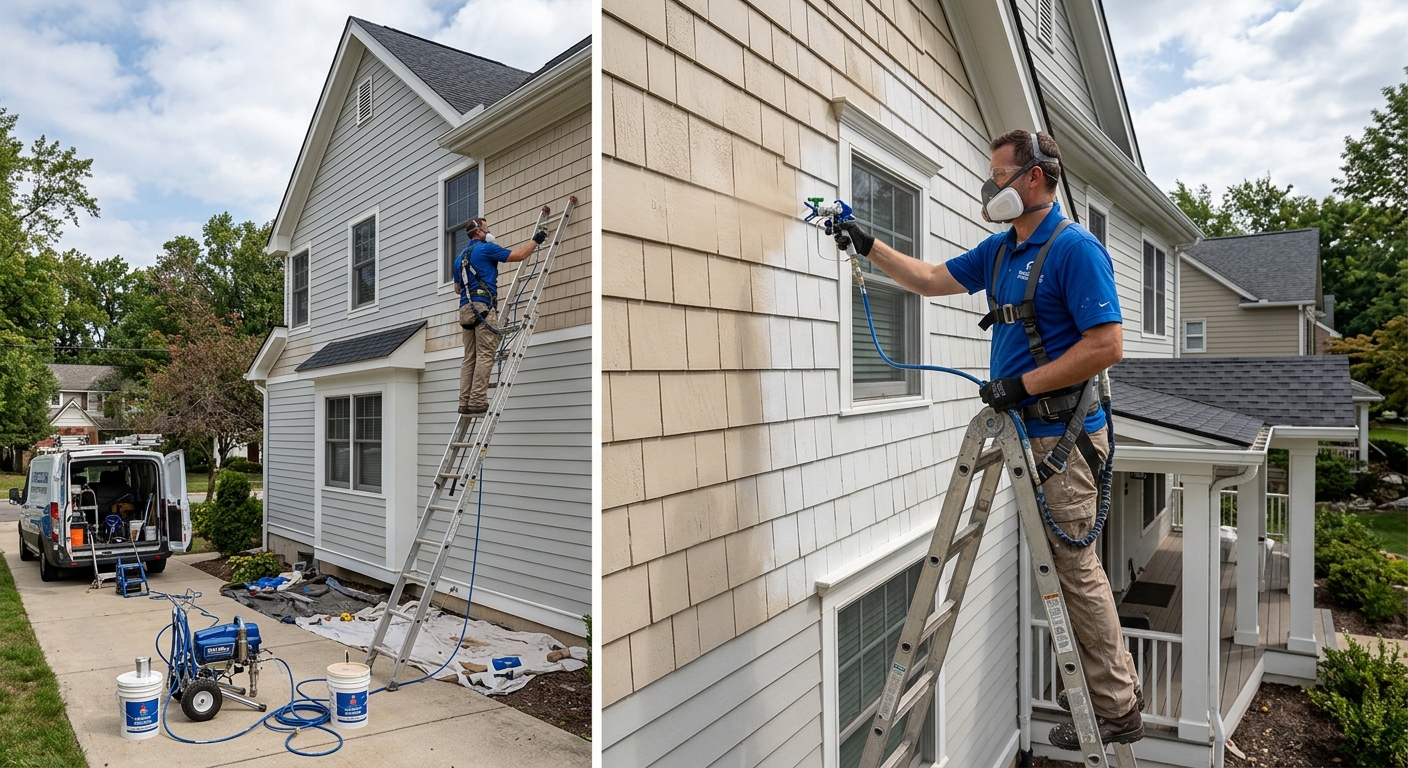
Painting options and costs in Playter Estates-Danforth
In Playter Estates-Danforth, the “right” paint option usually comes down to surface prep, the finish level you want, and how soon you can schedule work within the short exterior season. If your home is older—pre-1980 construction is common in Toronto’s neighbourhoods, and many owners are dealing with layered paint on trim, railings and older siding—budget for extra labour in scraping, sanding, patching, caulking and priming. That prep-heavy reality matters because older surfaces don’t hold paint the same way as newer drywall. In the area profile, Playter Estates-Danforth includes 7,804 residents (Statistics Canada, 2021 Census), and the smaller local homeowner pool can make “good scheduling windows” book up faster when demand rises.
Toronto’s exterior painting costs are strongly shaped by weather. Contractors typically work late May through June and again from September to mid-October, when temperatures are generally above about 10°C for at least 24–48 hours and humidity stays manageable for proper adhesion and curing. During June–August, peak demand plus limited ideal days often pushes exterior pricing up by roughly 10–15%. Interior painting is more flexible year-round, but labour still drives cost: masking, furniture movement, stairwells, and how detailed the trim and ceiling work needs to be.
In Playter Estates-Danforth—especially around the Coxwell Road corridor—exterior repainting tends to be in high demand as homeowners refresh older homes before summer events and after early fall weather settles. Next, here’s a practical cost comparison to help you map quotes to scope.
| Service |
What's Included |
Typical Duration |
Price Range |
| Interior — whole home (walls, ceilings, trim) |
Protect floors/furnishings, prep and patch, caulk where needed, prime as required, paint walls/ceilings, paint trim/doors (standard interior finish) |
5–10 days |
$1,800–$6,000 |
| Interior — per room (standard bedroom or living room) |
Prep and patch, prime as required, paint walls and ceiling, basic trim/door touch-ups (masking included) |
1–3 days |
$400–$1,800 |
| Exterior — full house (siding, trim, soffits) |
Wash/degrease, scrape/sand loose paint, caulk, prime bare spots as required, paint siding and trim, protect landscaping and windows |
2–3 weeks (weather-dependent) |
$3,000–$8,000 |
| Exterior — trim and accent colours only |
Prep and patch trim areas, caulk, spot-prime as required, paint trim/accents (siding left as-is) |
5–9 days |
$1,500–$4,500 |
| Kitchen cabinet painting (doors, frames, spray finish) |
Hardware removal, detailed sanding/deglossing, primer, high-durability topcoat (spray finish), reinstallation and light touch-ups |
7–15 days (including dry/cure) |
$1,200–$4,000 |
| Specialty / faux finish (accent wall, texture) |
Design consultation (as quoted), custom prep, base coats, specialty application, protective topcoat where required |
2–7 days |
$400–$3,800 |
Prices are estimates only and vary by project scope, site access and material selection.
What affects the price of painting in Playter Estates-Danforth
Homeowners in Playter Estates-Danforth often see quotes swing by 30–50% for what sounds like the same job. The biggest reason isn’t the paint colour—it’s the invisible work: surface prep, protection, access, repair level, and how coats are built (primer first, then two coats where required). Even two contractors using similar product brands can price differently if one includes deeper patching, additional priming, or better containment and cleanup practices.
Exterior costs in our region are tightly climate-bound. In the GTA, the practical window for exterior painting is roughly late May to early October, with temperatures generally needing to stay above about 10°C and remain stable long enough for proper curing and adhesion. Short “ideal weeks” concentrate demand, so exterior pricing can run about 10–15% higher in June–August compared to shoulder periods. In contrast, coastal BC often relies on mildew-resistant coatings and careful timing due to persistent dampness, while the GTA’s constraint is more about frost, rain showers and humidity spikes rather than year-round moisture.
Older homes also matter for cost. When you’re repainting, prep can become 50–70% of labour because contractors must scrape loose paint, sand edges, caulk gaps, and prime bare or weathered sections. On a typical exterior repaint, that can shift your estimate by hundreds of dollars depending on how much trim rot exists or how many patch areas show up once surfaces are opened up. If you’re trying to keep costs closer to the interior backbone band (for example, $400–$6,000), interior work stays more controllable year-round. For exterior, a “good weather” day helps, but if you’re in the full-house range (often $1,500–$8,000), expect the prep scope to decide whether you land near the lower or upper end.
Concrete examples from Playter Estates-Danforth: a small mid-century house with mostly intact siding and minimal caulking gaps usually prices closer to the trim-only side; a pre-1980 home with flaking railings, chalky trim edges, and multiple paint layers can push labour up quickly—even if the footprint isn’t large. Access also plays a role: narrow driveway placement and multi-storey elevations can add scaffolding or lift time, which is a real line item.
| Price Factor |
Why It Matters |
Cost Impact |
| Surface prep — scraping, sanding, patching drywall or wood |
Prep determines adhesion and smoothness; poor prep leads to peeling or flashing |
Often +20–60% versus minimal-prep scopes |
| Number of coats — 2-coat system over primer vs. 1 coat over existing |
Coverage and durability depend on correct layering, especially on stain-prone or patched areas |
Can swing labour/material by 10–25% |
| Paint quality tier — contractor-grade vs. premium (Benjamin Moore, Sherwin) |
Higher-quality coatings generally hide better and resist scuffing/staining longer |
Typically +5–20% for materials, but can reduce total coats |
| Ceilings and trim — adds significant time vs. walls-only |
Cutting-in, masking, and feathering around trim/edges is time-intensive |
Often +15–40% depending on finish details |
| Exterior season window — short season raises summer rates |
More scheduling pressure increases overhead and mobilization costs |
Commonly +10–15% in June–August |
| Lead-safe precautions — required for pre-1978 homes with lead paint |
Safe containment, wet methods, HEPA cleanup, and disposal increase labour |
Can add +5–25% if lead risk is confirmed or expected |
| Surface material — drywall vs. plaster vs. wood vs. stucco |
Each substrate requires different primers and preparation techniques |
Often +10–30% for specialty primers and prep |
| Height and access — multi-storey exterior requires scaffolding or lifts |
Access impacts safety, productivity, and time on ladders/scaffolds |
Can add +10–35% on exteriors |
Permits & regulations in Ontario
For most painting work in Ontario, you do not need a permit to paint residential interiors or exteriors. Painting is generally treated as a maintenance activity rather than a construction permit item, so you typically won’t see the process tied to municipal approvals. The main “regulatory” emphasis for professional contractors is safety and compliance—especially around lead-safe practices for older homes.
If your home was built before 1978, health guidelines recommend testing for lead paint before sanding or scraping, and using lead-safe work practices if lead is present (wet methods to reduce dust, HEPA vacuuming, proper containment and disposal). This is not automatically a homeowner permit requirement, but it is standard due diligence for professional crews in Ontario. In practice, a reputable contractor should be able to explain their lead approach (how they protect occupants and handle dust) and include it in the scope if pre-1978 materials are involved.
Also confirm the contractor carries liability insurance and has WSIB coverage for their workers (workers’ compensation). Before signing, require a written contract that spells out paint brand/line (and sheen), the number of coats per surface, and what surface prep is included (scrape/sand to sound edges, patching level, caulking, primer requirements, and cleanup).
How to verify, step-by-step: (1) Ask for proof of liability insurance and confirm the certificate is current. (2) Ask for proof of WSIB coverage and verify the account/coverage details. (3) Look for any licence/registration information the contractor should hold for their trade services through Ontario’s official contractor listings. (4) Request to see a sample contract outlining prep, materials, coats and exclusions. Keep everything in writing.
Interior vs exterior painting — getting the best result in Playter Estates-Danforth
In Playter Estates-Danforth, the difference between a paint job that looks great for years and one that fails early is almost always prep quality plus proper layering. Interiors are more forgiving than exteriors, but they still punish shortcuts. For interior walls, filling dents, sanding edges, cleaning residue, and priming stains or repairs matters more than chasing the most expensive topcoat. Sheen selection is also a durability lever: flat/“matte” hides wall imperfections but scuffs more; eggshell or satin typically performs better in living rooms and hallways; semi-gloss is commonly used on trim for washability. And in my experience, two coats over a properly primed surface outlast a single “heavy” coat because coverage becomes more uniform and adhesion stays consistent.
For exteriors, Ontario’s temperature swings and rain events make timing and prep non-negotiable. Scrape down to sound paint, sand feather edges, caulk before painting (not after), and ensure primer is appropriate for the substrate (and for bare spots). Acrylic latex topcoats usually dominate for siding and many exterior finishes, but the primer choice depends on whether you’re dealing with wood/fibre cement, previously painted surfaces, or problem areas. While BC projects often prioritize mildew-resistant products because dampness hangs around, the GTA’s failures are more commonly tied to water intrusion at caulk lines, poor adhesion from flaking paint, or painting when temperatures and curing conditions aren’t stable.
Cabinet painting is a budget alternative to replacement when the boxes and frames are structurally sound. However, it requires meticulous degreasing, sanding, and curing time for a durable sprayed finish—otherwise you’ll see peeling or dullness sooner than you expect. For pre-1978 homes, plan for lead-safe precautions during any scraping or dust-generating prep.
Dollar example: if an exterior trim-only refresh might land around $1,500–$4,500, but the siding shows widespread peeling and missing caulk, stepping up to a full-house scope can be justified because the cost of repeated touch-ups usually exceeds the savings. A well-prepped, two-coat system protects the whole envelope; “spot paint” doesn’t.
| Project Type |
Key Prep Step |
Recommended Coats |
Price Band |
| Interior — fresh drywall (new construction) |
Prime properly to seal drywall and prevent flashing |
Primer + 2 coats |
$1,800–$6,000 |
| Interior — repaint (good condition, no repairs) |
Clean, lightly sand sheen, spot prime if needed |
2 coats (spot prime where required) |
$1,000–$4,000 |
| Interior — repaint (patching and priming needed) |
Patch + sand smooth, prime repairs and stain-prone areas |
1 primer + 2 coats (repairs may need extra primer) |
$1,500–$5,500 |
| Exterior siding (wood or fibre cement) |
Scrape to sound paint, caulk, prime bare/suspect areas |
Primer as required + 2 top coats |
$3,000–$8,000 |
| Exterior trim and accents only |
Edge preparation + caulking for water-shedding |
Spot prime + 2 coats where exposed |
$1,500–$4,500 |
| Kitchen cabinets (spray finish) |
Degrease thoroughly, sand/degloss, prime for adhesion |
Primer + 2 finish coats |
$1,200–$4,000 |
How to choose a painting contractor in Playter Estates-Danforth
Choosing the right painter in Playter Estates-Danforth is mostly about verification and clarity. Start with insurance and coverage: ask for proof of liability insurance (a current certificate of insurance) and proof of WSIB coverage for their employees. If they can’t provide documentation promptly, that’s a serious problem—workmanship and cleanup still cost money, and you don’t want to guess who’s responsible if something goes wrong. For licensing, confirm what applies to their trade activities through Ontario’s official resources, then ensure the contractor’s details match the person on the quote and contract.
Next, get 2–3 written, itemised quotes. I strongly recommend you insist on a breakdown that separates labour from materials and identifies surface prep tasks and the number of coats by surface. A good quote will list what’s included (for example, pressure washing or scrubbing, scraping/sanding, caulking, priming of bare wood, protection of landscaping, and disposal) and what’s excluded. If they’re vague about prep, you’ll pay later in the form of peeling, blistering or patchy coverage.
Ask about warranty: workmanship coverage length, whether it’s tied to proper use and maintenance, and whether the manufacturer’s product warranty applies. Payment schedule should be conservative—never more than 10–15% upfront, then hold back a portion until cleanup and final walkthrough are complete.
Finally, demand a timeline in writing, including the start date, expected duration, and what weather contingency means for exterior work (Toronto’s summer humidity spikes and rain days can shift schedules).
- Verify liability insurance with a current certificate.
- Verify WSIB coverage for their workers (request confirmation/documentation).
- Confirm your quote includes surface prep specifics (scrape to sound edges, patch level, sanding and priming triggers).
- Require the paint brand/line and sheen level in writing.
- Check that caulking is included for exteriors before topcoats.
- Ask whether pressure washing/cleaning is included for siding and how it’s handled around plants/windows.
- Clarify disposal/cleanup: waste hauling, used materials removal, and final site cleaning.
- Ensure the quote states number of coats per area (and primer where required).
- Request a written timeline with weather contingency for exterior dates.
- Confirm workmanship warranty length and what it covers/excludes.
- Keep payment milestones limited: no more than 10–15% upfront; holdback until completion.
- Do a final walkthrough checklist (trim touch-ups, caulk lines, paint runs, and sheen consistency).
Red flags I see in Playter Estates-Danforth: quotes that don’t mention prep or caulking, “one-coat” promises over stained/peeled surfaces, inability to show insurance/WSIB paperwork, aggressive upfront payment requests beyond 10–15%, and no written warranty or vague scope language like “as needed” without details.
Frequently asked questions — painting in Playter Estates-Danforth
What's the difference between paint quality tiers?
Paint quality tiers mainly affect hide/coverage, how smoothly the paint levels, stain blocking, and how well the coating resists scuffs and cleaning over time. Contractor-grade products can be perfectly workable for many interior refreshes, but premium lines from brands like Benjamin Moore or Sherwin often provide better coverage—meaning fewer patch-visible differences and sometimes fewer coats. For exteriors in Playter Estates-Danforth, premium coatings can also help with long-term appearance because the topcoat holds up better against Toronto’s rain events and humidity spikes during the short late-May-to-October season. As a pricing reference, interior projects commonly fall within $400–$6,000, and paying a bit more for coating can be a trade-off if it reduces rework caused by inadequate coverage.
How do I compare painting quotes?
To compare quotes fairly in Ontario, match scope first, then compare price. Ask each contractor to specify surface prep tasks (scraping/sanding to sound edges, patching, caulking, and which surfaces get primed), the paint brand/line and sheen, and the number of coats by surface. If one quote includes primer on bare wood and another doesn’t mention priming, the cheaper option will usually fail sooner. For exteriors, confirm wash/cleaning methods and whether disposal and cleanup are included—these details often explain gaps in quotes. Use the regional price bands as a reality check: exterior full-house painting is commonly in the $1,500–$8,000 range depending on prep and access. If a quote is far outside that band without explaining more scope, question it.
What paint sheen should I use in different rooms?
Sheen choice affects both cleanability and how imperfections show. In most Playter Estates-Danforth homes, eggshell is a practical default for living rooms and bedrooms because it offers a softer look while handling everyday cleaning. Semi-gloss (or satin/low gloss depending on the product line) is typically best on trim, doors, and areas that get touched often because it resists scuffs. Kitchens and hallways benefit from slightly higher sheen on walls so you can wipe marks without dulling the finish. Ceilings often use flat/matte to minimize visible roller marks. The key is consistent sheen application—two-coat coverage over proper primer usually looks better than one thick coat. If your quote doesn’t include the sheen in writing, ask for it before work begins.
Can I paint my house exterior in spring or fall in Playter Estates-Danforth?
Yes—spring and fall can work well in Playter Estates-Danforth, as long as conditions support proper curing. In the GTA, exterior painting is typically best from late May through June and again from September to mid-October, when temperatures stay above about 10°C for at least 24–48 hours after application. Spring can be fine if the weather is stable and rain is minimal; fall can be excellent early on, but crews usually tighten scheduling as nights cool. The goal is adhesion and curing, not just “dry to touch.” If you want to avoid the June–August peak pricing pressure, shoulder-season timing can sometimes help your budget while still achieving long-lasting results—particularly when prep and caulking are done thoroughly.
How do I choose a painting contractor in Playter Estates-Danforth?
In Ontario, I recommend you choose based on verification plus written clarity. First, ask for proof of liability insurance and WSIB coverage for workers—then confirm the paperwork is current. Next, request an itemised quote with labour/material breakdown and explicit scope: prep work, priming triggers, caulking (especially for exteriors), paint brand/line and sheen, and the number of coats. Make sure there’s a written timeline and a workmanship warranty. A conservative payment schedule matters too—no more than 10–15% upfront, with holdback until the final walkthrough is complete. Use the local pricing bands as a check: if you’re in the exterior range of $1,500–$8,000 and the quote is wildly below that without explaining reduced prep, you should be cautious.
How many coats does an exterior repaint need in Playter Estates-Danforth?
Most exterior repaints require two topcoats for durability and even appearance, but the exact system depends on what you uncover during prep. In Playter Estates-Danforth, if the contractor scrapes to sound edges, repairs and caulks gaps, and primes bare or weathered sections, the typical approach is: primer as required plus two finish coats. If surfaces are severely failing, patchy, or staining is present, additional spot-priming may be needed before the final coats. Weather affects timing more than coat count: contractors need stable temperatures (around 10°C and rising) and enough time for curing, especially in the GTA’s humidity and rain patterns. If a quote promises “one coat for everything,” ask how they’ll achieve proper coverage and adhesion.