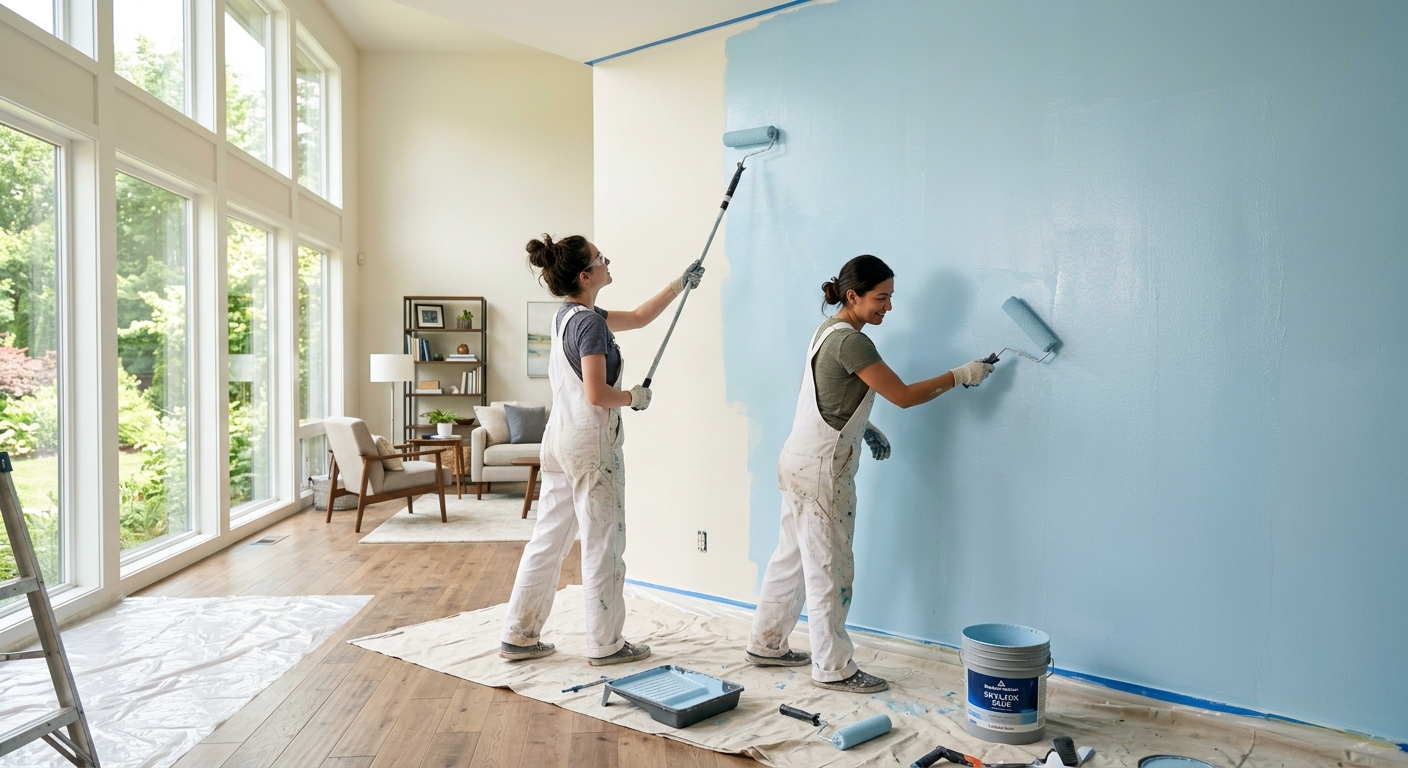
Painting options and costs in Palmerston-Little Italy
In Palmerston-Little Italy, Ontario, painting choices usually start with a simple question: what do you want to change, and how long do you need it to last? The neighbourhood’s housing stock includes many older properties—across the Toronto area, pre-1980 homes are common—so homeowners often pay more for prep: scraping, caulking, sanding, spot-priming, and sometimes lead-safe precautions where required for pre-1978 material. For context, the economic region’s population is 13,826 (Statistics Canada, 2021 Census), which helps explain why contractor availability and scheduling can be tight during peak weeks.
Toronto’s climate shapes exterior costs more than many people expect. Exterior work is typically concentrated in late May through June and again September to mid-October, when temperatures stay above about 10°C for proper adhesion and curing. In June to August, increased demand during short “ideal” windows often pushes exterior pricing up roughly 10–15%. That’s why two similar jobs in Palmerston-Little Italy can land at different totals even when the paint brand looks identical—surface condition, labour time, and scheduling are doing the heavy lifting.
In Palmerston-Little Italy, the trade is especially in demand around the core streets near the Little Italy area, where homeowners frequently update facades, porch rails, and trim as seasons shift. Below is a practical comparison of common services and what you can reasonably expect to pay before you compare individual quotes.
| Service |
What's Included |
Typical Duration |
Price Range |
| Interior — whole home (walls, ceilings, trim) |
Protect floors, mask, clean; fill/sand; prime as needed; paint walls/ceilings; caulk trim joints; paint doors/frames as specified; final cleanup and touch-ups |
5–10 days |
$2,200–$6,000 |
| Interior — per room (standard bedroom or living room) |
Patch and sand where needed; prime stained/porous areas; paint walls and one ceiling; caulk key trim gaps; basic prep and cleanup |
1–3 days |
$550–$1,800 |
| Exterior — full house (siding, trim, soffits) |
Power wash/clean; scrape loose paint; sand edges; caulk joints; prime bare wood/repairs; paint siding/trim/soffits; protect landscaping and hardware |
1–3 weeks (weather-dependent) |
$3,500–$8,000 |
| Exterior — trim and accent colours only |
Selective prep on trim/doors/rails; scrape and sand; prime where required; caulk; paint trim and accent areas; detail cleanup |
3–7 days |
$1,500–$3,800 |
| Kitchen cabinet painting (doors, frames, spray finish) |
Remove hardware; degrease; repair; sand/scuff; prime with cabinet-specific primer; spray finish (or equivalent); reinstall hardware; light touch-up |
5–12 days |
$1,200–$4,000 |
| Specialty / faux finish (accent wall, texture) |
Surface preparation; texture/faux application; 2–3 colour steps as applicable; sealing/clear coat where needed; cleanup and protection |
2–7 days |
$600–$3,500 |
Prices are estimates only and vary by project scope, site access and material selection.
What affects the price of painting in Palmerston-Little Italy
Across Toronto and Ontario, even “the same” painting job can come in 30–50% apart because quotes aren’t built on paint alone—they’re built on labour hours, risk, and prep requirements. A contractor’s approach to surface prep, how they handle older layers, and what they include (repairs, priming, caulking, disposal, protection) can change total cost dramatically. That matters in Palmerston-Little Italy because many homes are older, which means you’re more likely to see multiple paint layers, worn caulk lines, and repairs needed before a durable finish.
On the exterior, the season is tightly climate-bound in the Toronto region. In Ontario, the workable window for exterior painting is often late May to early October, when temperatures are high enough for application and the paint can cure properly above roughly 10°C for the necessary 24–48 hours. Contractors also run at higher rates in June–August because ideal conditions are limited and demand increases. Coastal BC may have a longer calendar, but frequent humidity and rainfall push costs toward higher-spec mildew-resistant systems and careful scheduling—Toronto’s challenge is less year-round dampness and more frost, rain, and humidity spikes.
In practice, older homes raise labour: scraping, sanding, patching and priming can represent 50–70% of total exterior repaint labour. For example, if bare wood is extensive, the job often shifts from an “accent trim” budget closer to the $1,500–$3,800 range into a full exterior repaint closer to $3,500–$8,000. Similarly, a siding job that requires scaffolding or lift time for multi-storey elevations will be priced higher even with the same paint quantity.
| Price Factor |
Why It Matters |
Cost Impact |
| Surface prep — scraping, sanding, patching drywall or wood |
Prevents peeling and blistering; poor prep causes early failure |
+20% to +50% depending on condition |
| Number of coats — 2-coat system over primer vs. 1 coat over existing |
Coverage and durability depend on proper layering and primer bond |
+10% to +30% |
| Paint quality tier — contractor-grade vs. premium (Benjamin Moore, Sherwin) |
Better solids/resin balance often improves hide and washability |
+5% to +20% |
| Ceilings and trim — adds significant time vs. walls-only |
Trim edges, profiles, and high ceilings require more masking and careful application |
+10% to +40% |
| Exterior season window — short season raises summer rates |
Scheduling pressure and weather delays increase labour risk |
+10% to +15% in peak months |
| Lead-safe precautions — required for pre-1978 homes with lead paint |
Extra controls slow prep when lead hazards are present |
+5% to +25% (project-dependent) |
| Surface material — drywall vs. plaster vs. wood vs. stucco |
Absorbency and adhesion needs differ by substrate |
+10% to +35% |
| Height and access — multi-storey exterior requires scaffolding or lifts |
Setup time and safety requirements increase labour cost |
+15% to +45% |
Permits & regulations in Ontario
For most residential painting in Ontario, you generally do not need a permit to paint the interior or repaint an existing exterior in the same general use. The bigger regulatory emphasis is on safety practices—especially for older homes. If your home was built before 1978, health guidelines recommend testing for lead paint before sanding or scraping, and using lead-safe work practices if lead is present. Professionals commonly use wet methods to reduce dust, HEPA-filter vacuuming, and proper containment and disposal. Homeowners aren’t always legally required to do lead testing themselves, but reputable contractors treat lead precautions as standard practice for pre-1978 material.
What does require attention from a contractor side is coverage and documentation. Confirm the contractor carries liability insurance and has WSIB (or WCB) workers’ compensation coverage for their painters. Also ask for a written contract that spells out paint brand and sheen, the number of coats, the prep scope (scrape/sand/prime/caulk/patch), and what’s included in disposal and cleanup.
To verify a contractor in Palmerston-Little Italy step by step, start with their Ontario licensing/registration information through the province’s business registry or the licensing search they provide (your contractor should be able to share their reference details). Next, request a certificate of insurance and confirm it lists the business entity performing the work. Finally, ask for proof of WSIB/WCB coverage and make sure the name matches the insured contractor—not just a general parent company. If they do lead-safe work, ask about their lead-safe procedures and how they handle waste.
Note: specific permit requirements depend on the type of work and any municipal conditions; when in doubt, ask your contractor to confirm in writing what (if anything) they need to pull.
Interior vs exterior painting — getting the best result in Palmerston-Little Italy
In Palmerston-Little Italy, the most common “premature failure” isn’t the topcoat—it’s the prep that came before it. Interiors generally fail slower than exteriors, but shortcuts show up as peeling around patches, flashing/streaking, or scuffed trim. For interior walls, filling and sanding before paint matters more than hunting for a premium brand. A proper primer under the right conditions helps older drywall and repaired areas accept paint evenly. Sheen choice also changes durability: flat or matte typically hides wall imperfections, but kitchens and hallways often need eggshell or satin for washability. A ceiling usually works best with a flat ceiling paint, while trim and doors benefit from satin or semi-gloss for cleanability.
On exteriors in Ontario, the rules are stricter because the coatings must survive freeze–thaw cycles, rain exposure, and humidity spikes. Caulking should be applied before painting so it seals and bonds correctly; re-caulking over dried paint can create leaks that pull moisture behind the system. Primer selection depends on the substrate—bare wood, previous coating types, and sometimes masonry/stucco compatibility. Unlike coastal BC (where mildew resistance and persistent dampness drive coating choices), Toronto’s timing and curing window are the bigger constraints; if a contractor paints when conditions won’t support curing, you can get adhesion issues and early failures.
Cabinet painting is a practical way to get impact without full replacement. If your cabinets are structurally sound, a spray-finish cabinet paint project often delivers a noticeable refresh for less than replacing cabinetry entirely—typically in the $1,200–$4,000 band depending on size and prep needs. And for pre-1978 homes, lead-safe precautions during sanding/scraping still apply on trim and older painted details, even when you’re only doing a small section.
| Project Type |
Key Prep Step |
Recommended Coats |
Price Band |
| Interior — fresh drywall (new construction) |
Prime porous drywall and sand smooth for an even surface |
Primer + 2 finish coats |
$1,100–$3,000 |
| Interior — repaint (good condition, no repairs) |
Clean/degloss as needed, spot prime only where required |
1–2 finish coats (often 2 for best uniformity) |
$550–$1,800 |
| Interior — repaint (patching and priming needed) |
Patch, sand, prime repaired areas to prevent flashing |
Primer + 2 finish coats (system-based) |
$900–$2,800 |
| Exterior siding (wood or fibre cement) |
Scrape loose paint, sand feather edges, prime bare spots, caulk properly |
Primer + 2 finish coats (system dependent) |
$3,500–$8,000 |
| Exterior trim and accents only |
Detail scraping/sanding on profiles and correct priming for bond |
Spot prime + 2 finish coats where colour change/coverage requires |
$1,500–$3,800 |
| Kitchen cabinets (spray finish) |
Degrease, sand/scuff thoroughly, cabinet-specific primer, controlled spray |
Primer + 2 finish coats (plus topcoat if specified by system) |
$1,200–$4,000 |
How to choose a painting contractor in Palmerston-Little Italy
Choosing the right painter in Palmerston-Little Italy comes down to verifying coverage, comparing written scopes, and making sure the quote matches the work you actually need. Start with Ontario licensing/registration: ask for the contractor’s business details and confirm they’re the legal entity performing the job. Next, request proof of liability insurance and make sure it’s current—then check the certificate lists the same company name you’re hiring. Finally, obtain confirmation of WSIB/WCB coverage for workers performing the job, not just a subcontractor’s paperwork. If they can’t provide these documents promptly, that’s a serious red flag.
Get 2–3 itemised written quotes with a labour + materials breakdown (prep tasks, number of coats, primer included?, caulking included?, and how surface condition is assessed). A fair quote should spell out what’s excluded—often things like lead testing, major repairs, window reglazing, or furniture moving beyond basic masking. Disposal should be included if they’re doing scraping and sanding. Ask about warranty: workmanship warranty length, whether product/manufacturer warranties apply, and whether warranties transfer if you sell your home.
Payment schedule matters. Never pay more than 10–15% upfront; hold back part of the total until the work is complete and you’ve done a walkthrough. Ask for a timeline with a start date and an estimated completion date in writing—especially for exterior work, since rain and temperature can shift plans mid-season.
- Ask for proof of liability insurance (current certificate).
- Confirm WSIB/WCB coverage matches the contractor’s business name.
- Require a written scope: prep, repairs, priming, caulking, coats, and sheen.
- Request a labour + materials breakdown, not a single lump sum.
- Confirm paint brand and finish lines (interior wall vs trim sheen).
- Ask how they protect landscaping, eavestroughs, and exterior hardware.
- Check whether disposal and cleanup are included (scrapings and debris).
- Verify their prep approach to older homes (scrape/sand/prime/patch).
- Ask about lead-safe process for pre-1978 homes if scraping is required.
- Get warranty terms in writing (workmanship and product coverage).
- Use a payment schedule with a holdback until completion.
- Ensure start/completion estimates are stated in the contract.
Red flags I commonly see in Palmerston-Little Italy include: quotes that don’t describe surface prep (just “paint and done”), refusing to provide insurance/WSIB documentation, unusually low pricing that skips priming or repairs, schedules that assume ideal weather for exterior work without contingencies, and contracts that don’t define the paint system (brand, sheen, primer, and number of coats).
Frequently asked questions — painting in Palmerston-Little Italy
What paint sheen should I use in different rooms?
In Palmerston-Little Italy, sheen choice is one of the biggest day-to-day differences you’ll feel, especially in Ontario homes where kitchens and entryways get heavy touch and cleaning. For most living rooms and bedrooms, an eggshell finish on walls balances washability with a soft look; bathrooms and kitchens often do better with satin for higher durability. Ceilings are typically best in a flat ceiling paint to minimize visible roller marks. Trim and doors usually perform well in semi-gloss for wipeability, especially around door handles. If your quote is coming in around the interior refresh range of $550–$1,800, ask whether they’re using the same sheen tier in all rooms—mismatched sheen can make touch-ups look patchy.
Can I paint my house exterior in spring or fall in Palmerston-Little Italy?
Yes, and fall is often a strong time in Ontario—if temperatures stay workable. In Palmerston-Little Italy, exterior painting is usually scheduled from late May into June, then again from about early September to mid-October, when conditions support curing (often needing sustained temperatures above about 10°C for 24–48 hours). Spring can work when the weather stabilizes, but early-season cold snaps and lingering damp can cause adhesion problems. Fall can be great because demand can ease versus peak June–August, but rain and humidity spikes can still interrupt the process. If you’re planning a full exterior repaint closer to $3,500–$8,000, book earlier in the season so delays don’t stretch prep beyond weather-safe timelines.
How do I choose a painting contractor in Palmerston-Little Italy?
Start by verifying coverage and paperwork—this protects you as a homeowner. In Ontario, you should ask for the contractor’s liability insurance certificate and proof of WSIB/WCB workers’ compensation, and make sure the business name matches the company doing the work. Next, get 2–3 itemised quotes that list prep steps (scrape/sand/patch/prime/caulk), number of coats, and product details (brand and sheen). Avoid lump-sum quotes that don’t explain what’s included. For older homes common in the Toronto area, ask how they handle surface prep and whether they follow lead-safe practices if pre-1978 lead paint is a possibility. A reputable contractor will also provide a written warranty for workmanship and a clear payment schedule—never more than 10–15% upfront.
How many coats does an exterior repaint need in Palmerston-Little Italy?
Most exterior repaints in Palmerston-Little Italy require a system-based approach: typically primer plus two finish coats, especially when there’s bare wood, heavy patching, or bonding needs after scraping. If the existing coating is firmly bonded and compatible, some projects may use two finish coats over appropriate primer spot-application, but one-coat coverage is usually where you start seeing patchiness and faster wear. The exact number depends on substrate (wood, fibre cement, stucco), colour change, and whether primer is required for adhesion. Because exterior work is weather-sensitive in Ontario, the contractor should also discuss curing time and how they handle days when rain or humidity delays progress—this scheduling risk is part of why exterior pricing often lands in the broader band of $3,500–$8,000.
What is the best primer for older Palmerston-Little Italy homes?
There isn’t a single “best” primer for every older home—primer choice depends on what you’re coating and what you’ve found underneath. For typical Toronto-area older properties (many pre-1980, and especially pre-1978 details), primers are selected for bonding to existing paint, sealing chalky surfaces, and preparing bare wood or repaired areas. If you have water stains or known staining, a stain-blocking primer is often necessary to prevent bleed-through. For exterior wood and trim, the primer system must match the substrate and the topcoat compatibility. For interior repairs, primer helps repaired drywall accept colour evenly and prevents flashing. The key is to require the contractor to name the primer in the written quote—if you’re comparing options around the $1,500–$3,800 exterior trim band, ask whether primer is spot-applied or full-coverage.
Should I paint or wallpaper my Palmerston-Little Italy home?
It depends on the condition of your walls and the finish you want. In many Palmerston-Little Italy homes, repainting is the safer baseline choice because it’s easier to correct uneven texture and patchwork, particularly on older drywall or plaster where prep can be inconsistent. Wallpaper can look amazing, but it adds labour around smoothing, aligning seams, and removing any old paper or adhesive properly—costs can rise quickly if the wall surface isn’t stable. If your goal is a cost-effective refresh, painting typically offers more predictable outcomes: you can choose washable sheens and spot-repair later without stripping an entire wall. If your budget is closer to $550–$1,800 for a single room, painting usually gives the best value. Wallpaper becomes more appealing when the wall is already very smooth and you want a specific pattern texture that paint can’t replicate.