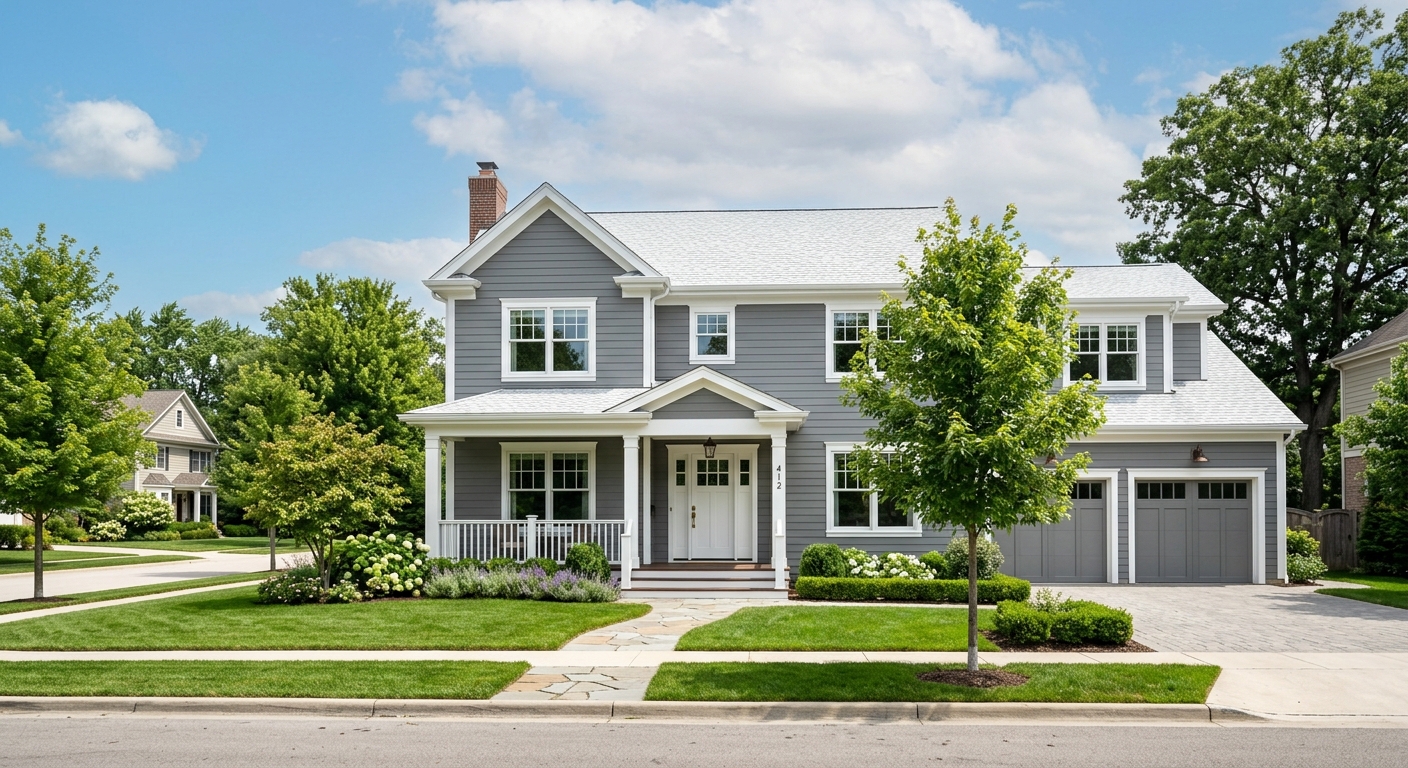
Painting options and costs in Millbrook
Painting in Millbrook, Ontario often feels straightforward until you compare options side-by-side. The biggest driver is usually not the “topcoat” choice—it’s how much preparation your home needs. Millbrook’s population is small (1,695 residents as of the 2021 Census), so reputable crews can get booked quickly when demand spikes. And across the Toronto economic region, a meaningful portion of housing is older, which typically means more labour for scraping, patching, caulking, and priming (often multiple paint layers). For homes built prior to 1978, contractors also plan around lead-safe practices when the risk is present—wet methods, HEPA vacuuming, and proper disposal—because older trim, windows, and railings can have paint that behaves differently when disturbed.
Exterior work is also shaped by local climate and scheduling. In the Greater Toronto Area, exterior painting is usually concentrated into a short, weather-dependent season—late May through June, then September into mid-October—when temperatures stay above about 10°C for proper adhesion and curing. In June–August, peak demand and limited “ideal” windows commonly push exterior pricing about 10–15% higher. That’s why you’ll often see more detailed prep line-items in summer quotes for siding and trim in established neighbourhoods like the Millbrook village area, where older homes are common and access is frequently tight.
Below is a practical comparison of typical scope, duration, and budget ranges so you can translate quotes into apples-to-apples decisions.
| Service |
What's Included |
Typical Duration |
Price Range |
| Interior — whole home (walls, ceilings, trim) |
Masking, wall washing (where needed), patching and sanding, caulking at trim, primer as required, 2-coat system on walls/ceilings, trim/door painting, site tidy-up |
5–14 days |
$1,800–$6,000 |
| Interior — per room (standard bedroom or living room) |
Preparation and repair of minor defects, 2-coat finish on walls, paint protection for floors and fixtures, basic trim touch-ups, disposal |
1–3 days |
$400–$1,200 |
| Exterior — full house (siding, trim, soffits) |
Power washing (as needed), scraping/sanding, caulking, spot-priming bare substrates, primer and 2-coat exterior system, paint protection, final cleanup |
1.5–4 weeks (weather-dependent) |
$1,800–$8,000 |
| Exterior — trim and accent colours only |
Surface prep on trim/soffits, spot-priming, 2-coat trim system, colour prep and masking, cleanup |
5–12 days |
$1,500–$5,000 |
| Kitchen cabinet painting (doors, frames, spray finish) |
Removal or protective covering, degreasing, sanding, bonding primer where required, sprayed finish for doors, hardware masking, reinstallation or return |
5–15 days (including dry/cure) |
$900–$4,000 |
| Specialty / faux finish (accent wall, texture) |
Surface prep, basecoat, specialty application (texture/faux steps), sealing clearcoat where required, touch-up and cleanup |
1–7 days |
$300–$5,000 |
Prices are estimates only and vary by project scope, site access and material selection.
What affects the price of painting in Millbrook
If two homeowners in Millbrook ask for “the same paint job,” the bids can still swing by 30–50% across the Toronto area because the scope of preparation, coatings, access, and scheduling is rarely identical. In labour-heavy projects—especially exteriors on older homes—surface prep can be the difference between a tidy repaint and a long-lasting system. In the Toronto economic region, the exterior season is tightly climate-bound: late May to early October, with temps ideally above 10°C for application and curing, and humidity that doesn’t spike too aggressively. Contractors can work through longer spans in shoulder months, but June–August demand tends to tighten availability, which is why exterior pricing can land toward the upper end of bands like $1,500–$8,000 for full exterior scopes.
Older housing stock across the region also matters. More prep can be 50–70% of total labour on a repaint because you’re scraping and sanding peeling areas, caulking joints properly, addressing cracks, and priming stained or bare sections. In practical Millbrook terms, that usually shows up as more labour where you have aged trim, window surrounds, and railings—especially on homes with multiple past paint layers.
Two local examples that raise costs: first, if your exterior has failing caulking around joints, we typically remove/replace caulk and then prime and paint—because painting over bad seals traps moisture and leads to faster failure. Second, tight access along the side yard may require lifts or careful ladder work, which adds time. The only time costs can come down is when a home is in good condition with stable substrate and minimal peeling; then you may land closer to the mid-range of $400–$6,000 for interior work, while exteriors with light prep may sit nearer the lower exterior band.
| Price Factor |
Why It Matters |
Cost Impact |
| Surface prep — scraping, sanding, patching drywall or wood |
Determines adhesion and smooth finish; older paint layers can require more labour |
High (often majority of labour on repaints) |
| Number of coats — 2-coat system over primer vs. 1 coat over existing |
Coverage and durability depend on substrate and colour change |
Medium to high |
| Paint quality tier — contractor-grade vs. premium (Benjamin Moore, Sherwin) |
Premium systems tend to cover more evenly and resist staining/scuffing better |
Low to medium (material cost, plus coverage efficiency) |
| Ceilings and trim — adds significant time vs. walls-only |
Ceilings require careful cutting-in and edging; trim needs extra sanding and caulking |
Medium |
| Exterior season window — short season raises summer rates |
Weather constraints concentrate demand and can extend the schedule |
Medium to high |
| Lead-safe precautions — required for pre-1978 homes with lead paint |
Special containment, wet methods, and HEPA vacuuming increase prep time |
Medium (sometimes higher for extensive disturbance) |
| Surface material — drywall vs. plaster vs. wood vs. stucco |
Absorbency and prep requirements differ by substrate |
Medium |
| Height and access — multi-storey exterior requires scaffolding or lifts |
Changes safety setup, set-up time, and pace |
Medium to high |
Permits & regulations in Ontario
In Ontario, painting itself generally does not require a permit for typical residential work. What can trigger regulatory attention is usually not “painting” but related hazards and building activities around it. For homes built before 1978, health guidelines strongly recommend that you treat sanding and scraping older paint as a potential lead-risk event. Professionals typically follow lead-safe work practices if lead is suspected or confirmed—wet methods to reduce dust, HEPA vacuuming, minimizing debris, and proper disposal—because this is what protects occupants and workers. While this isn’t typically a homeowner “permit” requirement, it is standard practice for professional contractors when lead is present.
What you should expect to be handled without special municipal permits includes: painting walls, ceilings, trim, soffits, siding, doors, and cabinet refinishing. What does require permits is not part of routine painting scope (for example, electrical work, structural changes, or major renovations that change building systems). For your painting contractor, the real compliance pieces are insurance and documentation.
To verify a contractor in Millbrook, Ontario step-by-step: (1) confirm they have proper Ontario licensing information listed in their business profile or contractor registry where applicable; (2) request a Certificate of Insurance showing liability coverage (and ask that it covers the project site); and (3) confirm WSIB/WCB workers’ compensation coverage with a clearance letter or active account confirmation. Also insist on a written contract that lists the paint brands, sheen levels, number of coats, and exactly what surface prep is included (washing, sanding, caulking, priming, and disposal).
Interior vs exterior painting — getting the best result in Millbrook
In Millbrook, the best paint job is the one that survives local weather cycles—so the prep and timing usually matter more than chasing the “most expensive” brand. Interiors fail early when homeowners or contractors rush patching and priming. For interior walls and ceilings, start with repairs: filling, sanding, and priming problematic areas so the finish topcoat doesn’t flash or look patchy. Sheen choice then controls how the paint performs in daily life: flat/eggshell on low-traffic ceilings and many bedrooms, satin for family rooms and hallways, and semi-gloss on trim for wipeability. The practical rule: two coats over proper primer is almost always more durable than one thick coat, because it builds an even film without hiding prep issues.
Exteriors fail early when caulking and substrate prep are treated like a quick step. In the GTA climate, proper exterior prep is critical because you’re working through humidity and rain risk in the warm months. We caulk before painting to prevent water ingress at joints, then prime bare or stained areas using the right primer type for the surface. Unlike coastal BC (where constant dampness and mildew risk drive mildew-resistant product choices), Millbrook’s main enemy is freezing/rain exposure and humidity spikes during the short season. That means choosing temperature-stable, adhesion-friendly coatings and sequencing work so surfaces are dry and stable for curing. For pre-1978 homes, lead-safe procedures may be required if older paint is disturbed around trim and railings.
Cabinet painting is often a smarter budget alternative to replacement: instead of a full kitchen remodel, a sprayed cabinet finish can deliver a dramatic refresh. If you’re comparing options, a cabinet project might fall in the $900–$4,000 range, while a full interior refresh for the same day-to-day impact could run $1,800–$6,000. The price difference is justified when you target high-visibility surfaces like cabinets and trim, without overextending the scope to every room.
| Project Type |
Key Prep Step |
Recommended Coats |
Price Band |
| Interior — fresh drywall (new construction) |
Seal/prime all joints and porous areas to prevent flashing |
2 coats topcoat over primer |
$1,200–$5,000 |
| Interior — repaint (good condition, no repairs) |
Light sanding and patch spot-priming only where needed |
2 coats |
$400–$3,500 |
| Interior — repaint (patching and priming needed) |
Proper fill/sand and spot-prime to unify sheen and absorption |
2 coats with primer for patches |
$800–$6,000 |
| Exterior siding (wood or fibre cement) |
Scrape/clean, caulk seams, prime bare or stained areas |
Primer + 2-coat system |
$1,800–$8,000 |
| Exterior trim and accents only |
Masking and careful prep on trim edges and caulk lines |
Spot prime as needed + 2 coats |
$1,500–$5,000 |
| Kitchen cabinets (spray finish) |
Degrease + adhesion primer, then sand for smooth spray laydown |
Primer + 2 coats (sprayed) |
$900–$4,000 |
How to choose a painting contractor in Millbrook
Choosing a painting contractor in Millbrook is mostly about verifying three things: insurance, coverage, and scope clarity. First, ask for liability insurance and review the Certificate of Insurance—make sure it lists your address or project as being covered and that the limits are adequate for residential work. Second, confirm WSIB/WCB workers’ compensation coverage (or a clearance letter showing active status). This matters because painting crews can be working on ladders, scaffolding, and in close proximity to windows and siding.
Next, request 2–3 itemised written quotes that separate labour and materials instead of one lump sum. The quote should break out surface prep (washing, sanding, scraping, caulking, patching), primer requirements, number of coats, and painting areas (for example, “siding and trim,” or “walls and ceilings,” not just “painting”). Read the exclusions: what’s not included for disposal, pressure-washing, lead-safe precautions, damaged wood repair, or replacing failing caulking?
On warranty, insist on both workmanship and product/manufacturer terms. Clarify whether the workmanship warranty is transferable if you sell the home. For payment, never agree to more than about 10–15% upfront; hold back a final portion until the job is complete and you’ve confirmed touch-ups. Finally, get the start date and completion estimate in writing—weather can affect exterior work, but the contractor should explain how they schedule around rain and temperature windows.
- Verify liability insurance with a current Certificate of Insurance.
- Confirm WSIB/WCB coverage with a clearance letter or proof of active account.
- Ask for a written scope: what prep is included (scrape/sand/caulk/prime) and what isn’t.
- Request paint brands and sheen levels (eggshell vs satin vs semi-gloss), not just “quality paint.”
- Ensure the quote states number of coats and whether primer is included.
- Confirm disposal is included for sanding debris, masking, and packaging.
- For pre-1978 homes, ask how they handle suspected lead-safe requirements (methods and cleanup).
- Get details on access: ladder-only vs lifts/scaffolding for multi-storey exterior work.
- Ask how they protect landscaping, windows, and trim edges (masking and coverings).
- Confirm cleanup standard: final walkthrough, touch-up process, and debris removal.
- Check warranty length for workmanship and whether it’s in writing.
- Agree on payment milestones: small deposit, progress payments, final holdback.
Red flags I see with less reliable painting contractors in Millbrook: (1) they won’t provide proof of WSIB/WCB or liability insurance; (2) they quote without explaining prep (just “we’ll paint”); (3) they start with a large upfront payment (beyond 10–15%); (4) vague warranty language or no written contract; and (5) pressure to choose paint on the spot without discussing sheen, coverage, or the number of coats.
Frequently asked questions — painting in Millbrook
How long does it take to paint a house?
In Millbrook and the GTA, timelines depend heavily on scope and weather—especially for exteriors. Interiors for a typical repaint can be completed in about 5–14 days for a whole home, since preparation, patching, and trim work take time even when walls are in good condition. For exterior painting, crews often aim for late May to June and again September to mid-October, when temperatures stay above about 10°C for curing and adhesion. Even with good scheduling, rain and humidity spikes can extend the calendar. As a budgeting guide, a full exterior range can sit around $1,800–$8,000, and higher scopes usually involve more prep time (scraping, caulking, priming) rather than faster painting.
What's the difference between paint quality tiers?
Paint quality tiers usually change coverage, durability, and how forgiving the product is during application. Premium lines (often sold through brands like Benjamin Moore or Sherwin) typically have better pigments and binders, which can improve hiding power and reduce the chance you’ll need extra coats to get an even finish. Contractor-grade products can work well, but you have to match them to the prep quality and substrate conditions, especially in Ontario’s temperature and humidity swings. For homeowners comparing quotes, don’t focus only on brand names—make sure your contract states the number of coats, primer inclusion, and surface prep steps. That’s where long-term results are made. Exterior scopes may land within $1,800–$8,000, and the biggest swings are often prep + coats, not just paint tier.
How do I compare painting quotes?
When comparing quotes in Millbrook, treat them like budgets for scope, not just totals. Ask each contractor for an itemised breakdown: labour for prep (washing, scraping, sanding, caulking, patching), primer coverage, and materials. Confirm the number of coats for every surface type (walls vs ceilings vs trim vs siding). A quote that’s cheaper may be assuming fewer coats, skipping primer, or excluding caulking and disposal. For exteriors, ensure they state how they handle weather dependencies in the short late spring-to-fall window around the GTA. Also verify insurance and WSIB/WCB coverage before comparing. If your interior quote is near $1,800–$6,000, compare whether it includes trim and ceilings, not just walls.
What paint sheen should I use in different rooms?
Sheen impacts cleanability, light reflection, and how patchiness shows. In Ontario homes, I usually recommend flat or ceiling paint for ceilings and many low-traffic areas, because it hides imperfections. For living rooms and hallways, eggshell or satin on walls is common—satin is more scuff-resistant and easier to wipe. Kitchens and areas with splashes typically do better with a higher-washability sheen like satin. Trim generally benefits from semi-gloss for wipeability and crisp edges. The key is matching sheen to prep quality: if patching and priming aren’t done well, higher sheen will reveal defects more strongly. Your quote should specify sheen in writing so you can compare fairly, especially when projects are priced within interior ranges like $400–$6,000.
Can I paint my house exterior in spring or fall in Millbrook?
Yes, but timing is everything in Millbrook’s GTA climate. Spring painting is often possible late spring, when surfaces can dry fully and temperatures are rising—typically late May into June. Fall work is commonly done again in September through mid-October, as long as temperatures remain above about 10°C for proper application and curing, and humidity doesn’t spike after the coat goes on. If you paint too early in spring or too late in fall, you risk poor adhesion, slow curing, and premature peeling. This is also why exterior pricing can run higher during June–August scheduling pressure—there are fewer “ideal” windows. For reference, full exterior budgets often fall in $1,800–$8,000, with prep and weather sequencing driving the end result.
How do I choose a painting contractor in Millbrook?
Start with verification and paperwork. Ask for liability insurance and proof of WSIB/WCB coverage, and request a written contract that includes paint brand, sheen, number of coats, and surface prep details. In Millbrook, homeowners should also ask how the contractor handles lead-safe precautions for pre-1978 homes if older paint is likely to be disturbed (wet methods, HEPA cleanup, and proper disposal). Then compare quotes using itemised scopes—not just the total. Make sure disposal and protection (floors, windows, landscaping) are included. Finally, confirm warranty: workmanship warranty length and whether product/manufacturer warranty terms are clear. If a contractor wants more than 10–15% upfront, refuses a final walkthrough, or won’t explain prep steps, treat it as a red flag.