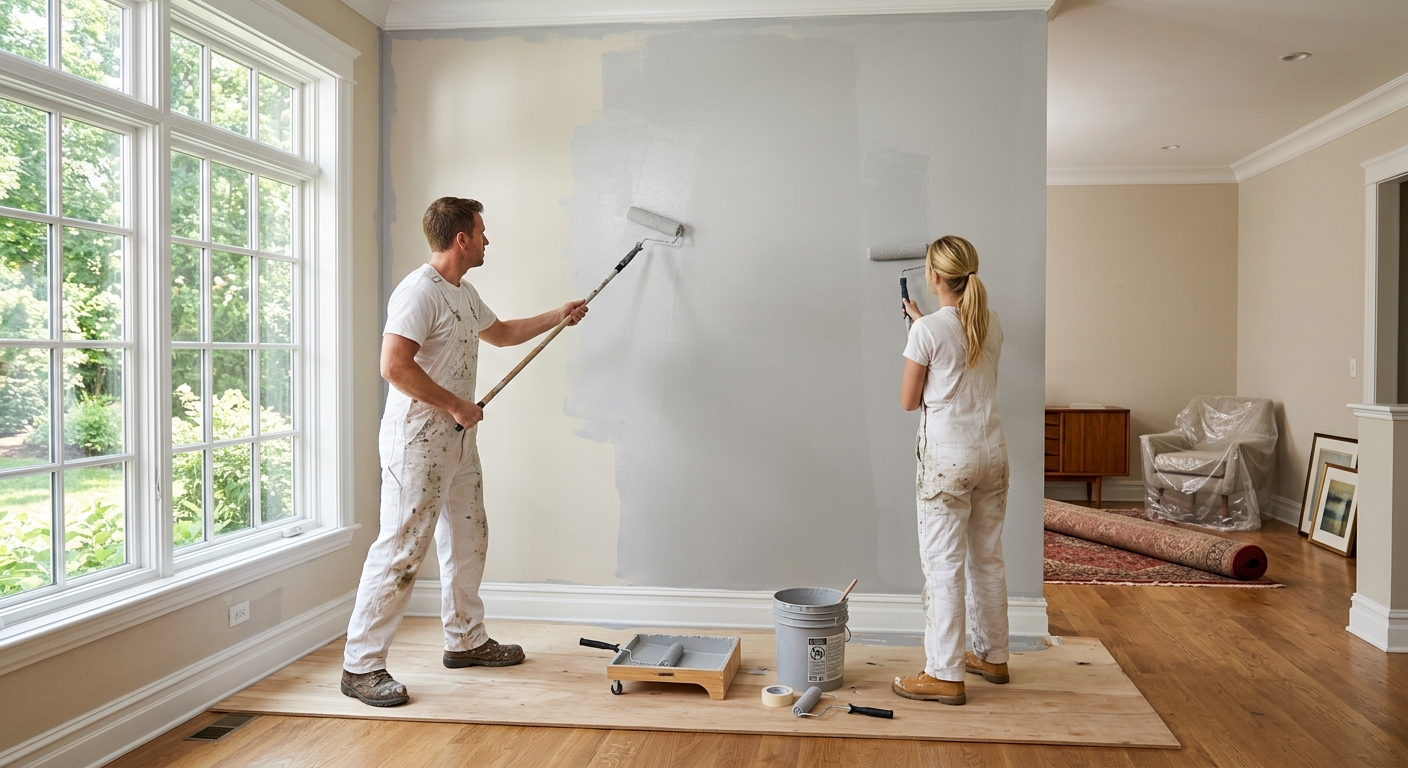
Painting options and costs in Laurentian Hills
In Laurentian Hills, choosing the right painting option is mostly about matching your home’s age and surface condition to a realistic schedule and budget. With 68.8% of homes in the area built before 1981 (Statistics Canada, 2021 Census), many projects start with the kind of prep older homeowners expect—scraping, patching, caulking, and priming—because the paint system has to bond to sound substrate. In a lot of pre-1981 properties, contractors also plan for lead-safe precautions when paint might contain lead, especially before sanding or aggressive scraping.
Costs in the Kingston–Pembroke market are shaped by a short, warm-weather exterior season, so exterior work often concentrates into a narrow window and can price higher when crews are fully booked. That means your availability and timing matter almost as much as your colour choices. If you’re looking for painters in demand, the trade is especially active around the downtown corridor and older residential pockets where repainting and trim refreshes commonly run together with seasonal maintenance.
Interior jobs generally have more scheduling flexibility, and whole-home repainting in Ontario commonly lands across a wide band depending on prep needs and whether ceilings and trim are included. Exterior pricing typically begins higher because prep and weather constraints pile up. Use the table below to estimate where your project may fall, then fine-tune the scope with itemised quotes.
| Service |
What's Included |
Typical Duration |
Price Range |
| Interior — whole home (walls, ceilings, trim) |
Surface inspection; filling/sanding as needed; caulking; primer where required; two-coat topcoat; masking/protection; cleanup; basic patch repairs |
5–10 days (average 3+ bedroom home) |
$2,500–$7,000 |
| Interior — per room (standard bedroom or living room) |
Prep and patching where needed; prime bare spots; two-coat wall coverage; ceiling as agreed; trim touch-ups as included in scope |
1–3 days per room |
$1,500–$3,500 |
| Exterior — full house (siding, trim, soffits) |
Power washing (where appropriate); scraping/sanding; caulking; spot-priming; full exterior two-coat system; protection from landscaping/fixtures; final cleanup |
1–3 weeks depending on height/condition |
$3,500–$10,000 |
| Exterior — trim and accent colours only |
Surface prep limited to trim areas; caulking/spot priming; two-coat coverage on trim/accents; protection and cleanup; no siding field work unless specified |
3–7 days |
$3,000–$7,500 |
| Kitchen cabinet painting (doors, frames, spray finish) |
Hardware removal; de-greasing; sanding/scuffing; bonding primer; cabinet topcoat; spraying/matched finish; re-install and light touch-up |
4–10 days including dry times |
$1,800–$4,500 |
| Specialty / faux finish (accent wall, texture) |
Surface prep; base coat(s); specialty glaze/texture materials; finish application; protection and careful edging |
1–5 days depending on complexity |
$2,000–$8,000 |
Prices are estimates only and vary by project scope, site access and material selection.
What affects the price of painting in Laurentian Hills
In Kingston–Pembroke, you can see the same “paint the house” request priced 30–50% differently across quotes, even when colour and square footage sound similar. The cause is usually the hidden parts of the work: how much prep is required, how many surfaces are included, and how the crew sizes and schedules around the weather window. In Ontario markets, interior repainting often fits somewhere within an interior range like $1,500–$7,000 depending on whether ceilings and trim are included and how many repairs are needed. Exterior repainting starts higher—often within $3,000–$10,000—because the application depends on temperature, drying time, and surface condition.
For exterior painting in this region, the season is tightly climate-bound. Crews typically aim for late May to early October when temperatures are reliably above 10°C and rising during application. Shorter seasons concentrate demand, so summer scheduling pressure can push labour rates up when crews are fully booked. By contrast, coastal BC generally has a longer window, but humidity and rainfall mean longer delays and more mildew-resistant systems. The result for Laurentian Hills homeowners is straightforward: if weather and prep line up, costs stabilize; if not, contractors price the risk and downtime.
Older housing stock also matters. With many homes built before 1981, peeling paint, poor caulking, and aged wood or masonry transitions frequently mean prep can be 50–70% of total labour on a repaint. A simple example: if your siding requires extensive scraping and multiple prime spots, an exterior job can move toward the upper end of the range instead of staying near the low thousands. If your trim is only lightly soiled and firmly adhered, you may keep costs closer to the mid-band. Material and surface type also swing pricing—drywall repainting is usually faster than plaster repairs, and wood and stucco need different primers and drying expectations.
| Price Factor |
Why It Matters |
Cost Impact |
| Surface prep — scraping, sanding, patching drywall or wood |
Bonding strength depends on sound material; worn paint layers must be removed or stabilised. |
Often +20–60% versus “paint over existing” assumptions |
| Number of coats — 2-coat system over primer vs. 1 coat over existing |
Most systems require primer plus two colour coats for durability and uniform sheen. |
+5–25% depending on primer needs and existing coverage |
| Paint quality tier — contractor-grade vs. premium (Benjamin Moore, Sherwin) |
Higher-tier paints typically offer better coverage, adhesion, and stain resistance. |
Materials may add +10–30%, sometimes reducing total coats |
| Ceilings and trim — adds significant time vs. walls-only |
Trim work demands masking, cut-ins, and cleaner edge control; ceilings require more protection and pace. |
+15–40% depending on number of levels and detail |
| Exterior season window — short season raises summer rates |
Demand spikes when weather cooperates; missed drying windows can force rescheduling. |
Can shift total by +10–25% on exterior jobs |
| Lead-safe precautions — required for pre-1978 homes with lead paint |
Professional lead-safe methods add labour, containment, and special cleanup. |
May add +5–20% where testing indicates lead or aggressive scraping is needed |
| Surface material — drywall vs. plaster vs. wood vs. stucco |
Different substrates need different primer systems and repair techniques. |
Can swing +10–35% depending on what’s underneath |
| Height and access — multi-storey exterior requires scaffolding or lifts |
Access tools and safety time increase labour and setup costs. |
Often +15–50% for tall or complex facades |
Permits & regulations in Ontario
In Ontario, painting typically does not require a permit for standard residential work. That said, there are important health and paperwork steps that protect both you and your contractor—especially in homes built before 1978, where lead paint may be present. For these properties, health guidelines recommend testing before sanding or scraping and using lead-safe work practices if lead is present. In practice, professional contractors follow wet methods, contain the work area, use HEPA-filtered vacuuming, and manage disposal correctly. These measures aren’t usually mandated for homeowners, but they are standard practice for professional crews because they reduce airborne risk and cleanup issues.
Also verify insurance and coverage before you sign anything. Confirm the contractor carries liability insurance and has WSIB or WCB workers’ compensation coverage for Ontario work. A written contract should specify the paint brand and sheen, the number of coats, and the surface prep included—especially what happens with peeling paint, failed caulking, or repairs.
What typically DOES require a permit isn’t “painting” itself, but work that changes building systems—like structural modifications, electrical/plumbing alterations, or any regulated work outside normal coating replacement. What typically does NOT require a permit is interior repainting, exterior repainting of existing surfaces, caulking replacement, and patching drywall for cosmetic restoration.
Step-by-step verification in Laurentian Hills:
- Ask for the contractor’s Ontario certificate of insurance (liability) and confirm the address matches your project and the coverage is current.
- Request WSIB/WCB clearance—either a recent certificate or clearance letter showing coverage status.
- Verify they provide a written scope and paint product list (brand, line, sheen).
- Ensure the contract includes surface prep boundaries and disposal responsibilities.
- Keep everything in writing: change orders, colour selections, and start/completion timing.
Interior vs exterior painting — getting the best result in Laurentian Hills
The difference between a long-lasting paint job and one that fails early in Laurentian Hills is almost always preparation and system fit, not just the topcoat name. For interiors, start with filling and sanding: pinholes, dents, and uneven patching will show through after the first dry coat. Priming matters too—especially over fresh patch repairs, water staining, or areas that previously had a different sheen or paint type. Sheen choice is also a durability tool: flat or matte is forgiving for low-traffic ceilings, while eggshell or satin on walls tends to balance washability and appearance. In higher-use rooms like kitchens and entryways, a satin or semi-gloss approach on trim and doors often holds up better than a flat sheen.
For exteriors, Ontario’s wet-dry cycles make caulking and surface prep non-negotiable. Cracked caulking lets water work behind the coating system. A proper exterior job includes scraping loose material, cleaning, priming bare spots, and installing caulking before the paint schedule—then allowing appropriate cure/dry time between coats. Primer choice depends on substrate; wood and weathered surfaces often need a bonding primer to reduce peeling later.
Cabinet painting can be a smart budget alternative to replacement when you want a refreshed kitchen without the disruption of new cabinets. If your cabinet frames and doors are solid and boxes are in good shape, painting can deliver a noticeable upgrade within the cabinet band of about $1,800–$4,500. The caution is prep: grease removal and sanding/scuffing must be thorough or the finish can fail quickly, especially around handles and high-contact edges.
In pre-1978 homes, lead-safe precautions should be part of the plan if sanding or scraping is likely, not an afterthought. A contractor who budgets time for containment, HEPA cleanup, and proper disposal is often worth the difference compared with a low bid that only “counts paint.”
| Project Type |
Key Prep Step |
Recommended Coats |
Price Band |
| Interior — fresh drywall (new construction) |
Prime drywall for uniform absorbency; fill/tape smoothing as needed |
Primer + 2 colour coats |
$1,500–$4,500 |
| Interior — repaint (good condition, no repairs) |
Light scuff/sand and clean; spot-prime only where required |
2 colour coats (primer only on bare spots) |
$1,500–$4,000 |
| Interior — repaint (patching and priming needed) |
Patch sanding + thorough spot priming of repairs and stain/odour areas |
Primer spots + 2 colour coats |
$2,500–$7,000 |
| Exterior siding (wood or fibre cement) |
Scrape loose paint, address failed caulking, prime bare substrate, and correct any moisture issues |
Primer where needed + 2 colour coats |
$3,500–$10,000 |
| Exterior trim and accents only |
Mask carefully and prep/prime trim edges to prevent peeling at joints |
2 colour coats (spot prime as required) |
$3,000–$7,500 |
| Kitchen cabinets (spray finish) |
Degrease and scuff for adhesion; bonding primer before spraying |
Primer + 2 finish coats (typical system) |
$1,800–$4,500 |
How to choose a painting contractor in Laurentian Hills
Choosing the right contractor in Laurentian Hills starts with proof, not promises. First, verify Ontario coverage: request a current liability insurance certificate and confirm WSIB/WCB workers’ compensation coverage for the painters who will be on your site. Where to look—ask for certificates directly, then review them for validity dates, named insured, and coverage limits. If anything is missing or unclear, treat it as a serious gap.
Next, get 2–3 itemised written quotes. You want a labour + materials breakdown, not a single lump sum. A good quote clearly lists prep work (scraping, sanding, patching, caulking, priming), the number of coats, and what’s included/excluded—especially for older homes where repairs can drive the difference between an interior job around $1,500–$7,000 and an exterior job approaching $3,000–$10,000. Make sure the quote states the paint line/brand and sheen, and whether disposal, protection, and cleanup are part of the price.
Warranty matters: confirm workmanship warranty length and what it covers (peeling, flaking, adhesion issues), plus the manufacturer warranty terms for the coatings. Also ask if the warranty is transferable if you sell the home. For payment, never agree to more than 10–15% upfront; hold back the remainder until the job is complete and final touches are done. Finally, get a start date and completion estimate in writing so summer scheduling pressure doesn’t leave you waiting after prep is already completed.
- Ask for their liability insurance certificate and confirm coverage is active.
- Request WSIB/WCB clearance for the workers assigned to your job.
- Ensure quotes list paint brand/line, sheen, and number of coats.
- Check scope for prep: caulking, primer types, and patching boundaries.
- Confirm whether power washing is included (and when it’s appropriate).
- Clarify disposal: old paint debris and masking removal responsibility.
- Review protection plan: floors, landscaping, fixtures, windows and lights.
- Get surface access details addressed (ladders vs. lifts/scaffolding).
- Ask how they handle lead-safe precautions for pre-1978 work.
- Confirm prep drying times and schedule sequencing between coats.
- Read the warranty language—duration, exclusions, and claim process.
- Agree on a payment schedule with a holdback until final walkthrough.
Red flags to watch for in Laurentian Hills: a quote that skips prep details and only quotes “paint and labour,” no written scope or paint line listed, refusal to provide WSIB/WCB or proof of liability insurance, payment demands above 15% upfront, and “we’ll decide on primer later” wording that can quietly change the system and durability.
Frequently asked questions — painting in Laurentian Hills
How long does it take to paint a house?
In Laurentian Hills, timelines depend on whether you’re doing interior only or a full exterior, plus how much prep is needed. For an interior whole-home repaint, many projects land around 5–10 days for average homes, assuming patching and caulking are included and dry times are respected. If ceilings and trim are part of the plan, add time for careful masking and cut-in work. Exterior jobs are more variable because the Kingston–Pembroke season is tightly weather-bound; crews often need late May to early October conditions and can lose days if rain or cool nights delay drying. A full house exterior commonly runs 1–3 weeks on older properties, where scraping and priming can take longer.
What's the difference between paint quality tiers?
Paint quality tier affects coverage, adhesion, stain resistance, and how many coats you truly need. Contractor-grade paints can be budget-friendlier, but premium lines (such as Sherwin or Benjamin Moore tiers contractors often recommend) typically offer better hiding power and more consistent sheen after curing—especially important on patched drywall or when changing from a darker to lighter colour. That can reduce rework and the likelihood of “flashing” (uneven tone) between old and new areas. In practice, quality tier can be one reason quotes differ within the same $1,500–$7,000 interior band or the $3,000–$10,000 exterior band. The best comparison is to evaluate prep scope and the listed paint line, not just the final total price.
How do I compare painting quotes?
To compare painting quotes in Ontario (including Laurentian Hills), start by matching scope line-by-line. Look for prep inclusions: scraping and sanding depth for exterior, caulking replacement, primer requirements for bare or stained areas, and how patching is handled for interiors. Then compare the number of coats and the paint line/brand and sheen—flat, eggshell, satin, or semi-gloss can’t be treated as equivalent. Quotes that land close in total cost can still differ drastically if one includes ceilings and trim and the other doesn’t. Also confirm whether labour includes masking, furniture moves, and cleanup/disposal. Finally, ensure insurance and WSIB/WCB coverage are provided, and that the contract states start/completion dates and a warranty. If one quote jumps far outside the typical band, ask what prep or materials are missing.
What paint sheen should I use in different rooms?
Sheen selection in Laurentian Hills depends on how the room is used and how easily surfaces get cleaned. Ceilings are commonly finished with flat or matte because it hides minor imperfections and reduces glare. For bedrooms and living rooms, eggshell is a popular wall choice because it’s easier to clean than flat while keeping a softer look. Kitchens, hallways, and areas with frequent contact often do better with satin on walls and semi-gloss on trim for durability. Bathrooms and mudrooms typically benefit from moisture-resistant systems where appropriate, but sheen still matters—choose a product designed for those conditions. If your quote includes trim painting, ask whether trim sheen will be semi-gloss or another washable finish; otherwise you can end up with walls that wipe well but trim that scuffs quickly.
Can I paint my house exterior in spring or fall in Laurentian Hills?
You can paint outside in spring or fall in Ontario, but timing is the limiting factor, and it’s more strict in Kingston–Pembroke than homeowners expect. Exterior work generally needs temperatures above about 10°C and rising during application, plus adequate drying time between coats. In spring, crews may wait until surfaces are dry and weather is stable; in fall, cool evenings and damp mornings can delay cure and increase the risk of streaking, poor adhesion, or early failure. That’s why many contractors focus exterior schedules roughly late May to early October. If you’re working with older homes (many built before 1981 in the region, Statistics Canada, 2021 Census), the prep—scraping, caulking, priming—also needs reliable drying windows for primers and sealants to bond properly.
How do I choose a painting contractor in Laurentian Hills?
Start with verification: ask for liability insurance and WSIB/WCB coverage and review the certificates before work begins. Next, request 2–3 itemised quotes that clearly list prep work, primers, number of coats, and the paint brand/line and sheen. In older Laurentian Hills homes, make sure the scope accounts for scraping, caulking, priming, and any lead-safe approach if lead testing is indicated for pre-1978 paint layers. Confirm warranty terms for workmanship and whether product warranties apply as expected. Payment should be conservative—never more than 10–15% upfront—with a holdback until you complete a walkthrough. For cost realism, compare against typical bands: interior whole-home painting often falls within $1,500–$7,000, while exterior work commonly sits around $3,000–$10,000 depending on prep and complexity. If a contractor can’t explain the scope clearly, that’s usually the biggest warning sign.