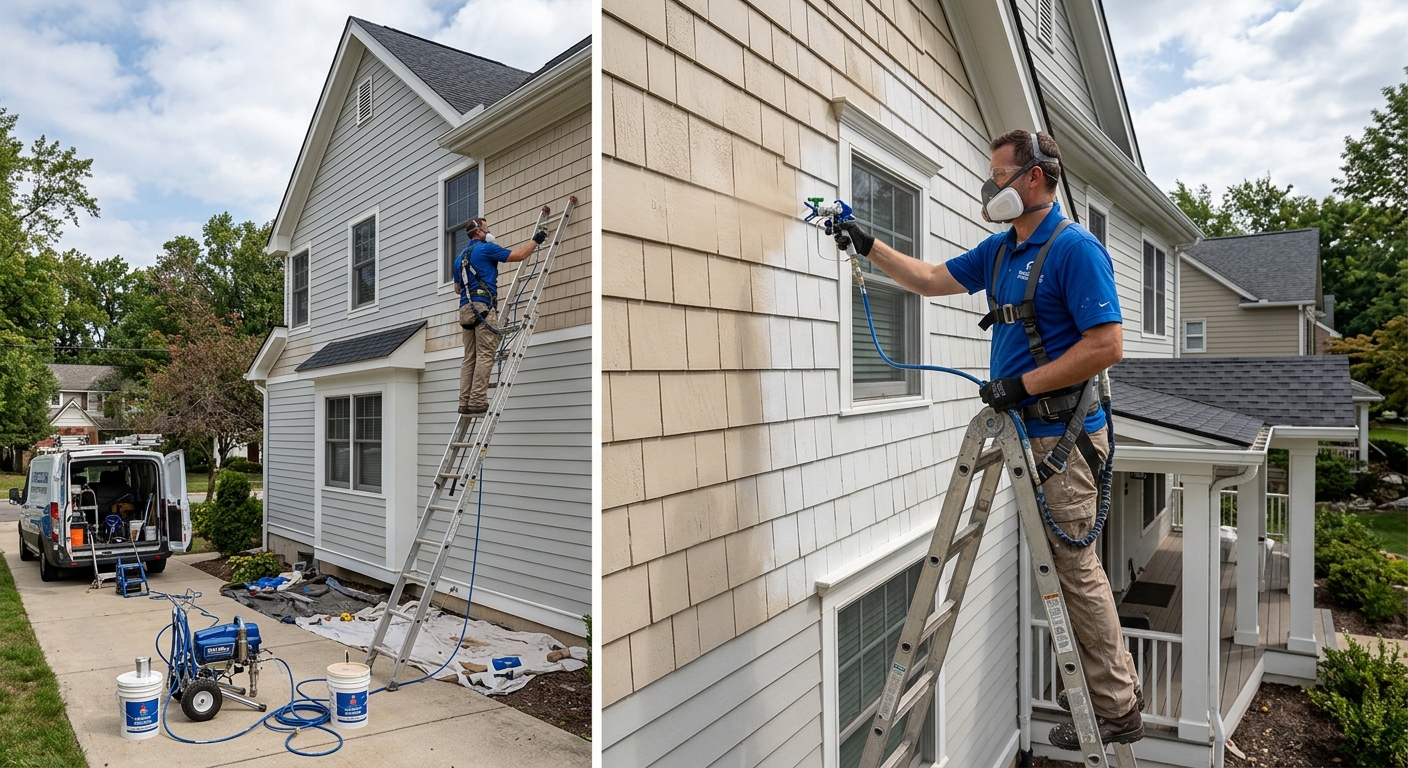
Painting options and costs in Humewood-Cedarvale
Painting in Humewood-Cedarvale usually comes down to what you’re updating (interior comfort vs. exterior protection), how much prep your surfaces need, and how tight the local weather window is for exterior work. In Toronto’s housing stock, many properties are older—around this area you’ll frequently see pre-1980 characteristics, which often means more labour for scraping, sanding, patching, caulking, and priming. For context, Humewood-Cedarvale has a population of 14,365 (Statistics Canada, 2021 Census), and that density helps keep trade availability steady, but it also means summer schedule pressure when crews are booked for exterior jobs. If you’re dealing with trim, railings, or window surrounds that have been repainted multiple times, costs rise quickly because prep time becomes the biggest line item.
In the GTA, exterior painting is tightly bound to a short season—typically late May through June and again September into mid-October—when temperatures stay above about 10°C for proper curing and adhesion. Between job demand in June–August and the reality of rain/humidity spikes, many contractors price with that risk in mind. By contrast, interior painting can be planned year-round, so interior quotes are less sensitive to the calendar and more sensitive to surface condition, ceiling height, and how detailed the finish work is.
Below are practical starting points you can compare between contractors for common Humewood-Cedarvale projects. Use them to sanity-check proposals before you sign a contract.
| Service |
What's Included |
Typical Duration |
Price Range |
| Interior — whole home (walls, ceilings, trim) |
Surface prep, patching where needed, caulking, priming of repairs/stains, 2-coat system on walls/ceilings, paint for door/trim surfaces based on condition, dust control and clean-up |
5–14 days |
$2,200–$6,000 |
| Interior — per room (standard bedroom or living room) |
Prep and protection, patching/sanding as needed, prime repairs, 2 coats walls; trim/door touch-ups based on scope |
1–3 days |
$400–$1,200 |
| Exterior — full house (siding, trim, soffits) |
Inspection, scrape/sand as required, caulking, spot-priming, full exterior paint system, protection of landscaping/hardscape, basic clean-up |
2–5 weeks (weather-dependent) |
$3,800–$8,000 |
| Exterior — trim and accent colours only |
Detailed prep on trim, caulking, prime where bare/sanded, paint accents, protection and clean-up |
1–2 weeks |
$1,500–$4,200 |
| Kitchen cabinet painting (doors, frames, spray finish) |
Hardware handling, degrease, sanding/scuffing, primer and multiple topcoats, spray finish for doors, reassembly and touch-up |
1–2 weeks |
$2,000–$4,000 |
| Specialty / faux finish (accent wall, texture) |
Surface prep for special effect, basecoat, finish coats, protective topcoat as needed, limited area coverage |
2–7 days |
$600–$2,800 |
Prices are estimates only and vary by project scope, site access and material selection.
What affects the price of painting in Humewood-Cedarvale
In Humewood-Cedarvale, two quotes for what sounds like the same paint job can still differ by 30–50% because labour swings more than materials do. Contractors don’t just “paint”—they remove failing coatings, prep substrates to stop future peeling, manage dust, protect landscaping, and work around temperature and humidity constraints. On exterior jobs, availability also matters: the GTA’s exterior window is relatively tight (late May to early October, with temperatures above about 10°C for reliable curing), so ideal scheduling weeks can be limited in June–August, pushing summer pricing up by roughly 10–15% versus shoulder season.
Prep is where older homes change the math. Many pre-1980 properties typically have more paint layers, tougher adhesion, and more damaged caulk joints, so scraping/sanding and priming can represent 50–70% of labour on a repaint. That’s why a “trim-only” scope might start around $1,500–$4,200, while a full exterior can land closer to $3,800–$8,000—not because the paint cost is higher, but because the preparation and detailing effort expands across the whole envelope.
Here are a few concrete Humewood-Cedarvale examples that move price up or down: (1) If your siding has blistering or chalking, expect extra scraping and primer adhesion testing, often adding several days. (2) If downspouts splash onto trim, caulking and paint system alignment become critical—good prep adds cost now to prevent repeat failures. (3) If your exterior includes multiple gables or multi-storey elevations, scaffolding or lifts increase labour and set-up time. Interior pricing is steadier year-round, but ceilings and heavy trim packages still drive labour; a whole-home refresh in the upper part of the $2,200–$6,000 range is often tied to detailed trim and ceiling work, not paint “upgrade” alone.
| Price Factor |
Why It Matters |
Cost Impact |
| Surface prep — scraping, sanding, patching drywall or wood |
Prep determines adhesion; poor prep leads to peeling and blistering |
Often +10–35% (major driver on repaint jobs) |
| Number of coats — 2-coat system over primer vs. 1 coat over existing |
Coverage and uniformity depend on substrate and stain/colour changes |
Often +5–20% depending on colour change and repairs |
| Paint quality tier — contractor-grade vs. premium (Benjamin Moore, Sherwin) |
Higher-tier coatings can improve hide, washability and long-term durability |
Materials may change +2–15% of total project |
| Ceilings and trim — adds significant time vs. walls-only |
Cutting in, masking, and detailed finishing increase labour |
Often +10–30% on whole-home scopes |
| Exterior season window — short season raises summer rates |
Weather-dependent curing and peak scheduling affect labour allocation |
Typically +10–15% in June–August |
| Lead-safe precautions — required for pre-1978 homes with lead paint |
Safe handling reduces exposure risk during scraping/sanding |
May add +5–25% if lead-safe controls are necessary |
| Surface material — drywall vs. plaster vs. wood vs. stucco |
Different materials need different primers and prep methods |
Commonly +5–20% for difficult substrates |
| Height and access — multi-storey exterior requires scaffolding or lifts |
Set-up, safety, and labour productivity are affected |
Often +10–40% on tall/multi-level exteriors |
Permits & regulations in Ontario
In Ontario, painting generally does not require a building permit—so you typically don’t need approvals to paint interior walls, ceilings, or standard exterior surfaces like siding and trim. Where pre-1978 homes come into play is health and safety: while a homeowner is not legally required to test before repainting, health guidelines strongly recommend lead-paint testing or, if lead is suspected, using lead-safe work practices before sanding or scraping. For professional contractors, safe methods (for example, wet methods during dust-generating prep, HEPA-filtered vacuuming, and proper disposal/containment) are standard practice when lead is confirmed or likely.
Work that DOES require permits is uncommon for painting alone. Permits usually become relevant only if your painting scope is paired with structural, envelope changes, or other regulated trades. For your checklist, focus on hiring standards rather than a permit.
Before work starts in Humewood-Cedarvale, verify three things step-by-step:
- Ontario licensing: many painting contractors in Ontario are not “licensed” the way some trades are, but reputable businesses should still be identifiable and insured, and may provide business registration details on request.
- Liability insurance: ask for a current Certificate of Insurance naming you as the certificate holder if possible.
- WSIB/WCB coverage: request proof of workers’ compensation coverage for their employees (or their coverage status documentation).
- Written contract: ensure it specifies paint brand/line, sheen (where relevant), number of coats, surface prep inclusions, and what happens if weather delays exterior curing.
If you want the simplest route, ask the contractor to email proof documents before signing, then keep copies with your signed contract.
Interior vs exterior painting — getting the best result in Humewood-Cedarvale
To get a long-lasting finish in Humewood-Cedarvale, focus less on the “topcoat name” and more on whether the job is built for Ontario’s conditions. For interior spaces, surface prep is the foundation: filling and sanding imperfections, properly priming stains (water, smoke, tannin bleed), and spot-priming repairs before the final colour. Sheen selection also matters because it affects how walls hold up to daily use—flat paint hides wall flaws but is less forgiving to scrubbing; eggshell/satin are commonly better for family rooms and hallways; semi-gloss or satin is typically used for trim, doors, and higher-touch areas. A proper primer plus two coats over it generally outlasts one thick coat, because coverage and film build are more even.
For exteriors, Ontario’s failure points are usually workmanship and timing: inadequate caulking, incomplete surface cleaning, and paint applied when conditions won’t support proper drying/curing. Caulk should be applied before painting to ensure joints are sealed and to reduce water ingress behind trim. Primer choice matters by substrate—different systems are needed for bare wood, weathered surfaces, and previously painted coatings. Unlike coastal BC (where mildew-resistant products and persistent dampness drive most decisions), the GTA’s pressure is frost, rain events, and humidity spikes during the season. That’s why contractors schedule around temperature stability and plan coverage when rain won’t wash coatings.
Cabinet painting is often the best value alternative to replacement: if your boxes are solid and the doors are the main issue, you can refresh with a spray-style finish. But if cabinet frames are warped or hardware alignment is off, painting won’t fix underlying problems—prep time rises and so does cost.
Budget example: if a full exterior is priced near $3,800–$8,000, it’s usually not worth “cutting” prep to save a few hundred dollars. In contrast, trim accents only can be a meaningful improvement at $1,500–$4,200 when the bulk of the siding coating is still sound—so long as the prep and caulking at interfaces are done properly.
| Project Type |
Key Prep Step |
Recommended Coats |
Price Band |
| Interior — fresh drywall (new construction) |
Prime drywall properly and address joint compound sheen differences |
2 coats topcoat (after primer) |
$900–$2,400 |
| Interior — repaint (good condition, no repairs) |
Clean, light scuff/sand, caulk minor cracks, spot-prime any inconsistencies |
1–2 coats topcoat (typically 2 for uniformity) |
$400–$1,200 |
| Interior — repaint (patching and priming needed) |
Sand edges of patches and prime repairs before colour coats |
2 coats topcoat (primer + 2 for repaired areas) |
$600–$1,800 |
| Exterior siding (wood or fibre cement) |
Scrape failing coating, sand edges, caulk joints, and prime bare spots |
2-coat exterior system |
$3,800–$8,000 |
| Exterior trim and accents only |
Detail prep on trim edges, prime bare/sanded areas, caulk before paint |
2 coats on primed/sanded areas |
$1,500–$4,200 |
| Kitchen cabinets (spray finish) |
Degrease thoroughly, scuff/sand for adhesion, prime for bond |
Primer + 2–3 topcoat passes (system-dependent) |
$2,000–$4,000 |
How to choose a painting contractor in Humewood-Cedarvale
Choosing a contractor in Humewood-Cedarvale is mostly about proof and clarity. First, verify insurance and coverage: request a current Certificate of Liability Insurance (and confirm the project address and coverage amount), plus documentation that their workers are covered by WSIB/WCB (or their coverage status paperwork). If they can’t provide proof quickly, treat it as a risk—especially on exterior work where falls and scaffolding lift set-ups raise exposure.
Next, get 2–3 itemised written quotes, not lump sums. Ask for a breakdown that separates labour for prep/caulking/sanding, paint/material line items, and waste/disposal fees. Scope matters: make sure the quote states what’s excluded (for example, power washing, rot repair, window caulking replacement, drywall patching beyond a certain number of locations) and whether disposal of peeling paint chips is included.
Warranty should be in writing. Look for workmanship warranty length, what it covers (for example, blistering caused by adhesion failure due to prep), and whether product warranties are directly from the manufacturer. Also ask whether the warranty is transferable if you sell your home.
Payment schedule: never pay more than 10–15% upfront. Hold back until the job is complete and cleaned. Finally, request a start date and an estimated completion window in writing, especially for exteriors where rain or temperature dips can push curing times.
- Ask for proof of liability insurance before work begins (not after).
- Confirm WSIB/WCB coverage for employees and subcontractors if they use any.
- Require an itemised quote: labour, materials, prep, paint system, and disposal.
- Check the quote for “surface prep” scope (scrape/sand depth, patching limits, priming rules).
- Clarify whether they include caulking (and which joints/areas).
- Confirm number of coats and sheen/finish levels by room and surface type.
- Ask about lead-safe approach if your home is pre-1978 (testing recommendation or controls).
- Get a timeline in writing, including weather contingencies for exterior work.
- Verify cleanup expectations (dust control, tarping, floor protection, final wipe-down).
- Demand paint brand/line names and product tiers—avoid “generic paint” wording.
- Use a payment schedule with a holdback until touch-ups and final inspection.
- Ensure warranty terms are specific and in the contract (not just verbal).
Red flags to watch for in Humewood-Cedarvale: (1) “We’ll skip primer” or “one coat is enough” without explaining the substrate; (2) reluctance to show insurance/WSIB/WCB paperwork; (3) no itemised scope for prep and caulking; (4) vague timelines with no weather-plan for exterior curing; and (5) large upfront payments (more than 10–15%) before any measurable work is complete.
Frequently asked questions — painting in Humewood-Cedarvale
Can I paint my house exterior in spring or fall in Humewood-Cedarvale?
Yes, both spring and fall can work in Humewood-Cedarvale, provided temperatures support proper drying and curing. In the GTA, exterior painting is typically most reliable from late May through June and again from September into mid-October when conditions are warmer and stable. Contractors generally look for temperatures above about 10°C for at least 24–48 hours after application and moderate humidity so the film cures evenly. Spring can be fine once steady warmth returns, while fall projects should be scheduled early enough to finish before nights drop. Pricing often differs: summer demand can push exterior work higher by roughly 10–15%, while shoulder-season dates may be slightly more favourable if weather cooperates. For a realistic budget, many full exterior repaint scopes land in the $3,800–$8,000 band depending on prep and access.
How do I choose a painting contractor in Humewood-Cedarvale?
Start by verifying insurance and coverage—ask for a current Certificate of Liability Insurance and proof of WSIB/WCB coverage for workers. Then request 2–3 itemised quotes so you can compare prep labour, caulking, priming, and the specific paint system (brand/line, sheen, and coat count). In Humewood-Cedarvale, prep is often the differentiator on older homes, so be cautious of quotes that treat scraping/sanding as “minor” unless they’ve inspected the surfaces in person. Read the scope for exclusions (for example, rot repair, extensive drywall patching, power washing, and paint-chip disposal). Finally, look for a written warranty for workmanship and a realistic schedule that accounts for GTA weather. If you’re comparing budgets, the exterior “trim-only” option can be around $1,500–$4,200, while a full house repaint often sits closer to the $3,800–$8,000 range.
How many coats does an exterior repaint need in Humewood-Cedarvale?
In Humewood-Cedarvale (GTA climate), most exterior repaints are done as a 2-coat exterior system. The exact approach depends on what’s under the existing coating and how much bare/primed surface you create during prep. If the contractor is stripping or scraping down to wood/fibre cement and prime spots are required, those areas should receive the correct priming coverage and then two topcoats overall for a consistent film thickness. If there are repairs and patching, spot priming is typically followed by the same topcoat system to blend sheen and colour uniformly. Avoid contractors who promise “1 coat” to save time—adhesion and uniform coverage can fail, especially after rain/humidity spikes in the short exterior season. As a ballpark, full exterior jobs commonly fall into $3,800–$8,000 where prep and the 2-coat system are properly included.
What is the best primer for older Humewood-Cedarvale homes?
For older homes in Ontario—especially pre-1978 properties—the “best primer” isn’t one universal product; it’s the right primer for the substrate and for what you’re sanding through. If existing paint is intact, sound and compatible, the prep may be less aggressive and the primer strategy might be limited to spot-priming. If you’re encountering bare wood, chalky coatings, or weathered areas, contractors often use primers designed for bonding to that condition and for sealing tannins or stains. In addition, if lead paint is suspected, the job should be approached with lead-safe practices (dust control and safe disposal) before any sanding or scraping. Your contractor should explain primer selection based on inspection results and surface condition—this is a key part of getting the adhesion that prevents peeling. Where budget is a factor, don’t cut primer to reduce cost; prep and primer choices are major drivers of how long a job lasts.
Should I paint or wallpaper my Humewood-Cedarvale home?
In Humewood-Cedarvale, painting is usually the safer, more flexible choice for most homeowners, especially if you have varying wall conditions or older plaster/drywall repairs. Paint makes it easier to control sheen and touch up future scuffs, and repainting can be scheduled year-round indoors. Wallpaper can look great, but it demands very consistent wall flatness and strong adhesion—so any cracks, patches, or moisture issues can show through later. Painting also tends to be easier to maintain around outlets and stairwells where scuffs happen. If you’re considering a textured or faux effect, paint can mimic many high-end looks without the seams. Practically, compare your finish goal to your budget: an interior “per room” paint scope often falls around $400–$1,200, while specialty finishes can be higher depending on labour and materials.
How do I fix peeling exterior paint in Humewood-Cedarvale?
Peeling exterior paint in Humewood-Cedarvale is usually a sign of an adhesion or moisture issue, not just a cosmetic problem—so the fix must start with the cause. The typical approach is to scrape off all loose material back to sound edges, sand to feather the transitions, and then clean the surface so primer can bond. Next comes caulking: joints and trim edges must be sealed before painting to reduce water ingress. If the coating has chalked or is poorly adhered across larger areas, it may require broader prep and appropriate primer for that substrate. If your home is pre-1978, treat dust control seriously; lead-safe practices are standard professional procedure when lead is suspected or found. Expect a full 2-coat exterior system after prep. Because peeling repairs often expand based on what’s found underneath, pricing commonly reflects prep time—full exterior repaint budgets frequently sit around $3,800–$8,000.