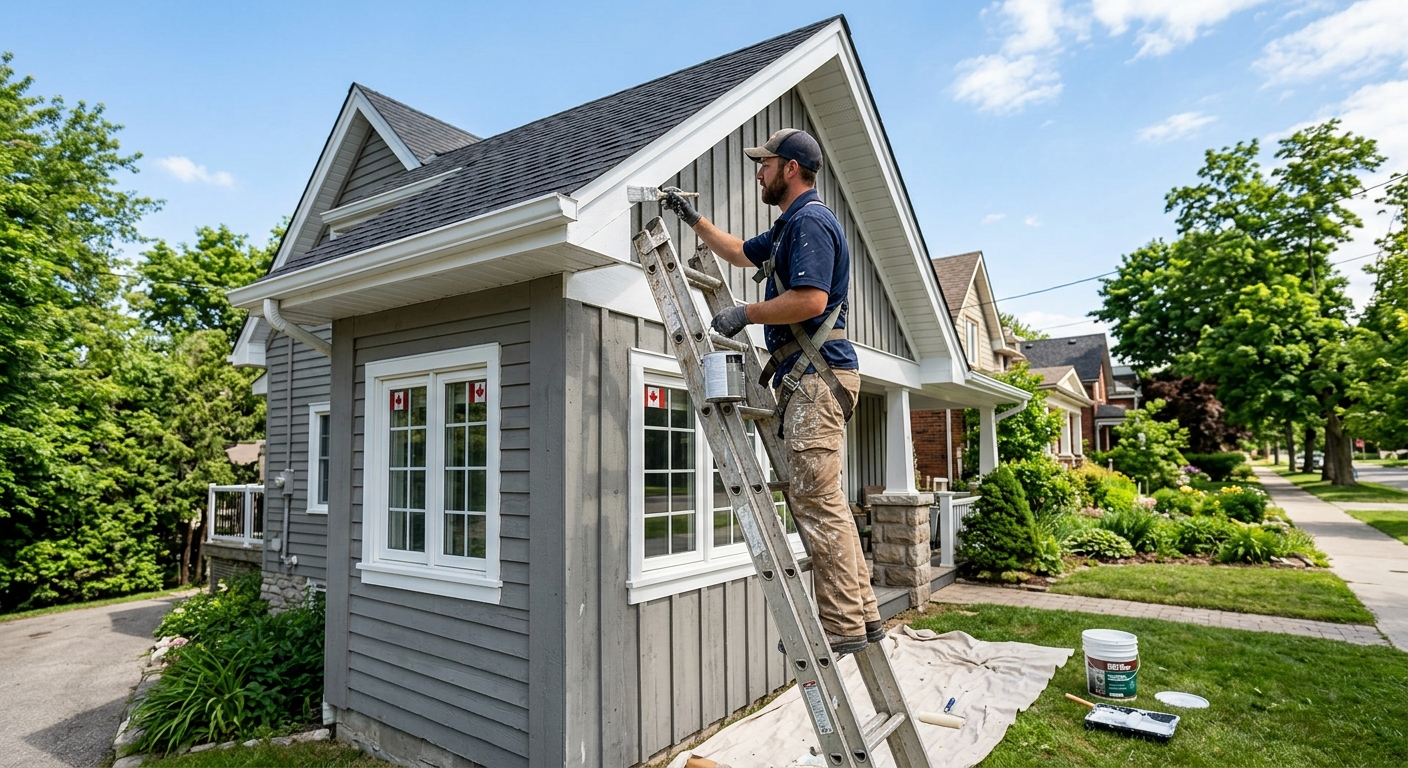
Painting options and costs in East End-Danforth
In East End-Danforth, painting choices usually start with how much prep your home needs. Toronto’s East End includes a significant mix of older housing—while the profile shows East End-Danforth has a total population of 21,381 (Statistics Canada, 2021 Census)—many of the occupied homes that contractors service are older than a typical new-build schedule, and that often means more scraping, patching and priming before any finish coat goes on. For pre-1978 properties, pros also plan for lead-safe work practices if there’s a chance of lead paint, especially on trim, windows and railings.
Cost is also shaped by the GTA’s tight exterior weather window. In practice, contractors in the area tend to work late May through June and again from early September to mid-October, when temperatures stay above about 10°C for proper adhesion and curing over 24–48 hours. Demand spikes in June–August, and that can push exterior pricing roughly 10–15% higher than off-peak weeks. Interior work is less season-sensitive, but labour still drives the budget: stairwells, high ceilings, masking around furniture and the finish level you choose.
Trade demand is especially steady around Greektown and the Beaches fringe of East End-Danforth, where owner-occupied homes often get refreshed before busy spring and summer listings. Next, use the comparison chart below to benchmark what different scopes typically cost before you request itemised quotes.
| Service |
What's Included |
Typical Duration |
Price Range |
| Interior — whole home (walls, ceilings, trim) |
Protect floors/furniture, patching and sanding (as needed), prime repaired areas, caulking, 2-coat finish on walls/ceilings, paintable trim finish, colour change included if specified |
5–12 business days |
$2,200–$6,000 |
| Interior — per room (standard bedroom or living room) |
Prep and protect, patch/spot prime as needed, 2-coat finish on walls, option for trim touch-up or full trim paint (as scoped) |
1–3 business days |
$400–$1,500 |
| Exterior — full house (siding, trim, soffits) |
Pressure wash (or appropriate cleaning), scrape/sand as needed, caulking, prime bare spots, 2-coat exterior system, paint trim/soffits/eaves (scoped), cleanup and site protection |
2–5 weeks (weather dependent) |
$3,500–$8,000 |
| Exterior — trim and accent colours only |
Clean, spot scrape, prime as required, caulk where specified, 2-coat trim/accent finish, limited coverage (no full siding resurface) |
1–2 weeks |
$1,500–$4,500 |
| Kitchen cabinet painting (doors, frames, spray finish) |
Degrease, disassemble where practical, sand scuffing, prime (adhesion primer), spray finish doors/drawers, brush/roll finish on frames, hardware masking, reinstall |
5–15 business days |
$2,000–$4,000 |
| Specialty / faux finish (accent wall, texture) |
Surface preparation and level correction as needed, primer where required, texture/faux technique, protective clear (if specified), colour-matching trial where practical |
2–7 business days |
$800–$2,800 |
Prices are estimates only and vary by project scope, site access and material selection.
What affects the price of painting in East End-Danforth
In East End-Danforth and the wider Toronto region, it’s common to see quotes for what sounds like the “same job” differ by 30–50%. The gap is usually preparation and sequencing: one contractor prices only topcoats, while another includes detailed surface prep, primer selection, caulking, repairs and realistic curing time. Labour rates in a busy Toronto market also intensify the difference—when crews are booked, exterior schedules compress into the most workable weeks, so minimum labour mobilization costs get baked into the quote.
Exterior painting is tightly climate-bound in the Toronto Economic Region. The practical window for exterior work runs roughly late May to early October, when temperatures are above about 10°C and stay stable long enough for paint to bond and cure. In coastal BC, contractors can paint longer, but high humidity and frequent rainfall often increase mildew-risk controls and extend waiting times. In the GTA, the limiting factors are frost, rain and humidity spikes, which is why a short season can push rates 10–15% higher in June–August.
Older housing stock across the area increases prep. On repaint projects, surface preparation—scraping, sanding, patching, caulking and priming—can represent 50–70% of total labour. For example, a basic interior refresh might sit near the interior band (starting around $400–$6,000 depending on size and prep), but an exterior repaint can jump into the upper exterior band once you factor in multiple paint layers, wood rot repairs and the need for a reliable primer system (commonly $1,500–$8,000 for typical house scopes). As a rule of thumb for Toronto: more peeling and blistering equals more time, and more time equals cost—especially on multi-storey fronts where access is slower.
| Price Factor |
Why It Matters |
Cost Impact |
| Surface prep — scraping, sanding, patching drywall or wood |
Paint won’t stick to failing coatings or loose material; good adhesion depends on correct removal and repairs |
Can add 20–60% vs. “paint only” assumptions |
| Number of coats — 2-coat system over primer vs. 1 coat over existing |
Coverage and durability depend on hiding power and uniform sheen/colour |
Often $300–$1,500 depending on area and primers |
| Paint quality tier — contractor-grade vs. premium (Benjamin Moore, Sherwin) |
Premium products can improve coverage and longevity, reducing rework risk |
Typically $150–$600 more in materials, potentially offset by fewer coats |
| Ceilings and trim — adds significant time vs. walls-only |
More cutting-in, masking, and brushwork plus extra protective labour |
Can increase interior jobs by 15–35% |
| Exterior season window — short season raises summer rates |
Weather readiness and crew scheduling drive minimum mobilization costs |
Often 10–15% higher in June–August for similar scopes |
| Lead-safe precautions — required for pre-1978 homes with lead paint |
Wet methods, HEPA cleanup and proper disposal add labour and materials |
Can add $300–$2,000 depending on scope and condition |
| Surface material — drywall vs. plaster vs. wood vs. stucco |
Different substrates require different primers and prep approach |
May add 10–30% depending on coating condition |
| Height and access — multi-storey exterior requires scaffolding or lifts |
Safe access increases setup time and sometimes rental costs |
Can add $400–$2,500 for front elevations |
Permits & regulations in Ontario
In Ontario, painting work itself typically does not require a building permit. Where permits can come into play is not “regular painting,” but work that overlaps with other regulated scopes (for example, structural repairs, enclosure changes, or work that triggers additional municipal requirements). For most homeowner repainting or colour changes, the usual path is straightforward: plan the prep, protect surfaces, and complete the finish system correctly.
For homes built before 1978, health guidance commonly recommends testing for lead paint before sanding or scraping. If lead is present, standard lead-safe practices include wet methods to reduce dust, HEPA vacuuming, containment where needed, and proper disposal of debris. While this isn’t typically something homeowners must legally execute themselves, professional contractors in Ontario commonly follow these procedures as standard practice to manage risk.
Before you book a crew in East End-Danforth, ask for three key documents: (1) proof of liability insurance, (2) proof of workers’ compensation coverage (WSIB or equivalent workers’ compensation coverage), and (3) a written contract. Your contract should clearly spell out the paint brand and sheen (or finish), the number of coats, the specific prep included (caulking, sanding, priming, spot repairs), and what happens at the end (cleanup/disposal).
To verify coverage: check your contractor’s liability certificate of insurance (ask for a current COI naming your property if applicable), confirm WSIB/WCB account status via their documentation, and ensure the written scope aligns with what they’re actually pricing. For licences/registrations, use the appropriate provincial/industry search links listed by the contractor and confirm the business details match the quote and invoice.
Interior vs exterior painting — getting the best result in East End-Danforth
The difference between a long-lasting paint job and a premature failure in East End-Danforth comes down to surface prep discipline and the right product/coat system for the environment. For interiors, prep beats brand every time. Filling, sanding and priming repaired or stained areas are what prevent flashing and peeling. Sheen selection matters by room: flat is forgiving for ceilings, eggshell works well for many living areas, satin is durable on walls, and semi-gloss is often best on trim because it’s easier to wipe. Two coats over proper primer typically outlast one thick coat—especially when you’re changing colours or covering repairs.
Exteriors live under Ontario’s temperature swing and frequent rain events. That makes caulking before painting essential: good caulk coverage helps stop water ingress behind trim and along joints. Primer choice also changes the outcome. A correct primer for wood/fibre cement and properly primed bare spots improves adhesion and reduces bleed-through. Unlike coastal BC, where mildew-resistance and persistent dampness heavily influence product selection, the GTA’s main external risks are rain, humidity spikes and winter freeze-thaw cycles that show up as blistering if prep is rushed.
Kitchen cabinets are a smart budget alternative to replacement when you want a quick, high-impact upgrade. If the box is sound, cabinet painting (typically spray-finished doors) can deliver a clean look while controlling cost. For pre-1978 homes, lead-safe precautions on trim and high-touch surfaces remain an important planning step.
Here’s a realistic cost example: if exterior trim refresh is scoped as accents only, you might land in the trim/accent band (often $1,500–$4,500). Trying to “stretch” the budget by skipping prep—especially on peeling areas—can lead to early failure and end up costing close to full-house repaint pricing later (often $3,500–$8,000 once the substrate is properly corrected). Doing the prep once is usually cheaper than doing it twice.
| Project Type |
Key Prep Step |
Recommended Coats |
Price Band |
| Interior — fresh drywall (new construction) |
Seal/prime new drywall thoroughly to ensure uniform absorption |
1 primer + 2 finish coats |
$900–$3,500 |
| Interior — repaint (good condition, no repairs) |
Light scuff sanding and cleaning; spot-prime only if needed |
1–2 finish coats depending on coverage |
$400–$2,000 |
| Interior — repaint (patching and priming needed) |
Patch, sand, and prime repairs to prevent flashing/colour mismatch |
2 finish coats (over spot primer) |
$800–$3,500 |
| Exterior siding (wood or fibre cement) |
Scrape failing edges, address repairs, and prime bare/affected areas |
2-coat exterior system (primer included where required) |
$3,500–$8,000 |
| Exterior trim and accents only |
Caulk joints and spot-prime before finishing to stop water tracking |
2-coat trim/accent finish (primer where needed) |
$1,500–$4,500 |
| Kitchen cabinets (spray finish) |
Degrease and adhesion-prime; proper sanding between coats |
Primer + 2 top coats (system dependent) |
$2,000–$4,000 |
How to choose a painting contractor in East End-Danforth
Choosing a contractor in East End-Danforth is mostly about proof and precision, not just price. Start by verifying liability insurance: ask for a current certificate of insurance (COI) and confirm it’s active. Next check workers’ compensation coverage—your contractor should provide proof of WSIB (or equivalent workers’ compensation coverage) coverage. For the job itself, ensure the quote and contract reflect the scope they’re selling: prep work, surface repairs, caulking, primer selection, number of coats, and cleanup/disposal.
Get 2–3 itemised written quotes rather than one lump sum. Ask for a labour + materials breakdown (even if materials are a credit-based allowance), and require them to list the paint brand and sheen/finish, prep steps, and what’s excluded (for example, removal of storm windows, restoration of rotting wood beyond a set allowance, lead testing, or replacing damaged siding). Disposal should be spelled out, particularly if sanding generates extra debris.
Warranty matters. Ask for a workmanship warranty length and whether it covers peeling/flaking related to application errors, plus any manufacturer warranty tied to the product. Confirm if the warranty is transferable if you sell your home.
Payment should be conservative. Never pay more than 10–15% upfront; hold back a portion until the job is complete and you’ve inspected the finish in good daylight. Also insist on a written timeline: a start date and realistic completion estimate, especially for exterior work where rain can shift the schedule.
- COI copy for liability insurance (active dates)
- WSIB/WCB coverage proof
- Written scope: prep, repairs, caulking, primer and coat counts
- Paint brand + sheen/finish clearly stated
- Itemised labour vs materials breakdown
- Exclusions listed (power washing, repairs beyond allowance, lead testing)
- Protection plan: tarping, masking, floor protection
- Cleanup and debris/disposal method described
- Schedule includes weather contingency for exteriors
- Workmanship warranty in writing
- Payment schedule with ≤10–15% deposit
- Final inspection walkthrough and touch-up process documented
Red flags in East End-Danforth include: quotes that mention “2 coats” but skip prep details; no written warranty or vague “guarantee”; inability/unwillingness to show COI and WSIB paperwork; asking for most payment upfront; and promising to paint exteriors regardless of temperature/rain conditions without discussing curing time and weather delays.
Frequently asked questions — painting in East End-Danforth
How many coats does an exterior repaint need in East End-Danforth?
In East End-Danforth (Toronto area), most exterior repaints are done with a 2-coat exterior system for the finish, plus primer on bare or problem areas. If your existing coating is well-bonded, coverage might still require two finish coats to get uniform hiding and consistent sheen, especially after repairs and colour changes. If there’s peeling, blistering, or exposed substrate, additional primer and careful spot treatment are needed before the finish coats. Pricing commonly reflects this prep reality—typical exterior full-house repaint scopes often land in the $3,500–$8,000 band, depending on access, repairs and how much prep is required. Contractors plan coats around late May–June and early September–mid October weather for proper curing (Statistics Canada, 2021 Census for local context).
What is the best primer for older East End-Danforth homes?
For older homes in East End-Danforth, “best” depends on the substrate and what’s failing. When the job involves raw wood, previously painted wood, fibre cement, or areas with stains or repaired sections, contractors typically choose an adhesion-focused primer that seals and locks in adhesion across the surface. If there are tannin stains or rust-like bleed-through risk, an appropriate stain-blocking primer is often used before topcoats. For pre-1978 homes, the bigger issue is safe preparation: lead-safe practices may be recommended before scraping and sanding if lead paint is suspected or tested positive. This prep and the extra materials are part of why older homes cost more—prep can represent 50–70% of labour on repaints. A realistic exterior budget often sits in the $1,500–$8,000 range depending on whether it’s trim-only or a full house.
Should I paint or wallpaper my East End-Danforth home?
In East End-Danforth, painting is usually the practical choice for resale and maintenance, particularly in rooms that see temperature swings and occasional humidity from daily living. Wall paper can look great, but it increases complexity: removing old layers, fixing seams, and achieving a flat surface for adhesion all add labour. If your walls have imperfections (common in older Toronto housing), paint systems with proper patching and priming often produce a more consistent result. Also, painting is typically more predictable for future touch-ups. Where wallpaper makes sense is with a carefully chosen accent wall in a room with stable conditions. If you’re budgeting, interior painting for a room can start around $400–$1,500, while specialty treatments and premium finishes can climb quickly. For wallpaper, get quotes that break down prep, seam work, and removal—otherwise you can end up paying for extra labour later.
How do I fix peeling exterior paint in East End-Danforth?
Peeling exterior paint in East End-Danforth is usually a “fix the cause first” situation, not just a paint-on solution. A proper repair includes removing loose and failing coating back to sound edges, scraping and sanding the area smooth, cleaning thoroughly, and then priming exposed or repaired sections with the correct primer for the substrate. Caulking joints and addressing water entry points (around trim, joints and penetrations) are critical—otherwise the new coating will lift again. For pre-1978 homes, sanding and scraping may require lead-safe precautions if lead paint is present or suspected; most professional contractors plan containment and HEPA cleanup as standard practice. The cost typically rises quickly because prep and repairs drive the labour. That’s why full exterior repaints often fall into the $3,500–$8,000 band when peeling is widespread.
What colours add the most resale value in East End-Danforth?
In East End-Danforth, resale buyers typically respond best to clean, timeless neutrals and warm whites that let light move through the space. Think warm white or soft off-white on walls, with consistent trim colour (often bright white or a slightly cooler trim tone), and muted greige/taupe accents rather than bold, highly saturated colours. For exteriors, many homeowners choose classic combinations—light body colours with darker trim for contrast, avoiding very dark shades that can heat up more in summer sun. Your best approach is to pick colours that align with your house’s existing features (brick tone, roof colour, window frames) and avoid “trend-only” choices. Interior refresh projects can remain in the lower interior band (for example, a single room often starts around $400–$1,500), but higher-end colour changes and full-home prep will push closer to the upper interior range.
How much does it cost to paint a house in East End-Danforth?
Cost varies most with prep and scope, especially for older Toronto homes where scraping, sanding, caulking and priming can be extensive. For interiors, whole-home painting can range widely—from roughly $2,200–$6,000—depending on number of rooms, ceiling height, trim work and the condition of the walls. For exteriors, a full house repaint commonly sits in the $3,500–$8,000 band because exterior season timing and substrate condition affect labour and material use. Trim-and-accent-only exterior jobs are often lower (commonly $1,500–$4,500) since the coverage is smaller. Before you choose, ask for 2–3 itemised quotes showing prep and coat counts, and confirm lead-safe precautions are discussed if your home is pre-1978. Toronto’s exterior schedule (late May–June and early September–mid October) also influences availability and final pricing.