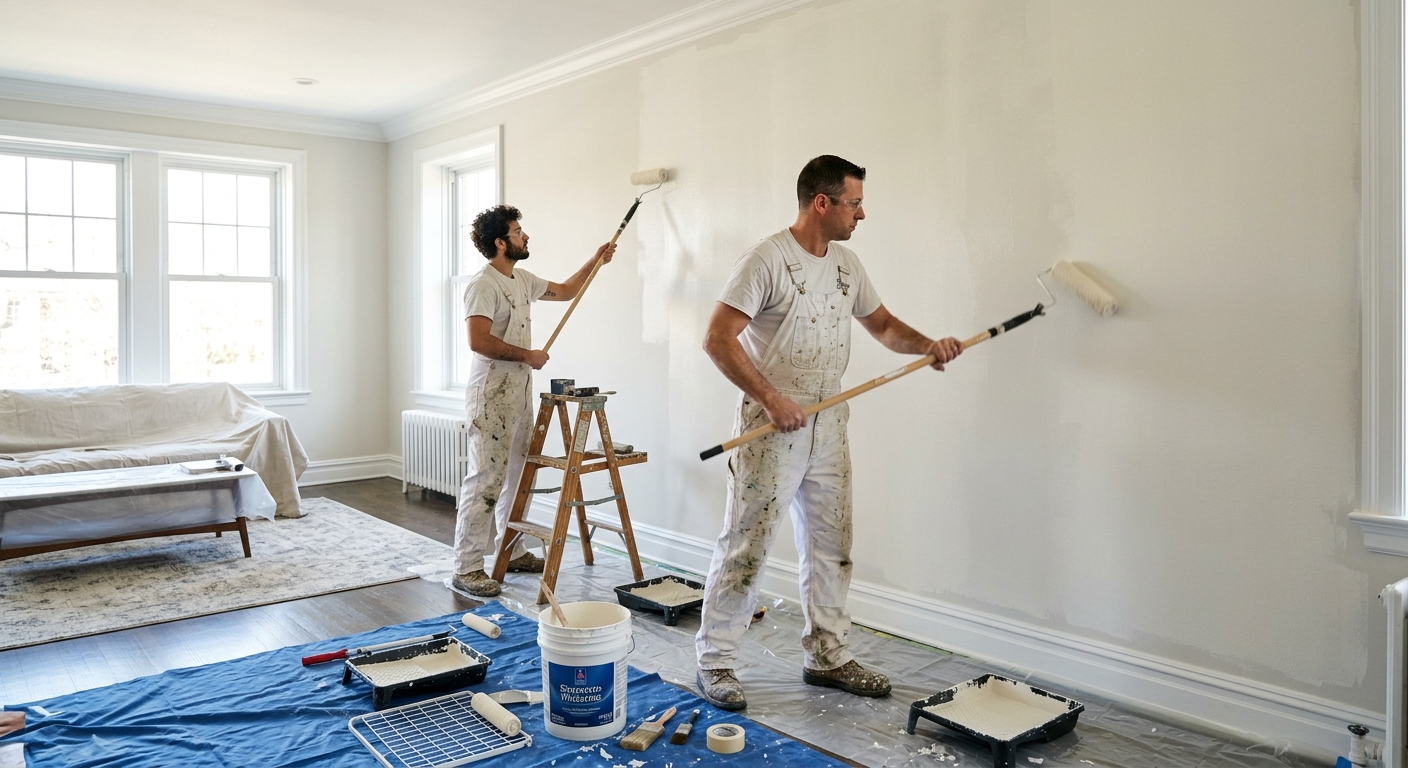
Painting options and costs in Bathurst Manor
Bathurst Manor, Ontario is a neighbourhood where paint pricing is strongly tied to both housing age and the short workable weather window. In the Toronto economic region, the 2021 Census recorded a population of 15,873 for Bathurst Manor (Statistics Canada, 2021 Census). A key driver of interior prep work and exterior labour is that many homes in the Toronto area are older; in practice, repainting pre-1978 surfaces usually takes longer because of multiple existing paint layers, more caulking and patching, and—if lead paint is suspected—lead-safe work practices before sanding or scraping. That extra preparation is often the difference between a job that looks good for a year and one that holds up for years.
Exterior painting in the GTA also has a tight season. Contractors typically schedule late May through June and again from early September to mid-October, when temperatures are reliably above about 10°C for application and early curing. During the June–August stretch, demand is higher and pricing can run about 10–15% above shoulder-season rates. Interior work is less season-sensitive, but labour still rises with things like stairwells, masking, ceiling height, and the finish level you want.
In Bathurst Manor, exterior repainting and trim refinishing are especially in demand around the Bayview Avenue and Sheppard Avenue corridor, where many homes are mid-century or older and benefit from thorough scraping, priming, and caulking. With that context, here’s how common painting scopes typically price out in this neighbourhood, so you can compare apples to apples across quotes before you book.
| Service |
What's Included |
Typical Duration |
Price Range |
| Interior — whole home (walls, ceilings, trim) |
Prep (patch/sand), caulking, prime where needed, wall/ceiling painting, interior trim/doors, protection & clean-up |
5–12 working days |
$2,500 – $6,000 |
| Interior — per room (standard bedroom or living room) |
Prep, 2-coat wall system, spot-prime repairs, baseboards/trim touch-up (as specified) |
1–3 working days |
$400 – $1,200 |
| Exterior — full house (siding, trim, soffits) |
Power washing (as needed), scrape/sand, caulk, prime bare spots, 2-coat exterior paint, safety set-up, disposal |
8–18 working days |
$2,500 – $8,000 |
| Exterior — trim and accent colours only |
Scrape/sand and spot-prime trim, paint accent features, protection, clean-up (no full siding repaint) |
3–8 working days |
$1,500 – $4,500 |
| Kitchen cabinet painting (doors, frames, spray finish) |
Degrease, light scuff & sanding, primer, spray finish on doors/drawers, box paint, hardware handling |
5–14 working days (including cure/return time) |
$1,200 – $4,000 |
| Specialty / faux finish (accent wall, texture) |
Surface prep, base coat(s), specialty application, multiple finishing steps, sealing as required |
2–6 working days |
$300 – $5,000 |
Prices are estimates only and vary by project scope, site access and material selection.
What affects the price of painting in Bathurst Manor
In Bathurst Manor (and across the Toronto region), two quotes for the “same” painting job can differ by 30–50% because prep and access aren’t the same from home to home. Contractors may include different levels of scraping, caulking, priming, drywall repair, and protection. They may also price different paint tiers and sheen systems, and they may count working-time differently for things like multi-storey access or extensive masking around trim, windows, and landscaping.
Exterior work is the biggest seasonal lever. In this region, the workable exterior painting window is typically late May to early October, with temperatures above about 10°C and enough time for proper curing. That season is shorter than coastal BC, where damp conditions often require mildew-resistant systems and very careful timing—but in the GTA, the cost pressure is more about frost/rain humidity spikes and limited “ideal weeks.” When peak summer demand hits (June–August), exterior pricing commonly runs 10–15% higher than shoulder season, pushing full exterior projects closer to the upper part of the $1,500 – $8,000 band.
Older homes throughout the region also change the labour math. Prep can represent 50–70% of total labour on a repainting job because it includes scraping, sanding, patching, caulking, and priming multiple paint layers. If your siding or trim has failing caulk lines, cracking paint edges, or previous oil/alkyd layers, contractors may need extra primer and additional sanding to prevent peeling. As a simple example, a “trim-only” exterior refresh might land near $1,500 – $4,500, but once you factor in widespread flaking on siding and the need to prime bare wood/fibre cement, costs can climb quickly toward the full exterior range.
Here are the most common factors that swing pricing in Bathurst Manor, so you can compare quotes confidently.
| Price Factor |
Why It Matters |
Cost Impact |
| Surface prep — scraping, sanding, patching drywall or wood |
Determines adhesion; poor prep causes peeling, bubbling, or flashing |
Often +15% to +40% on repaint scopes |
| Number of coats — 2-coat system over primer vs. 1 coat over existing |
Coverage and durability; thin or skipped coats fail sooner |
Typically +10% to +25% depending on condition |
| Paint quality tier — contractor-grade vs. premium (Benjamin Moore, Sherwin) |
Hide, washability, colour stability, and film build |
Usually +5% to +20% on materials |
| Ceilings and trim — adds significant time vs. walls-only |
Masking, cutting in, and careful brushing/rolling take longer |
Can change interior pricing by +20% to +50% |
| Exterior season window — short season raises summer rates |
Scheduling constraints increase overhead and demand |
Commonly +10% to +15% in June–August |
| Lead-safe precautions — required for pre-1978 homes with lead paint |
May add containment, wet methods, HEPA cleanup, and disposal steps |
Often +10% to +30% on older properties |
| Surface material — drywall vs. plaster vs. wood vs. stucco |
Each substrate needs different prep and primer compatibility |
Can swing by +10% to +35% depending on substrate |
| Height and access — multi-storey exterior requires scaffolding or lifts |
Safety setup and protected work areas add labour |
Often +15% to +40% for taller homes |
Permits & regulations in Ontario
In Ontario, painting itself typically does not require a permit. Where permits come into play is usually tied to structural work, removal/abatement, or changes that affect building systems—not routine interior wall or exterior paint work. For professional painting contractors, the bigger compliance focus for older homes is lead-safe practice rather than municipal painting permits.
For homes built before 1978 in Bathurst Manor, health guidelines recommend that lead paint be tested before sanding or scraping. If lead is present, lead-safe work practices are the standard approach: wet methods to reduce dust, HEPA vacuuming, proper containment and disposal, and careful cleanup. This is not generally “homeowner-permit paperwork,” but it is what reputable contractors follow to protect occupants and workers.
Regardless of age, your contractor should carry liability insurance and have WSIB/WCB coverage for their workers. Before work starts, insist on a written contract that clearly specifies the paint brand and line, sheen, number of coats, preparation steps (patching, caulking, primer type where required), and what’s included for protection and disposal.
To verify coverage, start by asking for: (1) your contractor’s insurance certificate (liability) showing policy limits, (2) proof of WSIB/WCB account and coverage for the crew, and (3) their business registration/licensing details as applicable through Ontario’s consumer/business listings. If they won’t provide documents in writing, that’s a major red flag—especially for pre-1978 homes where dust control and cleanup matter.
Interior vs exterior painting — getting the best result in Bathurst Manor
In Bathurst Manor, the difference between a long-lasting paint job and a premature failure comes down to prep discipline and the right product system for the substrate. For interiors, surface prep matters more than chasing the most expensive topcoat. That means filling and sanding to a smooth, stable surface, priming repair patches, and then applying two proper coats of the right sheen for the room. Flat paint hides wall imperfections best but marks easier; eggshell and satin are typically better for living areas and hallways; semi-gloss often suits trim because it’s easier to clean. If a quote is promising “one thick coat,” it’s usually cutting the film build that keeps colour even and scuffs from showing.
For exteriors, Ontario’s freeze–thaw cycles, driving rain, and humidity spikes make caulking and priming non-negotiable. Before paint goes on, contractors should scrape failing edges, sand glossy areas for adhesion, clean thoroughly, and caulk before painting so water can’t creep behind the coating. Primer selection is also substrate-specific: wood and fibre cement require primers that bond correctly and seal; the wrong primer can lead to peeling or flashing in the first season or two. Unlike BC’s constant mildew pressure, the GTA’s main failures tend to come from trapped moisture, rain timing, and insufficient cure time after application—so scheduling in the late May–June and September–mid-October windows is a practical quality factor.
Kitchen cabinet painting is a sensible budget alternative to replacement when the box is solid and the finish is prepped properly. However, cabinet work still requires patience for curing between steps—rushing can lead to tackiness or poor durability. For pre-1978 homes, lead-safe precautions should govern scraping/sanding of trim and older paint so you’re not trading longevity for speed.
On cost, it’s often justified to spend a bit more on prep: for example, moving from a minimal scrape-and-paint approach to a full surface-prep plan can shift an exterior project from the lower $1,500 – $4,500 trim-and-accent range toward the full exterior band, but it reduces the odds of peeling that would force an early re-do.
| Project Type |
Key Prep Step |
Recommended Coats |
Price Band |
| Interior — fresh drywall (new construction) |
Prime all drywall and embed/sand joints for a uniform surface |
Prime + 2 finish coats |
$400 – $2,500 |
| Interior — repaint (good condition, no repairs) |
Clean surfaces and light scuff-sand; spot-prime any stains |
2 finish coats (spot-prime as needed) |
$400 – $1,800 |
| Interior — repaint (patching and priming needed) |
Patch, sand flush, and prime repairs before topcoats |
2 finish coats with primer on repairs |
$600 – $3,000 |
| Exterior siding (wood or fibre cement) |
Scrape failing paint, caulk gaps, and prime bare spots |
2 exterior coats over primer where required |
$2,500 – $8,000 |
| Exterior trim and accents only |
Careful scrape/sand and tight caulking lines at joints |
2 coats on trim surfaces (primer where bare) |
$1,500 – $4,500 |
| Kitchen cabinets (spray finish) |
Degrease thoroughly and scuff-sand for coating bond |
Primer + 2 finish coats (with proper flash/cure) |
$1,200 – $4,000 |
How to choose a painting contractor in Bathurst Manor
To choose a contractor in Bathurst Manor, verify three things up front: Ontario business legitimacy, liability insurance, and WSIB/WCB coverage. Ask for the certificate of insurance for liability (make sure it lists your contractor as the insured and shows active coverage limits). Then ask for WSIB/WCB proof for their workers; a contractor without proper coverage shifts risk to you if someone gets hurt on site. If a company avoids providing paperwork or says you can “just trust us,” keep looking.
Next, get 2–3 itemised written quotes—not one lump sum. A good quote breaks labour and materials line-by-line (prep labour, primer, paint quantities, masking/protection, scaffolding/lifts if needed, and disposal). Read the scope carefully: ask what’s excluded (e.g., window caulking, mould remediation, drywall replacement, lead testing). Confirm whether a permit is needed for any related work (painting itself generally isn’t), and whether disposal, patch sanding, and touch-ups are included.
Ask about warranty terms. You want a workmanship warranty in writing (length and what it covers), plus the product/manufacturer warranty details. Clarify whether warranties transfer if you sell the home. Payment schedule matters too: never pay more than 10–15% upfront; hold back a portion until the job is complete, cleaned, and approved. Finally, request a start date and completion estimate in writing, especially for exterior work where rain or early frost can push timelines.
- Provide proof of liability insurance and WSIB/WCB coverage before scheduling
- Give an itemised quote with prep labour, primer, paint, and cleanup listed separately
- Specify paint brand/line and sheen in the contract (not just “exterior paint”)
- Confirm the number of coats and where primer is required
- Ask how they will protect landscaping, windows, and doors during prep and painting
- For exterior, confirm scraping/sanding standards and caulking plan before paint
- Confirm disposal is included (painted debris, plastic, and sanding dust cleanup)
- Ask if they will do moisture/condition checks (especially after rain)
- For older homes, ask about lead-safe procedures and dust control approach
- Request a start date, weather contingency plan, and completion timeframe in writing
- Insist on touch-ups and a final walkthrough checklist
- Use a payment schedule with a holdback until you accept the finished work
In Bathurst Manor, watch for red flags such as: refusing to provide insurance/WSIB proof, vague scopes like “we’ll prep as needed” without specifics, unusually low bids that skip primer or surface prep, pressure to pay most of the job upfront, and no written warranty or unclear colour/coat commitments.
Frequently asked questions — painting in Bathurst Manor
How do I fix peeling exterior paint in Bathurst Manor?
Peeling exterior paint in Bathurst Manor is almost always a preparation and moisture issue, not just a colour problem. The repair process should start with identifying why adhesion failed: flaking caused by old coatings, missing or failing caulk lines, or trapped moisture behind the film. A reputable contractor will scrape and sand back to firm edges, remove loose material, clean the surface, then prime bare and repaired areas before applying a full 2-coat exterior system. For pre-1978 homes, lead-safe work practices are standard when sanding/scraping is needed, and dust control should be part of the plan. If your plan is only “paint over the peeling,” it usually fails again quickly in GTA weather swings.
What colours add the most resale value in Bathurst Manor?
For resale-minded homeowners in Bathurst Manor, the highest “acceptability” colours tend to be classic neutrals and crisp trims that make homes look clean in all seasons. Think warm whites, soft greiges, light taupes, and muted greys—then anchor the look with a traditional trim colour (often a brighter white or off-white). If you want more contrast, use it on accents like shutters, front doors, or soffit details rather than making the entire façade very dark (darker colours can hold heat, which can be less forgiving during humid or sunny days). In the GTA market, well-executed exterior repainting commonly falls into the $2,500 – $8,000 range for full houses, so choosing crowd-pleasing colours helps protect that investment when buyers inspect curb appeal.
How much does it cost to paint a house in Bathurst Manor?
The cost depends mainly on whether you’re doing interior, exterior, or both, plus how much prep the home needs. For interiors, “whole home” projects commonly land in the mid-to-upper portion of the interior band, but the biggest swing is patching, trim scope, and ceiling work. For exterior, a full house repaint (siding, trim, soffits) typically falls within $2,500 – $8,000, with older homes often requiring more labour due to scraping, caulking, and priming multiple paint layers. GTA exterior pricing also rises in June–August because the season is short and scheduling demand is high. If you want a lower-cost option, trim and accent painting only is often around $1,500 – $4,500, but only if the siding coating is truly sound.
How much does interior painting cost per room in Bathurst Manor?
Per-room interior painting in Bathurst Manor typically ranges from $400 – $1,200 for standard bedrooms and living rooms, assuming normal access and limited repairs. The price moves up when there’s patching and priming (repaired drywall dents, water marks), when ceilings need significant work, or when you want more trim coverage than a baseboards-and-cut-in refresh. Two-coat work over a suitable primer is what most homeowners should expect for a durable finish. Also remember that masking, protecting floors and stairs, and cleanup are labour-heavy, especially in homes with busy layouts. If your walls are in good condition, you’ll usually land closer to the lower end; if the room needs repairs, expect to pay more.
When is the best time for exterior painting in Bathurst Manor?
The best time for exterior painting in Bathurst Manor is when temperatures stay above roughly 10°C for application and early curing, and when rain won’t interrupt the process. In the Toronto area, that usually means late May through June and again from early September to mid-October. June–August can be busy, and pricing is often higher because ideal weather windows are limited. Contractors also factor humidity spikes: if the forecast and surface moisture aren’t right, they’ll delay application to avoid adhesion and early failure. Since Bathurst Manor includes many older homes with more detailed trim work, it’s smart to book early for the shoulder windows rather than waiting for peak summer demand.
How many coats of paint do I need?
In most Bathurst Manor painting projects, the goal is a 2-coat finish system with primer where needed. For interiors, a typical repaint on properly prepped surfaces is 2 finish coats (with spot-priming for repairs or stains). For exteriors, contractors usually apply 2 exterior coats over primer/bare-spot primer to ensure even coverage and stronger durability against Ontario weather swings. If a contractor suggests “one coat” because it’s “thicker paint,” it can still look fine initially but tends to underperform once the coating film is stressed by sun, humidity, and temperature changes. For kitchen cabinets, expect a primer plus 2 finish coats (spray finishes often require careful flash and cure times). If your home has extensive peeling or bare wood/fibre cement, priming and coat count are especially critical.