Painting options and costs in View Royal
View Royal is a great place to refresh a home, but the pricing story is shaped by the local housing mix and the way Vancouver Island and the Coast seasonally compress exterior work. In View Royal, 28.6% of homes were built before 1981, so many projects start with extra surface prep—scraping failing paint, sanding weathered wood trim, patching small failures, and priming areas that otherwise would bleed through. On top of that, pre-1978 materials may require lead-safe practices if old paint is disturbed (a standard contractor approach; not just “good manners”).
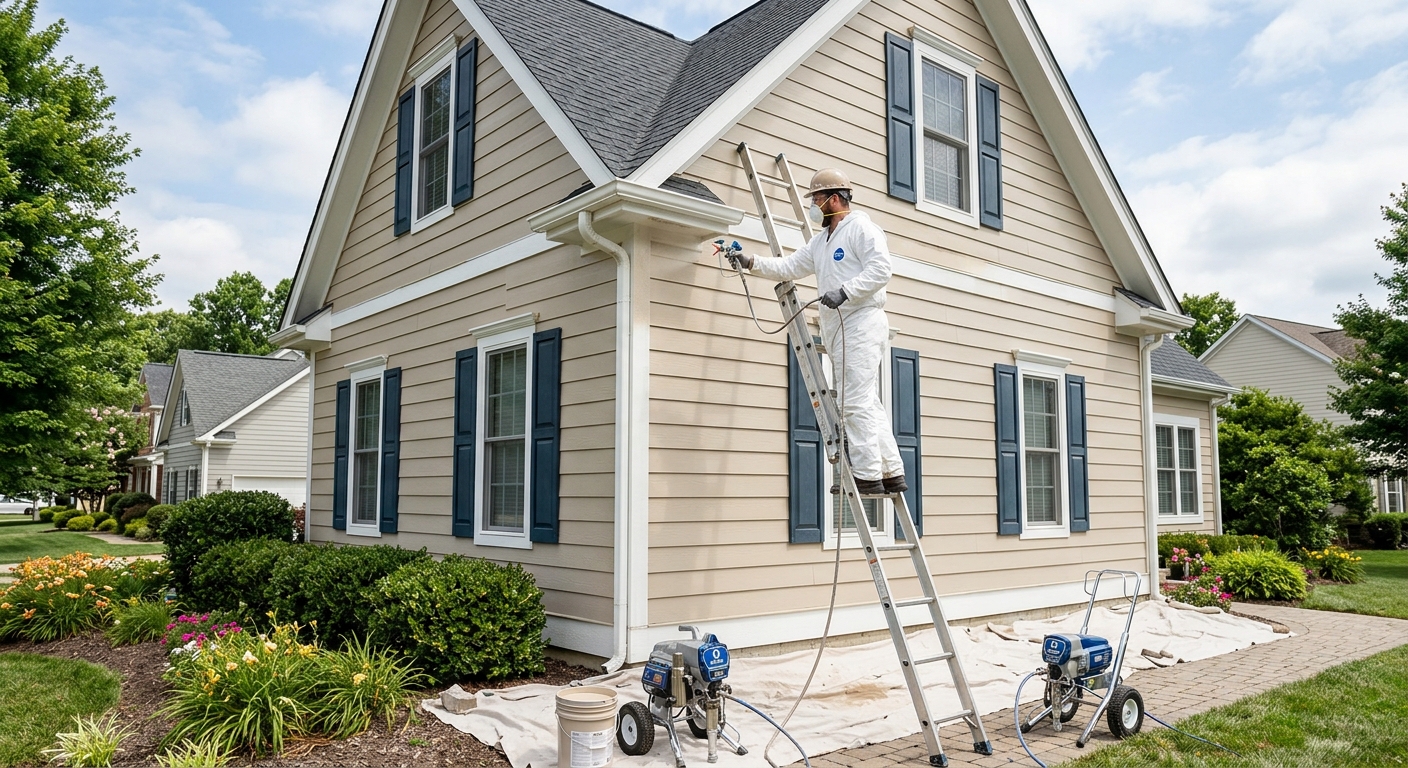
Coastal BC also affects crew availability and labour time. With frequent rain, morning dew and higher humidity, exterior painters rely on a reliable window when temperatures stay around 10°C to 30°C and forecasts support several dry hours—then they schedule back-to-back jobs to keep materials curing properly. That tighter late-spring to early-fall demand is why exterior painting in neighbourhoods such as Royal Bay often books up first, especially for full-house repaints on older siding and trim.
Interior work is less weather-bound, but it still costs more in View Royal when projects include ceilings, detailed trim, and mildew-aware bathroom/basement paint systems. Below is a realistic cost guide so you can compare apples-to-apples before you request quotes.
| Service |
What's Included |
Typical Duration |
Price Range |
| Interior — whole home (walls, ceilings, trim) |
Masking/protection, prep (fill/sand), caulking as needed, prime where required, low-VOC paint for walls/ceilings, paint trim/doors (basic), clean-up |
5–10 business days |
$2,800 – $6,500 |
| Interior — per room (standard bedroom or living room) |
Prep, prime where needed, 2-coat wall system, paint ceiling (optional), caulk trims where required, basic trim painting if included in scope |
1–3 business days |
$2,000 – $4,200 |
| Exterior — full house (siding, trim, soffits) |
Pressure-wash where appropriate, scrape/sand sound surfaces, caulk gaps, repair minor defects, prime bare/porous areas, paint siding/trim/soffits with mildew-resistant exterior coatings, final clean-up |
1–3 weeks (depending on height/access) |
$5,500 – $12,000 |
| Exterior — trim and accent colours only |
Spot prep (scrape/sand), caulk localized areas, prime as needed, paint trim/accents, protect landscaping/windows, clean-up |
3–7 business days |
$3,500 – $6,800 |
| Kitchen cabinet painting (doors, frames, spray finish) |
Degrease/clean, light scuff/sand, prime suitable for cabinets, paint/finish in 2-coats (sprayed or best-practice method), hardware removal/masking, re-install |
1–2 weeks (curing/set-up time included) |
$2,200 – $5,000 |
| Specialty / faux finish (accent wall, texture) |
Surface preparation for texture, base coat/primer, specialty application (technique-specific), protect surrounding surfaces, clean-up |
1–5 business days |
$800 – $4,500 |
Prices are estimates only and vary by project scope, site access and material selection.
What affects the price of painting in View Royal
Even when two homeowners describe the “same” job in View Royal, quotes can swing by 30–50% across Vancouver Island and Coast and across British Columbia. The difference is usually not the paint—it’s how much prep is required, how many coats the system needs for your surfaces, and whether the crew can work inside the coastal exterior weather window without losing curing time. For exteriors, contractors typically plan for the drier late-spring to early-fall period when temperatures stay roughly between 10°C and 30°C and humidity is manageable. That’s similar to how Ontario exterior work runs roughly late May to early October, but coastal BC adds more morning dew, drizzle risk and higher humidity, so contractors schedule carefully and lean on mildew-resistant, high-quality coatings.
Older housing stock drives labour too. When homes are 40+ years old, scraping and patching can become the biggest line item: surface prep can represent 50–70% of total labour on a repaint because the crew is deciding what’s sound, fixing what’s failed, and then priming so the new coating bonds. That’s why a “trim refresh” might land in a smaller band, while a full exterior repaint typically pushes toward the upper end of the exterior pricing range (for example, $3,500 – $6,800 for trim/accents versus $5,500 – $12,000 for full-house work, depending on prep and access).
Two common View Royal examples: (1) fibre cement or weathered wood siding with peeling edges usually requires more scraping and spot-priming than homeowners expect; (2) a two-storey home with tight eaves or limited driveway access can require lifts/scaffolding time. Homes built before 1981 often need more detailed caulking and priming, and when old coatings are disturbed, lead-safe work practices may add steps for containment and clean-up—costing more, but protecting occupants and crews.
| Price Factor |
Why It Matters |
Cost Impact |
| Surface prep — scraping, sanding, patching drywall or wood |
Prep determines adhesion and longevity; failures here cause premature peeling |
Often the largest swing (can add thousands on exteriors) |
| Number of coats — 2-coat system over primer vs. 1 coat over existing |
Coastal humidity and older substrates need proper hiding and bonding |
Typically +10% to +35% depending on coverage/primer need |
| Paint quality tier — contractor-grade vs. premium (Benjamin Moore, Sherwin) |
Higher-tier coatings usually cover better, resist mildew, and wear longer |
Materials +5% to +20%, sometimes offset by fewer coats |
| Ceilings and trim — adds significant time vs. walls-only |
More masking, more cut-in time, and more prep for detail surfaces |
Can add 15% to 40% to interior costs |
| Exterior season window — short season raises summer rates |
When crews can’t work, demand concentrates and scheduling tightens |
Often +10% to +25% for bookings inside peak weeks |
| Lead-safe precautions — required for pre-1978 homes with lead paint |
Wet methods, containment, HEPA cleanup and disposal increase labour |
Can add several hundred to over a thousand on complex jobs |
| Surface material — drywall vs. plaster vs. wood vs. stucco |
Different substrates demand different primers and prep approaches |
Moderate to large variation (often +5% to +30%) |
| Height and access — multi-storey exterior requires scaffolding or lifts |
Safety gear and setup time directly increase labour |
Can add 10% to 35% on larger exteriors |
Permits & regulations in British Columbia
In British Columbia, painting typically does not require a permit for homeowners or professional painters. The usual regulatory focus is around safety practices—especially when older homes may contain lead paint. For properties in View Royal built before 1978, health guidelines recommend testing for lead paint before sanding, scraping, or otherwise disturbing old coatings, and then following lead-safe work practices if lead is present. For professional contractors, that commonly includes wet methods to reduce dust, HEPA vacuuming, proper containment, and correct disposal of contaminated materials. This is generally not something homeowners are legally compelled to do on their own, but it’s standard professional practice for risk control.
What you should confirm for any contractor before they start: liability insurance and workers’ compensation coverage (the contractor’s coverage rules are handled through the province’s workers’ compensation framework). In addition, insist on a written contract that spells out the paint brand/line (or equivalent), sheen choices, number of coats, surface prep included, and what happens if rain/humidity affects exterior curing. You should also clarify whether disposal and jobsite protection (covers, tarps, masking) are included.
How to verify in step-by-step fashion: (1) ask for their British Columbia registration details and check their public listing; (2) request a certificate of insurance naming you as certificate holder if your contractor uses that process; (3) ask for proof of workers’ compensation clearance/coverage; (4) require everything above to match the quote and contract scope; and (5) keep copies of documents before work starts.
Interior vs exterior painting — getting the best result in View Royal
The difference between a long-lasting paint job and a premature failure in View Royal usually comes down to prep discipline and the coating system, not just the “nice colour.” For interiors, the foundation is filling, sanding, and priming—especially on patched drywall, water stains, or areas where old paint is failing. For the room you’re painting, sheen matters: flat can help hide wall imperfections but is harder to clean; eggshell and satin are common choices for living areas and bedrooms; semi-gloss on trim and doors gives durability for frequent contact. A proper two-coat finish over an appropriate primer almost always outlasts a “one thick coat” approach because it builds uniform film thickness and reduces flashing in the coastal light.
Exteriors in Vancouver Island’s marine climate are more unforgiving. Surface prep is critical: scraping loose material, sanding edges clean, and caulking joints before painting helps prevent water ingress behind the coating. Primer type also matters based on substrate—different primers handle bare wood, previously painted surfaces, and porous areas. In British Columbia, crews typically use mildew-resistant exterior coatings and temperature-stable products that behave well under coastal humidity. While Alberta can have longer stretches of dry warmth, coastal BC’s dew and recurring dampness mean the system needs to be planned around realistic drying and cure time.
Cabinet painting is often the best “value upgrade” short of replacement. If your frames and boxes are solid, painting can be a smart alternative; you’re paying for prep and a durable finish rather than full demolition and new cabinetry. For a quick example, exterior trim-only touch-ups might sit around $3,500 – $6,800, while a full exterior repaint typically costs more (often $5,500 – $12,000)—the extra spend is usually justified when the siding/trim needs extensive scraping, priming and re-coating so moisture can’t get under failing paint. For pre-1978 homes, lead-safe precautions may add steps, but they reduce dust and risk when surfaces are disturbed.
| Project Type |
Key Prep Step |
Recommended Coats |
Price Band |
| Interior — fresh drywall (new construction) |
Prime the drywall fully, then sand smooth before colour coat |
Primer + 2 coats |
$2,500 – $5,500 |
| Interior — repaint (good condition, no repairs) |
Clean/degloss lightly as needed, caulk minor gaps, light scuff-sand |
1 primer (spot) + 2 colour coats |
$2,000 – $4,800 |
| Interior — repaint (patching and priming needed) |
Patch/fill, sand flush, spot-prime repairs to prevent flashing |
Spot primer + 2 coats |
$2,800 – $6,500 |
| Exterior siding (wood or fibre cement) |
Scrape/sand to sound edges, caulk joints, prime bare/porous sections |
Primer + 2 exterior coats (as required by condition) |
$5,500 – $12,000 |
| Exterior trim and accents only |
Prep edges properly and seal gaps with exterior-grade caulking |
Spot prime as needed + 2 coats |
$3,500 – $6,800 |
| Kitchen cabinets (spray finish) |
Degrease thoroughly, scuff/sand, prime for adhesion, control dust |
Primer + 2 finish coats (system-dependent) |
$2,200 – $5,000 |
How to choose a painting contractor in View Royal
Choosing well in View Royal starts with verification. For British Columbia, ask for proof of licensing/registration details (confirm through the province’s public-facing contractor registry), then request a certificate of liability insurance with adequate coverage for your project size. Next, ask for proof of workers’ compensation coverage—contractors should be able to provide documentation or clearance evidence showing they’re insured to cover their workers on the job. If they can’t provide these items promptly, that’s a major risk signal.
Then get 2–3 itemised written quotes. Ideally, the quote breaks down labour and materials separately and lists surface prep tasks (scrape/sand/patch/caulk/prime), the paint brand/line or equivalent, number of coats, where primer is included, and what’s included for disposal. Confirm whether permit pull is required (it typically isn’t for painting), and whether the contractor includes protection and cleanup—especially for exteriors where overspray and debris are common.
Warranty matters too: ask for a workmanship warranty length (e.g., surface prep and adhesion coverage) and whether the manufacturer warranty applies to the paint system. Also ask whether warranties are transferable if you sell the home. For payment, never pay more than 10–15% upfront; hold back a portion until completion and final walk-through. Finally, require a written timeline: start date, estimated completion, and what they do if coastal weather disrupts exterior curing.
- Provide insurance certificate and workers’ compensation proof before signing.
- Quote is itemised (prep, primer, coats, paint brand/line, disposal, protection).
- Explicit prep scope: caulking, scraping/sanding, patching, and priming areas.
- Sheen schedule for interiors (walls/ceilings/trim/doors) in writing.
- Exterior plan for coastal conditions (mildew-resistant system, curing time).
- Lead-safe approach described for pre-1978 homes (testing expectation if applicable).
- Jobsite protection listed (floor coverings, masking, landscaping protection).
- Clear description of what happens if weather delays exterior work.
- Warranty details in writing (workmanship + product/manufacturer).
- Payment schedule with a holdback until final inspection.
- Colour selections process and responsibility for mismatches or touch-ups.
- Schedule/crew plan and start/completion dates in the contract.
Red flags to watch for in View Royal: (1) they won’t provide proof of insurance/coverage; (2) quotes that omit scraping/sanding/priming details for exteriors; (3) “one coat covers everything” promises; (4) no written warranty terms; and (5) asking for large upfront payments (well beyond 10–15%).
Frequently asked questions — painting in View Royal
Should I paint or replace my cabinets?
In many View Royal kitchens, painting is the smarter move when the cabinet boxes and frames are structurally solid. If doors are still straight, hinges align, and the finish isn’t deeply damaged by moisture, a high-prep cabinet paint with a spray-capable process can refresh the look at a fraction of replacement. Typical cabinet painting projects in this area often fall within $2,200 – $5,000, especially when prep and a durable finish system are included. You’d consider replacement if boxes are warped, if there’s significant water damage, or if you need layout changes. Also think about timeline: painting takes planning for curing, but replacement adds longer disruption. A good contractor will inspect door alignment, hardware condition, and the substrate condition before recommending paint vs replace.
How do I prep walls before painting?
For most homeowner prep in British Columbia, the goal is to avoid skipped steps that show up later—especially in coastal light. If you’re doing light prep yourself, start by removing wall plates, patching small holes, and sanding rough edges so repairs blend. Then clean the surface: dusty drywall and kitchen residue can prevent bonding. Caulking is important where trim meets walls or where small gaps appear—use paintable caulk and let it cure. If the wall is in poor condition (peeling paint, staining, or mildew), that’s where pro-level prep matters more than saving time, because scraping/sanding and stain-blocking primer may be required. For budget planning, remember that prep drives the cost—surface prep can represent 50–70% of labour on repaint jobs, particularly when older coatings need more attention.
Do I need to worry about lead paint in an older View Royal home?
It’s a good question for View Royal, especially because 28.6% of homes were built before 1981, and older coatings can include lead depending on when and how the home was painted. In British Columbia, painting generally doesn’t require a permit, but health guidelines recommend testing for lead paint before sanding or scraping on pre-1978 homes, and using lead-safe methods if lead is present. This is more about dust control and safe cleanup than about avoiding paint altogether. Professional contractors typically use wet methods, HEPA vacuuming, containment, and proper disposal when lead is suspected or confirmed. For homeowners, you don’t always have a legal obligation to do testing yourself, but you should still plan for safety. The best approach is to ask your contractor what lead-safe precautions they follow and whether testing is recommended for your specific situation.
How long does it take to paint a house?
Timing depends on scope, number of coats, and—on the exterior—the weather window. In View Royal, interior projects are less season-bound, so a typical whole-home interior can take about 5–10 business days depending on the amount of trim, ceilings, and repairs. Exterior timelines are usually longer because crews must manage curing time in coastal humidity. A full exterior repaint commonly takes about 1–3 weeks, not because the brushwork is slow, but because prep (scrape/sand/caulk/prime) plus proper drying/cure between coats can’t be rushed when rain or dew interferes. Cabinet painting is its own pace: you may see 1–2 weeks including set-up and curing steps. Ask your contractor for a written start/completion estimate and what they do if forecasts force a schedule change.
What's the difference between paint quality tiers?
Paint “tiers” typically reflect how well the coating performs—coverage, durability, washability, and how it handles mildew in damp conditions. Premium lines from major Canadian brands often cost more per litre, but they can reduce rework by covering better and maintaining colour and adhesion longer, especially in exterior environments where coastal humidity stresses coatings. In this region, that can matter for exteriors and for moisture-prone interior areas like basements and some bathrooms. Contractor-grade products can be fine for many projects, but the prep and coating system still govern results. When comparing quotes, don’t just compare the lowest dollar figure—compare the brand/line, primer type, and number of coats. A quote that lands near $3,500 – $6,800 for trim may still be excellent if prep is thorough and the system is appropriate.
How do I compare painting quotes?
To compare painting quotes in View Royal, insist on like-for-like scope. Start with the itemised breakdown: prep tasks (scrape/sand/patch/caulk), priming coverage, disposal and cleanup, and the number of coats for each surface. Then compare product details—paint brand/line (or equivalent), sheen schedule (walls/ceilings/trim), and whether the contractor uses mildew-resistant exterior coatings where needed. Verify coverage too: request proof of liability insurance and workers’ compensation documentation. Watch for missing exclusions (what they won’t do) and missing inclusions (what’s included for protection, hardware removal, and final touch-ups). Pricing can vary widely—exterior full-house work often sits in bands like $5,500 – $12,000 depending on prep and access—so if one quote is far lower, it may be cutting prep or coats. Choose the quote that matches your priorities and provides clear, written scope.