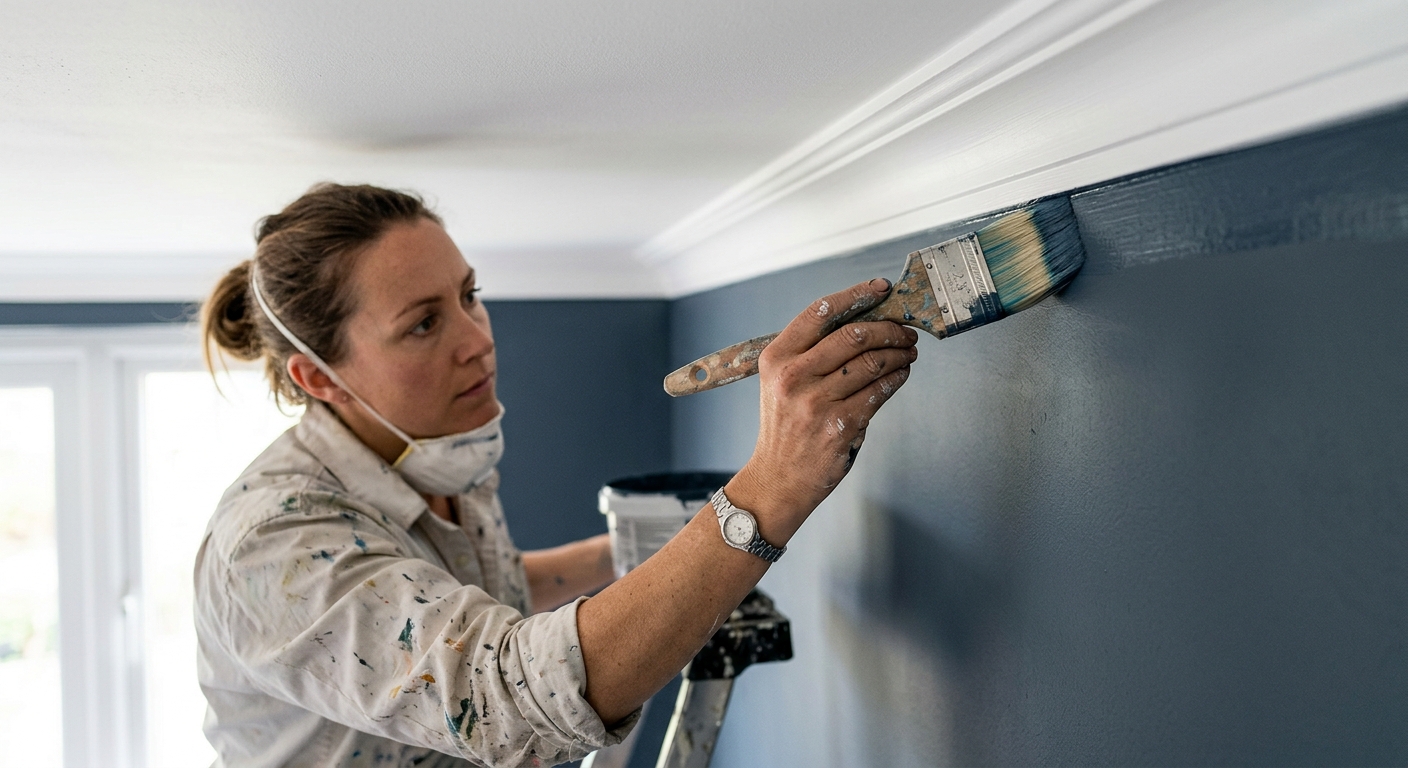
Painting options and costs in Kensington-Cedar Cottage
Kensington-Cedar Cottage is one of those neighbourhoods in the Lower Mainland–Southwest where painting costs often start with prep, not the colour swatch. With a population of 49,235 in 2021 (Statistics Canada, 2021 Census), demand is steady, and crews tend to book out when the weather allows. Just as important, a lot of the housing stock in the area dates back several decades, so many repaints involve old failing coatings, settlement cracking, and stain-blocking primers. For homes built before 1978, contractors may also use lead-paint–safe work practices if scraping is required—containment, HEPA clean-up, and proper disposal can add time to the estimate.
In this coastal BC market, exterior pricing is shaped by rain and humidity more than extreme cold. Because drying conditions can be inconsistent in shoulder seasons, painters plan around dry windows, use mildew-resistant, high-adhesion products, and re-mobilize between weather systems. Interior work is less weather-bound, so many contractors shift capacity indoors through fall and winter, which can improve scheduling. In Kensington-Cedar Cottage—especially around the streets closer to Kensington Avenue and near the Cedar Cottage area—painting demand is consistently high for both occupied repaints and exterior refreshes, since homeowners want curb appeal without long downtime.
Below are common budgeting ranges you’ll see for typical jobs; use them to compare apples-to-apples when you request quotes, and then let the scope details decide the final number.
| Service |
What's Included |
Typical Duration |
Price Range |
| Interior — whole home (walls, ceilings, trim) |
Move protect, prep/sanding, patching, caulking, primer as needed, 2-coat finish (walls/ceilings), trim/enamel, cleanup |
6–12 business days |
$1,900–$6,800 |
| Interior — per room (standard bedroom or living room) |
Protect floors, prep and patch, prime as needed, 2-coat finish, basic trim touch-ups |
1–3 business days |
$300–$1,650 |
| Exterior — full house (siding, trim, soffits) |
Power-wash, scrape/sand failing areas, patch/caulk, stain-blocking where needed, prime, 2-coat exterior system, labour for weather-day coordination, cleanup |
2–4 weeks (weather-dependent) |
$4,200–$12,500 |
| Exterior — trim and accent colours only |
Prep localized areas, caulk, spot prime, 2-coat enamel on trim/accents, protect surrounding surfaces, cleanup |
4–10 business days |
$1,200–$5,600 |
| Kitchen cabinet painting (doors, frames, spray finish) |
Light disassembly, degrease, sanding, bonding primer, spray/brush finish, hardware protection, re-install, touch-ups |
5–12 business days |
$2,300–$7,500 |
| Specialty / faux finish (accent wall, texture) |
Surface prep/leveling, primer, specialty coating system, protective topcoat as required, clean-up |
2–7 business days |
$500–$4,800 |
Prices are estimates only and vary by project scope, site access and material selection.
What affects the price of painting in Kensington-Cedar Cottage
In Kensington-Cedar Cottage and across the Lower Mainland–Southwest, two quotes for the “same” repaint can differ by 30–50% because the labour intensity behind prep is not the same from one contractor to the next. The same issue stretches across British Columbia: interior work is relatively consistent, but exterior work is dominated by site conditions—moisture, old coatings, and the number of weather windows needed to apply and dry properly. When painters can’t apply in a tight stretch of dry weather, they lose crew productivity and may need re-mobilization, which shows up in pricing.
For exteriors, the season here is climate-bound by rain and humidity. Unlike Ontario and Alberta, where crews lean on a short warm-up period but generally get clearer “dry heat” days, coastal BC demands careful timing and mildew-resistant products. Older homes throughout the region often require extensive surface prep—scraping, sanding, patching drywall or wood, caulking, and priming—which can be 50–70% of total labour on a repainting job. On a typical exterior refresh, that prep time is the difference between “paint over” and a true coating system.
Concrete examples from local projects: (1) A trim repaint on dense cedar or weathered fibre cement can cost more because bond/adhesion prep and primer selection take longer. (2) A full-house repaint can be less expensive than expected when coatings are mostly intact—less scraping means more time painting. (3) Cabinet refinishing may move from the low end of the $2,000–$8,000 cabinet/trim band into the mid-range when spray setup, fine detail coats, and extra curing/handling days are required.
Bottom line: in this market, prep quality and weather planning are what push costs toward the upper side of the $1,200–$15,000 exterior band or keep you closer to the middle.
| Price Factor |
Why It Matters |
Cost Impact |
| Surface prep — scraping, sanding, patching drywall or wood |
Determines adhesion and longevity; older coatings often fail if not removed/feathered. |
Higher prep can add 20–45% labour |
| Number of coats — 2-coat system over primer vs. 1 coat over existing |
Proper hiding and uniformity usually require a full 2-coat finish. |
Cutting corners can reduce cost 10–25% short-term, but increases callbacks |
| Paint quality tier — contractor-grade vs. premium (Benjamin Moore, Sherwin) |
Better solids/resistance often improves coverage and washability. |
Materials may shift 5–20% on total budget |
| Ceilings and trim — adds significant time vs. walls-only |
Trim lines, caulking, cut-in, and masking increase labour and material use. |
Can add 10–40% depending on scope |
| Exterior season window — short season raises summer rates |
Rain/humidity scheduling and waiting days affect productivity and crew availability. |
Can shift exterior pricing 15–30% |
| Lead-safe precautions — required for pre-1978 homes with lead paint |
Containment, HEPA clean-up, and disposal add time and steps. |
Often adds 5–25% when it’s triggered by prep conditions |
| Surface material — drywall vs. plaster vs. wood vs. stucco |
Each substrate needs specific sanding, priming and bonding approaches. |
Wrong system can double prep; correct system keeps costs steadier |
| Height and access — multi-storey exterior requires scaffolding or lifts |
Safety setup and time on ladders/lifts is labour-intensive. |
Can add 10–35% for hard-access homes |
Permits & regulations in British Columbia
In British Columbia, painting typically does not require a permit for most residential interior or exterior repainting. The key regulation-type step is around safe work practices when dealing with older coatings. For homes built before 1978 in Kensington-Cedar Cottage, health guidelines strongly recommend testing for lead paint before sanding or scraping. If lead is present, lead-safe work practices are considered standard for professional contractors: wet methods to minimize dust, HEPA vacuuming, proper containment, and disposal of debris as required by safe-handling practices.
What usually does not require a permit: painting interior walls/ceilings, trim touch-ups, repainting siding/soffits, and repainting doors or fences—so long as you’re not altering structural components or changing electrical/plumbing systems. What may require special attention: any work involving removal of old paint through sanding/scraping on pre-1978 surfaces, because safety procedures increase labour time and cleanup.
Before work starts, confirm your contractor carries liability insurance and has workers’ compensation coverage (WCB) for insured employees. Ask for a written contract that specifies the paint brand/line (not just “premium”), sheen, number of coats, and which prep activities are included (power-washing, sanding/scraping, caulking, patching, priming). For a practical checklist, ask to see their current certificate of insurance and their clearance/coverage confirmation, then match those dates to your project start date.
Interior vs exterior painting — getting the best result in Kensington-Cedar Cottage
The difference between a long-lasting finish and a premature failure in Kensington-Cedar Cottage is mostly prep discipline and the right coating system for BC’s damp climate, not just choosing an expensive paint. For interiors, the surface matters more than the brand of topcoat: filling and sanding smooths out imperfect drywall, patching reduces visible ridges, and priming keeps stains and uneven substrate absorption from showing through. Sheen choice also changes how the paint performs. Flat reads best on low-traffic ceilings and hides minor marks, while eggshell or satin is usually better on living spaces, hallways, and family rooms where wipeability matters. A common mistake is relying on a thick single coat—two coats over a proper primer almost always outlast one “overbuilt” layer.
For exteriors, BC’s humidity and rain make preparation even more critical. Caulking should be completed before painting so the paint system isn’t trying to bridge gaps that allow water ingress. Primer selection matters by substrate: oil- or bond-enhancing primers may be needed for problem adhesion areas, while acrylic/latex systems are common for stable siding and primed substrates when the manufacturer calls for it. Use mildew-resistant products for coastal conditions and schedule around dry windows; in our Lower Mainland–Southwest climate, waiting for correct surface dryness is part of the job.
Cabinet painting is a smart budget alternative to replacement when the doors and frames are sound. If your cabinets are structurally fine, investing in a spray-capable finish is often far cheaper than a full kitchen rebuild—typically within the $2,000–$8,000 cabinet/trim band versus replacement budgets that can run multiples higher.
For pre-1978 homes, lead-safe precautions can affect both prep time and cleanup, and that’s where a good contractor’s scope clarity protects you from surprises.
| Project Type |
Key Prep Step |
Recommended Coats |
Price Band |
| Interior — fresh drywall (new construction) |
Prime to seal and ensure uniform absorption before finish coats |
1 coat primer + 2 coats finish |
$1,000–$8,000 |
| Interior — repaint (good condition, no repairs) |
Light sanding, spot prime as needed, thorough cleaning |
Spot prime + 2 coats finish |
$300–$4,900 |
| Interior — repaint (patching and priming needed) |
Patch drywall/wood, sand flush, prime repaired areas for hide |
Primer on repairs + 2 coats finish |
$600–$6,800 |
| Exterior siding (wood or fibre cement) |
Scrape failing areas, caulk gaps, prime bare/porous spots |
2 coats exterior system (with primer as required) |
$1,200–$15,000 |
| Exterior trim and accents only |
Remove chalking/loose paint and spot prime for adhesion |
2 coats trim/enamel (spot prime as required) |
$1,200–$5,600 |
| Kitchen cabinets (spray finish) |
Degrease thoroughly, sand for bonding, prime properly |
Primer + 2 coats finish (plus cure/touch-ups) |
$2,000–$8,000 |
How to choose a painting contractor in Kensington-Cedar Cottage
Choosing a contractor in Kensington-Cedar Cottage is mostly about verification and scope clarity. Start with British Columbia compliance: ask for their WCB coverage confirmation (for insured workers) and current liability insurance certificate. To check it, request the actual certificate and verify the policyholder name matches the company on the quote, the coverage is active for your dates, and the limits are appropriate for residential work. If they can’t produce documentation promptly, that’s a warning sign.
Next, get 2–3 itemised written quotes. You want a labour + materials breakdown (prep, primer, paint brand/line, trim/enamel, disposal, and site protection), not a single lump sum. Scope should specify what’s included: power-washing method, scraping extent, caulking, drywall repair or patching allowance, whether product and prep materials are included, and whether job-site cleanup/disposal is part of the price.
Warranty matters: ask for the workmanship warranty length and what it covers (peeling, flaking, adhesion failures tied to prep). Also confirm the product/manufacturer warranty terms and whether the warranty is transferable to subsequent owners. Keep payment practical: never pay more than 10–15% upfront, and request a holdback until you’ve confirmed completion and touch-ups. Finally, insist on a written timeline: start date, estimated duration, and how weather delays will be handled on exterior work.
- Request proof of liability insurance and confirm coverage is active on your start date.
- Request WCB coverage confirmation (if they have employees).
- Ask for a written scope that lists prep steps, including caulking and primer requirements.
- Get paint brand/line and sheen specified (not “quality paint”).
- Confirm whether power-washing and disposal are included.
- Ask who performs sanding/scraping and what dust control method is used.
- Confirm the number of coats and where primer is required.
- Check for clear allowances (e.g., patching drywall up to a stated amount).
- Ask how colour changes and stain-blocking are handled (especially cedar/wood and older homes).
- Verify the workmanship warranty term and process for resolving issues.
- Review the payment schedule and keep a holdback until final walk-through.
- Ensure the contract includes start date, completion estimate, and weather contingency for exterior work.
Red flags to watch for in Kensington-Cedar Cottage: quotes that don’t spell out prep and primer; a contractor who won’t provide insurance/WCB documentation; very low pricing that assumes minimal surface scraping on older homes; vague “lump sum” scopes with no coat count or paint brand/line; and pressure to pay large deposits before any protective setup or scheduling is confirmed.
Frequently asked questions — painting in Kensington-Cedar Cottage
What's the difference between paint quality tiers?
In British Columbia, paint tiers mainly differ in solids, pigment quality, binder performance, and how consistently they cover. Contractor-grade products often cost less per litre, but may require more effort to get uniform hiding over patched drywall, tannin-staining wood, or areas that weren’t properly primed. Premium lines from brands such as Benjamin Moore or Sherwin typically provide better coverage and washability, which can reduce the number of touch-ups and help with durability in Kensington-Cedar Cottage’s humid coastal conditions. That’s why a proper 2-coat system over the correct primer is usually more valuable than chasing the cheapest paint. For budgeting, homeowners often see interior work fall in the broad $300–$8,000 range depending on prep, and the best results come when the quote matches the surface condition—not just the brand tier.
How do I compare painting quotes?
Compare quotes line-by-line, not by the final total. Ask each contractor to itemize labour and materials: prep steps (scraping, sanding, patching, caulking), primer type, paint brand/line and sheen, and how many finish coats are included. Make sure the scope matches—e.g., “whole home interior” should clearly list walls, ceilings, and trim, and “exterior” should say whether soffits, eaves, and trim are included. In Kensington-Cedar Cottage, exterior costs are particularly sensitive to humidity/rain scheduling and the extent of surface prep, so a quote that glosses over caulking, stain blocking, or moisture-driven prep is not truly comparable. If one quote puts a full exterior repaint closer to the $1,200–$15,000 band while another targets only “trim,” that difference should be explained by scope, not by skipping prep.
What paint sheen should I use in different rooms?
Sheen choice is about balancing appearance and durability. For ceilings, a flat finish helps hide minor imperfections and is the most forgiving on low-touch surfaces. For living rooms and bedrooms, eggshell is a common sweet spot—soft look with better wipe resistance than flat. Bathrooms, kitchens, and hallways usually benefit from satin or eggshell (depending on the wall condition) because they’re easier to clean and hold up to occasional moisture. Trim and doors typically use semi-gloss or satin for easier cleaning and a crisp look. If you’re repainting in British Columbia’s damp shoulder seasons, don’t overestimate sheen to “fix” poor prep—primer and proper drying still matter. A well-prepped surface with the right sheen is what keeps repairs from showing after the job and helps you stay within realistic interior budgeting (often $300–$8,000 depending on scope).
Can I paint my house exterior in spring or fall in Kensington-Cedar Cottage?
You can, but timing is everything. In the Lower Mainland–Southwest, spring and fall weather often brings higher humidity and rainfall, which slows drying and increases the risk of mildew or adhesion problems if surfaces aren’t fully dry. For exterior painting in Kensington-Cedar Cottage, contractors should schedule based on weather windows that allow correct application and dry times between coats, and they typically need to use mildew-resistant, high-adhesion products suited to coastal conditions. If a contractor promises painting through wet stretches without weather-day control, that’s risky. Practically, the best results often come when you can work during stable dry periods, because coastal BC’s damp shoulder seasons can create “looks fine today, fails later” outcomes. Budgeting for a full exterior repaint commonly falls within the $1,200–$15,000 band based on prep and weather demands.
How do I choose a painting contractor in Kensington-Cedar Cottage?
Start by verifying paperwork and then verify scope. In British Columbia, ask for proof of liability insurance and WCB coverage for insured workers, and ensure the documentation is current for your project dates. Then compare written quotes that include prep and coat counts, not just colour and a single price. A good contractor will name the paint brand/line, the sheen, and what’s included for disposal and cleanup. For Kensington-Cedar Cottage homes—many of which include older structures—ask how they’ll handle failed coatings, patching, and caulking. If your home is pre-1978 and scraping is involved, ask about lead-safe work practices and dust control. Finally, confirm the timeline in writing and keep payments sensible: no large deposits (10–15% max is typical) and a holdback until the job is completed to standard.
How many coats does an exterior repaint need in Kensington-Cedar Cottage?
Most exterior repaints need a 2-coat system over a properly prepared surface, with primer used wherever the substrate is bare, stained, or otherwise requires bonding/lining. The exact approach depends on what the contractor finds during prep—intact sound coatings can sometimes mean less intensive prep, while chalky, peeling, or stain-affected areas may require more scraping and more primer coverage. In coastal BC conditions (rain/humidity), primer and drying time are crucial because trapped moisture or incomplete cure can lead to early failures. For trim-only or accent work, you’ll still typically see 2 coats of exterior trim/enamel after spot priming. If your project is framed as a “full house” exterior repaint, budget within the $1,200–$15,000 range, where the prep intensity and primer needs often drive the difference.