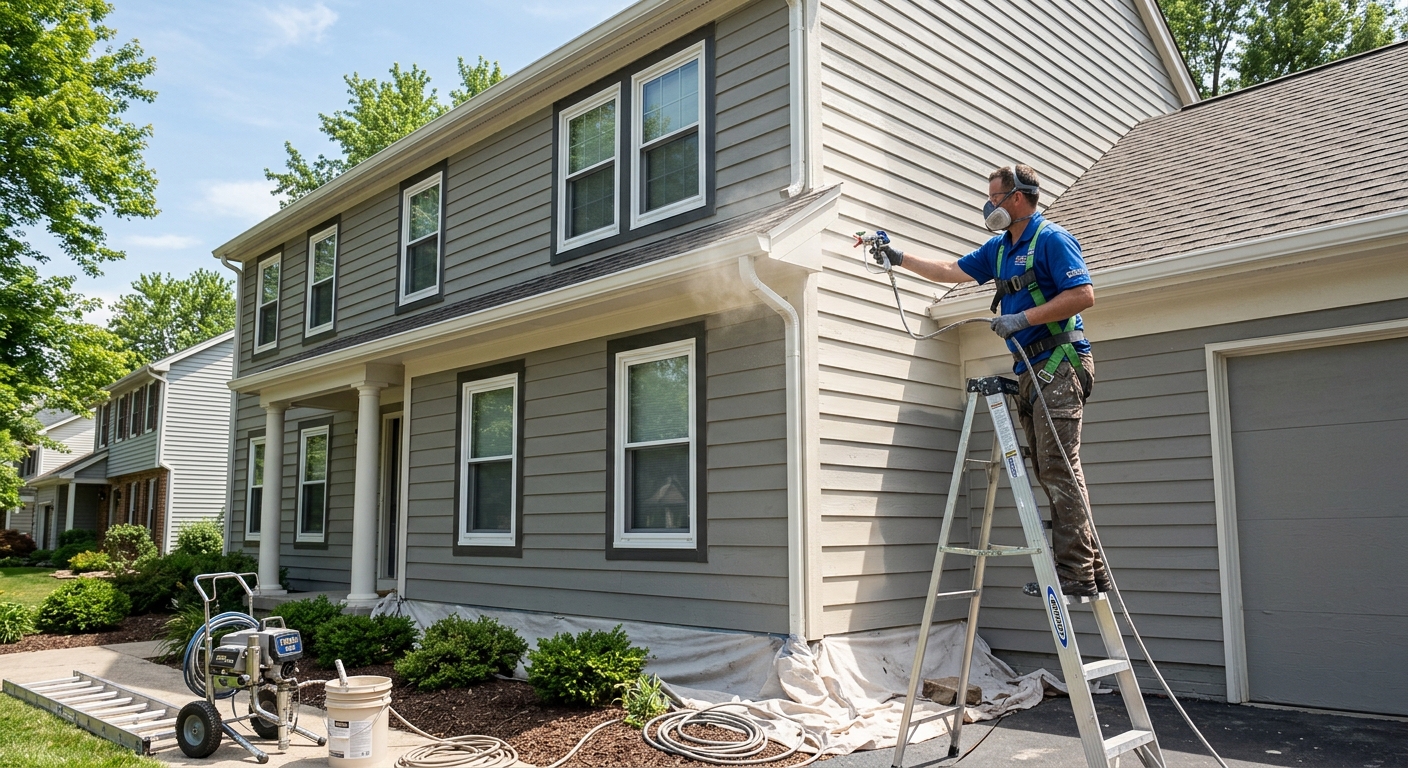
Painting options and costs in McMillan
In McMillan, homeowners typically start with one of three goals: refresh the look, protect surfaces against the coast, or tackle peeling and staining before it spreads. With a population of 9,250 (Statistics Canada, 2021 Census), demand is steady for both interior touch-ups and exterior refreshes, especially around the family-friendly pockets near Marine Way and the surrounding lower-slope streets where older duplexes and townhomes are common. A lot of houses in the Lower Mainland–Southwest were built mid-century through the 1990s, so many repaint projects require more than “wash and roll”—think scraping failing coatings, patching settlement cracks, and using stain-blocking primer for nicotine or wood tannins. On pre-1978 homes, lead-paint–safe practices may be required for the job to be completed safely (containment, cleanup, and disposal time), which can noticeably affect scheduling and cost.
Coastal BC weather shapes the price in a very practical way. Even though freezing temperatures aren’t the driver like they can be in some provinces, rain and humidity control when exterior crews can spray and roll, and they influence drying times. Contractors build in mildew-resistant systems, more careful surface prep, and the time it takes to re-mobilize between weather windows. That’s why “same house, same walls” can still vary meaningfully in final pricing. If you’re comparing options across interior and exterior, the table below will help you frame what’s typical in McMillan before you request an itemised quote.
| Service |
What's Included |
Typical Duration |
Price Range |
| Interior — whole home (walls, ceilings, trim) |
Protect floors, mask where needed, patch and sand minor defects, prime where required, apply 2-coat system, caulk trim gaps, paint walls/ceilings and a full trim package |
5–10 days |
$2,200–$6,500 |
| Interior — per room (standard bedroom or living room) |
Prep and protect, spot prime, paint walls (and matching ceiling if included), light trim/door touch-ups as scoped |
1–3 days |
$650–$1,900 |
| Exterior — full house (siding, trim, soffits) |
Thorough pressure washing, scrape loose paint, caulk, prime bare spots/stains, paint exterior walls, trim, soffits, and eaves; mildew-resistant topcoat system |
3–8 weeks (weather dependent) |
$4,500–$13,500 |
| Exterior — trim and accent colours only |
Spot prep on affected areas, scraping/sanding where needed, prime bare wood/patches, repaint trim bands and accent trim |
1–3 weeks |
$1,200–$6,500 |
| Kitchen cabinet painting (doors, frames, spray finish) |
Deep clean and degrease, remove/label doors where possible, sand and de-gloss, cabinet primer, spray application, hardware masking, reinstall/align |
1–3 weeks |
$2,200–$6,800 |
| Specialty / faux finish (accent wall, texture) |
Surface preparation for texture/adhesion, custom coating system, artistic finish application, protection and cleanup |
2–7 days |
$700–$5,500 |
Prices are estimates only and vary by project scope, site access and material selection.
What affects the price of painting in McMillan
In McMillan and across the Lower Mainland–Southwest, it’s common to see quote differences of about 30–50% for the same “paint the house” scope, even when the colour looks simple. The biggest reason is labour and surface prep complexity: not every contractor counts hidden failures the same way. In British Columbia, exterior work is tightly tied to rain and humidity. When the forecast won’t reliably deliver dry conditions, crews slow down or pause, and products need longer drying time to avoid adhesion failures and mildew bloom. That scheduling reality is one reason seasonal pressure can raise rates in peak summer weeks.
Older housing stock across the region also pushes prep costs up: scraping loose coatings, caulking repairs, patching drywall or wood, and priming stained or weathered areas can make up roughly 50–70% of total labour on a repaint. For example, a basic interior refresh in the typical $300–$8,000 range may stay near the lower end when walls are sound and you’re mostly doing a 2-coat topcoat. But if ceilings need sanding, trim needs caulk and repairs, and you must stain-block, the same “per room” job can jump toward the upper band because of primer time and rework prevention.
Concrete McMillan examples that change price quickly include: (1) peeling paint on wood trim that reveals deteriorated edges—more scraping, more primer sealing, and longer curing before caulking; (2) nicotine or tannin staining that requires a proper stain-blocking primer before colour, otherwise the spot shows through; and (3) homes with multi-storey access near sloped lots, where scaffolding or lifts add setup time and safety procedures.
| Price Factor |
Why It Matters |
Cost Impact |
| Surface prep — scraping, sanding, patching drywall or wood |
Prep determines adhesion and how long the finish holds in coastal humidity |
Large swing: often the majority of labour on repaints |
| Number of coats — 2-coat system over primer vs. 1 coat over existing |
Older colours and stain spots can require extra coverage after priming |
Medium: can add several hundred to over a thousand |
| Paint quality tier — contractor-grade vs. premium (Benjamin Moore, Sherwin) |
Higher solids and better coverage reduce touch-ups and early wear |
Medium: typically shifts total project cost by material tier |
| Ceilings and trim — adds significant time vs. walls-only |
Ceilings and detailed trim require more masking, cutting, and careful finish |
Medium to large: often noticeable per-room and per-level |
| Exterior season window — short season raises summer rates |
Rain and humidity pause work and extend drying/return visits |
Medium to large in peak weeks |
| Lead-safe precautions — required for pre-1978 homes with lead paint |
Containment, HEPA cleanup, and disposal add time and compliance steps |
Large: can materially increase total cost |
| Surface material — drywall vs. plaster vs. wood vs. stucco |
Different substrates need different prep and primers for adhesion |
Medium: changes primer type and prep intensity |
| Height and access — multi-storey exterior requires scaffolding or lifts |
Safety setup, take-down, and protected work areas add labour |
Medium to large depending on access |
Permits & regulations in British Columbia
In British Columbia, painting generally does not require a permit for typical residential projects. If a home was built before 1978, health guidelines recommend testing for lead paint before sanding, scraping, or aggressive prep. If lead is present, lead-safe work practices are standard for professional crews: wet methods to suppress dust, HEPA vacuuming, sealed containment where needed, and proper disposal of contaminated debris. This is not “homeowner-only legal permission” territory—rather, it’s accepted best practice to reduce exposure risk when hazardous materials may be present.
What can require permits is usually not the paint itself, but the work scope connected to other trades (for example, structural changes, deck rebuilding, or electrical/plumbing alterations). For a straightforward repaint—power washing, caulking, scraping, priming, and coating—permits are typically not involved.
When you hire a painter in McMillan, confirm they carry liability insurance and workers’ compensation coverage (WSBC / WCB). Get a written contract that clearly specifies the paint brand and sheen (especially for wet areas), the number of coats, and what surface prep is included (scraping limits, caulking scope, and priming requirements). For licensing checks: verify the contractor’s registration/licensing status through the British Columbia online contractor registry or business profile listings; then ask for a current certificate of insurance and a letter/documentation showing workers’ compensation coverage. If something is missing, ask before work begins—reputable crews will provide paperwork promptly.
Interior vs exterior painting — getting the best result in McMillan
In McMillan’s Lower Mainland–Southwest climate, the difference between a long-lasting paint job and a premature failure is usually the prep discipline—not just the topcoat. For interiors, surface preparation is king: filling and sanding minor defects, cleaning residues, and priming when stains or patches are involved. Then choose the right sheen by use. Flat is great for many ceiling applications, but high-touch areas benefit from eggshell or satin for easier cleaning and better scuff resistance. A practical rule holds here: two coats over the correct primer typically outlast one thick coat, especially where colour changes or patchwork exists.
For exteriors, preparation becomes even more critical. Coastal BC brings rain and humidity that can interfere with drying and adhesion if surfaces aren’t properly cleaned, scraped, and sealed. Caulking should be done as part of the prep sequence so water doesn’t migrate behind coatings—gaps that aren’t sealed will keep finding their way through even with a “good” paint system. Primer selection matters too: different substrates (bare wood, previously painted wood, fibre cement, or stucco-like surfaces) need primers with the correct bonding characteristics. While Alberta can lean toward temperature-stable systems because of wider temperature swings, in coastal BC you prioritize mildew-resistant, high-adhesion products and careful weather-window scheduling.
Cabinet painting is a smart budget alternative to replacement when boxes are solid and doors are workable; it costs less than full replacement and can land in the $2,000–$8,000 cabinet/trim band depending on finish complexity and prep. For pre-1978 homes, lead-safe precautions can add cost to prep, but they protect your family and the crew.
Where the price difference is justified: if an exterior “quick repaint” skips scraping and doesn’t prime stained areas, it may appear cheaper short-term, but it often leads to premature peeling—meaning you pay again. Investing properly at the exterior $1,200–$15,000 level usually prevents the rework cycle.
| Project Type |
Key Prep Step |
Recommended Coats |
Price Band |
| Interior — fresh drywall (new construction) |
Proper drywall cleaning and primer to seal joint compound and reduce flashing |
1 primer + 2 topcoats (typical) |
$1,000–$5,500 |
| Interior — repaint (good condition, no repairs) |
Clean/degloss, spot prime if needed, minimal sanding |
2 topcoats over appropriate primer where required |
$300–$3,200 |
| Interior — repaint (patching and priming needed) |
Patch cure time, sand smooth, prime repaired areas and stain-block as needed |
1 bonding/stain-block primer + 2 topcoats |
$700–$6,000 |
| Exterior siding (wood or fibre cement) |
Scrape loose coating, caulk gaps, prime bare spots and affected areas |
2-coat exterior system (primer + 2 topcoats where applicable) |
$4,500–$13,500 |
| Exterior trim and accents only |
Feather sanding, spot priming, careful masking for edges |
1 primer + 2 topcoats on prepared areas |
$1,200–$6,500 |
| Kitchen cabinets (spray finish) |
Deguress, sand/de-gloss, prime for adhesion, mask and spray for uniformity |
Primer + 2 cabinet finish coats (typical) |
$2,200–$6,800 |
How to choose a painting contractor in McMillan
Choosing the right painter in McMillan starts with paperwork and a quote you can actually compare. In British Columbia, confirm the contractor’s licensing/registration status using the provincial online contractor listings, then ask for a certificate of insurance showing liability coverage. Next, verify workers’ compensation coverage through documentation showing WSBC / WCB status—don’t rely on “we’re careful” or casual assurances. If they can’t produce current documents before starting, that’s a major red flag.
For pricing, request 2–3 itemised written quotes that break down labour and materials (paint/primer, caulking, prep materials, disposal) rather than one lump sum. Pay close attention to what’s excluded: deck staining, window masking, power washing scope, lead-safe procedures for pre-1978 prep, and whether furniture protection and floor covering are included. Permits generally aren’t required for routine paint work in BC, but demolition of coatings in lead-paint–risk scenarios involves compliance steps that should be explicitly stated.
Warranty matters for both workmanship and products. Ask: how long is the workmanship warranty, is it in writing, and is it transferable to the next homeowner? Also confirm the schedule and payment terms—never pay more than 10–15% upfront; use a holdback until key completion points are verified. Finally, get the start date and completion estimate in writing, including how weather windows may shift exterior timelines.
- Check insurance: certificate of liability with effective dates
- Verify WSBC / WCB coverage before prep begins
- Confirm licensing/registration status in BC through the online listings
- Request itemised labour/materials breakdown, not just a total
- Ensure surface prep scope is written (scrape/patch/prime limits)
- Ask which caulking is included and where it’s applied
- Confirm paint brand, sheen, primer type, and number of coats
- Ask how they handle mildew-prone areas in coastal BC
- Get disposal included (scrape debris, masking waste, filters)
- Clarify lead-safe plan if your home is pre-1978 (containment/cleanup)
- Use a milestone payment schedule; hold back until final walkthrough
- Get a written timeline with weather contingencies for exterior work
In McMillan, red flags I see often include: contractors who won’t put primer/coat counts in the contract, quotes that “estimate” prep without describing scraping/caulking, asking for a large upfront deposit, no proof of insurance or workers’ compensation, and crews that start exterior work without addressing rain timing (leading to tacky finishes and early failure).
Frequently asked questions — painting in McMillan
Can I paint my house exterior in spring or fall in McMillan?
In McMillan and across coastal British Columbia, spring and fall can work, but it depends on dry weather windows and substrate temperature. Exterior work is less about freezing and more about rain, humidity, and how long surfaces take to dry between coats. A professional schedule will account for forecast risk and may use mildew-resistant, high-adhesion products so the paint holds when humidity stays high. If you’re targeting an exterior repaint that’s typically in the $1,200–$15,000 band, plan on weather-driven pauses—those can extend timelines even if the calendar “looks open.” For best results, painters usually start when conditions are stable enough for consistent application and proper cure between coats.
How do I choose a painting contractor in McMillan?
Choose a contractor based on verifiable paperwork and a scope you can compare. In BC, ask for proof of liability insurance and WSBC/WCB coverage before work begins, and verify their registration/licensing status using the provincial online listings. Then compare 2–3 itemised quotes that list labour and materials separately and specify paint brand, sheen, primer type, and number of coats. Make sure the scope includes surface prep (scraping/patching/priming), caulking, and disposal—especially important on older Lower Mainland–Southwest homes. If your budget is closer to typical interior ranges (for example $300–$8,000 depending on house size and prep), the right contractor will still explain where prep increases costs so you’re not surprised later.
How many coats does an exterior repaint need in McMillan?
Most exterior repaints in McMillan are built as a 2-coat topcoat system, usually preceded by priming bare or problem areas. The exact number can increase if there are heavy stains, patching that requires extra sealing, or if the existing coating has irregular adhesion. Because coastal BC humidity can slow drying, the order and cure time matter as much as coat counts. A contractor may apply primer first, then two topcoats where required, with additional spot-priming on scuffed areas. That’s one reason a properly scoped exterior project (often $1,200–$15,000) can cost more than a “paint-only” estimate—prep and priming are what prevent blistering or early peeling.
What is the best primer for older McMillan homes?
For older homes in McMillan (many of which pre-date modern paint systems), the “best” primer depends on what you’re covering: stains, bare wood, patched drywall, or peeling coating remnants. When you might be dealing with lead-painted surfaces (commonly a concern for homes built before 1978), a lead-safe approach is important before sanding or scraping. Once the hazard is handled, stain-blocking primers are often essential if you have tannins, nicotine, or water marks—otherwise the problem can bleed through the colour. For exterior work in Lower Mainland–Southwest coastal conditions, primers must bond reliably and work with mildew-resistant topcoats. Your painter should specify the primer type in writing and explain why it’s selected for your substrate.
Should I paint or wallpaper my McMillan home?
It depends on the wall condition and your goals, but for many McMillan homeowners, paint is the simpler path—especially in homes where small cracks or patching are common. Wallpaper can look great, but it needs a very smooth, stable base and careful seams; if your walls have moisture-related issues or repeated patch repairs, paint tends to be more forgiving. Paint also offers easier maintenance in higher-touch areas and can be cheaper in the long run if prep is already planned. If you’re considering interior work, typical estimates can start around the $300–$8,000 interior range depending on scope and whether ceilings/trim are included. If your walls are textured, stained, or previously wallpapered, ask your contractor to include the base preparation steps in the quote.
How do I fix peeling exterior paint in McMillan?
Peeling exterior paint should not be skim-covered without addressing the cause. In McMillan’s coastal British Columbia climate, peeling often means moisture intrusion at failed areas, poor adhesion, or old coatings that weren’t fully stabilized. A proper repair process usually includes: scraping loose paint back to sound edges, sanding feathered transitions, cleaning the surface, caulking gaps before painting, then priming bare spots and any stained/problem areas with the correct primer. Only after that should the exterior topcoat system be applied—commonly a 2-coat finish over primer. Because lead-safe practices may be relevant for pre-1978 homes, a reputable contractor should outline how they’ll handle dust and disposal if lead is suspected. This kind of work is why exterior projects commonly sit in the $1,200–$15,000 band rather than being a quick touch-up.