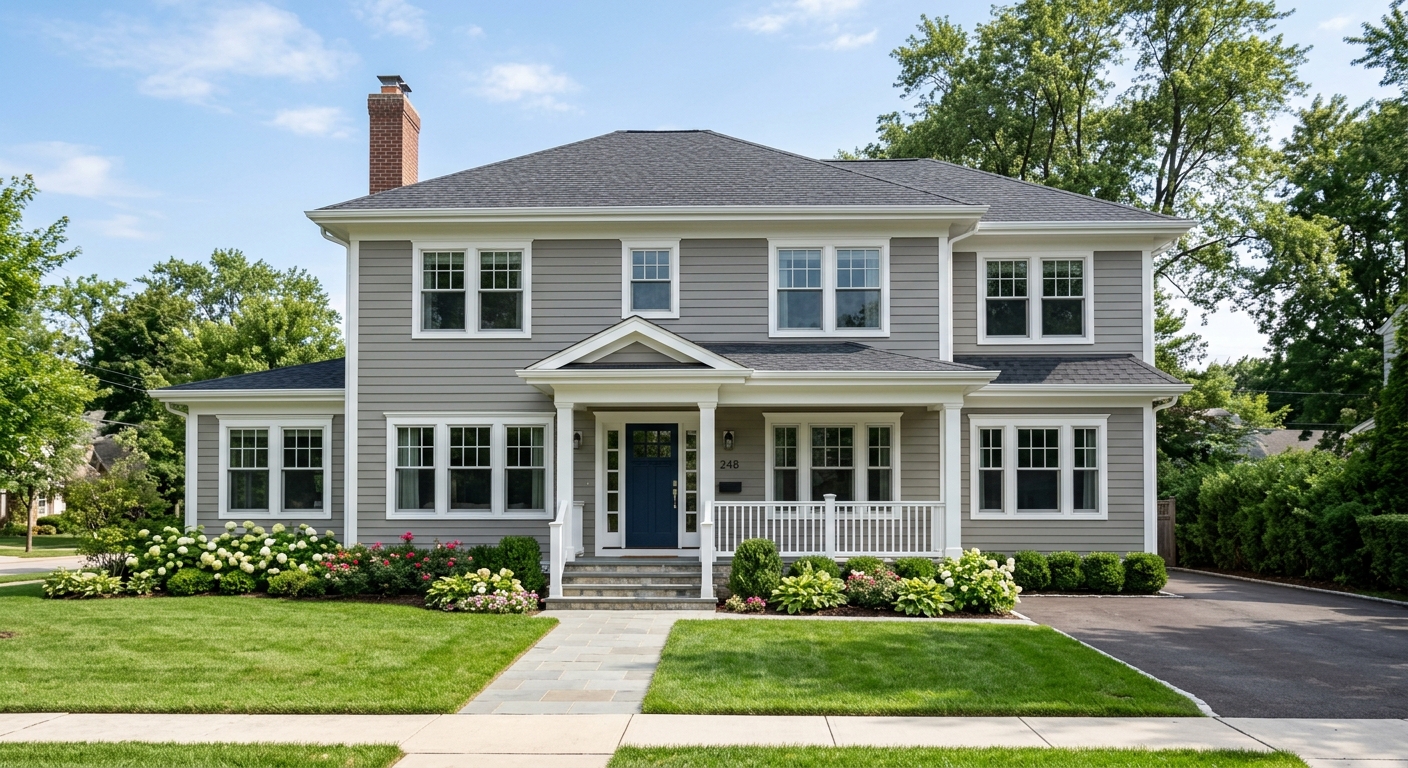
Painting options and costs in Whitecourt
Whitecourt homeowners usually start with the same question: “What will this cost?” The answer depends on the condition of your surfaces and how much prep is required. In Whitecourt, about 32.6% of homes were built before 1981 (Statistics Canada, 2021 Census), so many properties have older siding details, weathered caulking lines, and paint layers that need more scraping, sanding, patching, and priming than newer homes. Where that older build date overlaps with pre-1978 paint risk, professionals often plan for lead-safe work practices before disturbing suspect coatings.
Pricing is also shaped by the Edmonton economic region’s tight exterior window. Exterior painting is concentrated into late spring through early fall because application and curing depend on temperature, overnight lows, and dew; when the season is short, contractors book out faster and summer rates reflect that pressure. In neighbourhoods where property turnover and curb-appeal projects are common—such as the West Whitecourt area—demand for repainting and trim refreshes can surge, especially during June and July.
Below are realistic cost bands you can use to compare quotes for Whitecourt. Use them as a baseline, then we’ll fine-tune based on your wall/ceiling heights, trim complexity, surface condition, and whether you’re doing a full repaint or targeted updates.
| Service |
What's Included |
Typical Duration |
Price Range |
| Interior — whole home (walls, ceilings, trim) |
Preparation (protective covering, patching, caulking), 2-coat wall/ceiling system, primer where required, and painting of interior trim/doors; basic cleanup |
5–10 days |
$2,800–$7,200 |
| Interior — per room (standard bedroom or living room) |
Preparation and paint for walls/ceiling; trim/doors included if listed in scope; 2-coat finish system |
1–3 days |
$900–$2,600 |
| Exterior — full house (siding, trim, soffits) |
Power wash (where accessible), scraping/sanding, caulking, stain/peeling control, primer on bare or problem areas, and 2-coat exterior topcoats; surface protection and cleanup |
7–16 days |
$3,500–$11,000 |
| Exterior — trim and accent colours only |
Surface prep for trim only, spot-priming where needed, caulking at joints in scope, and 2-coat trim topcoats |
3–8 days |
$1,800–$6,500 |
| Kitchen cabinet painting (doors, frames, spray finish) |
Degreasing, sanding and bonding primer where needed, box/door spraying or detailed brushing, hardware masking, and curing time; doors usually removed if feasible |
4–10 days (plus drying/curing) |
$1,800–$6,500 |
| Specialty / faux finish (accent wall, texture) |
Surface prep, texture or faux application, basecoat/finish system as required, and protected cleanup |
1–4 days |
$1,200–$4,500 |
Prices are estimates only and vary by project scope, site access and material selection.
What affects the price of painting in Whitecourt
In Whitecourt and across the Edmonton region, two quotes for the “same” painting job can differ by 30–50% because contractors price the hidden parts: surface prep, how many coats are truly needed, access constraints, and whether the work requires specialty coatings or containment. Labour rates can also shift with scheduling—when the exterior season tightens, crews prioritize booked exterior work and interior projects fill the remaining gaps. Even within Alberta, the scope definition matters: walls-only vs walls-and-ceilings, trim included vs excluded, and whether patches/primer are part of the plan.
For exteriors, the short season in the Edmonton economic region is a major driver. Weather swings—plus frost/overnight dew—affect how well paint cures once it’s applied, which means painters concentrate jobs late May through early October when conditions stay workable. Coastal BC has a longer outdoor window, but humidity and rainfall require mildew-resistant systems and tighter timing, which can add product and labour. In Whitecourt, the compression of demand raises summer scheduling pressure, so a full exterior repaint often prices toward the top of bands such as $3,500–$11,000, while smaller trim refreshes typically land closer to $1,800–$6,500.
Older housing stock drives prep time. With 32.6% of homes built before 1981 (Statistics Canada, 2021 Census), many projects involve more scraping and patching because older caulking joints fail first and paint often adheres less predictably. One practical example: repainting weathered siding with peeling paint usually requires more labour for mechanical removal and bonding primer—often shifting the job by hundreds to thousands. Another: adding ceilings and detailed trim can add a full day of cutting-in and masking, even when the paint is the same.
| Price Factor |
Why It Matters |
Cost Impact |
| Surface prep — scraping, sanding, patching drywall or wood |
Prep determines adhesion and smoothness; poor prep causes peeling, blistering, and visible flashing |
Often +20% to +40% on repaints |
| Number of coats — 2-coat system over primer vs. 1 coat over existing |
Thin coverage hides better when coats are built correctly; changing wall/colour depth impacts coverage |
Typically +10% to +25% |
| Paint quality tier — contractor-grade vs. premium (Benjamin Moore, Sherwin) |
Better films level better and can reduce recoat issues, especially on trim and doors |
Material-driven +5% to +20% |
| Ceilings and trim — adds significant time vs. walls-only |
Cutting-in, masking, and detailed brush/roller work increases labour hours |
Often +15% to +35% |
| Exterior season window — short season raises summer rates |
Availability of crews tightens during late spring to early fall; weather constraints reduce productive hours |
Can shift the job by +10% to +30% |
| Lead-safe precautions — required for pre-1978 homes with lead paint |
HEPA vacuuming, wet methods, containment, and disposal add time and materials |
Can add +10% to +25% |
| Surface material — drywall vs. plaster vs. wood vs. stucco |
Different materials need different primers and abrasion prep for bonding |
Varies; +10% to +30% for difficult substrates |
| Height and access — multi-storey exterior requires scaffolding or lifts |
Safety gear and set-up time increases labour and scheduling |
Often +15% to +45% |
Permits & regulations in Alberta
In Alberta, painting generally does not require a permit. You typically do not need a permit for interior or exterior painting itself (including repainting siding, trim, ceilings, and walls). Permits are usually only triggered for other work types—like structural changes, electrical/plumbing alterations, or certain major exterior renovations—rather than coating work.
For homes built before 1978, health guidelines recommend testing for lead paint before sanding, scraping, or dry abrasion. If lead is present, professional lead-safe practices are standard: wet methods to control dust, HEPA vacuuming, proper containment, and disposal procedures. This isn’t “homeowner-banned” work, but it’s the responsible approach most contractors follow in Alberta when the paint history suggests risk.
When you hire a contractor in Whitecourt, verify insurance and coverage every time. A legitimate painting business should carry general liability insurance and have WSIB/WCB workers’ compensation coverage for its employees. Then protect yourself with a written contract that states the paint brand/line (or approval process), sheen, number of coats, surface prep scope (including scraping/patching/priming where needed), and cleanup/disposal responsibilities.
Step-by-step verification: (1) Ask for their Certificate of Insurance and confirm it includes the correct coverage type and active dates. (2) Request proof of workers’ compensation coverage (WSIB/WCB) for employees. (3) Look up their business information online as applicable and match the insured entity name to the quote. (4) Get everything in writing—scope, materials, and schedule—before deposits are paid.
Interior vs exterior painting — getting the best result in Whitecourt
Whitecourt’s climate rewards the boring parts: prep, correct primer, and the right sheen for how the room is used. Interior failures are often caused by skipping repair work (filling cracks, sanding ridges, and priming stains), while exterior failures are commonly caused by painting over loose material or not addressing water pathways.
For interiors, choose quality by system, not hype. Surface prep matters more than the brand of topcoat: patch compound needs full cure, drywall seams may require spot priming, and glossy marks should be scuffed and sealed. Sheen should match the room’s wear. Flat can hide wall imperfections but shows scuffs; eggshell is a common “balance” for living rooms and bedrooms, while satin or semi-gloss works better on trim, doors, and higher-touch surfaces. Two coats over proper primer will generally outlast one heavy coat, especially when you’re changing colour depth.
For exteriors, caulking is not optional—it’s part of waterproofing. In Alberta’s freeze-thaw cycles, joints open and contract; if you paint without addressing failed caulking, water can creep behind coatings. Use the right primer for the substrate (wood vs fibre cement vs patched areas) and apply products suited to local temperature and curing conditions. While mildew resistance is more emphasized in BC due to dampness, Whitecourt still benefits from coatings designed for durability and wash resistance because wind-driven dirt and freeze-thaw exposure are real.
Kitchen cabinet painting is a smart budget alternative to replacement when the boxes and doors are structurally sound. If your existing finish is failing, that’s where costs rise—bonding primer and sanding time are what you’re paying for. For example, a cabinet refresh can fit the $1,800–$6,500 band, but when cabinets need extensive repairs, you’re effectively paying for extra prep rather than “just paint.”
| Project Type |
Key Prep Step |
Recommended Coats |
Price Band |
| Interior — fresh drywall (new construction) |
Prime all surfaces (especially seams) and sand smooth after primer cure |
1 primer + 2 finish coats |
$2,800–$5,400 |
| Interior — repaint (good condition, no repairs) |
De-gloss/scuff where needed, clean thoroughly, spot-prime minor marks |
2 finish coats (plus spot primer as required) |
$900–$4,500 |
| Interior — repaint (patching and priming needed) |
Patch, sand, spot-prime repaired drywall/wood and seal stains |
1 primer + 2 finish coats (typical repaint system) |
$1,400–$7,200 |
| Exterior siding (wood or fibre cement) |
Scrape/repair failing paint, sand edges, caulk joints in scope, prime bare areas |
1 primer + 2 topcoats |
$3,500–$11,000 |
| Exterior trim and accents only |
Strip/sand loose coating, spot prime, and caulk trim edges |
2 topcoats (with spot primer where needed) |
$1,800–$6,500 |
| Kitchen cabinets (spray finish) |
Degrease, sand for adhesion, and bond with proper primer before topcoat |
1 primer + 2 finish coats (often sprayed) |
$1,800–$6,500 |
How to choose a painting contractor in Whitecourt
Choosing the right painting contractor in Whitecourt starts with proof. First, confirm Alberta coverage documents: ask for a Certificate of Insurance (liability) showing the company name and active dates, and verify that workers’ compensation coverage (WSIB/WCB) is in place for their employees. If you’re uncertain, request the paperwork directly—reputable contractors provide it without pushing back.
Next, request 2–3 itemised written quotes. You want a breakdown that separates labour and materials, and specifies what’s included in preparation (patching, sanding, caulking, primer on repaired areas, and any stain blocking). Avoid vague “paint and labour” language; instead, look for details like number of coats, surface conditions they will address, and how they handle furniture/dust containment. If there’s a permit requirement for an associated component (rare for painting itself), it should be stated clearly whether it’s included or not—most painting-only scopes do not require one.
Warranty matters: ask for the workmanship warranty length and whether it covers adhesion/peeling related to prep. Also confirm the product/manufacturer warranty terms and whether transfer is required. On payment, keep control—never pay more than 10–15% upfront; a holdback until the job is complete is a fair approach.
Timeline should be written: get a start date, weather contingencies for exterior work, and a completion estimate that accounts for drying/curing time.
- Confirm liability insurance certificate (active dates and correct legal name).
- Confirm WSIB/WCB coverage for employees (request proof, not reassurance).
- Ask for a scope that lists prep tasks: scraping, sanding, patching, caulking, priming.
- Request sheen and finish schedule by room/surface (walls vs trim vs doors).
- Check if colour change requires an extra primer coat.
- Verify cleanup/disposal is included (paint, debris, and masking materials).
- Ask whether they protect floors and remove/cover fixtures correctly.
- For exteriors, ask how they handle weather (temperature/dew constraints and scheduling).
- Get the number of coats in writing (primer and topcoat count).
- Confirm warranty duration and what it covers (prep-related failures vs normal wear).
- Use a payment schedule with a small deposit and holdback until punch list completion.
- Require a written start date and completion estimate.
Red flags in Whitecourt include: quotes that skip prep details (“we’ll paint over it”), inability to provide insurance/WSIB/WCB documents, a high upfront deposit with no holdback, no written warranty terms, and vague schedules that ignore exterior weather realities.
Frequently asked questions — painting in Whitecourt
How much does it cost to paint a house in Whitecourt?
For a typical Whitecourt home, exterior repainting is usually the bigger-ticket item because prep and scheduling are weather-dependent. In the Edmonton region, exterior painting commonly falls into the $3,500–$11,000 band depending on how much surface repair is needed (scraping, caulking, priming) and how complex the trim and access are. Interior whole-home painting typically sits in the $2,800–$7,200 range. Whitecourt’s housing stock also matters: with 32.6% of homes built before 1981 (Statistics Canada, 2021 Census), many properties need more prep than homeowners expect, which can push the estimate toward the higher end.
How much does interior painting cost per room in Whitecourt?
Per-room interior pricing in Whitecourt usually depends on wall condition, whether ceilings and trim are included, and how much patching/priming is required. A standard bedroom or living room repaint commonly lands between about $900 and $2,600 when it includes the typical two-coat wall/ceiling system and reasonable protection/masking. If you have stains, uneven drywall repairs, or colour changes that require extra primer, the job can climb toward the upper end. Contractors also price trim and doors separately if they’re not explicitly included in the room scope—so the “per room” number can be misleading unless the quote spells out exactly what’s included.
When is the best time for exterior painting in Whitecourt?
For exterior work in Whitecourt and the broader Edmonton economic region, the best window is late spring through early fall—roughly late May to early October—when temperatures are workable and paint can cure without problems from overnight lows or dew. The short season is one reason exterior quotes can tighten around summer: crews need weather-ready schedules. If you’re planning a full exterior repaint, aim to book earlier in the season so you’re not forced into rushed timelines. A contractor who checks the forecast and discusses curing conditions is usually delivering a better long-term result than one who simply starts whenever materials arrive.
How many coats of paint do I need?
Most painting jobs use a system: primer where required, then two topcoats. For example, many interior repaints use 2 finish coats, with spot priming for patched areas and stains. For fresh drywall, it’s commonly 1 primer coat followed by 2 finish coats for consistent coverage. On exteriors, the typical approach is 1 primer coat (especially on bare or problem areas) plus 2 exterior topcoats. If someone proposes “one heavy coat” to save time, it often leads to uneven sheen, poor hide, and quicker failure—especially on exterior surfaces that must survive Alberta’s freeze-thaw cycles and wind-driven dirt.
What paint is best for Whitecourt's climate?
In Alberta, the “best” paint is the right coating system for the substrate and the conditions, not just a brand. For interiors, you typically choose sheen by wear: eggshell for many living spaces, satin for higher-touch areas and trim/doors. For exteriors, durable exterior-grade coatings and the correct primer matter most because they control adhesion and water resistance after prep. Whitecourt’s housing stock includes a meaningful share of older homes (32.6% built before 1981 (Statistics Canada, 2021 Census)), so the primer and bonding steps are frequently where results are won or lost. A good contractor matches primer type to wood/fibre cement and ensures caulking is done before topcoating.
How long does exterior paint last here?
Exterior paint life in Whitecourt depends heavily on prep quality, the condition of caulking joints, and whether the contractor used the correct primer and coat count for the surface. With thorough scraping, sanding, patching, proper priming of bare areas, and full two topcoats, many homeowners see longer service life than “quick repaint” jobs that skip prep. The typical range you’ll hear from contractors is often several years to a decade+; however, older homes can deteriorate faster if previous coatings are failing or joints aren’t sealed. If your home is in the prep-heavy category, it’s common for the estimate to reflect that—often aligning closer to the $3,500–$11,000 exterior band.