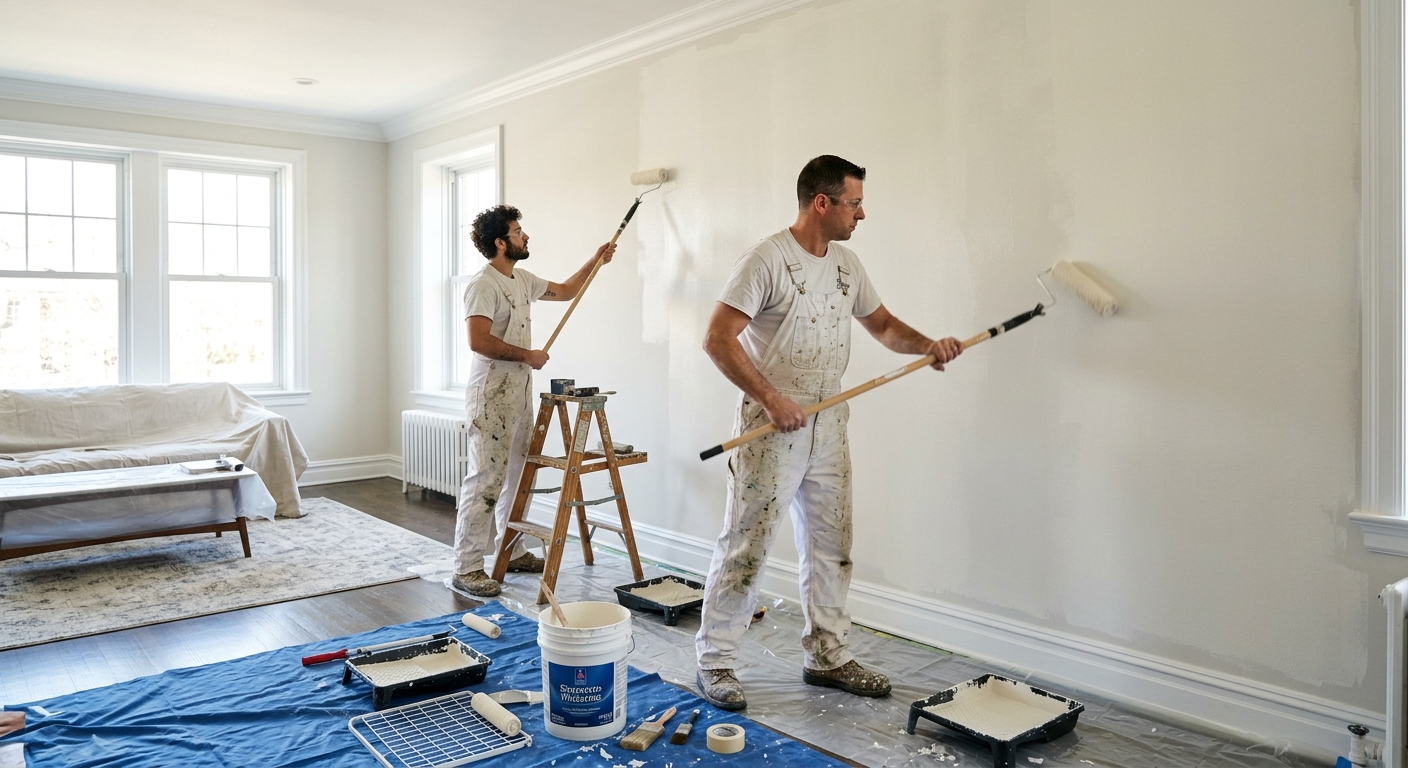
Painting options and costs in Raymond
Painting in Raymond, Alberta is all about choosing the right scope for the home you have and the timing that fits our short, workable weather window. With 53.8% of area homes built before 1981, many projects start with heavier surface prep—scraping loose material, filling chips, sanding rough areas, and priming before any topcoat goes on. If your home dates back to the pre-1978 era, contractors also plan for lead-safe work practices during aggressive sanding or scraping. On the housing side, Raymond’s 1,150 homeowner households (86.5% of all households) means steady demand for both interior refreshes and durable exteriors.
In the Lethbridge–Medicine Hat region, exterior painting costs tend to run higher because the best exterior window is tightly climate-bound. Crews typically target late spring through early fall—days generally need to stay above about 10°C for proper application and curing. When everyone tries to book the same season, scheduling pressure increases. Meanwhile, older housing stock across the region often means more labour for prep and mixed substrate challenges (wood elements, fibre cement, and patchwork that has been painted multiple times). In Raymond, trades can be especially busy around the older residential pockets near the downtown core, where repainting cycles land frequently.
Below are realistic starting ranges so you can compare quotes side-by-side before you choose a contractor and lock in a schedule.
| Service |
What's Included |
Typical Duration |
Price Range |
| Interior — whole home (walls, ceilings, trim) |
Move/protect furnishings as needed, wash where required, patch & sand, prime stained/soft spots, caulk select joints, paint walls/ceilings, paint trim/doors; standard site cleanup |
4–8 days |
$1,800–$4,800 |
| Interior — per room (standard bedroom or living room) |
Protect floors, wash, patch/sand, prime as needed, paint walls and ceiling, paint baseboards/door trim (standard quantities) |
1–3 days |
$800–$1,900 |
| Exterior — full house (siding, trim, soffits) |
Power wash or scrub, scrape/sand failing paint, caulk repairs, prime bare spots, spot-priming where needed, paint siding/trim/soffits; perimeter protection and cleanup |
5–12 days |
$4,500–$8,500 |
| Exterior — trim and accent colours only |
Surface prep on trim areas only, caulk where needed, prime bare spots, paint trim/accent sections; excludes full siding repaint unless specified |
2–5 days |
$2,500–$4,800 |
| Kitchen cabinet painting (doors, frames, spray finish) |
Remove hardware, degrease and sand, prime bonding primer, spray/brush finish on doors (and frames as noted), light sand/coat touch-ups, re-install hardware; includes basic protection |
5–10 days (including dry/cure time) |
$1,800–$3,900 |
| Specialty / faux finish (accent wall, texture) |
Prep and sealing, layout/edge work, apply specialty system (texture/faux), protect adjacent surfaces, final touch-ups |
2–6 days |
$650–$3,200 |
Prices are estimates only and vary by project scope, site access and material selection.
What affects the price of painting in Raymond
Even for the “same” job, Raymond quotes can differ by 30–50% across the Lethbridge–Medicine Hat region and Alberta because painting costs are driven more by prep and scheduling than by paint colour alone. Exterior work, in particular, is tightly bound to the warm-weather application window. In southern Alberta, when temperatures remain reliably above about 10°C and nights don’t hover near freezing, crews can apply and let coatings cure correctly. Coastal BC often has a longer calendar for temperature but adds humidity and mildew risk, pushing contractors toward specialized products and careful dry-weather timing. In our drier climate, it’s sun, wind and freeze-thaw planning that matter—so even without mildew, weather still affects labour timing and productivity.
Older housing stock is the other major driver. In this region, 53.8% of homes were built before 1981, which commonly means more labour for scraping, caulking, patching and priming. On a repaint, prep can account for 50–70% of labour time because contractors must stop peeling edges, feather old repairs and manage mixed substrate adhesion. That’s why an exterior repaint can fall into a range like $2,500–$4,800 for trim-focused work, but climb into $4,500–$8,500 when the full house siding and soffit system needs attention.
Local conditions create cost swings in concrete ways. For example, houses with more stubborn flaking paint increase scraping time and prime coverage. Multi-storey access (or long runs of trim under eaves) can require scaffolding or lifts, raising labour costs. Conversely, newer drywall interiors with fewer repairs can keep interior projects near the lower end of $800–$1,900 per room—especially when patching is minimal and caulking needs are straightforward.
| Price Factor |
Why It Matters |
Cost Impact |
| Surface prep — scraping, sanding, patching drywall or wood |
Prep determines adhesion and how well new coats bond to old surfaces |
+ $300 to + $3,000 depending on condition |
| Number of coats — 2-coat system over primer vs. 1 coat over existing |
Coverage and hide depend on primer use and substrate colour |
+ $200 to + $1,800 |
| Paint quality tier — contractor-grade vs. premium (Benjamin Moore, Sherwin) |
Higher solids and better coverage can reduce recoat time and improve durability |
- $0 to + $1,500 (net effect varies) |
| Ceilings and trim — adds significant time vs. walls-only |
Ceilings require detail work and more cutting-in; trim needs cleaner masking |
+ $150 to + $1,200 |
| Exterior season window — short season raises summer rates |
Demand concentrates into a few months; crew availability tightens |
+ 10% to + 25% on some exterior schedules |
| Lead-safe precautions — required for pre-1978 homes with lead paint |
Containment, HEPA vacuuming and safe disposal add setup time |
+ $300 to + $2,500 for worst-case prep |
| Surface material — drywall vs. plaster vs. wood vs. stucco |
Different substrates need different primers and repair approaches |
+ $200 to + $2,000 |
| Height and access — multi-storey exterior requires scaffolding or lifts |
Safety equipment and slower work pace increase labour |
+ $400 to + $2,800 |
Permits & regulations in Alberta
In Alberta, painting work typically does not require a permit for standard interior or exterior repainting. However, that doesn’t mean “anything goes.” For homes built before 1978, health guidelines commonly recommend checking for potential lead paint exposure before doing sanding, scraping, or dry abrasive prep. For professional crews, lead-safe work practices are standard: wet methods to reduce dust, HEPA vacuuming where appropriate, careful containment, and proper disposal of paint debris. While homeowners aren’t usually legally required to follow the same professional protocols, it’s the safer path—and it’s what you should expect from a reputable contractor.
What does require permits is not painting itself, but other related work—like structural changes, some roof replacements, or permits tied to building-envelope remediation (the contractor should tell you if your scope triggers any municipal building requirements). For painting, the key compliance items are insurance and coverage.
When you hire in Raymond, verify these step-by-step: (1) confirm the contractor’s business licensing and whether they’re in good standing through the appropriate Alberta business registry/contact channel used for contractor verification; (2) ask for a current certificate of liability insurance naming you as the interested party if applicable; (3) request proof of WCB/WSIB coverage for workers (often shown as a WCB clearance/coverage document or account confirmation); and (4) require a written contract listing paint brand/sheens, number of coats, and which prep items are included (scrape/sand areas, caulking, patching, priming). A clear scope beats surprises later.
Interior vs exterior painting — getting the best result in Raymond
In Raymond’s climate, the difference between a long-lasting paint job and an early failure is usually prep quality and system choice, not just brand. For interiors, topcoat quality matters—but surface prep matters more. That means proper filling and sanding, cleaning off residue, and priming any repaired or stained areas. For sheen, pick by room use: flat is typical for low-wear ceilings, eggshell is common for living areas, and satin or semi-gloss is better where the walls get wiped more often (kitchen areas, hallways). Also, two coats over the correct primer usually outlasts “one heavy coat” because it builds uniform hide and reduces premature scuffing.
For exteriors, Alberta’s sun and wind followed by temperature swings makes thorough prep non-negotiable. Clean surfaces, scrape failing edges, and prime bare or weathered spots. Caulking matters because water ingress often starts in joints and trim lines—so caulking should be done before painting and followed by the right primer/topcoat. Primer choice is also substrate-specific: wood and repaired areas often need a primer designed for bonding and sealing; metal or patch materials may require primers compatible with the topcoat system. In BC, mildew-resistant coatings are a big driver due to humidity; in southern Alberta, it’s more about temperature-stable application, curing, and adhesion across freeze-thaw cycles.
Cabinet painting is the budget alternative to replacement, but only when surfaces are properly degreased and primed for adhesion. For pre-1978 homes, lead-safe precautions should be planned for any aggressive sanding or scraping, even on interior trim.
As a dollar example, repainting a whole interior home is often in the $1,800–$4,800 range, while a full exterior can land in the $4,500–$8,500 range because exterior prep, coatings and short-season scheduling multiply labour and material system requirements.
| Project Type |
Key Prep Step |
Recommended Coats |
Price Band |
| Interior — fresh drywall (new construction) |
Seal/prime new drywall to control absorbency and prevent flashing |
Primer + 2 finish coats |
$1,500–$4,000 |
| Interior — repaint (good condition, no repairs) |
Wash, light scuff-sand, spot-prime minor stains |
2 finish coats over spot-primed areas |
$800–$3,200 |
| Interior — repaint (patching and priming needed) |
Patch, sand smooth, prime repairs and any exposed material |
Primer + 2 finish coats (typical) |
$1,200–$4,800 |
| Exterior siding (wood or fibre cement) |
Scrape failing paint, caulk joints, prime bare spots before topcoat |
Primer where needed + 2 exterior top coats (typical) |
$4,500–$8,500 |
| Exterior trim and accents only |
Mask carefully, prep trim edges, prime exposed or chalky areas |
Prime where needed + 2 finish coats (typical) |
$2,500–$4,800 |
| Kitchen cabinets (spray finish) |
Degrease thoroughly and use bonding primer for adhesion |
Primer + 2 finish coats (spray) |
$1,800–$3,900 |
How to choose a painting contractor in Raymond
Choosing a painter in Raymond starts with verification. First, ask for proof of Alberta business licensing/registry details (or the exact registration info used to operate in the province), then request a current certificate of liability insurance with policy dates that cover the work period. Next, confirm WCB/WSIB workers’ compensation coverage with documentation (not just “we’re covered” verbally). If a contractor can’t provide both insurance and WCB coverage, walk away.
Get 2–3 itemised written quotes—not lump sums only. The best quotes break down labour and materials: prep actions (scraping/sanding limits, caulking type, patching), number of coats by surface, primer and paint brands/sheens, and what’s included for disposal and cleanup. Check whether a permit is included if your scope triggers one (painting alone usually does not in Alberta). Also ask about prep exclusions like “paint only, no repairs” so you don’t discover extra charges after the job starts.
Look for clear warranty terms. A workmanship warranty should be in writing (commonly covering peeling/failure due to installation issues), and you should understand the scope and duration. Product/manufacturer warranties are different—they may require specific prep and application methods. Payment should be conservative: never pay more than about 10–15% upfront, and insist on a holdback until completion and final walkthrough. Finally, demand a written timeline with a start date and an estimated completion date.
- Verify contractor identity and that they operate in Alberta (registration details upon request).
- Request certificate of liability insurance and confirm coverage dates match your project window.
- Ask for WCB/WSIB coverage proof before any work begins.
- Get an itemised quote: labour, materials, primer type, paint brand and sheen.
- Confirm how prep is handled: scraping limits, sanding level, caulking joints, and patching approach.
- Confirm paint system: primer included or “spot only,” and the total number of topcoats.
- Ask about colour-change coverage assumptions (light to dark or stain-blocking requirements).
- Clarify exclusions: what repairs are not included (rotten wood, major drywall replacement).
- Ensure cleanup/disposal is spelled out (drop sheets, nail/paint debris removal).
- Confirm lead-safe approach if your home is pre-1978 and heavy scraping/sanding is needed.
- Agree on warranty length for workmanship and how claims are handled.
- Set payment schedule in writing with a holdback until completion and punch-list items are addressed.
Red flags I watch for in Raymond include: quotes that won’t specify paint brands or sheen, no mention of primer/number of coats, refusal to show WCB/WSIB or liability coverage proof, asking for large deposits upfront, and “we’ll just see how it goes” language around prep and repairs.
Frequently asked questions — painting in Raymond
How long does exterior paint last here?
In Raymond and the broader Lethbridge–Medicine Hat region, exterior paint life is strongly tied to prep quality and coating system choice. In real-world conditions, a well-prepped exterior repaint often targets roughly the mid-to-upper range of expected service life—especially when caulking is addressed and bare/failed spots are properly primed. If the house has older siding and prior peeling paint (common where 53.8% of homes were built before 1981), skipping scrape-and-prime work can cut lifespan significantly. Timing matters too: crews typically schedule exterior work in the late spring to early fall period when daytime temperatures stay reliably above about 10°C for proper application and curing. If you’re budgeting, a full-house exterior project often sits around $4,500–$8,500, and that prep effort is what helps it last.
Should I paint or replace my cabinets?
For most Raymond homeowners, cabinet painting is usually the smart choice when the box/frame is structurally sound and only doors, drawers and faces look dated. Painting doesn’t fix water damage, warped boxes, or severe hardware/hinge failure—those cases may require replacement. But when the cabinets are mostly intact, painting can modernize the look for a fraction of the cost. A spray-finish cabinet job commonly falls in the $1,800–$3,900 band and includes bonding primer, sanding, and multiple finish coats for durability. The key is prep: degreasing and proper primer adhesion. If a quote only mentions “paint” and doesn’t clearly list sanding/priming steps, ask for clarification before you commit.
How do I prep walls before painting?
For interior walls in Raymond, the contractor typically handles prep, but you can still help by moving furniture and clearing access. If you’re doing light prep yourself, start by removing wall hangings and protecting floors. Avoid heavy sanding unless you’re trained—especially in older homes where pre-1978 paint could contain lead and dust control matters. For non-lead concerns, walls should be clean and dry: patching small holes and letting repairs cure is important, and then sanding smooth so the wall doesn’t show ridges. Professional painters then wash where needed, caulk select joints, prime repaired/stained areas, and apply two finish coats. If you’re considering a per-room paint refresh, interior per-room pricing often lands around $800–$1,900, but prep quality strongly affects finish quality—so skipping cleaning or repairs can cost you in rework.
Do I need to worry about lead paint in an older Raymond home?
If your Raymond home is pre-1978, lead paint exposure is a concern during sanding, scraping, and demolition of paint layers. Alberta guidelines often recommend testing for lead paint before aggressive prep, and professional painters commonly follow lead-safe practices (wet methods to reduce dust, HEPA vacuuming, containment when needed, and proper disposal). While this isn’t always a homeowner legal requirement the way it is for professional work methods, it is standard good practice for contractors. A reputable crew will ask for building age details and tell you how they’ll manage dust control. If your project involves scraping or removing old flaking paint, expect additional time and cost in the quote for safe containment and cleanup—one reason older housing can push exterior and trim projects higher than a “paint-only” scenario.
How long does it take to paint a house?
Timing in Raymond depends on whether you’re painting inside or out and how much repair work is needed. A “whole home” interior repaint usually takes several days; for a smaller number of rooms, it can be much faster—often 1–3 days for a standard bedroom/living room when surfaces are in good shape. Exterior timelines are longer because of prep, drying/curing, and the short season. In Lethbridge–Medicine Hat, crews commonly plan exterior work for late spring through early fall when temperatures stay above about 10°C for proper application. Weather, access, and amount of peeling/surface damage can stretch a full exterior repaint to roughly a week or more. For budgeting, if you’re looking at a full interior in the $1,800–$4,800 band, the schedule often reflects prep and coat count, not just hours on site.
What's the difference between paint quality tiers?
Paint quality tiers generally differ in solids content, hiding power, durability, and how uniformly the product levels on walls and trim. Premium contractor lines can cover better with fewer visible streaks or flashing, and they often hold up longer against scuffing and cleaning—important in high-traffic interiors and sun-exposed exteriors. That said, quality paint can’t compensate for poor prep: if primer is missing where it’s needed, or peeling areas aren’t scraped back and feathered, failure can happen early regardless of brand. In quotes, quality tiers usually show up in the paint brand and sometimes the recommended system (primer plus two topcoats). When you compare bids, check whether both contractors include the same number of coats and the same primer strategy—those details often matter as much as the brand tier itself.