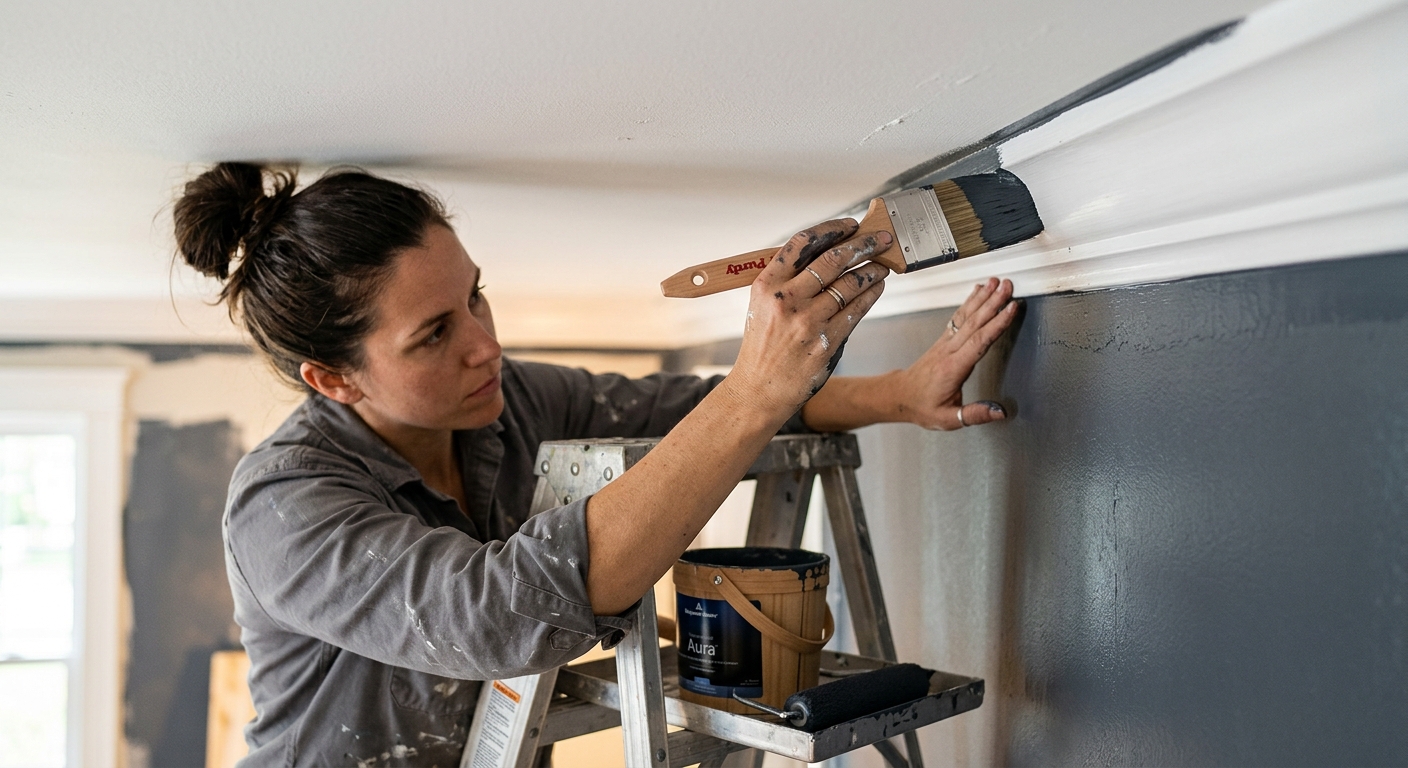
Painting options and costs in Beverly Heights
Beverly Heights homeowners often start their search for “the same paint job” in very different ways than they expect—because prep and weather realities can change the scope. Beverly Heights is a small community within the Calgary region (population 3,190, Statistics Canada, 2021 Census), and most nearby service capacity is routed through the Calgary market. That matters when scheduling exterior work, since the summer window in this area is relatively short and weather-dependent. If your home dates from the earlier housing stock across the region (many are 1960s–2000s, with pockets of pre-1978), repainting can require extra scraping, patching, caulking, and bonding primer before any topcoat goes on.
Calgary-area climate shapes costs in a practical way: exterior work is typically workable from about mid-May to late September, when daytime highs reliably stay above 10°C and surfaces dry properly between coats. Shorter, peak-season demand means firmer rates versus shoulder months, even though we’re not dealing with coastal-style year-round humidity. Still, freeze–thaw cycles, strong UV, and hail risk mean we prioritize high-quality acrylics and flexible exterior systems that tolerate movement, and we time around rain and overnight lows.
In Beverly Heights, painters are especially in demand for exterior repaints around established residential corridors and the busier parts of the community where homes need tidy staging and careful edging near driveways and entryways. If you’re planning a full update this year, comparing interior versus exterior and different prep levels will help you budget accurately—so below is a typical pricing snapshot.
| Service |
What's Included |
Typical Duration |
Price Range |
| Interior — whole home (walls, ceilings, trim) |
Masking, minor patching, sanding, caulking (as needed), primer where required, 2-coat finish on walls/ceilings, paint for trim and doors (standard sheen), clean-up and protection of flooring |
6–12 business days |
$2,000 – $7,500 |
| Interior — per room (standard bedroom or living room) |
Prep, spot patching, sanding, caulking, 2-coat finish on walls, ceiling included if required, trim touch-up or standard trim repaint (based on scope) |
1–3 business days |
$400 – $1,800 |
| Exterior — full house (siding, trim, soffits) |
Power washing, scraping and sanding loose paint, caulking at gaps/joints, priming bare spots and high-risk areas, elastomeric/flexible coating system as specified, 2-coat coverage, careful masking and final wash-down |
7–18 business days |
$3,500 – $9,000 |
| Exterior — trim and accent colours only |
Surface prep for trim and accents, primer where needed, 2-coat application to trim and accent surfaces, masking and protection, touch-ups at transition edges |
3–8 business days |
$2,500 – $6,000 |
| Kitchen cabinet painting (doors, frames, spray finish) |
Degreasing/cleaning, sanding/scuffing, repairs, bonding primer as required, sprayed finish for doors, brushing for frames, hardware removal (as agreed), 2–3 step finish depending on product system |
5–14 business days (including cure time) |
$1,800 – $7,000 |
| Specialty / faux finish (accent wall, texture) |
Surface stabilization, base coat, texture/faux application, protective topcoat, color matching, sealing and blending at edges |
2–6 business days |
$600 – $4,500 |
Prices are estimates only and vary by project scope, site access and material selection.
What affects the price of painting in Beverly Heights
Across Calgary and Alberta, it’s common to see quotes for what looks like “the same job” come in 30–50% apart, even before you compare brands. The biggest drivers are prep complexity, the actual number of coats, and how much detailing is involved (ceilings, trim, doors, caulking, and edgework). Because demand spikes during the short exterior window, labour availability and scheduling can also shift pricing—especially mid-summer when many homeowners want their exteriors refreshed at once.
For exteriors in this region, the season is tightly climate-bound: typically late May to early October, when daytime temperatures stay above about 10°C and surfaces can dry properly after rain or washing. In Ontario and Alberta you’re working within similar “get it done when it’s dry and warm” constraints (roughly late spring through early fall). Coastal BC can paint longer, but higher humidity and frequent rainfall increase dwell time for drying and can require mildew-resistant products and more careful timing. Here in Beverly Heights, the season is shorter, so contractors prioritize projects that meet weather-ready timelines—often pushing pricing toward the upper end of bands. Older homes throughout the region may require extensive prep; scraping, patching, caulking and priming can represent 50–70% of total labour on a repaint, which is why a repaint that starts at the lower end of a range can quickly move toward the higher end.
Concrete examples: (1) If your siding has flaking paint that has to be scraped back and stabilized, you may move from an exterior trim-only budget to full exterior work, shifting you from roughly $2,500 – $6,000 toward the full-house band $3,500 – $9,000. (2) If patching reveals soft drywall or damaged trim, additional priming and spot coating raises costs—often by several hundred dollars on smaller jobs. Prep and product system choices also interact with price bands like interior whole-home projects that can land around $2,000 – $7,500 depending on ceiling height, trim quantity, and repair scope.
| Price Factor |
Why It Matters |
Cost Impact |
| Surface prep — scraping, sanding, patching drywall or wood |
Coverage depends on sound substrate; loose paint and damaged areas require stabilization before topcoat |
Can add 20–60% of labour on repaints |
| Number of coats — 2-coat system over primer vs. 1 coat over existing |
Inadequate film build shortens lifespan, especially outdoors under UV and temperature swings |
Typically +10–25% when primer and full 2-coat system are required |
| Paint quality tier — contractor-grade vs. premium (Benjamin Moore, Sherwin) |
Premium products often improve coverage, durability and stain-blocking; cheaper paints can require more coats |
Material delta plus possible coat increase: ~5–20% |
| Ceilings and trim — adds significant time vs. walls-only |
Cut-in detail, masking, and multiple surfaces increase labour and dry-time coordination |
Often +15–35% on interior refreshes |
| Exterior season window — short season raises summer rates |
Weather-ready scheduling and contractor demand compress availability mid-summer |
Can shift pricing by 10–25% depending on week and forecast |
| Lead-safe precautions — required for pre-1978 homes with lead paint |
When lead is present, safe methods increase setup, containment, and cleanup time |
Can add 5–20% depending on condition and test results |
| Surface material — drywall vs. plaster vs. wood vs. stucco |
Porosity and bonding differ; some substrates need specific primers or elastomeric systems |
Often +10–30% where substrate is challenging |
| Height and access — multi-storey exterior requires scaffolding or lifts |
Setup time, safety procedures and slower application increase overall labour |
Can add $500–$3,000+ on larger multi-storey exteriors |
Permits & regulations in Alberta
In Alberta, painting typically does not require a permit. That means you usually don’t need municipal approval just to repaint siding, trim, or interior walls. However, the “no permit” part doesn’t mean “no rules.” For homes built before 1978, health guidance recommends testing for lead paint before sanding or scraping, and using lead-safe work practices if lead is present. For professional crews, these practices commonly include wet methods to reduce dust, HEPA vacuuming, appropriate containment, and proper disposal of debris. For homeowners, it’s not normally a legal requirement, but it’s standard professional practice because it reduces health risk and avoids dust migration.
What does require permits (generally) is not the painting itself—it’s usually related work like structural changes, window replacements, or certain exterior alterations that affect building envelope compliance. Purely painting and minor surface preparation typically falls under the no-permit category.
Before you hire a painter in Beverly Heights, verify coverage and paperwork in a clear step-by-step way:
- Confirm the contractor’s Alberta licensing/registration details via the applicable provincial online registry for businesses/contractors (or the contractor’s own registration number where shown).
- Request a current certificate of liability insurance (with dates and address) and verify it matches the project timeline.
- Ask for WSIB/WCB workers’ compensation confirmation for the painters who will be on-site.
- Get a written contract that specifies the paint brand, sheen, number of coats, and which prep activities are included (scraping, caulking, priming, patching).
- For pre-1978 homes, ask how they will handle lead-safe precautions if testing indicates lead paint.
Interior vs exterior painting — getting the best result in Beverly Heights
In Beverly Heights, the difference between a long-lasting paint job and a premature failure is almost always preparation plus system selection—not the marketing name on the can. For interior work, the order of importance usually goes: surface prep (filling, sanding, priming where stains or repairs exist), then correct sheen for the room’s function. Flat paint can look great on low-traffic ceilings, but walls in busy family areas often do better with a more scrubbable finish (like eggshell or satin). And while it can be tempting to push “one thick coat,” two coats over a proper primer almost always outlast one heavy coat because it improves film build evenly and reduces missed spots.
Exterior painting is where Alberta’s climate punishes shortcuts. Prep is critical: we clean, scrape only what must be removed, sand feather edges, and caulk before topcoat where joints need sealing. Caulking after the paint can create weak adhesion and leave water ingress paths. Primer selection matters too—different substrates (bare wood, previously painted surfaces, fibre cement, stucco) can require different bonding primers, and the wrong primer can lead to peeling over time. Product performance also needs to suit Calgary’s UV, freeze–thaw movement, and hail exposure; that’s why exteriors are often specified with acrylic systems and elastomeric/flexible coatings where appropriate.
Cabinet painting is a common budget alternative to replacement. If your kitchen is structurally sound, sprayed cabinet finishes can refresh the space for a fraction of a full reno, often landing in the cabinet band like $1,800 – $7,000 depending on prep and finish system—versus full replacement which typically costs far more. For pre-1978 homes, lead-safe precautions should be planned as part of the prep scope, especially if existing trim or siding is disturbed.
| Project Type |
Key Prep Step |
Recommended Coats |
Price Band |
| Interior — fresh drywall (new construction) |
Prime bare drywall properly, then sand lightly for uniformity |
1 primer + 2 finish coats |
$1,200 – $4,500 |
| Interior — repaint (good condition, no repairs) |
Light scuff-sand, clean, then spot prime any marks or stains |
2 finish coats (primer only where needed) |
$400 – $2,200 |
| Interior — repaint (patching and priming needed) |
Patch, sand flush, caulk gaps, and prime repairs for adhesion and sheen uniformity |
1 primer + 2 finish coats over repaired areas |
$800 – $5,000 |
| Exterior siding (wood or fibre cement) |
Scrape/sand loose edges, caulk joints, and use the right primer for the substrate |
1 primer (where needed) + 2 exterior coats |
$3,500 – $9,000 |
| Exterior trim and accents only |
Mask clean lines and prep edges so new trim paint bonds to existing surfaces |
1 primer (where needed) + 2 finish coats |
$2,500 – $6,000 |
| Kitchen cabinets (spray finish) |
Degrease thoroughly and use bonding primer for consistent adhesion |
2–3 coat system depending on sheen and primer system |
$1,800 – $7,000 |
How to choose a painting contractor in Beverly Heights
Choosing the right contractor in Beverly Heights is mostly about verifying coverage and getting a scope you can actually compare. Start by confirming Alberta licensing/registration details (ask for their business registration/number as applicable and verify it matches the contract name). Then request a current certificate of liability insurance—make sure it covers the project address and the dates overlap your start window. Finally, confirm WSIB/WCB coverage for workers who will be on-site; you can request proof directly from the contractor and retain it for your records.
Next, get 2–3 itemised quotes. You want a breakdown that separates labour and materials rather than a single lump sum, and that lists prep activities clearly: scraping extent, patching, caulking, primer locations, and whether ceilings/trim/doors are included. Ask what’s excluded (e.g., rotted wood repair, specialty coatings, lead-safe testing, furniture moving beyond what they normally handle, disposal/haul-away).
Warranty matters: ask for workmanship warranty length (and what it covers), product/manufacturer warranty details, and whether the warranty is transferable if you sell your home. For payment, never pay more than 10–15% upfront; use a practical holdback you release after the final walk-through. Also insist on a timeline: start date and completion estimate in writing, with scheduling notes tied to weather for exterior work.
- Ask for a written scope that specifies surface prep and patching inclusions.
- Confirm paint brand, sheen, and the number of coats in the contract.
- Request proof of liability insurance and verify dates/address coverage.
- Request WSIB/WCB confirmation for the crew performing work.
- Clarify disposal/clean-up: tarps, debris hauling, and nail/scrap removal.
- Confirm caulking coverage—what joints are caulked and what product is used.
- For pre-1978 homes: ask about lead-safe procedures if testing indicates lead.
- Ask how they protect landscaping, soffits, and HVAC vents during exterior prep.
- Confirm prep for cabinets: degreasing and bonding primer, not just “scuff and paint.”
- Check whether they include masking around windows/trim and edge detailing.
- Discuss cure and reassembly timing for cabinets so you can plan your kitchen use.
- Ensure payment schedule matches milestones and includes a final holdback.
Red flags I see in Beverly Heights include: vague quotes that don’t specify coats or prep; refusal to provide insurance/WSIB/WCB proof; “one-coat only” exterior promises; sudden change orders based on “hidden prep” with no written justification; and demanding large upfront payments without a contract holdback.
Frequently asked questions — painting in Beverly Heights
Can I paint my house exterior in spring or fall in Beverly Heights?
In Beverly Heights (Calgary region), you can sometimes paint in spring, but your schedule has to respect the temperature-and-dry-time reality: workable exterior conditions are usually when daytime temperatures stay above about 10°C and surfaces can dry properly between coats. Fall is similar—there may be a short extension into early fall, but overnight lows and rain increase the risk of poor adhesion or slow curing. If the weather is borderline, a contractor may recommend waiting for a more reliable week rather than risking a weak film build. Planning around the short summer demand is also why peak-season exterior jobs book fast and can land closer to the higher end of the exterior band (for example, $3,500 – $9,000 for full house work depending on prep and timing). (Statistics Canada, 2021 Census)
How do I choose a painting contractor in Beverly Heights?
Start with verification: ask for liability insurance and WSIB/WCB coverage, and confirm their Alberta registration/credentials match the name on your contract. Then compare scope, not just price—request itemised quotes that show labour versus materials and list prep work (scraping, sanding, patching, caulking, primer where needed). A good quote will specify paint brand and sheen, number of coats, and disposal/clean-up. In Beverly Heights, where many homes fall into older housing stock patterns, make sure the contractor addresses prep complexity (and lead-safe precautions for pre-1978 homes if testing indicates lead). Finally, use a sensible payment schedule: keep upfront deposits to 10–15% and hold back until a final walk-through is complete.
How many coats does an exterior repaint need in Beverly Heights?
Most exterior repaints in the Calgary region are done with a 2-coat top system, with primer used where the substrate requires it—so the typical approach is 1 primer (spot or full depending on prep and product requirements) plus 2 exterior coats. If your existing paint has been well stabilized after scraping and sanding, primer may be limited to bare areas and problem zones. If there’s significant failure, peeling, or bare wood/fibre cement exposure, primer coverage increases. Trying to stretch costs by going “one coat” is one of the biggest causes of early peeling in freeze–thaw and strong UV. Depending on scope, full-house exterior pricing often sits in the $3,500 – $9,000 band, while trim-only projects are commonly closer to $2,500 – $6,000.
What is the best primer for older Beverly Heights homes?
For older Beverly Heights homes—especially those with pre-1978 trim or siding—the “best primer” depends on what the surface is (sound previously painted finish, bare wood, patched drywall, or problematic adhesion). In practice, contractors choose primers based on bonding requirements and stain/repair conditions, not just by brand. If the house has areas where older coatings are chalky or failing, bonding primer helps restore adhesion before topcoats. For pre-1978 materials, lead-safe work practices should be planned before sanding/scraping; if testing indicates lead, safe methods like wet techniques and HEPA vacuuming are standard professional practice. Your quote should name the primer system and explain where it will be applied—this is more important than the primer name alone.
Should I paint or wallpaper my Beverly Heights home?
It depends on the wall condition and how long you want the finish to last. In Beverly Heights, painted walls generally handle small temperature and moisture swings more predictably than wallpaper, provided prep is done right (filling, sanding, and priming). Wallpaper can work beautifully in low-traffic areas, but it can highlight surface imperfections, and removing it later can be messy if the wall wasn’t prepped thoroughly. If your walls have patchwork, old seams, or uneven texture, painting with a proper primer is usually the safer path. If your goal is a budget update, interior painting often fits within the interior bands (for example, per-room projects can start around $400 – $1,800), while wallpapering frequently adds cost due to specialized labour and meticulous surface preparation.
How do I fix peeling exterior paint in Beverly Heights?
Peeling exterior paint usually means the bond failed, not just that the topcoat is worn. In Beverly Heights, the fix is to remove all loose and flaking material back to sound edges, then sand/feather properly so the next coating bonds. Caulking at joints and addressing water entry points is critical; otherwise the new paint can fail the same way. After cleaning, primer should be applied where substrate or exposed areas require it, using a bonding/flexible system suited to exterior Alberta conditions. Only after the prep steps are complete should you apply the 2-coat exterior finish system. If the peeling is extensive or you have pre-1978 surfaces, ask about lead-safe precautions and testing guidance before any sanding or scraping is done.