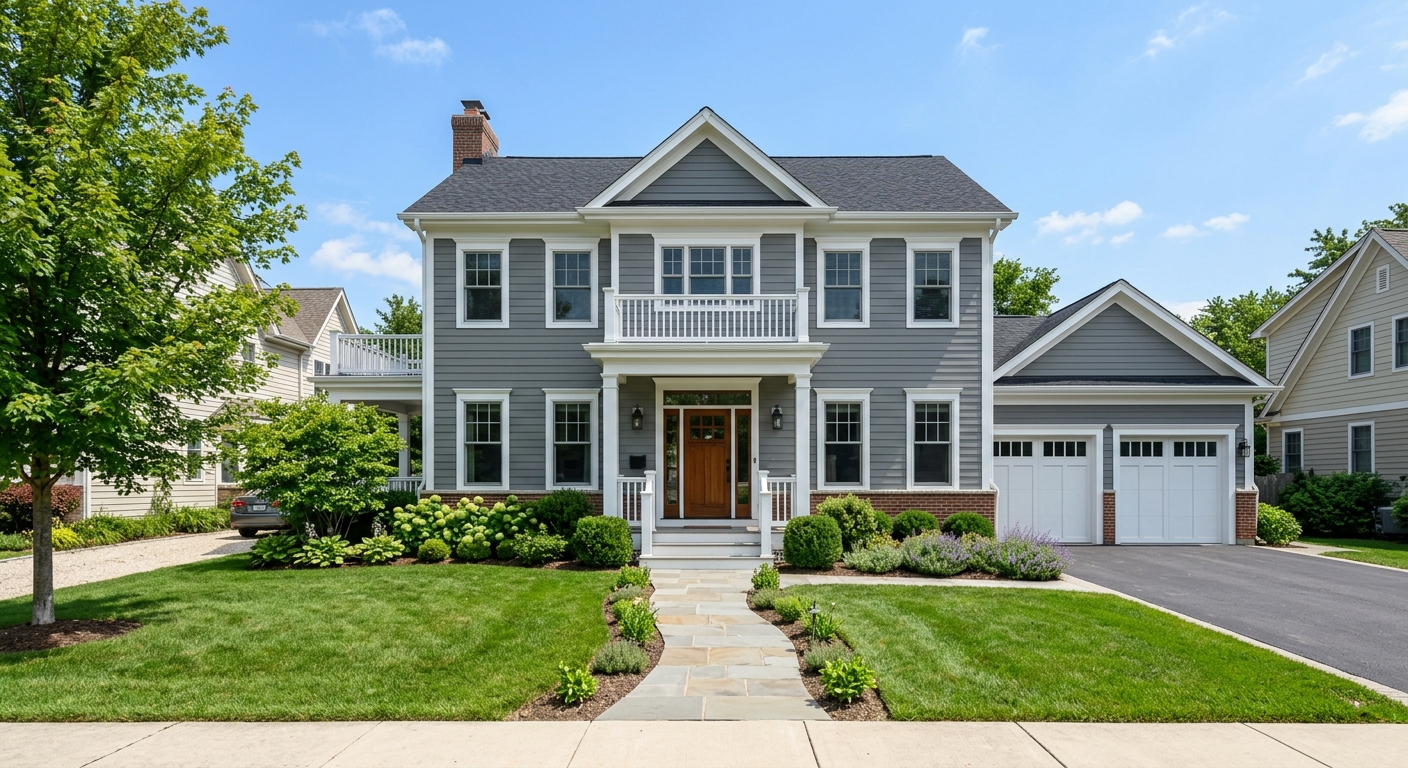
Painting options and costs in Marlborough Park
Marlborough Park homeowners typically choose from a few repeatable painting scopes, and the price moves mostly with prep complexity, surface size, and access. In this community, the overall population is 8,290 (Statistics Canada, 2021 Census), and that translates into steady demand for trades during the warmer months. A key cost driver is housing age: many older properties in the Calgary area are more likely to have earlier paint layers on trim and siding, which can mean extra scraping and careful priming before any new top-coat. If your home is pre-1978, contractors also treat lead-safe prep as standard best practice rather than an afterthought.
Calgary’s climate shapes costs in a very practical way. For exteriors, our workable season is usually mid-May through late September, when daytime temperatures stay above about 10°C and surfaces can dry properly between coats. That short window concentrates scheduling pressure, so peak-season slots can be firmer on pricing than shoulder months. Interiors are less weather-dependent, but labour still rises with ceiling heights, wall repairs, and trim coverage—especially where previous DIY work created patchy sheen or adhesion issues.
In Marlborough Park, trade interest tends to be especially high around the residential pockets closest to the LRT corridor, because many homes have similar siding and trim types and are due for periodic refreshes. The fastest way to compare contractor proposals is to line up scope side-by-side—so the table below transitions into typical service packages and price bands for your neighbourhood.
| Service |
What's Included |
Typical Duration |
Price Range |
| Interior — whole home (walls, ceilings, trim) |
Move/cover protection, caulking where needed, surface prep, 2-coat walls/ceilings, prime/spot-prime as required, basic trim painting, clean-up |
6–12 days |
$1,500–$6,500 |
| Interior — per room (standard bedroom or living room) |
Prep, patching/filling, sanding where required, 2-coat walls, prime/spot-prime, finish coats to trim and doors (as included in scope) |
2–4 days |
$400–$1,800 |
| Exterior — full house (siding, trim, soffits) |
Pressure wash, scraping/spot sanding, caulking, priming bare/porous areas, 2-coat exterior system, edge details, soffits/trim, disposal and site tidy |
7–16 days (weather-dependent) |
$2,500–$9,000 |
| Exterior — trim and accent colours only |
Surface cleaning, prep and spot prime, 2-coat on trim/accents, masking for clean lines |
3–8 days |
$1,200–$5,500 |
| Kitchen cabinet painting (doors, frames, spray finish) |
Degreasing, sanding/scuffing, bonding primer where needed, spray finish for doors/drawers, 2-coat system, hardware masking |
5–12 days |
$800–$7,000 |
| Specialty / faux finish (accent wall, texture) |
Surface prep, specialized coating application, design layout, protection and clean-up |
2–6 days |
$600–$6,000 |
Prices are estimates only and vary by project scope, site access and material selection.
What affects the price of painting in Marlborough Park
In Marlborough Park, two quotes for what looks like the same job can easily differ by 30–50% across Calgary and Alberta because painting is a prep-and-access business as much as it is a product-and-colour decision. The biggest reason is that “ready to paint” is rarely ready—especially on older substrates where prior DIY coats, patch repairs, and weathered caulking create adhesion and appearance problems. On exteriors, the climate-bound season is the other major driver: in the Calgary region, exterior work typically runs roughly late May to early October, when temperatures sit above 10°C and surfaces can dry properly during application and between coats. That shorter window compresses demand, so scheduling pressure pushes summer rates higher, while weather delays can also increase labour hours.
Older homes across the region often mean surface prep consumes 50–70% of total labour on a repaint. For example, a whole-house exterior repaint that lands in the lower end of the $2,500–$9,000 band can jump toward the top end when there’s extensive scraping, patching, and re-priming of trim and siding. Similarly, an interior refresh in the lower interior range can move upward when ceilings, multi-step trim detail, and patch-and-prime work are included—pushing the job toward the upper interior band (not just because of paint, but because of time).
Concrete Marlborough Park scenarios that change cost include: (1) freeze–thaw cracking and failed caulking on exterior edges, which forces extra prep and re-caulking before any top-coat; (2) strong UV exposure, which can make older exterior paint chalk and require deeper cleaning and adhesion testing; and (3) multi-storey access, where scaffolding or lifts increase labour and set-up time.
| Price Factor |
Why It Matters |
Cost Impact |
| Surface prep — scraping, sanding, patching drywall or wood |
Determines adhesion and smoothness; protects against peeling and flashes |
Often the largest labour component; can add major cost on older surfaces |
| Number of coats — 2-coat system over primer vs. 1 coat over existing |
Coverage and durability depend on correct layering |
Switching from “one coat” to true 2-coat systems can raise costs significantly |
| Paint quality tier — contractor-grade vs. premium (Benjamin Moore, Sherwin) |
Better hiding, stain resistance, and longevity reduce rework |
Higher-product bids usually cost more up front but help prevent early failure |
| Ceilings and trim — adds significant time vs. walls-only |
Ceilings require tighter technique; trim needs careful cutting and masking |
Can move a quote by hundreds to thousands depending on scope |
| Exterior season window — short season raises summer rates |
Weather and scheduling constraints compress availability |
Summer pricing firmness and potential delay costs |
| Lead-safe precautions — required for pre-1978 homes with lead paint |
Proper containment, wet methods, HEPA vacuuming and disposal reduce risk |
Adds labour and materials; can increase total project cost |
| Surface material — drywall vs. plaster vs. wood vs. stucco |
Different substrates need different primers and bonding steps |
Incorrect primer can fail; correct systems raise costs but protect outcomes |
| Height and access — multi-storey exterior requires scaffolding or lifts |
More set-up, safety requirements and slower application pace |
Lift/scaffold days can noticeably increase labour |
Permits & regulations in Alberta
In Alberta, painting usually does not require a permit for typical interior or exterior paint work on private homes—there’s generally no “permit to paint” for routine residential repainting. Where regulations come into play is mainly around health and safety work practices, and around contractor compliance. For homes built before 1978, health guidelines recommend testing for lead paint before sanding or scraping, and using lead-safe work practices if lead is present. That typically means wet methods to reduce dust, HEPA vacuuming, and proper disposal of debris. This isn’t something homeowners are commonly legally required to do for DIY, but it is standard professional practice when lead is suspected.
What does require a permit is not painting itself, but certain related building activities (for example, electrical or structural work) done alongside a renovation—painting alone does not fall into that category for most homeowners. The practical step is to ensure your contractor is set up for safe, compliant work: confirm they carry liability insurance and WSIB/WCB coverage for their workers before they start.
To verify in Marlborough Park, you can: (1) ask for their insurance certificate—confirm liability limits and that the policy is active; (2) ask for WSIB/WCB account coverage details (or proof of coverage); and (3) request their written contract that clearly lists paint brand, sheen, number of coats, and the exact prep included. If they discuss lead-safe methods for pre-1978 homes, ask how they’ll manage containment and clean-up.
If you’re unsure about wording, I recommend you avoid “allowances” in place of specifics—scope clarity is what keeps your final cost close to the quote.
Interior vs exterior painting — getting the best result in Marlborough Park
Whether you’re painting inside your Marlborough Park home or refreshing the exterior, the difference between a long-lasting job and a premature failure is usually prep, product compatibility, and correct layering—not just colour choice. For interiors, surface prep is king: filling and sanding imperfections, priming stains or patch areas, and addressing adhesion problems (especially over previous shiny coatings) matter more than the brand of topcoat. Sheen choice also affects how durable the finish looks day to day. In most homes, flat is typically used on ceilings, eggshell on living areas and bedrooms, satin on higher-traffic walls, and semi-gloss on trim for wipeability. The reality of longevity is that two coats over a proper primer always outlast one thick coat—because consistent film build comes from correct coverage across the whole wall.
For exteriors in Calgary-area winters and sun, the same rules apply, but the stakes are higher. Caulking before painting helps prevent water ingress behind trim and joints; then the right primer system bonds to the substrate and prevents peeling or blistering. Use product types that are stable for Alberta temperatures and designed for local exposure; unlike coastal BC, mildew-resistance matters less than adhesion and weather tolerance through freeze–thaw cycles and strong UV. For older homes, lead-safe precautions are also part of doing the job correctly when original layers may contain lead.
Budget-wise, cabinet painting is a smart alternative to replacement for many homeowners. If your kitchen is structurally fine, cabinet painting can deliver a major visual update with far less disruption than a full reno. For example, when a full kitchen replacement would typically be tens of thousands, a cabinet painting project within the $800–$7,000 range is often the point where the cost matches the lifestyle payoff—provided prep and a durable spray finish are included.
| Project Type |
Key Prep Step |
Recommended Coats |
Price Band |
| Interior — fresh drywall (new construction) |
Prime all drywall thoroughly, then caulk seams and spot-prime minor imperfections |
Primer + 2 coats topcoat |
$1,500–$6,500 |
| Interior — repaint (good condition, no repairs) |
Clean, lightly scuff, spot-prime if needed for adhesion or colour change |
2 coats topcoat (with spot-prime as required) |
$400–$3,500 |
| Interior — repaint (patching and priming needed) |
Fill, sand flush, then prime patched areas to prevent flashing |
Primer + 2 coats topcoat in repair zones |
$1,000–$6,500 |
| Exterior siding (wood or fibre cement) |
Scrape/clean and prime bare or porous areas; caulk joints before top-coat |
Primer where required + 2 coats exterior system |
$2,500–$9,000 |
| Exterior trim and accents only |
Mask clean edges, spot-sand, prime and caulk before painting |
2 coats trim system (with spot-prime as needed) |
$1,200–$5,500 |
| Kitchen cabinets (spray finish) |
Degrease, scuff/sand, then use a bonding primer to ensure adhesion |
Primer (if required) + 2 coats finish |
$800–$7,000 |
How to choose a painting contractor in Marlborough Park
Choosing a painting contractor in Marlborough Park comes down to verifying compliance, understanding scope details, and protecting yourself contractually. Start by confirming Alberta requirements: ask the contractor for proof of liability insurance and their workers’ compensation coverage (WSIB/WCB). You should also request their written contract and see that the project description matches what you agreed to. If the contractor pushes to start before documentation is in place, that’s a warning sign.
Next, get 2–3 itemised written quotes—not just a lump sum. Labour and material breakdown helps you compare apples to apples: prep hours, number of coats, prime requirements, caulking allowances, and whether disposal and pressure washing are included. Read the scope carefully for exclusions such as lead-safe prep, surface repairs beyond basic patching, masking around sensitive landscaping, and protection/cleanup details. For example, a lower exterior bid can become higher when a contractor excludes prep like scraping, caulking, and primer on bare wood.
Warranty matters in the long run. Ask for the workmanship warranty length (how long they stand behind peeling, bubbling or adhesion failures) and whether product/manufacturer warranties apply. Also ask if warranties are transferable if you sell your home—this can matter to future buyers.
Payment schedule should be conservative. Never pay more than 10–15% upfront; hold back a portion until the job is complete and you’ve inspected it. Finally, request a written timeline with a start date and completion estimate so weather delays (common in Alberta) are planned for, not surprises.
- Request certificate of liability insurance and confirm coverage is active before work begins.
- Verify workers’ compensation coverage (WSIB/WCB) so you’re not exposed if someone gets hurt.
- Get 2–3 quotes with labour + materials itemised, not “estimate only” lump sums.
- Confirm the exact paint brand, sheen, and system (primer type and topcoat count).
- Require the quote to spell out surface prep: scraping, sanding, patching, and caulking.
- Clarify exclusions: what isn’t included (drywall replacement, extensive carpentry, masonry repair).
- Ask whether pressure washing and disposal are included, especially for exteriors.
- Check if lead-safe testing and precautions are covered for pre-1978 homes.
- Ensure protection is part of scope: flooring/fixtures cover, masking, and cleanup.
- Demand a written start date and a realistic completion timeline.
- Confirm workmanship warranty length and whether it covers adhesion and exterior failures.
- Agree on payment milestones: keep upfront to 10–15% and hold back after completion.
Red flags in Marlborough Park include: quotes that don’t specify number of coats and primer type, contractors who won’t put insurance and workers’ compensation proof in writing, “too good to be true” exterior pricing that skips prep like caulking and prime-on-bare-wood, vague timelines with no plan for rain/cold snaps, and pressure to pay most of the job upfront.
Frequently asked questions — painting in Marlborough Park
What's the difference between paint quality tiers?
In Marlborough Park and across Alberta, paint “tiers” usually reflect hiding power, stain resistance, flexibility, and how consistently the finish levels. Contractor-grade products often cover well, but premium lines from brands such as Benjamin Moore or Sherwin typically provide better uniformity, especially on tricky surfaces like patched drywall, stained areas, or older trim that has absorbed uneven layers over time. The biggest practical difference isn’t just brightness—it’s how the finish holds up to Alberta conditions: strong UV, freeze–thaw movement, and frequent cleaning on high-touch interiors. On a value project, a properly prepared job with the right system can land in the lower half of the interior range (for example, “per room” work in the $400–$1,800 band). On exterior work, using a durable system helps reduce early chalking and peeling within the broader $2,500–$9,000 range.
How do I compare painting quotes?
To compare quotes fairly in Marlborough Park, line up the scope line-by-line: prep steps, primer requirements, number of coats, and what’s included for protection and disposal. A quote that’s lower may be skipping pressure washing, caulking, scraping, or prime-on-bare areas—prep is frequently 50–70% of labour on repaints. Ask for itemised labour and material amounts, not just a lump sum, and confirm brand and sheen (flat vs. eggshell vs. satin vs. semi-gloss). For interior projects, check whether ceilings and trim are included and whether patched areas receive primer to prevent flashing. For exteriors, check whether the contractor specifies a weather-ready exterior system and plan timing around the mid-May to late-September workable window. If two bids both land in the exterior $2,500–$9,000 band, but one includes more prep and a true two-coat system, it will usually hold up better in Calgary’s freeze–thaw cycles.
What paint sheen should I use in different rooms?
In Alberta homes, sheen selection is about balancing cleanability with how light reflects on walls. Ceilings are typically flat to reduce glare and hide minor imperfections. For living rooms and bedrooms in Marlborough Park, eggshell is a common choice because it cleans up better than flat while keeping walls looking soft. Higher-traffic spaces (hallways, family rooms) often benefit from satin on walls, which is more wipeable but still not as glossy as semi-gloss. Trim and doors usually use semi-gloss or a similar trim sheen because it withstands scuffs and frequent cleaning. Kitchens are special: walls may use washable eggshell/satin, while cabinet finishes often use a more durable sprayed topcoat. If your quote doesn’t specify sheen by surface, ask for it—sheen directly affects how the final look compares to photos.
Can I paint my house exterior in spring or fall in Marlborough Park?
Yes, but timing matters in Marlborough Park because exterior coats need workable conditions. In the Calgary region, the reliable window is roughly mid-May to late September when daytime highs are consistently above about 10°C so surfaces can dry properly between coats. Spring and fall can still work if weather cooperates, but overnight lows and intermittent rain can delay application and cause failures like poor adhesion or uneven sheen. If you’re painting in shoulder-season, contractors should build in buffer days and may reschedule if temperatures drop. Product selection also matters; we use high-quality acrylics and flexible or elastomeric systems on exteriors to better handle Alberta’s movement from freeze–thaw cycles and hail impacts. If you want to plan around cost, booking earlier in the season usually helps with scheduling availability, which is tighter when demand spikes in summer.
How do I choose a painting contractor in Marlborough Park?
Choose a contractor by verifying compliance and by requiring clear, itemised scope details. First, confirm they can provide proof of liability insurance and workers’ compensation coverage (WSIB/WCB) before starting—this protects you as the homeowner. Next, ask for 2–3 written quotes with labour and materials broken out, including surface prep (scraping, sanding, caulking, priming) and the exact number of coats. For exteriors, make sure they describe how they’ll manage weather and drying windows in Calgary-area conditions. Look for a written warranty for workmanship and clarity on product/manufacturer coverage. A trustworthy contractor won’t push for most payment upfront; in practice, keep upfront around 10–15% and hold back after completion. Finally, ensure the contract specifies paint brand, sheen, and disposal/protection steps. If they can’t explain the prep clearly, the final cost often creeps up after problems show—especially on older trim and siding.
How many coats does an exterior repaint need in Marlborough Park?
Most exterior repaints in Marlborough Park are done as a two-coat system over primer where required. The exact structure depends on substrate condition and how much of the surface is bare or weathered. For example, if existing paint is failing or there’s bare wood/fibre cement, primer is applied to stabilize the surface, then two coats of exterior topcoat follow for consistent colour and durability. If the surface is in genuinely good condition, contractors may reduce primer to spot-prime only, but they still typically plan for two top-coats to achieve uniform hiding and lasting protection in Alberta’s UV and freeze–thaw exposure. If lead-safe precautions are part of the job for pre-1978 homes, the prep work (containment, wet methods, HEPA cleanup) is addressed before coating so the system bonds properly. For budgeting, exterior repaint projects commonly fall within the broader $2,500–$9,000 band, and the coat count is usually one of the things that should never be vague in a quote.