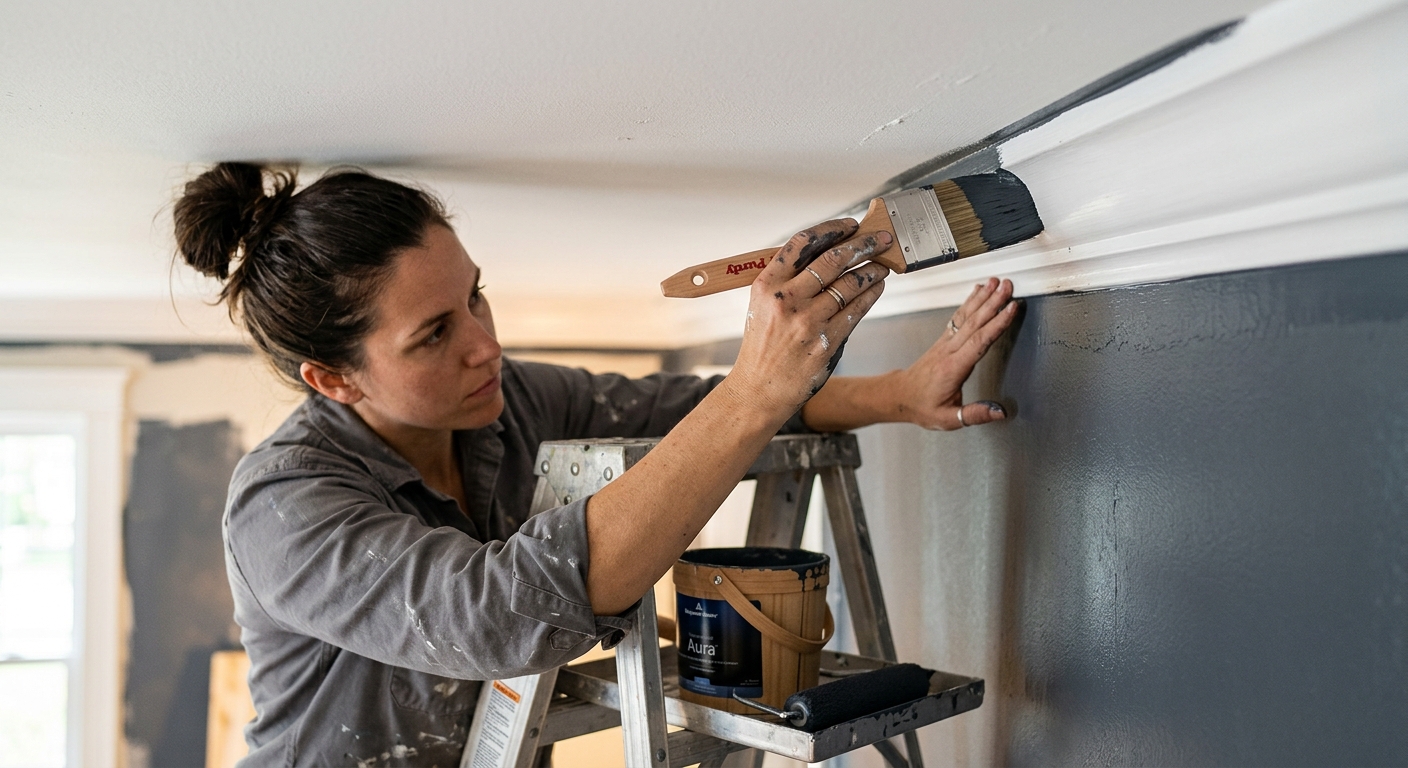
Painting options and costs in Lakeview
Lakeview, Alberta is a great place to paint, but costs depend heavily on what you’re updating and how much prep the job requires. With Lakeview’s relatively small population of 5,640 people (Statistics Canada, 2021 Census), our contractor availability can feel tighter than in larger centres—especially when exterior bookings peak. Another big driver is housing age: across the Calgary region, many homes date back to earlier construction eras, so repainting often involves more scraping, patching and priming than first-time paint jobs. In pre-1978 homes, planning for potential lead-safe work practices is also part of doing the job properly.
Calgary-area weather shapes exterior pricing too. Our workable exterior season is typically mid-May to late September, when surfaces can dry properly and daytime temperatures stay above 10°C. That short, weather-dependent window concentrates demand, so exterior work booked in the hottest months often costs more than the same project done earlier in the season. Interiors are less weather-bound, but labour and access—stairwells, ceiling height, and the amount of trimming and caulking—still affect the final number.
If you’re in the Lakeview neighbourhood pocket near the main residential corridors (where homeowners commonly tackle curb appeal and refreshes), you’ll notice painters are especially in demand for full exterior refreshes and trim-heavy updates. Below is a practical cost comparison to help you benchmark quotes, then we’ll break down what moves the price up or down.
| Service |
What's Included |
Typical Duration |
Price Range |
| Interior — whole home (walls, ceilings, trim) |
Protect floors/furnishings, patch & sand, prime as needed, paint walls & ceilings, caulk trim/joints, finish trim/doors, clean-up and post-job walkthrough |
5–10 working days |
$1,800–$7,500 |
| Interior — per room (standard bedroom or living room) |
Prep/patching, sand, spot prime, paint walls, paint ceiling, caulk where needed (trim included if in scope) |
1–3 working days |
$400–$1,800 |
| Exterior — full house (siding, trim, soffits) |
Scrape/sand weak coatings, patch, caulk gaps, prime bare wood or problematic areas, paint siding and trim/soffits, thorough final clean-up |
5–12 working days (weather-dependent) |
$2,900–$8,800 |
| Exterior — trim and accent colours only |
Surface prep on trim/accent areas, spot prime, paint trim lines and accent sections, protect adjacent surfaces, clean-up |
2–6 working days |
$1,600–$4,600 |
| Kitchen cabinet painting (doors, frames, spray finish) |
Degrease, light scuff/sand, bond primer (if needed), spray-corrected topcoats, hardware removal/refit, interior/exterior door faces in scope |
5–12 working days (dry/cure time) |
$1,200–$5,900 |
| Specialty / faux finish (accent wall, texture) |
Surface prep to a smooth base, specialty system application, glazing/texture technique as specified, protection and clean-up |
1–4 working days |
$600–$4,800 |
Prices are estimates only and vary by project scope, site access and material selection.
What affects the price of painting in Lakeview
It’s common to see quotes for the “same” painting job differ by 30–50% across Calgary and the broader Alberta market. In practice, the work rarely lines up: one contractor may include extensive prep and bonding primer, while another may assume the existing surface is sound. Exterior bids also tighten when weather allows only a short stretch of optimal drying days—especially here in the Calgary region, where workable conditions are usually mid-May to late September and daytime temperatures must be reliably above 10°C during application. In coastal BC, the season can run longer, but humidity and mildew management add complexity and product requirements; in Alberta, we manage freeze–thaw cycles, UV intensity and hail impact, which still calls for higher-quality acrylics and proper flexible/elastomeric systems on exterior assemblies.
In Lakeview, older housing stock is a frequent cost driver. More scraping and sanding often means more labour, and patching drywall or repairing wood trim can be extensive—prep can represent roughly 50–70% of labour on a repaint. For example, moving from a basic interior repaint to a job that includes full patching and primer increases the typical range from around $400–$1,800 per room to a whole-home interior scope that’s often closer to $1,800–$7,500. On exteriors, a full siding-and-soffit repaint can land near $2,900–$8,800, but trim-only refreshes can be noticeably lower because the same weather limitations still apply without the same surface area and priming volume.
Concrete Lakeview scenarios that raise cost include peeling paint on older trim, widespread caulking failure around windows, and multi-storey access requiring lifts. Costs can be lower when surfaces are intact (few repairs), colours are staying within the same family/sheen plan, and scheduling aligns with calm, dry stretches—so drying time and touch-ups don’t balloon.
| Price Factor |
Why It Matters |
Cost Impact |
| Surface prep — scraping, sanding, patching drywall or wood |
Poor adhesion shows up first at edges, patches and transitions. |
+ |
| Number of coats — 2-coat system over primer vs. 1 coat over existing |
Coverage and uniformity depend on correct layering, especially over repairs. |
++ |
| Paint quality tier — contractor-grade vs. premium (Benjamin Moore, Sherwin) |
Better pigments/binders improve hide, durability and washability. |
+/− |
| Ceilings and trim — adds significant time vs. walls-only |
Trim lines, cut-in time and protection increase labour. |
++ |
| Exterior season window — short season raises summer rates |
Weather limits spray/roll timing and can force resequencing. |
++ |
| Lead-safe precautions — required for pre-1978 homes with lead paint |
Testing/work methods change prep and disposal requirements. |
+ to ++ |
| Surface material — drywall vs. plaster vs. wood vs. stucco |
Different substrates need different primers and tolerances. |
+ to ++ |
| Height and access — multi-storey exterior requires scaffolding or lifts |
Access equipment and safety planning add time and cost. |
++ |
Permits & regulations in Alberta
In Alberta, painting typically does not require a permit for either interior or exterior repainting. What can change is the scope: if your project turns into anything beyond normal painting—such as structural alterations, window replacement, or work that affects permitted building systems—those trades may trigger separate requirements. For painting alone, the expectations focus on safe work practices, written scope, and proper prep/disposal.
For homes built before 1978, health guidelines recommend testing for lead paint before sanding or scraping, and using lead-safe work practices if lead is present. For professionals, that generally means wet methods to control dust, HEPA vacuuming, sealing and proper disposal of debris. While this is not typically legally mandated for homeowners, it’s the standard approach many experienced contractors follow when we encounter older trim, doors, or exterior siding with intact old coatings.
Before you sign with a contractor in Lakeview, verify three items step-by-step:
- Alberta licensing: check that the company is in good standing for the applicable trade registrations and business details shown publicly online.
- Liability insurance: ask for a current certificate of insurance naming you as the certificate holder (if offered) or showing sufficient general liability limits.
- WSIB/WCB coverage: request proof the contractor has workers’ compensation coverage for their painters.
- Written contract: confirm paint brands/line or comparable specified products, sheen levels, number of coats, prep inclusions (scrape/sand/patch/prime/caulk), and disposal.
If a contractor can’t provide insurance/coverage proof up front, I treat that as a red flag—even if the price looks appealing.
Interior vs exterior painting — getting the best result in Lakeview
The difference between a long-lasting paint job and a premature failure in Lakeview often isn’t the brand on the label—it’s the prep system and the coating choices matched to Alberta conditions. For interiors, start with surface prep: filling and sanding drywall imperfections, priming repaired areas, and sealing stains if present. Sheen matters more than many homeowners expect. Flat/ceiling paint reduces glare for ceilings; eggshell is a solid wall choice for most bedrooms and living rooms because it balances scuff resistance with a softer look. Satin or semi-gloss is often best for high-touch areas like trim, doors, and kitchens where cleanability matters.
For exteriors, the stakes are higher. Proper caulking before paint is critical to prevent water ingress behind trim and at window edges. Primer type is equally important: oil-based or bonding primers may be used on specific substrates or when stain blocking is needed, while latex systems with correct bonding are typical for sound drywall-like surfaces and well-prepared masonry. In Alberta, we also plan for freeze–thaw cycles and intense UV, so we specify quality acrylics and flexible coatings where assemblies need movement resistance.
Cabinet painting can be a smarter budget option than replacement when boxes are solid and doors are the main visual issue. The key is degreasing and a bonding primer before spraying—otherwise peeling and rough edges show up quickly. For pre-1978 homes, lead-safe precautions should be baked into the plan if trim or older painted surfaces require scraping.
Here’s a pricing example: if your kitchen boxes are in good shape, cabinet spray refinishing may land around $1,200–$5,900. Full replacement often costs substantially more, but skipping primer and relying on “one coat over the old finish” can lead to failure that forces an expensive do-over—so the higher prep-included bid is usually the one worth paying for.
| Project Type |
Key Prep Step |
Recommended Coats |
Price Band |
| Interior — fresh drywall (new construction) |
Prime new drywall and sand for uniform texture |
2 coats over primer |
$900–$3,200 |
| Interior — repaint (good condition, no repairs) |
Light scuff, spot prime minor marks, caulk small gaps |
2 coats (even coverage) |
$400–$1,800 |
| Interior — repaint (patching and priming needed) |
Patch/sand plus full prime on repaired areas |
2 coats over primer on repairs; consistent topcoat |
$700–$2,600 |
| Exterior siding (wood or fibre cement) |
Scrape/sand failing coatings, prime bare areas, caulk vulnerable joints |
2-coat system (primer + topcoats as specified) |
$2,900–$8,800 |
| Exterior trim and accents only |
Spot prep plus bonding/spot prime for sound adhesion |
2 coats on trim after primer as needed |
$1,600–$4,600 |
| Kitchen cabinets (spray finish) |
Degrease and bond primer before spray topcoats |
3-step system commonly used (primer + 2 topcoats) |
$1,200–$5,900 |
How to choose a painting contractor in Lakeview
Choosing a painter in Lakeview is mostly about verifying the basics and aligning the scope. Start with Alberta licensing/business information, then confirm liability insurance and WSIB/WCB coverage. How to check: ask for a current certificate of insurance (not expired) showing liability coverage and the insured parties; request WSIB/WCB account proof for their employees (a certificate or letter is usually provided). If a contractor says they’re “insured” but can’t produce documents, stop there.
Next, ask for 2–3 itemised written quotes. Look for a breakdown that separates labour and materials and clarifies what paint line (or equivalent) and sheen are included, plus how many coats are planned. Confirm prep inclusions: scraping and sanding extent, patching drywall, caulking type, and stain/odour blocking if needed. Read exclusions too—things like furniture moving, disposal of paint debris, repairs to damaged framing, or additional coats for colour change should be stated. Permits are typically not required for painting in Alberta, but you still want to know whether the contractor is including jobsite protection and any traffic protection if applicable.
For warranty, ask for a workmanship warranty length and whether it’s transferable to future homeowners. Confirm the product/manufacturer warranty (if applicable) and what conditions void it. Payment should stay conservative: never pay more than 10–15% upfront, and hold back until the job is complete and you’ve reviewed punch-list items. Also get the start date and completion estimate in writing, because Alberta weather can affect exterior timelines.
- Ask for insurance certificate and confirm it’s current (liability).
- Verify WSIB/WCB coverage for employees before work begins.
- Confirm the exact scope: prep, prime, paint count, and caulking included or excluded.
- Request itemised labour + materials (not just a lump sum).
- Ask which paint line and sheen (eggshell/satin/semi-gloss) is included.
- Confirm surface testing/lead-safe approach for pre-1978 homes if scraping is required.
- Get protection plans: floors, landscaping, windows, and hardware coverage.
- Clarify disposal: how paint waste and debris will be handled.
- Confirm colour change strategy (bonding primer, additional coats if needed).
- Ask about scaffolding/lift plans for multi-storey exterior.
- Review warranty: workmanship term, product warranty, and transferability.
- Set payment milestones: small deposit only, holdback until completion.
In Lakeview, common red flags include: quotes that skip prep details (“we’ll just paint over it”), no proof of WSIB/WCB or liability insurance, vague paint brand/specifications, refusing to list number of coats and priming requirements, and pushing for a large upfront payment beyond 10–15%.
Frequently asked questions — painting in Lakeview
How many coats of paint do I need?
In Lakeview and the Calgary region, most quality jobs use a proper system rather than a “one-coat promise.” For repainting interiors, a typical approach is 2 full coats of the chosen topcoat, after spot priming repairs and stained areas. If you’re patching drywall, you may need primer first, then 2 topcoats to keep sheen and colour uniform. On exteriors, it’s usually primer where needed plus 2 topcoat applications for siding and trim—especially if you’re correcting bare wood, failing paint, or widespread caulking issues. If your quote is landing toward the lower end of the exterior band (for example, around $2,900–$8,800), check whether it includes the right number of coats over properly prepared surfaces. More coats without prep can still fail, but correct layering over primer is what lasts.
What paint is best for Lakeview's climate?
For Lakeview, the best performance comes from coatings matched to Alberta’s sun, hail/impact potential, and freeze–thaw cycles. For exteriors, we generally specify high-quality acrylics and elastomeric or flexible coatings on areas that must tolerate movement (common around trim lines and some exterior details). Even though Alberta isn’t as damp as coastal BC, winter freeze–thaw and summer UV still stress paint films, so lower-tier paint can chalk or lose uniformity sooner. For interiors, the “best” paint is usually about sheen: eggshell for walls, satin or semi-gloss for trim and high-touch areas, and flat for ceilings to control glare. If you’re comparing quotes, don’t judge by price alone—compare what product line and sheen is included in the scope that leads to typical interior ranges like $1,800–$7,500 for whole-home work.
How long does exterior paint last here?
Exterior longevity in Lakeview varies with prep quality, surface condition, and how well the chosen system fits the substrate. When siding and trim are properly scraped, sanded, caulked, primed where needed, and then coated with a quality exterior acrylic system, many homeowners expect several years of strong performance with colour retention and better resistance to peeling. Failures often show up first where water can get behind coatings: window trim edges, caulking joints, and any area with weak adhesion. Because the Calgary-area exterior season is tighter—roughly mid-May to late September with daytime temperatures above 10°C—topcoats must be scheduled and applied correctly when surfaces can dry properly. If a contractor’s scope skips bonding primer or minimal prep, the job may look fine initially but wear faster. A realistic repaint plan should account for Alberta conditions and any hail/UV impacts on your specific facade.
Should I paint or replace my cabinets?
In Lakeview, painting cabinets is often the cost-effective option when the cabinet boxes are solid and the existing finish isn’t actively failing (bubbling, structural warping, or major delamination). Replacement can be worth it if you’re changing layout, dealing with damaged boxes, or want completely new hardware and shelving. Painting usually involves degreasing, scuffing, and—crucially—using a bonding primer before spraying topcoats. That prep step is what prevents peeling and keeps the finish smooth. If you’re quoted a cabinet spray job around $1,200–$5,900, compare whether the bid includes primer type, sanding/grit approach, and a realistic dry/cure schedule. If a quote sounds too low, ask if they’re using a minimal prep approach or cutting corners on coat build. In most Calgary-area homes, proper refinishing beats replacement for keeping budgets under control.
How do I prep walls before painting?
For best results in Lakeview, let the contractor handle the professional prep plan, but you can reduce surprises. Before the painters arrive, clear furniture or ask about moving services, and protect valuables—paint dust can travel even with tarps. If you have wall damage, note any areas with stains from previous leaks, nicotine, or persistent scuffs; those spots may require specific priming or stain-blocking. Remove wall hangings, curtains, and anything that can’t be easily covered. If you’re doing DIY touch-ups, avoid heavy filler without sanding—lumpy patches can show under better lighting. After the contractor starts, watch that they’re following proper steps: sanding and smoothing patches, spot priming repairs, caulking gaps, then applying two even coats. This is how you reach the reliable interior repaint ranges (commonly $400–$1,800 per room when there are no major repairs) without “mystery coverage” issues.
Do I need to worry about lead paint in an older Lakeview home?
If your Lakeview (or surrounding Calgary region) home was built before 1978, it’s reasonable to worry about potential lead paint—especially on trim, doors, and exterior wood elements. Alberta doesn’t typically require permits for painting, but health guidance recommends testing before sanding or scraping, and using lead-safe work practices if lead is found. For homeowners, it’s not always enforced the same way as for contractors, but it’s still the safest and most professional approach—wet methods to control dust, HEPA vacuuming, and correct containment/disposal. Practically, this affects timing and scope, and it can change the labour effort and equipment needed. When you get quotes, ask what they’ll do if lead is suspected: do they offer testing or do they proceed with lead-safe controls as a precaution? A well-scoped bid should explain prep and containment clearly rather than treating older trim like newer surfaces.