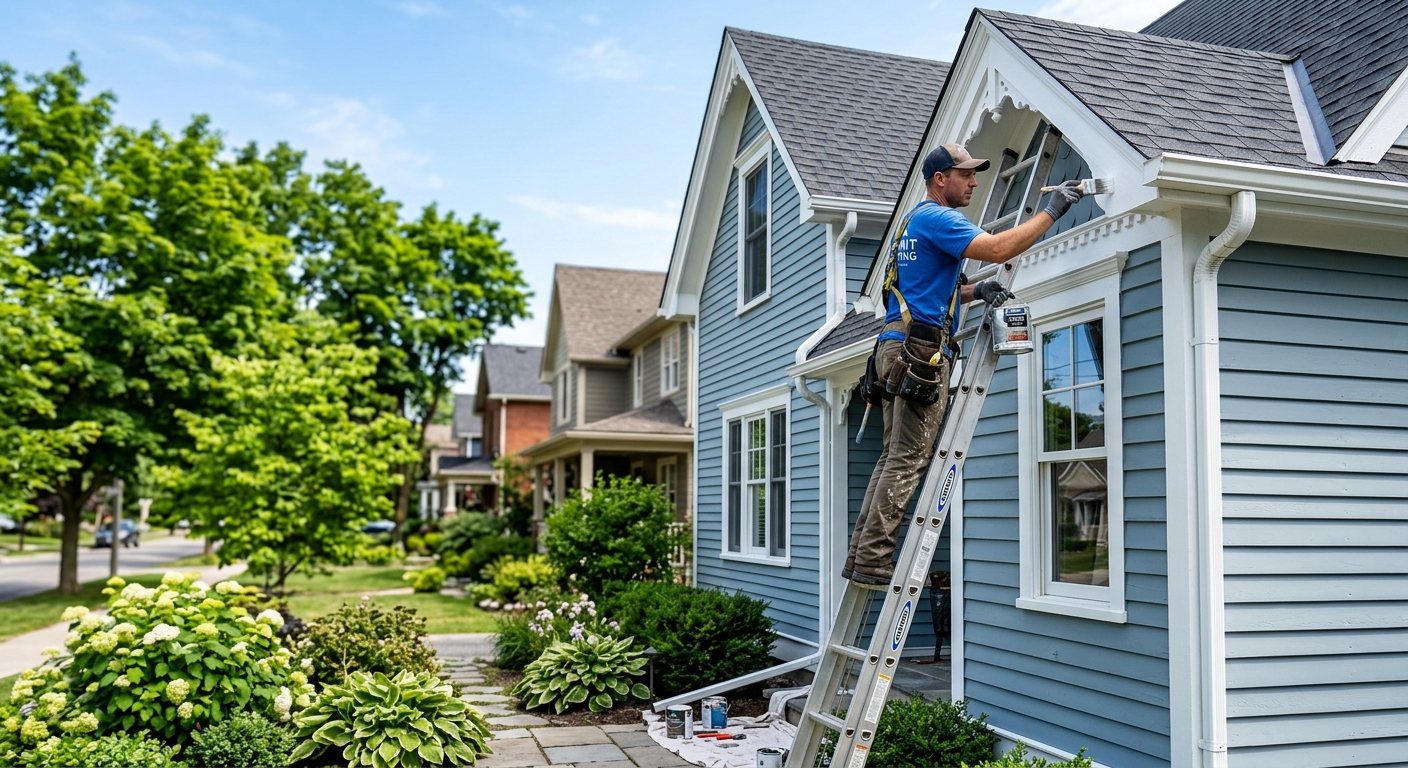
Painting options and costs in Coventry Hills
Coventry Hills, Alberta is a great place to paint—when the job is planned around our short exterior-weather window and the right prep is done up front. With a 2021 population of 17,350 (Statistics Canada, 2021 Census), demand can spike as the season opens, especially in established pockets where homeowners stay put and repaint instead of moving. Many houses in the Calgary economic region are older, and homes built before about 1980 tend to need more time for scraping, patching, caulking, and primer work; if a home predates 1978, lead-safe practices are often part of professional prep planning. That prep is where bids diverge.
In the Calgary area, our workable exterior season typically runs from mid-May to late September, when daytime highs are reliably above 10°C and surfaces can dry properly. Because that window is weather-dependent, exterior work books quickly and summers often price firmer than shoulder months. Interiors are less season-sensitive, but labour still varies with ceiling height, access, and how much trim and cabinet work is involved.
In Coventry Hills proper, we often see extra demand around the Coventry Hills neighbourhood core near 68 Street, where families commonly schedule interior refreshes alongside summer exterior touch-ups. For homeowners, the easiest way to compare quotes is to start with service level and scope—then confirm what’s included in prep, coats, and finish. Use the table below to match the option you’re considering to a realistic price range.
| Service |
What's Included |
Typical Duration |
Price Range |
| Interior — whole home (walls, ceilings, trim) |
Move-protected areas, surface cleaning/de-glossing as needed, patching & sanding, priming where required, 2-coat wall/ceiling system, caulking, and painting trim/doors; basic colour change planning |
6–14 working days |
$3,200 – $8,000 |
| Interior — per room (standard bedroom or living room) |
Prep (clean, patch, sand), prime spot areas, 2-coat walls (and ceiling if included), caulking touch-ups; trim painting based on listed scope |
1–3 working days |
$400 – $1,600 |
| Exterior — full house (siding, trim, soffits) |
Power washing (as required), scrape/sand/stain-blocking on suspect areas, caulking, primer system for exposed substrate, 2-coat exterior paint with elastomeric/flexible system as needed, trim/soffit painting |
5–12 working days |
$2,500 – $9,000 |
| Exterior — trim and accent colours only |
Localized prep and priming, caulking for trim seams, 2-coat trim/accent application; protects surrounding surfaces |
2–6 working days |
$1,200 – $4,500 |
| Kitchen cabinet painting (doors, frames, spray finish) |
Degreasing/cleaning, light scuffing, bonding primer where needed, spray-applied finish system, hardware protection; includes sanding/trim touch-ups on installed surfaces as scoped |
4–10 working days (plus curing time) |
$800 – $7,000 |
| Specialty / faux finish (accent wall, texture) |
Surface levelling where required, primer, basecoat and finish system, optional glaze/tinting, clear-coat if specified |
2–7 working days |
$600 – $6,000 |
Prices are estimates only and vary by project scope, site access and material selection.
What affects the price of painting in Coventry Hills
Even when you describe the same “repaint,” quotes in the Calgary region can swing by 30–50%. The main driver is prep: how much scraping, patching, caulking, sanding, stain-blocking, and priming is actually needed once we’re on site. Another driver is labour efficiency—two contractors can see the same house, but one may allow proper cure times, ventilation setups, and detailed trim work while the other rushes into top-coat. Product selection also matters: a premium system (including better primers and elastomeric or flexible exterior coatings) costs more, but it can reduce repeat work later.
Exterior painting is tightly climate-bound here. In our region, the effective window is typically roughly late May to early October—temperatures should stay above 10°C and surfaces must dry properly during application and curing. Coastal BC can stretch the season, but humidity and rainfall complicate drying and can require mildew-resistant products and additional scheduling care. Because our window is shorter, demand concentrates, which can push summer rates toward the higher end (for example, exterior full-house pricing often lands closer to the upper band of $2,500 – $9,000 when the substrate is challenging).
In Coventry Hills, older housing stock from the 1960s–2000s means prep can be substantial—scraping and patching can easily represent 50–70% of labour on a repaint. For example, a home with flaking trim paint or failing caulk lines can push exterior costs from the lower end of the range toward the mid-to-upper end once we factor in additional priming and flexible caulking. Interiors are often easier to schedule, but ceiling work and heavy trim packages can move a “per room” job up toward $400 – $1,600 quickly.
| Price Factor |
Why It Matters |
Cost Impact |
| Surface prep — scraping, sanding, patching drywall or wood |
Determines bond; flaky paint and soft drywall must be stabilized before top-coats |
Often the biggest swing; can add 20–60% versus light prep |
| Number of coats — 2-coat system over primer vs. 1 coat over existing |
Sheen, hide, and coverage requirements drive coat count |
Usually adds 10–25% if extra coats/primers are required |
| Paint quality tier — contractor-grade vs. premium (Benjamin Moore, Sherwin) |
Premium systems can improve hide, durability, and scuff resistance |
Material cost may rise 5–20%; labour often stabilizes |
| Ceilings and trim — adds significant time vs. walls-only |
Ceilings increase reach/time; trim needs cutting accuracy and cleanup |
Can increase interior scope 15–35% |
| Exterior season window — short season raises summer rates |
Weather windows limit booking and affect scheduling costs |
Can increase exterior pricing by 10–25% in peak weeks |
| Lead-safe precautions — required for pre-1978 homes with lead paint |
Proper containment, HEPA cleanup, and dust control add time and disposal |
Can add 10–30% depending on conditions |
| Surface material — drywall vs. plaster vs. wood vs. stucco |
Different porosity needs different primer and bonding approach |
Commonly shifts prep and primer costs 10–30% |
| Height and access — multi-storey exterior requires scaffolding or lifts |
Access affects safety, time, and equipment rental |
Can add 15–40% for multi-storey hard-to-reach elevations |
Permits & regulations in Alberta
In Alberta, painting work typically does not require a permit for residential projects. For homes built before 1978, health guidelines recommend testing for lead paint before sanding or scraping, and using lead-safe work practices if lead is confirmed. For contractors, this commonly includes wet methods to reduce dust, HEPA vacuuming, containment when needed, and proper disposal procedures. Homeowners aren’t generally legally required to test or follow lead-safe methods, but professional work in Coventry Hills almost always treats this as standard risk management on older substrates.
What does require permitting is not painting itself—rather, it’s work that involves structural changes, electrical/plumbing alterations, or other regulated renovations (for example, moving walls or rewiring). Simple surface painting, prep, caulking, and repainting do not typically trigger a permit in the way building additions or major renovations do.
When you’re hiring in Coventry Hills, you can verify key protections step-by-step:
- Alberta licence/credentials: check the contractor’s business information and any trade registrations they claim, using their legal business name.
- Liability insurance: request a current certificate of insurance showing coverage that fits your project, plus your address/name if available.
- WSIB/WCB workers’ compensation: ask for proof of coverage; review the paperwork so you know the crew is properly covered.
- Clear written contract: confirm paint brand, sheen, number of coats, prep scope (scrape/sand/prime/caulk), and cleanup/disposal responsibilities.
- Workmanship and product warranties: have warranty terms stated in writing.
If any of these items are missing or vague, it’s a clear signal to slow down before money changes hands.
Interior vs exterior painting — getting the best result in Coventry Hills
In Coventry Hills, the best paint jobs aren’t about using the fanciest product—they’re about matching prep and coating strategy to the way our climate stresses surfaces. For interiors, durability most often comes from surface preparation: filling, sanding, spot-priming, and proper cleaning (especially where kitchen grease or water staining exists). Sheen choice also matters. In high-touch areas, satin or eggshell balances cleanability with aesthetics; flat paint can look great on ceilings, but it needs careful handling in busy rooms. And the reality is simple: two coats over a proper primer almost always outlast one thick coat. If coverage is inconsistent, that’s usually a prep or primer issue, not a paint-brand issue.
For exteriors, Alberta’s freeze–thaw cycles, strong UV, and hail impacts make prep and sealing critical. Caulking before painting helps prevent water ingress at trim joints and helps stop moisture cycling behind finish layers. Primer type matters too: oil-based primers are often specified for difficult stains, bare wood, or adhesion issues, while latex primers may be appropriate for stable, properly prepared substrates. We also select systems that tolerate temperature swings and exposure; unlike coastal BC (where mildew-resistant products are often emphasized due to persistent damp), Coventry Hills requires a plan that accounts for drying time after rain and overnight lows.
Cabinet painting is a smart alternative to replacement when the existing boxes are in good shape. If your goal is budget relief, cabinet painting can deliver a major visual upgrade, but it’s not “paint and walk away”—it depends on degreasing, bonding primer choices, and careful spray-applied finish.
For a concrete example: moving from basic touch-up prep to full scrape/sand/prime on exterior trim can cost more upfront, but it’s often the difference between paint that lasts through the next winter cycle and paint that blisters or fails prematurely. On the pricing side, that’s why an exterior full-house job often lands in the $2,500 – $9,000 band, while smaller trim-only work is typically closer to $1,200 – $4,500—because the prep workload changes dramatically.
| Project Type |
Key Prep Step |
Recommended Coats |
Price Band |
| Interior — fresh drywall (new construction) |
Prime all bare drywall and feather joints; caulk seams consistently |
Prime + 2 coats |
$1,800 – $6,500 |
| Interior — repaint (good condition, no repairs) |
Clean/de-gloss lightly; spot-prime only where needed |
2 coats (spot prime allowed) |
$400 – $4,200 |
| Interior — repaint (patching and priming needed) |
Patch, sand, prime repaired areas to match absorption |
Primer + 2 coats |
$600 – $8,000 |
| Exterior siding (wood or fibre cement) |
Scrape loose paint, sand edges, caulk joints, stain-block as required |
Primer + 2 coats (system dependent) |
$2,500 – $9,000 |
| Exterior trim and accents only |
Localized scraping/sanding and caulking at trim interfaces |
Prime where exposed + 2 coats |
$1,200 – $4,500 |
| Kitchen cabinets (spray finish) |
Degrease thoroughly and use bonding primer for adhesion |
Primer + 2 finish coats (often) |
$800 – $7,000 |
How to choose a painting contractor in Coventry Hills
Start by verifying three things for Alberta work: proper credentials, insurance, and coverage for the crew. First, ask for proof of liability insurance and confirm it’s current (request the certificate of insurance and review the policy dates). Second, request WSIB/WCB coverage proof so you know you’re not exposed if someone gets injured on your property. Third, ensure the contractor provides a clear, itemised scope that shows exactly what will be done—prep, coatings, cleanup, and disposal are where value is won or lost.
Next, request 2–3 written quotes that break down labour and materials instead of a single lump sum. Itemisation should show prep steps (scrape/sand/patch/caulk/prime), number of coats, the paint line or tier, sheen selection, and whether areas like trim edges, railings, and caulking are included. Also confirm if permit-related steps apply (usually not for painting itself, but ask what’s included) and whether prep debris and paint waste disposal are covered.
For warranty, look for a workmanship warranty length (and what qualifies as a defect), plus the manufacturer’s product warranty details. If the product warranty depends on proper surface prep and application, make sure the scope reflects that. Payment schedule matters: never pay more than 10–15% upfront—hold back a portion until the job is complete and cleaned. Finally, insist on a start date and completion estimate in writing; with Calgary’s exterior season tightening, timelines should be realistic about weather delays.
- Certificate of liability insurance with policy dates
- Proof of WSIB/WCB coverage for the crew
- Written contract with prep scope and number of coats
- Paint brand/line and sheen specified (eggshell vs satin vs semi-gloss)
- Caulking method and where it will be replaced/renewed
- Surface condition assumptions listed (what happens if rot/blistering is worse than expected)
- Disposal and cleanup included (scraper dust, masking removal, waste handling)
- Colour change guidance and how trim transitions will be handled
- Access plan (lifts/scaffolding) for multi-storey exterior work
- Workmanship warranty terms in writing
- Payment schedule that holds 10–15% until completion
- Realistic start date that accounts for drying/curing and Calgary weather
Red flags in Coventry Hills include: quotes that ignore surface prep or caulking, “too good to be true” pricing that doesn’t match the required exterior season labour, refusal to provide insurance/WSIB/WCB documentation, vague contracts that don’t list coats/brands, and demands for large upfront payments or cash-only arrangements.
Frequently asked questions — painting in Coventry Hills
What is the best primer for older Coventry Hills homes?
For older homes in Coventry Hills (and across Alberta), the “best” primer depends on what we’re bonding to. If there’s chalky or flaking residue, we first remove loose material, then use a bonding primer compatible with the existing substrate. For pre-1978 trim or areas that may have lead paint, professionals plan containment and lead-safe cleanup; after prep, the primer selection focuses on adhesion and stain-blocking. On wood trim with prior staining issues, stain-blocking primers are often necessary so tannins don’t bleed through. If you’re seeing rust spots, smoke or water stains, or inconsistent coverage, that’s usually where a primer choice changes the outcome more than switching top-coat brands. A contractor who can explain “why this primer here” is typically the one giving you the longest-lasting result.
Should I paint or wallpaper my Coventry Hills home?
Most homeowners in Coventry Hills choose paint because it’s easier to maintain and more forgiving with our temperature swings. Paint also scales better when you’re doing whole-home refreshes, since you can match sheen by room—flat on ceilings, eggshell or satin on walls—without dealing with seams. Wallpaper can look amazing, but it demands a very consistent, well-prepped surface; in older homes, patching and sanding may need to be more extensive before paper goes up. If your drywall has texture, small cracks, or patch areas from past repairs, paint generally hides those issues more predictably. If you’re unsure, a practical approach is to wallpaper only one accent area and paint the rest. For budgets, interior repainting commonly ranges from $400 – $8,000 depending on repairs and trim scope—so choosing paint can keep the project more controllable.
How do I fix peeling exterior paint in Coventry Hills?
Peeling exterior paint in Coventry Hills almost always means moisture and failed adhesion at the surface—not just “needing a new top-coat.” The fix starts with diagnosing: check where peeling occurs (trim joints, around windows, at caulk lines, or over bare wood). Proper repairs typically include scraping all loose paint back to stable edges, sanding feathered transitions, and addressing the underlying cause (often deteriorated caulking, poor seal at trim, or stain/bleed). Then we clean, spot-prime exposed areas, and apply a compatible system with good adhesion and flexibility for freeze–thaw stress. Caulking is renewed before painting so water doesn’t work behind the finish. Expect the cost to rise when peeling is widespread because prep can be 50–70% of the labour. That’s why exterior full-house projects often fall within $2,500 – $9,000 rather than smaller “touch-up” pricing.
What colours add the most resale value in Coventry Hills?
In Coventry Hills, resale-friendly colours tend to be bright, neutral, and consistent across larger surfaces—think warm whites, soft greiges, and light taupes. These colours photograph well and pair with common flooring and cabinetry tones in the Calgary region’s typical housing stock. For trim, crisp white or a slight warm-off-white is usually safer than a dramatic contrast. If you want personality, use depth on one feature wall, or choose a muted accent that matches exterior elements (brick/stone tones and roof colour). Avoid highly trendy or extremely saturated colours for whole-home coverage, because buyers’ preferences vary. If you’re repainting before selling, focusing money on clean surfaces, even sheen, and professional caulking often improves perceived value more than the exact colour. Budget planning matters too—interior per-room repainting often starts around $400 – $1,600, while whole-home scope can move toward $3,200 – $8,000 depending on trim and repairs.
How much does it cost to paint a house in Coventry Hills?
Painting cost in Coventry Hills varies mostly by scope (interior vs exterior), prep complexity, and trim/cabinet involvement. For interior whole-home work (walls, ceilings, trim), many projects land within $3,200 – $8,000, particularly when repairs, priming, and lots of trim are included. Exterior full-house painting (siding, trim, soffits) commonly falls in the $2,500 – $9,000 range because Alberta’s short exterior season requires strong scheduling and because prep work—scrape, sand, caulk, prime, and sometimes stain-blocking—drives labour time. If you’re doing exterior accents only, pricing is often lower, typically around $1,200 – $4,500. For the most accurate number, request an itemised quote that clearly lists coats, primer decisions, and what happens if hidden surface issues are worse than expected.
How much does interior painting cost per room in Coventry Hills?
Per-room pricing in Coventry Hills depends on whether you’re painting just walls, or walls plus ceilings and trim. For a standard bedroom or living room with typical prep and a straightforward repaint, budgets often start around $400 – $1,600. If the room needs patching, sanding, and additional priming—like after water staining, scuffs, or older repairs—that can push toward the upper part of the range due to labour time and primer/materials. Ceilings and extensive trim work (baseboards, window casings, doors) are also major cost drivers because they increase cutting time and cleanup. Sheen changes can add complexity too, because walls and trim frequently require different sheens for a consistent look. If you’re getting quotes, compare the prep and coat count in writing, not only the final total.