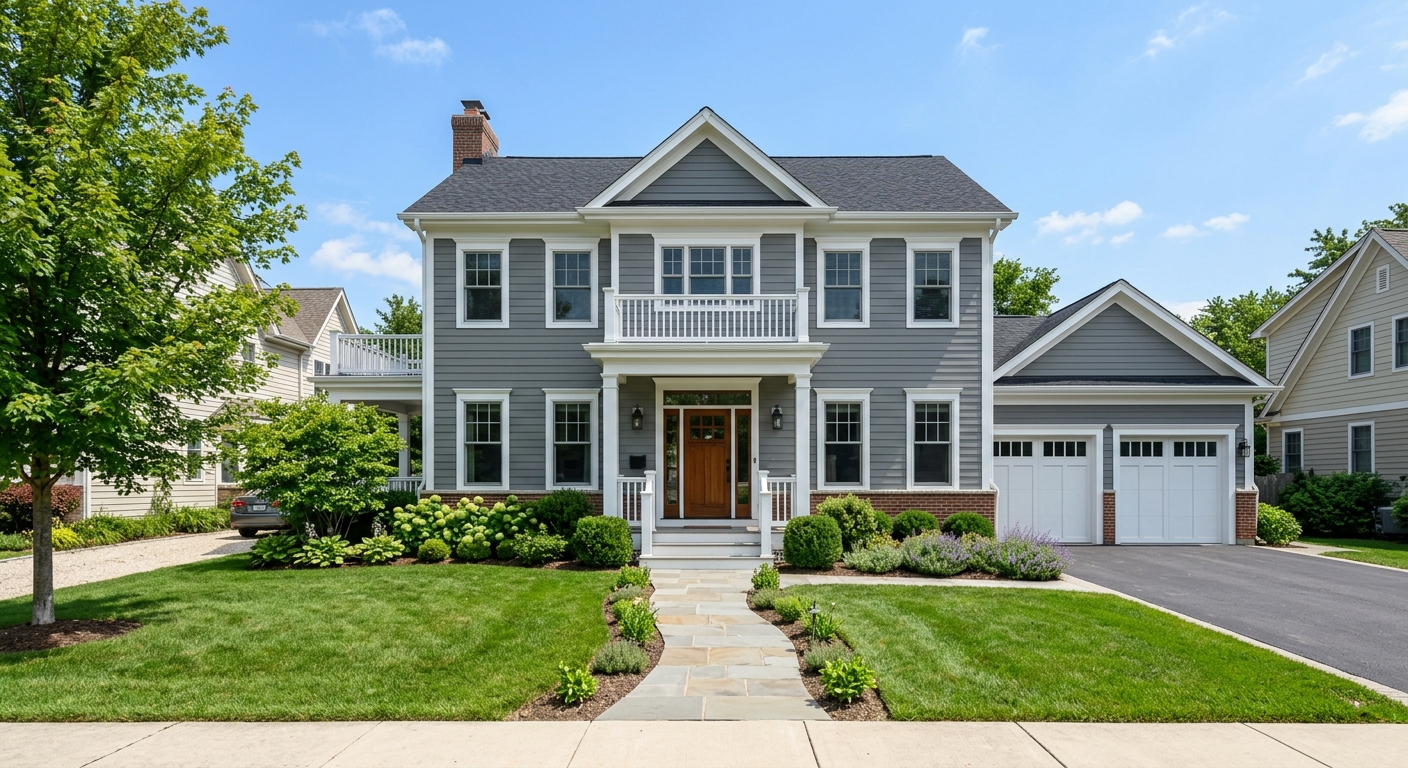
Painting options and costs in Coleman
Coleman, Alberta is a small community—about 1,441 residents (Statistics Canada, 2021 Census)—and that usually means you feel the contractor schedule quickly when demand spikes. Many homes were built in earlier decades, and in the broader Calgary economic region you’ll commonly run into older substrates that need extra prep: scraping loose paint, patching small defects, caulking gaps, and priming before any top-coat goes on. That prep-heavy reality matters because labour on repainting can dominate the final price, especially when surfaces have been touched up by previous owners.
In the Calgary area, exterior painting is strongly shaped by weather. Our workable season typically runs from mid-May to late September, when daytime temperatures stay reliably above 10°C so coatings can level and dry properly; rain and overnight lows can still delay work. Interiors are less weather-sensitive, but the same market pressures—limited crews in summer, access constraints, and how much trim is involved—can tighten availability. In Coleman, we often see strong demand around the downtown and surrounding residential blocks, where turn-over and curb-appeal refreshes line up with spring listings and early-summer renovations.
Below are realistic starting points homeowners use when comparing options, from whole-home interiors to full exterior repaints, so you can frame your budget before we measure surfaces and confirm prep scope.
| Service |
What's Included |
Typical Duration |
Price Range |
| Interior — whole home (walls, ceilings, trim) |
Protect floors and furniture where possible, prep and patch, prime as required, paint walls/ceilings, caulk touch-ups, paint baseboards and trim; clean-up at the end of each day |
3–7 days |
$1,800 – $6,500 |
| Interior — per room (standard bedroom or living room) |
Prep and patch, prime as required, paint walls and ceiling, mask/protect, light trim/baseboard painting included |
1–3 days |
$400 – $1,600 |
| Exterior — full house (siding, trim, soffits) |
Surface inspection, scrape and sand loose material, caulking at gaps as needed, prime bare/unstable areas, paint siding and trim, protect plants/fixtures, final clean-up |
1–3 weeks (weather dependent) |
$4,500 – $9,000 |
| Exterior — trim and accent colours only |
Spot prep on trim/accent areas, sand/scuff as needed, prime bare spots, paint trim/accents; typically excludes full siding repaint unless required by condition |
4–10 days |
$2,500 – $5,500 |
| Kitchen cabinet painting (doors, frames, spray finish) |
Degrease, clean and scuff, bonding primer where needed, paint doors/frames with spray-compatible system, re-install hardware as directed, light touch-up after |
5–12 days |
$2,200 – $4,800 |
| Specialty / faux finish (accent wall, texture) |
Surface prep for the feature wall, texture or stencil prep and application, seal coat where required, blending and clean edge finishing |
2–6 days |
$600 – $3,500 |
Prices are estimates only and vary by project scope, site access and material selection.
What affects the price of painting in Coleman
In Coleman and the wider Calgary market, two “same-size” jobs can land 30–50% apart because the quote isn’t just paint—it’s time, prep, and risk. Exterior work is also tightly climate-bound in the Calgary region: coatings need consistent temperatures above about 10°C during application and drying, so scheduling becomes compressed from mid-May into late September. That’s why contractors often price more firmly in peak months and may decline work if conditions don’t cooperate. Coastal BC can run longer, but humidity and rainfall drive mildew-resistant product needs and tighter timing around wet days.
Older homes across the region typically mean more surface prep. When we’re scraping failing coating edges, sanding smooth patches, patching drywall or repairing wood, and then applying primer, that prep can represent 50–70% of the labour on a repainting job. In practical dollar terms, that can move an exterior repaint toward the higher end of $4,500 – $9,000 depending on how much unstable paint we remove, not just how many hours we’re on-site.
Three Coleman examples we see often: (1) sun-baked trim with peeling edges usually requires more feather-sanding and spot-priming before any topcoat—raising cost even if the house size is the same; (2) previously DIY-touched walls can create extra patch/spot-prime work—pushing interior whole-home projects from the mid to upper portion of the $1,800 – $6,500 range; and (3) access constraints (steep pitches, narrow driveways, limited staging room) can add labour time for masking, ladder moves, or lifts.
| Price Factor |
Why It Matters |
Cost Impact |
| Surface prep — scraping, sanding, patching drywall or wood |
Determines adhesion and prevents early peeling or flashing |
+15% to +45% |
| Number of coats — 2-coat system over primer vs. 1 coat over existing |
Coverage and durability depend on full hide, especially over patches |
+5% to +25% |
| Paint quality tier — contractor-grade vs. premium (Benjamin Moore, Sherwin) |
Premium systems often include better pigments/binders and smoother finish |
+5% to +20% |
| Ceilings and trim — adds significant time vs. walls-only |
Ceilings and detailed trim require more masking and cutting in |
+10% to +30% |
| Exterior season window — short season raises summer rates |
Weather limits labour days and increases scheduling pressure |
+10% to +35% |
| Lead-safe precautions — required for pre-1978 homes with lead paint |
Safe work practice increases setup, containment, and cleaning steps |
+5% to +20% |
| Surface material — drywall vs. plaster vs. wood vs. stucco |
Porosity and bonding needs change primer type and prep effort |
+5% to +30% |
| Height and access — multi-storey exterior requires scaffolding or lifts |
More set-up time, safety checks, and slower production |
+10% to +40% |
Permits & regulations in Alberta
In Alberta, painting generally does not require a permit for typical interior or exterior repainting. The work that may trigger permits is not “painting itself,” but rather related building alterations—examples include structural changes, altering exterior openings, or work that falls under separate building requirements. For homeowners in Coleman, what matters most for compliance is using safe practices on older homes rather than permits.
For homes built before 1978, health guidelines recommend testing for lead paint before sanding or scraping, and following lead-safe work practices if lead is present. This usually includes wet methods to minimize dust, HEPA vacuuming, proper containment and disposal, and extra attention during sanding/stripping. It is not legally mandated for homeowners in the same way it is for licensed professional handling, but it’s standard contractor practice because it reduces exposure risk during prep—the stage that creates the dust.
Also confirm your contractor carries liability insurance and WSIB/WCB workers’ compensation coverage. A written contract should clearly list the paint brand and sheen, number of coats, caulking and primer scope, and exactly what prep is included (scrape/sand/patch/spot-prime). Step-by-step, Coleman homeowners can verify: (1) licence/registration status through the appropriate online Alberta contractor registry where applicable; (2) insurance certificate directly from the contractor (request the certificate and confirm limits); and (3) WSIB/WCB clearance or account confirmation on demand—preferably attached to the quote or provided before work starts.
Interior vs exterior painting — getting the best result in Coleman
The biggest difference between a paint job that lasts and one that fails early in Coleman is prep discipline matched to our freeze–thaw cycles, strong UV, and hail-prone weather. For interiors, surface prep matters far more than brand: filling, sanding, priming stains or patched areas, and achieving clean, scuff-ready surfaces. Sheen choice also affects how the paint wears—flat hides imperfections on ceilings, eggshell is a practical wall finish, satin or semi-gloss holds up better in higher-touch areas and trim. Two coats over the correct primer typically outlast a “heavy” single coat because coverage and binder performance are better when we apply to spec, not by guess.
For exteriors, adhesion and water control are everything. We scrape and feather peeling edges, caulk joints before painting to reduce water ingress behind coatings, and select primer for the substrate (for example, bonding primers for problem surfaces). In Alberta, we prioritize temperature-stable, flexible systems suited to expansion/contraction from seasonal changes; unlike the mildew pressure you see in more humid climates, our failures more often come from poor adhesion at edges and water trapping rather than constant dampness.
Cabinet painting is a strong budget alternative to replacement when the prep is thorough: degreasing, sanding/scuffing, appropriate primer, and a spray-compatible multi-step finish. For a dollar reality check, a full exterior repaint can land near the mid-to-upper end of $4,500 – $9,000, while trim-only refresh might suit $2,500 – $5,500. Spending extra on primer and prep is usually justified when peeling edges, failed caulking, or bare/spotty areas are present—because paint over trouble tends to fail faster than the cost difference you think you’re saving.
| Project Type |
Key Prep Step |
Recommended Coats |
Price Band |
| Interior — fresh drywall (new construction) |
Proper drywall priming to seal and unify absorbency; patch sanding |
2 coats topcoat (often primer + 2 coats total system) |
$1,000 – $3,200 |
| Interior — repaint (good condition, no repairs) |
Degrease/mask, light scuff-sand, spot-prime stains or sheen changes |
2 coats (spot prime as needed; typically full 2-coat application) |
$400 – $2,600 |
| Interior — repaint (patching and priming needed) |
Patch, sand, and prime repairs/stain-block areas before finish coats |
2–3 coats total (primer + 2 coats; sometimes 3 if heavy stains) |
$800 – $4,000 |
| Exterior siding (wood or fibre cement) |
Scrape/sand loose coating, prime bare areas, caulk as required before topcoat |
2 coats exterior topcoat over primer where needed |
$4,500 – $9,000 |
| Exterior trim and accents only |
Clean and spot-prime edges and any failing caulk lines |
2 coats (spot prime + 2 coats on trim sections) |
$2,500 – $5,500 |
| Kitchen cabinets (spray finish) |
Degrease thoroughly, bond/prime correctly, and sand for adhesion between steps |
Primer + 2 finish coats (or system-matched multi-step equivalent) |
$2,200 – $4,800 |
How to choose a painting contractor in Coleman
Start by verifying Alberta coverage and legitimacy in a way that protects you if something goes wrong. First, confirm the contractor’s Alberta licence/registration status through the appropriate online registry where applicable, and match the business name to their paperwork. Second, request a certificate of liability insurance and verify it covers your job scope and has sufficient limits for residential work. Third, ask for proof of WSIB/WCB workers’ compensation coverage (or clearance confirmation) before work begins—don’t accept “it’s all in place” without documentation.
Next, get 2–3 itemised written quotes. You want line items that separate labour from materials and that specify prep tasks (scrape/sand/patch/caulk/prime), the paint brand and sheen, and how many coats are included. Be alert to exclusions: some quotes omit drywall sanding, lead-safe prep, ceiling height considerations, or disposal of scrap paint. Also clarify whether a permit pull is included—typically painting itself doesn’t need one in Alberta, but related scope changes might.
Warranty matters too. Ask for the workmanship warranty length and whether product/manufacturer warranty terms apply if surfaces were properly prepped. Confirm whether the warranty is transferable to a new owner if you sell. For payment, avoid large deposits: never pay more than about 10–15% upfront, and hold back a portion until the job is complete and cleaned. Finally, lock in a timeline with a start date and completion estimate in writing, including weather contingency for exterior work in Alberta.
- Ask for the paint brand, model/line, and sheen in writing.
- Confirm how many coats of topcoat are included (not “one coat plus touch-ups”).
- Ensure prep scope is explicit: scraping, sanding, patching, caulking, priming.
- Verify lead-safe approach for pre-1978 homes (testing and HEPA/containment steps).
- Request insurance certificate (liability) and confirm WSIB/WCB coverage.
- Check whether ceiling work, trim detail, and hard-to-reach areas are included.
- Get disposal details: are scrap materials and paint-contaminated waste handled?
- Confirm protection plan for floors, landscaping, and fixtures.
- Ask about colour accuracy process (sample approval before mass rolling).
- Review warranty terms in the contract: coverage length and what voids it.
- Agree on an inspection walkthrough at completion and what constitutes “done.”
- Use a written payment schedule with a holdback until final quality check.
In Coleman, common red flags include: quotes that skip or minimize surface prep (“paint over everything”), no mention of caulking/priming decisions for exterior, refusing to provide insurance/WSIB/WCB documentation, vague scopes that exclude ceiling/trim or disposal, and pressure for large upfront payments or cash-only arrangements.
Frequently asked questions — painting in Coleman
How many coats does an exterior repaint need in Coleman?
In Coleman and the Calgary region, an exterior repaint typically uses a full 2-coat system over appropriate primer. If we’re scraping back failing areas to sound substrate, prime bare or unstable spots first, then apply two topcoats to the siding/trim sections so colour and sheen stay consistent. The “how many coats” answer depends on how much old coating is removed, whether stains or bleeding are present, and what substrate you’re painting (wood vs. fibre cement vs. stucco). If your house is in the $4,500 – $9,000 range, that price generally assumes prep plus a proper 2-coat exterior application, not a single quick coat over patches. Because Alberta exterior work is weather- and temperature-dependent (typically mid-May to late September), rushing coats to fit the schedule often leads to early adhesion problems.
What is the best primer for older Coleman homes?
For older Coleman homes—especially those built before 1978—the “best” primer is the one that matches the problem surface and your required adhesion level. Where we’ve got exposed wood, previously stained areas, repaired drywall, or areas that weren’t prepped well, we’ll use a bonding primer or stain-blocking primer so the finish coat can adhere and stay uniform. If lead paint risk is suspected on pre-1978 surfaces, the priority is safe prep: testing and lead-safe methods before any sanding or scraping. Primer choice also depends on whether you’re dealing with drywall/plaster interiors or exterior substrates like fibre cement and wood; each needs different adhesion and sealing characteristics. If you’re budgeting an interior whole-home refresh ($1,800 – $6,500), a substantial portion of the cost is often correct priming and repair prep rather than primer brand alone.
Should I paint or wallpaper my Coleman home?
In Coleman, most homeowners choose paint for a reason: it’s easier to maintain in Alberta’s climate and quicker to refresh when tastes change. Wallpaper can look great, but it’s unforgiving if the wall surface has cracks, patching ridges, or uneven texture—issues you often find in older homes that needed scraping and patching. Paint also lets you spot-prime stains and repair areas so the finish stays even. That said, wallpaper can be worth it for a feature wall if you’re prepared for extra surface prep and the risk of edges lifting with temperature/airflow changes. For a cost lens, interior per-room projects commonly start around $400 – $1,600, while specialty finishes (like texture accents) can scale upward based on labour. If you’re unsure, we can advise based on wall condition during your estimate—prep quality is the deciding factor either way.
How do I fix peeling exterior paint in Coleman?
Peeling exterior paint in Coleman usually can’t be fixed reliably by just scraping the loose edges and rolling over without proper prep. The correct approach is: (1) scrape/sand back to sound, well-adhered coating; (2) feather the edges so the surface is smooth; (3) repair and caulk gaps where water can get behind the system; (4) prime bare or problem areas with a primer matched to substrate; and (5) apply a full 2-coat exterior system. Because Alberta has freeze–thaw cycles and strong UV, water ingress and poor adhesion at edges are common failure triggers. If the peeling is widespread, spot fixes often won’t last as long as a full repaint scope. For budgets, that’s why many homeowners compare trim-only refresh pricing ($2,500 – $5,500) versus full exterior repaint ($4,500 – $9,000) based on how much coating is actually failing.
What colours add the most resale value in Coleman?
For resale in Coleman and the broader Calgary region, the safest approach is neutral, light-to-medium tones with a durable sheen strategy. Buyers typically respond well to brighter wall colours that keep rooms feeling clean and larger, while using slightly deeper shades for accents (like front doors, built-ins, or trim). In practical terms, a consistent eggshell or satin on walls and semi-gloss on trim looks “finished” and tolerates cleaning better than very flat coatings. If you’re planning a whole-home interior refresh, keeping walls cohesive from room to room tends to reduce buyer surprises and makes the property feel move-in ready. For exterior curb appeal, maintaining a traditional scheme with high-contrast trim often performs well, especially when hail/UV exposure makes older colours fade unevenly. If you want, share your current palette and we’ll suggest colour directions that align with what’s been selling well in similar neighbourhoods around Coleman.
How much does it cost to paint a house in Coleman?
The cost to paint a house in Coleman depends mostly on the amount of prep needed and whether you’re painting interior, exterior, or both. As a baseline for homeowners comparing quotes: interior whole-home painting often lands around $1,800 – $6,500, while an exterior full-house repaint commonly falls within $4,500 – $9,000 because it includes scraping/sanding, caulking decisions, primer work, and a weather-aware schedule. If you’re doing one room, interior per-room estimates often start near $400 – $1,600, and trim-only exterior refresh can be around $2,500 – $5,500. We also account for access and surface condition—older homes may require significantly more prep, which can be a larger driver of cost than the paint brand itself. (Statistics Canada, 2021 Census) shows Coleman’s small population, and limited contractor capacity can tighten summer schedules, especially for exterior work.