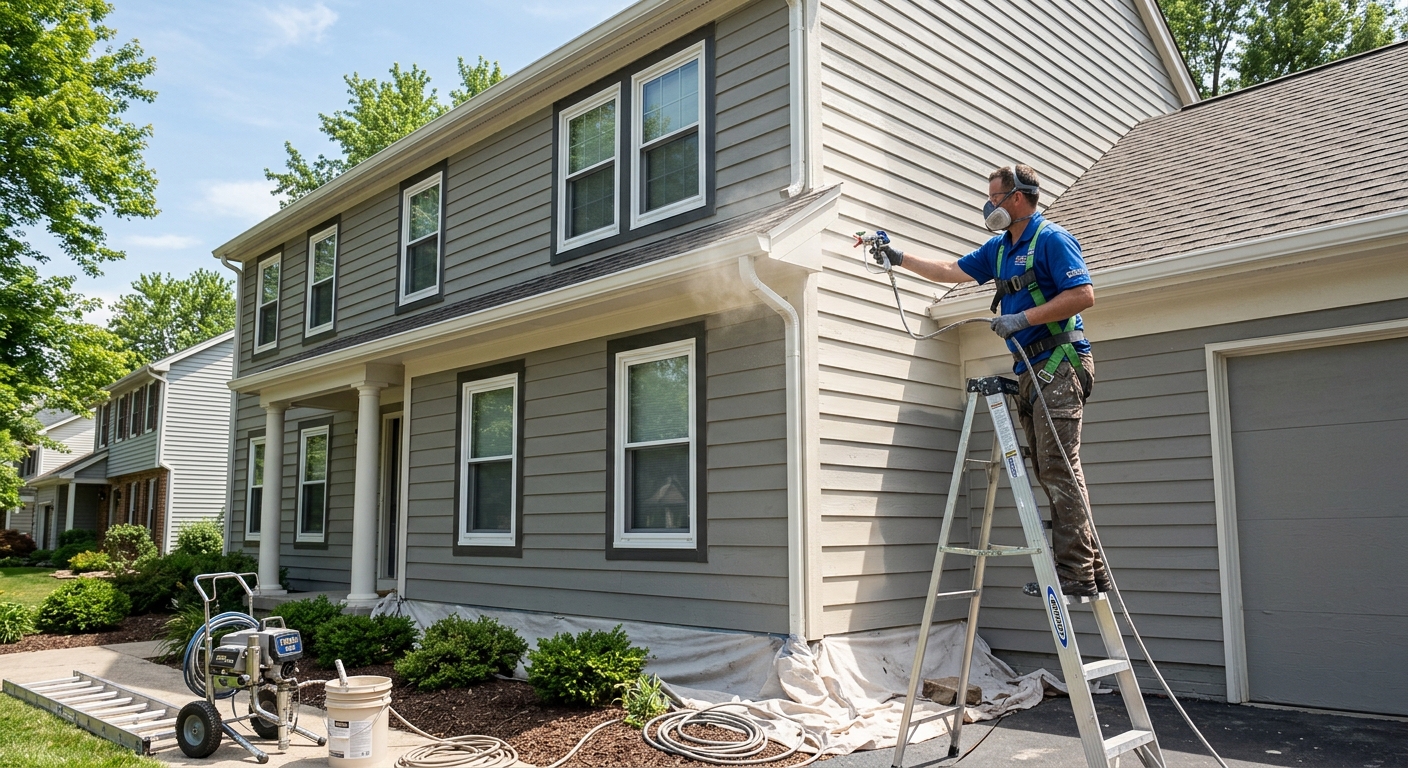
Painting options and costs in Thorold
Thorold homeowners typically have plenty of painting choices, but the right option depends on how much surface prep your house needs and where the work sits on the interior–exterior calendar. In Thorold, many homes are older—55.1% of dwellings were built before 1981—so repaint projects often involve more scraping, patching and priming than a straight “paint-over” job. That extra prep matters because it’s where paint failures usually start in Ontario’s weather. The other local factor shaping cost is homeownership patterns: 69.3% of households own their home (Statistics Canada, 2021 Census), which means demand clusters around summer repainting and scheduled refresh projects, especially for families preparing for move-ins or seasonal use.
On the Hamilton–Niagara Peninsula, exterior painting is limited to a tight late-spring through early-fall window, when surfaces stay dry enough for proper adhesion and curing. When contractors are busiest in peak summer—often around areas with higher concentrations of older single-detached homes such as the west side near Lake Gibson or the downtown core—quotes can tighten and pricing can spike, particularly for multi-storey elevations that require lifts or scaffolding. Interior work is more flexible, so it’s commonly scheduled alongside exterior prep to keep labour efficient.
To compare options, use the table below as a practical starting point. Your final price will change with prep level, substrate condition, number of coats, accessibility, and product tier.
| Service |
What's Included |
Typical Duration |
Price Range |
| Interior — whole home (walls, ceilings, trim) |
Protect floors/fixtures, patch & sand as needed, prime problem areas, caulk where required, two finish coats (plus trim/doors where specified) |
4–8 days |
$1,500–$5,000 |
| Interior — per room (standard bedroom or living room) |
Prep, patch/sand limited repairs, prime as needed, two finish coats on walls + one coat on ceilings (trim included only if listed) |
1–2 days |
$600–$1,800 |
| Exterior — full house (siding, trim, soffits) |
Power wash, scrape/sand loose coatings, caulking, spot-priming, two-coat exterior system to manufacturer specs, protective masking |
5–12 days |
$3,200–$8,000 |
| Exterior — trim and accent colours only |
Light prep/scrape, caulk, prime bare spots, two-coat trim system, careful masking to keep lines crisp |
2–6 days |
$1,500–$4,500 |
| Kitchen cabinet painting (doors, frames, spray finish) |
Hardware handling, de-grease, sand/feather, bonding primer, sprayed enamel/finish coats, re-install & touch-ups |
4–10 days (typical schedule varies) |
$1,200–$4,500 |
| Specialty / faux finish (accent wall, texture) |
Surface smoothing/spot primer, custom finish materials, artistic work, sealing/clear coat as required |
1–5 days |
$1,000–$6,000 |
Prices are estimates only and vary by project scope, site access and material selection.
What affects the price of painting in Thorold
Across Hamilton–Niagara Peninsula and the broader Ontario market, it’s common to see the same “paint the house” request swing by 30–50% once contractors price out prep and access. Exterior work is tightly climate-bound in a four-season Ontario pattern: roughly late May to early October is when painters can reliably apply and cure coatings with surfaces staying warm and dry (you generally want conditions above 10°C and rising during application). Coastal BC often has a longer workable window, but higher humidity and rainfall can drive up product selection and drying-time management. In Ontario, the shorter season concentrates demand—so summer scheduling pressure can raise labour rates, especially for multi-storey work.
Older housing stock is another big driver. With 55.1% of dwellings built before 1981 in the broader Thorold area, many repaint jobs include more than just a topcoat—scraping flaking paint, caulking at joints, patching wood rot, and priming stained or bare areas. In many projects, prep can represent 50–70% of total labour, which helps explain why a job that “should be” in the $1,500–$4,500 exterior trim band can quickly move into the $3,200–$8,000 full-house band when repairs and primer coverage are extensive.
Concrete examples I see in Thorold: (1) Houses with aged wood trim near Lake Gibson often require more caulking and spot-priming due to moisture cycling, which increases labour time; (2) A painted finish over poorly adhered previous coatings can force additional scraping and disposal, pushing costs toward the top of the exterior range. If your siding is newer, surfaces are mostly sound, and access is simple (bungalow or easy lift reach), interior projects can stay closer to the lower end of $500–$5,000 depending on how many rooms and ceiling areas you include.
| Price Factor |
Why It Matters |
Cost Impact |
| Surface prep — scraping, sanding, patching drywall or wood |
Prep determines adhesion; failure here usually shows up as peeling or bubbling later |
Often the largest driver; can add roughly 50–70% of labour on repaints |
| Number of coats — 2-coat system over primer vs. 1 coat over existing |
Coverage varies by sheen, colour change, and how much surface is porous or stained |
Can shift total price by 10–25% depending on required priming |
| Paint quality tier — contractor-grade vs. premium (Benjamin Moore, Sherwin) |
Higher-quality products typically cover better and resist scuffing and staining |
Material difference is usually smaller than prep—often 5–15% overall |
| Ceilings and trim — adds significant time vs. walls-only |
Trim requires precise masking; ceilings require protection and consistent cutting-in |
Can add 15–40% for full-home work |
| Exterior season window — short season raises summer rates |
Contractors book quickly when weather is favourable; delays can be costly to reschedule |
In peak summer, bids may be 10–20% higher than shoulder-season dates |
| Lead-safe precautions — required for pre-1978 homes with lead paint |
Testing and controlled work methods reduce exposure risk and increase containment/disposal |
Can add noticeable labour and disposal costs; often 5–20% depending on findings |
| Surface material — drywall vs. plaster vs. wood vs. stucco |
Different substrates absorb differently and need matching primers and patch systems |
Improper primer can force rework; proper matching reduces risk |
| Height and access — multi-storey exterior requires scaffolding or lifts |
Access equipment increases setup time and safety measures |
Can move projects by $500–$2,000+ depending on the home layout |
Permits & regulations in Ontario
In Ontario, painting work itself usually does not require a permit—whether you’re updating interior walls or refreshing exterior siding and trim. The key compliance items are about safety and documentation, not municipal approvals. For homes built before 1978, health guidelines recommend considering lead paint testing before sanding, scraping, or dry abrasive removal. If lead is present, pro-style lead-safe practices are standard: wet methods to reduce dust, HEPA vacuuming, proper containment, and correct disposal. While this is not typically legally mandated for homeowners in the way a contractor would follow workplace requirements, following the same safer process is strongly advisable for any high-dust prep.
Also, confirm your painter carries current liability insurance and WSIB/WCB workers’ compensation coverage (for contractor employees). A written contract should clearly state the paint brand/line and sheen, number of coats, surface prep scope (including caulking/spot priming), colour change responsibilities, and any protections and disposal.
What DOES require a permit in typical homeowner scenarios is not “painting,” but related work (for example, certain exterior structural alterations, electrical/plumbing changes, or window/door replacements). Simple repainting and trim colour updates are generally permit-free.
To verify coverage in Thorold, start with: (1) the contractor’s provincial business details/licensing information via the appropriate Ontario registry page, if applicable to their trade setup; (2) their certificate of insurance—ask for a COI showing liability limits; and (3) their WSIB/WCB status certificate. If they can’t provide documentation before quoting, that’s a major warning sign. Then keep a signed contract and any product/spec sheets for your records.
Interior vs exterior painting — getting the best result in Thorold
The difference between a long-lasting paint job and a premature failure in Thorold usually isn’t the “best brand” alone—it’s prep quality, correct sheen/product choices, and getting coats on at the right time for our climate conditions. For interiors, surface prep matters more than the topcoat label: filling, sanding, priming stains, and addressing patch quality so you don’t trap defects under new paint. Choose sheen by room use. Flat can hide wall imperfections but scuffs more; eggshell is a common, balanced choice for living areas; satin holds up well in higher-touch rooms; and semi-gloss is often reserved for trim because it’s easier to clean. Two coats over a proper primer typically outlast one heavy coat because primer anchors and finish paint builds uniform colour.
For exteriors, Ontario weather turns prep into the deciding factor. Caulking should be done before painting to prevent water ingress and to seal joints properly. Primer type matters by substrate: oil-based primers are sometimes used for problematic adhesion situations, while latex systems are common when compatibility and surface conditions are right. In our Hamilton–Niagara Peninsula humidity cycles, mildew resistance and correct curing time are essential. Cabinet painting is a smart budget alternative to replacement—if your cabinet boxes and doors are structurally sound—because you can achieve a fresh look for a fraction of replacement costs. For pre-1978 homes, lead-safe precautions should be part of your plan if scraping or sanding is required (wet methods, HEPA cleanup, and careful disposal).
Example: if full exterior work is priced around the $3,200–$8,000 band, choosing “trim and accent colours only” at $1,500–$4,500 can be justified when your siding coatings are well adhered and only fascias/frames need refresh. If the siding has peeling edges or heavy patching is needed, limiting the scope rarely saves money because the system still needs prep and primer to match. The right approach is usually the one that fixes the failure points first.
| Project Type |
Key Prep Step |
Recommended Coats |
Price Band |
| Interior — fresh drywall (new construction) |
Seal drywall with proper primer to prevent flashing and uneven absorption |
1 primer + 2 finish coats |
$800–$3,000 |
| Interior — repaint (good condition, no repairs) |
Clean, scuff-sand if needed, caulk minor gaps, spot-prime stains |
1 primer (spot) + 2 finish coats |
$500–$2,200 |
| Interior — repaint (patching and priming needed) |
Patch with correct compound, sand flush, prime all repaired/porous areas |
1 primer + 2 finish coats (often with additional spot primers) |
$900–$3,800 |
| Exterior siding (wood or fibre cement) |
Scrape loose coatings, sand edges, caulk joints, spot-prime bare areas |
Primer + 2 exterior finish coats (system-based) |
$3,200–$8,000 |
| Exterior trim and accents only |
Mask cleanly and prime any bare/failed spots before finishing |
Spot primer + 2 finish coats |
$1,500–$4,500 |
| Kitchen cabinets (spray finish) |
Degrease thoroughly, sand/feather, and use a bonding primer for adhesion |
Primer + 2–3 finish coats (system-dependent) |
$1,200–$4,500 |
How to choose a painting contractor in Thorold
To hire well in Thorold, you want proof—before work starts—of Ontario coverage and professional readiness. First, verify liability insurance: ask for a current certificate of insurance (COI) naming you as the certificate holder if possible, and confirm the expiry date and coverage limits. Second, confirm WSIB/WCB status: ask for the WSIB clearance certificate or coverage proof (what’s provided depends on their employer structure). Third, check business details so the contractor is operating legitimately in Ontario; then match the quote to what they’re licensed/insured to do.
Get 2–3 itemised written quotes instead of one lump sum. A good quote breaks labour + materials, identifies the number of coats, lists the prep tasks (washing, scraping, sanding, patching, caulking, priming), and clarifies what’s included in surface protection. Also ask if permit pulls are needed for any related work—usually painting itself does not require one, but a contractor should confirm the scope clearly. Clarify disposal, floor protection, and how they’ll handle lead-safe tasks if your home is in the pre-1978 range.
Warranty matters. Ask for the workmanship warranty length and whether it’s backed in writing. Product/manufacturer warranties may apply to coating failure, but workmanship issues (peeling due to prep) are typically addressed by contractor terms and may not be transferable if you sell. For payment scheduling, never pay more than about 10–15% upfront; use progress payments and a holdback until final walkthrough and touch-ups are complete. Finally, demand dates: a start date and an estimated completion window, written, because Ontario’s exterior season can be delayed by rain and temperature swings.
- Request COI (liability) with current dates and correct coverage limits.
- Ask for WSIB/WCB coverage proof before signing.
- Insist quotes are itemised (labour, materials, prep, coats).
- Confirm the sheen and product line (and whether primer is included).
- Get written prep scope: scraping, sanding, caulking, patching, spot priming.
- Ask how they protect landscaping, windows, and siding edges.
- Clarify disposal: does it include debris haul-away and scraping residue?
- Verify if colour changes require special primer or extra coats.
- Confirm lead-safe approach if your home is pre-1978 and sanding/scraping is required.
- Require a workmanship warranty in writing (and what it covers).
- Use a staged payment schedule with a holdback until completion.
- Get start and completion dates/conditions in writing (weather contingency for exterior).
Red flags in Thorold include: a contractor who won’t provide insurance/WSIB documentation, quotes that don’t spell out prep and number of coats, “too-good-to-be-true” exterior pricing that ignores scraping or caulking, pressure for large upfront deposits, and vague contracts with no workmanship warranty or cleanup/disposal details.
Frequently asked questions — painting in Thorold
What paint is best for Thorold's climate?
In Thorold, the “best” paint is the one matched to the surface and the conditions, not just the brand. For interiors, a durable washable finish (commonly eggshell or satin depending on the room) helps with everyday cleaning in a household setting. For exteriors, choose a product system rated for exterior use with good mildew resistance and adhesion, because humidity near Lake Ontario and the Hamilton–Niagara Peninsula’s weather cycles can stress coatings. Many repaint jobs also need primer compatibility to prevent adhesion issues on aged wood trim, stucco, or previously painted areas. If you’re planning a trim refresh, budgets usually sit around the $1,500–$4,500 band, but product selection still matters—cutting corners on primer or prep tends to cost more later.
How long does exterior paint last here?
Exterior paint longevity in Thorold often depends on prep quality and how well the coating system matches the substrate and moisture exposure. A well-prepped, properly primed repaint on sound siding and trim commonly lasts several years; shorter lifespans happen when previous coatings weren’t scraped back to solid adhesion, or when caulking and joint sealing were skipped before painting. The region’s four-season cycle and the compressed exterior season (late spring to early fall) also affect timing and curing consistency. If your house is pre-1981 and shows flaking or moisture-driven deterioration, plan for more prep—and a longer-lasting outcome when the surface is repaired and primed correctly. For comparison, full exterior projects typically land in the $3,200–$8,000 range, and that higher prep effort is often what supports better longevity.
Should I paint or replace my cabinets?
In many Thorold kitchens, cabinet painting is worth it if the boxes are solid and the doors/drawers function properly. Painting can deliver a fresh look for a fraction of replacement costs, especially when you want to keep the layout. If you’re dealing with warped doors, deep water damage, or structural issues, replacement may still be the better long-term solution. For painting, the key is prep: degreasing, sanding/feathering, and using a bonding primer so the finish doesn’t peel. A sprayed cabinet finish can run roughly $1,200–$4,500 depending on door style, quantity, and how much repair is needed. If you’re trying to stay budget-friendly, cabinet painting is usually a smarter first step than replacing everything.
How do I prep walls before painting?
For interior walls in Thorold, prep is what makes the finish look even and last. Start by removing dust and grease (a gentle cleaner works for most walls), then patch holes and dents with spackle/joint compound and sand flush after it cures. If you have stained areas, scuffs, or uneven patches, priming those spots is usually necessary—skipping primer commonly causes “flashing” or colour variation after the second coat. Caulk only where needed (baseboards, trim edges, and small gaps), then lightly sand dried compound for a smooth surface. If you’re unsure about lead paint in a home built before 1978, avoid dry scraping; instead, ask a contractor about testing and lead-safe methods before you sand.
Do I need to worry about lead paint in an older Thorold home?
If your Thorold home was built before 1978, you should treat lead paint as a possibility before sanding, scraping, or using abrasive methods that create dust. Ontario homeowners are not typically required to get a permit for painting, but safe practice matters. Professional contractors usually recommend testing first and then using lead-safe work methods if it’s confirmed—wet methods to control dust, HEPA vacuum cleanup, containment when required, and proper disposal of contaminated debris. Even if you plan to do the work yourself, avoid dry scraping because that’s where exposure risk can rise. The safest route is to hire a contractor who can explain their testing and cleanup approach and provide written scope details, especially for pre-1978 surfaces. (Statistics Canada notes many homes in the area are older, with 55.1% built before 1981.)
How long does it take to paint a house?
Timing in Thorold depends on interior vs exterior and, critically, how much prep is needed. Interior “whole home” projects commonly take about 4–8 days of active work when repairs are included; a single room can be as quick as 1–2 days. Exterior timing is constrained by Ontario weather, so scheduling often follows the late spring–early fall window, and rain or temperature drops can pause progress while surfaces dry and cure. Prep-heavy repaints (scraping, caulking, priming bare spots) increase duration. If you’re painting trim-only, many projects run 2–6 days; full exterior houses often take 5–12 days depending on access and repair scope. For budgeting, full exterior work commonly falls in the $3,200–$8,000 range—part of that cost reflects the extra time required to get prep and curing right.