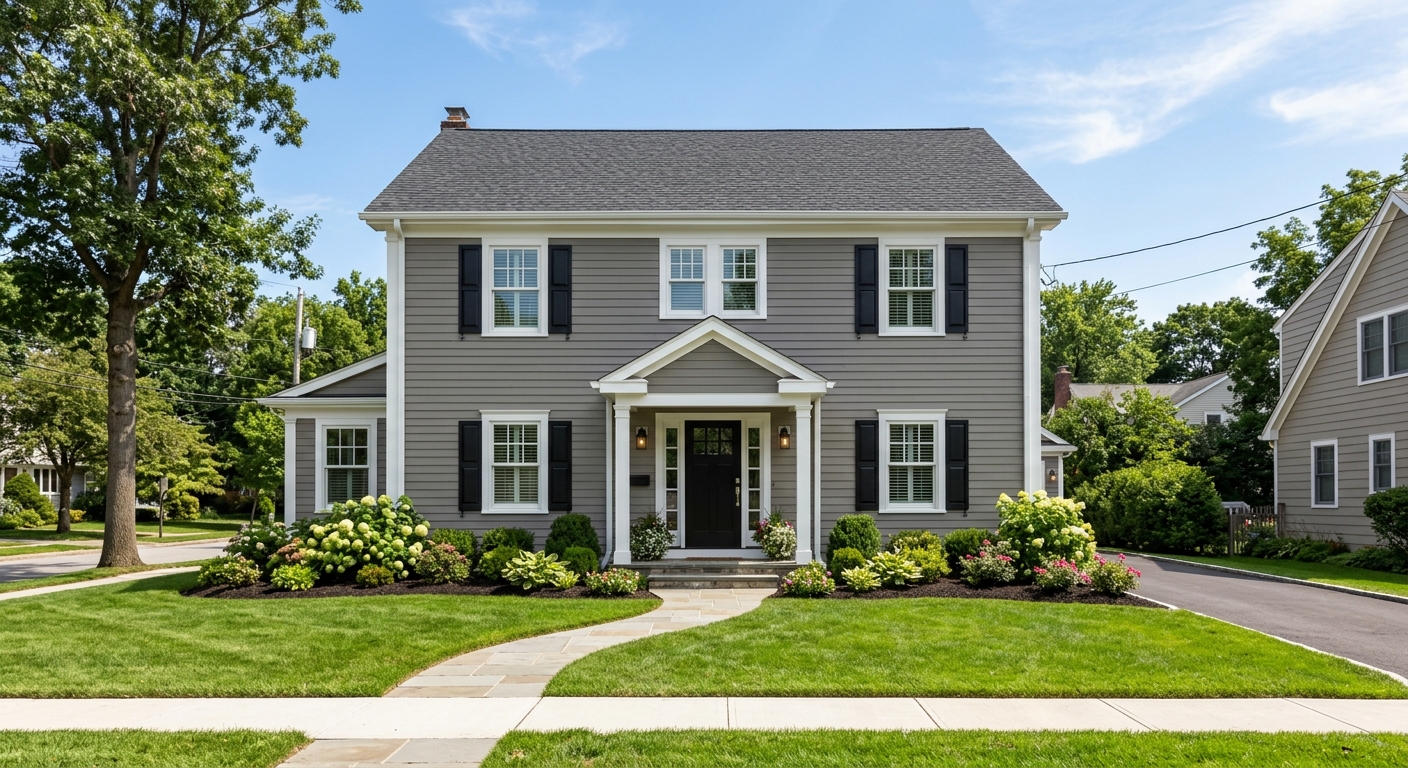
Painting options and costs in Morrisburg
Morrisburg homeowners usually get the best value by matching the right paint system and prep level to the job—especially in an older housing market. In Morrisburg, the community sits at about 3,014 residents (Statistics Canada, 2021 Census), and that smaller local base means you may see tighter scheduling for high-demand weeks. It also helps to know that Ontario’s older homes often have more layers of paint on trim and siding, which typically means extra scraping, sanding, patching and priming compared with newer builds.
Cost in the Toronto economic region is strongly shaped by our short exterior season. Exterior work typically runs from late May through June and again from early September to mid-October, when temperatures stay above roughly 10°C for proper application and curing. In June–August, contractor demand can spike during the “ideal” windows, pushing exterior pricing up about 10–15% compared with shoulder-season availability. Interiors are more flexible year-round, but prep work still controls the final number—especially if you have stained ceilings, patched drywall, or heavy trim coverage.
If you’re in the more established residential pockets—such as along or near the St. Lawrence River corridor—you’ll often notice older façades and mature trees, which can mean more attention to caulking, scraping and surface cleaning before the first coat. From there, it’s easier to compare typical scopes and budgets.
Below are practical starting points based on common Morrisburg job scopes, with ranges reflecting surface condition, finish level, and whether the schedule falls in peak exterior weeks.
| Service |
What's Included |
Typical Duration |
Price Range |
| Interior — whole home (walls, ceilings, trim) |
Room-by-room protection, patching as needed, primer where required, 2-coat finish on walls/ceilings (per plan), caulking trim, and cleaning |
5–10 days |
$1,800 – $6,000 |
| Interior — per room (standard bedroom or living room) |
Prep, patching (minor), primer spot-priming, 2-coat walls, light trim/door touch-ups (scope-dependent) |
1–3 days |
$400 – $900 |
| Exterior — full house (siding, trim, soffits) |
Pressure washing (or equivalent cleaning), scraping/sanding, caulking, spot-priming, 2-coat exterior paint system, protection/cleanup |
1–3 weeks |
$3,500 – $8,000 |
| Exterior — trim and accent colours only |
Surface prep on trim areas, caulking, primer as required, 2-coat application on specified trim/accents |
3–7 days |
$1,500 – $4,200 |
| Kitchen cabinet painting (doors, frames, spray finish) |
Hardware removal, cleaning/degreasing, sanding, bonding primer, sprayed or rolled finish, re-install and touch-ups |
5–12 days |
$1,600 – $3,800 |
| Specialty / faux finish (accent wall, texture) |
Surface prep, texture application or faux technique, topcoat/seal (as required), colour mixing per plan |
2–6 days |
$800 – $5,000 |
Prices are estimates only and vary by project scope, site access and material selection.
What affects the price of painting in Morrisburg
Even when two homeowners describe the same “repaint,” Morrisburg pricing can swing widely—often by 30–50% across Toronto and Ontario—because prep and access are where most time goes. Labor rates are similar within the Greater Toronto Area, but job conditions differ: surface condition, height, the number of paint layers, and how much patching is needed.
Exterior painting is the most season-sensitive cost driver. In the Toronto economic region, contractors typically rely on a short stretch from late May through June and again from early September to mid-October when temperatures are above about 10°C and rising for application, and humidity stays moderate enough for proper curing. In June–August, peak scheduling pressure can push exterior pricing up roughly 10–15%, which is why a similar house can land closer to the top end of the exterior band ($1,500 – $8,000) when you book during the busiest weeks. Coastal BC is different—longer seasons exist, but dampness and mildew risk often require mildew-focused products and very careful timing; our main exterior constraints are rain events, frost risk and humidity spikes rather than constant wet exposure.
Older homes throughout the region also change the math. Extra scraping, caulking and priming can account for 50–70% of labour on a repaint. In practical terms, shifting from “good condition” to “peeling/failed paint that needs heavier sanding and multiple primers” can move you by thousands of dollars; for example, an exterior trim-only refresh may stay nearer $1,500 – $4,200 when preparation is light, while full-house prep can push toward $3,500 – $8,000 when the contractor needs more surface restoration.
In Morrisburg, two common examples raise cost: repainting mature siding where vegetation shields areas (more cleaning and sometimes more surface chalking), and working on multi-storey elevations near the downtown/core where access is tighter, increasing time for lifts or safer ladder setups.
| Price Factor |
Why It Matters |
Cost Impact |
| Surface prep — scraping, sanding, patching drywall or wood |
Failed paint and damaged substrates must be stabilized before coating |
High: can be 30–60% of the labour on repaints |
| Number of coats — 2-coat system over primer vs. 1 coat over existing |
Proper film thickness prevents early peeling and patch flashing |
Medium to high: materials + time |
| Paint quality tier — contractor-grade vs. premium (Benjamin Moore, Sherwin) |
Premium lines typically cover better and resist fading/scuffing longer |
Medium: usually modest material add, larger for large homes |
| Ceilings and trim — adds significant time vs. walls-only |
Ceilings and detailed trim require more cutting-in and masking |
Medium to high depending on coverage |
| Exterior season window — short season raises summer rates |
Limited “ideal” weeks concentrate demand and crews |
Medium: can add 10–15% in peak weeks |
| Lead-safe precautions — required for pre-1978 homes with lead paint |
Work practices change when hazardous dust risk exists |
Medium: extra controls, cleanup and disposal |
| Surface material — drywall vs. plaster vs. wood vs. stucco |
Different substrates need different primers and prep methods |
Medium: primer selection and patching differ |
| Height and access — multi-storey exterior requires scaffolding or lifts |
Safer systems and time add cost |
High on multi-storey exteriors |
Permits & regulations in Ontario
In Ontario, painting itself does not typically require a permit for a standard residential repaint. What can require permits is not the paint work, but related building changes or structural work (for example, if you’re altering exterior openings, changing the building envelope, or doing work that triggers other trade approvals). For most Morrisburg homeowners, the practical compliance focus is worker safety, insurance, and—when relevant—lead-safe practices.
For homes built before 1978, health guidelines recommend testing for lead paint before sanding or scraping, and using lead-safe work practices if lead is present (wet methods to control dust, HEPA vacuuming, and proper disposal). This is not legally mandated for homeowners in the way it is for professional remediation, but it is standard practice for professional contractors because sanding and scraping can create hazardous dust.
Before work begins, confirm your contractor carries liability insurance and has workers’ compensation coverage through WSIB/WCB for their employees. Then require a written contract that clearly states: paint brand and product line, sheen, number of coats, primer requirements, and what prep tasks are included (caulking, patching, scraping, sanding, pressure washing, and disposal).
To verify: (1) check the contractor’s Ontario licence/registration via the appropriate provincial registry listing, (2) request a certificate of insurance for liability (make sure it includes your project and dates), and (3) ask for proof of WSIB/WCB clearance or coverage. A clearance letter is often provided for current status; if they hesitate, that’s a red flag.
Interior vs exterior painting — getting the best result in Morrisburg
In Morrisburg, the difference between a long-lasting paint job and a premature failure usually comes down to prep discipline and weather timing—not just the paint brand. Interiors are less climate-sensitive, but the surface still matters. For interior walls, filling, sanding, spot-priming and proper caulking beat “extra-thick” paint every time. Sheen choice also affects durability and appearance: flat hides imperfections on low-traffic ceilings, eggshell is popular for many living spaces, satin handles wipe-clean needs better, and semi-gloss is ideal for doors, trim and areas that get frequent touch.
Realistically, two coats over a correctly primed surface outlasts one heavy coat. If you’re repainting and the wall is sound, you can often keep costs closer to the lower interior end (for example, a bedroom or living room often lands within $400–$900 per room depending on trim and prep). If you need patching and priming, labour climbs quickly because sanding dust control, drying time, and re-coat schedules add days.
For exteriors, Ontario’s temperature and moisture swings make prep and caulking critical. Caulk should be applied before painting to seal joints and stop water ingress, and primer type must match the substrate (and existing conditions). Where wood has tannin bleed or where surfaces have staining, the primer decision matters as much as the topcoat. Unlike coastal BC—where mildew resistance is often the headline feature—our biggest exterior triggers in this region are frost risk around scheduling and rain/humidity spikes that can interfere with curing.
Cabinet painting is a smart budget alternative to replacement when the frames and doors are in good condition. On pre-1978 homes, the same lead-safe logic applies if surfaces are disturbed—so plan for controlled prep and cleanup rather than dry scraping.
Here’s where price differences are justified: if a full exterior prep is required, paying for thorough scraping, sanding and primer can prevent peeling within a season. Skipping these steps might save money upfront, but it usually costs more later when you’re repainting again sooner.
| Project Type |
Key Prep Step |
Recommended Coats |
Price Band |
| Interior — fresh drywall (new construction) |
Prime all new drywall, seal joints, and sand smooth before finish |
1 primer + 2 finish coats |
$800 – $2,500 |
| Interior — repaint (good condition, no repairs) |
Clean, lightly sand sheen-gloss areas, spot-prime if needed |
2 finish coats |
$400 – $1,200 |
| Interior — repaint (patching and priming needed) |
Patch, sand feather edges, and prime repaired areas to prevent flashing |
Spot prime + 2 finish coats |
$650 – $2,000 |
| Exterior siding (wood or fibre cement) |
Scrape/sand failing paint, caulk cracks, prime exposed areas, and clean thoroughly |
Primer where required + 2 finish coats |
$3,500 – $8,000 |
| Exterior trim and accents only |
Surface prep on trim edges and proper caulking for joints |
Primer where required + 2 finish coats |
$1,500 – $4,200 |
| Kitchen cabinets (spray finish) |
Degrease, sand, bond-prime, and control overspray for a factory-like finish |
Bond primer + 2 finish coats |
$1,600 – $3,800 |
How to choose a painting contractor in Morrisburg
Start with contractor verification so you don’t pay for “best effort” work that doesn’t hold up. In Ontario, a legitimate painting contractor should be properly registered for their trade category, carry liability insurance, and have workers’ compensation coverage (WSIB/WCB) for employees. How to check: (1) ask for their Ontario licence/registration number and verify it through the provincial registry listing, (2) request a current certificate of insurance and confirm coverage dates and limits, and (3) request proof of WSIB/WCB clearance or coverage—many contractors can provide a document immediately.
Next, get 2–3 itemised written quotes rather than one lump-sum. Ask for labour and materials breakdown where possible, and ensure the scope is specific: prep tasks (scraping, sanding, patching, caulking, pressure washing), the paint line they’ll use, sheens, number of coats, and protection/cleanup/disposal. Also clarify exclusions (for example, what happens with rotten wood found during prep—does it get repaired or does that become a change order?). For exteriors in Morrisburg, request the expected start date and completion estimate in writing, because the short ideal weather windows can change crew availability.
Warranty matters too. Look for a workmanship warranty length and ask whether product/manufacturer warranties apply directly to the coating system. Confirm whether warranties are transferable to future homeowners—often a big resale benefit.
For payment schedule, never pay more than 10–15% upfront. Use a holdback until the job is complete and punch-list items are corrected.
- Ask for a written scope: exact prep included (scrape/sand/prime/caulk) and what’s “not included.”
- Confirm exterior schedule strategy for Ontario weather (rain plan and curing time).
- Require paint brand and product line, plus sheen (flat/eggshell/satin/semi-gloss) in writing.
- Check insurance documents: certificate of liability and coverage dates.
- Verify WSIB/WCB coverage for employee work (request clearance/proof).
- Request an itemised quote (labour + materials) rather than a single number.
- Confirm who supplies masking, drop cloths, and site cleanup/disposal.
- Ask about lead-safe approach if your home is pre-1978 (testing and cleanup plan if needed).
- Get a schedule: start date, estimated duration, and how weather delays are handled.
- Require warranty terms in writing: workmanship and any product warranty conditions.
- Avoid large upfront payments; keep a holdback until completion.
- Ask for references or photos of similar Morrisburg exteriors or cabinet spray jobs.
Red flags I see in Morrisburg include: vague scope with no mention of caulking/sanding/priming; refusal to provide insurance and WSIB/WCB proof; quotes that don’t specify paint brand/sheens or number of coats; demanding more than 10–15% upfront; and no written timeline for exterior work despite Ontario’s short weather window.
Frequently asked questions — painting in Morrisburg
How do I fix peeling exterior paint in Morrisburg?
Peeling exterior paint in Morrisburg is usually a preparation problem as much as a paint problem. Start by identifying why it’s failing: loose paint and poor adhesion, moisture intrusion at joints, or underlying substrate issues. Professionals typically remove all loose material via scraping/sanding, then clean the surface before spot-priming exposed areas. Caulking is key because Ontario’s humidity spikes and rain events can push water into gaps; sealing joints before topcoats helps prevent the next cycle of peeling. For pre-1978 homes, take lead-safe precautions—testing is recommended before scraping and sanding, with HEPA vacuuming and proper disposal if lead is present (as a contractor best practice). Budget-wise, a full exterior repaint in this region often fits the broader band of $3,500 – $8,000, depending on how much prep is required.
What colours add the most resale value in Morrisburg?
In Morrisburg and across Ontario’s Toronto-region market, resale-friendly colour choices tend to be classic, high-contrast exteriors and neutral interiors. For exteriors, buyers often respond well to well-coordinated trim and siding tones—think warm whites or light greys for trim with deeper body colours for contrast, because the look stays “timeless” rather than trend-driven. Interiors generally re-sale better with soft neutrals (warm greige, light taupe, or clean off-white), paired with consistent sheen choices (eggshell/satin for walls, semi-gloss for doors/trim). The goal is to reduce the perceived “maintenance” burden: high-visibility colours can highlight patchwork or uneven prep. If you’re deciding between exterior refresh options, remember that trim-only repainting can cost materially less than repainting the whole house; many homeowners use the $1,500 – $4,200 trim-and-accents band when the siding colour is still acceptable, then focus labour on preparation where it matters.
How much does it cost to paint a house in Morrisburg?
The cost to paint a house in Morrisburg depends mainly on whether you’re doing interior, exterior, or both—and on surface condition. For a full exterior on a typical home with proper prep (scraping/sanding, caulking, spot-priming, then 2 topcoats), pricing in this market commonly falls within $3,500 – $8,000. If you’re only updating trim and accent colours, many projects land in $1,500 – $4,200. Interior work is more flexible year-round, so scheduling pressure is usually less than exteriors. A whole-home interior job can range widely because trim coverage and ceiling height affect labour; interior whole-home projects are often estimated from roughly $1,800 upward depending on scope. Also consider that older Morrisburg-area homes frequently need more surface prep—extra sanding, patching, priming, and, for pre-1978 properties, lead-safe dust control practices may be required as a professional standard.
How much does interior painting cost per room in Morrisburg?
For interior painting in Morrisburg, per-room costs usually track wall area, ceiling height, and trim detail. A standard bedroom or living room typically lands in the $400 – $900 range when the walls are in good condition and prep is straightforward (cleaning, light sanding, spot-priming only). If you have noticeable patching, damaged drywall, staining, or you want more extensive trim work, the same room can move higher because priming and additional coats take time. Sheen choice also influences workflow—semi-gloss trim and doors require careful cutting-in and masking to keep edges crisp. Remember the practical rule: two coats over proper primer generally outlast one heavy coat, so contractors factor that into labour. If your home has multiple rooms with a consistent finish plan, bundling can reduce per-room mobilization time, but the prep still determines your final number.
When is the best time for exterior painting in Morrisburg?
The best time for exterior painting in Morrisburg (and the broader Toronto economic region) is when temperatures stay above about 10°C for application and—just as importantly—when conditions support curing over the next 24–48 hours. In practice, contractors commonly work late May through June and again from early September to mid-October. June–August demand can tighten because exterior work is concentrated into these “ideal” weeks, and that scheduling pressure can nudge pricing up about 10–15% in peak summer periods. You’ll also want the crew to plan around rain events: light drizzle and extended high humidity can interfere with adhesion and dry times. If you’re aiming for the best value, consider booking during shoulder weeks in late May/early June or early September, when availability is often better while still meeting Ontario’s workable temperature window.
How many coats of paint do I need?
Most solid-colour residential work uses a 2-coat system for the finish coat because it achieves proper coverage and a consistent look. The exact number depends on what’s under the topcoat. If you’re repainting and the surface is sound, you typically still apply 2 finish coats, with primer only where needed (for example, on repaired areas, bare wood, or stained sections). If you’re dealing with repairs, patching, or previously failed paint, expect spot priming plus 2 finish coats to prevent flashing and early peeling. For cabinets, the usual approach is bonding primer plus 2 finish coats for durability under daily wear. On exteriors in Ontario, proper caulking and primer choice support adhesion through humidity spikes and rain, and that’s why skipping primer or trying to “thicken” one coat often shortens service life. If you’re budgeting, the right coat system is one reason exterior quotes in Morrisburg commonly sit in ranges like $3,500 – $8,000 for full-house work.