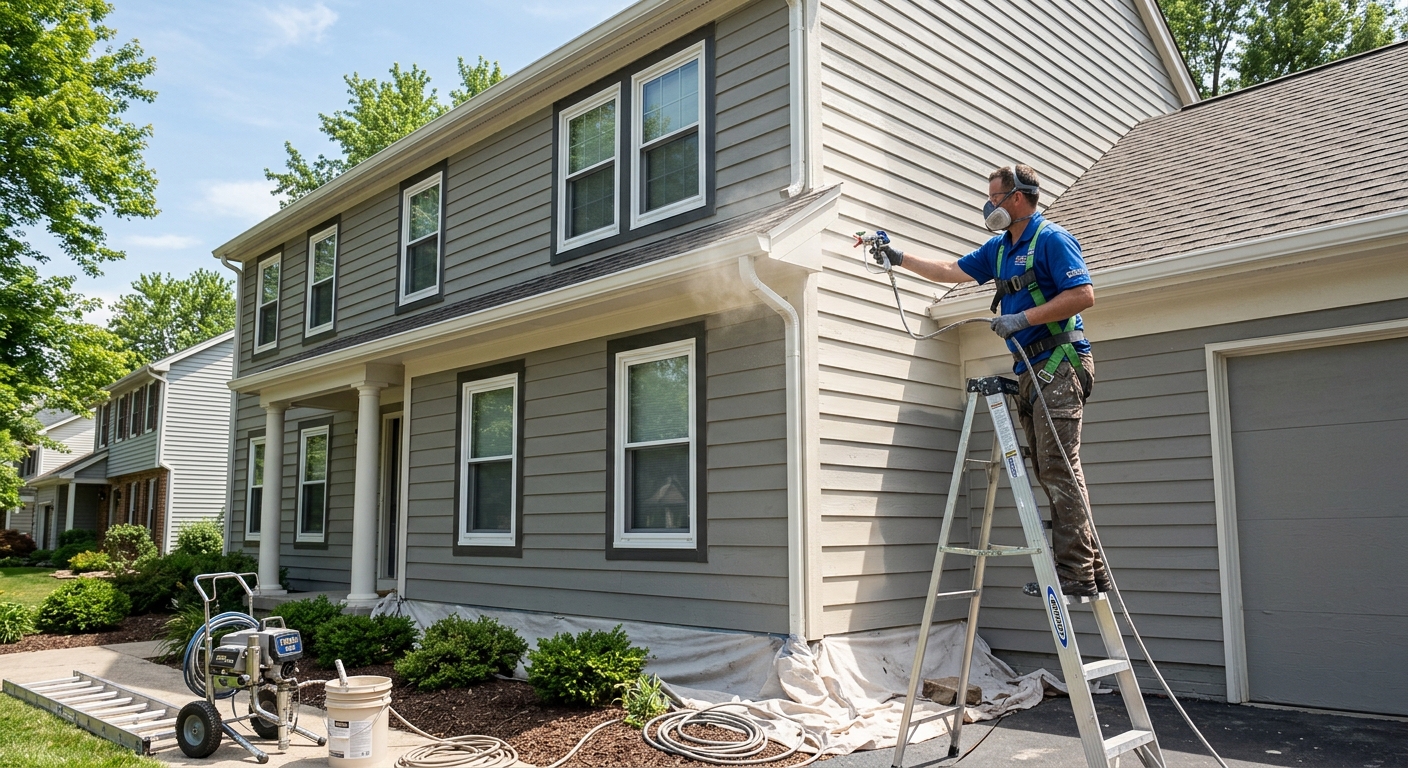
Painting options and costs in L'Amoreaux
Painting in L'Amoreaux typically starts with two decisions: how much of your home you want refreshed, and how much time you’re comfortable spending on prep. In this part of Toronto, the housing mix matters—Ontario’s older housing stock is common in the area, and many homes have gone through multiple paint layers over the years. That usually means more scraping, sanding, patching and priming, and for pre-1978 properties, professionals often follow lead-safe precautions even though homeowners aren’t required to do anything legally mandated.
On the pricing side, the GTA’s exterior work is tightly linked to weather. Contractors usually aim for late May through June and then again September to mid-October, when temperatures stay around 10°C+ for the right window and humidity is manageable. In June–August, demand can spike because there are fewer “ideal” weeks, so exterior pricing is commonly about 10–15% higher than shoulder-season availability. Interior projects are less seasonal and can be booked year-round, but labour still depends heavily on room count, ceiling height, stairwells, and how much masking and protection is required for an occupied home.
In L'Amoreaux specifically, exterior painting demand is often strong around the Thorncliffe Park and L'Amoreaux neighbourhood edges, where families commonly plan updates around school calendars and summer move-in/out. With that in mind, the table below compares common options and realistic budget ranges for homeowners in your area—so you can align scope before you request quotes.
| Service |
What's Included |
Typical Duration |
Price Range |
| Interior — whole home (walls, ceilings, trim) |
Move-in/move-out protection, patching and sanding, caulking where needed, prime bare spots, 2-coat wall system, ceilings coated, trim/doors spot prep and 2-coat finish; sheen selection by room (flat/eggshell/satin/semigloss) |
5–10 business days |
$2,200–$6,000 |
| Interior — per room (standard bedroom or living room) |
Protection and masking, prep for minor repairs, prime bare spots, 2-coat walls and one coat on trim touch-ups (spot prime as needed); basic cleanup |
2–4 business days |
$450–$1,500 |
| Exterior — full house (siding, trim, soffits) |
Pressure wash/degrease (where needed), scrape/sand failing areas, caulk gaps, prime bare spots, 2-coat exterior system; finish includes trim/soffits; weather-dependent scheduling plan |
1–2 weeks |
$3,500–$7,800 |
| Exterior — trim and accent colours only |
Prep of trim surfaces, caulking, spot prime, 2-coat finish on selected areas (doors/railings/trim as scoped) |
4–8 business days |
$1,500–$4,800 |
| Kitchen cabinet painting (doors, frames, spray finish) |
Hardware masking or removal, degrease, light sanding/surface prep, bonding primer, sprayed doors/drawers for smoother finish, 2-coat system; final reinstallation and basic hardware handling |
5–12 business days |
$1,800–$4,000 |
| Specialty / faux finish (accent wall, texture) |
Surface prep for texture level, base coat, custom application (rag/colour wash/texture systems as specified), protective topcoat (where required) |
1–5 business days |
$450–$3,800 |
Prices are estimates only and vary by project scope, site access and material selection.
What affects the price of painting in L'Amoreaux
In L'Amoreaux, two quotes for the “same” painting job can easily differ by 30–50% across the broader Toronto market because the biggest cost drivers—prep and scheduling—aren’t always described the same way. A contractor who prices a repaint based on “two coats everywhere” will be cheaper than one who budgets for extensive scraping, drywall patching, caulking and primer build-up on older surfaces. That’s especially true for exterior repainting, where older homes in the area often have more failing paint, more cracked caulk lines, and more time spent preparing trim details before any finish coating goes on.
Climate also compresses options. In the GTA, exterior work depends on a narrow window from roughly late May to early October, when temperatures are above 10°C for application and curing. When ideal weeks are short, summer availability tightens and labour demand rises, pushing exterior pricing up—often by that same 10–15% mentioned during June–August. In coastal BC, the constraint is persistent moisture; in Alberta, it’s temperature stability and rapid weather swings. Toronto’s main issues are frost nights near transitions, rain that can interrupt curing, and humidity spikes that can slow drying and affect film formation.
Concrete examples from L'Amoreaux projects: (1) If your siding has peeling paint along the bottom 2–3 feet, prep may consume half the schedule, which can move a job from the lower end of the exterior band (around the mid “$1,500” range for trim-only) into the full-house exterior range (closer to several thousand more). (2) Pre-1978 trim on older homes can add lead-safe setup time—HEPA vacuuming, wet methods and careful cleanup—without changing the colour, but it can shift the labour cost materially. (3) Multi-storey frontage often adds access costs for scaffolding or lifts, which can be the difference between “manageable” and “full premium” labour time. For context, Toronto’s total population is 43,993 in L'Amoreaux (Statistics Canada, 2021 Census), which helps explain why scheduling and contractor availability are consistently competitive.
| Price Factor |
Why It Matters |
Cost Impact |
| Surface prep — scraping, sanding, patching drywall or wood |
Preparation determines adhesion and smoothness; repainting rarely costs more because of paint, but often because of labour. |
Up to +20–40% on repaints; prep can be 50–70% of labour for older surfaces |
| Number of coats — 2-coat system over primer vs. 1 coat over existing |
One-coat “coverage” fails faster when existing colour is mismatched or bare spots weren’t primed. |
Typically +5–15% with proper bonding/primer and full 2-coat finish |
| Paint quality tier — contractor-grade vs. premium (Benjamin Moore, Sherwin) |
Premium products often hide better, resist scuffs and stains, and handle colour changes with fewer problems. |
Material uplift may add +3–10%, but can reduce labour if it hides better |
| Ceilings and trim — adds significant time vs. walls-only |
Trim and ceilings require more masking, feathering and careful cut-in to avoid flashing and lap marks. |
Often +15–35% depending on room height and trim complexity |
| Exterior season window — short season raises summer rates |
Fewer “ideal” weeks increase scheduling pressure; crews charge more when demand outpaces availability. |
Commonly +10–15% in June–August vs. shoulder months |
| Lead-safe precautions — required for pre-1978 homes with lead paint |
If lead is present, wet methods, HEPA vacuuming and controlled cleanup protect occupants and workers. |
Can add +5–20% depending on extent of scraping and containment needs |
| Surface material — drywall vs. plaster vs. wood vs. stucco |
Different substrates need different primers and prep profiles to avoid peeling, bubbling or texture bleed. |
Material/primer changes can add +5–25% |
| Height and access — multi-storey exterior requires scaffolding or lifts |
Access affects time, safety planning, and how much protection must be used around windows/landscaping. |
Often +10–30% on exterior for multi-level façades |
Permits & regulations in Ontario
In Ontario, painting itself typically does not require a permit. What can change the paperwork is the safety practice around hazardous materials—not the act of painting. For homes built before 1978, health guidelines recommend testing for lead paint before sanding or scraping, and using lead-safe work practices if lead is present. These practices include wet methods to control dust, HEPA vacuuming, and proper disposal of debris. Homeowners generally aren’t legally mandated to do this themselves, but professional contractors in Ontario commonly treat it as standard procedure to protect occupants and workers.
Separately, you should confirm your contractor is insured and properly covered. A reputable painter should carry liability insurance (so damage to your property is covered) and have workers’ compensation coverage such as WSIB. You should also ask for a written contract that clearly specifies the paint brand and sheen, the number of coats, what surface prep is included (scraping/sanding/patching/priming/caulking), and what’s excluded.
What DOES require a permit versus what typically does NOT: painting and staining is usually no-permit work. However, permits may be required if your project includes structural modifications, changes to egress, or major exterior building alterations—those aren’t “painting-only” jobs. For normal interior/exterior painting in L'Amoreaux, you’re usually only coordinating safety and insurance documentation.
Step-by-step verification for Ontario homeowners: (1) Ask for their Ontario business details and look for licensing/registration info using the online registry resources they provide; (2) request a certificate of liability insurance and confirm coverage dates and your address/jobsite; (3) request proof of WSIB/WCB coverage or clearance; and (4) ask for written scope details so the quote can’t “shrink” during prep.
Interior vs exterior painting — getting the best result in L'Amoreaux
Getting a long-lasting paint job in L'Amoreaux is less about picking the fanciest brand and more about matching prep and coating type to the surface and the season. On interiors, surface prep is king: filling and sanding nail pops or minor dents, priming stained or bare areas, and caulking trim transitions where gaps show. Sheen choice also matters for durability and cleanability. For example, kitchens and hallways typically look better in eggshell or satin, while bedrooms often do well with eggshell; flat paint can hide imperfections, but it scuffs sooner. The “two coats over a proper primer” rule holds—two full coats on correctly primed substrate almost always outlast one thick coat that never bonds the same way.
On exteriors, Ontario’s freeze–thaw cycle punishes shortcuts. Caulk lines should be properly prepared and caulked before painting to prevent water ingress behind trim. Primer selection matters: different substrates (bare wood, previously painted surfaces, fibre cement, or masonry) need compatible primers so the finish coating doesn’t fail early. Unlike coastal BC—where persistent dampness drives mildew-resistant choices—the GTA challenge is more about timing and curing. That means planning around rain and ensuring the surface can dry and the coating can set—usually during late May–June and September–mid October. For Alberta, contractors watch temperature swings; in Toronto, humidity spikes and early fall cool-downs are the risk that can cause problems if crews rush.
Cabinet painting can be the budget-smart alternative to replacement. If your kitchen is functional but dated, a cabinet repaint often brings the room back without the demolition and new-door cost. In many L'Amoreaux homes, the cabinet band lands around $1,800–$4,000; replacing cabinets typically runs far higher, and you may also pay for counters, flooring protection and refinishing. For pre-1978 homes, lead-safe precautions still apply when sanding trim or railings—don’t treat older surfaces like they’re “standard paint prep.”
Where is the price difference justified? When prep is honest. If one quote offers to “paint over peeling spots,” it’s usually not a true apples-to-apples comparison. The higher number is often because more time is budgeted for scraping, sanding, priming and caulking—the parts that protect your investment.
| Project Type |
Key Prep Step |
Recommended Coats |
Price Band |
| Interior — fresh drywall (new construction) |
Prime all drywall and patch seams, then sand to remove texture ridges before final coats |
Primer + 2-coat finish |
$1,200–$3,500 |
| Interior — repaint (good condition, no repairs) |
Clean/degloss, spot prime any scuffs or stains, then maintain consistent finish on walls |
2-coat finish (spot prime as needed) |
$400–$2,200 |
| Interior — repaint (patching and priming needed) |
Patch, sand, spot prime properly so sheen and texture match across repaired areas |
Primer spot + 2-coat finish |
$800–$4,800 |
| Exterior siding (wood or fibre cement) |
Scrape failing paint, caulk gaps and prime bare areas before finish coating |
Primer where needed + 2-coat exterior finish |
$3,500–$8,000 |
| Exterior trim and accents only |
Feather edges of worn coating, clean thoroughly and prime bare trim for adhesion |
Spot primer + 2-coat finish |
$1,500–$4,800 |
| Kitchen cabinets (spray finish) |
Degrease and prep for bonding, then prime and spray to reduce brush marks |
Bonding primer + 2-coat finish |
$1,800–$4,000 |
How to choose a painting contractor in L'Amoreaux
Choosing the right contractor in L'Amoreaux is mostly about verification and clarity. First, confirm Ontario coverage: ask for proof of liability insurance (certificate of insurance) and proof of WSIB/WCB workers’ compensation. Then, request their business documentation so you’re not relying on verbal promises. When you review documents, confirm dates are current, and make sure the certificate includes your jobsite address or at least matches the contractor’s current operation for the work period.
Next, don’t accept a lump-sum quote without an itemised scope. Ask for 2–3 written quotes that break labour and materials down—preparation, caulking, primer, coat count, and cleanup/disposal. Pay attention to exclusions such as: lead-safe containment (for pre-1978 projects), power-washing, lift/scaffold requirements, furniture moving, window glazing masking, and whether caulking is included or “as needed.” Also confirm whether the contract includes proper paint disposal and surface protection (e.g., ground tarps and plant coverings).
Warranty matters, too. A workmanship warranty should be spelled out (how long, what it covers, and how claims are handled). Separate it from manufacturer warranties on paint products; also ask whether coverage is transferable if you sell the home. For payment schedule, never pay more than about 10–15% upfront. Hold back the final portion until the job is complete and you’ve confirmed touch-ups and final cleanup.
Finally, schedule certainty: require a start date and completion estimate in writing, and ask how weather delays will be communicated. In GTA painting, late rain or a temperature drop can disrupt curing—good contractors build that into planning.
- Verify liability insurance and WSIB/WCB proof before work begins
- Request an itemised quote (labour/prep/primer/coats, plus materials and paint line)
- Confirm number of coats and where primer is required (bared wood, patched drywall, stains)
- Ask whether power-washing/degreasing is included and how it’s scheduled
- Confirm caulking is included and what gaps/locations are covered
- Check what surfaces are excluded (fascia/soffit, railings, window trim, basements)
- Clarify disposal and cleanup responsibility (paint, debris, masking materials)
- Confirm access method for exterior work (scaffolding/lifts) and whether it’s in the price
- Ask for colour samples and sheen selection by room (flat/eggshell/satin/semigloss)
- Require a written workmanship warranty length and claim process
- Agree on payment milestones (10–15% max upfront; holdback until completion)
- Get a written start date and weather-delay communication plan
Red flags I commonly see with unreliable painters around L'Amoreaux: (1) quoting “one coat” without discussing primer or coverage, (2) refusing to provide insurance/WSIB proof, (3) giving only a verbal price with no written scope, (4) offering large upfront payments beyond 10–15%, and (5) minimizing exterior prep like scraping/caulking because “the paint will stick.”
Frequently asked questions — painting in L'Amoreaux
How much does interior painting cost per room in L'Amoreaux?
In L'Amoreaux, most “per room” interior jobs land in a broad range because prep varies (minor patching vs. sanding and priming stained spots). For a standard bedroom or living room, you’ll commonly see pricing around $450–$1,500 depending on ceiling height, trim amount, and whether the walls need repairs. If it’s a repaint in good condition with no major repairs, crews can often keep labour lower; once patching and priming are needed, the work expands and the budget typically climbs toward the mid-to-upper part of that band. For planning, ask the contractor to itemise labour for prep and include coat count and sheen selection so the quote is comparable.
When is the best time for exterior painting in L'Amoreaux?
The best exterior window in the GTA is late May through June and again September to mid-October, when temperatures are typically above about 10°C for proper application and curing over 24–48 hours, with humidity staying manageable. In June–August, contractors are busiest, so exterior pricing can be about 10–15% higher due to limited “ideal” weeks and schedule pressure. If a crew starts in the wrong stretch—right before extended cool nights or during frequent rain—coatings can dry unevenly, adhesion can be weaker, and you’ll pay later in premature failures. For best results, choose a contractor who plans around the weather and clearly explains how delays affect curing time.
How many coats of paint do I need?
For most properly prepared interiors and exteriors in Ontario, the standard is a 2-coat finish system. The “number of coats” depends on what you’re covering: a fresh drywall surface usually needs primer plus 2 finish coats, while a repaint in good condition may need 2 finish coats with spot priming for stains, patches, or bare spots. If existing paint is failing or if you’ve scraped back to wood or damaged substrate, primer coverage becomes part of the correct system. Homeowners sometimes hear “one thick coat” as a shortcut, but in L'Amoreaux conditions—temperature swings and humidity—this can shorten service life. Always ask the contractor to specify primer use and coat count in the written contract.
What paint is best for L'Amoreaux's climate?
For L'Amoreaux and the Toronto area, “best” usually means the right coating system for the surface plus good timing, not just a premium brand. Exterior paints should be formulated for adhesion and durability through seasonal humidity and temperature changes, with a system that includes primer where needed and proper caulking before finishing. Unlike coastal BC (where persistent dampness often drives mildew-focused product choices), Toronto’s main issues are frost-risk timing, rain interruptions, and occasional humidity spikes that affect dry/cure. For interiors, the best choice depends on room use: washable eggshell or satin for hallways and kitchens, and flatter finishes where you want to hide minor imperfections. Discuss sheen and substrate compatibility so the contractor doesn’t rely on one product for everything.
How long does exterior paint last here?
Exterior paint life in L'Amoreaux commonly ranges roughly from 5 to 10 years, but it depends heavily on surface preparation, caulking quality, and whether the right system was matched to siding material. Older homes in the area tend to need more scraping, sanding and priming because multiple old layers can fail unpredictably, especially along trim edges and caulk lines. If prep is rushed—paint is applied over peeling coatings, or caulking isn’t replaced—you’ll often see failure sooner. If the contractor budgets for proper prep and applies coatings during the right seasonal window, you can push closer to the upper end of that range. Ask your contractor what preparation steps they’ll complete and how they’ll manage curing during the late May–June and September–mid October periods.
Should I paint or replace my cabinets?
For many L'Amoreaux homeowners, painting cabinets is the smarter value when the box/structure is solid but the finish is dated. Cabinet painting (especially spray-finished doors) typically falls around $1,800–$4,000, while replacement usually costs significantly more once you include removal, new hardware, installation, and refinishing nearby surfaces. Painting makes the most sense if the doors and frames are in good condition (or can be repaired), and you’re okay with a temporary kitchen disruption while coatings cure. If your cabinets have water damage, deep structural warping, or you’re changing the layout, replacement may be more practical. For pre-1978 components, ask about lead-safe practices during prep/sanding, even if you’re only refreshing trim and cabinet surfaces.