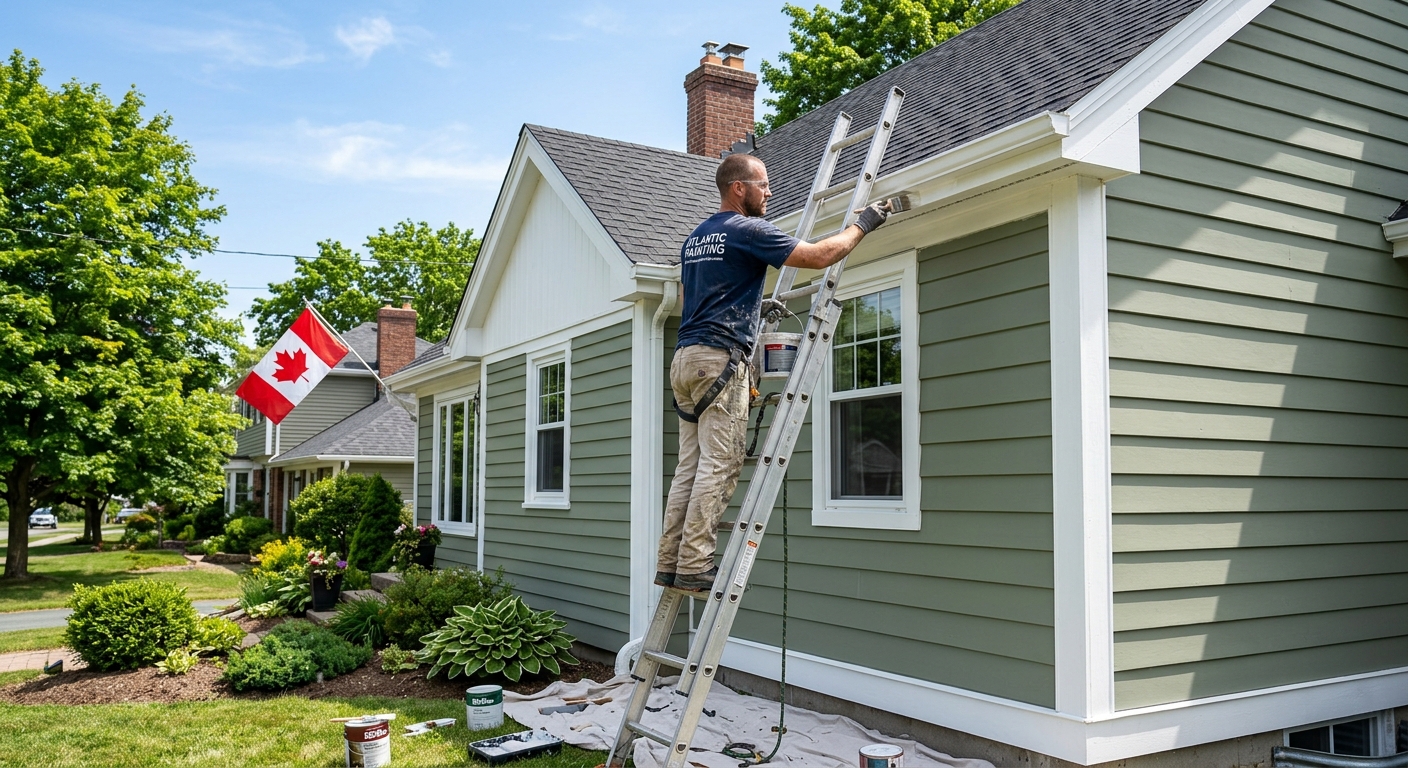
Painting options and costs in South Arm
South Arm homeowners usually have a few different paths to a refreshed look, and the cost swings mostly on prep and weather-window management. South Arm has a long-established housing mix—South Arm’s population was 7,503 in 2021 (Statistics Canada, 2021 Census)—and in the Lower Mainland–Southwest many homes were built mid-century through the 1990s, which often means peeling coatings, older caulking, patched drywall, and sometimes staining from wood tannins or household smoke. On pre-1978 homes, contractors may need lead-paint–safe practices when sanding or scraping (containment, HEPA cleanup, and disposal), which can add time and materials.
In the coastal Lower Mainland–Southwest, exterior painting pricing is shaped by humidity, rain, and mildew risk rather than just temperature. Even with a solid crew, painters need multiple dry stretches for application and drying, and they’ll typically schedule around coastal dampness. That reality is why you’ll often see exterior scopes land in the broader range—interior work is easier to keep moving, so crews can shift indoors through fall and winter.
Trade demand is especially strong around the Tsawwassen-adjacent area of the peninsula where many repaint/refresh projects line up with seasonal scheduling and home staging. From there, it’s easiest to compare apples-to-apples using standard scopes, then adjust for your prep needs, height/access, and paint tier—so the table below is the starting point for most South Arm estimates.
| Service |
What's Included |
Typical Duration |
Price Range |
| Interior — whole home (walls, ceilings, trim) |
Protect floors/windows, patch & sand, prime where needed, paint walls/ceilings, paint doors/trim, clean-up; no structural repairs beyond standard patching |
5–10 days |
$1,800–$6,500 |
| Interior — per room (standard bedroom or living room) |
Protect area, prep spot repairs, prime as required, paint walls and trim; ceiling paint included for most scopes |
1–3 days |
$450–$2,200 |
| Exterior — full house (siding, trim, soffits) |
Wash/spot clean, scrape loose coatings, caulk where needed, prime bare spots, paint siding/trim/soffits; mildew-resistant system for coastal conditions |
7–18 days (weather dependent) |
$3,500–$12,500 |
| Exterior — trim and accent colours only |
Prep and paint trim/railings/selected accents; typically excludes full siding repaint unless required by adhesion issues |
2–8 days |
$1,200–$4,800 |
| Kitchen cabinet painting (doors, frames, spray finish) |
Degrease, thorough sanding/scuffing, bonding primer, spray-style enamel finish, re-install hardware; minor adjustments included, not full cabinet rebuild |
5–15 days (incl. cure time) |
$2,500–$6,500 |
| Specialty / faux finish (accent wall, texture) |
Custom prep, base coat, finish coats, protective topcoat as needed; pattern/texture planning included |
1–5 days |
$750–$4,500 |
Prices are estimates only and vary by project scope, site access and material selection.
What affects the price of painting in South Arm
Even when two quotes sound like they cover the same “paint the whole house” scope, costs in South Arm can differ by 30–50% across the Lower Mainland–Southwest and the rest of British Columbia. The biggest drivers are labour intensity (prep and detail work), material system choices, and how crews manage coastal humidity and rain windows. When you’re comparing bids, the difference is usually not the topcoat—it’s what’s happening before the first roller touches the wall.
Exterior work is tightly weather-bound in the Lower Mainland–Southwest. While the coast avoids deep winter cold like parts of Ontario and Alberta, the long damp shoulder seasons mean primers and paints can dry slower, and mildew growth risk increases if surfaces stay wet. Painters also need to schedule around rain-free stretches, then sometimes re-mobilize if weather shifts. That pressure shows up in pricing, especially during peak summer demand. On top of that, many older homes around South Arm require extensive prep: scraping failing coatings, sanding glossy surfaces for adhesion, patching settlement cracks, and priming stained areas. In repaints, prep can reasonably run 50–70% of total labour, and that’s where your cost climbs.
Two concrete examples: first, a full exterior repaint can move within the exterior band (roughly $3,500–$12,500 for a typical full house) if there’s heavy peeling and multiple primer resets versus mostly intact coatings. Second, interior repaint pricing (often $300–$8,000 depending on size and condition) can jump if ceilings and trim require more sanding, crack repair, and bonding primer. If your home has smoke or tannin bleed, stain-blocking primer choices can also be the difference between a job that looks great for a year and one that looks great for a decade.
| Price Factor |
Why It Matters |
Cost Impact |
| Surface prep — scraping, sanding, patching drywall or wood |
Adhesion and longevity depend on getting loose/porous material off and restoring a sound surface |
High (commonly the largest line item) |
| Number of coats — 2-coat system over primer vs. 1 coat over existing |
Coverage, hiding, and durability improve with proper primer + two topcoats |
Medium to High |
| Paint quality tier — contractor-grade vs. premium (Benjamin Moore, Sherwin) |
Premium systems often offer better coverage, washability, and stain resistance |
Medium |
| Ceilings and trim — adds significant time vs. walls-only |
Ceilings require cut-in precision; trim needs careful caulking and smoothing |
Medium to High |
| Exterior season window — short season raises summer rates |
Weather windows drive crew availability and rework risk |
High (especially mid-summer) |
| Lead-safe precautions — required for pre-1978 homes with lead paint |
Containment, HEPA cleanup, and disposal add time and compliance effort |
Medium to High |
| Surface material — drywall vs. plaster vs. wood vs. stucco |
Different substrates need different bonding primers and prep methods |
Medium |
| Height and access — multi-storey exterior requires scaffolding or lifts |
Safety equipment and slower access increase labour hours |
Medium to High |
Permits & regulations in British Columbia
In British Columbia, painting typically does not require a permit. For most standard interior/exterior repainting, homeowners can hire a contractor without pulling a city permit for the act of painting itself. The key regulatory theme in BC is often safety and workmanship standards—not municipal approvals.
For homes built before 1978 in South Arm, professional contractors commonly recommend and follow lead-safe work practices if lead paint is present. This is not generally a homeowner “permit” requirement, but it is standard practice when there’s a risk from sanding, scraping, or cutting into old coatings. Lead-safe methods typically include wet methods to suppress dust, HEPA vacuuming, containment as needed, and proper disposal of debris.
What does require a permit is uncommon for painting jobs; however, permits may be required if you’re doing changes beyond painting (for example, structural alterations, electrical/plumbing work, or major renovations that trigger building permits). For plain painting, expect no permit—focus instead on contractor credentials.
Step-by-step, South Arm homeowners can verify a contractor in BC:
- Ask for their proof of liability insurance (certificate of insurance) and confirm it covers the scope (interior/exterior, ladders/lifts).
- Ask for workers’ compensation coverage (WCB/registration proof). If they subcontract, require proof that subcontractors are covered.
- Confirm the project will include a written contract stating paint brand (e.g., Benjamin Moore or Sherwin), sheen where relevant, number of coats, and what prep/disposal is included.
- Request a clear start/completion timeline and weather contingency language for exterior work.
Interior vs exterior painting — getting the best result in South Arm
In South Arm’s coastal Lower Mainland–Southwest climate, the “best result” comes down to two things: disciplined surface prep and choosing the right system for moisture conditions. For interiors, surface prep beats paint brand every time. Cracks should be filled and sanded smooth, glossy patches should be scuffed for bond, and stained areas should be primed with a stain-blocking primer. Then sheen matters by room: flat or matte is common for low-traffic ceilings, eggshell suits many living spaces, and satin or semi-gloss usually performs better in kitchens, bathrooms, and trim because it wipes cleaner.
A common failure is trying to stretch paint with one heavy coat. In practice, two coats over a proper primer tends to outlast “one thick coat,” because proper film build and hiding depend on the full system. For repaints, expect more time where ceilings and trim need smoothing and caulking touch-ups.
For exteriors, prep is even more critical. Coastal humidity and mildew pressure mean you should caulk before painting so water ingress pathways are sealed first, then apply a high-adhesion primer compatible with your substrate (wood, fibre cement, stucco) and follow with mildew-resistant topcoats. The wrong primer on the wrong surface is a frequent cause of early peeling in BC. Cabinet painting is a budget-friendly alternative to replacement—when done well, spraying enamel-style finishes can restore a kitchen for a fraction of replacement cost, though it requires careful degreasing, sanding, bonding primer, and staged cure time.
Lead-safe precautions still matter on pre-1978 homes if coatings must be scraped or sanded. If you’re deciding between options, a practical example is choosing to repaint trim and accents only: it can sit around the exterior trim band (often $1,200–$4,800) when siding is still intact, avoiding the higher cost of a full house repaint (roughly $3,500–$12,500) that’s only justified when adhesion and coverage demand it.
| Project Type |
Key Prep Step |
Recommended Coats |
Price Band |
| Interior — fresh drywall (new construction) |
Prime and seal for uniform absorption before finish coats |
2 coats (often primer + 2 topcoats depending on system) |
$3,000–$8,000 |
| Interior — repaint (good condition, no repairs) |
Light scuffing, spot prime only where needed, clean for adhesion |
2 coats |
$1,200–$4,500 |
| Interior — repaint (patching and priming needed) |
Patch, sand smooth, feather edges, and prime repairs and stains |
2 coats with stain/bond primer where required |
$1,800–$6,500 |
| Exterior siding (wood or fibre cement) |
Scrape loose paint, caulk, prime bare spots, and address mildew/contaminants |
2 coats over primer (mildew-resistant system) |
$3,500–$12,500 |
| Exterior trim and accents only |
Clean, sand/scuff, caulk cracks and joints, prime bonding points |
2 coats over primer |
$1,200–$4,800 |
| Kitchen cabinets (spray finish) |
Degrease thoroughly, scuff/sand, bonding primer for adhesion |
Primer + 2 finish coats (enamel-style) with proper cure |
$2,500–$6,500 |
How to choose a painting contractor in South Arm
Choosing the right contractor in South Arm starts with verifying credentials and then matching the quote to your scope—because painting outcomes live or die in prep and clear documentation. First, confirm British Columbia compliance through three checks: (1) ask for their liability insurance certificate and ensure the policy covers your type of work (interior/exterior, access equipment use), (2) confirm they have workers’ compensation coverage for their crew (WCB/coverage proof), and (3) make sure the contract clearly defines what’s included in prep, materials, and cleanup.
Next, request 2–3 itemised written quotes rather than lump sums. A good quote breaks out labour and materials separately (primer system, caulking, sanding/repair, topcoat sheen, and disposal). Carefully read exclusions: Is lead-safe work included if the home is pre-1978? Is pressure washing included (or just “clean”)? Is protective sheeting, masking, and trim protection included? Also confirm disposal is part of the scope—dump fees and debris handling are frequently omitted from low bids.
Warranty matters: ask for a workmanship warranty length and whether it applies to adhesion issues tied to prep. Also ask if the paint/manufacturer warranty is included or only the product warranty applies, and whether it’s transfer-eligible if you sell the home.
Payment schedule should be conservative: never more than about 10–15% upfront, with the balance held until completion and walkthrough. Get the start date and completion estimate in writing, and for exterior work, ask how they handle rain windows and drying delays.
- Request a contract with paint brands, sheen levels, and number of coats.
- Confirm who will do sanding/caulking/priming (and what triggers stain-blocking primer).
- Ask whether they include protection of floors, landscaping, and nearby fixtures.
- Verify liability insurance certificate before work begins.
- Verify workers’ compensation coverage (WCB/coverage proof) for all workers.
- Ensure prep details are specific: scrape loose paint, patch and sand, scuff gloss, wash surfaces.
- Clarify disposal: how debris is contained and removed.
- Confirm lead-safe protocol for pre-1978 homes if scraping/sanding is required.
- Ask about caulking type and where it’s applied (before coating on exterior seams).
- Get written weather contingency for exterior schedules (rain/damp windows).
- Confirm warranty terms in writing: workmanship and any product coverage notes.
- Hold back most payment until final walkthrough and touch-ups are done.
Red flags I commonly see in South Arm: quotes with only a single line for “paint and labour” (no prep detail), no mention of primer/stain-blocking or caulking, pushing for a large upfront deposit, vague warranty language (“guaranteed” with no term), and refusing to provide insurance/coverage proof before starting.
Frequently asked questions — painting in South Arm
What paint is best for South Arm's climate?
For South Arm, the “best” paint is the right system for coastal humidity and how your surfaces are prepared. On exteriors, look for mildew-resistant, high-adhesion products paired with an appropriate primer for your substrate (wood, fibre cement, or stucco). The Lower Mainland–Southwest moisture swings mean proper caulking and primer selection matter as much as topcoat brand. For interiors, choose washable coatings for kitchens and bathrooms (often satin/eggshell sheen), and use flat/matte for ceilings. If your home has older staining, a quality stain-blocking primer can prevent bleed-through and save money versus repainting early.
How long does exterior paint last here?
Exterior paint life in South Arm typically depends on prep quality and how well the system manages damp conditions. In the Lower Mainland–Southwest, humidity and rain create a harsher environment than “dry” climates, so shortcuts like skipping thorough scraping, caulking, or the correct primer often cause early failures. A well-prepped, properly primed two-coat exterior system generally lasts longer than a thin, minimal-prep repaint—often measured in multiple years to a decade+ depending on siding condition and sun exposure. If your quote is only in the lower end (for example, near the exterior trim band), it may not fully address siding adhesion issues that shorten overall performance. For full exterior repaint planning, many projects land closer to the full-house exterior band (roughly $3,500–$12,500).
Should I paint or replace my cabinets?
In many South Arm kitchens, painting cabinets is the smarter option because it avoids demolition, dust-heavy remodeling, and cabinet replacement lead times. Professional cabinet painting (spray-finish style) typically reuses existing boxes and refurbishes doors/frames, so you’re paying for prep and finish rather than new hardware and construction. A budget alternative to replacement is especially compelling when cabinets are solid but the finish is dated—expect a professional cabinet range commonly around $2,500–$6,500, depending on size and detail. Painting isn’t ideal if your cabinets are structurally failing, warping, or have deep water damage. If your main issue is wear and colour, painting is usually the higher-value choice.
How do I prep walls before painting?
In South Arm, good wall prep usually means addressing three categories: cleaning, surface repair, and adhesion. First, remove dust/grease and lightly scuff glossy areas so primer and paint bond properly. Second, fill cracks/holes and sand smooth—feather edges so patched areas don’t telegraph. Third, prime repaired and stained spots: stain-blocking primer is key for smoke, tannin bleed, or persistent discolouration. For existing interiors, contractors also protect floors and trim, then mask carefully to avoid “halo” lines at edges. If you’re DIY prepping, avoid over-sanding plaster until it powders, and don’t paint directly over peeling or chalky areas—those need scraping and proper priming.
Do I need to worry about lead paint in an older South Arm home?
If your home in South Arm was built before 1978, it’s wise to plan for lead-paint risk when sanding or scraping. In British Columbia, professional lead-safe practices are commonly followed when there’s a likelihood of lead in existing coatings; it’s not usually framed as a homeowner permit requirement for painting. Contractors may recommend testing, and if lead is present (or suspected), they typically use wet methods to reduce dust, HEPA vacuuming, containment, and proper disposal. The key point: avoid dry scraping that creates fine dust. For your project plan, ask your contractor how they handle pre-1978 work, what methods they’ll use, and whether that adds time and cost to your scope—often it’s reflected in prep and cleanup rather than the topcoat.
How long does it take to paint a house?
Timelines in South Arm depend on interior vs exterior work, surface condition, and how weather affects exterior drying. Interior projects are generally more predictable: a per-room repaint may take 1–3 days, while a whole-home interior can run 5–10 days depending on patching, ceilings, and trim detail. Exterior work is more weather-window dependent in the Lower Mainland–Southwest. Even with an efficient crew, you may see 7–18 days total for a full house repaint when you factor in drying time, rain delays, and the time needed for priming after scraping and caulking. If your contractor quoted “full exterior” near the lower end without mentioning prep time, ask what’s included—weather and prep sequencing are usually what drives the schedule.