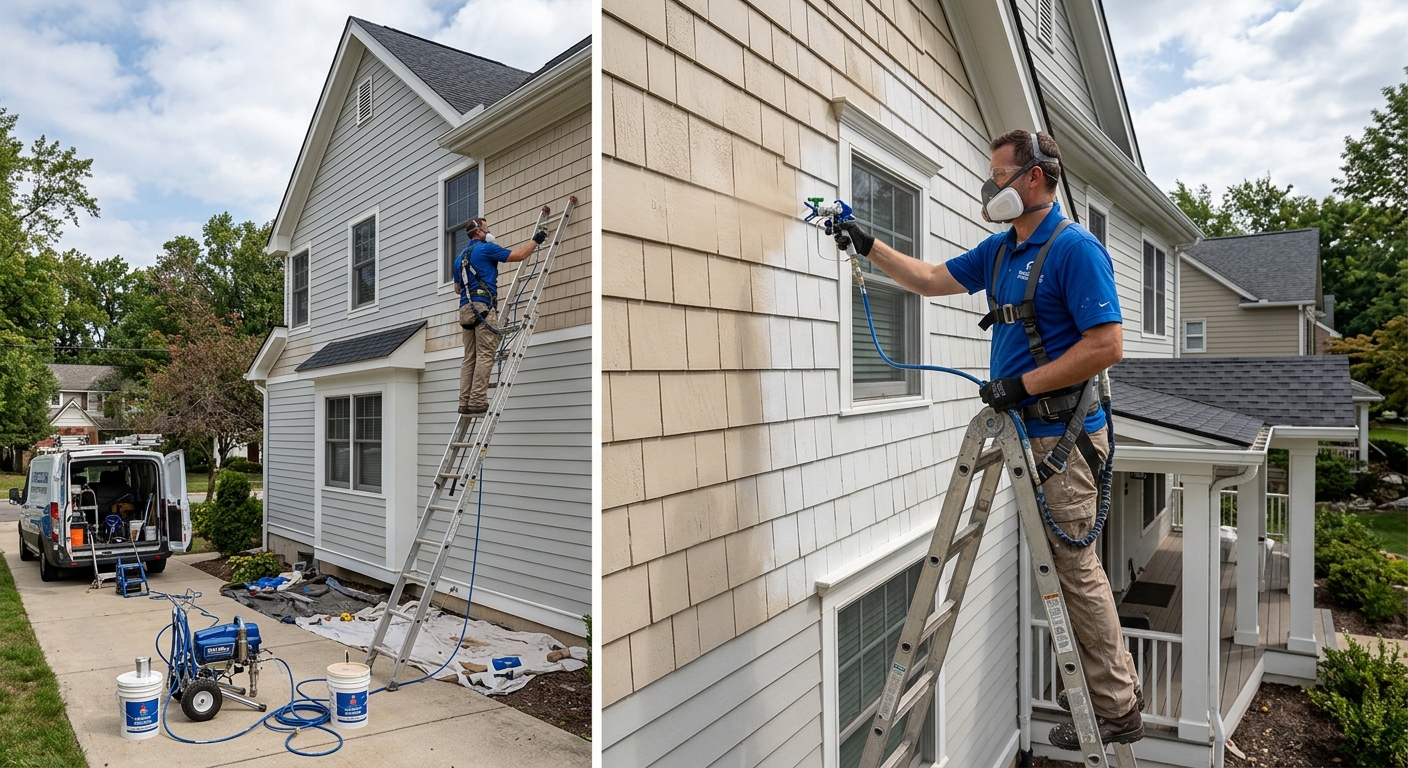
Painting options and costs in Caulfeild
Caulfeild homeowners usually find painting quotes start to make sense once you separate “surface work” from “finish work.” In Caulfeild—where the local community is small (population 3,757, Statistics Canada, 2021 Census)—many jobs are driven by older housing conditions and tight scheduling around the coast. We commonly see repeat prep needs such as scraping failing coatings, patching settlement cracks, and stain blocking for wood tannins and older nicotine areas. If your home is pre-1978, you may be dealing with higher lead-paint risk during sanding or scraping; contractors often plan lead-safe, wet-method work with HEPA cleanup even when a homeowner isn’t legally required to do so.
Lower Mainland–Southwest pricing is also shaped by coastal weather: exterior painting is constrained by rain and humidity, so crews must work around dry windows and allow for slower drying times. That risk management typically costs more than “good weather” regions, because painters may re-mobilize equipment and labour between weather breaks. Demand is especially active in the Caulfeild neighbourhood core and along the main residential streets near the waterfront—where homes often have mixed siding/trim details and frequent repaint cycles.
Use the table below as a starting point for budgeting. Once we know your surface condition (how much prep is required) and whether ceilings/trim are included, your range can tighten quickly.
| Service |
What's Included |
Typical Duration |
Price Range |
| Interior — whole home (walls, ceilings, trim) |
Move/cover furniture, prep and patching, sanding as needed, prime where required, paint walls/ceilings, caulk, and paint baseboards/trim |
5–10 days |
$1,800–$6,800 |
| Interior — per room (standard bedroom or living room) |
Prep and patching, prime stains/spots as needed, paint walls, coat trim/baseboards, light protection/cleanup |
1–3 days |
$450–$1,800 |
| Exterior — full house (siding, trim, soffits) |
Power-wash/rinse, scrape loose paint, caulk, spot-prime bare wood, paint siding/trim/soffits, manage weather windows and cleanup |
3–8 days (spread across dry periods) |
$6,500–$14,500 |
| Exterior — trim and accent colours only |
Surface prep of trim only, caulking as needed, prime bare spots, paint specified trim/accents |
2–5 days (weather-dependent) |
$1,200–$5,900 |
| Kitchen cabinet painting (doors, frames, spray finish) |
Degrease, light scuff/sand, prime, spray/brush finish coats, hardware protection and re-install, touch-up |
4–10 days (often includes dry time) |
$2,400–$6,800 |
| Specialty / faux finish (accent wall, texture) |
Surface prep, basecoat, application of specialty material/texture, topcoat/protective finish, detailing |
1–4 days |
$600–$6,200 |
Prices are estimates only and vary by project scope, site access and material selection.
What affects the price of painting in Caulfeild
Even for the “same” job, Caulfeild quotes can vary by 30–50% across the Lower Mainland–Southwest compared with other parts of British Columbia because scope assumptions differ—especially around prep. In repainting jobs, older coatings may be failing in small areas (or widespread), and the real cost becomes surface correction: scraping, sanding, patching, caulking, priming, and sometimes stain-blocking. Labour availability also affects scheduling; when summer weather windows open and close quickly, crews may price for the added logistics of starting and restarting.
Exterior work is tightly climate-bound in the Lower Mainland–Southwest: rain and humidity slow drying, and high moisture can create adhesion and mildew risk if the wrong products are used or if paint is applied too late in a wet spell. That’s why many estimates lean toward mildew-resistant, high-adhesion systems. In contrast to colder regions where crews plan around low temperatures, coastal BC focuses on dry-time, surface moisture control and re-mobilization. For interiors, crews can often steady the year by shifting work indoors through fall and winter.
Age is a major cost driver in Caulfeild. Older houses typically need more prep; it’s common for prep to represent 50–70% of the labour on a repaint. For example, a “trim only” exterior job might land closer to the low end (trim and accents around $1,200–$5,900), while a full exterior repaint with widespread scraping and spot-priming often lands mid-to-high (full house typically $6,500–$14,500). If your home is pre-1978, lead-safe precautions add containment, HEPA cleanup, and disposal time—pushing the job upward even when the painted area isn’t larger.
Two quick local examples: (1) coastal siding with mildew spotting usually requires additional wash time and a barrier primer to prevent bleed-through; (2) multi-storey trim near steep rooflines can require lifts/scaffolding and longer surface time, even when material use is similar.
| Price Factor |
Why It Matters |
Cost Impact |
| Surface prep — scraping, sanding, patching drywall or wood |
Determines adhesion and smoothness; failures often start with unprepared surfaces |
High: can be 50–70% of labour on repaints |
| Number of coats — 2-coat system over primer vs. 1 coat over existing |
Coverage and durability depend on proper priming and full cure |
Medium–High: +10–25% depending on condition |
| Paint quality tier — contractor-grade vs. premium (Benjamin Moore, Sherwin) |
Better products generally cover more evenly and resist scuffs/colour fade |
Medium: often a few hundred dollars on a room; more on full homes |
| Ceilings and trim — adds significant time vs. walls-only |
Ceilings increase ladder time and cutting-in; trim needs caulk and detail work |
Medium–High: frequently adds 15–40% to interior scope |
| Exterior season window — short season raises summer rates |
More scheduling pressure and rework risk if rain hits mid-dry |
High in summer: can increase total by 10–30% |
| Lead-safe precautions — required for pre-1978 homes with lead paint |
Containment, HEPA vacuuming, and proper disposal take extra time |
Variable: can add 5–20% depending on conditions and prep extent |
| Surface material — drywall vs. plaster vs. wood vs. stucco |
Different substrates absorb differently and need matching primer systems |
Medium: wrong primer can cause premature failure |
| Height and access — multi-storey exterior requires scaffolding or lifts |
Safe access drives labour hours and equipment costs |
High: may be the difference between “trim only” and “full repaint” pricing |
Permits & regulations in British Columbia
In British Columbia, painting typically does not require a permit for residential work. However, homes built before 1978 can contain lead paint, and health guidelines strongly recommend testing (or treating suspected coatings as lead-containing) before sanding or scraping. If lead is present, standard professional practice uses lead-safe methods such as wet sanding or wet scraping, sealing the work area when needed, HEPA vacuuming, and proper disposal of debris and plastic containment. This isn’t legally mandated for homeowners in the way some construction activities are, but it is what reputable contractors plan for to protect you, your family, and their crew.
What usually does not require a permit: repainting interior walls/ceilings, painting exterior siding/trim, and applying typical primers and topcoats. What may be more regulated in other contexts is the removal of hazardous material beyond paint (for example, demolition activities or specific remediation plans); for painting-only jobs, the key requirement is safe work practices, not permits.
Before hiring in Caulfeild, verify three things step-by-step: (1) licensing/registration where applicable for your contractor type—start by checking their business information online and confirming they’re in good standing; (2) liability insurance—ask for a current certificate of insurance naming you as the interested party if available; and (3) workers’ compensation—confirm they have active coverage through WCB/WSIB-type workers’ compensation for the work and timeframe. Then get a written contract stating paint brand and sheen, number of coats, and the surface prep included (especially scraping, patching, caulking, and priming). This is where cost clarity is won or lost.
Interior vs exterior painting — getting the best result in Caulfeild
The difference between a long-lasting paint job and a premature failure in Caulfeild comes down to prep discipline and matching products to conditions. In interiors, surface prep matters more than the brand of topcoat: filling holes, sanding edges, cleaning dust, and priming patched or stain-affected areas so new paint doesn’t flash or peel. Sheen choice is also practical. Flat/low-sheen works for ceilings, but for higher-touch areas (hallways, kids’ rooms, trims by doorways) eggshell or satin usually balances cleanability and appearance. The biggest durability principle is coverage strategy: two coats over the correct primer nearly always outlast one thick coat, because proper film build is achieved without starving adhesion at the surface.
For exteriors, coastal BC makes preparation non-negotiable. Moisture and mildew risk require thorough washing/rinsing, scraping of loose coatings, and caulking before painting to reduce water ingress into joints and behind trim. Primer selection matters by substrate: oil-based systems have a place for certain stains and older wood/repairs, while high-adhesion acrylic primers are common for updated exterior systems. The key is using products rated for mildew resistance and compatible with the temperature and humidity swings of the Lower Mainland–Southwest.
Cabinet painting is often the smarter budget alternative to replacement—especially if the boxes are sound and the goal is a refresh. For example, if your kitchen is otherwise functional, cabinet painting commonly sits around the $2,400–$6,800 range versus replacement costs far beyond that; the justified premium is careful degreasing, priming, and a durable finish coat.
If your home is pre-1978, lead-safe practices during scraping/sanding add time—but they protect families and reduce the chance of contamination. In Caulfeild’s housing stock, that planning is often the difference between “we painted it” and “it was done correctly.”
| Project Type |
Key Prep Step |
Recommended Coats |
Price Band |
| Interior — fresh drywall (new construction) |
Prime all drywall and sand for uniform texture |
2 coats topcoat over primer |
$300–$2,200 |
| Interior — repaint (good condition, no repairs) |
Clean/scuff, spot-prime as needed for stains or sheen changes |
1–2 coats topcoat depending on coverage (commonly 2) |
$450–$1,800 |
| Interior — repaint (patching and priming needed) |
Fill, sand, spot-prime repairs to prevent flashing |
2 coats topcoat plus primer on patches |
$650–$2,800 |
| Exterior siding (wood or fibre cement) |
Scrape loose paint, caulk joints, and prime bare areas |
2 coats over primer system |
$6,500–$14,500 |
| Exterior trim and accents only |
Surface prep and caulking at trim lines; prime bare spots |
2 coats topcoat over primer spots |
$1,200–$5,900 |
| Kitchen cabinets (spray finish) |
Degrease, prime, and sand for adhesion before spraying |
Primer + 2 topcoat coats (typical) |
$2,400–$6,800 |
How to choose a painting contractor in Caulfeild
Choosing the right painting contractor in Caulfeild starts with verifying coverage and clarity. First, confirm British Columbia licensing/registration where applicable for their business type, then request proof of liability insurance (a current certificate of insurance showing coverage dates and your address if possible). Next, ask for proof of workers’ compensation coverage for their employees through WCB/WSIB-type coverage as applicable in BC; reputable contractors can provide this quickly because it’s part of standard compliance. If they can’t produce documentation, that’s a major warning sign.
For pricing, get 2–3 itemised written quotes, not a single “lump sum.” Ask for a breakdown of labour versus materials, and include line items for prep (scraping, sanding, patching, caulking, stain blocking, primer) and coatings (brand, sheen, number of coats). Scope details matter: is paint waste disposal included? Is protection/masking included for floors and landscaping? Is a permit pull included if your job requires any other type of municipal approvals (most painting doesn’t, but the quote should state “no permit required” or “permit not included” clearly)? Also confirm the warranty: workmanship warranty length, product/manufacturer warranty terms, and whether it transfers to a new owner.
Finally, keep payment sensible. Never pay more than 10–15% upfront; hold back a portion until the work is complete and you’ve inspected touch-ups. Require a written timeline with a start date and an estimated completion window, and ensure weather contingencies for exterior work are discussed up front.
- Ask for liability insurance and confirm the coverage is current.
- Confirm workers’ compensation coverage for employees (WCB/WSIB-type) before any work starts.
- Get an itemised quote separating labour and materials.
- Require the quote to list paint brand, sheen, and number of coats.
- Verify prep inclusions: caulking, scraping, sanding, patching, stain blocking, primer.
- Ask how mildew or damp areas are handled on exterior surfaces.
- Confirm whether disposal of paint debris and masking materials is included.
- Request start date, daily schedule, and completion estimate in writing.
- Clarify protection: drop sheets, plastic sealing, and cleanup method.
- Check warranty terms for both workmanship and products, and whether it’s transferable.
- Ensure payment schedule is milestone-based with a holdback until final inspection.
- For pre-1978 homes, ask what lead-safe practices are planned during scraping/sanding.
Red flags I watch for in Caulfeild: (1) quotes that ignore surface prep or caulking; (2) no documentation for insurance and workers’ compensation; (3) vague coatings (“a good paint” with no brand/sheens/coats); (4) asking for a large upfront payment; and (5) refusing a written contract with prep scope and warranty terms.
Frequently asked questions — painting in Caulfeild
How do I prep walls before painting?
In Caulfeild, homeowners can speed results by doing the easy prep before the crew arrives: remove wall hangings, patch obvious nail/screw holes, and keep pets/kids away while surfaces are drying. However, professional-grade prep usually includes cleaning (especially greasy kitchen areas), sanding edges, and spot-priming to prevent flashes—particularly on patched drywall or stained spots. If you’re repainting a whole room, the best help is ensuring the area is clear and accessible. For colour changes, we often plan for two-coat coverage over a proper primer so the finish looks consistent. If you’re budgeting, per-room interior painting commonly falls around $450–$1,800, and the prep included is what keeps that final cost from jumping.
Do I need to worry about lead paint in an older Caulfeild home?
British Columbia health guidelines recommend considering lead paint risk for homes built before 1978, especially before sanding or scraping. In Caulfeild, many repaint projects touch trim, window frames, and older painted surfaces where lead may be present. A homeowner is not typically required to conduct lead testing for the painting job itself, but professional contractors commonly use lead-safe practices if lead is suspected—wet methods, containment when appropriate, HEPA vacuuming, and correct disposal. This can add time, but it reduces dust contamination risk. If you’re seeing flaking or chalking paint, tell your contractor up front; it affects planning and cleanup. Depending on the scope, lead-safe work can shift a project within the normal price bands—for example, interior work can move upward inside $1,800–$6,800 for whole-home repainting when prep expands.
How long does it take to paint a house?
Time depends on surface condition and whether you’re doing interior, exterior, or both. In Caulfeild’s coastal conditions, exterior schedules are often spread across dry windows because rain and humidity can slow drying and increase adhesion risk. Interior work is usually steadier, so crews may complete it first and then shift to exterior when weather cooperates. A typical interior whole-home job often takes about 5–10 days of active work. A full exterior repaint can take 3–8 days spread over multiple weather breaks. If extensive scraping and priming are needed, timelines extend because prep can be the majority of the work. If your budget is near the exterior full-house band of $6,500–$14,500, plan for that extra prep time to be built into the schedule.
What's the difference between paint quality tiers?
“Contractor-grade” vs. “premium” usually comes down to how evenly the paint covers, how it levels, durability in high-touch areas, and how forgiving it is during application. Premium lines (including products commonly sold by Benjamin Moore and Sherwin) generally have stronger pigments/resins and can mean fewer surprises like patchy coverage or scuffing, especially on cabinets, trim, and ceilings that see daily wear. In practice, the biggest determinant of longevity is prep and the correct primer system—not just the topcoat brand. Still, using a higher tier can be worth it when you’re paying for labour-intensive work like full interior painting in $1,800–$6,800 range or cabinet painting where adhesion and finish toughness matter most. Your quote should list the actual paint brand and sheen so you can compare like-for-like.
How do I compare painting quotes?
Compare quotes line by line, not by the total number. For Caulfeild and the Lower Mainland–Southwest, the most common quote gap is prep scope: one contractor might include scraping, patching, caulking, and stain-blocking; another might only “roll and paint.” Ask each contractor to list labour and materials separately and to specify paint brand, sheen, primer type, and number of coats. Confirm whether disposal and cleanup are included and whether the quote assumes any weather delays for exterior work. Also ask for warranty length for workmanship and product, and whether the warranty is transferable. If one quote is far lower, it may be missing key items—often the items that protect your finish for years. Use your price bands as guardrails: for example, trim-only exterior projects commonly sit around $1,200–$5,900 when prep is reasonable.
What paint sheen should I use in different rooms?
In British Columbia homes—including Caulfeild—the climate isn’t the only factor; daily living and cleaning frequency matter. Ceilings typically use flat or low-sheen to hide imperfections. For walls, eggshell is a common sweet spot because it’s more washable than flat but still hides minor wall texture. Trim and doors often use satin or semi-gloss for durability and easier wipe-down, especially around doorways, handrails, and baseboards. Kitchens and bathrooms can benefit from moisture-resistant, washable finishes where appropriate. The sheen choice should match the surface preparation quality: even the best sheen can show flashing if patches weren’t primed correctly. If you’re planning an interior per-room job, staying within $450–$1,800 typically depends on selecting the right sheen and doing proper primer coverage so the finish looks uniform.