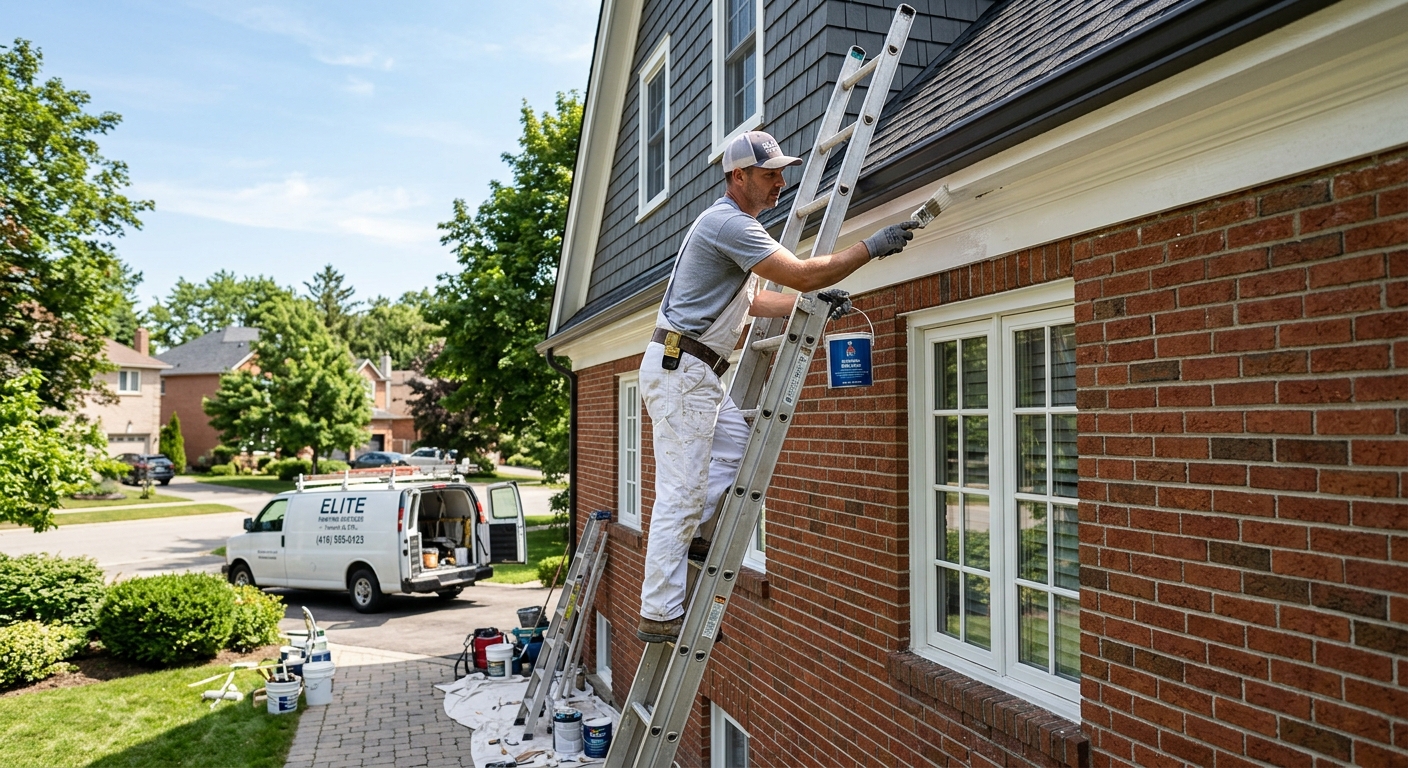
Painting options and costs in Westgate
In Westgate, Alberta, the “right” painting option usually comes down to how much preparation your home needs and how soon you want to get through it before summer weather tightens up. Westgate’s housing stock is part of Calgary’s wider pattern—many homes are from the 1960s to the 2000s, which often means older siding/trim details and previous DIY touch-ups that must be scraped, patched, caulked, and primed before any topcoat. In fact, the Westgate profile shows a 2021 population of 3,225, and that smaller local base tends to concentrate demand when crews can travel and when the longer exterior season in the region opens. Calgary-area exterior work is typically workable from about mid-May to late September, when daytime highs reliably stay above 10°C so surfaces dry properly and paint cures predictably.
That weather window is why exterior quotes can feel “firmer” in peak months and why interior projects often move more easily year-round. If your home is near the busier residential pockets around Westgate Road and the broader shopping-and-transit area, you’ll notice higher scheduling pressure for exterior repaints, simply because more households aim to refresh before late summer. Use the table below as a starting point; your final number will depend on prep complexity, number of coats, height/access, and the product system specified for Alberta’s UV, hail, and freeze–thaw cycles.
| Service |
What's Included |
Typical Duration |
Price Range |
| Interior — whole home (walls, ceilings, trim) |
Protect floors/fixtures, prep and patch, sand/prime as needed, paint walls and ceilings, caulk where required, paint interior trim/doors (non-custom), cleanup |
5–12 business days |
$2,000–$7,500 |
| Interior — per room (standard bedroom or living room) |
Prep and patch, sand/prime touch-ups, paint one room’s walls, ceiling as requested, include basic trim/door touch-ups where applicable |
1–3 business days |
$450–$1,650 |
| Exterior — full house (siding, trim, soffits) |
Power wash/clean, scrape/sand, patch and caulk, prime bare spots, full exterior coating system for siding and trim, protect landscaping, cleanup |
7–18 business days |
$3,500–$9,000 |
| Exterior — trim and accent colours only |
Targeted prep for trim/accents, sand/spot prime, caulking at joints, paint selected details, protect surfaces and cleanup |
3–8 business days |
$2,000–$5,500 |
| Kitchen cabinet painting (doors, frames, spray finish) |
Degrease/clean, remove hardware (as arranged), sand/prime, spray-grade finish, reassemble, light touch-up on adjacent areas, cleanup |
5–15 business days (including cure time) |
$1,800–$6,500 |
| Specialty / faux finish (accent wall, texture) |
Surface prep for specialty coating, base coat(s), specialty application (texture/faux) and protective topcoat as required, cleanup |
2–6 business days |
$600–$3,800 |
Prices are estimates only and vary by project scope, site access and material selection.
What affects the price of painting in Westgate
In Calgary and across Alberta, two homeowners can receive quotes that differ by 30–50% for a very similar-looking job because painting is largely a prep and workmanship trade, not just product cost. Labour varies with how much surface conditioning is required, how many access challenges exist (walkouts, multi-storey sections, tight eaves), and how much coordination the contractor must do around weather. For exteriors, the exterior season is tightly climate-bound in the Calgary region: workable conditions generally sit around mid-May through late September, with daytime temperatures staying above 10°C so application and drying aren’t compromised. Unlike coastal BC—where longer season can still be shortened by humidity and mildew risk—Alberta’s freeze–thaw cycles and intense UV mean we plan for cure and durability, plus rain and overnight lows.
Older homes throughout the region frequently need heavier surface prep—scraping, sanding, caulking and priming—because previous paint failures, sun-checked trim, and patchy repairs must be stabilized before coating. On a repaint, prep can easily represent 50–70% of total labour, which helps explain why an “exterior trim-only” scope might land closer to the lower end (often around the exterior trim band) while a full house repaint climbs toward the higher exterior range when bare wood, peeling, and extensive patchwork appear. For example, a straightforward exterior trim refresh might price closer to the mid-range, while a full-house repaint that requires multiple priming rounds and deeper patching is more in line with the broader exterior band.
In Westgate specifically, the cost drivers I see most often are older siding/trim details that need careful caulking and sealing, plus homes with prior DIY patches that need stain-blocking and extra primer to prevent flashing. If you have multi-storey elevations near the main roads and established back-alley access routes, scaffolding or lift time can add both labour and scheduling cost.
| Price Factor |
Why It Matters |
Cost Impact |
| Surface prep — scraping, sanding, patching drywall or wood |
Determines adhesion and smoothness; prevents peeling and bubbling |
Can shift a job by 20–40% depending on failures |
| Number of coats — 2-coat system over primer vs. 1 coat over existing |
Proper coverage and uniform sheen/colour depth |
+10–25% if extra coats are needed |
| Paint quality tier — contractor-grade vs. premium (Benjamin Moore, Sherwin) |
Sheen stability, hide, and durability under UV/hail abrasion |
Material tier often changes total by ~5–15% |
| Ceilings and trim — adds significant time vs. walls-only |
More edges, masking, caulking, and detail work |
Typically +15–35% for full interior coverage |
| Exterior season window — short season raises summer rates |
Weather and drying times compress scheduling |
Summer work can be priced firmer by 5–15% |
| Lead-safe precautions — required for pre-1978 homes with lead paint |
Changes prep method and disposal; protects occupants and workers |
Can add a noticeable premium to labour time |
| Surface material — drywall vs. plaster vs. wood vs. stucco |
Different profiles need different primers and adhesion systems |
Often +10–25% when multiple substrates are present |
| Height and access — multi-storey exterior requires scaffolding or lifts |
Safety and setup time for ladders, lifts, and protection |
Can add several hundred to multiple thousand dollars |
Permits & regulations in Alberta
In Alberta, most painting work does not require a permit. If you’re repainting a residential interior or exterior with typical architectural coatings, you generally do not need a municipal permit. What does change the “rules of the road” is housing age and safety practice. For homes built before 1978, health guidelines strongly recommend testing for lead paint before you disturb surfaces (like sanding, scraping, or removing old caulking). If lead is present, lead-safe work practices are standard contractor procedure—wet methods to reduce dust, HEPA vacuuming, sealed containment where needed, and proper disposal of debris. This is not automatically legally mandated for homeowners in the way it is for certain regulated tasks, but it’s the best-practice approach in Alberta and we follow it to protect families.
Also confirm your contractor carries proper coverage: liability insurance and WSIB/WCB workers’ compensation. Get a written contract that clearly states the paint brand, sheen level, number of coats, and surface prep scope (including patching, priming, caulking, and cleaning). For “permit-required” work, painting itself usually isn’t; however, if a scope includes things like structural demolition, significant drywall removal, or other regulated alterations, that’s where permits and additional compliance can come into play.
Step-by-step for Westgate: (1) ask for their Alberta business/contractor listing details, (2) request a current certificate of liability insurance and verify coverage dates, (3) request WSIB/WCB proof of clearance/coverage, and (4) ensure the contract mirrors those commitments. If they can’t provide documentation up front, pause and get it in writing.
Interior vs exterior painting — getting the best result in Westgate
In Westgate’s Calgary climate, the difference between a paint job that looks great for years and one that fails early comes down to prep quality, correct systems, and the right sheen decisions. For interiors, many homeowners assume brand matters most. In reality, surface preparation is the foundation: filling and sanding defects, priming patched areas, and controlling stains so they don’t bleed through. Sheen matters too—flat/eggshell for low-traffic ceilings and bedrooms, satin for living areas, and semi-gloss only where walls need washability (often kitchens/trim). Two coats over a properly primed surface almost always outlast a single “thick” coat, especially on repaired drywall.
For exteriors, Alberta’s UV, hail exposure, and freeze–thaw cycles make surface prep even more critical. Caulking before painting helps prevent water ingress behind trim and around joints; if you paint over poorly sealed gaps, moisture can work its way under coating. Primer selection must match substrate and condition—oil-based primers may be required for certain stains or stubborn adhesion conditions, while latex systems are often appropriate for stable, properly prepared surfaces. We specify mildewy-adjacent considerations when relevant, but in Alberta the bigger day-to-day risks are weather timing and cure—so coats are planned around drying needs and overnight temperatures.
Cabinet painting is a smart budget alternative to replacement when boxes are solid and the finish is prepped correctly. For a concrete example: cabinet spray finishing often lands in the cabinet range (commonly around the mid to upper portion of the $800–$7,000 local band depending on size and prep), and that difference is justified when the contractor removes hardware, degreases thoroughly, primes correctly, and applies a durable multi-step finish. If you skip prep or rushed cure times, the “savings” can turn into peeling and sticky hardware months later. For pre-1978 homes, include lead-safe precautions as part of your planning so prep dust and disposal are handled properly.
| Project Type |
Key Prep Step |
Recommended Coats |
Price Band |
| Interior — fresh drywall (new construction) |
Prime whole surface and spot-prime defects before finish coat |
2 finish coats (often 1 primer + 1–2 finish depending on absorption) |
$2,000–$5,500 |
| Interior — repaint (good condition, no repairs) |
Light sanding, cleaning, and touch-prime small issues only |
2 coats over properly prepared surface |
$1,200–$4,200 |
| Interior — repaint (patching and priming needed) |
Patch, sand, and prime bare/previously stained areas |
2 coats with spot primer (and sometimes stain-blocking) |
$1,800–$7,000 |
| Exterior siding (wood or fibre cement) |
Scrape/sand, caulk joints, prime bare spots, ensure wash and dry |
2-coat exterior system over primer |
$3,500–$9,000 |
| Exterior trim and accents only |
Scrape edges, caulk seal lines, spot prime for adhesion |
1–2 coats depending on coverage and existing paint condition |
$2,000–$5,500 |
| Kitchen cabinets (spray finish) |
Degrease, sand to profile, prime all surfaces, control overspray and cure |
Primer + 2 finish coats |
$1,800–$6,500 |
How to choose a painting contractor in Westgate
Choosing the right contractor in Westgate is mostly about verifying coverage, insisting on a detailed written scope, and making sure the quote reflects the real prep work—especially for Alberta’s exterior conditions and older substrates. Start with Alberta verification: ask for their contractor information, then request proof of liability insurance (a current certificate of insurance with effective dates), and proof of WSIB/WCB coverage (clearance/coverage document). If they can’t provide it promptly, it’s a major red flag.
Next, get 2–3 itemised written quotes with a breakdown of labour versus materials—don’t accept “lump sum” without line items. Your quote should specify what prep is included (washing, scraping, sanding, drywall patching, caulking, priming, stain-blocking), what products are used (brand and sheen), and how many coats are planned. Ask whether permit pull is included (for painting-only it typically isn’t required in Alberta, but inclusions/exclusions should still be stated), and confirm disposal/cleanup responsibilities.
Warranty matters: insist on workmanship warranty length and whether it’s tied to proper maintenance. Product/manufacturer warranties are useful, but workmanship is what protects you if adhesion or coverage issues come from prep. Payment scheduling should be conservative—never more than 10–15% upfront, with a holdback until the job is complete and walkthrough is done. Finally, get a start date and completion estimate in writing.
- Ask for proof of Alberta contractor details before work starts.
- Verify liability insurance with active dates and correct address/coverage.
- Request WSIB/WCB proof and confirm it covers the crews on site.
- Insist on an itemised quote (labour + materials) instead of a single total.
- Confirm exactly which surfaces are included (trim, doors, ceilings, soffits).
- Require clear prep scope: washing, scraping, sanding, patching, caulking, priming.
- Confirm number of coats for both primer and finish (not “as needed” only).
- Ask about disposal and cleaning: what’s hauled away and what’s protected.
- Get sheen recommendations by room (flat/eggshell/satin/semi-gloss) in writing.
- Review warranty terms for workmanship and how defects are handled.
- Lock the schedule: start date, weather contingencies, and completion estimate.
- Agree on payment milestones with a holdback until punch-list is complete.
Red flags I commonly see around Westgate: quotes that refuse to list paint brand/sheens, no documentation for insurance or WSIB/WCB, “we’ll scrape later” promises that skip the prep plan, payment requests over 20% upfront, and an exterior schedule that ignores Alberta drying and temperature needs (midday application and cure time).
Frequently asked questions — painting in Westgate
Should I paint or replace my cabinets?
If your kitchen cabinets boxes and frames are solid, painting is often the better value in Westgate. Cabinet replacement is a major cost jump, while cabinet painting can refresh the look without redoing the layout. The key is condition: if doors are warped, hinges are failing, or boxes are structurally loose, replacement may be more practical. When the structure is good, professional spray-finish cabinet painting typically sits in the local cabinet/trim range and often lands around the middle of the band depending on size and prep needs. For example, a well-prepped spray finish can be closer to the $1,800–$6,500 range, while replacement commonly goes well beyond painting. Also consider cure time and ventilation—good cabinet results depend on proper degreasing, priming, and multi-step coating. For pre-1978 homes, include lead-safe planning if existing coatings might be lead-based.
How do I prep walls before painting?
In Alberta, homeowner prep can help, but it can’t replace contractor-grade prep. For walls, start by removing loose items and cleaning greasy areas (especially kitchens) so primer can bond. Patch cracks and holes with appropriate compound and let it fully cure before sanding smooth. Sand lightly to remove sheen from glossy patches, then wipe dust off with a damp cloth or tack cloth. If you suspect stains (water marks, tannins, old smoke), they often require stain-blocking primer—this is where many DIY attempts fail. For trim and baseboards, scrape any flaking paint, then caulk gaps so the finish doesn’t trap moisture. If you’re planning an interior repaint around Westgate, plan for a thorough inspection: a small amount of patching and spot priming can be the difference between a finish that lasts and one that flashes or peels.
Do I need to worry about lead paint in an older Westgate home?
Yes, it’s worth taking lead precautions seriously in Alberta for homes built before 1978. While homeowners aren’t always legally required to test before repainting, best practice for Westgate-style older housing is to test suspected lead coatings before sanding or scraping. If lead is present, professional lead-safe practices are important: wet methods to reduce dust, HEPA vacuuming, controlled cleanup, and proper disposal of debris. This isn’t just about compliance—it’s about protecting occupants, pets, and workers from lead dust exposure. When you book a painter in Calgary, ask how they handle pre-1978 prep and cleanup. If their plan is “we’ll sand it smooth,” that’s a concern. A proper contractor will discuss testing or lead-safe containment steps and reflect the extra prep time in the quote.
How long does it take to paint a house?
Timing depends on whether you’re painting interiors or exteriors, and how much prep is required. For interiors in Westgate, whole-home projects typically take about 5–12 business days, assuming normal access and reasonable conditions (repairs, caulking, and primer/finish coats). For exteriors, duration is weather-driven because the Calgary region exterior window generally needs daytime temperatures above 10°C and surfaces that can dry properly—so schedules stretch or tighten based on rain and overnight lows. A full house exterior repaint commonly lands in the 7–18 business day range including prep, coating, and cure time; trim-only projects are usually faster. Cabinet projects can also take longer than people expect due to multiple steps and cure times. If you’re deciding between options, remember that rushing cure time is one of the fastest ways to create premature failure.
What's the difference between paint quality tiers?
Paint quality tiers generally affect hide/coverage, colour stability, scuff resistance, and how well the coating performs under Alberta sun and weather exposure. Premium lines (often familiar brands like Sherwin or Benjamin Moore) usually provide better consistency and performance, meaning you may need fewer problematic coats and you’ll typically see improved durability and washability. Contractor-grade coatings can still perform well when the correct primer system and prep are done, but the biggest determinant remains surface preparation. For interiors, choosing the right sheen by room is as important as the tier. For exteriors, the product system needs to match the substrate and condition—primer adhesion, caulking compatibility, and UV resistance are key. In practical terms, when a quote increases within the expected bands—for example, moving up toward the upper interior or exterior ranges—it’s often paying for better product consistency and more reliable coverage, not just a higher price per litre.
How do I compare painting quotes?
Compare quotes the way you’d compare a recipe, not just the final price. Start with scope: make sure both quotes list the same prep work (washing, scraping, sanding, patching, caulking, primer, stain-blocking) and the same number of coats. Check whether the quotes specify paint brand and sheen, and whether trim and ceilings are included or excluded. For older Westgate homes, confirm lead-safe prep is addressed where applicable. Compare materials too: premium coatings aren’t useful if primer and prep are cut short. Ask for labour versus materials breakdown, not a lump sum. Finally, look at pricing bands: if one quote is around the $2,500–$9,000 exterior range while another is far below for a “full house,” it may be missing significant prep or coating requirements. Choose the quote that’s clear, documented, and realistic for Alberta weather drying and cure times.